
South Korea Cushing’s Syndrome Diagnostics and Therapeutics Market Summary:
According to Transpire Insight, a detailed research report on the market reflects that the therapeutics application segment dominates the South Korea Cushing’s Syndrome Diagnostics and Therapeutics Market, supported by increasing diagnosis and treatment of Cushing’s disease. Recordati S.p.A. leads the market with approximately €2.62 billion in annual global revenue in 2025 and a greater than €1.2 billion global peak-sales estimate for Isturisa®, making it a leading contributor to Cushing’s syndrome treatment development, innovation, advanced therapeutic solutions, expanding commercialization capabilities, and market growth dynamics.
Market Snapshot
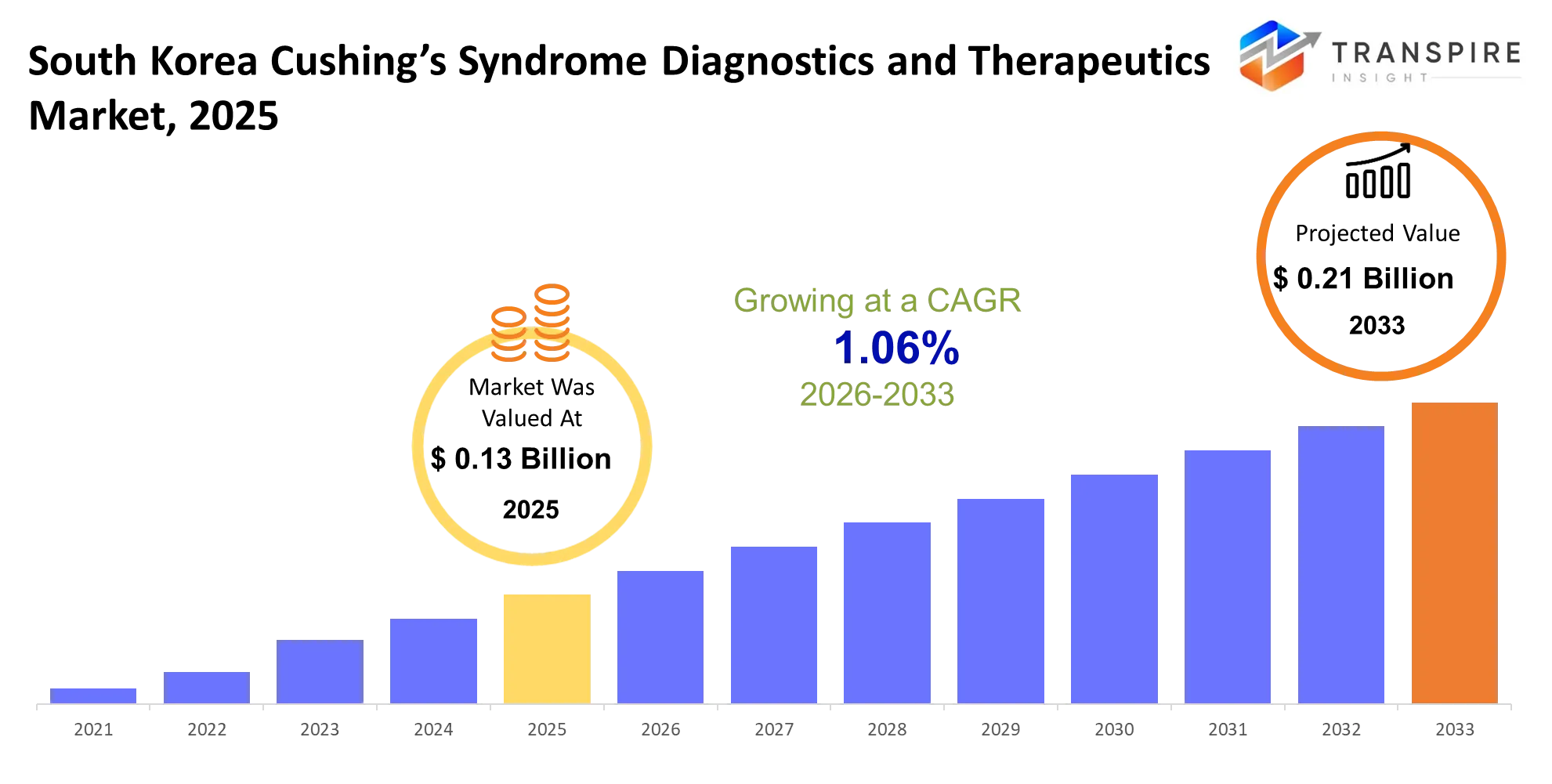
- Market Value (2025): USD 0.13 Billion.
- Expected Market Value (2026): USD 0.14 Billion.
- Estimated Market Value (2033): USD 0.21 Billion.
- Forecast CAGR (2026–2033): 1.06%
Introduction
The South Korea Cushing's Syndrome Diagnostics and Therapeutics Market represents the healthcare industry dedicated to the identification, management, and treatment of Cushing's syndrome, which is a rare hormonal condition resulting from prolonged elevated secretion of cortisol hormone. The South Korea Cushing's Syndrome Diagnostics and Therapeutics Market represent a highly dynamic industry in the wider East Asia rare endocrine disorders market. The market has been able to address several issues related to delayed diagnosis, poor prognosis, and treatment of Cushing's syndrome due to several factors including. Market Opportunities in the South Korea Cushing’s Syndrome Diagnostics and Therapeutics Market arise from the availability of modern health care infrastructure, extensive diagnostic facilities, and advanced in vitro diagnostics technologies which help in proper evaluation of the endocrine system. Good health care policies and initiatives, development in health care by the government, and changing reimbursement policies would be helpful in the implementation of Cushing’s syndrome diagnostic techniques and therapies. Drug therapy, including somatostatin receptor directed therapies, is another way of managing patients suffering from hypercortisolism due to persistence and recurrence of symptoms after surgery. Increased use of precision diagnostics and effective therapeutic approaches has created more market opportunities in South Korea.
Key Market Highlights: -
- By diagnostic test, the 24-Hour Urinary Free Cortisol segment dominated the market and holds nearly 40% share in 2025 and is projected to grow at a substantial CAGR during the forecast period.
- By cause, the Pituitary Adenoma segment dominated the market and holds nearly 60% share in 2025 and is projected to grow at a substantial CAGR during the forecast period.
- By end user, the Hospitals segment dominated the market and holds nearly 45% share in 2025 and is projected to grow at a substantial CAGR during the forecast period.
- 100-Day Fast Track Reimbursement Policy: In South Korea, the Ministry of Health and Welfare has reduced the timeline for getting treatments for rare diseases onto the National Health Insurance list from up to 240 days to 100 days from 2026. This policy may help patients gain faster access to novel Cushing’s syndrome drugs.
How is Technology Driving Growth in the South Korea Cushing’s Syndrome Diagnostics and Therapeutics Market?
The South Korea Cushing's Syndrome Diagnostics and Therapeutics Market is progressing owing to the development of highly advanced diagnostic tools, therapeutics and digital health platforms. Advancements in high resolution imaging and refined cortisol assays are enabling the improved diagnosis and understanding of pituitary and adrenal problems. Precision medicine, biomarker discovery, and genomic profiling are contributing towards better-targeted treatments for Cushing's disease. Advanced drug delivery mechanisms and digital health platforms may improve administration, compliance, remote monitoring, and consultations with specialists. In addition to that, stereotactic radiosurgery offers new minimally invasive procedures for some patients with tumors. Together, all these developments provide an opportunity for the advancement of diagnostics, individualized treatment, remote monitoring and decision-making in South Korea's rapidly evolving endocrine care environment.
Market Drivers
The diagnostics and therapeutics market for Cushing’s Syndrome in South Korea is fueled by an advanced healthcare system, wherein top-notch metropolitan medical facilities have adopted advanced minimally invasive surgery techniques for endocrine conditions. The aging population along with the rising prevalence of chronic metabolic diseases is encouraging an increased focus on endocrine problems, thus driving the need for diagnosis. Improvements in technologies related to high resolution imaging and biochemical tests, along with developments in therapeutic treatments, have been augmenting diagnostic accuracy as well as the effectiveness of treatment. Additionally, there has been an increase in clinical awareness among endocrinologists, which might prevent delays in diagnosis. The South Korea Cushing's Syndrome Diagnostics & Therapeutics Market benefits from the presence of state-of-the-art healthcare infrastructure such as specialized endocrine care centers along with advanced diagnostic facilities, which help in making fast and precise diagnosis of the disease. Rapid aging of the population has increased the requirement for management of endocrine and metabolic disorders, leading to an increase in diagnostic and treatment demand. There are harmonized clinical practice guidelines, such as those provided by the Korean Endocrine Society, for standardized diagnosis and treatment procedures of the disorder. Besides, there are favorable healthcare policies and innovations which are contributing towards market growth.
Restrain
There are challenges in the South Korean market for Cushing’s Syndrome diagnostics and therapeutics owing to high costs associated with treatment, issues with reimbursement, and long-term treatment needs. There could be diagnostic difficulties, such as biochemical heterogeneity and similar ACTH patterns, which could make diagnosis late. Since Cushing’s syndrome is rare, there will be limited market potential in addition to limiting treatments to tertiary centers.
|
Driver |
Relative Impact on Growth (%) |
Geographic Relevance |
Impact Timeline |
Demand Strength |
Growth Mechanism |
Key Beneficiaries |
Major Constraint |
|
Driver 1: Expansion of Advanced Hormonal Diagnostics |
27% |
Seoul, Gyeonggi, Major Metropolitan Hospitals |
Short-term |
High |
Improves early detection and biochemical diagnostic accuracy |
Diagnostic laboratories, hospitals, assay manufacturers, patients |
Limited awareness of rare endocrine disorders |
|
Driver 2: Increasing Adoption of Targeted Cushing’s Therapies |
23% |
Nationwide, strongest in tertiary hospitals |
Short-term |
High |
Expands treatment options for persistent or inoperable disease |
Pharmaceutical companies, endocrinologists, specialty hospitals |
High treatment costs and eligibility restrictions |
|
Driver 3: Growth of Specialized Pituitary Centers |
20% |
Seoul and Major Tertiary Medical Centers |
Medium-term |
High |
Enables multidisciplinary diagnosis, surgery, and follow-up |
Hospitals, neurosurgeons, endocrinologists, imaging providers |
Concentration of specialized expertise |
|
Driver 4: Improved Access Through Health Insurance Policies |
17% |
Nationwide |
Short-term |
Medium |
Improves affordability and supports eligible therapy utilization |
Patients, hospitals, pharmaceutical manufacturers |
Strict reimbursement eligibility criteria |
|
Driver 5: Advancements in Precision Imaging and Treatment Monitoring |
13% |
Seoul, Gyeonggi, Advanced Medical Centers |
Long-term |
Medium |
Enhances tumor localization and treatment-response monitoring |
Imaging companies, hospitals, technology providers |
High equipment and infrastructure costs |
Analysis of Prices and Consumer Behaviour
The South Korea Cushing’s syndrome diagnostics and therapeutics market is defined by high accuracy of diagnostic testing and specific treatment interventions which are predominantly supplied by endocrinology units, tertiary hospitals and endocrinology centers. In total, a countrywide Korean study showed that there were 584 newly diagnosed Cushing’s disease patients in 2013–2017, giving the annual incidence rate of 2.3 cases per million populations and prevalence rate of 9.3 cases per million populations. Diagnostics is performed based on the application of biochemical testing, namely 24-hour urinary free cortisol measurement, 1-mg overnight dexamethasone suppression test and midnight serum cortisol, followed by pituitary MRI and localization testing if necessary. According to the Korean Endocrine Society, the key diagnostic criteria for Cushing’s disease are serum cortisol level greater than 1.8 μg/dL after 1-mg overnight dexamethasone suppression test and awake midnight serum cortisol level greater than 7.5 μg/dL. Treatment of Cushing’s disease includes transsphenoidal surgery which achieves remission in 65–90% of cases with microadenomas. Treatment options encompass corticosteroid-reducing therapy, ACTH-targeting therapy, as well as osilodrostat therapy becoming increasingly important in South Korea; in South Korea, guidelines for reimbursement set out in 2025 indicate the use of osilodrostat for adult patients with Cushing's disease who are unable to undertake surgery on the pituitary gland or who did not derive adequate results from surgery and whose mean daily urinary free cortisol is more than 1.3 times the upper limit of normal.
Who are the Key Players in the South Korea Cushing’s Syndrome Diagnostics and Therapeutics Market and how do they compete?
Competitive analysis in the South Korea market of Cushing's syndrome Diagnostics and Therapeutics depends on companies and healthcare facilities engaged in the provision of advanced hormonal diagnostics, pituitary imaging, endocrine therapy, and multi-disciplinary disease management. Competitiveness is based on diagnostic accuracy, specialization in the area of endocrinology, pharmaceutical therapies, surgeries, and patient care paths. Complementary biochemical diagnostic methods and imaging techniques are suggested by the Korean Endocrine Society.
By offering innovative solutions of endocrine diagnostics and pituitary therapy, companies like Novartis, Recordati, HRA Pharma, and pharmaceutical producers compete in the area of treatments that focus on the processes of cortisol production and ACTH-related therapies. Novartis is the owner of Signifor (pasireotide) patent and Recordati produces Isturisa (osilodrostat) that has already met reimbursement criteria in South Korea for patients with Cushing's disease. Major healthcare facilities like Seoul National University Hospital differentiate themselves by multi-disciplinary pituitary centers offering endocrinology, neurosurgery, radiology, radiation oncology, and medical therapies.
Top Companies in the South Korea Cushing’s Syndrome Diagnostics and Therapeutics Market
- Recordati
- HRA Pharma
- Corcept Therapeutics
- Novartis
- Ipsen
- Strongbridge Biopharma
- Pfizer
- Bristol Myers Squibb
- Eli Lilly
- AstraZeneca
- Takeda
- Sanofi
- Teva
- Ferring Pharmaceuticals
- Daewoong Pharmaceutical
|
Company |
Est. Revenue Share Range |
Key Offerings |
Strategic Positioning |
Geographic Strength |
Technology Focus |
|
Recordati |
15–25% |
Isturisa (osilodrostat); Signifor (pasireotide); rare-endocrine medicines |
Rare-disease therapeutic leadership |
Europe, Asia Pacific, South Korea |
Cortisol synthesis and pituitary-targeted therapies |
|
Abbott |
8–14% |
ARCHITECT cortisol assays; Alinity immunoassay systems; endocrine testing |
High-throughput diagnostic platform differentiation |
North America, Europe, Asia Pacific |
Automated cortisol immunoassay diagnostics |
|
Siemens Healthineers |
7–12% |
Atellica cortisol testing; immunoassay analyzers; laboratory automation |
Integrated laboratory diagnostics leadership |
Europe, Asia Pacific, North America |
Automated immunoassay and laboratory automation |
|
Beckman Coulter (Danaher) |
6–10% |
DxI cortisol assays; Access immunoassay systems; laboratory automation |
Automation-led laboratory efficiency |
North America, Europe, Asia Pacific |
Automated endocrine testing and laboratory workflows |
|
Roche Diagnostics |
5–9% |
Elecsys cortisol assays; cobas immunoassay platforms; laboratory diagnostics |
Premium analytical diagnostic ecosystem |
Europe, Asia Pacific, North America |
High-throughput immunoassay and analytical standardization |
|
GE HealthCare |
4–7% |
MRI systems; CT imaging; advanced neuroimaging solutions |
Advanced pituitary imaging specialization |
North America, Europe, Asia Pacific |
High-resolution MRI and neuroimaging technologies |
|
Philips |
3–6% |
MRI systems; diagnostic imaging; clinical imaging software |
Integrated imaging and workflow optimization |
Europe, Asia Pacific, North America |
MRI imaging and clinical workflow technologies |
|
Canon Medical Systems |
3–5% |
MRI systems; CT systems; advanced diagnostic imaging |
Imaging-focused regional competition |
Asia Pacific, Europe, North America |
Advanced MRI and precision diagnostic imaging |
|
Thermo Fisher Scientific |
2–4% |
LC-MS/MS systems; mass spectrometry; chromatography solutions |
Specialty analytical diagnostics positioning |
North America, Europe, Asia Pacific |
LC-MS/MS cortisol quantification technologies |
|
Hologic |
1–3% |
Molecular diagnostics; laboratory testing platforms; specialty assays |
Specialty laboratory diagnostics diversification |
North America, Europe, Asia Pacific |
Automated molecular and laboratory diagnostics |
South Korea Cushing’s Syndrome Diagnostics and Therapeutics Market Segmentation
The South Korea Cushing’s Syndrome Diagnostics and Therapeutics Market share is divided into six categories: By diagnostic test, therapeutic class, cause, route, end user and distribution channel.
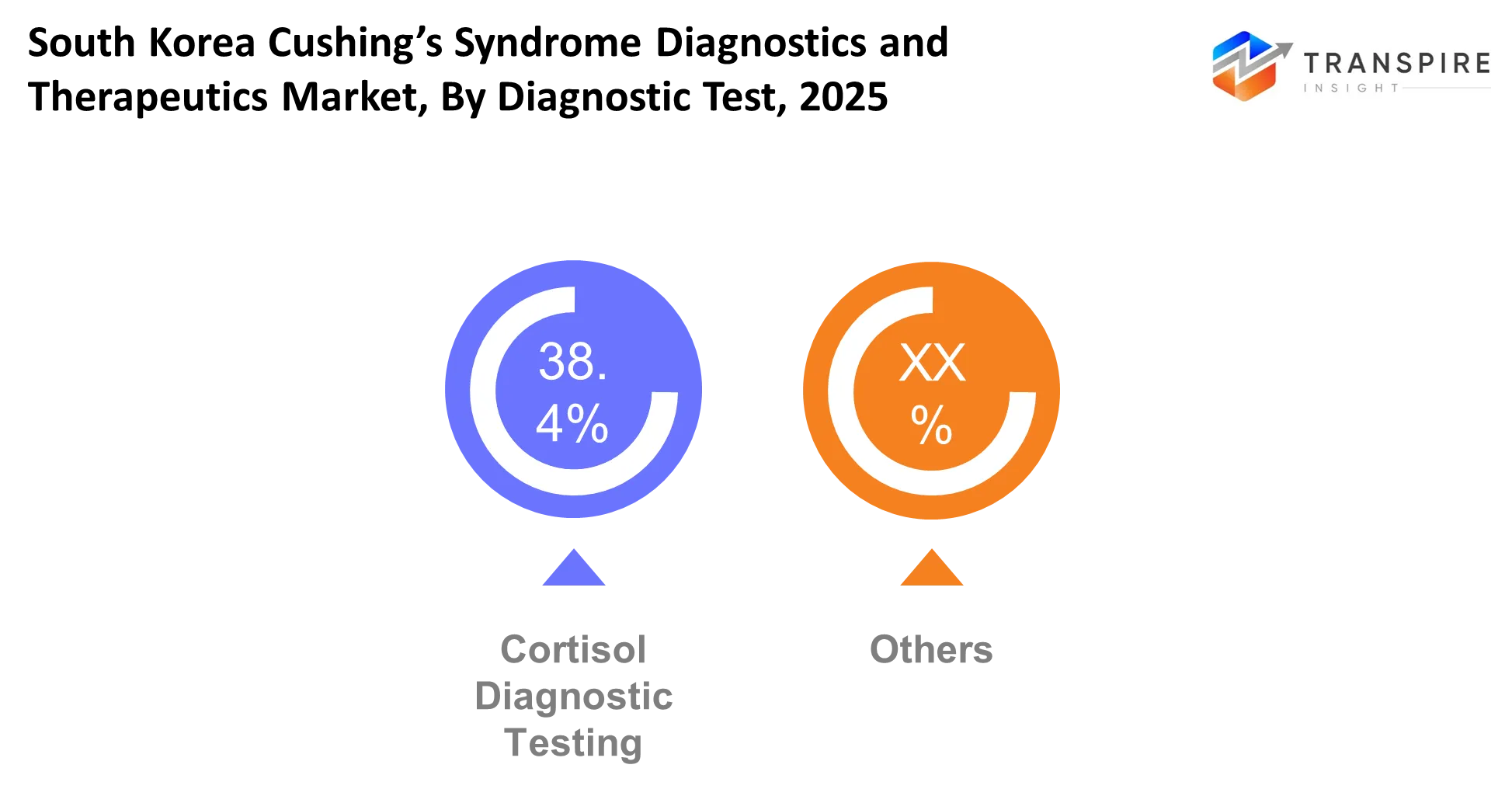
The 24-Hour Urinary Free Cortisol dominated the market, accounting for nearly 40% in 2025 and is expected to rise at a significant CAGR during the forecast period.
The South Korea Cushing’s Syndrome Diagnostics and Therapeutics Market is segmented by diagnostic test into Cortisol Tests, ACTH Tests, Dexamethasone Suppression Tests, 24-Hour Urinary Free Cortisol, Late-Night Salivary Cortisol, Imaging, CRH Stimulation Tests, Inferior Petrosal Sinus Sampling. Among these, the 24-Hour Urinary Free Cortisol segment dominated the market, accounting for nearly 40% in 2025 and expected to increase at a significant CAGR during the forecast period. The UFC segment led the market in 2025, holding a share of nearly 40%, owing to its established use in the diagnosis of Cushing's syndrome, and accurate measurement of cortisol secretion over a 24-hour period. Its well-established sample collection technique and diagnostic use make it suitable for future adoption and growth in the market.
The Pituitary Adenoma dominated the market, accounting for nearly 60% in 2025, and is expected to rise at a significant CAGR during the forecast period.
The South Korea Cushing’s Syndrome Diagnostics and Therapeutics Market is segmented by cause into Pituitary Adenoma, Adrenal Tumors, Ectopic ACTH Syndrome, Iatrogenic Cushing’s, Other Endogenous Causes, Adrenal Hyperplasia, Ectopic CRH, Other Causes. Among these, the Pituitary Adenoma segment dominated the market, accounting for nearly 60% in 2025 and expected to increase at a significant CAGR during the forecast period. In 2025, the Pituitary Adenoma accounted for nearly 60% of the total market share due to its widespread presence as one of the key causes of Cushing’s disease. The rise in diagnostics, improvements in imaging of the pituitary gland, advancements in hormonal analysis, and rising acceptance of minimally invasive transsphenoidal surgery are aiding the growth of the market.
The Hospitals dominated the market, accounting for nearly 45% in 2025 and is expected to rise at a significant CAGR during the forecast period.
The South Korea Cushing’s Syndrome Diagnostics and Therapeutics Market is segmented by end user into Hospitals, Endocrinology Clinics, Specialty Clinics, Diagnostic Laboratories, Research Institutes, Academic Medical Centers, Surgery Centers, Other Healthcare Facilities. Among these, the Hospitals segment dominated the market, accounting for nearly 45% in 2025 and expected to increase at a significant CAGR during the forecast period. In 2025, Hospitals was the leading segment, making up almost 45% of the market share due to the presence of dedicated endocrinology departments, diagnostic facilities, and interdisciplinary clinics. The increase in patient numbers, diagnoses of Cushing’s syndrome, hormone and imaging tests, and surgery services are contributing to the diagnosis and treatment within hospitals.
Future Market Trends for the South Korea Cushing’s Syndrome Diagnostics and Therapeutics Market: -
- Pharmacotherapy Shift: Increasing use of innovative steroidogenesis inhibitors along with or even without surgeries for improved control of cortisol levels.
- Innovative Diagnostics: Innovative biomarkers and enhanced hormonal testing are reducing development times and helping to detect problems early.
- Novel Therapies: The use of somatostatin analogs and glucocorticoid receptor antagonists is offering more options for non-surgical therapy.
- Policy Support: Good orphan drugs regulation and enhanced local reimbursement policy are attracting more players in the market.
Recent Development
- In September 2026: According to Lundbeck, Orphan Drug Designation has been issued by the U.S. FDA for asedebart (Lu AG13909), an investigational anti-ACTH monoclonal antibody intended for endogenous Cushing’s syndrome. It is an important development from around the world that can help build the pipeline of treatments targeting ACTH and possibly bring innovations to the South Korean Cushing’s syndrome market.
- In June 2026: Lundbeck announced preliminary Phase II results of asedebart (Lu AG13909) in ENDO 2026, where urinary free cortisol normalization was observed in 7 out of 8 assessable subjects after individual dose adjustment. The case provides an example of novel developments in ACTH-directed treatments and can facilitate future innovations in the Cushing’s syndrome diagnostics/therapy market in South Korea.
Market Segment
This study forecasts revenue at South Korea, regional and country levels from 2020 to 2033. Transpire Insight has segmented the South Korea Cushing’s Syndrome Diagnostics and Therapeutics Market based on the below-mentioned segments:
South Korea Cushing’s Syndrome Diagnostics and Therapeutics Market, By Diagnostic Test
- Cortisol Tests
- ACTH Tests
- Dexamethasone Suppression Tests
- 24-Hour Urinary Free Cortisol
- Late-Night Salivary Cortisol
- Imaging
- CRH Stimulation Tests
- Inferior Petrosal Sinus Sampling
South Korea Cushing’s Syndrome Diagnostics and Therapeutics Market, By Therapeutic Class
- Cortisol Synthesis Inhibitors
- Glucocorticoid Receptor Antagonists
- Pituitary-Directed Drugs
- ACTH-Targeted Therapies
- Steroidogenesis Inhibitors
- Combination Therapies
- Surgery
- Radiation Therapy
South Korea Cushing’s Syndrome Diagnostics and Therapeutics Market, By Cause
- Pituitary Adenoma
- Adrenal Tumors
- Ectopic ACTH Syndrome
- Iatrogenic Cushing’s, Other Endogenous Causes
- Adrenal Hyperplasia
- Ectopic CRH
- Other Causes
South Korea Cushing’s Syndrome Diagnostics and Therapeutics Market, By Route
- Oral
- Intravenous
- Subcutaneous
- Intramuscular
- Transdermal
- Surgical
- Radiation
- Other Routes
South Korea Cushing’s Syndrome Diagnostics and Therapeutics Market, End User
- Hospitals
- Endocrinology Clinics
- Specialty Clinics
- Diagnostic Laboratories
- Research Institutes
- Academic Medical Centers
- Surgery Centers
- Other Healthcare Facilities
South Korea Cushing’s Syndrome Diagnostics and Therapeutics Market, By Distribution channel
- Hospital Pharmacies
- Retail Pharmacies
- Specialty Pharmacies
- Online Pharmacies
- Direct Distribution
- Clinics
- Wholesalers
- Other Channels
Frequently Asked Questions
Find quick answers to common questions.
The market is projected to reach USD 0.21 billion by 2033, growing from USD 0.13 billion in 2025.
24-Hour Urinary Free Cortisol dominates, accounting for nearly 40% in 2025 due to established diagnostic application.
Pituitary Adenoma leads with nearly 60% share, supported by improved hormonal testing, imaging, and minimally invasive surgery.
Hospitals dominate with nearly 45% share, driven by specialized endocrinology departments, diagnostics, surgery, and multidisciplinary treatment capabilities.
Key players include Recordati, Novartis, HRA Pharma, Corcept Therapeutics, Ipsen, Pfizer, and Ferring Pharmaceuticals, among others.
- Recordati
- HRA Pharma
- Corcept Therapeutics
- Novartis
- Ipsen
- Strongbridge Biopharma
- Pfizer
- Bristol Myers Squibb
- Eli Lilly
- AstraZeneca
- Takeda
- Sanofi
- Teva
- Ferring Pharmaceuticals
- Daewoong Pharmaceutical
About the Authors

Pankaj Ghogare Patil
I am Pankaj Ghogare Patil, a Senior Research Analyst at Transpire Insight, specializing in the Pharmaceutical, Chemicals & Materials, Healthcare IT, and Biotechnology industry. My expertise lies in conducting comprehensive market research, analyzing industry trends, evaluating competitive landscapes, and translating complex data into actionable insights. At Transpire Insight, I closely follow emerging technologies, regulatory developments, and market innovations to create accurate, well-researched, and informative content that helps businesses and professionals make informed decisions. I am committed to producing credible, evidence-based articles that reflect industry best practices while making technical topics accessible and valuable for a broad audience.

Chakradhar Khansole
Chakradhar serves as the Research Director at Transpire Insight, bringing over 8 years of experience in technology, innovation, and strategic market intelligence. He specializes in transforming complex market data into actionable business insights that enable organizations to make informed, growth-oriented decisions. Recognized for his strategic vision and analytical expertise, Chakradhar leads high-impact research initiatives, delivering comprehensive market assessments, competitive intelligence, and forward-looking industry analysis.
Recently Published Reports
-
Apr 2026
AI in Diabetic Retinopathy Market
AI in Diabetic Retinopathy Market Size, Share & Analysis Report By Type (Screening AI Systems, Diagnostic AI Systems, and Predictive AI Models), By Application Segment (Hospitals, Ophthalmology Clinics, Diagnostic Centers, and Research and Development), and Geography (North America, Europe, Asia-Pacific, Middle East and Africa, South and Central America), 2021 - 2031
-
Apr 2026
Psychometric Tests Market
Psychometric Tests Market Size, Share & Analysis Report By Type (Personality Tests, Ability/Aptitude Tests, Skill/Knowledge Tests, and Others), By Application (Talent Acquisition and Talent Management), and Geography (North America, Europe, Asia-Pacific, Middle East and Africa, South and Central America), 2021 – 2031
-
Apr 2026
Rare Biological Sample Collection Market
Rare Biological Sample Collection Market Size, Share & Analysis Report By Type (Isolation Kits & Reagent, Blood Collection Tubes, and Others), By Application (Oncology, Transcriptomics, Pharmacogenomics, and Others), and Geography (North America, Europe, Asia-Pacific, Middle East and Africa, South and Central America), 2021 – 2031
-
Jul 2026
Diabetic Retinopathy Market
Diabetic Retinopathy Market Size, Share & Analysis Report By Type (Proliferative Diabetic Retinopathy, and Diabetic Macular Edema (DME)), By Treatment Type (Anti VEGF Drug, Steroid Implants, Laser Surgeries, and Vitrectomy), and Geography (North America, Europe, Asia-Pacific, Middle East and Africa, South and Central America), 2021 – 2031
Our Clients







