

Siding & Decking Market Summary:
According to Transpire Insight, a detailed research report on the market reflects that the residential application segment dominates the Siding & Decking Market, accounting for approximately 57% of the total share worldwide. James Hardie Industries plc leads the market with approximately (around USD 4.0 billion) in annual revenue and an estimated 10-14% market share, making it the leading contributor to market development, innovation, advanced siding and decking product manufacturing, expanding production capabilities, and growth dynamics.
Market Snapshot
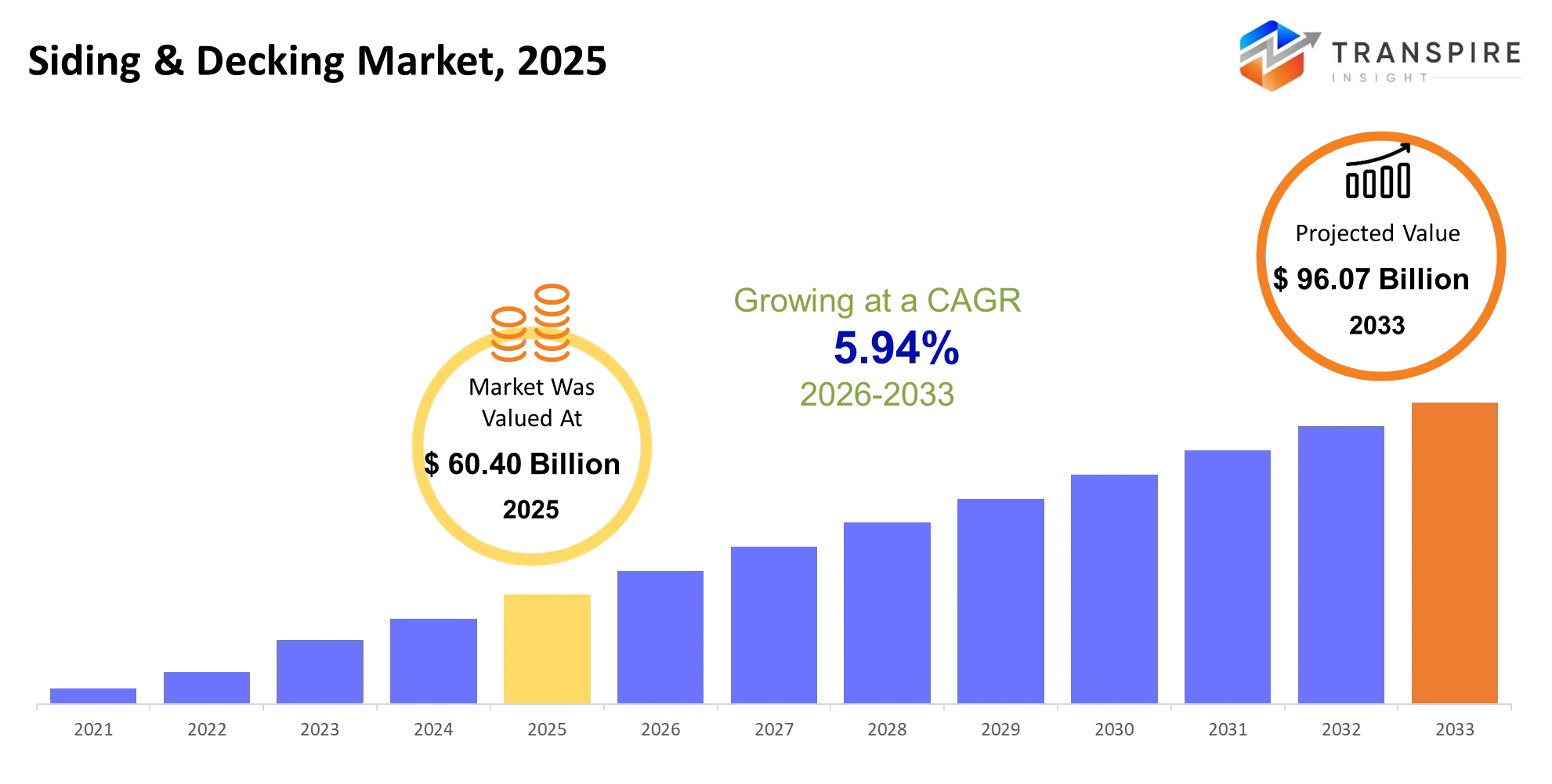
- Market Value (2025): USD 60.40 Billion.
- Expected Market Value (2026): USD 64.16 Billion.
- Estimated Market Value (2033): USD 96.07 Billion.
- Forecast CAGR (2026-2033): 5.94%
- Leading Region in 2025: North America
- Second-largest Region: Europe
- Fastest Growing Region: Asia Pacific
Introduction
Siding & Decking market comprises sales of exterior protective and decorative building materials such as shingles siding, decks boards, railings and fascia boards. Market Value is based on factory-gate price, which includes the cost of goods sold from factories to distributors, retailers or directly to end-users, including services rendered by producers. Siding (Cladding) is the exterior protective and decorative covering of building walls. Its main purpose is to protect the building structure from adverse weather elements (e.g. rain, snow, wind) , provide thermal insulation and add aesthetic value "curb appeal" to building exterior. Decking is a structural component of the horizontal platform/floor of outdoor structures. It provides extension of indoor living space to backyards, hospitality constructions, balconies and rooftops. The siding and decking industry is also gaining from modern material advancements, which provide the best combination of performance, beauty, and environmental friendliness. The composite, plastic, and vinyl materials ensure low maintenance, as they do not fade, get stained or damaged at their surface, and have reduced requirements for repainting and sealing. Fiber-cement and engineered wood materials ensure high durability through increased moisture, rot, pest resistance, and even fire resistance. Modern high-performance siding also contributes to the energy efficiency of buildings through improved thermal insulation and heat control. With modern production methods, it is now possible to manufacture synthetic and composite materials to mimic premium wood and stone surfaces.
For instance:- The North American Siding & Decking Market, The investment is made easy with low maintenance vinyl and fiber cement siding, increased use of composite deck, energy codes, and modular systems that are resistant to wildfires.
Market Highlights: -
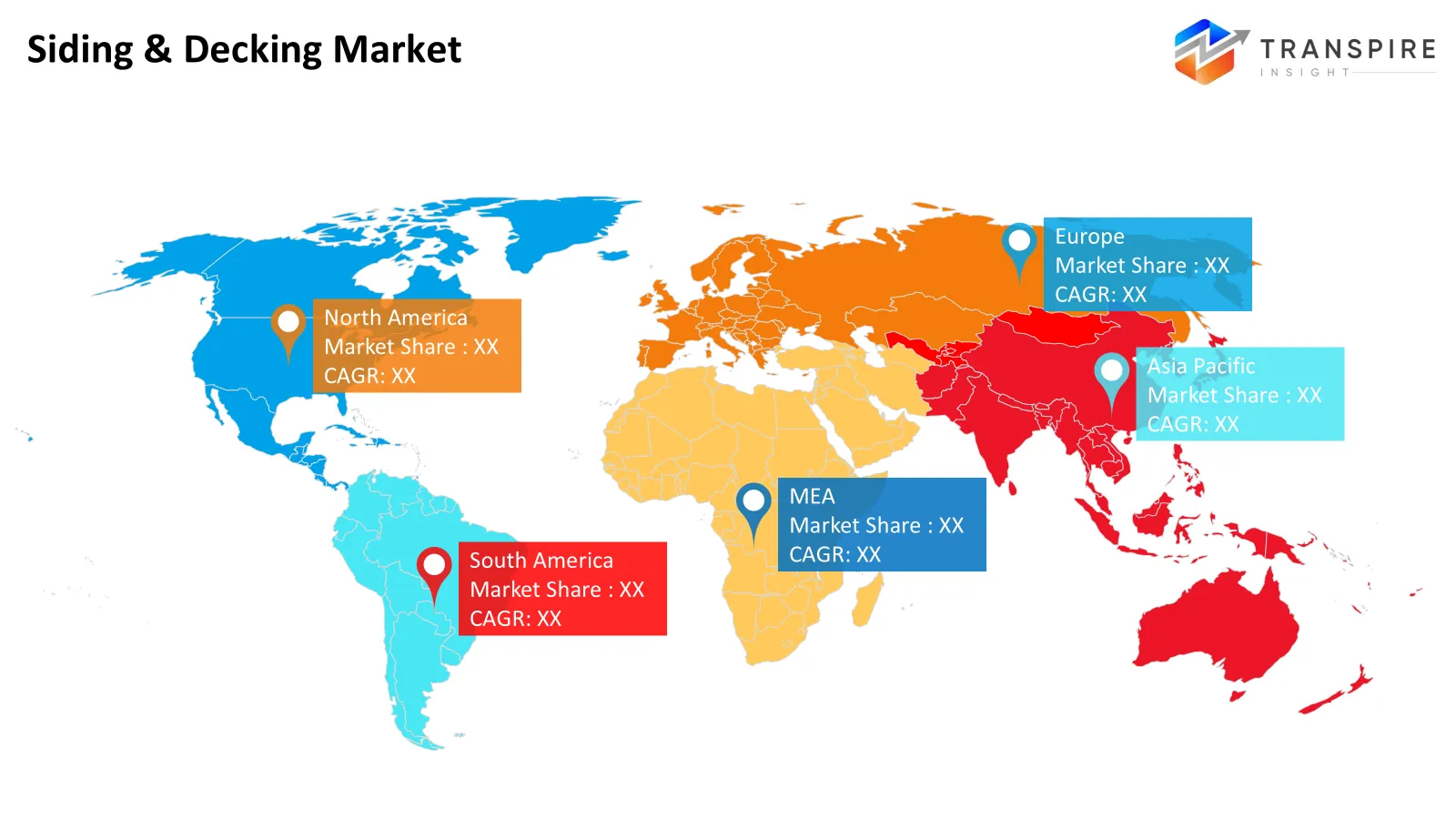
- North America is anticipated to hold roughly 48% share of the Siding & Decking Market over the predicted timeframe.
- Europe is expected to grow at a rapid CAGR in the Siding & Decking Market by holding roughly 28% of the share during the forecast period.
- Asia Pacific is anticipated to hold roughly 26% share of the Siding & Decking Market over the predicted timeframe.
- By product, the Siding segment dominated the market and holds nearly 70% share in 2025 and is projected to grow at a substantial CAGR during the forecast period.
- By application, the Residential segment dominated the market and holds nearly 57% share in 2025 and is projected to grow at a substantial CAGR during the forecast period.
- By end user, the Contractors segment dominated the market and holds nearly 40% share in 2025 and is projected to grow at a substantial CAGR during the forecast period.
- BHAVA Scheme: The BHAVA Scheme of India worth ₹33,660 crore, which is associated with 100 industrial parks that are ready for investments, may contribute towards boosting construction and development activities within the industrial sector. Such development might help in boosting the demand for durable, weather-proof, and maintenance-free siding, decking, exterior panels, and envelope construction materials.
How is Technology Driving Growth in the Siding & Decking Market?
Material science innovations are revolutionizing the siding and decking industry through the use of composite and hybrid materials that mimic natural wood but provide improved resistance to the elements like weather, moisture, UV rays, and rot. Technologies like co-extrusion are contributing to increased durability of the surface, while technologies that promote thermal comfort have been developed for the decks. Digital manufacturing is contributing to increased efficiency during the manufacturing process using automation and robotics that eliminate waste and labor. The use of BIM ensures precise material planning and installation, while pre-fabricated sidings and modular deck systems simplify the process of construction on site. Furthermore, digital visualization tools and online configurators allow customers to view their customized exteriors before purchasing.
|
Report Metrics |
Details |
|
Market size value in 2025 |
USD 60.40 Billion |
|
Market size value in 2026 |
USD 64.16 Billion |
|
Revenue forecast in 2033 |
USD 96.07 Billion |
|
Growth rate |
CAGR of 5.94% from 2026 to 2033 |
|
Base year |
2025 |
|
Historical data |
2021 - 2024 |
|
Forecast period |
2026 - 2033 |
|
Report coverage |
Revenue forecast, competitive landscape, growth factors, and trends |
|
Regional scope |
United States; Canada; Mexico; United Kingdom; Germany; France; Italy; Spain; Denmark; Sweden; Norway; China; Japan; India; Australia; South Korea; Thailand; Brazil; Argentina; South Africa; Saudi Arabia; United Arab Emirates |
|
Key company profiled |
James Hardie, Westlake Royal Building Products, LP Building Solutions, Trex, AZEK, CertainTeed, Kingspan, Boral, UPM, Fiberon, TAMKO, Ply Gem, TimberTech, Fortress Building Products, Barrette Outdoor Living |
|
Customization scope |
Free report customization (country, regional & segment scope). Avail customized purchase options to meet your exact research needs. |
|
Report Segmentation |
By Product (Siding, Decking, Railing, Fascia, Soffits, Trim, Accessories, Others); By Material (Vinyl, Fiber Cement, Wood, Composite/WPC, Metal, PVC, Aluminum, Others); By Application (Residential, Commercial, Industrial, Institutional, Multifamily, Hospitality, Recreational, Others); By End User (Homeowners, Contractors, Builders, Developers, Property Managers, Architects, Government, Others); By Installation (New Construction, Remodeling, Replacement, Retrofit, Renovation, Modular, Prefabricated, Others); By Product Form (Boards, Panels, Sheets, Tiles, Planks, Profiles, Systems, Others); By Distribution (Direct Sales, Dealers, Distributors, Home Centers, Specialty Stores, Online, Contractors, Others) |
Market Drivers
The market for siding and decking products is propelled by urbanization and residential & commercial constructions in particular. A boom in home improvement and refurbishment is urging homeowners to renovate their old houses and increase the curb appeal of the buildings and also raise their energy efficiency and thus property value. The move towards sustainable building materials and such products as composite and fiber-cement is contributing to high demand for reliable and environmentally friendly materials. Furthermore, rising popularity of outdoor living and do-it-yourself movement is resulting in an increasing number of people installing easy-to-mount decking systems. The market for siding and decking products is positively impacted by high-tech material solutions which provide improved performance, increased longevity, and better aesthetics. The contemporary generation of vinyl, fiber-cement, and wood plastic composite materials needs little maintenance, which lowers expenses on painting and repairing. Better resistance to the elements increases the lifespan of the product through protection from moisture, UV radiation, temperature changes, and wear. Insulating siding materials can enhance energy efficiency of buildings by helping regulate indoor temperature conditions and lowering heating/cooling costs. Increased use of recyclable, bio-degradable and eco-friendly materials corresponds to sustainable practices. Moreover, modern production processes allow manufacturers to imitate high-quality wood texture using composite and synthetic products.
For Instance: -
- The market of siding and decking in Russia is moving towards substituting imports due to sanctions limiting availability of western materials. Despite heavy reductions in investments into urban real estate due to high interest rates, an unprecedented boom in private construction leads to a stable demand for siding and wood-plastic composite materials.
- The European siding and decking sector offers immense possibilities for investments, owing to tough environmental regulations and home renovation activities. The growth will be spurred by an increasing trend towards sustainable and maintenance-free composite woods and thermally modified woods.
Restrain
Some of the key challenges that exist in the market include the initial cost associated with installing high-quality materials and the need for skilled labor. The prices of lumber, resin, and metal can create cost problems for manufacturers as well as project budgets. There is the possibility of rising installation costs due to labor shortages. Trade barriers, environmental legislation, and complicated building codes contribute to higher input costs.
|
Driver |
Relative Impact on Growth (%) |
Geographic Relevance |
Impact Timeline |
Demand Strength |
Growth Mechanism |
Key Beneficiaries |
Major Constraint |
|
Driver 1: Residential Construction, Remodeling & Replacement |
27% |
North America, Europe, Asia Pacific |
Short-term |
High |
Renovation expands replacement and exterior-material demand |
Siding manufacturers, contractors, retailers, homeowners |
High material and installation costs |
|
Driver 2: Demand for Sustainable & Low-Maintenance Materials |
23% |
North America, Europe, Asia Pacific |
Medium-term |
High |
Composite and WPC adoption improves lifecycle value |
Composite producers, recyclers, builders, homeowners |
Higher upfront premium versus conventional materials |
|
Driver 3: Energy Efficiency, Fire Resistance & Building-Code Requirements |
19% |
North America, Europe |
Medium-term |
High |
Performance standards increase advanced-cladding specifications |
Fiber-cement producers, insulation suppliers, architects |
Compliance increases product development and construction costs |
|
Driver 4: Outdoor Living & Premium Decking Adoption |
17% |
North America, Europe, Asia Pacific |
Short-term |
High |
Outdoor-living trends stimulate decking and railing purchases |
Decking manufacturers, contractors, retailers, homeowners |
Weather conditions and discretionary spending |
|
Driver 5: Prefabrication, Automation & Advanced Manufacturing |
14% |
North America, Europe, Asia Pacific |
Long-term |
Medium |
Factory production reduces installation time and labor dependence |
Manufacturers, automation vendors, contractors, builders |
High technology investment and integration costs |
Analysis of Prices and Consumer Behaviour
The residential sector dominates siding and decking demand, with an estimated 68.47% share in North America in 2025, mainly driven by new construction, renovation and replacement processes. In 2025, siding is predicted to constitute an estimated 58.91% of North American siding and decking revenues while enjoying strong demand for long-lasting, weatherproof and visually attractive construction materials. In 2025, vinyl is expected to represent an estimated 43.63% as a material, being attractive to consumers due to its affordability, low maintenance and installation process. The demand for composite, WPC and PVC products is growing being attributed to their longevity, water resistance and eco-friendliness. The commercial division is predicted to grow at a CAGR of about 4.16%, which is supported by renovation, infrastructure creation and expenses related to commercial buildings. The consumer path to purchase reflects higher demand for durability, weather-proofing, quality of materials, maintenance, aesthetics and lifecycle value, whereas contractors and distributors become more sensitive to supply reliability, efficiency of installation and performance of products.
|
Investment Factor |
Why It Matters to Investors |
Opportunity |
Investment Implication |
|
Residential Renovation & Replacement |
Sustains demand beyond new construction cycles |
Replacement siding, remodeling, exterior upgrades |
Supports recurring project-driven revenue |
|
Composite & Sustainable Materials |
Higher-performance materials address durability and sustainability needs |
WPC, composite, fiber-cement and recycled materials |
Supports premium product differentiation |
|
Outdoor Living Expansion |
Extends residential spending toward exterior living spaces |
Premium decking, railing and outdoor systems |
Creates attractive specialty-product opportunities |
|
Energy & Fire Performance |
Building-performance requirements increase advanced-material adoption |
Insulated and fire-resistant siding systems |
Encourages technology-led product investment |
|
Prefabrication & Automation |
Addresses installation complexity and skilled-labor shortages |
Modular siding and factory-finished systems |
Improves scalability and manufacturing efficiency |
|
Asia-Pacific Expansion |
Construction growth creates opportunities beyond mature markets |
Local manufacturing and distribution expansion |
Enables geographic diversification and market access |
Who are the Key Players in the Siding & Decking Market and how do they compete?
In the international market for siding and decking, competition relies on companies that focus on developing new building materials, solutions for homes and businesses, and distribution networks worldwide. This method of competing not only on price but also on using long-lasting materials, building materials that resist climate conditions, eco-friendly materials, style of the goods, and speed of installation allows companies to continually develop their products and gain other advantages, namely durability, energy efficiency, and higher operational efficiency of the building.
James Hardie Industries has strengthened its market position by creating new cladding systems and composite decking materials. By launching high-quality vinyl, composite, and engineered products applied in residential and commercial construction, the company sets itself apart from its competitors. This is also the position of Westlake Royal Building Products, which offers both cladding and decking solutions as well as solutions that combine innovative materials, flexible designs, and reliable distribution possibilities.
Top Companies in the Siding & Decking Market
- James Hardie
- Westlake Royal Building Products
- LP Building Solutions
- Trex
- AZEK
- CertainTeed
- Kingspan
- Boral
- UPM
- Fiberon
- TAMKO
- Ply Gem
- TimberTech
- Fortress Building Products
- Barrette Outdoor Living
|
Company |
Est. Revenue Share Range |
Key Offerings |
Strategic Positioning |
Geographic Strength |
Technology Focus |
|
James Hardie Industries plc |
8-12% |
Hardie siding, Hardie trim, TimberTech decking, AZEK Exteriors, Versatex, StruXure |
Integrated exterior and outdoor-living market leadership |
North America, Europe, Asia Pacific |
Fiber cement, composite, PVC, climate-resilient materials |
|
Westlake Royal Building Products |
5-8% |
Royal vinyl siding, Exterior Portfolio, TruExterior, Celect, Zuri Premium Decking |
Broad exterior-products portfolio with strong distribution |
North America |
Vinyl, cellular composite, poly-ash, premium decking |
|
Trex Company, Inc. |
4-7% |
Trex Signature, Transcend, Select, Enhance, Trex railing |
Premium composite decking and railing specialization |
North America, Europe, Asia Pacific |
Composite formulations, protective shells, recycled materials |
|
Saint-Gobain / CertainTeed |
3-5% |
CertainTeed vinyl siding, fiber cement siding, trim, exterior systems |
Diversified building-materials and exterior-solutions provider |
North America, Europe, Asia Pacific |
Vinyl, fiber cement, insulated exterior systems |
|
LP Building Solutions |
2-4% |
LP SmartSide siding, ExpertFinish, trim, fascia, soffits |
Engineered-wood siding innovation and contractor penetration |
North America, Latin America |
Engineered wood, SmartGuard treatment, prefinished coatings |
|
UFP Industries |
2-4% |
Deckorators decking, railing, accessories, composite products |
Multi-channel outdoor-living and composite-products challenger |
North America, Europe, Asia Pacific |
WPC, mineral composite, recycled-material manufacturing |
|
Fortune Brands Innovations |
1-3% |
Fiberon decking, Fiberon railing, Fiberon cladding, composite products |
Outdoor-living specialization with portfolio optimization |
North America, Europe |
Composite materials, AI-enabled manufacturing, cladding |
|
Kingspan Group |
1-3% |
Insulated panels, façade systems, architectural cladding, building envelopes |
High-performance building-envelope technology differentiation |
Europe, North America, Asia Pacific |
Insulated panels, thermal efficiency, digital building systems |
|
UPM |
0.5-2% |
UPM ProFi decking, composite boards, outdoor building products |
Sustainable bio-based composite materials specialization |
Europe, North America, Asia Pacific |
Wood-polymer composites, recycled materials, bio-based inputs |
|
Owens Corning |
0.5-2% |
Exterior building systems, cladding-related materials, insulation solutions |
Building-envelope performance and material-system integration |
North America, Europe, Asia Pacific |
Advanced insulation, composites, energy-efficient envelopes |
Market Segmentation
The Siding & Decking Market share is divided into six categories: By product, application, end user, installation, product form and distribution.
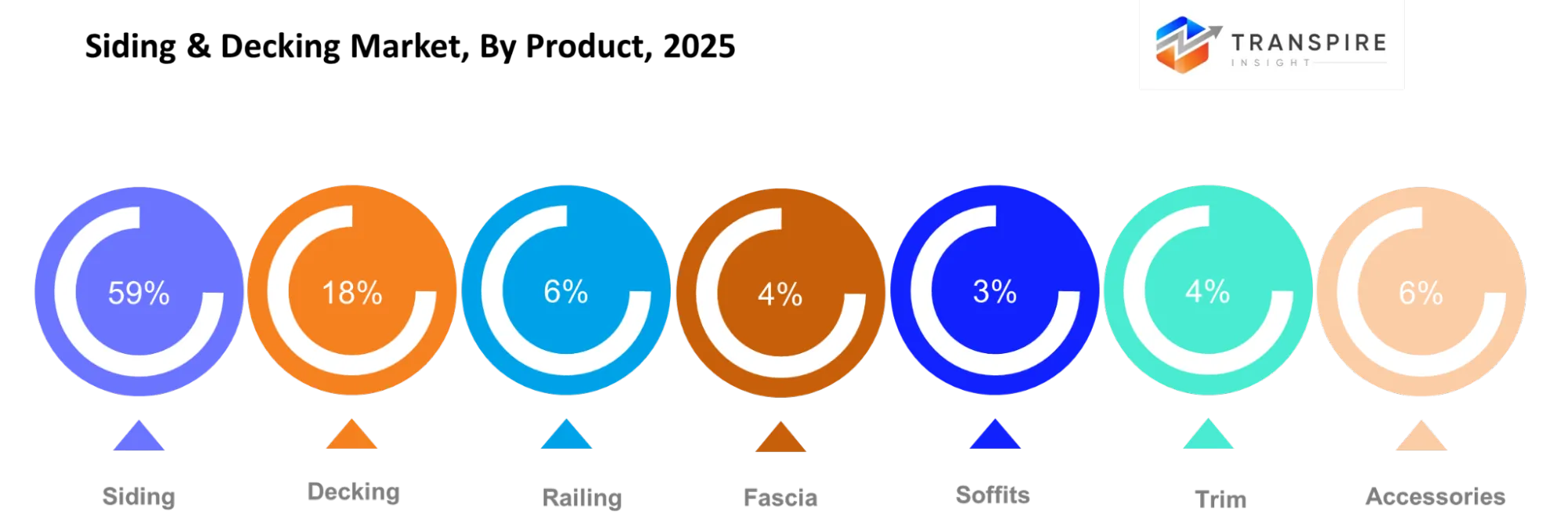
The Siding dominated the market, accounting for nearly 70% in 2025 and is expected to rise at a significant CAGR during the forecast period.
The Siding & Decking Market is segmented by product into Siding, Decking, Railing, Fascia, Soffits, Trim, Accessories, Others. Among these, the Siding segment dominated the market, accounting for nearly 70% in 2025 and expected to increase at a significant CAGR during the forecast period. Siding held a commanding position within the Siding & Decking Market in 2025, accounting for almost 70%, owing to increasing demands for exterior protection, weather proofing, energy saving, and aesthetic value. Increasing housing constructions and renovations as well as usage of maintenance-free materials like vinyl, fiber cement, and composite materials will contribute to the sustained growth of this segment in the forecast period.
The Residential dominated the market, accounting for nearly 57% in 2025, and is expected to rise at a significant CAGR during the forecast period.
The Siding & Decking Market is segmented by application into Residential, Commercial, Industrial, Institutional, Multifamily, Hospitality, Recreational, Others. Among these, the Residential segment dominated the market, accounting for nearly 57% in 2025 and expected to increase at a significant CAGR during the forecast period. In 2025, the Residential segment was leading in the Siding & Decking Market, contributing about 57%. The segment's growth is being fueled by increasing constructions of new homes, as well as renovations and refurbishments of houses. An increasing preference of homeowners for durable, easy-to-maintain, energy-efficient, and visually appealing building products is boosting the demand for siding and decking in the residential sector.
The Contractors dominated the market, accounting for nearly 40% in 2025 and is expected to rise at a significant CAGR during the forecast period.
The Siding & Decking Market is segmented by end user into Homeowners, Contractors, Builders, Developers, Property Managers, Architects, Government, Others. Among these, the Contractors segment dominated the market, accounting for nearly 40% in 2025 and expected to increase at a significant CAGR during the forecast period. Contractors were the dominant segment in the Siding & Decking Market in 2025, with close to 40% of the market share because of the rising number of residential constructions, renovations, and remodeling activities. Contractors are key in making decisions about choice and installation of products, and the rising demand for durable, maintenance-free, and aesthetically pleasing external materials is helping to boost their market power.
Regional Segment Analysis of the Siding & Decking Market:
- North America (U.S., Canada, Mexico)
- Europe (Germany, France, U.K., Italy, Spain, Rest of Europe)
- Asia-Pacific (China, Japan, India, Rest of APAC)
- South America (Brazil and the Rest of South America)
- The Middle East and Africa (UAE, South Africa, Rest of MEA)
North America is the fastest-growing region in the Siding & Decking Market during the period, holding roughly 48% share.
North America is expected to grow at a rapid CAGR in the Siding & Decking Market holding roughly 48% share during the forecast period. North America's dominant standing in the Siding & Decking Market has been enabled by good residential building, remodeling, and renovation work taking place in the region. The high expenditure made by consumers to improve their homes, the well-established decking and siding systems, and the need for long-lasting and energy-efficient materials have fueled market growth.
Europe is expected to grow at a rapid CAGR in theSiding & Decking Market, holding roughly 28% of the share during the forecast period.
Europe is expected to grow at a rapid CAGR in the Siding & Decking Market holding roughly 28% share during the forecast period. The development of Europe within the Siding & Decking Market can be attributed to the increase in the renovations and refurnishing of old buildings, strict energy efficiency regulations, and increased use of sustainable building materials. There is also an increase in the adoption of low maintenance, durable, and sustainable siding and decking systems.
Asia Pacific is the fastest-growing region in the Siding & Decking Market during the period, holding roughly 26% share.
Asia pacific is the fastest-growing region in the Siding & Decking Market during the forecast period, holding roughly 26% share during the forecast period. Rapid urbanization and the increase in residential as well as commercial construction and development of infrastructure are some of the key factors contributing to the growth of the Siding & Decking Market in the Asia Pacific region. Disposal income levels are on the rise in the region, which is aiding the trend of investment in home improvements and outdoor living.
Strategies for Market Growth in Non-Leading Regions:
The advancement of technology for building siding and decking materials will bring advantages to small and medium producers. Locally produced siding and decking materials and manufacturing facilities in less developed regions can lessen the reliance on imports and minimize overall production costs. Partnerships with regional builders, contractors, distributors, home improvement retailers, and construction services providers will enhance the market reach of siding and decking manufacturers. To improve the knowledge of siding installation, decking construction, the quality of materials, and environmentally friendly construction practices, education and improvement of technical skills will be needed. Other relevant aspects are flexible financing types, long-term supply contracts, and manufacturing agreements making siding and decking materials cheaper. The implementation of joint programs with the government, infrastructure-building projects, and e-commerce will promote the availability of siding and decking products and support the sustainable development of the market of roofing in less developed countries.
Future Market Trends for the Siding & Decking Market: -
- Sustainable Materials: Growing requirement for sustainable composite materials, wood plastic composites (WPCs) and engineered wood.
- Weather & Fire Resistance: New weather resistant materials and non-flammable products in areas prone to fires.
- Energy Efficiency: Stricter building regulations have increased the deployment of insulated and high performance siding assemblies.
- Prefab and Automation: Change towards modular decks and panelized siding to counter labor shortages.
- Digitalization & Smart Technologies: Emergence of new visualization software and IoT performance monitoring systems for decking products.
Recent Development
- In February 2026: Novus Fused Composite Decking with Image Capture Technology, Thermoset Shell, and Wood-look was launched by Fiberon as part of their innovation efforts, which provides better protection against fading, water, scratches, and wear & tear. This is an outcome of increased need for high-quality composite decking materials in the Siding & Decking Market.
- In February 2026: Eva-Last extended the Pioneer Indigenous Collection by introducing colors like True Ipe and Weathered Ipe with high-tech digital printing technology for an authentic look of exotic hardwoods. The use of bamboo foam PVC and glass fiber reinforced materials allows for durability and weather resistance, which contributes to innovation in the Siding & Decking Market.
This study forecasts revenue at global, regional and country levels from 2020 to 2033. Transpire Insight has segmented the Siding & Decking Market based on the below-mentioned segments:
Siding & Decking Market, By Product
- Siding
- Decking
- Railing
- Fascia
- Soffits
- Trim
- Accessories
- Others
Siding & Decking Market, By Application
- Residential
- Commercial
- Industrial
- Institutional
- Multifamily
- Hospitality
- Recreational
- Others
Siding & Decking Market, By End User
- Homeowners
- Contractors
- Builders
- Developers
- Property Managers
- Architects
- Government
- Others
Siding & Decking Market, By Installation
- New Construction
- Remodeling
- Replacement
- Retrofit
- Renovation
- Modular
- Prefabricated
- Others
Siding & Decking Market, By Product Form
- Boards
- Panels
- Sheets
- Tiles
- Planks
- Profiles
- Systems
- Others
Siding & Decking Market, By Distribution
- Direct Sales
- Dealers
- Distributors
- Home Centers
- Specialty Stores
- Online
- Contractors
- Others
Non-Invasive Surgical Wound Closure Market, By Regional Analysis
North America
- US
- Canada
- Mexico
Europe
- Germany
- UK
- France
- Italy
- Spain
- Russia
- Rest of Europe
Asia Pacific
- China
- Japan
- India
- South Korea
- Australia
- Rest of Asia Pacific
South America
- Brazil
- Argentina
- Rest of South America
Middle East & Africa
- UAE
- Saudi Arabia
- Qatar
- South Africa
- Rest of the Middle East & Africa
Frequently Asked Questions
Find quick answers to common questions.
The market reached USD 60.40 billion in 2025 and is projected to reach USD 96.07 billion by 2033.
Siding dominates, accounting for approximately 70% share in 2025, driven by construction, renovation, durability, protection, and aesthetic requirements.
North America leads with approximately 48% share, supported by residential construction, remodeling, renovation, and demand for energy-efficient materials.
Growth is driven by urbanization, construction, renovation, outdoor living, sustainable materials, technological innovation, and demand for low-maintenance products.
Key trends include sustainable materials, weather resistance, energy efficiency, prefabrication, automation, digital visualization, and smart technologies for exterior construction.
- James Hardie
- Westlake Royal Building Products
- LP Building Solutions
- Trex
- AZEK
- CertainTeed
- Kingspan
- Boral
- UPM
- Fiberon
- TAMKO
- Ply Gem
- TimberTech
- Fortress Building Products
- Barrette Outdoor Living
About the Authors

Pankaj Ghogare Patil
I am Pankaj Ghogare Patil, a Senior Research Analyst at Transpire Insight, specializing in the Pharmaceutical, Chemicals & Materials, Healthcare IT, and Biotechnology industry. My expertise lies in conducting comprehensive market research, analyzing industry trends, evaluating competitive landscapes, and translating complex data into actionable insights. At Transpire Insight, I closely follow emerging technologies, regulatory developments, and market innovations to create accurate, well-researched, and informative content that helps businesses and professionals make informed decisions. I am committed to producing credible, evidence-based articles that reflect industry best practices while making technical topics accessible and valuable for a broad audience.

Chakradhar Khansole
Chakradhar serves as the Research Director at Transpire Insight, bringing over 8 years of experience in technology, innovation, and strategic market intelligence. He specializes in transforming complex market data into actionable business insights that enable organizations to make informed, growth-oriented decisions. Recognized for his strategic vision and analytical expertise, Chakradhar leads high-impact research initiatives, delivering comprehensive market assessments, competitive intelligence, and forward-looking industry analysis.
Recently Published Reports
-
May 2026
Healthcare Polymer Packaging Market
Healthcare Polymer Packaging Market Size, Share & Analysis Report By Packaging Type (Syringes, IV Bottles and Pouches, Clamshells, Blisters, Bottles & Jars, Containers, Tubes, IV Parental Packaging, Others), By Type (Regulated, Non-regulated), By Polymer Type (LDPE (Low-Density Polyethylene), HDPE (High-Density Polyethylene), Homo-polymer (Homo), Random Copolymer (Random), Block Copolymer (Block), PET, Polystyrene, Polyvinyl Chloride, Polyamide/EVOH, Others), and Geography (North America, Europe, Asia-Pacific, Middle East and Africa, South and Central America), 2021 - 2031
-
Apr 2026
Hydrophilic Tape (Waterstop) Market
Hydrophilic Tape (Waterstop) Market Size, Share & Analysis Report By Type (Bentonite-Based Hydrophilic Tape, Rubber-Based Hydrophilic Tape), By Application (Residential Buildings, Commercial Buildings, Infrastructure Projects), and Geography (North America, Europe, Asia-Pacific, Middle East and Africa, South and Central America), 2021 - 2031
-
Apr 2026
Metalens Market
Metalens Market Size, Share & Analysis Report By Type (Visible Light Metalens, and Infrared Metalens), By Application (Consumer Electronics, Automotive Electronics, Industrial, Medical, and Others), and Geography (North America, Europe, Asia-Pacific, Middle East and Africa, South and Central America), 2021 - 2031
-
Apr 2026
PBT Resin Market
PBT Resin Market Size, Share & Analysis Report By Type (Reinforced PBT Resin, Unreinforced PBT Resin), By Processing Method (Injection Molding, Extrusion, Blow Molding, Others), By End-User (Automotive, Electrical & Electronics, Consumer Appliances, Industrial Machinery, Medical Devices, Packaging, Others), and Geography (North America, Europe, Asia-Pacific, Middle East and Africa, South and Central America), 2021 - 2031