

Global Polyvinyl Chloride (PVC) Market Size & Forecast:
- Global Voice and Language Intelligence Market Size 2025: USD 52.5 Billion
- Global Voice and Language Intelligence Market Size 2033: USD 75.2 Billion
- Global Voice and Language Intelligence Market CAGR: 4.60%
- Global Voice and Language Intelligence Market Segments: By Type (Rigid PVC, Flexible PVC, Chlorinated PVC, Bio-based PVC, Recycled PVC, Medical Grade PVC, Specialty PVC, Others); By Application (Pipes & Fittings, Films & Sheets, Wire & Cable, Flooring, Bottles, Profiles, Medical Devices, Others); By End User (Construction, Automotive, Electrical & Electronics, Healthcare, Packaging, Consumer Goods, Others); By Processing Method (Extrusion, Injection Molding, Calendering, Blow Molding, Others); By Grade (General Purpose, High Impact, Transparent, Others)
Global Polyvinyl Chloride (PVC) Market Summary:
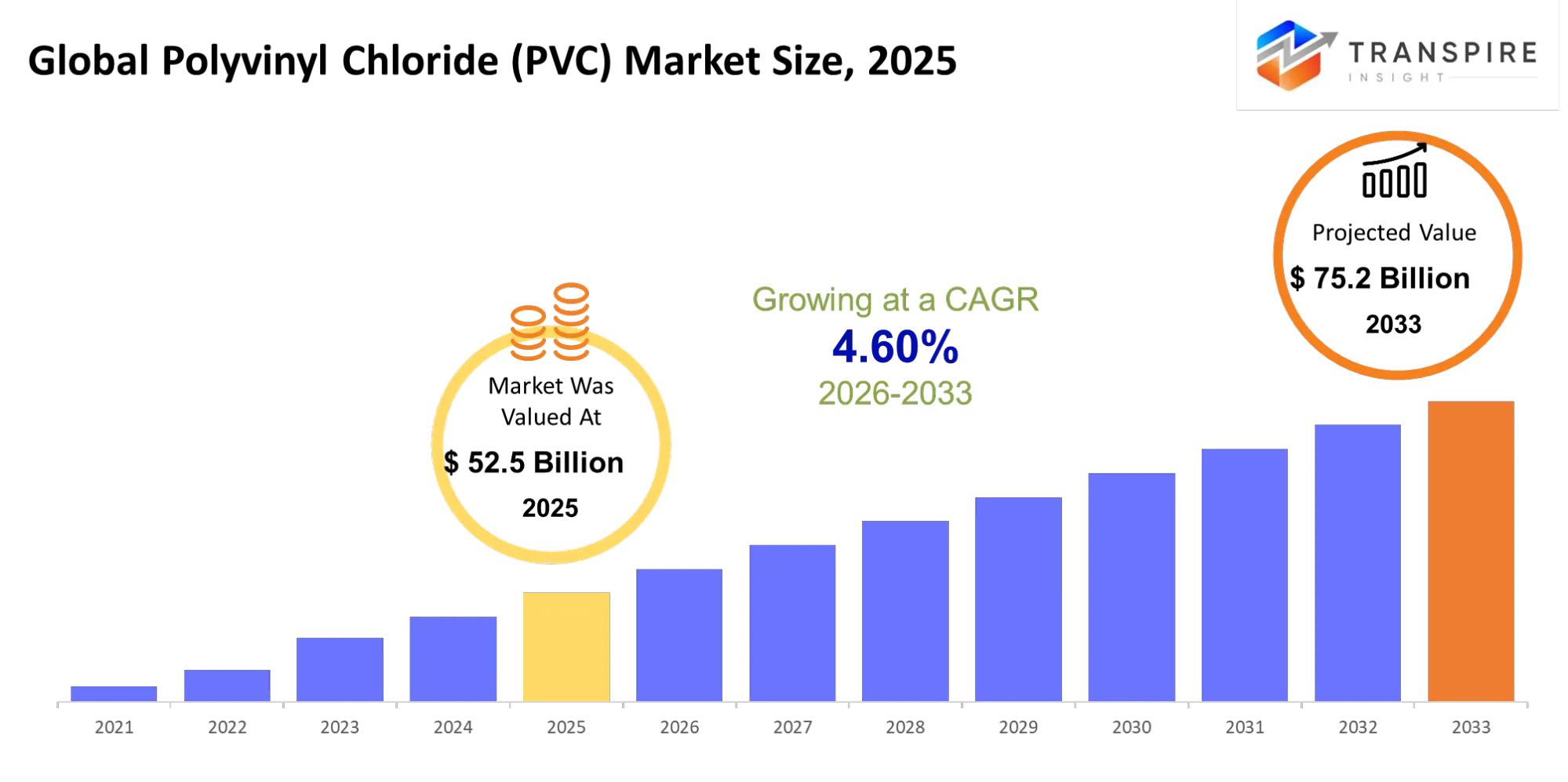
As per Transpire Insight Analysis, the Global Polyvinyl Chloride (PVC) Market size is estimated at USD 52.5 billion in 2025 and is anticipated to reach USD 75.2 billion by 2033, growing at a CAGR of 4.60% from 2026 to 2033.
The global PVC market is at the forefront of cost-effective solutions in infrastructure development, electrical appliances, medical devices, packaging products, and diverse industrial applications. PVC continues to be among the most manufactured polymers worldwide due to its resilience, chemical resistance, and malleability in both rigid and plastic formats. Recent trends in the past 3-5 years indicate a decline in volume-based production, shifting focus towards the manufacturing processes supported by recycled feedstocks, bio-based PVC, and enhanced sustainability parameters. The circularity has picked up pace that supports PVC recycling initiatives and initiatives targeting lesser carbon footprint. Trigger has been increasing government initiatives for public infrastructure construction and development of urbanisation in the Asia Pacific region and the Middle East region, which has helped increase PVC demand. Growing investment in long lifespan infrastructure from governments, along with advancements in the performance and manufacturing processes of PVC, the product gained further adoption from Construction, Healthcare, electrical, and industrial application manufacturers.
Key Global Polyvinyl Chloride (PVC) Market Insights:
PVC is currently transitioning from commodity production to sustainable, speciality-grade and digitally managed manufacturing. The recycling industry, the energy efficiency of production and formulation for specific applications are innovating and changing the competitive landscape around the world.
- Rigid PVC is the most demanded PVC, and manufacturers are creating high-impact formulations for durable infrastructure applications.
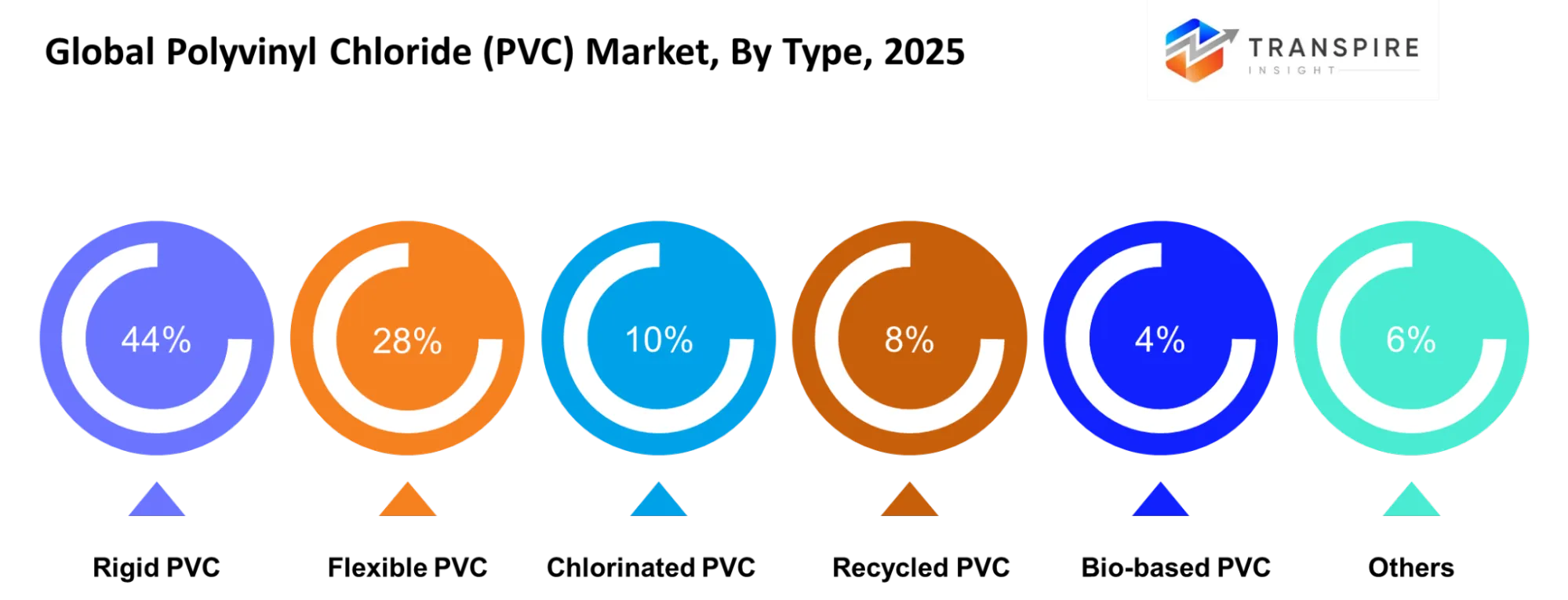
- Flexible PVC (28%) remains growing with cable and automotive manufacturers turning to lighter insulators that are more resistant to fire.
- Renewable feedstock and green chemistry investments are expected to drive the highest growth of bio-based PVC at 11.6% CAGR.
- Advanced recycling facilities are being built by leading producers to collect post-consumer PVC, thus enhancing circular material availability.
- Production is becoming more efficient with fewer defects due to digital process monitoring and AI-supported quality checks.
- As medical manufacturers create safer technologies for plasticiser use in critical medical applications, medical-grade PVC demand is rising.
- For high-performance cable insulation, electrical and electronics manufacturers are turning to speciality PVC compounds that are flame-resistant.
- To mitigate logistics-related costs and enhance supply-chain resiliency, global producers are consolidating their regional production bases.
What are the Key Drivers, Restraints, and Opportunities in the Global Polyvinyl Chloride (PVC) Market?
Driver:
The growth is a global upgrading of water, wastewater treatment, transport and power infrastructure. Countries have a mandate for robust long-life infrastructure and a long-lived asset base that depends on corrosion-resistant, low-maintenance building and infrastructure materials, thereby presenting an ideal engineering material for PVC pipes and fittings. Coupled with rising building performance standards for energy efficiencies for insulated doors, windows, profiles and electrical conduit produced by leading plastics producers who have increased production capacities for speciality formulations and efficiency gains, leading to broader market penetration and revenue generation across both building and utility markets.
In May 2026, TA'ZIZ signed multiple long-term chemical offtake and product sale agreements valued at $28.5 billion. This partnership secures critical global supply streams for polyvinyl chloride (PVC) and vinyl feedstocks destined for domestic and international infrastructure developers to build out massive public utilities and water management systems.
Restraint:
Severe regulatory restrictions on traditional phthalate plasticisers and heavy-metal stabilisers impose a persistent barrier to market expansion. This barrier remains highly restrictive because substituting these additives requires complex chemical reformulations that often compromise the polymer's structural integrity or sharply escalate manufacturing costs, trapping producers in a costly cycle of continuous compliance testing and compounding margin pressures.
Opportunity:
The chemical circular production of PVC is facilitated through the use of advanced recycling techniques, biomaterials, and smart manufacturing systems, which could boost recycling resin output and help reduce the carbon footprint as facilities expand and become more efficient. Additionally, developing Asian, African and Latin American countries that benefit from rising demand in urban development and water management will present opportunities, as can the widespread use of smart production and supply chain tracing that includes both recycled materials and their virgin counterparts, thereby helping to enable a premiumization approach in market development. In March 2026, the Vinyl Institute launched a fully redesigned and enhanced online Vinyl Recycling Directory. This product launch delivers a highly optimised digital mapping and tracing tool that allows commercial operators and municipal waste management.
What Has the Impact of Artificial Intelligence Been on the Global Polyvinyl Chloride (PVC) Market?
AI is critical operational technology at PVC manufacturing facilities, optimising productivity, maintaining quality and ensuring equipment uptime. AI process controls continually evaluate polymerisation temperature, pressure, catalyst efficiency, and energy usage, then instantly fine-tune operations for peak resin quality and minimised scrap production. For real-time assessment of films, pipes, profiles, sheets and other PVC products leaving manufacturing lines, AI-powered computer vision inspects surface characteristics, detecting defects or inconsistencies in dimension. AI has revolutionised how maintenance teams plan and carry out repair operations with machine learning and AI models analysing vibration, temperature and machine performance to accurately predict breakdowns. This reduces expensive, unscheduled downtime and extends the life of equipment. AI algorithms optimise a factory supply chain by modelling consumption of raw materials, balancing stock holdings and ensuring distribution across several locations. In reality, the pace of this adoption is limited by prohibitively expensive integration of AI models with a much older installed base of PVC machines, with many traditional plants needing a significant digital overhaul for new technologies to realise their full potential, and it is of particular interest to smaller, regional PVC manufacturers. In March 2026, Inovyn Produzione Italia Spa secured substantial R&D funding under the IDROCAT project initiative. This funding directly accelerates advanced industrial AI deployment and chemical process innovations.
Key Global Polyvinyl Chloride (PVC) Market Trends:
The traditional mass production of PVC is shifting towards the digital optimisation and sustainability of the product, as well as production according to the application. New investments in technology and environmental compliance are making them more competitive than production volumes.
- Recycled PVC use is gradually rising as manufacturers strive to adhere to the commitments and expectations of the circular economy.
- Real-time production monitoring and optimisation are increasingly being done with digital manufacturing platforms.
- Conventional grades are being replaced in higher performance speciality uses, such as electrical, healthcare and industrial uses.
- As sustainability goals get tougher and tougher, the use of bio-based raw materials is gradually coming into commercial production.
- Demand for durable PVC pipe, conduit and utility protection systems is growing as a result of smart infrastructure projects.
- Adoption of automation has gained pace in the extrusion and molding plants for better yield and less dependency on the workforce.
- Producers are investing in low-carbon manufacturing technologies that will cut energy use and GHG emissions.
- Global supply chains are becoming regional hubs to enhance supply chain resilience in mitigating geopolitical shocks and freight volatility.
Global Polyvinyl Chloride (PVC) Market Segmentation
By Type:
Rigid PVC is the leader with 44% due to increasing applications in the pipes and fittings sector, building products such as windows and fittings and pipe and construction applications that require a significant amount of durability. Flexible PVC accounted for 28%, driven by applications in wiring cables, floor coverings, medical devices, tubes and automotive interiors. Chlorinated PVC (10%) has also gained market share and is used for applications that require high and also medical PVCs have started the race for Medical Grade, Speciality, and Other. The Bio PVC market share is around 4%.
By Application:
Pipes & Fittings continues to lead in revenue due to a strong focus by governments on water infrastructure upgrades and sanitation expansion. Films & Sheets gains strong momentum in packaging and industrial protection solutions. Wire & Cable sees increasing demand driven by the renewable energy installation and smart grid expansion plans. Flooring & Profiles grows steadily, driven by the commercial buildings and renovation business. Medical Devices finds momentum as healthcare investments rise across regions. Bottles and other niche applications grow through innovation in processing and product lightweightening.
By End-User:
Construction with ongoing investment in residential housing, retail, commercial construction and large-scale infrastructure projects. Automotive utilises PVC’s strength and lightweight properties for automotive parts, and Electric & Electronics uses PVC’s demand for insulating cable and pipe. Medical utilisation of medical-grade PVC products, packaging, and consumer goods provides a steady increase, with the need for efficient and lasting packaging and consumer goods. Speciality-grade PVC is seeing an uptake in the other industrial sector due to its performance.
By Processing Method:
Extrusion is still the king of industrial processing by enabling large volumes of pipes, window profiles, cables, and sheets to be created quickly. Injection Molding keeps growing, dominating the market for precision industrial and consumer applications. Calendering is ideal for film and sheet, and also for creating high volumes of flooring. Blow Molding still dominates container production, and a host of other advanced processing solutions improve material use, product diversity and production flexibility.
By Grade:
General-purpose PVC continues to represent the largest commercial category due to its versatility across multiple industries. High Impact grades are gaining wider adoption in demanding construction and industrial applications requiring superior mechanical performance. Transparent grades continue expanding in healthcare, packaging, and consumer products where optical clarity is essential, while other specialised grades support increasingly customised engineering requirements as manufacturers pursue higher-value market segments.
What are the Key Use Cases Driving the Global Polyvinyl Chloride (PVC) Market?
Construction infrastructure accounts for the majority share of PVC consumption. The material is commonly used in such applications as window and door profiles, electrical conduit, and water supply and drainage pipes, where its durability, resistance to corrosion and minimal maintenance provide efficient, long-life public and housing infrastructure. Use is expanding within the automobile, electrical, health care and packaging sectors.
Flexible PVC offers light-weight cable insulation, medical tubes, blood bags and flooring as well as protective packaging solutions to facilitate durable products to the specifications and safety requirements today.
Applications include such areas as renewable energy, smart grids, recyclable construction materials, and medical devices.PVC speciality grade compounds are seeing demand due to growth areas in EV and renewable power supply lines and other infrastructure projects.
|
Report Metrics |
Details |
|
Market size value in 2025 |
USD 52.5 Billion |
|
Market size value in 2026 |
USD 54.9 Billion |
|
Revenue forecast in 2033 |
USD 75.2 Billion |
|
Growth rate |
CAGR of 4.60% from 2026 to 2033 |
|
Base year |
2025 |
|
Historical data |
2021 - 2024 |
|
Forecast period |
2026 - 2033 |
|
Report coverage |
Revenue forecast, competitive landscape, growth factors, and trends |
|
Regional scope |
United States; Canada; Mexico; United Kingdom; Germany; France; Italy; Spain; Denmark; Sweden; Norway; China; Japan; India; Australia; South Korea; Thailand; Brazil; Argentina; South Africa; Saudi Arabia; United Arab Emirates |
|
Key company profiled |
Shin-Etsu Chemical, Formosa Plastics, Westlake, INEOS, Orbia, Reliance Industries, Kem One, Hanwha Solutions, LG Chem, Xinjiang Zhongtai, SABIC, Chemplast Sanmar, Finolex Industries, Vynova, Braskem. |
|
Customization scope |
Free report customization (country, regional & segment scope). Avail customized purchase options to meet your exact research needs. |
|
Report Segmentation |
By Type (Rigid PVC, Flexible PVC, Chlorinated PVC, Bio-based PVC, Recycled PVC, Medical Grade PVC, Specialty PVC, Others); By Application (Pipes & Fittings, Films & Sheets, Wire & Cable, Flooring, Bottles, Profiles, Medical Devices, Others); By End User (Construction, Automotive, Electrical & Electronics, Healthcare, Packaging, Consumer Goods, Others); By Processing Method (Extrusion, Injection Molding, Calendering, Blow Molding, Others); By Grade (General Purpose, High Impact, Transparent, Others) |
Which Regions are Driving the Global Polyvinyl Chloride (PVC) Market Growth?
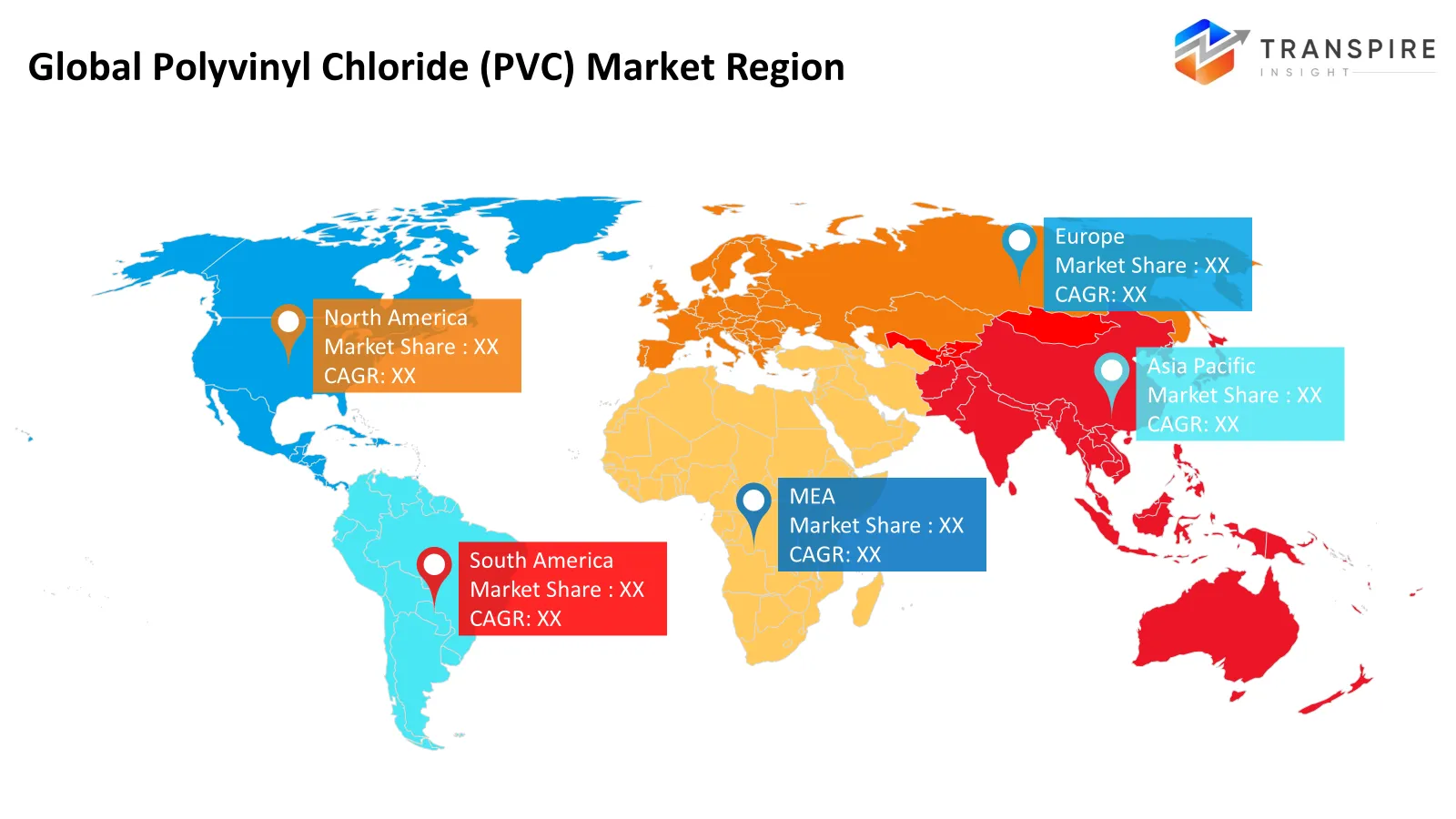
Asia Pacific holds 49% share of the global PVC market in terms of capacity and production in volume by region and is a major demand driver, supported by huge manufacturing capabilities and accelerating infrastructure investments. Driven by a sustained pace of urban growth, industry growth, significant government investments in water supply, transportation, affordable housing, integrated petrochemical production, efficient manufacturing costs and increasing export abilities, the Asia Pacific will continue to be the core market in the global PVC landscape through further investments in the construction and utilities sector.
In April 2026, the National Commodities and Derivatives Exchange (NCDEX) re-launched its dedicated Polyvinyl Chloride (PVC) futures contract in India. This product launch delivers a highly anticipated financial risk management tool for domestic plastic processors.
The market is divided 20% by Europe, leading, with sustainability initiatives along with stricter standards for production, ahead of other regions, including the market in the Asia Pacific. A higher priority on sustainability-compliant standards for product applications, especially speciality PVC - recyclability processes and production of plastics with reduced carbon footprints for all material applications. As one of Asia Pacific’s strongest markets, Europe continues with the innovation for high-value-adding product applications for the medical, industrial, and electric and electronics markets. In June 2026, Westlake Vinnolit completed the acquisition of the major polyvinyl chloride (PVC) and vinyl chloride monomer (VCM) production site in Wilhelmshaven, Germany. This acquisition integrates a substantial 380,000 metric ton annual capacity facility under Westlake's European operational footprint.
The Middle East & Africa are expected to register the highest CAGR of 10.9%, currently accounting for 7% market share. In the last few years, substantial investment in large-scale projects, including desalination plants, smart cities, industrial zones, and energy projects, has driven the consumption growth. South America represents 6% market share due to the steady development of industrialisation in the Latin American region, and Middle East countries are expanding their capacities to export production to global customers due to rapid construction developments and improvement in production capacity.
In May 2026, thyssenkrupp nucera was selected as the technology provider by Taziz for its mega-scale chemical complex in the UAE. This partnership officially scales up the engineering phase of an industrial facility configured to manufacture 500,000 tons of PVC per year.
Who are the Key Players in the Global Polyvinyl Chloride (PVC) Market and how do they Compete?
The global PVC sector's competitive landscape hinges on factors including production efficiency, vertical integration, portfolio differentiation, environmental initiatives, and geographic expansion. Top players are focusing on cost efficiency and differentiation, expanding investments in sophisticated polymer and technology offerings, advanced recycling, and in-house specialised PVC formulations that bolster competitiveness in the long run.
Shin-Etsu Chemical uses proprietary technology and high-quality PVC products, while Formosa Plastics’ advantages lie in economies of scale gained through integrated manufacturing processes. Westlake strengthens market competitiveness through further downstream integration into building products, with INEOS emphasising cost leadership from energy efficiency in operations and circularity. Orbia expands into infrastructure and application-specific PVC solutions, while Reliance Industries enjoys advantages from its petrochemical business and high domestic market demand. Kem One offers industrial-specific solutions to varied applications, while Hanwha Solutions and LG Chem are driving sustainability in new-generation materials and smart processing technologies. Xinjiang Zhongtai aims to increase exports through large capacity expansion, while SABIC targets premium industrial applications with its extensive distribution channels worldwide.
Key Players are:
- Shin-Etsu Chemical
- Formosa Plastics
- Westlake
- INEO
- Orbia
- Reliance Industries
- Kem One
- Hanwha Solutions
- LG Chem
- Xinjiang Zhongtai
- SABIC
- Chemplast Sanmar
- Finolex Industries
- Vynova
- Braskem
Recent Development News
- In March 2026, Vynova achieved its fifth consecutive EcoVadis Gold sustainability rating for responsible chemical operations. This milestone validates the company's ongoing capital investments in low-impact manufacturing and resource efficiency.
- In June 2026, Westlake Corporation completed the acquisition of the polyvinyl chloride and vinyl chloride monomer production plant in Wilhelmshaven, Germany. This acquisition expands the company’s global chlorovinyls manufacturing footprint by adding 380,000 metric tons of annual PVC capacity through a strategically located deep-water logistics hub.
What Strategic Insights Define the Future of the Global Polyvinyl Chloride (PVC) Market?
The global market is heading toward a technology, sustainable, value-added business where digital manufacturing, speciality materials and circularity play a greater competitive role than alone-standing scale and size. Companies that can use recycled materials to achieve greater efficiency in their plants and offer high-value products for the top-performing market applications are to win high-margin market space. A lurking threat A widening gap between stricter environmental mandates and shrinking supplies of high-quality recycled PVC feedstock also looms, potentially raising product costs and squeezing operating profits. But a new opportunity, the convergence of innovative recycling approaches with bio-feedstocks, may give rise to a low-carbon PVC option across sectors such as infrastructure, electrical, and health and medical equipment. For manufacturers to successfully adapt to a greener global marketplace, manufacturers will need to invest in regional recycling facilities, intelligent manufacturing, speciality PVC innovation, and robust domestic supply chains-a balancing act that drives compliance, profitability, and long-term viability.
Key Segmentations are:
By Type
- Rigid PVC
- Flexible PVC
- Chlorinated PVC
- Bio-based PVC
- Recycled PVC
- Medical Grade PVC
- Speciality PVC
- Others
By Application
- Pipes & Fittings
- Films & Sheets
- Wire & Cable
- Flooring
- Bottles
- Profiles
- Medical Devices
- Others
By End User
- Construction
- Automotive
- Electrical & Electronics
- Healthcare
- Packaging
- Consumer Goods
- Others
By Processing Method
- Extrusion
- Injection Molding
- Calendering
- Blow Molding
- Others
By Grade
- General Purpose
- High Impact
- Transparent
- Others
By Regional Analysis
North America
- United States
- Canada
- Mexico
Europe
- Germany
- United Kingdom
- France
- Italy
- Spain
- Russia
- Rest of Europe
Asia Pacific
- China
- Japan
- India
- South Korea
- Australia
- Rest of Asia Pacific
South America
- Brazil
- Argentina
- Rest of South America
Middle East & Africa
- Saudi Arabia
- United Arab Emirates
- Qatar
- South Africa
- Rest of the Middle East & Africa
Frequently Asked Questions
Find quick answers to common questions.
The global polyvinyl chloride (PVC) market size was valued at USD 52.5 billion in 2025 and is poised to reach USD 75.2 billion by 2033, expanding at a 4.60% CAGR.
Key segments for the global polyvinyl chloride (PVC) market are By Type (Rigid PVC, Flexible PVC, Chlorinated PVC, Bio-based PVC, Recycled PVC, Medical Grade PVC, Specialty PVC, Others); By Application (Pipes & Fittings, Films & Sheets, Wire & Cable, Flooring, Bottles, Profiles, Medical Devices, Others); By End User (Construction, Automotive, Electrical & Electronics, Healthcare, Packaging, Consumer Goods, Others); By Processing Method (Extrusion, Injection Molding, Calendering, Blow Molding, Others); By Grade (General Purpose, High Impact, Transparent, Others).
Growth is primarily driven by massive global investments in upgrading municipal water infrastructure and replacing legacy metallic pipelines with corrosion-resistant, large-diameter vinyl piping systems.
The global polyvinyl chloride (PVC) market is led by major manufacturers, including Shin-Etsu Chemical, Formosa Plastics, Westlake, INEOS, Orbia, Reliance Industries, Kem One, Hanwha Solutions, LG Chem, Xinjiang Zhongtai, SABIC, Chemplast Sanmar, Finolex Industries, Vynova, and Braskem.
Asia Pacific controls a dominant 49% market share, dictating global supply chains through its massive manufacturing capacity, rapid urbanization programs, and highly integrated petrochemical networks.
Commercial opportunities lie in scaling up closed-loop chemical recycling technologies and expanding high-margin, bio-attributed PVC product lines to capture premium, eco-conscious industrial segments.
- Shin-Etsu Chemical
- Formosa Plastics
- Westlake
- INEO
- Orbia
- Reliance Industries
- Kem One
- Hanwha Solutions
- LG Chem
- Xinjiang Zhongtai
- SABIC
- Chemplast Sanmar
- Finolex Industries
- Vynova
- Braskem
About the Authors

Pankaj Ghogare Patil
I am Pankaj Ghogare Patil, a Senior Research Analyst at Transpire Insight, specializing in the Pharmaceutical, Chemicals & Materials, Healthcare IT, and Biotechnology industry. My expertise lies in conducting comprehensive market research, analyzing industry trends, evaluating competitive landscapes, and translating complex data into actionable insights. At Transpire Insight, I closely follow emerging technologies, regulatory developments, and market innovations to create accurate, well-researched, and informative content that helps businesses and professionals make informed decisions. I am committed to producing credible, evidence-based articles that reflect industry best practices while making technical topics accessible and valuable for a broad audience.

Chakradhar Khansole
Chakradhar serves as the Research Director at Transpire Insight, bringing over 8 years of experience in technology, innovation, and strategic market intelligence. He specializes in transforming complex market data into actionable business insights that enable organizations to make informed, growth-oriented decisions. Recognized for his strategic vision and analytical expertise, Chakradhar leads high-impact research initiatives, delivering comprehensive market assessments, competitive intelligence, and forward-looking industry analysis.
Recently Published Reports
-
May 2026
Healthcare Polymer Packaging Market
Healthcare Polymer Packaging Market Size, Share & Analysis Report By Packaging Type (Syringes, IV Bottles and Pouches, Clamshells, Blisters, Bottles & Jars, Containers, Tubes, IV Parental Packaging, Others), By Type (Regulated, Non-regulated), By Polymer Type (LDPE (Low-Density Polyethylene), HDPE (High-Density Polyethylene), Homo-polymer (Homo), Random Copolymer (Random), Block Copolymer (Block), PET, Polystyrene, Polyvinyl Chloride, Polyamide/EVOH, Others), and Geography (North America, Europe, Asia-Pacific, Middle East and Africa, South and Central America), 2021 - 2031
-
Apr 2026
Hydrophilic Tape (Waterstop) Market
Hydrophilic Tape (Waterstop) Market Size, Share & Analysis Report By Type (Bentonite-Based Hydrophilic Tape, Rubber-Based Hydrophilic Tape), By Application (Residential Buildings, Commercial Buildings, Infrastructure Projects), and Geography (North America, Europe, Asia-Pacific, Middle East and Africa, South and Central America), 2021 - 2031
-
Apr 2026
Metalens Market
Metalens Market Size, Share & Analysis Report By Type (Visible Light Metalens, and Infrared Metalens), By Application (Consumer Electronics, Automotive Electronics, Industrial, Medical, and Others), and Geography (North America, Europe, Asia-Pacific, Middle East and Africa, South and Central America), 2021 - 2031
-
Apr 2026
PBT Resin Market
PBT Resin Market Size, Share & Analysis Report By Type (Reinforced PBT Resin, Unreinforced PBT Resin), By Processing Method (Injection Molding, Extrusion, Blow Molding, Others), By End-User (Automotive, Electrical & Electronics, Consumer Appliances, Industrial Machinery, Medical Devices, Packaging, Others), and Geography (North America, Europe, Asia-Pacific, Middle East and Africa, South and Central America), 2021 - 2031