
Second Generation Antipsychotics Market Summery:-
The Second Generation Antipsychotics Market comprises a comprehensive range of atypical antipsychotic medications, pharmaceutical formulations, therapeutic drugs, oral tablets, capsules, orally disintegrating tablets, oral solutions, injectable formulations, and long-acting injectable therapies designed to manage, control, and treat schizophrenia, bipolar disorder, schizoaffective disorder, major depressive disorder, and other psychiatric and neurological conditions. The market includes risperidone, olanzapine, quetiapine, aripiprazole, clozapine, ziprasidone, lurasidone, paliperidone, asenapine, brexpiprazole, cariprazine, lumateperone, and other second generation antipsychotic medications with diverse mechanisms of action, formulations, therapeutic applications, and treatment approaches. It serves hospitals, psychiatric clinics, specialty healthcare centers, outpatient facilities, pharmacies, healthcare providers, mental health institutions, and patients across developed and emerging markets.
Advanced Second Generation Antipsychotics Market technologies, including novel drug delivery systems, long-acting injectable formulations, extended-release technologies, orally disintegrating formulations, nanotechnology-based drug delivery, controlled-release systems, pharmaceutical formulation technologies, precision medicine, pharmacogenomics, artificial intelligence (AI)-assisted drug discovery, and digital health technologies, represent key industry innovations that improve treatment effectiveness, medication adherence, therapeutic outcomes, patient convenience, and drug safety. Technological advancements enhance drug formulation, bioavailability, controlled drug release, dosage optimization, treatment monitoring, pharmacological targeting, and personalized therapy through the adoption of advanced pharmaceutical manufacturing technologies, extended-release formulations, long-acting injectable therapies, precision medicine approaches, and data-driven drug development. Improved medication adherence, reduced dosing frequency, optimized therapeutic management, patient compliance, and opportunities for personalized psychiatric treatment are further supported by pharmaceutical innovation. Second generation antipsychotic manufacturers, pharmaceutical companies, research organizations, healthcare providers, and regulatory authorities increasingly prioritize therapeutic efficacy, patient safety, medication adherence, formulation stability, pharmacovigilance, clinical evidence, drug quality, regulatory compliance, and applicable national and international pharmaceutical standards.
The demand for advanced Second Generation Antipsychotics Market solutions is being driven by several factors, including the increasing prevalence of schizophrenia and bipolar disorder, growing burden of mental health disorders, rising awareness of psychiatric treatment, increasing demand for effective antipsychotic medications, growing adoption of atypical antipsychotics, rising preference for long-acting injectable formulations, increasing focus on medication adherence, growing investments in mental healthcare infrastructure, rising availability of generic antipsychotic drugs, increasing healthcare expenditure, growing demand for personalized psychiatric treatment, rising adoption of extended-release formulations, increasing access to mental health services, growing geriatric population, rising diagnosis of psychiatric disorders, increasing focus on reducing treatment discontinuation, growing pharmaceutical research and development activities, rising adoption of innovative drug delivery technologies, increasing government initiatives supporting mental healthcare, expanding specialty pharmacy networks, growing demand for outpatient psychiatric treatment, and ongoing advancements in pharmaceutical formulation, precision medicine, pharmacogenomics, drug delivery, and clinical research technologies. These factors are strengthening the adoption of effective, scalable, patient-centric, and cost-effective antipsychotic therapies while creating significant growth opportunities for pharmaceutical manufacturers, healthcare providers, hospitals, psychiatric clinics, specialty pharmacies, research organizations, and other stakeholders operating in the Second Generation Antipsychotics Market.
Market Highlights: -
- Asia Pacific is expected to grow at a rapid CAGR in the Second Generation Antipsychotics Market, holding nearly 42% of the market share during the forecast period.
- North America is anticipated to be the fastest-growing region in the Second Generation Antipsychotics Market during the forecast period, holding around 31% share.
- Europe is anticipated to hold approximately 24% share of the Second Generation Antipsychotics Market over the projected timeframe.
- By Drug Type, the Risperidone segment dominated the market and holds nearly 47.3% share in 2025 and is projected to grow at a substantial CAGR during the forecast period.
- By Indication, the Schizophrenia segment dominated the market and holds nearly 47.3% share in 2025 and is projected to grow at a substantial CAGR during the forecast period.
- By Route of Administration, the Oral Tablets segment dominated the market and holds approximately 36.8% share in 2025 and is projected to grow at a substantial CAGR during the forecast period.
- By End User, the Hospitals segment dominated the market and holds approximately 36.8% share in 2025 and is projected to grow at a substantial CAGR during the forecast period.
- By Distribution Channel, the Hospital Pharmacies segment dominated the market and holds roughly 41.4% share in 2025 and is projected to grow at a substantial CAGR during the forecast period.
- Growing Demand for Second Generation Antipsychotics, Atypical Antipsychotic Therapies, and Advanced Mental Healthcare Solutions: Hospitals, psychiatric clinics, rehabilitation centers, specialty mental health centers, homecare providers, and other healthcare institutions across Asia Pacific, North America, and Europe are increasing demand for advanced second generation antipsychotic medications, including risperidone, olanzapine, quetiapine, aripiprazole, clozapine, ziprasidone, paliperidone, and other atypical antipsychotic therapies. The growing prevalence of schizophrenia and bipolar disorder, increasing diagnosis of psychiatric conditions, rising awareness of mental health treatment, expanding access to psychiatric healthcare, increasing demand for medication adherence, growing adoption of long-acting injectable therapies, and rising investments in mental healthcare infrastructure are further supporting demand across the Second Generation Antipsychotics Market. The integration of advanced pharmaceutical formulation technologies, long-acting drug delivery systems, extended-release formulations, precision medicine, pharmacogenomics, artificial intelligence (AI)-assisted drug development, digital health technologies, and data-driven treatment approaches is further improving therapeutic management, medication adherence, dosing convenience, treatment personalization, patient monitoring, and clinical outcomes, thereby supporting long-term growth in the Second Generation Antipsychotics Market.
How is the Second Generation Antipsychotics Market Growing Due to Technology?
The Second Generation Antipsychotics Market is growing significantly due to ongoing advancements in pharmaceutical formulation technologies, drug delivery systems, long-acting injectable formulations, extended-release technologies, precision medicine, pharmacogenomics, artificial intelligence, digital health, and data-driven drug development. Modern technologies such as advanced oral formulations, orally disintegrating tablets, long-acting injectable therapies, controlled-release drug delivery systems, personalized treatment platforms, AI-assisted drug discovery, pharmacogenomic testing, digital medication adherence solutions, and remote patient monitoring technologies are improving therapeutic efficacy, medication adherence, dosing convenience, treatment personalization, patient safety, clinical outcomes, and treatment management. Innovations in pharmaceutical formulation, targeted drug delivery, extended-release technologies, pharmacogenomics, biomarker identification, artificial intelligence, machine learning, digital therapeutics, electronic health records, clinical decision-support systems, and real-world data analytics enable pharmaceutical manufacturers, hospitals, psychiatric clinics, specialty mental health centers, healthcare providers, and research organizations to access more effective, scalable, reliable, patient-centric, and technology-driven antipsychotic treatment solutions while meeting stringent pharmaceutical quality requirements, safety standards, pharmacovigilance requirements, clinical guidelines, and applicable national and international regulatory frameworks. In addition to improving therapeutic management, medication adherence, treatment effectiveness, dosing flexibility, patient monitoring, drug safety, personalized therapy, and healthcare efficiency across the Second Generation Antipsychotics Market, these technological advancements are supporting broader adoption across oral tablets, injectable formulations, long-acting injectables, oral solutions, intramuscular injections, precision psychiatry, personalized medicine, hospital-based treatment, outpatient psychiatric care, specialty mental health services, digital medication management, and other advanced antipsychotic treatment applications.
|
Report Metrics |
Details |
|
Market size value in 2025 |
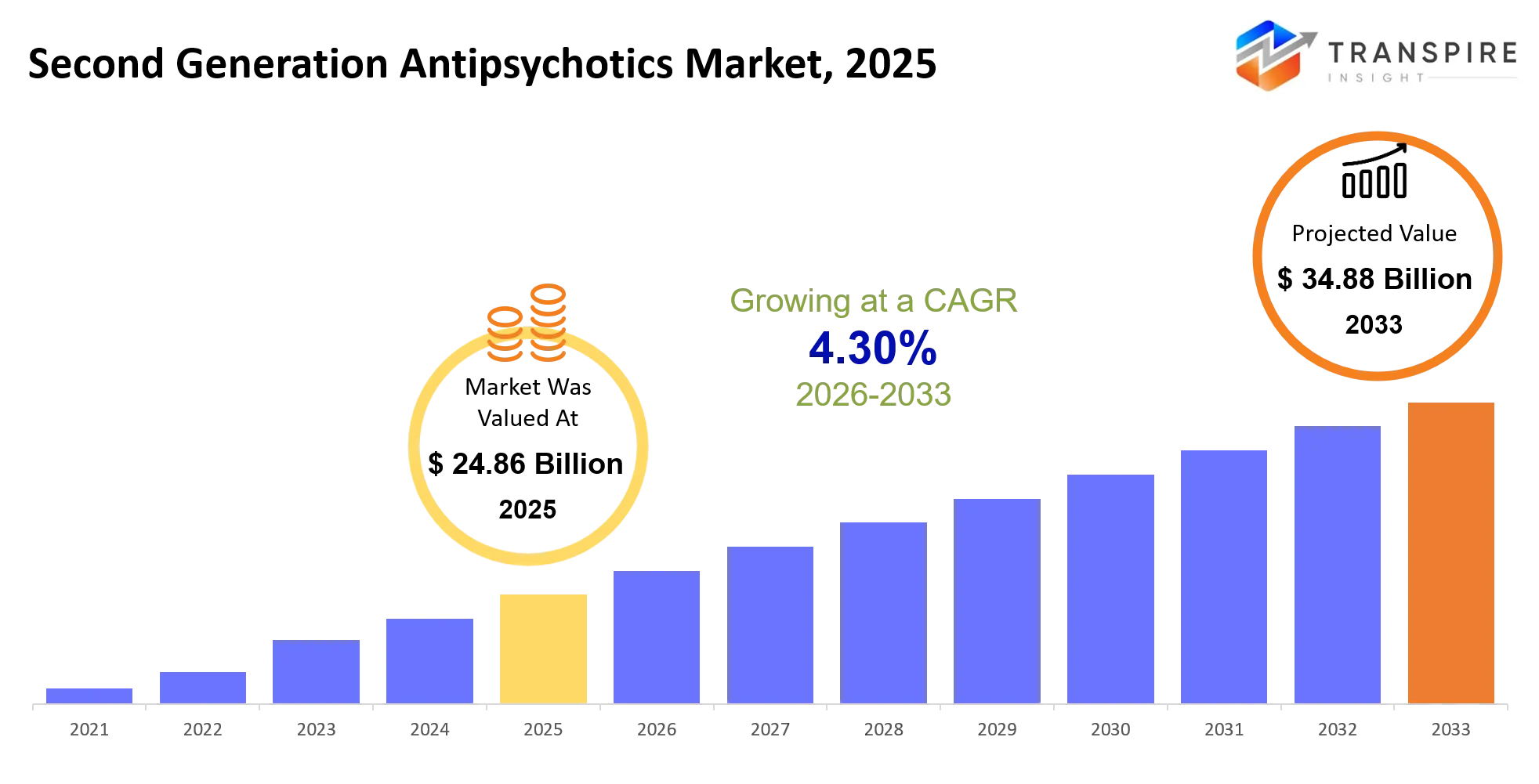
USD 24.86 Billion |
|
Market size value in 2026 |
USD 25.94 Billion |
|
Revenue forecast in 2033 |
USD 34.88 Billion |
|
Growth rate |
CAGR of 4.30% from 2026 to 2033 |
|
Base year |
2025 |
|
Historical data |
2021 - 2024 |
|
Forecast period |
2026 - 2033 |
|
Report coverage |
Revenue forecast, competitive landscape, growth factors, and trends |
|
Regional scope |
United States; Canada; Mexico; United Kingdom; Germany; France; Italy; Spain; Denmark; Sweden; Norway; China; Japan; India; Australia; South Korea; Thailand; Brazil; Argentina; South Africa; Saudi Arabia; United Arab Emirates |
|
Key company profiled |
Otsuka Pharmaceutical, Bristol Myers Squibb, Johnson & Johnson, Eli Lilly, Pfizer, AbbVie, Teva Pharmaceutical Industries, Viatris, Lundbeck, Sun Pharmaceutical, Dr. Reddy's Laboratories, Aurobindo Pharma, Hikma Pharmaceuticals, Sandoz, Cipla |
|
Customization scope |
Free report customization (country, regional & segment scope). Avail customized purchase options to meet your exact research needs. |
|
Report Segmentation |
By Drug Type (Risperidone, Olanzapine, Quetiapine, Aripiprazole, Clozapine, Ziprasidone, Paliperidone, Others); By Indication (Schizophrenia, Bipolar Disorder, Major Depressive Disorder, Autism Spectrum Disorder, Dementia-related Psychosis, Anxiety Disorders, Others); By Route of Administration (Oral Tablets, Injectable, Long-acting Injectables, Oral Solutions, Intramuscular Injection, Others); By End User (Hospitals, Psychiatric Clinics, Rehabilitation Centers, Homecare, Specialty Mental Health Centers, Others); By Distribution Channel (Hospital Pharmacies, Retail Pharmacies, Online Pharmacies, Specialty Pharmacies, Government Procurement, Others) |
Market Drivers
The Second Generation Antipsychotics Market is being driven by the increasing prevalence of schizophrenia, bipolar disorder, major depressive disorder, and other psychiatric conditions, rising awareness regarding mental health treatment, growing demand for effective atypical antipsychotic therapies, expanding access to psychiatric healthcare services, increasing diagnosis of mental health disorders, and rising investments in mental healthcare infrastructure. The increasing demand for risperidone, olanzapine, quetiapine, aripiprazole, clozapine, ziprasidone, paliperidone, and other second generation antipsychotic medications, along with growing investments in advanced drug delivery systems, long-acting injectable formulations, extended-release technologies, precision medicine, pharmacogenomics, and digital health solutions, is driving demand for therapies that improve treatment effectiveness, medication adherence, dosing convenience, patient safety, and therapeutic outcomes across diverse healthcare settings. These developments are encouraging hospitals, psychiatric clinics, rehabilitation centers, specialty mental health centers, healthcare providers, and other end users to invest in advanced antipsychotic therapies, long-acting injectable medications, personalized treatment approaches, digital medication management solutions, and technology-enabled psychiatric care. Companies in the worldwide Second Generation Antipsychotics Market are strengthening their pharmaceutical portfolios, improving drug formulations, expanding research and development activities, developing innovative treatment approaches, enhancing medication adherence solutions, and creating new growth opportunities.
For example, leading pharmaceutical companies, biotechnology companies, drug manufacturers, specialty healthcare providers, and research organizations continue to advance second generation antipsychotic treatment capabilities by providing risperidone, olanzapine, quetiapine, aripiprazole, clozapine, ziprasidone, paliperidone, and other atypical antipsychotic therapies supported by advanced pharmaceutical formulations, long-acting injectable technologies, extended-release drug delivery, precision medicine, pharmacogenomics, artificial intelligence, digital health, clinical decision-support systems, and data-driven treatment technologies that improve therapeutic management, medication adherence, dosing convenience, patient monitoring, treatment personalization, clinical outcomes, and healthcare efficiency across hospitals, psychiatric clinics, rehabilitation centers, specialty mental health centers, homecare settings, and other end users in the Second Generation Antipsychotics Market.
Restrain
The primary challenges facing the Second Generation Antipsychotics Market are adverse drug reactions, metabolic side effects, weight gain, treatment discontinuation, medication adherence challenges, high costs of branded medications, regulatory requirements, lengthy clinical development processes, drug safety concerns, complex pharmacological profiles, limited treatment response among certain patients, and challenges associated with long-term antipsychotic therapy. The development and implementation of advanced second generation antipsychotic therapies require substantial investments in pharmaceutical research and development, clinical trials, drug formulation, manufacturing, quality control, pharmacovigilance, regulatory compliance, distribution infrastructure, patient monitoring, and healthcare professional training, while pharmaceutical companies, healthcare providers, hospitals, and other stakeholders face significant challenges associated with complex clinical requirements, treatment personalization, medication adherence, adverse effects, and varying patient responses. Widespread market expansion is challenged by concerns regarding metabolic complications, cardiovascular risks, extrapyramidal symptoms, sedation, drug interactions, treatment tolerability, long-term medication adherence, generic competition, pricing pressures, reimbursement limitations, and regulatory requirements, as well as increasing investments in pharmacovigilance, patient monitoring, clinical research, and drug safety management. These factors could restrain the expansion of the Second Generation Antipsychotics Market and large-scale adoption of advanced, effective, safe, reliable, and cost-effective antipsychotic therapies across emerging and highly competitive pharmaceutical markets.
Analysis of Prices and Consumer Behaviour
The Second Generation Antipsychotics Market is experiencing increasing demand for effective, safe, reliable, accessible, flexible, and cost-effective atypical antipsychotic therapies as hospitals, psychiatric clinics, specialty mental health centers, healthcare providers, patients, and caregivers increasingly prioritize treatment effectiveness, medication adherence, patient safety, dosing convenience, therapeutic outcomes, and long-term treatment management. Pricing is influenced by factors such as drug type, formulation, dosage strength, route of administration, branded or generic status, long-acting injectable technology, manufacturing costs, research and development expenditure, clinical trial requirements, regulatory compliance, distribution costs, reimbursement policies, geographic location, healthcare infrastructure, and market competition. Government healthcare systems, hospitals, psychiatric institutions, specialty pharmacies, healthcare providers, and other end users are increasingly evaluating antipsychotic therapies based on overall therapeutic value, clinical effectiveness, safety profile, treatment adherence, lifecycle costs, availability, patient convenience, and long-term healthcare outcomes rather than initial price alone. Consumer and end-user purchasing behaviour is also shifting toward long-acting injectable antipsychotics, extended-release formulations, orally disintegrating tablets, generic medications, personalized psychiatric treatment, digital medication management, and other advanced therapeutic options where treatment effectiveness, reduced dosing frequency, medication adherence, tolerability, affordability, patient convenience, and clinical outcomes influence purchasing and treatment decisions. As healthcare stakeholders increasingly demand effective, safe, affordable, accessible, scalable, and patient-centric antipsychotic therapies, companies are focusing on competitive pricing strategies, innovative formulations, flexible treatment options, advanced drug delivery technologies, improved medication adherence, pharmacovigilance, patient support programs, and personalized treatment solutions to address evolving mental healthcare requirements and strengthen their position in the Second Generation Antipsychotics Market.
Who are the Key Players in the Second Generation Antipsychotics Market and how do they compete?
In the market for Second Generation Antipsychotics solutions, the competitiveness of companies depends on firms that research, develop, manufacture, commercialize, distribute, and support atypical antipsychotic medications for hospitals, psychiatric clinics, rehabilitation centers, specialty mental health centers, healthcare providers, pharmacies, and patients across multiple therapeutic applications and geographic markets. They compete, not just on prices, but on therapeutic efficacy, safety profiles, medication adherence, formulation quality, dosage convenience, long-acting injectable capabilities, clinical evidence, drug availability, manufacturing quality, regulatory compliance, pharmacovigilance, research and development capabilities, patient support, distribution networks, and relationships with healthcare providers, hospitals, specialty pharmacies, government healthcare institutions, and other healthcare stakeholders. Thus, a strategy of competition leads to continuous pharmaceutical innovation and helps healthcare providers, psychiatrists, patients, caregivers, and healthcare systems improve access to effective, reliable, scalable, safe, flexible, and technology-enabled Second Generation Antipsychotics solutions.
Leading pharmaceutical companies, biotechnology companies, generic drug manufacturers, specialty pharmaceutical companies, contract development and manufacturing organizations, and research organizations are enhancing their presence in the market through the development and supply of innovative risperidone, olanzapine, quetiapine, aripiprazole, clozapine, ziprasidone, paliperidone, and other second generation antipsychotic therapies. Companies are able to distinguish themselves from competitors by offering comprehensive pharmaceutical portfolios, advanced drug formulations, long-acting injectable technologies, extended-release therapies, improved drug delivery systems, strong clinical evidence, personalized treatment capabilities, patient adherence programs, reliable supply chains, regulatory expertise, and efficient distribution networks. Other market participants are strengthening their position through the implementation of artificial intelligence, machine learning, pharmacogenomics, precision medicine, digital health technologies, electronic health records, clinical decision-support systems, remote patient monitoring, and data-driven healthcare strategies, enabling healthcare organizations to improve treatment personalization, enhance medication adherence, optimize therapeutic management, strengthen patient monitoring, support clinical decision-making, improve treatment outcomes, and deliver more reliable and technologically advanced Second Generation Antipsychotics Market solutions.
Top Companies in the Second Generation Antipsychotics Market
- Otsuka Pharmaceutical
- Bristol Myers Squibb
- Johnson & Johnson
- Eli Lilly
- Pfizer
- AbbVie
- Teva Pharmaceutical Industries
- Viatris
- Lundbeck
- Sun Pharmaceutical
- Dr. Reddy's Laboratories
- Aurobindo Pharma
- Hikma Pharmaceuticals
- Sandoz
- Cipla
Market Segmentation
The Second Generation Antipsychotics Market share is divided into five categories: Drug Type, Indication, Route of Administration, End User, Distribution Channel.
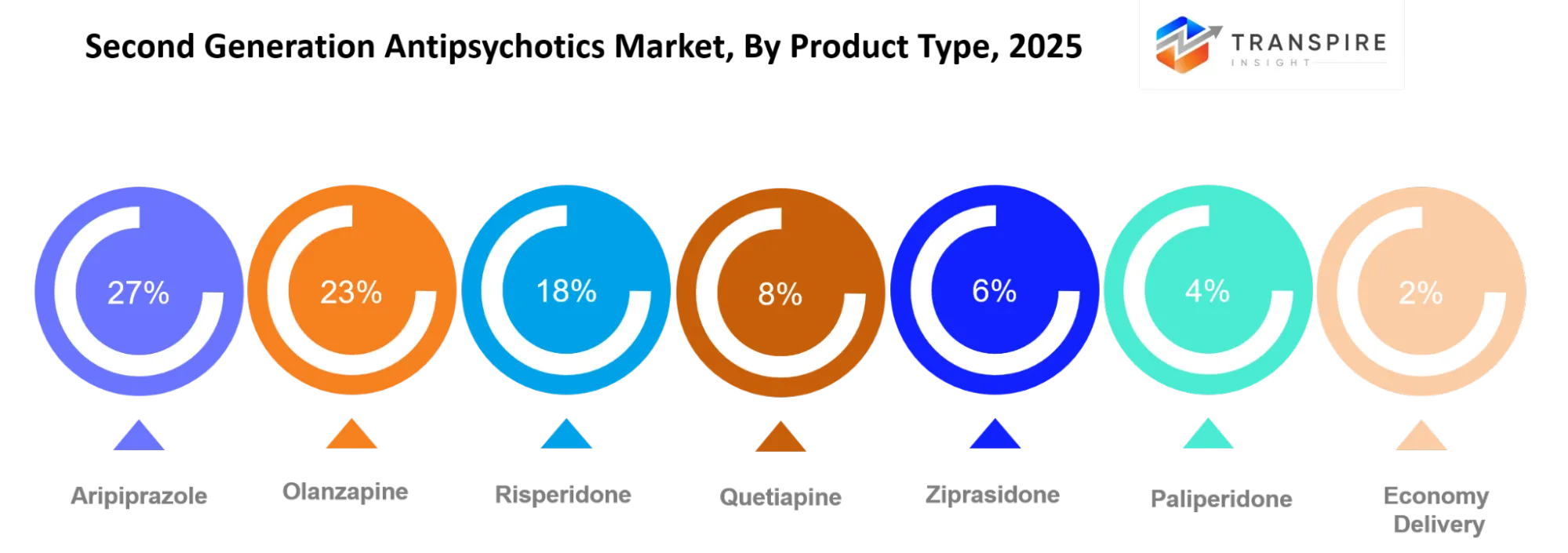
The Risperidone dominated the market, accounting for nearly 47.3% in 2025, and is expected to rise at a significant CAGR during the forecast period.
The Second Generation Antipsychotics Marketis segmentedBy Drug Type Risperidone, Olanzapine, Quetiapine, Aripiprazole, Clozapine, Ziprasidone, Paliperidone, OthersAmong these, the Risperidonedominated the market, accounting for nearly 47.3% in 2025 and expected to increase at a significant CAGR during the forecast period.due to its broad use in schizophrenia and bipolar disorder, established clinical efficacy, multiple formulations, extensive availability, and strong physician familiarity.
The Schizophrenia segmentheld the greatest share of approximately 49.1% in 2025 and is expected to increase at a substantial CAGR over the forecast period.
The Second Generation Antipsychotics Market is segmented By Indication Schizophrenia, Bipolar Disorder, Major Depressive Disorder, Autism Spectrum Disorder, Dementia-related Psychosis, Anxiety Disorders, Others Among these the Schizophreniasegment held the greatest share of approximately 49.1% in 2025 and is expected to increase at a substantial CAGR over the forecast period. due to its high treatment requirement, chronic nature, widespread prevalence, strong dependence on antipsychotic therapy, and extensive use of second generation medications for symptom management.
The Oral Tablets segmentheld the greatest share of approximately 45.4%in 2025 and is expected to increase at a high CAGR over the forecast period.
The Second Generation Antipsychotics Market is segmented.By Route of Administration Oral Tablets, Injectable, Long-acting Injectables, Oral Solutions, Intramuscular Injection, OthersAmong these the Oral Tabletssegment held the greatest share of approximately 44.9% in 2025 and is expected to increase at a considerable CAGR over the projected period. due to their convenience, ease of administration, widespread availability, established clinical use, cost-effectiveness, flexible dosing, and strong patient and physician preference.
Regional Segment Analysis of the Second Generation Antipsychotics Market
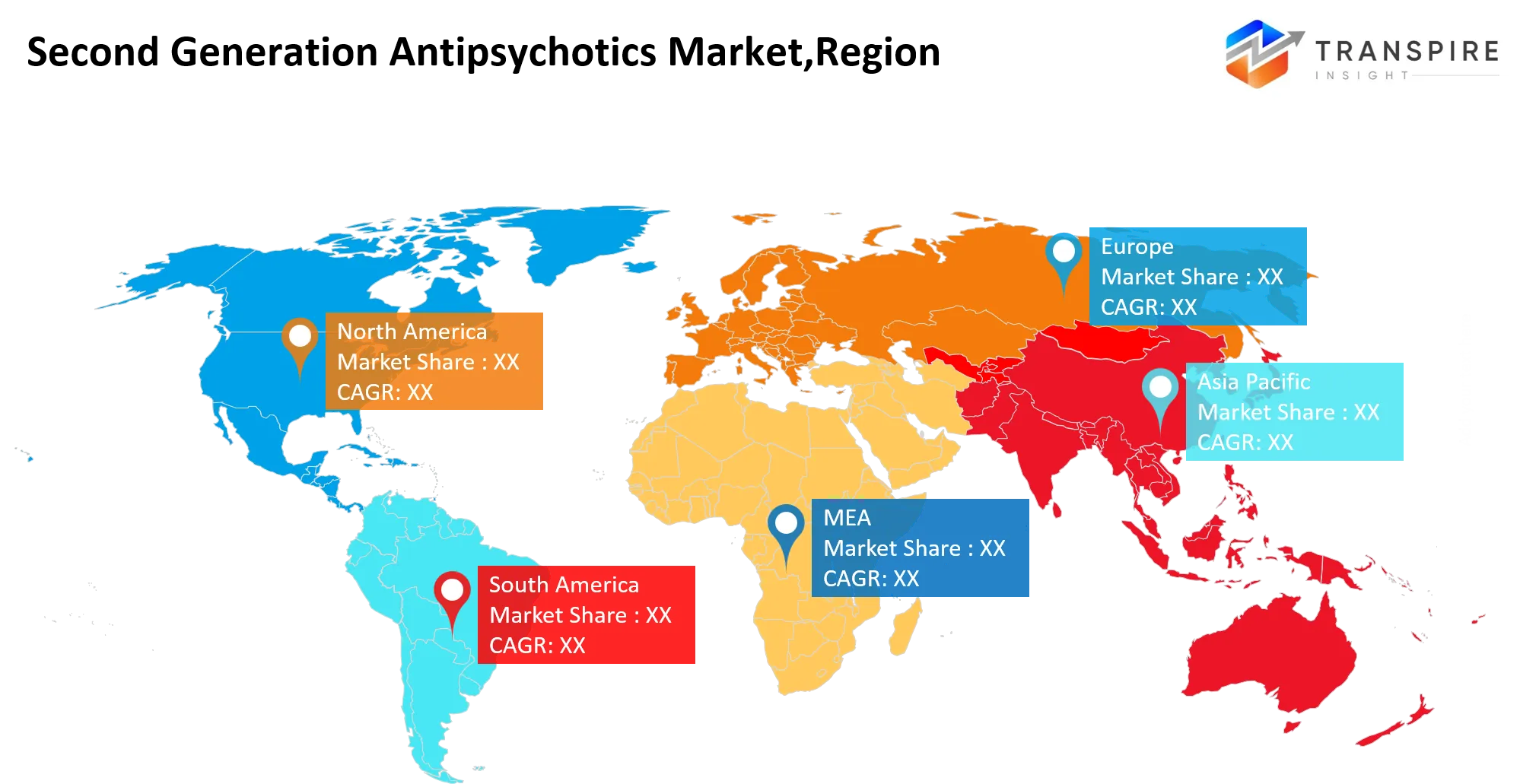
- North America (U.S., Canada, Mexico)
- Europe (Germany, France, U.K., Italy, Spain, Rest of Europe)
- Asia-Pacific (China, Japan, India, Rest of APAC)
- South America (Brazil and the Rest of South America)
- The Middle East and Africa (UAE, South Africa, Rest of MEA)
Asia Pacific is expected to grow at a rapid CAGR in the Second Generation Antipsychotics Market by holding nearly 42% of the share during the forecast period.
Over the forecast period, the Second Generation Antipsychotics Market is anticipated to expand rapidly in Asia Pacific. The region accounts for nearly 42% of the market and is expected to maintain its leading position due to the increasing prevalence of psychiatric disorders, growing awareness of mental health treatment, expanding access to psychiatric healthcare, rising adoption of atypical antipsychotic medications, and increasing investments in mental healthcare infrastructure across countries such as China, India, Japan, South Korea, and Australia. Market demand is driven by the growing need for effective treatment of schizophrenia, bipolar disorder, major depressive disorder, and other psychiatric conditions. The expansion of hospitals, psychiatric clinics, rehabilitation centers, specialty mental health facilities, pharmaceutical distribution networks, and healthcare infrastructure, combined with increasing investments in advanced pharmaceutical formulations, long-acting injectable therapies, extended-release drug delivery, precision medicine, pharmacogenomics, and digital health technologies, is further strengthening regional market growth. The rising adoption of innovative antipsychotic therapies, medication adherence solutions, personalized psychiatric treatment, and advanced drug delivery systems, along with increasing demand for effective, safe, accessible, and cost-effective second generation antipsychotic medications, further supports the growth of the Second Generation Antipsychotics Market in Asia Pacific.
Europe is anticipated to hold approximately 24% share of the Second Generation Antipsychotics Market over the predicted timeframe.
Over the course of the projected period, Europe is expected to hold approximately 24% market share of the Second Generation Antipsychotics Market. The region's growth is primarily driven by increasing prevalence of mental health disorders, growing awareness regarding psychiatric treatment, expanding access to mental healthcare services, rising adoption of atypical antipsychotic medications, increasing investments in healthcare infrastructure, and growing demand for reliable, effective, and patient-centric psychiatric therapies among hospitals, psychiatric clinics, specialty mental health centers, healthcare providers, and patients. Germany, the UK, France, Italy, Spain, and the Netherlands are among the countries demonstrating strong demand for risperidone, olanzapine, quetiapine, aripiprazole, clozapine, paliperidone, and other second generation antipsychotic therapies across schizophrenia, bipolar disorder, major depressive disorder, and other psychiatric applications. Pharmaceutical companies, healthcare providers, specialty pharmacies, research organizations, and government institutions are increasingly focusing on therapeutic efficacy, medication adherence, patient safety, long-acting injectable formulations, precision medicine, pharmacogenomics, pharmacovigilance, and advanced drug delivery technologies. Partnerships involving pharmaceutical manufacturers, healthcare organizations, research institutions, specialty pharmacies, government agencies, and technology providers are accelerating the development, commercialization, distribution, and adoption of advanced antipsychotic therapies to improve treatment outcomes, strengthen medication adherence, enhance patient management, and promote long-term market growth throughout Europe.
North America is anticipated to hold approximately 31% share of the Second Generation Antipsychotics Market over the predicted timeframe.
North America is anticipated to hold around 31% of the worldwide market for Second Generation Antipsychotics throughout the forecast period. A well-established healthcare infrastructure, advanced pharmaceutical industry, strong research and development ecosystem, high awareness of mental health conditions, significant investments in psychiatric treatment, and growing demand for effective and personalized antipsychotic therapies are expected to contribute to the region's sustained growth. Growing investments by pharmaceutical companies, hospitals, psychiatric clinics, specialty healthcare providers, research organizations, government healthcare institutions, and specialty pharmacies, increased demand for atypical antipsychotic medications, and continuous advancements in pharmaceutical formulation, long-acting injectable technologies, precision medicine, pharmacogenomics, digital health, and clinical research are contributing to market expansion. Additionally, efforts to improve mental healthcare access, enhance treatment adherence, reduce treatment discontinuation, optimize therapeutic outcomes, expand psychiatric healthcare infrastructure, support personalized treatment, and provide reliable and cost-effective antipsychotic therapies are driving innovation, market diversification, technology adoption, and commercialization in the North American Second Generation Antipsychotics Market.
Strategies for Market Growth in Non-Leading Regions
By developing scalable, cost-effective, safe, effective, accessible, technologically advanced, and patient-centric psychiatric treatment ecosystems utilizing advanced pharmaceutical formulations, long-acting injectable therapies, extended-release drug delivery, precision medicine, pharmacogenomics, digital health, artificial intelligence, and data-driven clinical technologies, non-leading regions can promote growth in the Second Generation Antipsychotics Market. Through the development of local mental healthcare infrastructure, pharmaceutical distribution networks, specialty treatment facilities, digital healthcare ecosystems, and advanced psychiatric treatment capabilities, regions can strengthen access to antipsychotic therapies, medication management, treatment adherence, patient monitoring, and personalized psychiatric care and improve access to reliable and effective mental health services. Commercialization and market penetration will be accelerated through strategic partnerships with pharmaceutical companies, hospitals, psychiatric clinics, government healthcare agencies, specialty pharmacies, research organizations, healthcare providers, and technology companies. To increase treatment effectiveness, medication adherence, patient safety, operational efficiency, affordability, accessibility, scalability, and competitive positioning, investments in pharmaceutical manufacturing, healthcare infrastructure, workforce training, research and development, advanced drug delivery systems, digital health platforms, pharmacogenomics, patient monitoring, and compliance with applicable pharmaceutical and healthcare regulations are required. Government support for mental healthcare development, affordable medication access, psychiatric treatment programs, pharmaceutical research and development, healthcare workforce development, and regulatory frameworks can attract private investment, strengthen local pharmaceutical ecosystems, accelerate adoption of advanced second generation antipsychotic therapies, improve access to effective mental healthcare, and support the long-term growth of the Second Generation Antipsychotics Market in emerging economies.
Recent Development
- In April, 2026: Leading Second Generation Antipsychotics Market companies, pharmaceutical manufacturers, biotechnology companies, research organizations, healthcare providers, and specialty pharmaceutical companies announced advancements in atypical antipsychotic formulations, long-acting injectable therapies, extended-release drug delivery, precision medicine, pharmacogenomics, digital medication management, and clinical research, supporting improved therapeutic efficacy, medication adherence, dosing convenience, patient monitoring, and treatment personalization. These innovations support next-generation Second Generation Antipsychotics Market applications, improve integration of advanced pharmaceutical technologies, promote data-driven psychiatric treatment, and enhance schizophrenia management, bipolar disorder treatment, medication adherence, patient monitoring, treatment optimization, and healthcare efficiency across hospitals, psychiatric clinics, specialty mental health centers, rehabilitation facilities, and other healthcare sectors.
- In July, 2026: Leading Second Generation Antipsychotics Market companies and pharmaceutical healthcare ecosystem participants expanded their therapeutic capabilities through advanced long-acting injectable antipsychotics, extended-release formulations, personalized psychiatric treatment platforms, digital medication adherence solutions, pharmacogenomic technologies, clinical decision-support systems, patient monitoring technologies, and innovative drug delivery infrastructure for hospitals, psychiatric clinics, rehabilitation centers, specialty mental health facilities, healthcare providers, specialty pharmacies, and other end users. The development supports innovative antipsychotic treatment solutions, improves medication adherence, enhances therapeutic management and patient monitoring, optimizes treatment effectiveness and dosing convenience, and strengthens reliable, scalable, safe, integrated, and technology-driven Second Generation Antipsychotics Market capabilities.
Future Market Trends for the Second Generation Antipsychotics Market:
- Growing Adoption of Advanced Atypical Antipsychotic Therapies, Long-Acting Injectables, and Personalized Psychiatric Treatment: As hospitals, psychiatric clinics, rehabilitation centers, specialty mental health centers, healthcare providers, specialty pharmacies, and other healthcare organizations place greater priority on effective psychiatric treatment, medication adherence, patient safety, treatment personalization, and improved clinical outcomes, end users are expanding their Second Generation Antipsychotics Market capabilities, including risperidone, olanzapine, quetiapine, aripiprazole, clozapine, ziprasidone, paliperidone, long-acting injectable antipsychotics, extended-release formulations, and advanced psychiatric treatment solutions.
- Growing Need for Scalable, Safe, Effective, Integrated, and Patient-Centric Antipsychotic Therapies: To meet increasing demand for schizophrenia treatment, bipolar disorder management, major depressive disorder treatment, medication adherence, reduced dosing frequency, personalized psychiatric care, and efficient treatment management, pharmaceutical companies and healthcare organizations are progressively developing advanced antipsychotic formulations, long-acting injectable therapies, extended-release drug delivery systems, orally disintegrating formulations, precision medicine platforms, pharmacogenomic solutions, digital medication management technologies, patientmonitoring systems, and data-driven clinical decision-support tools. Rising industry interest in therapeutic efficacy, patient safety, medication adherence, treatment tolerability, formulation quality, drug availability, treatment personalization, scalability, healthcare efficiency, pharmacovigilance, regulatory compliance, and improved clinical outcomes is expected to support continued adoption across the Second Generation Antipsychotics Market.
- Increasing Investment in Antipsychotic Drug Development, Advanced Drug Delivery Technologies, and Second Generation Antipsychotics Market Innovation: In order to improve therapeutic efficacy, medication adherence, patient safety, treatment personalization, dosing convenience, treatment monitoring, clinical outcomes, healthcare accessibility, and overall psychiatric care, organizations are investing in atypical antipsychotic medications, long-acting injectable therapies, extended-release formulations, controlled-release drug delivery, precision medicine, pharmacogenomics, artificial intelligence, machine learning, digital health, clinical analytics, patient monitoring, medication adherence technologies, and innovative Second Generation Antipsychotics Market solutions.
Market Segment
This study forecasts revenue at global, regional, and country levels from 2020 to 2033. Transpire Insights has segmented the Second Generation Antipsychotics Market based on the below-mentioned segments
Second Generation Antipsychotics Market, By Drug Type
- Risperidone
- Olanzapine
- Quetiapine
- Aripiprazole
- Clozapine
- Ziprasidone
- Paliperidone
- Others
Second Generation Antipsychotics Market, By Indication
- Schizophrenia
- Bipolar Disorder
- Major Depressive Disorder
- Autism Spectrum Disorder
- Dementia-related Psychosis
- Anxiety Disorders
- Others
Second Generation Antipsychotics Market, By Route of Administration
- Oral Tablets
- Injectable
- Long-acting Injectables
- Oral Solutions
- Intramuscular Injection
- Others
Second Generation Antipsychotics Market, By End User
- Hospitals
- Psychiatric Clinics
- Rehabilitation Centers
- Homecare
- Specialty Mental Health Centers
- Others
Second Generation Antipsychotics Market, By Distribution Channel
- Hospital Pharmacies
- Retail Pharmacies
- Online Pharmacies
- Specialty Pharmacies
- Government Procurement
- Others
Second Generation Antipsychotics Market, By Regional Analysis
North America
- US
- Canada
- Mexico
- US
- Canada
Europe
- Germany
- UK
- France
- Italy
- Spain
- Rest of Europe
Asia Pacific
- China
- Japan
- India
- South Korea
- Australia
- Rest of Asia Pacific
South America
- Brazil
- Argentina
- Rest of South America
Middle East & Africa
- UAE
- Saudi Arabia
- Qatar
- South Africa
- Rest of the Middle East & Africa
Frequently Asked Questions
Find quick answers to common questions.
The market is driven by the increasing prevalence of schizophrenia, bipolar disorder, and other psychiatric conditions, rising mental health awareness, expanding psychiatric healthcare access, growing adoption of atypical antipsychotics, long-acting injectable therapies, and increasing investments in mental healthcare infrastructure.
The Risperidone segment dominates the market, accounting for nearly 47.3% share in 2025, supported by its broad use in schizophrenia and bipolar disorder, established clinical efficacy, multiple formulations, extensive availability, and strong physician familiarity.
Technological advancements in long-acting injectable formulations, extended-release drug delivery, precision medicine, pharmacogenomics, AI-assisted drug discovery, digital medication management, and patient monitoring are improving medication adherence, treatment personalization, dosing convenience, safety, and therapeutic outcomes.
Asia Pacific is expected to maintain its leading position, accounting for nearly 42% share, driven by the increasing prevalence of psychiatric disorders, growing mental health awareness, expanding healthcare infrastructure, improving access to psychiatric treatment, and rising adoption of advanced antipsychotic therapies.
Major challenges include adverse drug reactions, metabolic side effects, weight gain, treatment discontinuation, medication adherence issues, high branded-drug costs, regulatory requirements, reimbursement limitations, generic competition, and concerns related to long-term antipsychotic therapy.
- Otsuka Pharmaceutical
- Bristol Myers Squibb
- Johnson & Johnson
- Eli Lilly
- Pfizer
- AbbVie
- Teva Pharmaceutical Industries
- Viatris
- Lundbeck
- Sun Pharmaceutical
- Dr. Reddy's Laboratories
- Aurobindo Pharma
- Hikma Pharmaceuticals
- Sandoz
- Cipla
About the Authors

Pankaj Ghogare Patil
I am Pankaj Ghogare Patil, a Senior Research Analyst at Transpire Insight, specializing in the Pharmaceutical, Chemicals & Materials, Healthcare IT, and Biotechnology industry. My expertise lies in conducting comprehensive market research, analyzing industry trends, evaluating competitive landscapes, and translating complex data into actionable insights. At Transpire Insight, I closely follow emerging technologies, regulatory developments, and market innovations to create accurate, well-researched, and informative content that helps businesses and professionals make informed decisions. I am committed to producing credible, evidence-based articles that reflect industry best practices while making technical topics accessible and valuable for a broad audience.

Chakradhar Khansole
Chakradhar serves as the Research Director at Transpire Insight, bringing over 8 years of experience in technology, innovation, and strategic market intelligence. He specializes in transforming complex market data into actionable business insights that enable organizations to make informed, growth-oriented decisions. Recognized for his strategic vision and analytical expertise, Chakradhar leads high-impact research initiatives, delivering comprehensive market assessments, competitive intelligence, and forward-looking industry analysis.
Recently Published Reports
-
Jul 2026
Alopecia Treatment Market
Alopecia Treatment Market Size, Share & Analysis Report By Disease Type (Alopecia Areata, Cicatricial Alopecia, Traction Alopecia, Alopecia Totalis, Androgenetic Alopecia, Alopecia Universalis, and Other Disease Types), By Treatment Type (Topical Treatments, Oral Medications, Injectable Therapies, and Hair Transplantation), By Gender (Male, and Female), By Distribution Channel (Hospitals and Clinics, Retail Pharmacies, and Online Retailers), and Geography (North America, Europe, Asia-Pacific, Middle East and Africa, South and Central America), 2021 - 2031
-
Jul 2026
Medical Ultrasound Probe Market
Medical Ultrasound Probe Market Size, Share & Analysis Report By Type (Linear Type, Convex Type, Endocavitary Probe, Phased Array/Cardiac Probe, Transesophageal (TEE) Probe, and Others), By Application (Ophthalmology, Cardiology, Musculoskeletal, Oncology, Obstetrics & Gynecology, General Imaging, and Others), By End User (Hospitals & Clinics, Diagnostic Centers, Ambulatory Surgical Centers, and Others), and Geography (North America, Europe, Asia-Pacific, Middle East and Africa, South and Central America), 2021 – 2031
-
May 2026
Biosimilars Market
Biosimilars Market By Product Type (Monoclonal Antibodies, Recombinant Hormones, Erythropoietin, G-CSF, Others), By Indication (Oncology, Autoimmune Diseases, Blood Disorders, Diabetes, Others), By Manufacturing Type (In-House Manufacturing, Contract Manufacturing), By Distribution Channel (Hospital Pharmacies, Retail Pharmacies, Online Pharmacies), By Industry Analysis, Size, Share, Growth, Trends, and Forecasts 2021-2033
-
Apr 2026
Gastrointestinal Endoscopy Market
Gastrointestinal Endoscopy Market By Type (Rigid Gastrointestinal Endoscope, Flexible Gastrointestinal Endoscopes, Disposable Gastrointestinal Endoscope), By Procedure Type (Colonoscopy, Gastroscopy, Duodenoscopy, Enteroscopy, Flexible Sigmoidoscopy, Others), By Application (Diagnosis, Treatment), By End-Users (Hospitals, Ambulatory Surgical Centers, Specialty Clinics, Laboratories, Others), By Industry Analysis, Size, Share, Growth, Trends, and Forecasts 2021-2033