


Market Summary
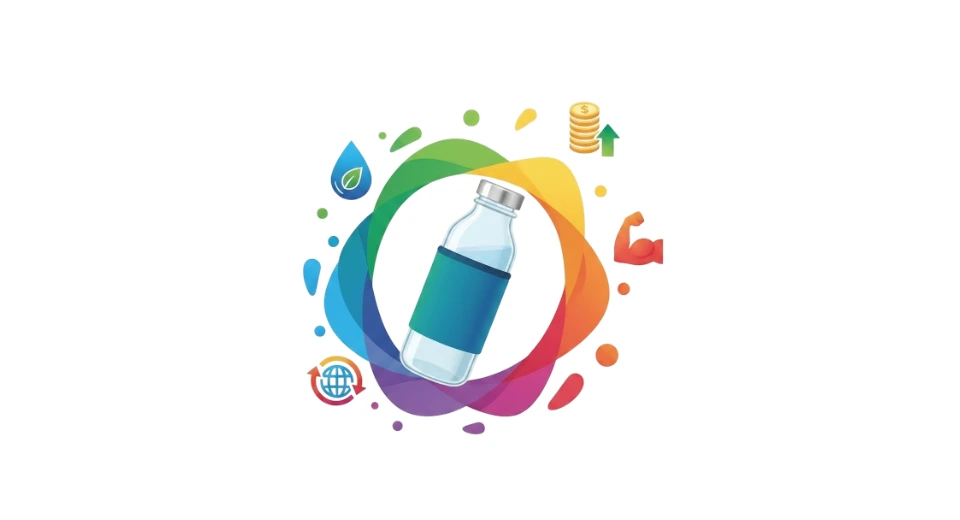
The global Reusable Water Bottle market size was valued at USD 9.40 billion in 2025 and is projected to reach USD 17.80 billion by 2033, growing at a CAGR of 8.30% from 2026 to 2033. Growing health awareness and fitness activities are fueling the demand for rugged and portable water products, while the trend of healthy living and monitoring water intake on a daily basis is also contributing to the growth of the market.
Market Size & Forecast
- 2025 Market Size: USD 9.40 Billion
- 2033 Projected Market Size: USD 17.80 Billion
- CAGR (2026-2033): 8.30%
- North America: Largest Market in 2026
- Asia Pacific: Fastest Growing Market

To learn more about this report,  Download Free Sample Report
Key Market Trends Analysis
- North America is showing steady growth in the market due to awareness about sustainability, the adoption of premium products, and a strong fitness culture, where consumers are showing interest in durable and insulated bottles, while the well-established retail infrastructure and higher purchasing power are contributing to steady replacement demand in the market.
- The United States is at the forefront of market development due to strong consumer preference for premium insulated bottles, growing engagement in sports and fitness activities, and swift adoption of innovative hydration solutions through advanced e-commerce platforms and strong sustainability positioning by brands.
- The Asia Pacific market is experiencing fast-paced growth due to growing urbanization, a rising middle-class population, and rising awareness about sustainability, where consumers are increasingly adopting reusable bottles for their daily commutes and fitness activities, along with the development of manufacturing capabilities and favorable pricing models in the market.
- Stainless steel continues to be the most prominent material type due to its durability, long product life, and exceptional temperature retention properties, although the growing concern among consumers about sustainability and premium product perception continues to shift market demand away from disposable and lower-quality options.
- The 501 ml to 1-liter capacity type continues to lead the market as it provides the best balance between portability and hydration needs, although the growing emphasis among manufacturers on ergonomic designs and lightweight materials continues to enhance market demand.
- Insulated water bottles are witnessing intense market adoption as consumers continue to seek products that are multifunctional and have the ability to retain beverage temperatures for longer periods, which in turn enables manufacturers to capitalize on premium pricing and brand differentiation opportunities.
- E-commerce platforms continue to witness rapid growth due to convenience, increased product availability, and the growing dependence among consumers on digital platforms for purchasing products, which in turn enables manufacturers to capitalize on customization, direct engagement, and competitive pricing opportunities.
So, the reusable water bottles market is related to the manufacturing and marketing of products that are reusable to minimize the use of plastic bottles. The market is fueled by the growing concern for the environment, government policies to restrict the use of plastic, and consumer demand for eco-friendly products. The market is witnessing growing interest in innovation related to materials, insulation, and design to improve product differentiation. The demand for the market is also fueled by growing health awareness and an increasing number of people involved in fitness activities, travel, and outdoor adventures. Consumers are using reusable water bottles as part of their daily routine, with the support of corporate sustainability initiatives and institutional programs for waste reduction. The growing market for premium and smart water bottles also indicates changing consumer attitudes towards functionality and convenience.
Innovation and changes in the distribution network are transforming the competitive landscape in the market. E-commerce platforms and marketing initiatives by brands are helping the market reach a wider audience, and developing countries are also contributing to the growth in volumes due to growing urbanization and improvements in affordability across various product segments.
Reusable Water Bottle Market Segmentation
By Material
- Stainless Steel
Stainless steel bottles are finding increasing acceptance because of their durability, temperature retention properties, and premium offerings. The factors driving growth include sustainability awareness and longer product life cycles, with insulated stainless steel bottles gaining popularity in fitness and travel segments.
- Plastic (BPA-Free)
BPA-free plastic bottles continue to hold a substantial market share due to their low manufacturing cost, portability, and affordability. Their easy accessibility through mass retailing channels is a major factor for increased sales volume, especially among budget-conscious consumers. However, sustainability issues are slowly driving the market towards other materials.
- Glass
Glass bottles are gaining acceptance in health-conscious and premium segments due to their chemical-free and odor-free properties. The factors driving demand include increasing awareness about toxin-free hydration and sustainable offerings, although their fragility and heavier weight restrict acceptance in fitness and travel segments.
- Silicone
Silicone bottles are a new niche market, especially because of the advantages of portability and collapsibility. However, the growth in this market is moderate because of the lack of durability compared to metal or rigid plastic bottles.
- Aluminum
Aluminum bottles are a new market segment that is positioned as a light and recyclable option. The adoption of this product is driven by environmental campaigns and promotional or branded use, but the lack of insulation and taste issues has limited its adoption compared to stainless steel products.
To learn more about this report, Download Free Sample Report
By Capacity
- Up to 500 ml
This capacity segment is largely used for short-term hydration requirements such as commuting, educational, and office purposes. The compact nature and portability of these products fuel demand, especially among urban consumers.
- 501 ml – 1 Liter
The 501 ml to 1-liter capacity segment is a major market as it meets hydration requirements and portability. It is largely used in the fitness and office segments, which aligns with average hydration requirements.
- 1 – 1.5 Liters
This market is fueled by the rising awareness of health and water intake habits among fitness and outdoor enthusiasts. Consumers who engage in sports and outdoor activities increasingly opt for larger capacity products that minimize the need for frequent refilling.
- Above 1.5 Liters
The large-capacity bottle market is gaining momentum among sports, outdoor, and long-distance travelers. The market is fueled by lifestyle trends that focus on hydration tracking and extended outdoor activities, although the product is not very portable.
By Product Type
- Insulated
Insulated bottles lead the premium and high-value segments based on the ability to retain temperatures for hot and cold drinks. The growing need for multi-functional products and outdoor activities has fueled the adoption rate, especially for stainless steel-insulated bottles.
- Non-Insulated
Non-insulated bottles maintain a volume share based on price and portability. Non-insulated bottles are preferred for casual and daily drinking purposes, especially in educational institutions and budget-conscious markets where functionality takes precedence over premium features.
- Collapsible
Collapsible bottles are being preferred by travelers and outdoor enthusiasts based on flexibility and space-saving properties. Silicone-based collapsible bottles are portable and ideal for hiking and travel purposes, but lack durability to be widely adopted.
- Infuser Bottles
Infuser bottles are driven by wellness trends and the increasing popularity of flavored and detox water consumption. Demand is rising among health-conscious consumers looking for functional hydration products that support lifestyle and dietary preferences.
- Smart Water Bottles
Smart bottles are an emerging category that combines hydration tracking, temperature, and app connectivity. Growth is driven by digital health trends and urban consumers, with a rising number of product launches in the category that focus on technology-enabled hydration solutions
By Distribution Channel
- Supermarkets & Hypermarkets
Supermarkets and hypermarkets lead the distribution channel due to product visibility, assortment, and competitive pricing. Customers prefer offline retailing for assessing product design, size, and material, thus ensuring the continued dominance of offline retailing.
- Specialty Stores
Specialty stores address the demand for premium and branded products, particularly insulated and sports-oriented bottles. These stores ensure product differentiation, expert advice, and brand-based purchasing experiences, thus ensuring higher-value sales.
- Online Retail
The online retailing channel is experiencing fast growth due to product customization, assortment, and convenience. Online retailing enables customers to benefit from personalization and direct-to-consumer approaches, thus becoming increasingly important for premium and smart bottle categories.
- Convenience Stores
Convenience stores facilitate impulse buying and replacement demands, especially for lower to mid-range bottles. Although their role is still supplementary, convenience stores are significant in urban areas with heavy commuter traffic.
- Direct Sales
Direct sales channels are growing as a result of corporate gifting, promotional activities, and sustainability campaigns. Organizations are increasingly giving out branded reusable bottles as part of their sustainability initiatives and employee wellness programs, thus supporting the demand for bulk purchases.
Regional Insights
North America, comprising the United States, Canada, and Mexico, is a mature market with high sustainability awareness, high penetration of insulated and premium products, and widespread adoption in fitness and outdoor categories. The United States is the innovation and premium leader, with a focus on environmentally compliant products in Canada and a growing demand for products through retail distribution in Mexico. Europe, including Germany, United Kingdom, France, Spain, Italy, and the rest of Europe, is a market with high regulatory influence driving the adoption of reusable products. Consumers in Europe prefer products made from recyclable materials and premium designs, with sustainability policies driving the replacement of disposable plastic bottles in both residential and commercial settings. Asia Pacific, including Japan, China, Australia, New Zealand, South Korea, India, and the rest of Asia Pacific, is the fastest-growing market due to the presence of a large population base, an increasing middle-class consumer base, and a growing awareness level about the environment. The ability to manufacture in the region and an increasing number of fitness enthusiasts are also contributing factors.
South America, including Brazil, Argentina, and the rest of South America, is witnessing a gradual adoption rate due to urbanization and an increasing awareness level about sustainable consumption. Market development is impacted by price sensitivity, with mid-range and economical reusable bottles driving the market in urban areas. The Middle East & Africa market, including Saudi Arabia, United Arab Emirates, South Africa, and the rest of the Middle East & Africa, is growing steadily due to favorable climatic conditions that promote frequent hydration and an increasing number of sustainability initiatives. The development of retail infrastructure and tourism-driven demand is gradually improving market reach in key urban areas.
To learn more about this report, Download Free Sample Report
Recent Development News
- January 2026, Hydro Flask has announced a multi-year partnership with Ocean Conservancy as part of the “Protect Where We Play” initiative, which focuses on minimizing single-use plastic consumption and encouraging sustainable hydration practices. The partnership involves community outreach, education, and environmental awareness campaigns that are associated with the use of reusable bottles and circular sustainability principles. This move demonstrates increased brand support for sustainability and sustainability-driven engagement for reusable bottles
- In September 2024, The company launched its global marketing campaign, “We Make It. You Own It.,” which emphasizes innovation, consumer experience, and lifestyle integration of the reusable insulated bottles. The marketing campaign will help the company in expanding its products and positioning the brand on durability and minimizing the use of single-use plastics.
|
Report Metrics |
Details |
|
Market size value in 2025 |
USD 9.40 Billion |
|
Market size value in 2026 |
USD 10.20 Billion |
|
Revenue forecast in 2033 |
USD 17.80 Billion |
|
Growth rate |
CAGR of 8.30% from 2026 to 2033 |
|
Base year |
2025 |
|
Historical data |
2021 – 2024 |
|
Forecast period |
2026 – 2033 |
|
Report coverage |
Revenue forecast, competitive landscape, growth factors, and trends |
|
Regional scope |
North America; Europe; Asia Pacific; Latin America; Middle East & Africa |
|
Country scope |
United States; Canada; Mexico; United Kingdom; Germany; France; Italy; Spain; Denmark; Sweden; Norway; China; Japan; India; Australia; South Korea; Thailand; Brazil; Argentina; South Africa; Saudi Arabia; United Arab Emirates |
|
Key company profiled |
Hydro Flask, CamelBak Products LLC, Nalgene, S'well, Klean Kanteen, Contigo, Thermos LLC, YETI Holdings Inc., Stanley PMI Worldwide, SIGG Switzerland AG, Tupperware Brands Corporation, Brita GmbH, Takeya USA, Chilly's Bottles, and Corkcicle LLC |
|
Customization scope |
Free report customization (country, regional & segment scope). Avail customized purchase options to meet your exact research needs. |
|
Report Segmentation |
By Material (Stainless Steel, Plastic (BPA-Free), Glass, Silicone, Aluminum), By Capacity (Up to 500 ml, 501 ml – 1 Liter, 1 – 1.5 Liters, Above 1.5 Liters), By Product Type (Insulated, Non-Insulated, Collapsible, Infuser Bottles, Smart Water Bottles) and By Distribution Channel (Supermarkets & Hypermarkets, Specialty Stores, Online Retail, Convenience Stores, Direct Sales) |
Key Reusable Water Bottle Company Insights
Hydro Flask sustains a robust competitive edge in the reusable water bottle industry with its high-end insulated stainless steel products and strong brand association with outdoor and lifestyle enthusiasts. The company derives benefits from the high durability of its products, temperature retention technology, and extensive color and size range, which help the company support high-end pricing. The company’s emphasis on sustainability resonates with the growing consumer interest in eco-friendly water bottles. The company’s robust distribution network in specialty retail, e-commerce, and outdoor gear helps improve market penetration. The company’s emphasis on product innovation and brand collaborations helps the company retain its leadership position in North America and increase its foothold in the international market.
Key Reusable Water Bottle Companies:
- Hydro Flask
- CamelBak Products LLC
- Nalgene
- S'well
- Klean Kanteen
- Contigo
- Thermos LLC
- YETI Holdings Inc.
- Stanley PMI Worldwide
- SIGG Switzerland AG
- Tupperware Brands Corporation
- Brita GmbH
- Takeya USA
- Chilly's Bottles
- Corkcicle LLC
Global Reusable Water Bottle Market Report Segmentation
By Material
- Stainless Steel
- Plastic (BPA-Free)
- Glass
- Silicone
- Aluminum
By Capacity
- Up to 500 ml
- 501 ml – 1 Liter
- 1 – 1.5 Liters
- Above 1.5 Liters
By Product Type
- Insulated
- Non-Insulated
- Collapsible
- Infuser Bottles
- Smart Water Bottles
By Distribution Channel
- Supermarkets & Hypermarkets
- Specialty Stores
- Online Retail
- Convenience Stores
- Direct Sales
Regional Outlook
- North America
- United States
- Canada
- Mexico
- Europe
- Germany
- United Kingdom
- France
- Spain
- Italy
- Rest of Europe
- Asia Pacific
- Japan
- China
- Australia & New Zealand
- South Korea
- India
- Rest of Asia Pacific
- South America
- Brazil
- Argentina
- Rest of South America
- Middle East & Africa
- Saudi Arabia
- United Arab Emirates
- South Africa
- Rest of the Middle East & Africa






 APAC:+91 7666513636


