



Market Summary
The global Refrigerant market size was valued at USD 23.50 billion in 2025 and is projected to reach USD 42.80 billion by 2033, growing at a CAGR of 7.30% from 2026 to 2033. The refrigerant market around the world is growing at a pace. This is because more and more people need refrigeration for residential purposes. They also need it for cars and industrial air conditioning. The rules to protect the environment are getting stricter. So, people are moving away from things like HCFCs. They are switching to options like HFCs, HFOs and natural refrigerants. This means the refrigerant market is getting a boost because people need to replace things with new ones. The refrigerant market is also growing because of storage facilities, for cold things and because some countries are getting more developed. All these things are helping the refrigerant market to grow.
Market Size & Forecast
- 2025 Market Size: USD 23.50 Billion
- 2033 Projected Market Size: USD 42.80 Billion
- CAGR (2026-2033): 7.30%
- North America: Largest Market in 2026
- Asia Pacific: Fastest Growing Market

To learn more about this report,  Download Free Sample Report
Key Market Trends Analysis
- There is a lot of growth in the Hydrofluorocarbon market in North America. This is happening because people are replacing systems in commercial refrigeration and car air conditioning with new ones that use less energy and are good, for the environment. The Hydrofluorocarbon market is growing fast.
- The North America market is using commercial refrigeration systems. This is because there are supermarkets, retail outlets and cold storage facilities being built. People want to use eco- refrigerants and cooling systems that do not waste energy.
- The United States market is adopting Hydrofluoroolefin refrigerants quickly. People are using these Hydrofluoroolefin refrigerants in air conditioning and commercial applications because they are very good for the environment. The government has rules to protect the environment. It is giving incentives to companies that switch to sustainable Hydrofluoroolefin refrigerants. This is why we are seeing a lot of growth in the Hydrofluoroolefin market, in the United States.
- More and more people in the United States are using cooling and refrigeration systems. This is happening because people know more about the options for cooling and refrigeration systems now. Residential cooling and refrigeration systems are getting better and more efficient. They are also using refrigerants that're better for the environment.
- The market, for refrigeration and natural refrigerants is growing fast in the Asia Pacific region. Residential cooling and refrigeration systems and natural refrigerants are needed by industries. For example, food processing companies, pharmaceutical companies and chemical companies need cooling and refrigeration systems. They need cooling and refrigeration systems to keep things cool.
- In the Asia Pacific region, more industrial sectors are adopting Near- refrigerants. They choose these refrigerants because they have performance characteristics.
- Asia Pacific: Liquid phase refrigerants are leading in commercial and industrial refrigerant applications due to their stability and compatibility with large capacity applications.
The Global Refrigerant Market is about chemicals used in cooling systems, air conditioning and refrigeration. These are found in homes, businesses, cars and industries. Refrigerants include things like HFC, HFO and HCFC. There are also products like ammonia, CO2 and hydrocarbons. They help move heat in heating, ventilation and air conditioning (HVAC) and refrigeration systems. The Global Refrigerant Market is growing because of technologies in cooling systems. There is also a need for storage. Additionally, rules are being put in place to control how much these products contribute to warming. The Global Refrigerant Market has to adapt to these changes. The demand for cooling systems drives the Global Refrigerant Market. People need storage for various products. The Global Refrigerant Market provides solutions for this need. Refrigerants, like HFC, HFO and HCFC are used in these systems.
Rise in cities, more factories, and people having money to spend is increasing the need for cooling products for homes and offices. The car industry also plays a role as more vehicles are being made with air conditioning. The food, medicine, and chemical industries are needing industrial refrigeration, making industrial refrigeration more important in industries. The need for cooling products is increasing in both homes and businesses, and the use of refrigerants is becoming more common. In developing countries in Asia Pacific and Latin America, new and better refrigeration methods are being used because of improving infrastructure and government support for eco-friendly and low-GWP refrigerants. Governments are encouraging the use of eco-alternatives, and this trend towards eco-friendly refrigerants continues. Infrastructure development in Asia Pacific and Latin America is helping growth. The demand for refrigerants is increasing as cities and industries grow. More people having incomes is contributing to the growth. The Asia Pacific and Latin America regions are leading this growth, driven by urbanization, industrial expansion, rising vehicle air conditioning use, and increasing adoption of cooling products across sectors.
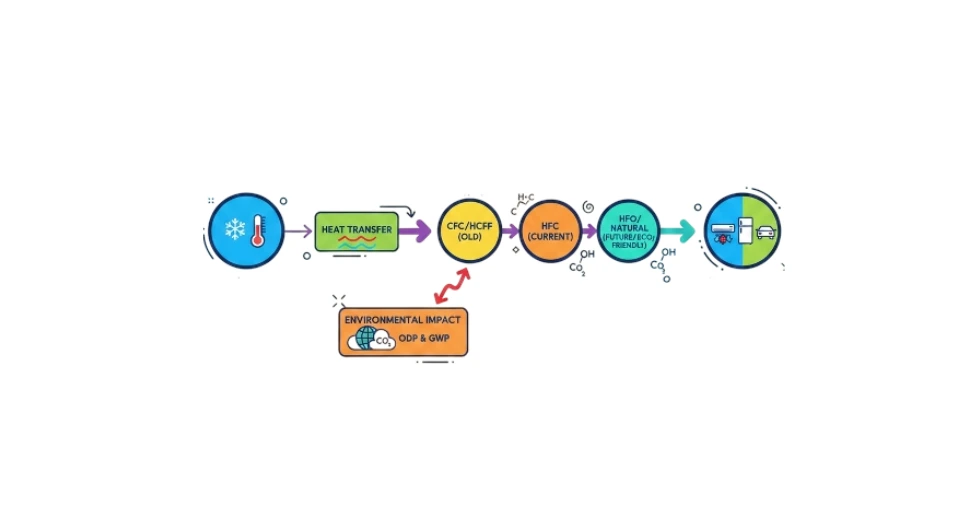
The market is changing from refrigerants like HFCs and HCFCs to Hydrofluoroolefins and natural refrigerants. This is happening because of problems with the environment and big agreements like the Kigali Agreement. Companies that make these products are spending a lot of money to make them better and safer. People are getting more worried about climate change. There are rules against products that are bad for the environment. This means the market, for Hydrofluoroolefins and natural refrigerants will probably keep getting bigger.
Refrigerant Market Segmentation
By Product Type
- Hydrofluorocarbon (HFC)
Hydrofluorocarbons are the commonly used refrigerants in the market because people use them a lot in homes, offices and cars to keep things cool. The government is making rules that are helping to create a demand for Hydrofluorocarbons. At the time people are starting to use other refrigerants like Hydrofluoroolefins and natural refrigerants that are better, for the environment. Hydrofluorocarbons are still very popular. Hydrofluoroolefins and natural refrigerants are slowly becoming more accepted.
- Hydrochlorofluorocarbon (HCFC)
HCFCs are declining as legacy refrigerants because of environmental issues. Although they are still being used in some parts of the world and in existing systems, phase-out agreements in international treaties are restricting their growth and promoting the use of environmentally friendly alternatives.
- Hydrofluoroolefin (HFO)
The Hydrofluoroolefins are getting bigger fast because they do not hurt the environment as much as other things and they use less energy. This is an alternative to the Hydrofluorocarbons. People want to use Hydrofluoroolefins more in car air conditioners, stores and factories because the government says we have to and we need to stop making the air dirty.
- Natural Refrigerants (Ammonia, CO₂, Hydrocarbons)
The natural refrigerants are becoming really popular because they are good for the earth do not. Are cheap. People are using ammonia, carbon dioxide and other natural things like propane and isobutane more and more in factories, stores and even at home because they are good, for the environment and cost less. The Hydrofluoroolefins are also being used a lot in these places.
To learn more about this report, Download Free Sample Report
By Refrigerant Grade
- Commercial Refrigeration
The commercial refrigeration market is really taking off because of all the new supermarkets and stores being built and also because of the cold storage facilities. People want to be kind to the environment so they are looking for refrigeration equipment that uses less energy and is better for the earth.
- Residential Refrigeration
The residential refrigeration market is doing well because people have money to spend and they are moving to cities. They are also replacing their heating and cooling equipment with new ones. People are buying refrigerators and air conditioners that use energy and are better for the environment, which is good for the residential refrigeration market and, for the commercial refrigeration market.
- Automotive AC
The demand for car air conditioners is going up because more vehicles are being made and people are upgrading their vehicles with eco-friendly coolants. The need for friendly coolants in the transportation industry is also helping the car air conditioner market grow.
- Commercial AC
The need for air conditioners in spaces is increasing because there are more offices, hotels and shopping malls. People are looking for air conditioners that use gases like HFOs and natural refrigerants to meet environmental standards.
- Industrial Refrigeration
The demand for refrigeration is growing because of the increase in food processing plants, pharmaceutical factories and chemical plants. There is a growing need for air conditioners that use natural refrigerants because they are more efficient. The industrial refrigeration market is growing because of the need, for air conditioners.
By End-User
- Commercial
People who work in offices, stores and hotels are changing the way they keep their buildings cool. They want to make sure their cooling systems work well and do not harm the environment. This is why they are looking for better refrigerants.
- Residential
People are getting heating and cooling systems for their homes. They want these systems to be good, for the environment and use energy. People are choosing refrigerants that're safe and do not use a lot of electricity.
- Industrial
Factories and other big industrial places use a lot of refrigerants. These places make things store food and do kinds of work that need refrigerants. They are using refrigerants because they have big systems and they want to follow environmental rules.
- Automotive
The automotive sector is using refrigerants. This is because more cars have air conditioning now. The automotive sector needs refrigerants to keep the air cool in cars.
By Refrigerant Grade
- Azeotropic
Refrigerants that are azeotropic are preferred because they have boiling and condensation characteristics. They are reliable in operation and hence are preferred for commercial as well as industrial applications.
- Zeotropic
Zeotropic refrigerants are used in variable capacity and multi-compressor applications. They are flexible and efficient in heat transfer in commercial and industrial applications.
- Near Azeotropic
Some refrigerants that are near-azeotropic are being used more and more in refrigeration and air conditioning systems. This is because azeotropic refrigerants have better thermodynamic performance and are easier to integrate with the systems that are already in place. Azeotropic refrigerants are a good choice, for large-capacity refrigeration and air conditioning applications.
By Phase
- Liquid
Liquid-phase refrigerants are used a lot because they are easy to store, measure and add to the system in a controlled way. People use them in homes, businesses and factories to keep things running smoothly.
- Gas
Gas-phase refrigerants are important for industrial uses checking for leaks and some special heating and cooling jobs. They are very flexible. Can work in complicated systems, which makes them good, for big businesses and factories that need a lot of cooling.
Regional Insights
The Global Refrigerant Market is really different in parts of the world. This is because of rules made by the government new factories being. New roads and buildings being constructed. In North America countries like the United States and Canada are using refrigerants that're better for the environment. This is happening because of rules to protect the environment and new technology being developed. On the hand Mexico is a bit behind but it is growing fast with new factories and cars being made. The Global Refrigerant Market is changing in North America due to these factors. The Global Refrigerant Market has a lot of potential for growth in countries, like the United States and Canada. Upgrading traditional infrastructure and the cold chain has been driving the market.
The European market is led by Tier 1 countries like Germany, the United Kingdom, France, Italy, and Spain, due to strict F-gas regulations and widespread use of energy-efficient HVAC equipment. The Rest of Europe is a Tier 2 market with a gradual shift towards eco-friendly refrigerants, aided by EU environmental regulations and development of commercial refrigeration infrastructure.
Asia Pacific is growing fast, in this region the top markets are China, Japan, India, South Korea and Australia & New Zealand. The other markets in Asia Pacific are considered Tier 2. In South America the top markets are Brazil and Argentina. This region is getting bigger because of food processing and retail. The other markets in South America are emerging. In the Middle East & Africa the top markets are Saudi Arabia, United Arab Emirates and South Africa. This region is growing because its really hot and cold there. The other markets, in the Middle East & Africa are still developing.
To learn more about this report, Download Free Sample Report
Recent Development News
- March 2025, At ISH 2025, Daikin outlined its refrigerant strategy to support low-carbon heat pump adoption in Europe, showcasing innovations like the Altherma 4 generation and CO₂ VRV systems that emphasize sustainable refrigerant use aligned with decarbonization goals.
(Source:https://www.daikin-ce.com/en_us/press-releases/2025/daikin-at-ish-2025.html)
- October 2025, Honeywell completed the spin-off of its advanced materials business, Solstice Advanced Materials, which includes refrigerants and related solutions, establishing it as an independent publicly traded company in October 2025.
|
Report Metrics |
Details |
|
Market size value in 2025 |
USD 23.50 Billion |
|
Market size value in 2026 |
USD 26.00 Billion |
|
Revenue forecast in 2033 |
USD 42.80 Billion |
|
Growth rate |
CAGR of 7.30% from 2026 to 2033 |
|
Base year |
2025 |
|
Historical data |
2021 – 2024 |
|
Forecast period |
2026 – 2033 |
|
Report coverage |
Revenue forecast, competitive landscape, growth factors, and trends |
|
Regional scope |
North America; Europe; Asia Pacific; Latin America; Middle East & Africa |
|
Country scope |
United States; Canada; Mexico; United Kingdom; Germany; France; Italy; Spain; Denmark; Sweden; Norway; China; Japan; India; Australia; South Korea; Thailand; Brazil; Argentina; South Africa; Saudi Arabia; United Arab Emirates |
|
Key company profiled |
Honeywell International Inc., The Chemours Company, Daikin Industries Ltd., Arkema S.A., Linde plc, Air Liquide S.A., Orbia Advance Corporation S.A.B. de C.V., Dongyue Group Co. Ltd., Sinochem Group Co. Ltd., Zhejiang Juhua Co. Ltd., Gujarat Fluorochemicals Limited, Navin Fluorine International Limited, SRF Limited, Shandong Yuean Chemical Industry Co. Ltd., A-Gas International Limited |
|
Customization scope |
Free report customization (country, regional & segment scope). Avail customized purchase options to meet your exact research needs. |
|
Report Segmentation |
By Product Type: Hydrofluorocarbon (HFC), Hydrochlorofluorocarbon (HCFC), Hydrofluoroolefin (HFO), Natural Refrigerants (Ammonia, CO₂, Propane, Isobutane), Others | By Refrigerant Grade: Commercial Refrigeration, Residential Refrigeration, Automotive AC, Commercial AC, Industrial Refrigeration | By End-User: Commercial, Residential, Industrial, Automotive | By Refrigerant Grade: Azeotropic, Zeotropic, Near Azeotropic | By Phase: Liquid, Gas |
Key Refrigerant Company Insights
Honeywell International Inc. Is a name when it comes to making refrigerants. They have a presence in the world of heating and cooling, cars and industrial refrigeration. The company makes a lot of products including low-GWP Hydrofluoroolefins and new kinds of refrigerants. These products are good for the environment because they meet the rules that are in place to protect the Earth. Honeywell International Inc. Is really focused on research and development which has helped them make products that use energy and are better for the environment. This makes Honeywell International Inc. A leader in the move from old refrigerants to newer more environmentally friendly ones. Honeywell International Inc. Works with the companies that make the equipment. They are involved in things like the Kigali Amendment, which is a big deal, for environmental rules. This helps Honeywell International Inc. Stay on top in the market.
Key Refrigerant Companies:
- Honeywell International Inc.
- The Chemours Company
- Daikin Industries Ltd.
- Arkema S.A.
- Linde plc
- Air Liquide S.A.
- Orbia Advance Corporation, S.A.B. de C.V.
- Dongyue Group Co., Ltd.
- Sinochem Group Co., Ltd.
- Zhejiang Juhua Co., Ltd.
- Gujarat Fluorochemicals Limited
- Navin Fluorine International Limited
- SRF Limited
- Shandong Yuean Chemical Industry Co., Ltd.
- A-Gas International Limited
Global Refrigerant Market Report Segmentation
By Product Type
- Hydrofluorocarbon (HFC)
- Hydrochlorofluorocarbon (HCFC)
- Hydrofluoroolefin (HFO)
- Natural Refrigerants
- Ammonia (NH₃)
- Carbon Dioxide (CO₂)
- Hydrocarbons (Propane, Isobutane)
- Others
By Application
- Commercial Refrigeration
- Residential Refrigeration
- Automotive AC
- Commercial AC
- Industrial Refrigeration
By End-User
- Commercial
- Residential
- Industrial
- Automotive
By Refrigerant Grade
- Azeotropic
- Zeotropic
- Near Azeotropic
By Phase
- Liquid
- Gas
Regional Outlook
- North America
- United States
- Canada
- Mexico
- Europe
- Germany
- United Kingdom
- France
- Spain
- Italy
- Rest of Europe
- Asia Pacific
- Japan
- China
- Australia & New Zealand
- South Korea
- India
- Rest of Asia Pacific
- South America
- Brazil
- Argentina
- Rest of South America
- Middle East & Africa
- Saudi Arabia
- United Arab Emirates
- South Africa
- Rest of the Middle East & Africa








 APAC:+91 7666513636


