

The global polyacrylamide market size reached an estimated valuation of USD 6.70 billion in 2026 and is projected to expand to USD 10.40 billion by 2033. This structural growth represents a compound annual growth rate CAGR of 6.50% over the 2026-2033 forecast period.
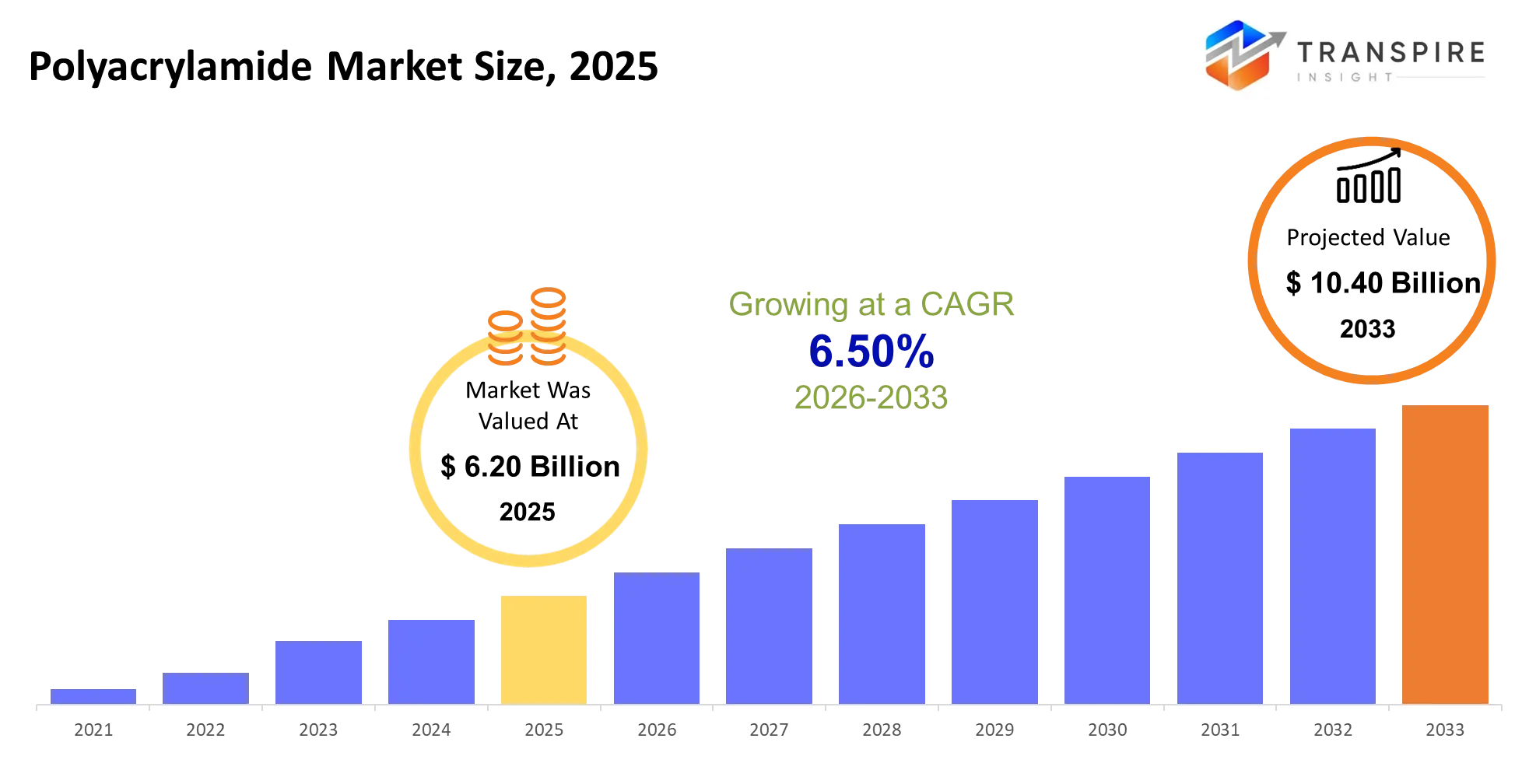
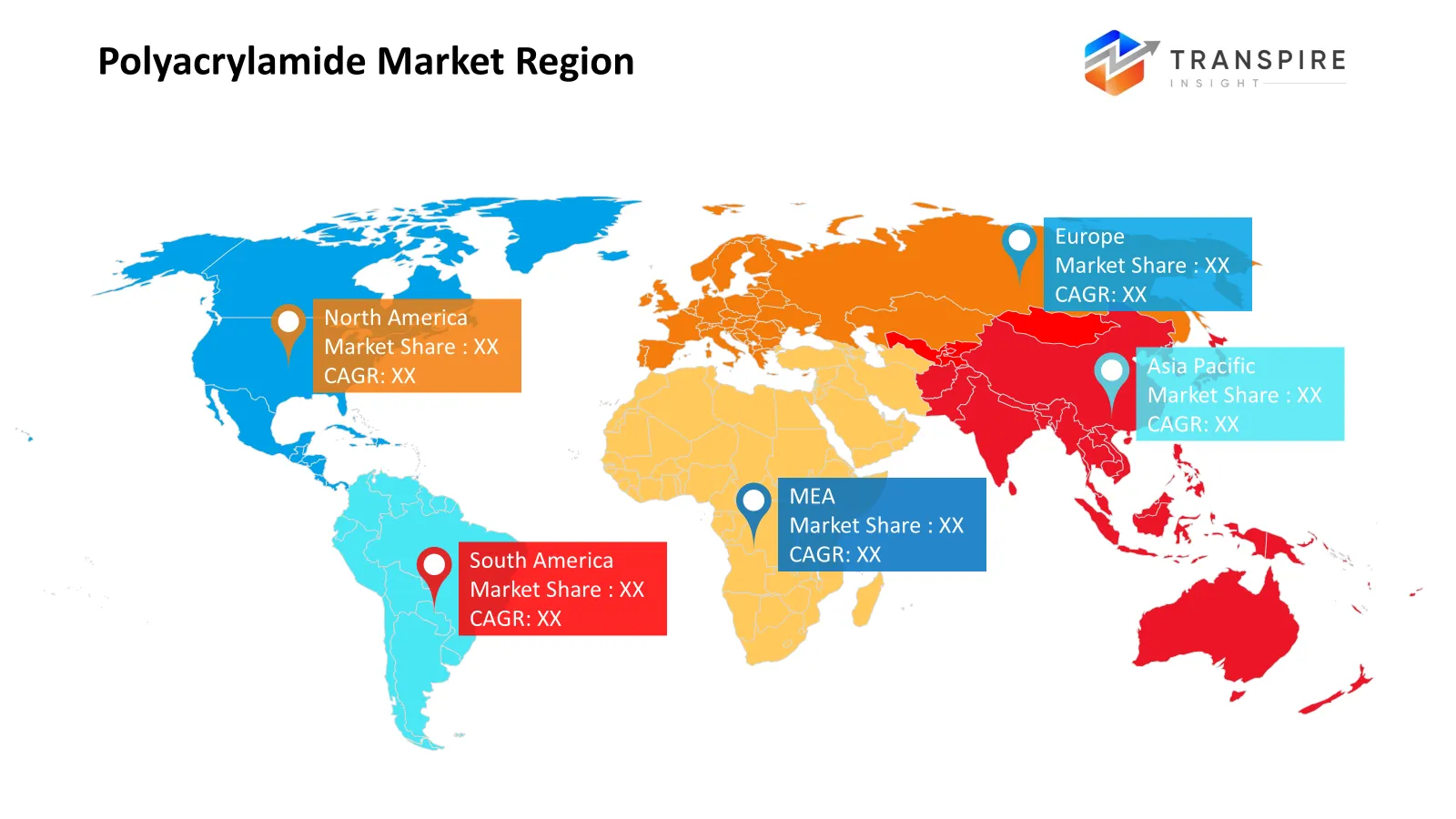
Asia-Pacific maintains its position as the dominant regional market, holding a 62.64% share of global revenue. This position is sustained by intensive infrastructural expansion, expanding manufacturing bases, and broad mandates for wastewater treatment chemicals across industrial hubs in China and India.
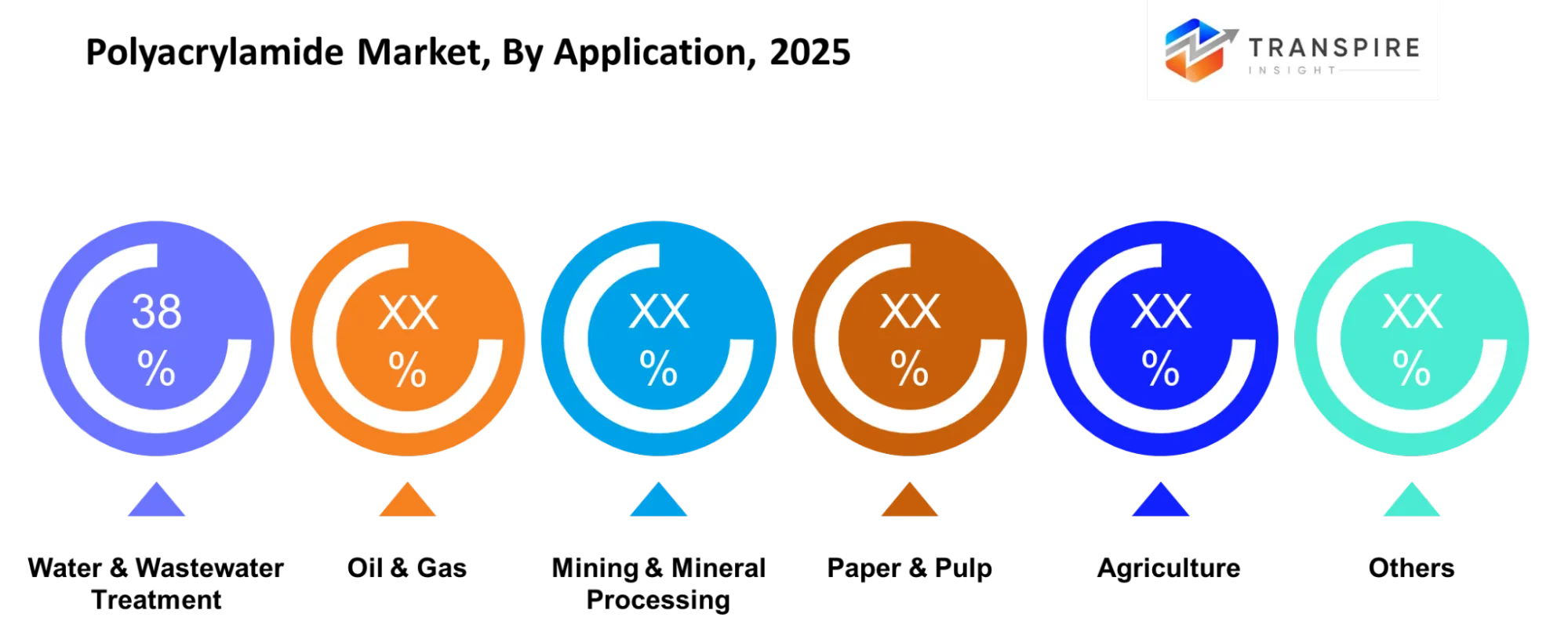
From an application perspective, the water treatment sector continues to serve as the largest volume consumer, representing 38.22% of total market revenue. Industrial volume growth is increasingly propelled by the rising demand for high-performance flocculants, sludge treatment agents, and polymers utilized in enhanced oil recovery (EOR) operations.
As regulatory frameworks enforce lower effluent discharges globally, municipal water utilities and private operators are accelerating their intake of specialized water purification chemicals. This structural shift establishes a long-term demand curve for advanced synthetic macromolecules.
Polyacrylamide Market Snapshot
|
Market Metric |
Strategic Data Point |
|
Market Size (2026) |
USD 6.70 Billion |
|
Market Size (2025) |
USD 6.20 Billion |
|
Forecast Value (2033) |
USD 10.40 Billion |
|
Compound Annual Growth Rate (CAGR) |
6.50% (2026-2033) |
|
Regional Scope |
North America, Europe, Asia-Pacific, Latin America, Middle East & Africa |
|
Forecast Period |
2026-2033 |
|
Largest Regional Market |
Asia-Pacific (62.64% revenue share) |
|
Fastest Growing Regional Market |
North America (EOR and friction reducer segments) |
|
Leading Product Segment |
Anionic Polyacrylamide (44.08% revenue share) |
|
Leading Application Segment |
Water Treatment (38.22% revenue share) |
|
Fastest Growing Application Segment |
Oil & Gas (7.1% projected CAGR) |
|
Primary Industry Players |
SNF Group, BASF SE, Kemira Oyj, Solvay S.A., Ecolab Inc., W. R. Grace & Co., Ashland Global Holdings Inc., Polydyne Inc., KemSys Inc., NIPPON SHOKUBAI Co. Ltd., Huntsman Corporation, LG Chem Ltd., Anhui Sihuan Chemical Group Co. Ltd., Dow Inc., SNF Holding Company, and Xi’an Yongfeng Chemical Co. Ltd. |
Executive Summary
The global trade of polyacrylamide (PAM) is undergoing structural shifts as legacy applications in the paper and textile sectors yield market share to high-margin sectors like tertiary oil extraction and complex industrial water recycling. Market participants face dynamic operating conditions shaped by raw material pricing anomalies and evolving regulatory environmental limits.
Key Findings
- Segment Dominance: Anionic formulations represent over 44% of global market revenue, supported by wide application in municipal sedimentation processes and mining tailing thickening.
- Hydrocarbon Sector Velocity: The oil and gas sector is expanding at a 7.1 percentage CAGR, outpacing traditional sectors due to widespread implementation of slickwater fracturing and tertiary polymer flooding.
- Geographic Concentration: The manufacturing base remains highly concentrated in East Asia, with Chinese suppliers accelerating export volumes by 15% to clear domestic overcapacity.
- Physical Form Transitions: Liquid emulsions and dispersions are capturing incremental market share over standard dry powders, expanding at 6.12% annually due to automation compatibility and rapid dissolution rates.
- Regulatory Compliance Pressures: Stringent requirements regarding residual acrylamide monomer concentrations particularly under European REACH protocols are forcing capital expenditure toward secondary purification technologies.
Strategic Observations
- Value Chain Forward-Integration: Tier-1 chemical producers are systematically investing in downstream formulation facilities located near major end-users to decouple margins from volatile raw material costs.
- Technological Hedging: Established suppliers are forming joint ventures with industrial biotechnology firms to secure early-stage access to bio-based acrylamide pathways and renewable raw materials.
- Application Specificity: Commodity PAM grades face margin compression, prompting a shift toward specialty polymers featuring tailored molecular weights and specialized charge densities.
- Infrastructure Driven Influx: Large-scale water infrastructure funding in developing nations acts as a stable buffer against cyclical demand downturns in the global mining and construction sectors.
- Service-Centric Commercial Models: Leading operators are shifting from bulk chemical supply to integrated performance-based service contracts that combine chemistry with digital dosing hardware.
Commercial Trends
- Asset Optimization Focus: Mining operations are increasing their intake of ultra-high-molecular-weight flocculants to improve process water recovery rates and shrink tailing pond footprints.
- Slickwater Volumetric Intensity: Unconventional shale plays in North America are recording higher polymer loading requirements per well as lateral lengths extend past 3,000 meters.
- Zero-Liquid-Discharge Mandates: Industrial manufacturing facilities in Asia-Pacific are adopting high-charge cationic polymers to satisfy stringent zero-discharge standards and maximize closed-loop water reuse.
- Synthetic Replacement Strategies: European industrial buyers are testing bio-derived alternatives for municipal applications, accepting premium pricing structures to meet corporate environmental metrics.
- Logistical Regionalization: Heightened maritime freight volatility is causing industrial buyers to prioritize regional supply security over low spot-market pricing from overseas producers.
Polyacrylamide Market Overview
Product Definition and Chemical Properties:
Polyacrylamide is a high-molecular-weight synthetic polymer synthesized from acrylamide subunits. The molecule can be synthesized as a linear structure or cross-linked to achieve specific performance properties.
Its commercial utility stems from the presence of highly polar amide groups, which form strong hydrogen bonds with target surfaces, suspended solids, and mineral particles. By manipulating the copolymerization process with specialized co-monomers, manufacturers can adjust the net ionic charge of the polymer chain.
The polymer functions across three primary structural variants:
- Anionic (APAM): Copolymerized with acrylic acid or sodium acrylate, introducing negatively charged carboxylate groups along the carbon backbone. These polymers excel at binding positively charged metallic suspensions and mineral particles.
- Cationic (CPAM): Copolymerized with positively charged monomers such as methyl chloride quaternary salts of dimethylaminoethyl acrylate (ADAME-Quat). This configuration provides an affinity for negatively charged organic solids, biological sludges, and cellular debris.
- Non-Ionic (NPAM): Pure homopolymer displaying neutral charge characteristics, relying on hydrogen bonding to destabilize non-ionic colloidal suspensions.
Manufacturing Process and Supply Chain Structure:
Commercial production follows a distinct two-step chemical synthesis chain. The initial stage requires the conversion of acrylonitrile to acrylamide monomer through an enzymatic hydration process using Rhodococcus rhodochrous microbial catalysts. This biocatalytic method has largely replaced legacy copper-catalyst systems, lowering production byproducts and residual monomer impurities.
The second stage involves the free-radical polymerization of acrylamide in aqueous solution, emulsion, or suspension formats. Initiators such as persulfates or azo compounds trigger the chain-growth mechanism.
For powder production, the resulting high-viscosity aqueous gel undergoes chopping, drying, and milling stages. Emulsion polymerization yields a biphasic liquid system requiring specialized surfactant stabilization to prevent phase separation during distribution and storage.
The raw material supply chain depends directly on the upstream petrochemical network. Propylene serves as the base hydrocarbon feedstock, which is converted into acrylonitrile via ammoxidation.
Consequently, any pricing disruptions in the global crude oil or natural gas markets directly impact the manufacturing economics of acrylamide monomers and final polyacrylamide formulations.
Polyacrylamide Market Ecosystem Analysis
|
Ecosystem Component |
Primary Entities Involved |
Industrial Mandate & Function |
|
Petrochemical Feedstocks |
Refiners, Steam Cracker Operators |
Supply high-purity propylene and ammonia for upstream intermediate synthesis. |
|
Monomer Production |
Specialty Chemical Synthesis Plants |
Convert acrylonitrile to acrylamide monomer using advanced enzymatic hydration. |
|
Polymerization Refining |
Core PAM Manufacturers |
Execute free-radical polymerization to generate custom ionic formulations (Powder, Emulsion). |
|
Distribution & Logistics |
Bulk Dry Freight, Liquid Tanker Fleets |
Manage transport, climate-controlled warehousing, and regional supply buffering. |
|
Application Integration |
Water Treatment EPCs, Oilfield Services |
Design on-site dissolution systems, automatic dosing loops, and custom chemical packages. |
|
End-User Operations |
Municipal Utilities, Mining Firms, EOR Operators |
Consume finalized polymer solutions to achieve solid-liquid separation or viscosity control. |
Market Dynamics
Market Drivers
Wastewater Treatment Expansion:
Urbanization across developing economies requires continuous upgrades to public sanitation infrastructure. Municipal wastewater treatment plants rely on cationic polyacrylamide to accelerate coagulation-flocculation cycles and optimize sludge dewatering processes.
As global urban centers expand, the volumetric load on existing treatment facilities rises. This creates consistent baseline demand for sludge treatment polymers to process the higher volumes of organic waste.
Industrial Water Recycling Mandates:
Industrial manufacturing operations face increasing water scarcity constraints alongside stricter zero-liquid-discharge (ZLD) regulations. Regulatory pressures compel heavy industries including chemical processing, manufacturing, and automotive production to establish advanced closed-loop water treatment loops.
Polyacrylamide formulations facilitate the rapid clarification of industrial process water, enabling continuous filtration and reuse within the facility while shrinking the net environmental footprint.
Intensifying Mining and Mineral Processing:
The global energy transition has driven significant increases in mining throughput for battery metals and critical minerals, including copper, lithium, nickel, and cobalt. Processing these lower-grade ores requires intensive mineral processing operations.
Anionic polyacrylamide functions as a vital sedimentation aid in thickener units, accelerating tailing separation and maximizing the immediate recovery of process water from mineral slurries.
Unconventional Hydrocarbon Extraction & EOR:
Maturing oilfields require secondary and tertiary recovery methods to maintain production levels. In enhanced oil recovery (EOR), high-molecular-weight partially hydrolyzed polyacrylamide (HPAM) is injected into mature reservoirs to modify water viscosity. This process improves the volumetric sweep efficiency of waterflooding operations.
Simultaneously, hydraulic fracturing operations in shale basins utilize ultra-high-molecular-weight friction reducers to lower fluid turbulence and pumping pressures during high-volume completions.
Market Restraints
Toxicity and Environmental Safety of Acrylamide Monomers:
While fully polymerized polyacrylamide is chemically inert, residual unreacted acrylamide monomer represents a documented neurotoxin and suspected human carcinogen.
Regulatory bodies restrict the permissible levels of free monomer in commercial polymer products. For municipal drinking water clarification, strict limits require residual monomer content to remain below 0.05% (500 ppm), forcing manufacturers to implement secondary purification steps that increase processing costs.
Volatility of Upstream Petrochemical Feedstocks:
The chemical synthesis of polyacrylamide relies on stable, cost-effective access to the propylene-acrylonitrile-acrylamide chain. Fluctuations in crude oil prices, natural gas costs, and regional petrochemical cracker utilization directly impact downstream polymer margins.
Sudden pricing spikes for raw feedstocks can disrupt manufacturer profitability, forcing suppliers to pass costs along via variable indexing surcharges.
Market Opportunities
Commercialization of Bio-Based Polyacrylamide:
The development of sustainable polymer chemistry offers a path toward reducing petrochemical dependence. Chemical companies are exploring bio-derived alternatives, using renewable bio-derived acrylonitrile or sugar-fermented intermediates to synthesize sustainable polyacrylamide alternatives.
These bio-based formulations help industrial users meet scope 3 carbon emission reductions while maintaining technical parity with fossil-fuel-derived equivalents.
Integration of Automated Real-Time Dosing Systems:
Traditional chemical dosing practices often lead to over-injection, increasing operating costs and potential system fouling. Incorporating optical sensors, real-time streaming turbidimeters, and automated dosing controls into water treatment facilities enables precise polymer application.
This technical integration allows suppliers to bundle proprietary polyacrylamide formulations with digital management systems, shifting the commercial focus from bulk volume sales to optimized performance contracts.
Market Challenges
Increasing Production Costs and Thin Outflow Margins:
Commodity grades of dry polyacrylamide face significant price competition, particularly from large-scale manufacturing installations in East Asia.
Established multi-regional producers face continuous pressure to lower processing costs, optimize energy inputs during gel drying, and minimize chemical raw material consumption to defend historical margins against low-cost market entries.
Compliance Demands in Multi-Jurisdictional Regulatory Environments
Exporters supplying polyacrylamide to multiple global regions must manage a complex regulatory landscape. Requirements vary significantly, ranging from European Union REACH registrations and U.S. EPA toxic substances declarations to local drinking water certifications.
Adapting identical production streams to comply with disparate environmental rules, chemical tracking registries, and product liability standards increases administrative burdens and limits global inventory mobility.
Polyacrylamide Market Dynamics: Impact Matrix
|
Market Driver / Restraint |
Short-Term Impact (2026-2028) |
Mid-Term Impact (2029-2031) |
Long-Term Impact (2032-2033) |
Industrial Strategic Influence |
|
Municipal Upgrades |
High |
High |
Medium |
Drives steady demand for high-charge cationic powders in urban centers. |
|
EOR Polymer Flooding |
Medium |
High |
High |
Increases adoption of premium heat-resistant polymer variants in mature basins. |
|
Monomer Restrictions |
High |
High |
High |
Accelerates capital expenditure on secondary post-polymerization extraction systems. |
|
Bio-Based Alternatives |
Low |
Medium |
High |
Reconfigures premium procurement frameworks across western European markets. |
Polyacrylamide Market by Type
Anionic Polyacrylamide (APAM)
Anionic polyacrylamide represents the largest product type, holding a 44.08% revenue share. These polymers feature negatively charged functional groups, typically carboxylates, along the structural chain. This negative charge density makes APAM highly effective at neutralizing positively charged mineral particles and metallic oxides suspended in water.
The product finds its primary applications in mining sedimentation units, industrial water recycling circuits, and the primary clarification stage of wastewater treatment plants.
In the mining sector, APAM destabilizes slurry suspensions, accelerating the settling rate of fine clay particulates and tailings. This process helps operations recover clean process water for immediate reuse.
In the oilfield sector, partially hydrolyzed anionic polyacrylamide (HPAM) is widely used in enhanced oil recovery due to its ability to increase injection fluid viscosity and improve reservoir sweep efficiency.
Cationic Polyacrylamide (CPAM)
Cationic polyacrylamide features positively charged functional groups, usually quaternary ammonium configurations, incorporated along the polymer backbone. CPAM commands premium pricing over anionic variants due to the higher manufacturing costs associated with specialized cationic co-monomers, such as ADAME-Quat or DADMAC.
CPAM serves an indispensable role in municipal sewage treatment and biological sludge management. Biological sludges carry a net negative charge due to cellular membranes and organic matter.
The positive charge of CPAM neutralizes these surface charges, causing micro-flocs to aggregate into larger structures. This aggregation significantly improves the efficiency of mechanical dewatering equipment, including belt presses, screw presses, and solid-bowl centrifuges.
Non-Ionic Polyacrylamide (NPAM)
Non-ionic polyacrylamide is a pure homopolymer synthesized without ionic co-monomer additions. It maintains a neutral electrical charge across various pH ranges.
Instead of charge neutralization, NPAM relies on hydrogen bonding between its amide groups and suspended particles to form bridges that destabilize colloidal suspensions.
This neutral profile makes NPAM well-suited for acidic environments and high-salinity industrial applications where ionic polymers might undergo coil collapse or lose efficacy.
Primary uses include acidic wastewater clarification, textile sizing formulations, and specialized structural coatings where broad chemical compatibility is required.
Amphoteric Polyacrylamide
Amphoteric polyacrylamide contains both positive and negative functional charges along a single macromolecular chain. This dual-charge structure allows the molecule to adjust its conformation and surface affinities based on the pH and ionic strength of the surrounding fluid.
While it represents a smaller volume segment of the global market, amphoteric PAM is expanding into highly specialized applications.
It is used in complex industrial wastewater systems containing mixed organic and inorganic solids, and in advanced paper-making processes where it functions as a retention aid and dry-strength additive under varying wet-end chemistry conditions.
Polyacrylamide Type Comparison
|
Chemical Variant |
Charge Density Range |
Avg. Molecular Weight (g/mol) |
Dominant Industrial Application |
Primary Processing Form |
|
Anionic (APAM) |
5% - 80% (Molar) |
$15 \times 10^6 - 25 \times 10^6$ |
Mineral tailing settlement, EOR polymer floods, industrial recycling |
Granular Powder, Inverse Emulsion |
|
Cationic (CPAM) |
10% - 80% (Molar) |
$6 \times 10^6 - 12 \times 10^6$ |
Municipal sludge dewatering, biological clarifier separation |
Granular Powder, Emulsion |
|
Non-Ionic (NPAM) |
Neutral |
$8 \times 10^6 - 15 \times 10^6$ |
Acidic effluent treatment, textile finishing, mineral leaching |
Granular Powder |
|
Amphoteric |
Variable Dual |
$5 \times 10^6 - 10 \times 10^6$ |
Mixed organic-inorganic streams, high-speed papermaking |
Liquid Dispersions, Powder |
Polyacrylamide Market by Application
Water & Wasterwater Treatment
Water treatment represents the primary application segment for polyacrylamide, accounting for 38.22% of global revenue. Polymeric flocculants are used across municipal water purification, sewage dewatering, and industrial effluent treatment systems.
The chemistry functions by converting fine suspended colloids into large, easily filterable macro-flocs. Municipal utilities utilize high-charge cationic powders to accelerate sedimentation cycles, increasing plant processing capacity without requiring expansion of physical basin footprints.
In industrial water recycling circuits, PAM addition ensures rapid particle separation, supporting zero-liquid-discharge compliance and reducing raw water intake demands.
Oil & Gas
The oil and gas sector is the fastest-growing application area, expanding at a 7.1 percentage CAGR. This growth is driven by unconventional shale development and the wider adoption of tertiary enhanced oil recovery (EOR) techniques.
In hydraulic fracturing operations, polyacrylamide serves as the primary component in slickwater fracturing fluid designs. These ultra-high-molecular-weight friction reducers alter the fluid dynamics within the wellbore, lowering turbulence and allowing high-pressure blenders to sustain target injection rates with reduced horsepower requirements.
For mature conventional assets, HPAM injection maintains steady water-cut control and improves sweep performance across heterogeneous reservoirs.
Mining
Mineral processing operations rely heavily on polyacrylamide as a sedimentation aid and tailing conditioner. Modern beneficiation processes require significant volumes of water to crush, wash, and float mineral-bearing ores.
Anionic PAM formulations are added to industrial thickeners to accelerate solid-liquid separation. This treatment forces fine gangue material and milled tailings to settle rapidly out of suspension, releasing clear water to be recycled back into the mill circuit.
This process helps mining facilities reduce external water consumption, optimize tailings pond management, and satisfy local environmental disposal standards.
Paper & Pulp
The paper and pulp industry utilizes specialized polyacrylamide formulations to optimize wet-end chemistry on high-speed paper machines. Within this sector, PAM functions as a retention aid and drainage accelerator.
By binding fine cellulose fibers, mineral fillers, and sizing agents to the forming sheet, the polymer minimizes raw material losses into the whitewater system.
Simultaneously, the accelerated drainage rate allows paper machines to run at higher mechanical speeds while lowering the steam energy required in the downstream drying section.
Agriculture
In agricultural management, linear anionic polyacrylamide is applied to cultivated soils via irrigation systems to stabilize soil structure and mitigate erosion.
The polymer binds loose surface particles together, increasing pore stability and accelerating water infiltration rates. This structural stabilization reduces soil erosion from runoff, prevents surface crusting, and improves fertilizer retention within the root zone.
Textile
Textile finishing operations utilize non-ionic and modified anionic polyacrylamide grades as sizing agents and yarn lubricants during high-speed weaving.
Additionally, the polymer functions as a flocculant within textile dyeing wastewater treatment facilities, destabilizing residual pigments, azo dyes, and processing chemicals to ensure compliance before effluent discharge.
Construction
The construction sector uses polyacrylamide formulations as stabilizing additives in boring muds, piling excavations, and tunneling operations.
The polymer modifies the rheological properties of drilling fluids, improving hole cleaning capacity and stabilizing exposed soil walls. This treatment helps prevent cave-ins during subterranean excavations and minimizes fluid loss into porous geological formations.
Regional Analysis
North America
The North American polyacrylamide market is characterized by high technical performance requirements and robust demand from the energy sector. The United States serves as the primary demand center within the region, driven by active shale plays including the Permian, Bakken, and Marcellus basins.
The widespread use of slickwater fracturing designs in these plays requires large volumes of specialized liquid emulsion friction reducers.
Simultaneously, U.S. and Canadian municipal water utilities are upgrading aging treatment infrastructure to comply with stricter EPA effluent rules, supporting stable baseline demand for premium cationic sludge treatment polymers.
Europe
The European market operates under a stringent regulatory framework shaped by European Chemicals Agency (ECHA) guidelines and REACH compliance mandates.
Western European countries, led by Germany, France, and the United Kingdom, maintain comprehensive water purification infrastructures with strict regulations regarding residual monomer exposure.
This environment favors premium, highly purified polymer grades with ultra-low free acrylamide content. The regional market is also seeing increased investment in sustainable polymer alternatives, with industrial buyers testing bio-derived chemical pathways to reduce product carbon footprints.
Asia-Pacific
Asia-Pacific remains the largest global market for polyacrylamide, controlling 62.64% of total market revenue. This dominant share is supported by large-scale production capacities and extensive manufacturing bases across China and India.
China is both a primary global consumer and a major exporter of polyacrylamide. Domestic demand is driven by large-scale municipal water treatment projects, industrial zero-liquid-discharge (ZLD) mandates, and tertiary oil recovery programs in mature basins like the Daqing oilfield.
In India, demand is expanding rapidly due to ongoing national infrastructure initiatives aimed at expanding public water treatment and industrial water recycling networks.
Latin America
Latin American market activity is closely tied to the region's large-scale mineral extraction and export sectors. Chile and Peru represent major demand hubs for anionic polyacrylamide, which is used as a sedimentation aid in large copper, gold, and lithium processing facilities.
In Brazil, market demand is driven by industrial water treatment requirements within agricultural processing facilities, pulp mills, and chemical manufacturing complexes.
Middle East & Africa
The Middle East and Africa region presents distinct growth opportunities linked to energy operations and water scarcity challenges.
Desalination and industrial wastewater reuse projects across Gulf Cooperation Council (GCC) nations require specialized water treatment polymers to optimize water conservation loops.
In oil and gas operations, regional producers are increasingly deploying high-temperature, salt-tolerant polyacrylamide variants for polymer flooding initiatives to maintain production levels in mature reservoirs.
Regional Market Matrix
|
Geographic Region |
Primary Revenue Driver |
Dominant Physical Form |
Regulatory Landscape |
Import/Export Dynamics |
|
North America |
Shale fracturing, EOR flooding |
Liquid Emulsions |
US EPA TSCA compliant |
Net importer of dry powders; self-sufficient in liquid emulsions. |
|
Europe |
Municipal sludge handling |
Ultra-low Monomer Powder |
ECHA REACH restrictions |
High regional specialization; exports premium low-monomer grades. |
|
Asia-Pacific |
Industrial ZLD, mining processing |
Standard Dry Powder |
National environmental quotas |
Global export leader; massive outward trade flows to Western markets. |
|
Latin America |
Copper & precious ore milling |
Coarse Dry Granules |
Local environmental tracking |
Highly dependent on imports from Chinese and North American producers. |
|
Middle East |
High-salinity reservoir EOR |
Heat-Stabilized Powder |
State-directed industrial rules |
Bulk importer of high-temperature specialty polymer formulations. |
Competitive Landscape
The global polyacrylamide market features a consolidated structure among top-tier international chemical groups, alongside a fragmented tier of regional suppliers specializing in commodity powder production. The top five manufacturers control approximately 67.5% of total market revenue.
BASF SE
BASF SE maintains a diverse product portfolio under trade names such as Magnafloc and Alclar, targeting global water treatment, mining, and oilfield applications. The company leverages its backward-integrated production model, securing intermediate raw materials directly from its internal chemical network to manage feedstock pricing volatility.
Strategic initiatives focus on developing high-performance polymer configurations that offer increased thermal stability for demanding oilfield and industrial processes.
The company maintains production assets across Europe, North America, and Asia, allowing it to supply customized formulations to regional industrial markets.
SNF Group
SNF Group is the global market leader in polyacrylamide manufacturing, accounting for more than 18.2% of total production volume. The company operates dedicated, large-scale polymer manufacturing installations across Europe, the United States, and China.
The company recently completed a significant capacity expansion at its facility in Louisiana, U.S., adding 50,000 metric tons of annual polyacrylamide capacity to support North American oilfield and water treatment demands.
SNF emphasizes high-volume manufacturing efficiency, maintaining a comprehensive supply network that provides cost-competitive powder and emulsion grades directly to municipal and industrial accounts globally.
Kemira Oyj
Kemira Oyj focuses its corporate strategy on water-intensive industrial applications, providing specialized polyacrylamide formulations for pulp and paper manufacturing, municipal water authorities, and oilfield operations under the Superfloc brand.
The company prioritizes sustainable chemistry development, establishing a EUR 130 million joint venture with International Flavors & Fragrances (IFF) to commercialize next-generation bio-based polymers.
This initiative aims to position the company as a key supplier of renewable alternatives as European environmental standards tighten.
Solenis LLC
Following its integration of specialized water assets, Solenis functions as a major supplier of water treatment chemistry and process optimization systems. Its polyacrylamide portfolio is designed for municipal clarification loops, heavy industrial processes, and paper-mill operations.
The company utilizes a service-heavy commercial model, bundling its polymer products with proprietary automated dosing hardware and digital monitoring platforms to provide industrial customers with verified chemical reduction and process efficiency metrics.
Ashland Inc.
Ashland delivers high-purity polyacrylamide formulations tailored for specialty industrial applications, including personal care products, advanced coatings, and complex chemical processes.
Rather than competing in high-volume commodity markets, the company focuses on high-margin segments that require stringent quality control, low impurity profiles, and specific performance attributes.
PetroChina Company Limited
PetroChina operates internal, large-scale polyacrylamide production units designed primarily to support its domestic upstream extraction operations. The company is a pioneer in the application of ultra-high-molecular-weight partially hydrolyzed polyacrylamide (HPAM) for large-scale EOR operations, notably within the mature Daqing oilfield.
Its manufacturing focus is optimized for producing heavy anionic powders capable of maintaining viscosity under typical reservoir conditions, reducing dependence on international chemical suppliers.
Beijing Hengju Chemical Group Co., Ltd.
Beijing Hengju is a prominent Chinese manufacturer specializing in high-molecular-weight polyacrylamide variants for EOR, mineral processing, and municipal wastewater treatment.
The company maintains large-scale production facilities in China and competes actively in international export markets, supplying bulk powder grades to buyers across the Asia-Pacific, African, and Latin American regions.
Anhui Tianrun Chemicals Co., Ltd.
Anhui Tianrun operates large-scale polymerization lines in East Asia, producing a wide range of anionic, cationic, and non-ionic polyacrylamide powders.
The company focuses on manufacturing efficiency and competitive pricing, making it a key supplier for cost-sensitive municipal utilities, paper mills, and mining operations throughout developing regional markets.
Competitive Positioning Analysis
|
Manufacturing Giant |
Market Share Tier |
Core Product Strengths |
Strategic Business Model |
Target Growth Vector |
|
SNF Group |
Tier 1 (Leader) |
High-volume production, global supply chain network |
Global cost leadership via large-scale manufacturing |
Capacity expansions across North American shale basins |
|
BASF SE |
Tier 1 |
Backward integration, advanced R&D resources |
Integrated chemical supply loops |
Specialty polymers for extreme industrial environments |
|
Kemira Oyj |
Tier 1 |
Wet-end paper chemistry, municipal applications |
High-service application integration |
Renewable bio-polymers via strategic joint ventures |
|
Solenis LLC |
Tier 2 |
Combined chemical-digital processing packages |
Performance-based optimization contracts |
Digital automated dosing across heavy manufacturing |
|
Beijing Hengju |
Tier 2 |
High-molecular-weight anionic formulations |
Export-driven commodity supply |
Mining and EOR expansion across emerging markets |
Emerging Companies and Startup Analysis
The industrial polyacrylamide market is seeing new entry from specialized technology firms and sustainable chemistry startups. These companies aim to address traditional challenges in carbon intensity, residual toxicity, and rigid chemical dosing requirements.
Sustainable Chemistry Startups & Bio-Based Polymer Developers
New entrants are focusing on developing renewable polymer alternatives to traditional fossil-fuel-derived PAM. These firms utilize biochemical conversion pathways, substituting petroleum-derived acrylonitrile with intermediates derived from biomass fermentation or industrial byproducts.
The primary commercial objective is delivering functional parity with synthetic alternatives while providing a lower cradle-to-gate carbon profile to assist industrial users in meeting sustainability targets.
AI Wastewater Optimization Firms & Green Flocculant Innovators
Startups specializing in industrial automation are introducing digital monitoring platforms designed to optimize chemical usage in water treatment facilities.
By integrating real-time optical sensors, influent turbidity monitoring, and predictive AI models, these platforms allow municipal and industrial operators to dynamically adjust polymer dosing rates.
This targeted application helps prevent chemical over-injection, lowers operating expenditures, and reduces the volume of polymer residues entering downstream environments.
Startup Innovation Profiler
|
Venture Entity |
Core Technology Innovation |
Funding Status |
Commercial Viability Hurdle |
|
Bio-Macromolecule Labs |
Enzymatic conversion of agricultural waste into functional acrylamide chains. |
Series B Capitalization |
Achieving production cost parity with bulk petrochemical manufacturing. |
|
Fluidic Automation AI |
Real-time optical sensing systems that adjust polymer dosing levels dynamically. |
Venture Funded |
Overcoming conservative procurement policies within municipal utility boards. |
|
Eco-Floc Solutions |
Biodegradable cross-linked polymers designed for zero-liquid-discharge mining circuits. |
Seed / Early Stage |
Demonstrating shear stability in high-volume industrial processing pumps. |
Recent Developments (2024-2026)
The global polyacrylamide industry has recorded notable capital investments, corporate realignments, and regulatory adjustments over the 2024-2026 period, reflecting a shifting operating environment.
Timeline of Industry Milestones
March 2025 - SNF Louisiana Expansion Completion
SNF Group finalized construction on a major production line expansion at its manufacturing complex in Louisiana, U.S. This expansion added 50,000 metric tons of annual polyacrylamide capacity, specifically configured to supply liquid emulsions and specialized friction reducers to unconventional shale basins across North America.
September 2025 - Black Rose Capacity Influx
Black Rose Industries expanded its polyacrylamide liquid production capacity at its Jhagadia manufacturing installation in Gujarat, India. This project was executed to secure domestic supply lines for high-charge liquid grades, reducing regional dependence on imported polymer formulations for municipal water treatment projects.
October 2025 - NNA Polymers Strategic Announcement
NNA Polymers announced plans to construct a large-scale polyacrylamide production facility in Big Spring, Texas. The plant's strategic objective is providing localized supply security for water treatment and oilfield service operations located throughout the Permian Basin.
Early 2026- Kemira & IFF Sustainable Alliance
Kemira advanced its strategic partnership with International Flavors & Fragrances (IFF) by committing capital to a joint production venture. Scheduled for initial commercial scale-up by 2027, this initiative focuses on manufacturing next-generation bio-based polymers to hedge against long-term regulatory restrictions on synthetic micro-particles.
Pricing Trend Analysis
Polyacrylamide pricing structures depend heavily on upstream feedstock values, regional capacity balances, and energetic manufacturing inputs.
Feedstock Influence and Regional Variances
Acrylonitrile remains the dominant cost component in polyacrylamide production. Its market price tracks the broader movements of crude oil and chemical cracker operations.
In addition to feedstock costs, the energy required to dry polymerized gels into commercial granular powders represents a meaningful operating expense. As a result, regions with higher industrial energy costs face structural margin pressures when manufacturing standard dry grades.
Export Trends and Chinese Production Balance
Large-scale production capacity in East Asia allows regional manufacturers to offer competitive pricing on bulk granular powders globally.
When domestic demand in China experiences cyclical slowdowns, these producers accelerate export volumes into European, North American, and Latin American spot markets. This trade dynamic places a downward cap on international commodity pricing but can trigger regional trade monitoring actions and anti-dumping investigations.
Key Pricing Vectors
|
Price Influence Component |
Volatility Index |
Direct Operational Consequence |
|
Acrylonitrile Feedstock |
High |
Drives the baseline cost structure for global monomer synthesis lines. |
|
Thermal Drying Energy |
Medium |
Impacts production economics for granular powders relative to liquid emulsions. |
|
Maritime Freight Rates |
High |
Shifts the competitive balance between imported spot materials and local suppliers. |
|
Purification Processing |
Low |
Introduces fixed processing premiums for ultra-low monomer municipal grades. |
Supply Chain Analysis
The global polyacrylamide supply chain requires coordinated logistical management, moving raw petrochemical inputs through specialized synthesis stages to reach distributed end-users.
Upstream Raw Material Procurement
The initial stage relies on receiving chemical feedstocks from petrochemical complexes. Propylene and ammonia are transformed into acrylonitrile, which is subsequently converted into acrylamide monomer via enzymatic hydration. Supply continuity at this stage is essential, as continuous polymerization lines require a steady feed of high-purity monomer.
Distribution and Freight Management
Polyacrylamide products move through distinct logistical channels depending on their physical form:
- Granular Powders: Transported in bulk bags or standard moisture-resistant sacs. Dry powders offer stable shelf-lives but require specialized on-site dissolution equipment to properly hydrate the macromolecular chains before application.
- Liquid Emulsions: Distributed in intermediate bulk containers (IBCs) or dedicated liquid tankers. Emulsions offer faster dissolution rates but require storage under controlled temperatures to prevent phase separation and product degradation.
Supply Chain Risk Identification
The polyacrylamide supply network faces several operational vulnerabilities:
- Petrochemical Disruptions: Unplanned outages or force majeure declarations at regional chemical crackers can limit feedstock availability.
- Logistical Volatility: Port congestion and maritime freight rate spikes increase total landed costs for international shipments.
- Regulatory Influx: Shifting rules regarding chemical classification and environmental tracking can restrict trans-border inventory movements.
Regulatory Landscape
Polyacrylamide manufacturing, distribution, and application are governed by detailed regional chemical safety frameworks and environmental policies.
United States Frameworks
The U.S. Environmental Protection Agency (EPA) monitors polyacrylamide under the Toxic Substances Control Act (TSCA). For municipal water purification applications, National Sanitation Foundation (NSF/ANSI Standard 60) certifications enforce strict operational limits.
These rules restrict the maximum allowable polymer dosage in drinking water clarification loops and require regular validation of low residual monomer concentrations to protect public safety.
European Union Regulations
The European Chemicals Agency (ECHA) regulates polyacrylamide through Registration, Evaluation, Authorisation and Restriction of Chemicals (REACH) frameworks.
European authorities maintain strict oversight regarding residual acrylamide monomer content due to its classification as a potential mutagen and carcinogen.
Additionally, evolving European environmental discussions are focusing on the long-term status of synthetic polymer micro-particles in surface water discharges, accelerating industrial evaluation of biodegradable alternatives.
Future Outlook (2026-2033)
The polyacrylamide market is projected to sustain a steady growth trajectory through 2033, supported by non-discretionary water treatment requirements and changing technical needs in the energy and mining sectors.
Structural Technology Developments
The industry is moving toward narrower performance specifications. Commodity, broad-spectrum flocculants are increasingly being replaced by application-specific formulations featuring optimized molecular weights and precise charge densities designed for targeted operating environments.
In municipal wastewater treatment, operations are adopting low-dose, high-charge cationic emulsions that integrate directly with automated dosing controls to reduce chemical waste.
Sustainable Polymer Transition Paths
Over the forecast period, the commercial status of bio-derived polyacrylamide alternatives is expected to shift from early-stage testing to broader industrial use, particularly within European markets.
As manufacturing costs for bio-based acrylonitrile decrease, major chemical suppliers will expand their sustainable product lines, enabling industrial consumers to reduce scope 3 emissions without sacrificing process performance.
Analyst Insights and Strategic Recommendations
Capital Allocation & Investment Focus
Organizations investing in the specialty polymers sector should prioritize positions in backward-integrated assets or secure structured, long-term intermediate supply contracts.
Defending profit margins against energy and raw material volatility requires manufacturing infrastructure that minimizes processing inputs.
Investing in automated production lines capable of switching output between dry granular powders and liquid emulsions allows producers to shift manufacturing volumes toward higher-margin regional demand segments.
Commercial Optimization & Service Models
Commodity PAM grades face ongoing margin compression due to large-scale international production capacity. Chemical companies can address this challenge by shifting from bulk volume supply toward integrated service-performance models.
By combining proprietary polymer formulations with automated dosing equipment, real-time sensing hardware, and digital monitoring systems, suppliers can secure long-term, contract-based revenue streams while helping clients optimize chemical consumption.
Application and Regional Targeting
High-growth opportunities are concentrated in regional infrastructure modernizations and resource extraction sectors:
- North America: Suppliers should focus on high-performance emulsion friction reducers tailored for long-lateral unconventional completions and mature reservoir polymer flooding.
- Asia-Pacific: Focus should center on supplying high-charge cationic variants to municipal wastewater upgrades and supporting industrial compliance with zero-liquid-discharge mandates.
- Latin America: Producers should position efficient, high-molecular-weight anionic sedimenting aids directly within major copper and critical mineral processing circuits to support water recycling initiatives.
Key Polyacrylamide Company Insights
One thing stands out about SNF Group: they make polyacrylamide and similar water-dissolving materials found everywhere from mines to city water plants. Instead of chasing trends, their work leans into smart chemistry that helps separate solids from liquids more smoothly. Across continents, factories hum with output aimed at cleaning up wastewater or boosting extraction processes. Because labs stay busy testing new formulations, progress isn’t just claimed - it shows up in real applications. Clients get help shaped around actual needs, not generic fixes, which quietly sets the standard others try to match. While scale matters, what sticks is how precisely their products behave under pressure, day after day. Behind steady growth lies something less visible: years spent refining molecules that respond exactly when needed.
Key Polyacrylamide Companies:
- SNF Group
- BASF SE
- Kemira Oyj
- Solvay S.A.
- Ecolab Inc.
- R. Grace & Co.
- Ashland Global Holdings Inc.
- Polydyne Inc.
- KemSys Inc.
- NIPPON SHOKUBAI Co. Ltd.
- Huntsman Corporation
- LG Chem Ltd.
- Anhui Sihuan Chemical Group Co. Ltd.
- Dow Inc.
- SNF Holding Company
- Xi’an Yongfeng Chemical Co., Ltd
Frequently Asked Questions
Find quick answers to common questions.
Growth is primarily driven by expanding municipal wastewater treatment installations, strict industrial zero-liquid-discharge mandates, and higher consumption of specialized polymers in enhanced oil recovery and critical mineral processing circuits.
Anionic polyacrylamide holds the largest revenue share, accounting for 44.08% of the global market due to its widespread use in mining sedimentation, industrial water recycling, and reservoir waterflooding.
Global polyacrylamide market size was valued at USD 6.70B in 2026 and is poised to reach USD 10.40B by 2033, expanding at a 6.50% CAGR.
The energy sector increasingly relies on ultra-high-molecular-weight friction reducers to optimize slickwater fracturing completions and uses partially hydrolyzed polyacrylamide flooding to maximize recovery from mature oil fields.
Regulatory scrutiny focuses on residual unreacted acrylamide monomer concentrations, which are strictly limited by the US EPA, NSF Standard 60, and European REACH frameworks due to toxicity concerns.
Asia-Pacific holds a dominant 62.64% revenue share and acts as a major global exporter. Regional demand is supported by large-scale municipal infrastructure projects and extensive industrial water recycling networks.
Granular powders offer long shelf-lives and lower transport costs but require on-site dissolution equipment. Liquid emulsions dissolve rapidly and integrate easily with automated dosing systems but require temperature-controlled handling to prevent phase separation.
Bio-based polyacrylamide derived from renewable intermediates allows industrial operators to reduce scope 3 carbon emissions and satisfy strict green-procurement mandates, particularly within European markets.
The global market is led by major chemical producers including SNF Group, BASF SE, Kemira Oyj, Solvay S.A., Ecolab Inc., W. R. Grace & Co., Ashland Global Holdings Inc., Polydyne Inc., KemSys Inc.
Automated dosing platforms use real-time sensors to optimize polymer application rates. This precise injection helps industrial operations prevent chemical over-dosage, reduce operating costs, and minimize downstream environmental residues.
- SNF Group
- BASF SE
- Kemira Oyj
- Solvay S.A.
- Ecolab Inc.
- R. Grace & Co.
- Ashland Global Holdings Inc.
- Polydyne Inc.
- KemSys Inc.
- NIPPON SHOKUBAI Co. Ltd.
- Huntsman Corporation
- LG Chem Ltd.
- Anhui Sihuan Chemical Group Co. Ltd.
- Dow Inc.
- SNF Holding Company
- Xi’an Yongfeng Chemical Co., Ltd
About the Authors

Pankaj Ghogare Patil
I am Pankaj Ghogare Patil, a Senior Research Analyst at Transpire Insight, specializing in the Pharmaceutical, Chemicals & Materials, Healthcare IT, and Biotechnology industry. My expertise lies in conducting comprehensive market research, analyzing industry trends, evaluating competitive landscapes, and translating complex data into actionable insights. At Transpire Insight, I closely follow emerging technologies, regulatory developments, and market innovations to create accurate, well-researched, and informative content that helps businesses and professionals make informed decisions. I am committed to producing credible, evidence-based articles that reflect industry best practices while making technical topics accessible and valuable for a broad audience.

Chakradhar Khansole
Chakradhar serves as the Research Director at Transpire Insight, bringing over 8 years of experience in technology, innovation, and strategic market intelligence. He specializes in transforming complex market data into actionable business insights that enable organizations to make informed, growth-oriented decisions. Recognized for his strategic vision and analytical expertise, Chakradhar leads high-impact research initiatives, delivering comprehensive market assessments, competitive intelligence, and forward-looking industry analysis.
Recently Published Reports
-
May 2026
Healthcare Polymer Packaging Market
Healthcare Polymer Packaging Market Size, Share & Analysis Report By Packaging Type (Syringes, IV Bottles and Pouches, Clamshells, Blisters, Bottles & Jars, Containers, Tubes, IV Parental Packaging, Others), By Type (Regulated, Non-regulated), By Polymer Type (LDPE (Low-Density Polyethylene), HDPE (High-Density Polyethylene), Homo-polymer (Homo), Random Copolymer (Random), Block Copolymer (Block), PET, Polystyrene, Polyvinyl Chloride, Polyamide/EVOH, Others), and Geography (North America, Europe, Asia-Pacific, Middle East and Africa, South and Central America), 2021 - 2031
-
Apr 2026
Hydrophilic Tape (Waterstop) Market
Hydrophilic Tape (Waterstop) Market Size, Share & Analysis Report By Type (Bentonite-Based Hydrophilic Tape, Rubber-Based Hydrophilic Tape), By Application (Residential Buildings, Commercial Buildings, Infrastructure Projects), and Geography (North America, Europe, Asia-Pacific, Middle East and Africa, South and Central America), 2021 - 2031
-
Apr 2026
Metalens Market
Metalens Market Size, Share & Analysis Report By Type (Visible Light Metalens, and Infrared Metalens), By Application (Consumer Electronics, Automotive Electronics, Industrial, Medical, and Others), and Geography (North America, Europe, Asia-Pacific, Middle East and Africa, South and Central America), 2021 - 2031
-
Apr 2026
PBT Resin Market
PBT Resin Market Size, Share & Analysis Report By Type (Reinforced PBT Resin, Unreinforced PBT Resin), By Processing Method (Injection Molding, Extrusion, Blow Molding, Others), By End-User (Automotive, Electrical & Electronics, Consumer Appliances, Industrial Machinery, Medical Devices, Packaging, Others), and Geography (North America, Europe, Asia-Pacific, Middle East and Africa, South and Central America), 2021 - 2031