

Pizza Foodservice Market Summary:
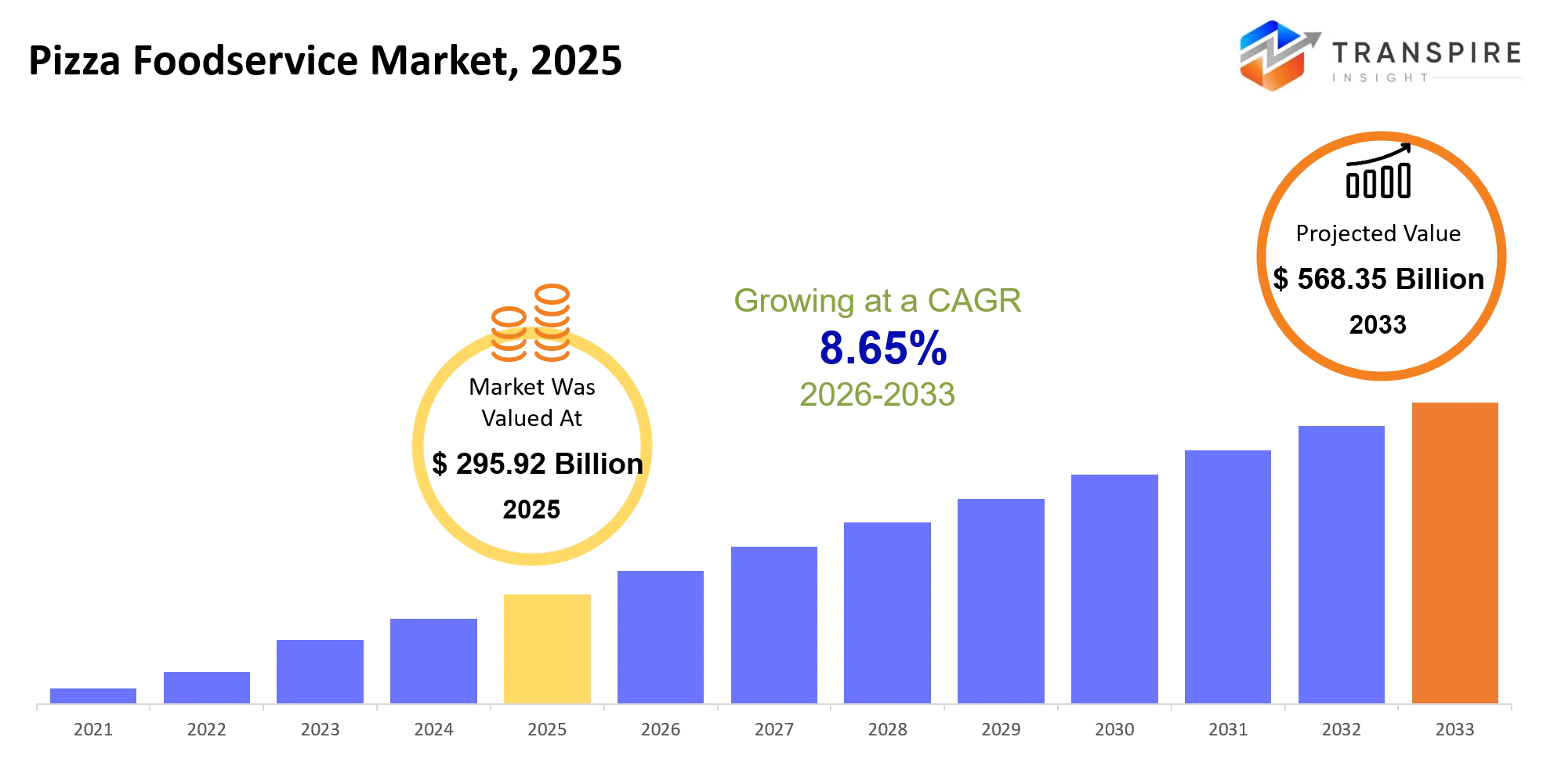
As per Transpire Insight Analysis, The Pizza Foodservice Marketsize is estimated at USD 295.92 billion in 2025 and is anticipated to reach USD 568.35 billion by 2033, growing at a CAGR of 8.65% from 2026 to 2033.
The pizza foodservice market around the world is changing. Restaurants are trying to find the mix between easy ways to order food, making sure the food is always good and offering meals that don't cost too much. Pizza shops and smaller places are spending money on ordering, delivery services, ways to change menus and programs that reward regular customers. In the next three to five years, ordering online and using third-party delivery services has become more connected to how restaurants run. Customers are also showing interest in single slices, fancy toppings and different kinds of crusts. A big change is that more restaurants are using technology to help run their foodservice. Mobile apps, digital payments and systems that track orders link customers to the kitchen and the delivery people. Rising costs and higher expenses have also pushed restaurants to make their kitchens work better and to control how much they spend on ingredients. These changes help the market grow by making it easier to order pizza, giving choices on the menu and helping businesses serve customers whether they come in, take it away or get it delivered.
Pizza Foodservice Market Size & Forecast:
- Market Size 2025: USD 295.92 Billion
- Expected Market Value (2033): USD 568.35 Billion
- Forecast CAGR (2026–2033): 8.65%
- Leading Region in 2025: North America
- Fastest Growing Region: Asia Pacific
- Key Company Profiles: Domino's Pizza, Pizza Hut, Papa John's, Little Caesars, Yum! Brands, Restaurant Brands International, Papa Murphy's, Marco's Pizza, California Pizza Kitchen, Blaze Pizza, MOD Pizza, Telepizza, Oetker, Nestlé, General Mills
Key Market Insights:
The market trend has shifted towards a blend of technological ease, menu innovation, and competitive pricing. The delivery service is still the biggest revenue-generating segment of the services offered, but technology spending and international operations have had an effect on how pizza companies acquire and retain customers.
- The delivery category accounts for 41.20% of the market, highlighting the significance of convenience at home and last-mile delivery fulfilment.
- The online delivery of pizza is expected to grow at a 9.10% CAGR due to mobile ordering, payment systems, and integration of delivery apps.
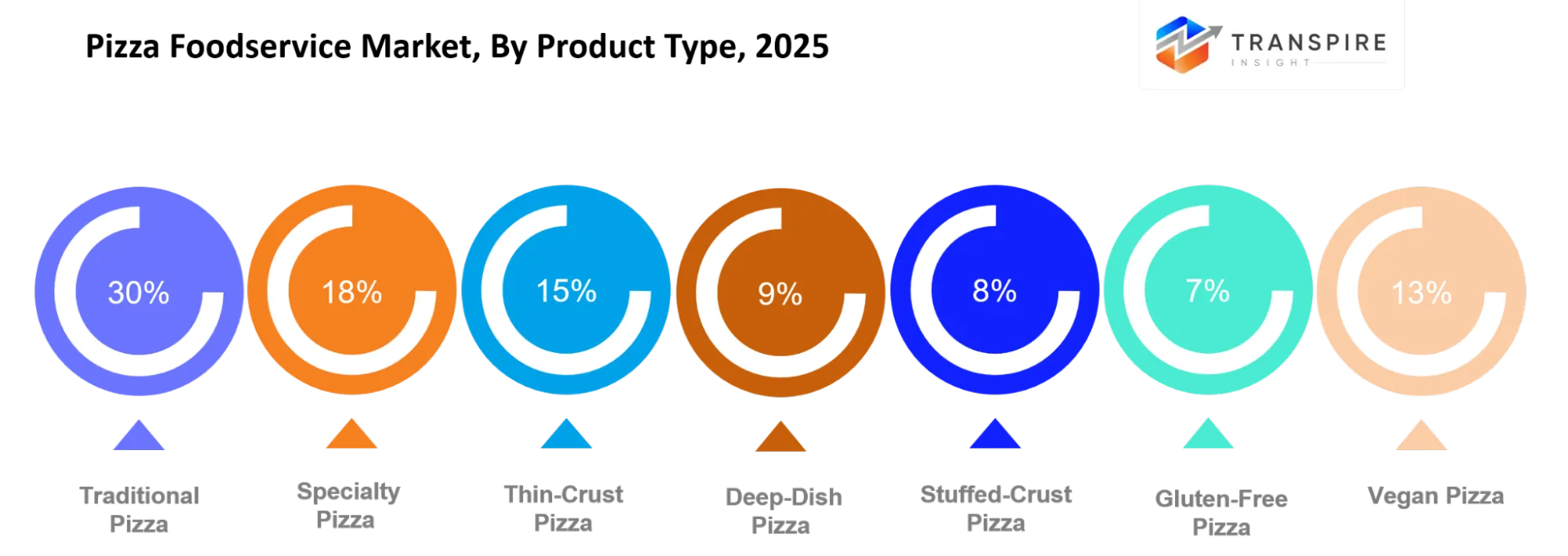
- The traditional pizza category accounts for 30% of the pizza type category distribution.
- The speciality pizza category accounts for 18% and encourages restaurants to introduce unique products through premium products and flavours.
- The thin-crust pizza category accounts for 15% and shows the significance of crust variety to cater to different taste and portion requirements.
What are the Key Drivers, Restraints, and Opportunities in the Pizza Foodservice Market?
Drivers
The growth of the market is Mobile orders, delivery convenience, and menu flexibility all become very important factors for the growth of the pizza foodservice market. Mobile orders allow customers to customize their orders, get promotional offers, and track delivery time without even going to a pizza restaurant. With the increase in the use of app-based deliveries, pizza companies have started increasing their online ordering capabilities and kitchen efficiency.
Restraints
Increases in the cost of ingredients, wages, rent, packaging and delivery costs can make a business less profitable. Costs are hard to cut because pizza companies use perishable ingredients, labour-intensive preparation and delivery and most small independent outlets have little capital to invest in sophisticated ordering systems and compete with big chains with a national network to share the costs of technology and marketing.
Opportunities
Opportunities for potential growth include AI to help with demand forecasting, food truck automated cooking processes, incentives for loyalty programs, and suburban market entry in the case of urban underprivileged areas. It is possible to use sales information in order to prepare for peak periods, reduce food waste, and optimize employee shifts. The Asia-Pacific region can become a good market for operators able to customize menus, prices, and distribution approaches. Online delivery channels may be used in order to create greater loyalty among customers.
|
Driver |
Relative Impact on Market Growth (%) |
Geographic Relevance |
Impact Timeline |
Demand Strength |
Growth Mechanism |
Key Beneficiaries |
Major Constraint |
|
Expansion of Online Food Delivery and Digital Ordering |
26% |
North America, Asia-Pacific, Europe |
Short-term (≤2 years) |
High |
Expands customer reach through convenient digital ordering channels |
Pizza chains, delivery platforms, restaurant operators |
High delivery commissions and customer acquisition costs |
|
Growing Demand for Quick-Service and Convenient Meals |
23% |
North America, Asia-Pacific, Middle East |
Short-term (≤2 years) |
High |
Increases frequent purchases through fast service and accessible menus |
Quick-service restaurants, franchisees, ingredient suppliers |
Intense competition and changing consumer spending |
|
Expansion of Pizza Chains and Franchise Networks |
20% |
Asia-Pacific, North America, Latin America |
Medium-term (2–4 years) |
High |
Accelerates outlet expansion and strengthens brand market penetration |
Franchise operators, pizza chains, food distributors |
High setup costs and operational complexity |
|
Menu Innovation and Demand for Customizable Products |
17% |
North America, Europe, Asia-Pacific |
Medium-term (2–4 years) |
High |
Attracts diverse consumers through new flavors and dietary options |
Restaurant brands, ingredient manufacturers, food innovators |
Ingredient costs and inconsistent product acceptance |
|
Adoption of Automation, AI, and Sustainable Operations |
14% |
North America, Europe, Asia-Pacific |
Long-term (≥4 years) |
Medium |
Improves kitchen efficiency, demand forecasting, and resource utilization |
Restaurant operators, technology vendors, packaging suppliers |
High implementation costs and integration challenges |
|
Total |
100% |
Global |
— |
— |
— |
— |
— |
What Has the Impact of Artificial Intelligence Been on thePizza Foodservice Market?
The use of artificial intelligence in business is making changes to the way in which orders are taken, the way the products are prepared, and even how the customers are handled. Order-taking systems based on AI can understand what customers have ordered, make recommendations about menu combinations, and allow for placing orders at a higher speed in the digital sphere. Ordering orders vocally and using chatbots will assist restaurants in dealing with common customer questions during peak times. The aforementioned applications will prove useful for those organisations that work in mobile apps, websites, and third-party delivery apps. Predictive analytics can use such factors as historical sales information, current day of the week, season, ongoing promotions, and local order rates to predict the demand for products. Using this, restaurants could be better prepared in terms of purchasing ingredients, scheduling workers, and preparing their kitchen stations depending on the expected number of orders. Proper planning will assist in minimising food losses and shortages while improving preparation time. AI delivery systems could help in allocating orders and choosing the optimal route. However, the effectiveness will depend on the traffic and delivery information.
Instance
In March 2026,Domino’s Pizza enhanced its Domino’s Tracker with the help of artificial intelligence, which enables the system to deliver more precise estimates of when the order will be ready. This technology makes use of real-time information from stores and machine learning.
Key Market Trends:
There is a trend towards connectivity and customer focus in the pizza foodservice industry. Restaurants are combining digital solutions with innovative products, efficient kitchen operations, and flexible dining concepts in order to remain competitive.
- Restaurants have evolved from making telephone calls to utilising apps and websites that provide personalisation, payment, and tracking possibilities.
- Companies are starting to provide options on toppings, crust, and sizes in order to meet the needs of individuals' preferences and special meals.
- Some companies are starting to add unusual ingredients and recipes to differentiate themselves from normal menu items.
- Loyalty programs, meal combinations, and time-bound discounts have become a great tool for attracting price-sensitive consumers.
- Restaurants are now collaborating with their own and third-party delivery services to reach more consumers.
- Demand analysis is helping companies in planning staffing, inventory, and preparation schedules through sales data analysis.
Pizza Foodservice Market Segmentation
By pizza types
The largest type among them is traditional pizza, which represents 30% of the supplied pizza-type distribution. Its existing recipes and high level of customer awareness allow for continued sales both in pizza chains and independently operated pizza places. The next one in size is speciality pizza, which makes up 18% and gives the chance for various restaurants to distinguish their menus by special products and flavours. The share of thin-crust and deep-dish pizzas are 15% and 9% correspondingly. Stuffed-crust and gourmet pizzas take 8% each. Gluten-free pizza represents 7%, and vegan pizza is 5%.
By service type
Delivery is the largest category (41.20%), the convenience of having a meal delivered without having to visit the restaurant. Dine-in, takeaway, drive-through, catering, quick-service restaurants and full-service restaurants cater for different occasions of consumption. The sustained growth in the importance of delivery has led to investment in specialised packaging, tracking, speed of order preparation and last-mile delivery. The report identifies online pizza delivery as the fastest-growing category, with a CAGR of 9.10%; the share of other service types is not available.
By restaurant type
Independent pizzerias differentiate through local presence, table service and niche menu, and the use of personalised recipes; pizza chains differentiate through branding, procedures and wider marketing. Quick-service restaurants differentiate through ease of access and speed of service; full-service restaurants differentiate through a greater focus on the customer 'experience'; cafés and food courts differentiate through presence alongside other dining options; and ghost kitchens differentiate through the provision of a delivery-based operating model that does not require a large amount of space for table service. The source does not include percentages for these categories of restaurants.
By crust type
Choosing the restaurant's pizza bases gives a choice to allow customers to pick their favourite. The thinner-style crust base appeals to the customers that are more interested in lighter, thinner bases than the thick and pan crust option, the "stuffed" option offers an exterior layer of ingredients, a hand-thrown crust offers the classic restaurant pizza that can be found through the menu, the Neapolitan style bases follows the traditional method of casting the dough, gluten free and cauliflower based bases offer restaurants a choice of bases which may contain specific ingredients for some customers. I cannot find the market share on these bases individually.
By topping
Cheese and meat remain the dominant traditional pizza menu ingredients, but seafood, vegetables, fruit, herbs and spices enable restaurants to expand the possibilities for flavour combinations. More plant-based toppings provide options for consumers who want to reduce or eliminate animal ingredients. Speciality toppings allow higher value-added products to be differentiated and can also support special/limited time menu introductions. Topping combinations can be used to mirror local tastes, facilitate ordering options, promote individual preferences and give products distinctive variation. No topping shares are available in the source document.
By Distribution Channel
Restaurant sales, internet ordering, mobile apps, call-in, drive-through, third-party delivery, and catering appeal to different segments. Restaurant sales let you more directly control the customer relationship and sales data. Internet ordering and mobile apps reach a wider online audience that currently exists on the web and mobile, and apps can also increase repeat sales and build loyalty. Call-in provides a voice ordering option, while drive-through and catering each appeal to convenience for smaller groups.
What are the Key Use Cases Driving the Pizza Foodservice Market?
Delivery is the use cases in the pizza foodservice market, belonging to the provided market distribution. The customers place the orders in the restaurant websites and applications as well as in the delivery apps in order to order the meals from their homes or workplaces, while order tracking and digital payments make it easier for the customers to purchase the meals. Takeaway, drive-through, and quick service formats cater to customers who require convenience during their lunch hours or on the go. Catering caters to the orders of groups of people for office, party, and social events, enabling restaurants to cater to many customers using one transaction. The use cases that have emerged include personalised meal ordering, AI-based recommendations, and delivery-specific ghost kitchens.
|
Report Metrics |
Details |
|
Market size value in 2025 |
USD 295.92 Billion |
|
Market size value in 2026 |
USD 317.98 Billion |
|
Revenue forecast in 2033 |
USD 568.35 Billion |
|
Growth rate |
CAGR of 8.65%from 2026 to 2033 |
|
Base year |
2025 |
|
Historical data |
2021 - 2024 |
|
Forecast period |
2026 - 2033 |
|
Report coverage |
Revenue forecast, competitive landscape, growth factors, and trends |
|
Regional scope |
United States; Canada; Mexico; United Kingdom; Germany; France; Italy; Spain; Denmark; Sweden; Norway; China; Japan; India; Australia; South Korea; Thailand; Brazil; Argentina; South Africa; Saudi Arabia; United Arab Emirates |
|
Key company profiled |
Domino's Pizza, Pizza Hut, Papa John's, Little Caesars, Yum! Brands, Restaurant Brands International, Papa Murphy's, Marco's Pizza, California Pizza Kitchen, Blaze Pizza, MOD Pizza, Telepizza, Oetker, Nestlé, General Mills |
|
Customization scope |
Free report customization (country, regional & segment scope). Avail customized purchase options to meet your exact research needs. |
|
Report Segmentation |
Pizza Type (Traditional Pizza, Specialty Pizza, Thin-Crust Pizza, Deep-Dish Pizza, Stuffed-Crust Pizza, Gluten-Free Pizza, Vegan Pizza, Gourmet Pizza); Service Type (Dine-In, Takeaway, Delivery, Drive-Through, Catering, Quick-Service Restaurant, Full-Service Restaurant, Food Trucks); Restaurant Type (Independent Pizzerias, Pizza Chains, QSRs, Full-Service Restaurants, Cafes, Food Courts, Ghost Kitchens); Crust Type (Thin Crust, Thick Crust, Pan Crust, Stuffed Crust, Hand-Tossed, Neapolitan, Gluten-Free, Cauliflower Crust); Topping (Cheese, Meat, Seafood, Vegetables, Fruits, Herbs & Spices, Plant-Based Toppings, Specialty Toppings); Distribution Channel (Direct Restaurant Sales, Online Delivery Platforms, Mobile Apps, Telephone Ordering, Drive-Through, Third-Party Delivery, Catering) |
Which Regions are Driving the Pizza Foodservice Market Growth?
North America
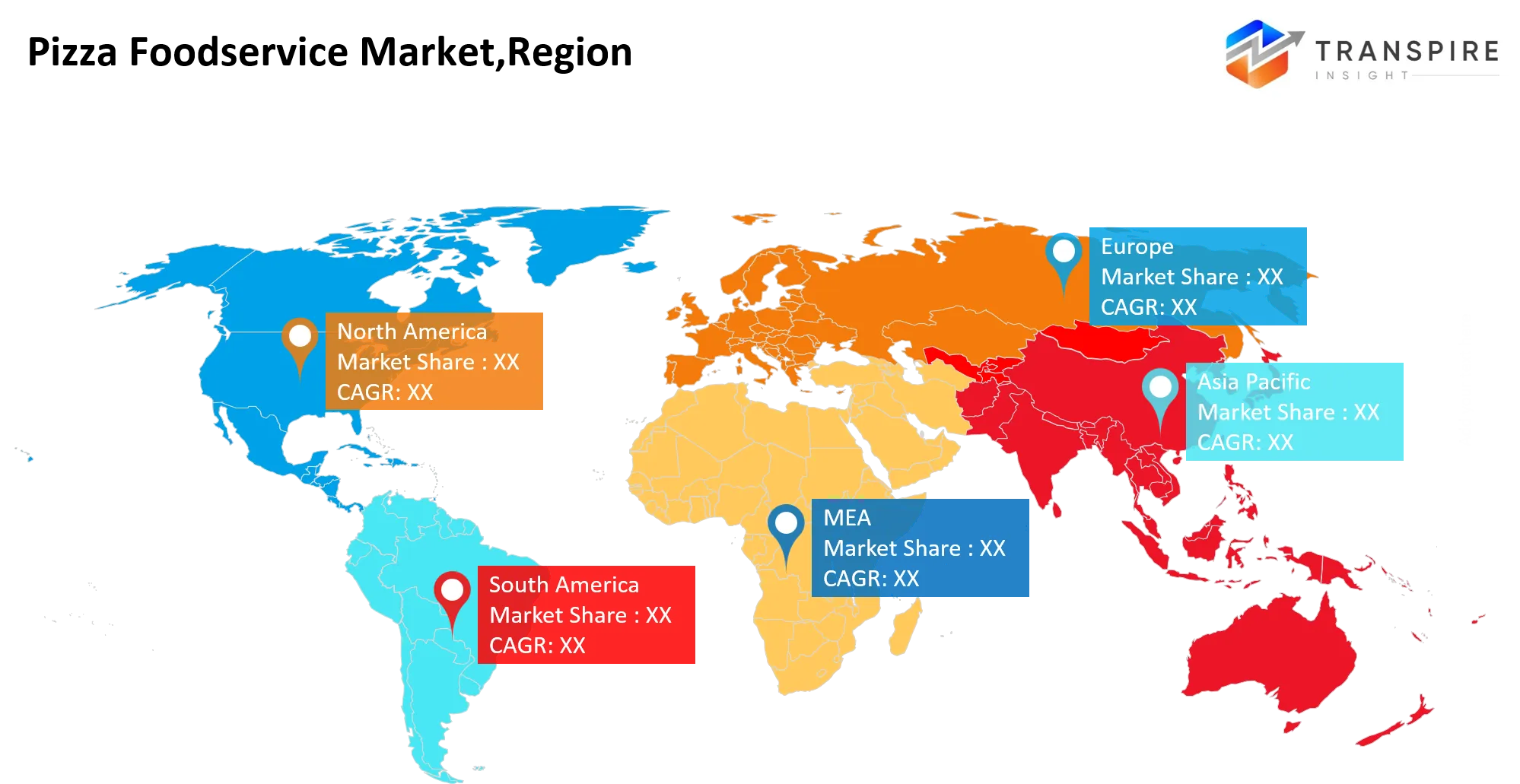
North America holds the largest share of the world's pizza food service market with 37.80% due to its extensive presence of pizza chains, restaurant networks, and customer awareness about pizza as a regular meal. Technology-based orders, loyalty schemes, and efficient delivery services enable restaurant operators to cater to their customers through various channels like dine-in, takeaway, and delivery. The competition among major brands further drives them to introduce new items on the menu, lower prices, and enhance their delivery services. Though these capabilities help market growth, operators need to control labour costs, ingredient costs, and fluctuating consumer budgets.
In April 2025, Domino’s Pizza collaborated with DoorDash to further increase online ordering capabilities within the USA. This collaboration ensures increased accessibility and provides an additional option for ordering of pizzas, contributing to growth in the regional foodservice sector.
Europe
Europe represents 28.00% of the market due to its presence of well-established foodservice industry, presence of restaurant networks in cities, and popularity of both conventional and innovative pizzas. The stability of Europe's market depends upon the presence of independent pizzerias, international chains, dine-in outlets, and takeaway places. The variation in tastes of local people forces the companies to vary the recipe of pizza according to individual countries.
In August 2025,Domino’s Pizza Group indicated growth in the market shares alongside improvements in delivery times and customer loyalty initiatives. All these initiatives show how important efficient operations and customer retention are in the European competitive pizza foodservice market.
Asia-Pacific
Asia-Pacific holds 24.00% of the market share and is expected to witness the highest growth rate among all regions with a CAGR of 8.40%. The increasing number of people living in urban areas, along with the increased use of smartphones and the emergence of online food delivery services, has created more business opportunities for the pizza industry. International and local players can lure customers with their locally tailored toppings, reasonable pricing, and easy order systems.
In January 2026, According to DPC Dash, there were 1,315 Domino’s Pizza stores in mainland China, Hong Kong, and Macau by the end of 2025. The number is a result of increased opportunities for pizza chains through wider availability and customer engagement in the region.
Who are the Key Players in the Pizza Foodservice Market and how do they compete?
The competition in the pizza foodservice market is based on factors such as product quality, pricing, speed of delivery, digital convenience, brand recognition, and restaurant growth. The key players in the market include Domino's, Pizza Hut, Papa John's, Little Caesars, and regional pizza chains, as well as independent pizzerias. Each of the competitors employs different strategies in the process of competition depending on the target audience, operational model, menu positioning, and geographical spread. Domino's specialises in value, digital ordering, delivery logistics, and standardised services. The launch of the individual Detroit-style Domino pizza is an example of a strategy that combines innovations in the menu with personalised portions. Pizza Hut distinguishes itself through innovation in the area of pan pizza, crust innovation, product diversification, and advertising. The launch of the Crispy Parm Pan Pizza shows how the development of the crust leads to the creation of a unique product. Papa John's pays attention to product quality, menu development, technology, and international franchise expansion. Its cooperation with Google Cloud announced aims at the improvement of digital order and customer experience through AI and analytics.
Pizza Foodservice Market companies
- Domino's Pizza
- Pizza Hut
- Papa John's
- Little Caesars
- Yum! Brands
- Restaurant Brands International
- Papa Murphy's
- Marco's Pizza
- California Pizza Kitchen
- Blaze Pizza
- MOD Pizza
- Telepizza
- Oetker
- Nestlé
- General Mills
|
Company |
Est. Revenue Share Range |
Key Offerings |
Strategic Positioning |
Geographic Strength |
Technology Focus |
|
Domino's Pizza |
Estimated 5–8% |
Delivery pizza, carryout, specialty pizzas, sides |
scale leadership through value and delivery efficiency |
North America, Europe, Asia Pacific |
AI-assisted operations, digital ordering, delivery optimization |
|
Pizza Hut (Yum! Brands) |
Estimated 4–7% |
Pan pizza, stuffed-crust pizza, pasta, wings |
Broad-format competition across dine-in and delivery |
North America, Asia Pacific, Middle East |
Loyalty platforms, digital ordering, automated restaurant systems |
|
Little Caesars |
Estimated 2–4% |
HOT-N-READY pizza, deep-dish pizza, Detroit-style pizza |
Cost leadership through affordable, convenient carryout |
North America, Latin America, Asia Pacific |
Digital ordering, automated production, pickup convenience systems |
|
Papa Johns |
Estimated 1–2% |
Specialty pizzas, original dough pizza, Papadias, sides |
Quality-led differentiation through ingredients and innovation |
North America, Europe, Middle East |
Digital ordering, customer loyalty, delivery management |
|
Telepizza |
Estimated 0.5–1.5% |
Classic pizzas, specialty pizzas, sides, delivery |
Franchise-led expansion with localized menus and pricing |
Europe, Latin America, Middle East |
Online ordering, delivery coordination, franchise systems |
|
Marco's Pizza |
Estimated 0.3–0.8% |
Specialty pizzas, fresh-dough pizzas, subs, wings |
Product-quality differentiation through franchising |
North America, Latin America |
Digital ordering, loyalty tools, franchise operations technology |
|
Papa Murphy's |
Estimated 0.2–0.6% |
Take-and-bake pizzas, customizable pizzas, sides |
Niche positioning around fresh preparation and home baking |
North America |
Online customization, pickup ordering, customer engagement platforms |
|
California Pizza Kitchen |
Estimated 0.1–0.4% |
California-style pizzas, premium toppings, gluten-free options |
Premium positioning through culinary variety |
North America, Asia Pacific |
Digital ordering, menu personalization, omnichannel services |
|
MOD Pizza |
Estimated 0.1–0.3% |
Custom-built pizzas, individual-size pizzas, salads |
Fast-casual differentiation through customization and speed |
North America |
Digital customization, loyalty applications, order-ahead systems |
Recent Development News
In April 2025, Papa John's has extended its multi-year partnership with Google Cloud to use artificial intelligence, machine learning, and data analysis for its ordering and customer experience. This will help increase convenience for the customer while engaging customers and improving operations.
https://stories.papajohns.com/papa-johns-and-google-cloud-team-deliver-ai-powered-pizza-experiences
In February 2026, Domino’s has released its fourth-quarter and full-year results for 2025, with retail sales up 5.4%, excluding any impacts from foreign currency fluctuations, and net store growth of 776 stores in 2025. This illustrates the company's focus on restaurant growth and value.
What Strategic Insights Define the Future of the Pizza Foodservice Market?
The future of the pizza foodservice market would hinge on how well firms are able to integrate convenience, product differentiation, and cost management. While online ordering and delivery provide ways of reaching more consumers, rising platform fees, increased costs, and ingredient costs can affect profitability despite the high number of orders. One such threat is over-reliance on promotions and discounts that encourage repeat purchases while not providing enough margin. The firm must therefore concentrate on customer loyalty, kitchen efficiency, and direct digital ordering as opposed to just promotional activities.A new opportunity is in Asia-Pacific and the firm should expand through localized menus, cheap products, and technology-assisted delivery. AI-based demand forecasting can help with better inventory management. The market players should concentrate on profitable growth, customer loyalty, and expansion opportunities in light of local demand, costs, and delivery capabilities.
Pizza Type
- Traditional Pizza
- Specialty Pizza
- Thin-Crust Pizza
- Deep-Dish Pizza
- Stuffed-Crust Pizza
- Gluten-Free Pizza
- Vegan Pizza
- Gourmet Pizza
Service Type
- Dine-In
- Takeaway
- Delivery
- Drive-Through
- Catering
- Quick-Service Restaurant
- Full-Service Restaurant
- Food Trucks
Restaurant Type
- Independent Pizzerias
- Pizza Chains
- QSRs
- Full-Service Restaurants
- Cafes
- Food Courts
- Ghost Kitchens
Crust Type
- Thin Crust
- Thick Crust
- Pan Crust
- Stuffed Crust
- Hand-Tossed
- Neapolitan
- Gluten-Free
- Cauliflower Crust
Topping
- Cheese
- Meat
- Seafood
- Vegetables
- Fruits
- Herbs & Spices
- Plant-Based Toppings
- Specialty Toppings
Distribution Channel
- Direct Restaurant Sales
- Online Delivery Platforms
- Mobile Apps
- Telephone Ordering
- Drive-Through
- Third-Party Delivery
- Catering
Frequently Asked Questions
Find quick answers to common questions.
The pizza foodservice market size was valued at USD 295.92 Billion in 2025 and is poised to reach USD 568.35 Billion by 2033, expanding at a 8.65% CAGR.
Key segments for the pizza foodservice market are Pizza Type (Traditional Pizza, Specialty Pizza, Thin-Crust Pizza, Deep-Dish Pizza, Stuffed-Crust Pizza, Gluten-Free Pizza, Vegan Pizza, Gourmet Pizza); Service Type (Dine-In, Takeaway, Delivery, Drive-Through, Catering, Quick-Service Restaurant, Full-Service Restaurant, Food Trucks); Restaurant Type (Independent Pizzerias, Pizza Chains, QSRs, Full-Service Restaurants, Cafes, Food Courts, Ghost Kitchens); Crust Type (Thin Crust, Thick Crust, Pan Crust, Stuffed Crust, Hand-Tossed, Neapolitan, Gluten-Free, Cauliflower Crust); Topping (Cheese, Meat, Seafood, Vegetables, Fruits, Herbs & Spices, Plant-Based Toppings, Specialty Toppings); Distribution Channel (Direct Restaurant Sales, Online Delivery Platforms, Mobile Apps, Telephone Ordering, Drive-Through, Third-Party Delivery, Catering)
Growth is primarily driven by increasing online food delivery orders, expanding quick-service restaurant chains, growing consumer preference for customized pizzas, and the wider adoption of digital ordering platforms.
The market is led by major manufacturers including Domino's Pizza, Pizza Hut, Papa John's, Little Caesars, Yum! Brands, Restaurant Brands International, Papa Murphy's, Marco's Pizza, California Pizza Kitchen, Blaze Pizza, MOD Pizza, Telepizza, Oetker, Nestlé, General Mills
North America constitutes 37.80% of the total pizza foodservice market around the world, driven by high levels of pizza consumption, chain restaurants, delivery services, online ordering, and the popularity of fast food.
Opportunities include the development of food delivery platforms, the rising demand for healthier and vegetarian pizzas, franchise growth in new markets, the trend of customised pizzas, and digital ordering and automated kitchens.
- Domino's Pizza
- Pizza Hut
- Papa John's
- Little Caesars
- Yum! Brands
- Restaurant Brands International
- Papa Murphy's
- Marco's Pizza
- California Pizza Kitchen
- Blaze Pizza
- MOD Pizza
- Telepizza
- Oetker
- Nestlé
- General Mills
About the Authors

Chetan Dhatrak
I’m Chetan Dhatrak, a Senior Research Analyst at Transpire Insight, specializing in the Consumer Goods, Foods and Beverages industry. I focus on analyzing market trends, consumer behavior, competitive landscapes, and industry developments to deliver accurate, data-driven insights. My research at Transpire Insight is built on credible sources and in-depth analysis, helping businesses and readers better understand market dynamics, emerging opportunities, and evolving consumer preferences. I’m committed to creating reliable, well-researched content that supports informed decision-making and reflects the latest developments in the consumer goods and food & beverage sectors.

Chakradhar Khansole
Chakradhar serves as the Research Director at Transpire Insight, bringing over 8 years of experience in technology, innovation, and strategic market intelligence. He specializes in transforming complex market data into actionable business insights that enable organizations to make informed, growth-oriented decisions. Recognized for his strategic vision and analytical expertise, Chakradhar leads high-impact research initiatives, delivering comprehensive market assessments, competitive intelligence, and forward-looking industry analysis.
Recently Published Reports
-
Apr 2026
Baby Infant Formula Market
Baby Infant Formula Market Size, Share & Analysis Report By ype (Infant Milk, Follow On Milk, Specialty Baby Milk, Growing-Up Milk), By Ingredient (Carbohydrate, Fat, Protein, Minerals, Vitamins, and Others), By Product Form (Powder, Liquid, and Ready-to-feed), By Distribution Channels (Supermarket/Hypermarket, Specialty Store, Pharmacies, Online Retail, and Others), and Geography (North America, Europe, Asia-Pacific, Middle East and Africa, South and Central America), 2021 - 2031
-
Apr 2026
Edible Insects for Animal Feed Market
Edible Insects for Animal Feed Market Size, Share & Analysis Report By Type (Insect Powder, Insect Meal, Insect Bar, Insect Paste, Insect Oil, and Others), By Insect Type (Beetles, Cricket, Caterpillar, Hymenoptera, Orthoptera, Tree Bugs, and Others), By Application (Livestock, Pet Food, and Aquaculture), By Livestock Type (Poultry, Swine, and Others), and Geography (North America, Europe, Asia-Pacific, Middle East and Africa, South and Central America), 2021 - 2031
-
Apr 2026
Food Industry Disinfection and Bacterial Control Market
Food Industry Disinfection and Bacterial Control Market Size, Share & Analysis Report By Type (Chemical Disinfectants, Physical Disinfectants, and Biocides and Antimicrobials), By Application (Food Processing Equipment Surface Disinfection, Food Preparation Areas Surface Disinfection, Storage Areas Surface Disinfection, Anti-microbial Coatings Food Preservation, and Preservative Solutions Food Preservation), By End User (Meat and Poultry Processing, Dairy Processing, Seafood Processing, Bakery and Confectionery, Restaurants and Commercial Kitchens, and Food Service Providers), By Sales Channel (Online, Offline), and Geography (North America, Europe, Asia-Pacific, Middle East and Africa, South and Central America), 2021 - 2031
-
May 2026
Freeze Dried Food Market
Freeze Dried Food Market Size, Share & Analysis Report By Product Type (Fruits, Vegetables, Freeze-Dried Dairy Products, Freeze-Dried Meat and Seafood, Freeze-Dried Pet Food, and Prepared Meal), By Nature (Organic, and Conventional), By Form (Powdered, Granules, and Diced), By End Use (Breakfast Cereals, Dairy Products, Bakery & Confectionery, Nutritional Bars & Supplements, Powdered Beverages, Snacks, and Retail (Household)), and Geography (North America, Europe, Asia-Pacific, Middle East and Africa, South and Central America), 2021 - 2031