

Perilla Seed Oil Market Summary:
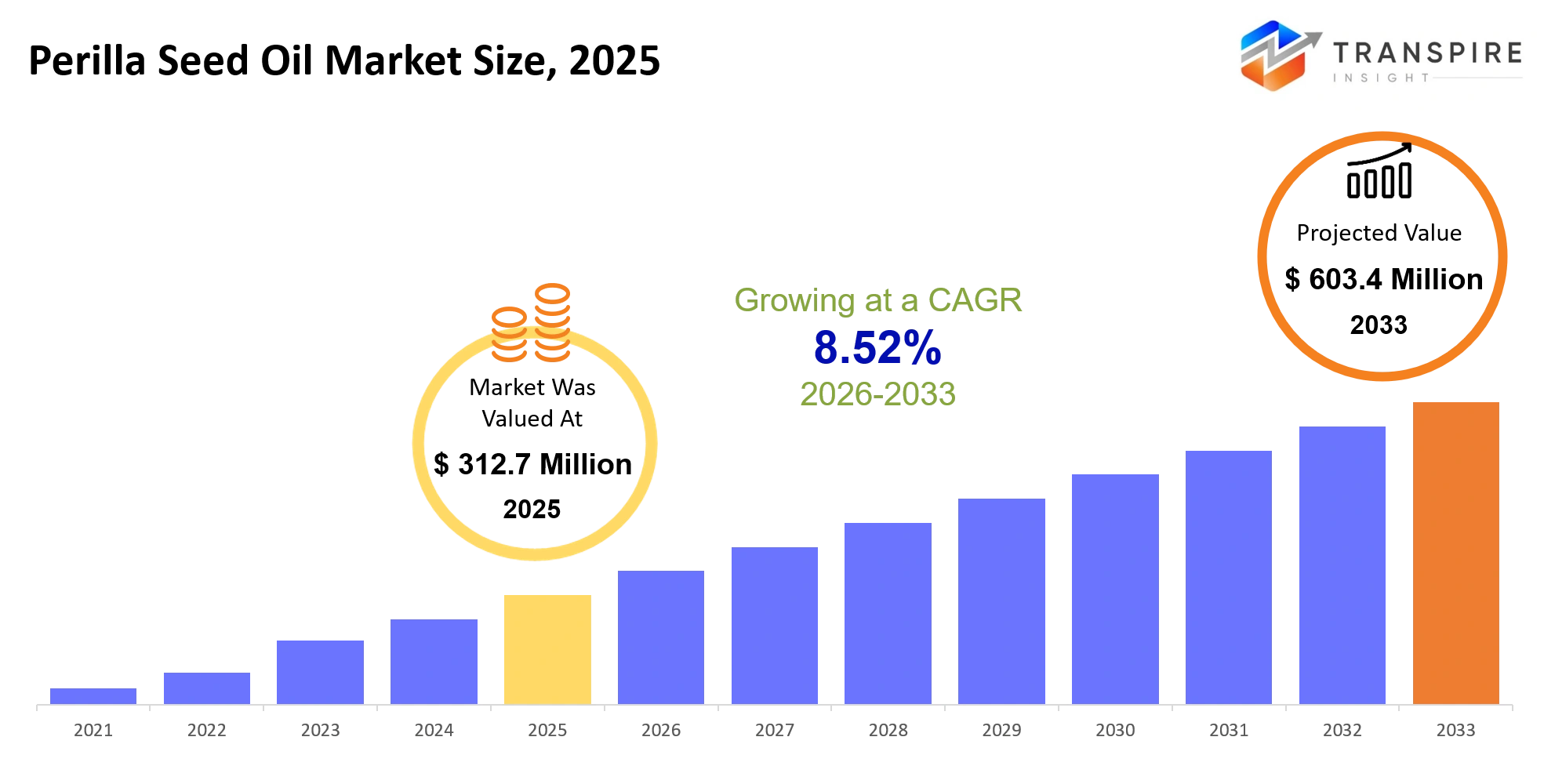
As per Transpire Insight Analysis, the Perilla Seed Oil Market size is estimated at USD 312.7 Million in 2025 and is anticipated to reach USD 603.4 Million by 2033, growing at a CAGR of 8.52% from 2026 to 2033.Growing demand for products based on plants, containing omega-3, and natural in food, supplement, and personal care industries.
The perilla seed oil market has changed a lot from what it used to be. It was mainly used in local food in certain areas. It is now being used more and more in health products, beauty products, and special foods. Companies are using it more because it has a lot of omega-3 fatty acids naturally. People are also starting to accept it as a plant-based ingredient in health-focused products.
In the past three to five years, people have started to like products that are not too processed and have simple labels. This has led companies to produce more high-quality, cold-pressed, organic perilla seed oil. A big change helping this market is the use of ways to grow the plants and better ways to press the oil. These new methods help keep the things in the oil and also make it easier to make more of it. The fast growth of the plant-based health industry has made more people want perilla seed oil in different areas. As companies keep finding ways to use perilla seed oil and people look for natural options instead of man-made ones, the market for perilla seed oil is expected to grow in a steady and lasting way in the years ahead.
Perilla Seed Oil Market Size & Forecast:
- Market Size 2025: USD 312.7 Million
- Expected Market Value (2033): USD 603.4 Million
- Forecast CAGR (2026–2033): 8.52%
- Leading Region in 2025: Asia Pacific
- Fastest Growing Region: North America
- Key Company Profiles: Ottogi, CJ CheilJedang, NOW Foods, Nature's Way, Swanson Health, Kadoya Sesame Mills, Henry Lamotte Oils, Gustav Heess, Bioriginal Food & Science, Huiles Bertin, Flora Manufacturing, NutriBiotic, Daesang Corporation, Spectrum Organics, Jedwards International.
Key Market Insights:
The perilla seed oil market globally is progressing because the product is being applied to various sectors such as food, nutraceuticals, and personal care due to innovations and premiumization. These factors have increased competitiveness within the market and will also facilitate growth.
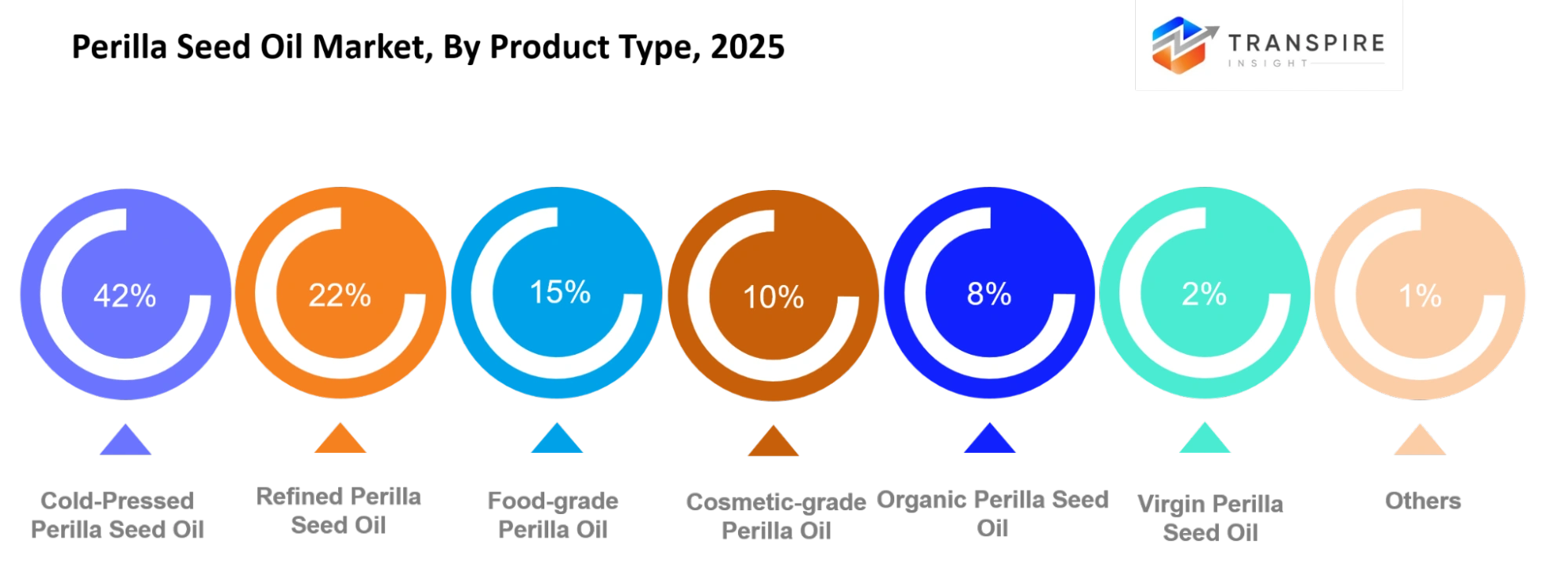
- The cold-pressed perilla seed oil segment holds 42% of the market, with the players adopting new technologies for cold extraction to preserve nutrients and meet consumer demands for unrefined and healthy products.
- The organic perilla seed oil segment will experience the highest CAGR of 15.8%, due to the increase in organic certifications and consumers’ preferences for natural products.
- The refined perilla seed oil segment will contribute to 22% of the market, owing to the efforts taken by the players in improving their refining technology and increasing the stability of the products for wide commercial and industrial use.
- The food-grade perilla oil segment is estimated to capture 15% of the market, owing to the introduction of functional foods and enriched edible oil products.
- The cosmetic-grade perilla oil segment accounts for 10% of the market, owing to the inclusion of the ingredient by skincare brands in moisturisers and anti-ageing formulations.
- Players are focusing on developing organic and premium product segments through traceable sourcing methods and environmental practices.
What are the Key Drivers, Restraints, and Opportunities in the Perilla Seed Oil Market?
Drivers
The increasing incorporation of plant extracts in functional foods, dietary supplements, and premium skin care products is one of the most important factors that drives the market for perilla seed oil. Awareness among consumers about the benefits of omega-3 fatty acid content in natural oils is leading to a preference for clean-label and clear-source products. Food processing companies, nutraceutical firms, and cosmetics companies are broadening their range of products owing to the rise in consumer demand.
Restraints
There are still many issues that persist in the market due to the scarcity of perilla seeds of good quality and their concentration in a small number of countries that produce them. The seasonal differences in harvesting, the irregularities in raw material sourcing and increased production costs result in price variations that limit the expansion on a larger scale.
Opportunities
There is an important opportunity for increased commercial growing, improved extraction techniques, and enhanced organic certification practices. Sustainable agricultural practices coupled with more advanced cold pressing techniques will result in higher-quality products being produced in a more efficient manner. Another opportunity is that there is increased demand for natural nutrition and cosmetic ingredients from North America and Europe. This offers producers the opportunity to export their products and increase their international reach.
What Has the Impact of Artificial Intelligence Been on the Perilla Seed Oil Market?
Artificial intelligence is steadily making operations more efficient through intelligent farming practices, processing and supply chain management within the perilla seed oil market. For instance, agricultural producers apply monitoring technology that uses artificial intelligence to evaluate soil composition, weather conditions and crop health, helping farmers to take necessary actions to enhance the quality of perilla seed and prevent risks connected with their cultivation. In the course of processing, artificial intelligence contributes to automation, which makes it possible to maintain constant working conditions during cold press extraction of oil and minimise losses of materials in the process.
AI can be applied to improve demand forecasting and planning of inventories of companies. Through analysing past sales records and consumer preferences, artificial intelligence contributes to better alignment between production and demand for perilla seed oil, thus making it possible to cut unnecessary inventories and respond quicker to changing consumer demands. Moreover, quality control through the application of computer vision can detect problems with products before packaging and help increase quality assurance. Many small and medium-sized producers do not have the resources and means to apply artificial intelligence in the process of production. In March 2025, the application of artificial intelligence (AI) and digital agronomy tools to assist in the optimisation of planting timing, monitoring of crop condition, prediction of diseases, and yield quality improvement among oilseed farmers. Although such an AI system is applicable in a variety of oilseed crops, it may be beneficial in perilla seed farming due to improved productivity and quality of raw materials.
Key Market Trends:
The perilla seed oil market around the world is undergoing an evolution towards high-end products that are sustainably made and offer multiple applications. Innovation in production processes, changes in consumer lifestyle trends and increased applications in various industries contribute to shaping new trends in the development of products and business.
- Consumers have been gradually shifting from conventional edible oil production to minimally processed and nutritious speciality oils with guaranteed quality.
- Firms involved in the production of foods are using perilla seed oil for functional food formulations due to growing interest in natural ingredients.
- Skin care companies are using botanical oils more often in their products as the cosmetic industry becomes more oriented towards natural products.
- Organic cultivation of plants and sustainable agriculture are becoming more prevalent as consumers become increasingly concerned about sustainable sourcing and traceability.
- Cold-pressed extraction process becomes more popular because it preserves the nutritional value of the oil while providing differentiation.
- Online retail channels are increasingly used by companies manufacturing speciality products to reach health-oriented customers all over the world.
- Modern technologies are used to improve production efficiency and automation.
Perilla Seed Oil Market Segmentation
By product type
Cold-Pressed Perilla Seed Oil holds the market dominance with a market share of 42% owing to its excellent nutritional content, natural production process, and high consumer preference towards unrefined oil. The share of Refined Perilla Seed Oil is 22%, owing to its wide application in food production processes requiring stability of the products. The market share of Food-grade Perilla Oil is 15%, whereas the share of Cosmetic-grade Perilla Oil is 10%. This is due to the rise in demand for botanical components in skin care products. The share of Organic Perilla Seed Oil is 8%, whereas it is expected to witness the fastest CAGR of 15.8%. This is attributed to the rising demand for organic products.
By Application
The Food & Beverages sector is dominating the industry due to extensive use of perilla seed oil in cooking oils, functional foods, and nutrition products. The segment of Dietary Supplements is increasing continuously owing to the growing consumer trend for getting omega-3 fatty acids from plant-based sources. On the other hand, the segment of Cosmetics & Personal Care is gaining prominence due to the increased use of botanical oils in skin care and hair care products.
By end users
Food Manufacturers have continued to be the largest consumers since the increased use of speciality oils in processed and health foods is becoming common. Nutraceutical Companies are increasing the level of product development in response to the increased need for natural supplements. The use of perilla seed oil in cosmetic manufacturers has continued to increase as part of high-quality makeup, while Pharmaceutical Companies are carrying out research on its functionality in health products.
By Distribution channels
Supermarkets & Hypermarkets have been able to create considerable sales volumes from providing extensive product visibility and consumer accessibility. Health Food Stores and Specialty Stores continue to experience stable demand through their efforts to attract consumers interested in superior wellness products. On the other hand, Online Retail has developed into one of the fastest-growing sales channels, making it possible for companies to reach more customers through online retailing. Direct Sales and Wholesalers are among the other channels that are instrumental in improving product availability.
By form
Liquid Perilla Seed Oil still remains the best form due to the high frequency of its utilisation in cooking, dietary supplements, and cosmetics. Capsules and Softgels are becoming increasingly popular with customers who are more health-conscious and prefer ready-to-use nutritional supplements of standardised doses. At the same time, Bulk Oil keeps serving industries, and Powder, along with other forms, is getting increasingly used with the emergence of functional foods and nutraceuticals.
What are the Key Use Cases Driving the Perilla Seed Oil Market?
The most common use of perilla seed oil is in the food and beverages sector, where cold-pressed perilla seed oil is used in gourmet cooking oils, salads, and functional foods. These are popular because of their omega-3 fatty acid content and natural extraction process.
Apart from being used in food items, perilla seed oil finds usage in dietary supplements from nutraceutical companies and skincare and hair care products from cosmetics companies because of its moisturising and antioxidant properties. Even some pharmaceutical firms have been exploring the possible use of perilla seed oil in certain wellness formulations.
There are emerging applications of perilla seed oil in functional nutrition, aromatherapy, and speciality animal feeds. Increased investments in plant-based ingredients and clean-label product development are driving manufacturers to explore commercial applications of this oil.
|
Report Metrics |
Details |
|
Market size value in 2025 |
USD 312.7 Million |
|
Market size value in 2026 |
USD 340.5 Million |
|
Revenue forecast in 2033 |
USD 603.4 Million |
|
Growth rate |
CAGR of 8.52% from 2026 to 2033 |
|
Base year |
2025 |
|
Historical data |
2021 - 2024 |
|
Forecast period |
2026 - 2033 |
|
Report coverage |
Revenue forecast, competitive landscape, growth factors, and trends |
|
Regional scope |
United States; Canada; Mexico; United Kingdom; Germany; France; Italy; Spain; Denmark; Sweden; Norway; China; Japan; India; Australia; South Korea; Thailand; Brazil; Argentina; South Africa; Saudi Arabia; United Arab Emirates |
|
Key company profiled |
Ottogi, CJ CheilJedang, NOW Foods, Nature's Way, Swanson Health, Kadoya Sesame Mills, Henry Lamotte Oils, Gustav Heess, Bioriginal Food & Science, Huiles Bertin, Flora Manufacturing, NutriBiotic, Daesang Corporation, Spectrum Organics, Jedwards International. |
|
Customization scope |
Free report customization (country, regional & segment scope). Avail customized purchase options to meet your exact research needs. |
|
Report Segmentation |
By Product Type (Cold-Pressed Perilla Seed Oil, Refined Perilla Seed Oil, Organic Perilla Seed Oil, Virgin Perilla Seed Oil, Blended Perilla Oil, Food-grade Perilla Oil, Cosmetic-grade Perilla Oil, Others); By Application (Food & Beverages, Dietary Supplements, Cosmetics & Personal Care, Pharmaceuticals, Animal Feed, Functional Foods, Aromatherapy, Others); By End User (Food Manufacturers, Nutraceutical Companies, Cosmetic Manufacturers, Pharmaceutical Companies, Retail Consumers, Animal Feed Producers, Others); By Distribution Channel (Online Retail, Supermarkets & Hypermarkets, Specialty Stores, Direct Sales, Health Food Stores, Wholesalers, Others); By Form (Liquid, Capsules, Softgels, Bulk Oil, Powder, Others). |
Which Regions are Driving the Perilla Seed Oil Market Growth?
North America
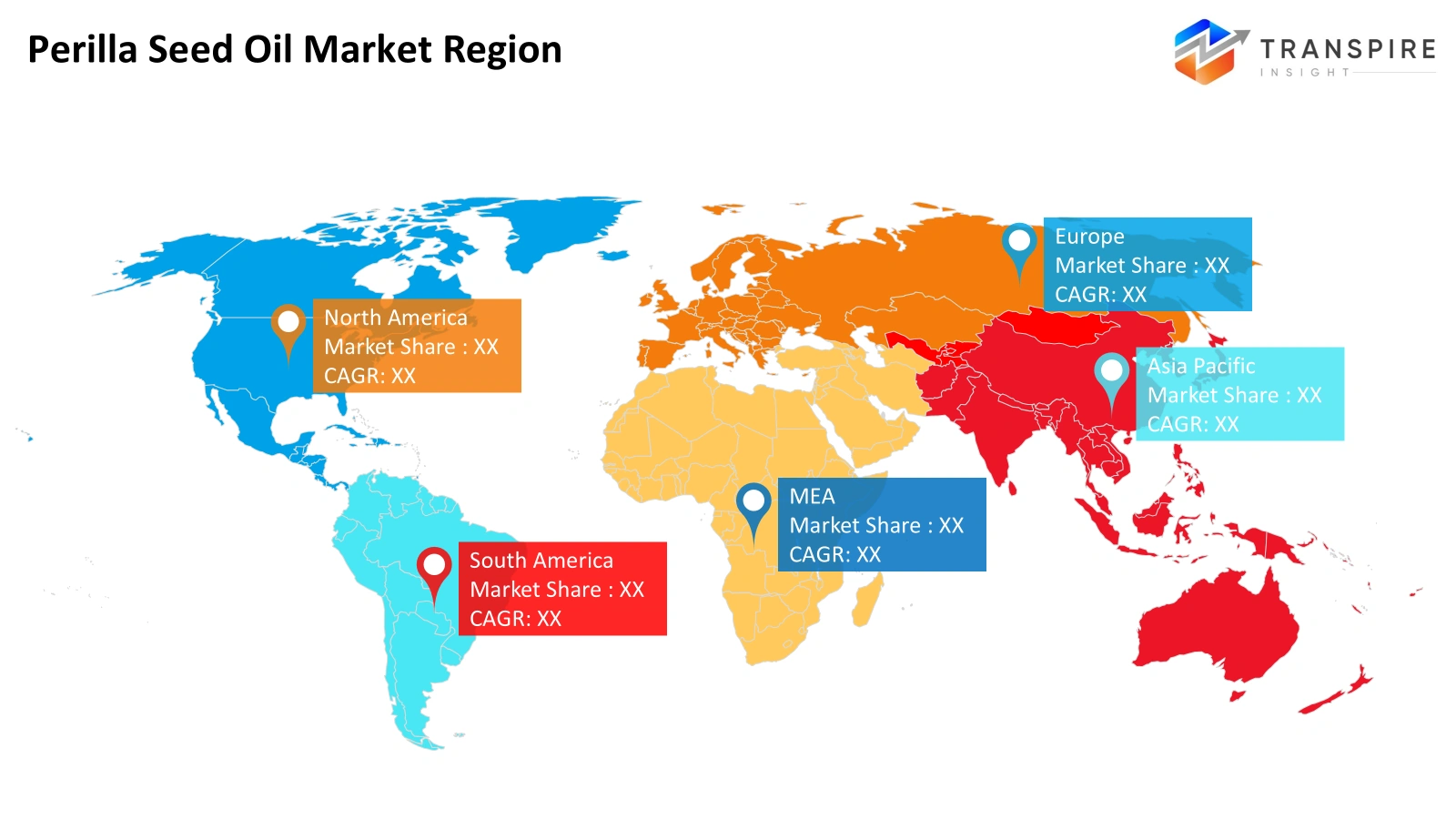
North America accounts for 24% of the worldwide market share and is expected to witness the highest CAGR of 16.6% over the forecast period. The growing consumer preference for products based on plant nutrition, dietary supplements, and natural wellness has fueled the demand for perilla seed oil. An increased supply of the product through online stores, health speciality stores, and gourmet food producers will increase the market presence within the region. Investments in functional nutrition and clean-label products can help generate future growth prospects.In May 2025, KKOSUM, a South Korean manufacturer of cold-pressed virgin perilla oil, exhibited its Cold-pressed Virgin Perilla Oil at SEOUL FOOD 2025 To-Go in Chicago (USA). The exhibition aimed at increasing the company’s market presence in North America through the promotion of Korean perilla oil among food distributors, retailers, and wellness product buyers in the U.S., which is related to the increased commercial interest in omega-3 oils derived from plants in North America.
Europe
Europe contributes 23% of the worldwide market share and experiences continuous growth due to a strong demand for natural premium ingredients in the food industry, nutraceuticals, and personal care products. Compared to Asia Pacific, the region depends more on the import of raw materials, but it possesses stringent quality standards and expertise in producing high-quality products. Consumers' preference for organic, clean-label, and sustainable ingredients helps in generating continuous market growth.
Asia Pacific
The Asia Pacific region is leading the market for perilla seed oil with 46% of the total market share due to the high prevalence of perilla farming, processing infrastructure, and consumption in foods and wellness applications. Nations like China, South Korea, and Japan are gaining an edge in terms of agricultural output and efficient logistics to ensure continuous availability of the raw material. Investment in value-added ingredients and nutraceuticals manufacturing has helped the region maintain its stronghold in the market.In April 2025, the Korea Agro-Fisheries & Food Trade Corporation (aT) announced updates of international certifications, such as FDA certification and HACCP certification, for Korean Perilla Oil products marketed via the company’s K-Food Trade portal. Such certifications increase export opportunities and make Korean perilla oil more competitive in the market.
Who are the Key Players in the Perilla Seed Oil Marketand how do they Compete?
In the perilla seed oil industry, competition occurs due to the factors of product quality, sourcing skills, processing technology, and ability to serve various industries. The firms are developing strategies involving the production of premium-quality oils, organic products, and formulations to gain a competitive advantage in the market. Sustained investments in cultivation techniques, processing technologies, and international distribution networks are increasingly being recognised as competitive advantages.
Henry Lamotte Oils GmbH specialises in premium-quality speciality vegetable oils and its emphasis on quality assurance processes. It places focus on innovations in food, nutraceuticals, and cosmetic ingredient products and expands its distribution network through strategic alliances. Aromex Industry produces natural plant-derived oils with unique formulations that cater to its specialised customers in the food and personal care industries. Hunan Nutramax Inc. gains its competitive advantage from offering standardised botanical extracts, along with the development of innovative processing technology that helps achieve product uniformity. Kangcare Bioindustry Co., Ltd. keeps developing its portfolio by means of research-oriented product innovation and certification, appealing to health-conscious buyers and nutraceutical producers. As for Shaanxi Jiahe Phytochem Co., Ltd., its competitive advantage includes diversification of its botanical extracts, as well as sales of its products internationally, which is due to increasing demand for plant-based raw materials.
Perilla Seed Oil Market companies
- Ottogi
- CJ CheilJedang
- NOW Foods
- Nature's Way
- Swanson Health
- Kadoya Sesame Mills
- Henry Lamotte Oils
- Gustav Heess
- Bioriginal Food & Science
- Huiles Bertin
- Flora Manufacturing
- NutriBiotic
- Daesang Corporation
- Spectrum Organics
- Jedwards International
Recent Development News
In September 2025, Hunan Nutramax Inc. initiated Phase II of its Longsheng production plant project to expand the company’s production capacity of botanic products. This move would lead to increased efficiency and would address the high demand for plant-based health products.
Source: https://www.nutra-max.com/news/2/
In April 2026, Henry Lamotte Oils made known their involvement in Vitafoods Europe 2026, where they were exhibiting speciality vegetable oils and functional ingredient solutions for the nutraceutical industry.
Source: https://lamotte-oils.de/en/news/
What Strategic Insights Define the Future of the Perilla Seed Oil Market?
The worldwide perilla seed oil industry will grow through diversifying products, establishing high-end positioning, and adopting the product in the functional food, nutraceutical, and personal care segments. Businesses that will concentrate on modern extraction techniques, certified organic cultivation, and transparency in sourcing will have a competitive edge because of the rising demand for plant-based ingredients. One of the risks that is not apparent to many people in the market is the reliance of the market on a few agricultural areas.
One of the opportunities available is increasing cultivation of the product in other agricultural areas and formulation of value-added products targeting health-conscious consumers. This is coupled with strategic alliances with food producers, cosmetic companies, and nutraceutical firms to increase the pace of market penetration. For sustainable long-term growth in the business, organisations need to emphasise building resilience in their supply chains, innovations in products, and quality control in order to cope with regulations and changing consumer expectations.
Key Segmentations are:
By Product Type
- Cold-Pressed Perilla Seed Oil,
- Refined Perilla Seed Oil
- Organic Perilla Seed Oil
- Virgin Perilla Seed Oil
- Blended Perilla Oil
- Food-grade Perilla Oil,
- Cosmetic-grade Perilla Oil
By Application
- Food & Beverages
- Dietary Supplements
- Cosmetics & Personal Care
- Pharmaceuticals
- Animal Feed
- Functional Foods
- Aromatherapy
By End User
- Food Manufacturers
- Nutraceutical Companies
- Cosmetic Manufacturers
- Pharmaceutical Companies
- Retail Consumers
- Animal Feed Producers
By Distribution Channel
- Online Retail
- Supermarkets & Hypermarkets
- Speciality Stores
- Direct Sales
- Health Food Stores
- Wholesalers
By Form
- Liquid
- Capsules
- Softgels
- Bulk Oil
- Powder
Regional Outlook
North America
- United States
- Canada
- Mexico
Europe
- Germany
- United Kingdom
- France
- Spain
- Italy
- Rest of Europe
Asia Pacific
- Japan
- China
- Australia & New Zealand
- South Korea
- India
- Rest of Asia Pacific
South America
- Brazil
- Argentina
- Rest of South America
Middle East & Africa
- Saudi Arabia
- United Arab Emirates
- South Africa
- Rest of the Middle East & Africa
Frequently Asked Questions
Find quick answers to common questions.
The perilla seed oil market size was valued at USD 312.7 million in 2025 and is poised to reach USD 603.4 million by 2033, expanding at an 8.52% CAGR.
Key segments for the perilla seed oil market are By Product Type (Cold-Pressed Perilla Seed Oil, Refined Perilla Seed Oil, Organic Perilla Seed Oil, Virgin Perilla Seed Oil, Blended Perilla Oil, Food-grade Perilla Oil, Cosmetic-grade Perilla Oil, Others); By Application (Food & Beverages, Dietary Supplements, Cosmetics & Personal Care, Pharmaceuticals, Animal Feed, Functional Foods, Aromatherapy, Others); By End User (Food Manufacturers, Nutraceutical Companies, Cosmetic Manufacturers, Pharmaceutical Companies, Retail Consumers, Animal Feed Producers, Others); By Distribution Channel (Online Retail, Supermarkets & Hypermarkets, Specialty Stores, Direct Sales, Health Food Stores, Wholesalers, Others); By Form (Liquid, Capsules, Softgels, Bulk Oil, Powder, Others).
Growth is primarily driven by increasing demand for vegetable oils and omega-3 oils, increased health consciousness, increased application in cosmetics and personal care, and increasing usage of natural ingredients in food, pharmaceutical, and nutraceuticals.
The market is led by major manufacturers including Ottogi, CJ CheilJedang, NOW Foods, Nature's Way, Swanson Health, Kadoya Sesame Mills, Henry Lamotte Oils, Gustav Heess, Bioriginal Food & Science, Huiles Bertin, Flora Manufacturing, NutriBiotic, Daesang Corporation, Spectrum Organics, and Jedwards International.
The Asia Pacific region has been reported to account for the highest share in the worldwide perilla seed oil market, which is estimated at 46%. The major factors that have contributed to the leadership position include mass cultivation of perilla, high demand for edible and traditional medicinal oils, presence of adequate processing facilities, and usage of perilla seed oil in the region.
The market for perilla seed oil has good commercial prospects due to increasing demand for plant-based nutrition supplements, natural skincare and cosmetics, functional food products, and increased use in the pharmaceutical sector. Increased consumer preference for clean-label products and organics opens up new avenues for growth for the companies.
- Ottogi
- CJ CheilJedang
- NOW Foods
- Nature's Way
- Swanson Health
- Kadoya Sesame Mills
- Henry Lamotte Oils
- Gustav Heess
- Bioriginal Food & Science
- Huiles Bertin
- Flora Manufacturing
- NutriBiotic
- Daesang Corporation
- Spectrum Organics
- Jedwards International
About the Authors

Chetan Dhatrak
I’m Chetan Dhatrak, a Senior Research Analyst at Transpire Insight, specializing in the Consumer Goods, Foods and Beverages industry. I focus on analyzing market trends, consumer behavior, competitive landscapes, and industry developments to deliver accurate, data-driven insights. My research at Transpire Insight is built on credible sources and in-depth analysis, helping businesses and readers better understand market dynamics, emerging opportunities, and evolving consumer preferences. I’m committed to creating reliable, well-researched content that supports informed decision-making and reflects the latest developments in the consumer goods and food & beverage sectors.

Chakradhar Khansole
Chakradhar serves as the Research Director at Transpire Insight, bringing over 8 years of experience in technology, innovation, and strategic market intelligence. He specializes in transforming complex market data into actionable business insights that enable organizations to make informed, growth-oriented decisions. Recognized for his strategic vision and analytical expertise, Chakradhar leads high-impact research initiatives, delivering comprehensive market assessments, competitive intelligence, and forward-looking industry analysis.
Recently Published Reports
-
Apr 2026
Baby Infant Formula Market
Baby Infant Formula Market Size, Share & Analysis Report By ype (Infant Milk, Follow On Milk, Specialty Baby Milk, Growing-Up Milk), By Ingredient (Carbohydrate, Fat, Protein, Minerals, Vitamins, and Others), By Product Form (Powder, Liquid, and Ready-to-feed), By Distribution Channels (Supermarket/Hypermarket, Specialty Store, Pharmacies, Online Retail, and Others), and Geography (North America, Europe, Asia-Pacific, Middle East and Africa, South and Central America), 2021 - 2031
-
Apr 2026
Edible Insects for Animal Feed Market
Edible Insects for Animal Feed Market Size, Share & Analysis Report By Type (Insect Powder, Insect Meal, Insect Bar, Insect Paste, Insect Oil, and Others), By Insect Type (Beetles, Cricket, Caterpillar, Hymenoptera, Orthoptera, Tree Bugs, and Others), By Application (Livestock, Pet Food, and Aquaculture), By Livestock Type (Poultry, Swine, and Others), and Geography (North America, Europe, Asia-Pacific, Middle East and Africa, South and Central America), 2021 - 2031
-
Apr 2026
Food Industry Disinfection and Bacterial Control Market
Food Industry Disinfection and Bacterial Control Market Size, Share & Analysis Report By Type (Chemical Disinfectants, Physical Disinfectants, and Biocides and Antimicrobials), By Application (Food Processing Equipment Surface Disinfection, Food Preparation Areas Surface Disinfection, Storage Areas Surface Disinfection, Anti-microbial Coatings Food Preservation, and Preservative Solutions Food Preservation), By End User (Meat and Poultry Processing, Dairy Processing, Seafood Processing, Bakery and Confectionery, Restaurants and Commercial Kitchens, and Food Service Providers), By Sales Channel (Online, Offline), and Geography (North America, Europe, Asia-Pacific, Middle East and Africa, South and Central America), 2021 - 2031
-
May 2026
Freeze Dried Food Market
Freeze Dried Food Market Size, Share & Analysis Report By Product Type (Fruits, Vegetables, Freeze-Dried Dairy Products, Freeze-Dried Meat and Seafood, Freeze-Dried Pet Food, and Prepared Meal), By Nature (Organic, and Conventional), By Form (Powdered, Granules, and Diced), By End Use (Breakfast Cereals, Dairy Products, Bakery & Confectionery, Nutritional Bars & Supplements, Powdered Beverages, Snacks, and Retail (Household)), and Geography (North America, Europe, Asia-Pacific, Middle East and Africa, South and Central America), 2021 - 2031