

Pasta Sauce Market Summary:
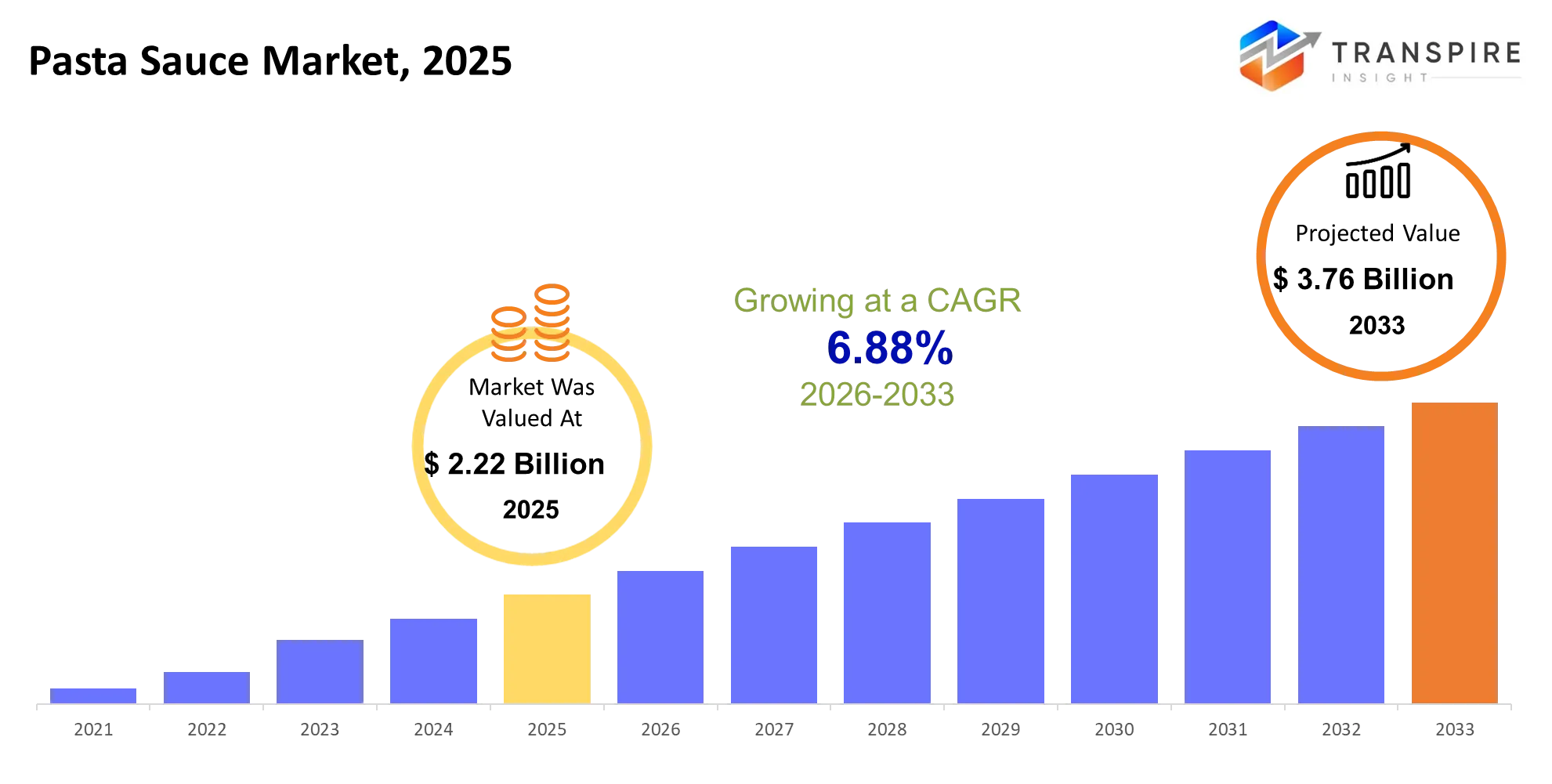
As per Transpire Insight, the Pasta Sauce Market size is estimated at USD 2.22 billion in 2025 and is anticipated to reach USD 3.76 billion by 2033, growing at a CAGR of 6.88% from 2026 to 2033.
The pasta sauce market provides households, restaurants and foodservice businesses that want ways to make tasty pasta meals. Tomato-based sauces are still the popular choice. Lately, organic, plant-based, and premium versions are gaining ground and giving companies new chances to grow. In the past three to five years, people have been buying more sauces that are easy to use, made with clear, simple ingredients and taste like something you’d get in a restaurant. This change is pushing companies to move beyond recipes. They’re now making sauces with labels and offering more special, unique options. More people shopping for groceries online have also helped bring niche sauces to an audience. New products, with ingredients, bold spice mixes and high-quality recipes, show how brands are keeping up with what customers want. These changes help the market grow. Consumers now have options. Across different prices, diets and cooking times. At the time, companies can stand out more and get noticed better in stores.
Pasta Sauce Market Size & Forecast:
- Market Size 2025: USD 2.22 Billion
- Expected Market Value (2033): USD 3.76 Billion
- Forecast CAGR (2026–2033): 6.88%
- Leading Region in 2025: Europe
- Fastest Growing Region: Asia Pacific
- Key Company Profiles: Kraft Heinz, Barilla, Nestlé, Conagra Brands, Mizkan, Unilever, Campbell Soup Company, Del Monte Foods, Mars, Bertolli, Rao's Homemade, Newman’s Own, Classico, Prego, Mutti
Key Market Insights:
The market trend is shifting towards tomato-based recipes that are known to everyone, but there are still many chances for growth as people will experiment with high-quality, organic and international flavours. Companies can build their market strength through innovation, proper packaging and distribution channels.
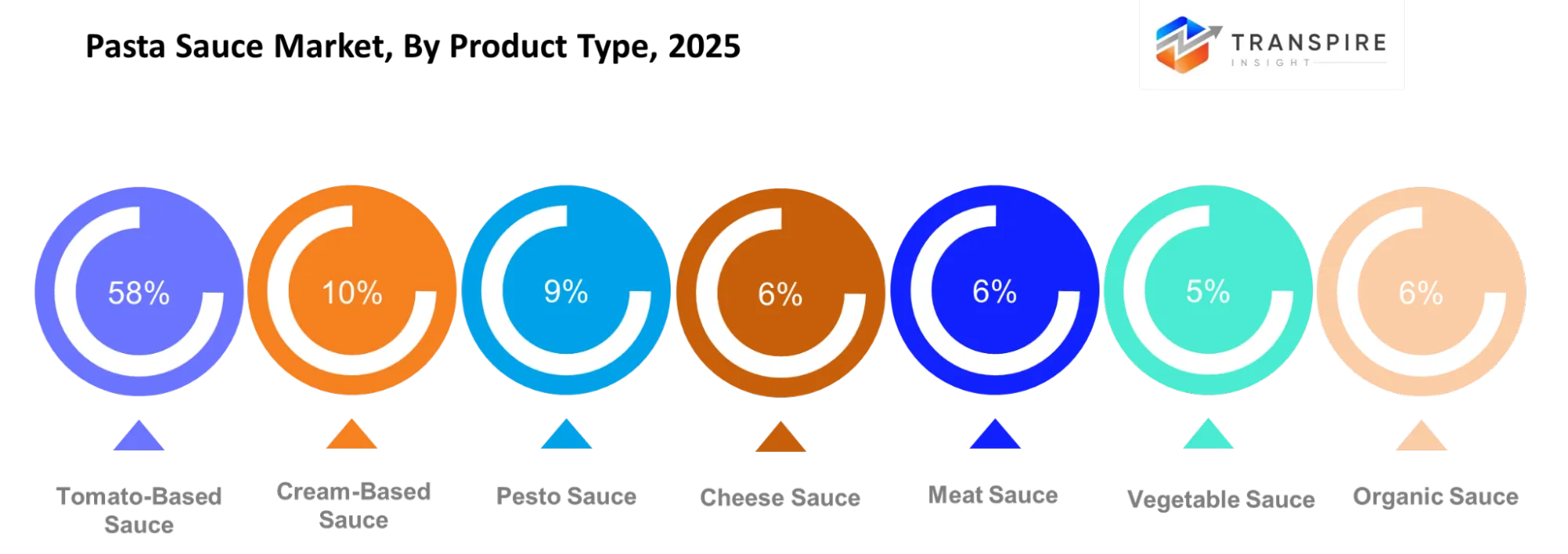
- Sauces made from tomatoes account for 58.30% of the total supplied product segmentation, considering the already existing tradition in daily preparation of pasta dishes based on such sauces.
- The fastest-growing category is organic and vegetable-based sauces, accounting for the highest CAGR in terms of the supplied products at 7.60%.
- Crema-based sauce constitutes 10.00% of the total segmentation, meeting the needs of those customers who look for richer taste and various sauce versions for pasta in the style of Alfredo.
- There are pesto sauces that account for 9.00% of the total segmentation, providing a choice to tomato-based recipes based on herbs and other ingredients.
- The remaining 6.00% are attributed to cheese-based and meat-based sauces that satisfy the customer desire to prepare rich meals and recipes for pasta dishes.
- Vegetable-based sauces occupy 5.00% of the overall segmentation and may be used to develop recipes that contain different vegetable and herb combinations.
What are the Key Drivers, Restraints, and Opportunities in the Pasta Sauce Market?
Drivers:
This trend bodes well for the sales of pasta sauce, as the convenience of home-cooked food means ready-to-use options save time without forcing the consumer to cook sauces from scratch. Heavy workloads and more demand for ready-made weekday dinners are driving consumers to have shelf-stable sauces at hand. Producers can use the habits of consumers to sell more through familiar recipes with higher-end flavourings and appropriate pack sizes. New product innovation can also appeal to consumers who are seeking organic ingredients, vegan solutions and more robust flavourings.
Restraints:
Cost of ingredients such as tomatoes, edible oils, herbs, milk products, packaging materials and transportation can hit margins. Changes in crop volumes caused by weather may impact availability and price of tomatoes, while promotional demands from retailers can constrain manufacturers' ability to pass on increased costs to consumers. Premium products may also be hard to price in price-conscious markets if lower-cost products are easy to source.
Opportunities:
Food producers can increase their reach by focusing on new plant-based, gluten-free or other recipes, locally inspired flavours and packaging that suits a variety of household sizes. Asia Pacific provides a major growth opportunity as the regional forecast shows it to be the fastest-growing market, at 8.10% CAGR. Those of us in the region can support local flavour development, distribute via local partners and onto digital retail outlets, to introduce new consumers to your products. Accurate forecasts and agile plans can help keep ingredient costs in check while keeping the shelves stocked.
|
Driver |
Relative Impact on Growth (%) |
Geographic Relevance |
Impact Timeline |
Demand Strength |
Growth Mechanism |
Key Beneficiaries |
Major Constraint |
|
Convenience and demand for ready-to-use meal solutions |
28% |
North America, Europe, Asia-Pacific |
Short-term (≤2 years) |
High |
Reduces cooking time and simplifies everyday meal preparation |
Packaged sauce brands, supermarkets, busy households, foodservice operators |
Price sensitivity and competition from homemade sauces |
|
adoption of Italian cuisine and pasta-based meals |
24% |
Europe, North America, Asia-Pacific |
Long-term (≥4 years) |
High |
Expands consumption through pasta's growing culinary appeal |
Pasta sauce manufacturers, pasta producers, restaurants, distributors |
Regional taste preferences and uneven pasta consumption |
|
Premiumization, clean-label and organic product demand |
20% |
North America, Western Europe, Asia-Pacific |
Medium-term (2–4 years) |
High |
Encourages premium purchases through natural ingredients and distinctive flavors |
Organic brands, premium manufacturers, ingredient suppliers, specialty retailers |
Higher ingredient costs and limited consumer affordability |
|
Flavor innovation and product diversification |
16% |
North America, Europe, Asia-Pacific |
Medium-term (2–4 years) |
High |
Attracts consumers through pesto, spicy, creamy and fusion varieties |
Product developers, sauce manufacturers, ingredient innovators, retailers |
Consumer acceptance uncertainty and product development costs |
|
Retail expansion, e-commerce and sustainable packaging innovation |
12% |
North America, Europe, emerging Asia-Pacific markets |
Short-term (≤2 years) |
Medium |
Improves accessibility through digital sales and convenient packaging |
Online retailers, packaging suppliers, manufacturers, distributors |
Packaging compliance costs and intense retail competition |
|
Total |
100% |
market |
— |
— |
— |
— |
— |
What Has the Impact of artificial intelligence on the Pasta Sauce Market?
The use of artificial intelligence offers new possibilities for the development of efficient solutions for production planning, quality control, and supply chain management in the pasta sauce industry. For instance, companies can make use of artificial intelligence forecasting systems that will allow them to predict the demand of each product type depending on seasons, retailers and geographical regions. This information can be used for organising the process of production, planning the stock of ingredients such as tomatoes, etc., as well as to minimise waste of resources.Ai technologies can also help with automated quality control using computer vision technologies to detect any discrepancies with packaging, filling, labelling, as well as some parameters of the product quality. If combined with production data, predictive maintenance can be implemented to detect any patterns and organise the servicing of equipment before its failure results in disruptions of the process of production. All these possibilities are dependent on the availability of reliable data and proper equipment. Smaller producers might face problems with implementation due to high costs, and bad data might influence forecast accuracy negatively. Therefore, the use of AI technologies should be a complement to food safety programs, laboratory research, and quality control specialists.
Instance:
In October 2025, RINA created an AI-based inspection solution for Barilla's pasta manufacturing processes. RINA has developed an image-based inspection AI solution designed for Barilla pasta production, to spot colour or shape imperfections prior to final packaging.
https://www.rina.org/en/media/projects/ai-driven-quality-control
Key Market Trends:
As companies look to reconcile traditional flavours with the changing tastes and premium positioning, the industry is progressing past the use of standard formulas. Other changes in packaging, digital delivery, and production that utilise more data are transforming the way sauce brands create products.
- Clean Label Products. As people are becoming more aware of what they are eating, companies are providing simpler formulas and better product information.
- Organic and Plant-Based Products: Companies are developing organic and plant-based formulas to cater to the changing consumer trends.
- Premium Flavours. Gourmet and restaurant-inspired sauces are being provided by the companies to attract customers.
- Convenient Packages: Pouches, easy-to-use bottles, and single-serve packages have made the process of meal-making and packing easier for consumers.
- Online Grocery Shopping. Online grocery stores have improved access to speciality sauces.
- Regional Flavors The companies are creating regional flavors to cater to their geographical audience.
- Automated filling, packaging, and inspections have helped manufacturers improve production efficiency.
- Data-Driven Forecasts Sales data analysis is helping the manufacturers to forecast demand and shortages.
Pasta Sauce Market Segmentation
By product type:
Tomato sauce, which holds 58.30% of the market segmentation supplied. The popularity of tomato sauce is due to its widespread application in daily cooking, its versatility of flavours, and its use in pasta dishes. Cream sauce holds 10.00%, pesto sauce holds 9.00%, and cheese sauce and meat sauce hold 6.00% each. Vegetable sauce holds 5.00%, organic sauce holds 3.00%, and speciality sauce holds 2.70%. The aforementioned products are used according to the varying preferences of consumers. Organic and vegetable sauces are recognised as the fastest-growing segment in the supplied brief, with a CAGR of 7.60%. This segment can be developed through differentiation of ingredients, positioning, and appealing flavours.
By Packaging:
Sustainable packaging options can affect shelf life, presentation, convenience, transportation and end-user impression. While glass bottles and jars continue to be relevant for those seeking to present the quality of a product and its visibility, some formats lend themselves to ease of use for particular sauce offerings. Tubs are suitable for a handful of foodservice applications and refrigerated applications, whereas sachets and single-serve containers can cater for portioned or 'meal for one' requirements. Where each format might fit into the future of the category will depend on product, cost of manufacturing, rules and regulations on packaging materials and consumer perception. Producers seeking a medium between maximum protection and optimum material use may be in a better position to sell to retail and industrial users alike.
By Distribution Channel:
The Distribution will be affected by supermarkets/hypermarkets, convenience stores, specialty stores, online retail, food service, wholesaling and direct sales. Supermarkets/hypermarkets provide prominence on shelf space, which enables consumers to compare different brands. Online retailers enable brands to reach customers who want a specific taste or nutrition. Food service and wholesaling enables firms to get to restaurants, hotels, cafe, caterers and other high volume customers who require supply consistency and recipe consistency. The performance of the future channel will ultimately depend on distribution reach, order fulfillment costs, product availability and capacity for varied order sizes.
By ingredient:
Example formatted by segments including tomato, basil, garlic, cheese, meat, vegetables, herbs and spices and plant-based ingredients. Tomato-based ingredients will form the basis of most conventional red sauces, with basil and garlic creating traditional 'flavour formulas' that can be used across a range of styles. Cheese and meat ingredients can provide for more indulgent sauce formulas, with vegetables offering the potential for varied textures and formulation options. Herbs and spices could enable product manufacturers to vary the recipe to differentiate it from other products without changing the form of food preparation at the time of manufacturing, while plant-based ingredients can offer scope for products to eliminate some specific animal-based ingredients or meet specific consumer preferences. Ingredient sourcing, seasonality, processing needs and allergen considerations will all impact formulation.
By End-user:
Customer demand is from household, restaurant, hotel, cafe, catering, food processing, institutional foodservice when purchasing domestic fresh, door-to-door retail, institutional, etc., houses prefer convenience, taste, price, can be full-time reasonably-sized packs; restaurants, hotels consider food taste, supply stability, and the formulation suitable for standard dishes; cafes, catering institutions need to have different tastes, food factories consider the application of convenience foods such as pasta sauces to prepare food, packaged food seasonal, traditional sensitive demand, full-time demand, reasonable convenience are varieties, to explore different needs, to help us develop more value-added packaging, package form, special prescription and other options.
By Price Category:
The range covers everything from economy and mid-range products through to premium, organic, gourmet, speciality and private-label sauces. Although price and availability drive economy products, mid-range versions attempt to satisfy consumer quality expectations but at a reasonable price. The organic and speciality ranges service specific consumer needs while private-label offers combinations for different price points. Further evolution of the segment will depend on household buying power, ingredient inflation and promotional activity, along with consumers' attitudes to price premiums. Brands need to find a reason for their positioning or provide consumers with a compelling reason to pay a price premium.
What are the Key Use Cases Driving the Pasta Sauce Market?
The use application here would be cooking pasta meals at home, with the tomato-based sauces forming part of the existing product segments. The Marinara sauce, as well as tomato and herbs sauces, would allow consumers to cut down the time needed in preparation of the sauces while maintaining the taste. The other application area is restaurants, which include hotels, cafes, and catering services. They need standardised sauces for their pasta meals and also a standardised menu. The cream-based sauces, pesto sauces, cheese sauces, and meat sauces would allow food service companies to have different meals without making all the sauces. The potential new application areas could be meal development in plant-based foods, premium home eating and processed food production.
|
Report Metrics |
Details |
|
Market size value in 2025 |
USD 2.22 Billion |
|
Market size value in 2026 |
USD 2.36 Billion |
|
Revenue forecast in 2033 |
USD 3.76 Billion |
|
Growth rate |
CAGR of 6.88% from 2026 to 2033 |
|
Base year |
2025 |
|
Historical data |
2021 - 2024 |
|
Forecast period |
2026 - 2033 |
|
Report coverage |
Revenue forecast, competitive landscape, growth factors, and trends |
|
Regional scope |
United States; Canada; Mexico; United Kingdom; Germany; France; Italy; Spain; Denmark; Sweden; Norway; China; Japan; India; Australia; South Korea; Thailand; Brazil; Argentina; South Africa; Saudi Arabia; United Arab Emirates |
|
Key company profiled |
Kraft Heinz, Barilla, Nestlé, Conagra Brands, Mizkan, Unilever, Campbell Soup Company, Del Monte Foods, Mars, Bertolli, Rao's Homemade, Newman’s Own, Classico, Prego, Mutti |
|
Customization scope |
Free report customization (country, regional & segment scope). Avail customized purchase options to meet your exact research needs. |
|
Report Segmentation |
Product Type (Tomato-Based Sauce, Cream-Based Sauce, Pesto Sauce, Cheese Sauce, Meat Sauce, Vegetable Sauce, Organic Sauce, Specialty Sauce); Packaging (Glass Jars, Plastic Bottles, Pouches, Cans, Tubs, Sachets, Single-Serve Containers); Distribution Channel (Supermarkets & Hypermarkets, Convenience Stores, Specialty Stores, Online Retail, Foodservice, Wholesale, Direct Sales); Ingredient Type (Tomato, Basil, Garlic, Cheese, Meat, Vegetables, Herbs & Spices, Plant-Based Ingredients); End User (Households, Restaurants, Hotels, Cafes, Catering, Food Manufacturers, Institutional Foodservice); Price Category (Economy, Mid-Range, Premium, Organic, Gourmet, Specialty, Private Label) |
Which Regions are Driving the Pasta Sauce Market Growth?
North America:
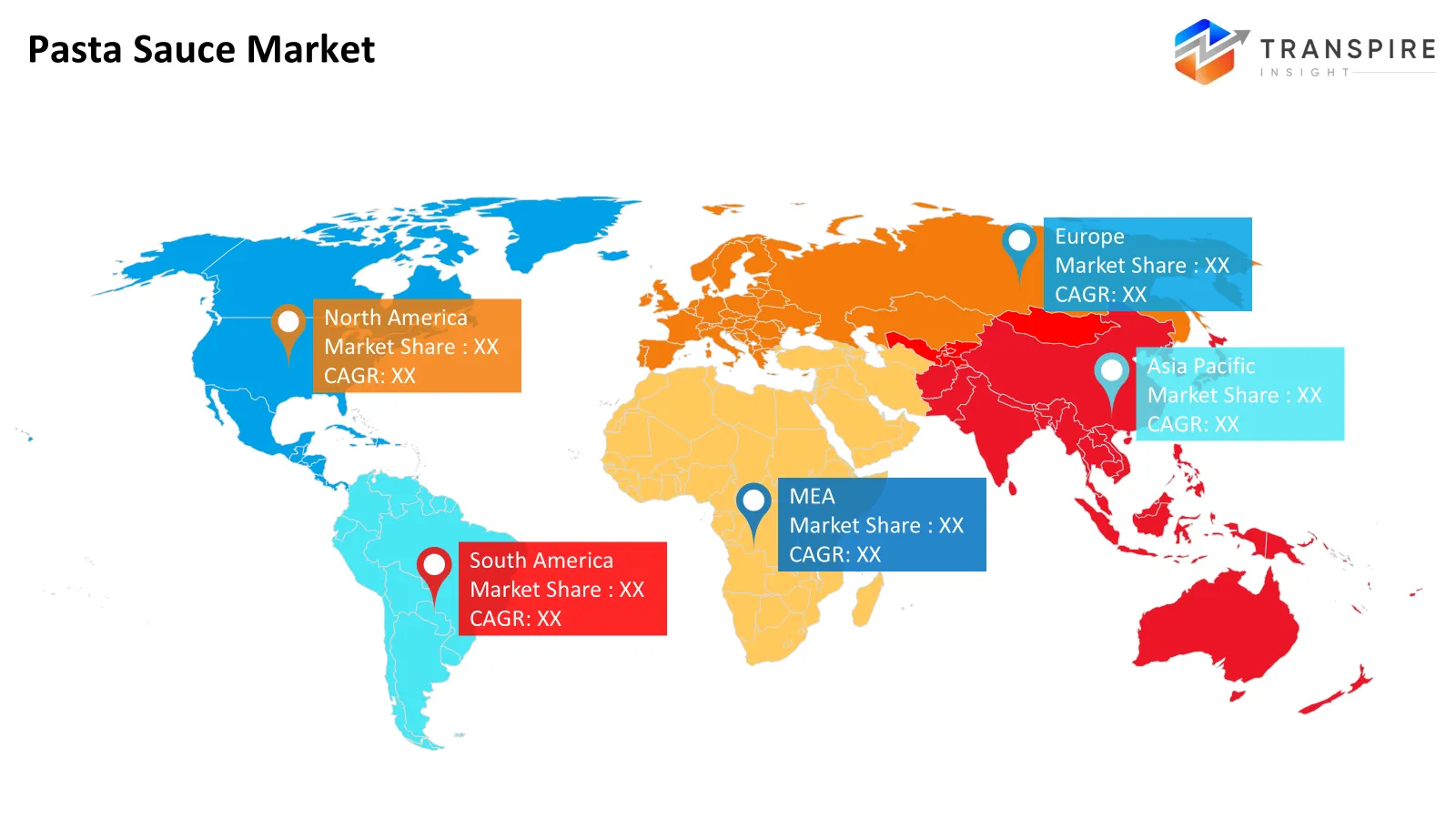
North America comprises 32.00% of the market and is a significant market for packaged pasta sauces. Popularity of recognised grocery chains, high penetration of shelf-stable items and familiarity with Italian-American dishes provide continuity for consistent purchase. Competition between leading brands, private label products and high-end, specialised ones motivates manufacturers to offer differentiation via flavours, ingredient claims and pricing, with prospects in future of further improving availability, providing specialised versions and catering to the consumer wanting a time-saving home cooking option.
In May 2026, Rao's Homemade grows its range of creamy pasta sauces. The Campbell's Company launches two new variations of Rao's Homemade - Creamy Roasted Garlic and Creamy Peppered Parmesan - using a combination of mascarpone and Parmigiano Reggiano. These launches illustrate the trend for premium flavours and restaurant-style pasta sauces in North America, where players are vying for differentiation.
Europe:
Europe is the largest region with a share of 34.20%, aided by the prominence of pasta in many regional cuisines as well as sauce producers that are already well established. Retail infrastructure and consumer understanding of tomato-based, pesto and other regional varieties ensure demand is strong across the household and foodservice channels. Brand legacy, authenticity of recipes and variety within brands ensure product differentiation in the competitive sector, and producers can leverage this through premium lines, organic options and packaging innovations in line with changing shopping preferences.
In March 2025,Mutti unveils Lion Jar new pack for ready-to-eat pasta sauce. Italian sauces and pasta brand Mutti has revealed a new packaging design for its pasta sauce range. Mutti has brought out a new glass jar for its ready-made pasta sauces, which melds traditional brand values with a more premium aesthetic. It demonstrates how European sauce brands are positioning their products to consumers.
https://news.italianfood.net/2025/03/24/mutti-unveils-lion-jar-new-line-of-ready-made-sauces-packs/
Asia Pacific:
Asia Pacific holds 23.00% of the regional segmentation and accounts for the largest market share of the total consumed packaged pasta sauce. It is also the fastest-growing regional segment with an 8.10% CAGR. More familiarity with foreign cuisines, growing modern retail and online grocery channels can facilitate new consumers' familiarity with packaged pasta sauces. Moreover, local taste preferences bring opportunities for alternative recipes that tailor to regional levels of spice usage and local food habits. Cost-effective products, together with localised taste and a strong distributor network, are likely to have opportunities for market growth.
In October 2025, Nagatanien promotes the renewal of its Pa-Kit product, a product that offers the possibility for consumers to prepare pasta and warm up the sauce in the microwave. Japanese food manufacturer Nagatanien shared the relaunch of Pa-Kit, a product that can be prepared for easy consumption, offers consumers both pasta and a sauce, and can be heated up in a microwave
https://note.nagatanien.co.jp/n/n364cf8387db4?hl=en
Who are the Key Players in the Pasta Sauce Market and how do they Compete?
Competition in the world pasta sauce market is from large food manufacturers, known Italian food brands and small specialist premium manufacturers. Competitors compete on retail channels, pricing, recipes, branding and consistent product quality. Competition is seen from traditional tomato-based sauces through to premium ranges, organic and specials. The following information is an indication of the variation of competition, not an indication of market share. Premium offers like Carbone Fine Food concentrate on restaurant-style recipes and unique, differentiated, flavour combinations. In February 2025, Carbone introduced five new sauce varieties, taking its range to 17 varieties. Narrow targets like Bionaturae, a specialist producer, use organic positioning and ingredient claims to appeal to more targeted shoppers. All of these strategies depend on shelf access, product differentiation, appropriate pricing, and the ability to convert new product launches into regular repeat purchases.
Pasta Sauce Market companies
- Kraft Heinz
- Barilla
- Nestlé
- Conagra Brands
- Mizkan
- Unilever
- Campbell Soup Company
- Del Monte Foods
- Mars
- Bertolli
- Rao's Homemade
- Newman’s Own
- Classico
- Prego
- Mutti
|
Company |
Est. Revenue Share Range |
Key Offerings |
Strategic Positioning |
Geographic Strength |
Technology Focus |
|
The Kraft Heinz Company |
Estimated 8–13% |
Prego, Classico, Tomato Basil Sauce, Alfredo Sauce |
Mass-market scale with broad flavor variety |
North America, Europe |
Recipe development and shelf-stable processing |
|
Mizkan Group |
Estimated 7–12% |
RAGÚ, Bertolli pasta sauces, Traditional Tomato Sauces, Premium Italian-Style Sauces |
Strong household brands with value and premium tiers |
North America, Europe |
Sauce formulation and large-scale food processing |
|
Barilla Group |
Estimated 4–8% |
Tomato Sauces, Pesto, Arrabbiata, Bolognese Sauces |
Italian authenticity supported by distribution |
Europe, North America, Asia Pacific |
Ingredient traceability and sustainable food processing |
|
Campbell’s Company |
Estimated 3–6% |
Rao’s Homemade Marinara, Tomato Basil, Roasted Garlic, Specialty Sauces |
Premium positioning through restaurant-inspired flavors |
North America, selected international markets |
Slow-simmered recipes and ingredient quality control |
|
Mutti S.p.A. |
Estimated 1–3% |
Tomato-Based Table Sauces, Passata, Chopped Tomatoes, Tomato Concentrates |
Tomato specialization with Italian provenance |
Europe, North America |
Tomato selection and processing optimization |
|
Mars, Incorporated |
Estimated 1–3% |
Dolmio Tomato Sauces, Bolognese Sauces, Tomato and Herb Varieties |
Accessible Italian-style sauces for everyday meals |
Europe, Asia Pacific, Australia |
Recipe consistency and automated food manufacturing |
|
Saclà Italia |
Estimated 0.5–2% |
Basil Pesto, Red Pesto, Tomato Sauces, Mediterranean Sauces |
Specialty positioning in pesto and Mediterranean flavors |
Europe, North America, Asia Pacific |
Pesto formulation and ingredient preservation |
|
De Cecco S.p.A. |
Estimated 0.5–1.5% |
Tomato Sauces, Pesto, Traditional Italian Sauces, Pasta Accompaniments |
Premium Italian culinary authenticity |
Europe, North America |
Ingredient quality control and flavor consistency |
|
Del Monte Foods Private Limited |
Estimated 0.2–0.8% |
Pizza and Pasta Sauce, White Pasta Sauce, Foodservice Pasta Sauce |
Accessible pricing with convenient packaging |
Asia Pacific, particularly India |
Spout-pack formats and shelf-stable processing |
|
TreeHouse Foods, Inc. |
Estimated 0.2–1% |
Private-Label Pasta Sauces, Tomato-Based Sauces, Retailer-Specific Sauce Ranges |
Retailer partnerships and private-label manufacturing |
North America |
Flexible production and packaging efficiency |
Recent Development News
- In February 2026, Carbone Fine Food appointed Jeff Stoeckel to the position of president, with duties associated with the next stage of development for the company. This organisational decision is related to the brand’s further development and business strategy as Carbone continues to build its business in the market of high-end foods. https://www.prnewswire.com/news/carbone-fine-food/
- In January 2025, Bionaturae launched its first range of organic pasta sauces, which includes Marinara, Arrabbiata, and Tomato & Basil. This move allowed the brand to venture into ready-to-use sauces and cater to customers seeking organic products with special ingredients. https://www.prnewswire.com/news-releases/bionaturae-unveils-its-first-ever-line-of-organic-pasta-sauces-delivering-homemade-simplicity-in-every-jar-302348309.html
What Strategic Insights Define the Future of the Pasta Sauce Market?
The future success in the international pasta sauce market will be contingent upon a company’s capability to safeguard sales through traditional sauces and to design other products with an obvious added value. While the future commercial importance of tomato sauces can be predicted, there is an opportunity with organic, vegan, and luxury products aimed at attracting special customers. Another underexplored risk concerns the stress caused by highly variable costs of ingredients: tomato shortages and inflation in packaging and shipping prices can affect the bottom line regardless of sales volumes staying constant. Another promising niche of this product can be found in Asia Pacific, with its predicted regional growth rate of 8.10% CAGR. The company’s opportunity will come from adapting tastes to local needs, affordable packages and collaboration with local retailers and online grocery stores. It can be achieved with improved demand forecasting, more efficient production and more flexible suppliers. The strategy that the company needs to adopt should involve designing innovations that have a consumer research basis, testing them in chosen markets, and scaling them if the sustainability has been proven.
Product Type
- Tomato-Based Sauce
- Cream-Based Sauce
- Pesto Sauce
- Cheese Sauce
- Meat Sauce
- Vegetable Sauce
- Organic Sauce
- Specialty Sauce
Packaging
- Glass Jars
- Plastic Bottles
- Pouches
- Cans
- Tubs
- Sachets
- Single-Serve Containers
Distribution Channel
- Supermarkets & Hypermarkets
- Convenience Stores
- Specialty Stores
- Online Retail
- Foodservice
- Wholesale
- Direct Sales
Ingredient Type
- Tomato
- Basil
- Garlic
- Cheese
- Meat
- Vegetables
- Herbs & Spices
- Plant-Based Ingredients
End User
- Households
- Restaurants
- Hotels
- Cafes
- Catering
- Food Manufacturers
- Institutional Foodservice
Price Category
- Economy
- Mid-Range
- Premium
- Organic
- Gourmet
- Specialty
- Private Label
By Regional Analysis
North America
- US
- Canada
- Mexico
Europe
- Germany
- UK
- France
- Italy
- Spain
- Russia
- Rest of Europe
Asia Pacific
- China
- Japan
- India
- South Korea
- Australia
- Rest of Asia Pacific
South America
- Brazil
- Argentina
- Rest of South America
Middle East & Africa
- UAE
- Saudi Arabia
- Qatar
- South Africa
- Rest of the Middle East & Africa
Frequently Asked Questions
Find quick answers to common questions.
The pasta sauce market size was valued at USD 2.22 billion in 2025 and is poised to reach USD 3.76 billion by 2033, expanding at a 6.88% CAGR.
Key segments for the pasta sauce market areProduct Type (Tomato-Based Sauce, Cream-Based Sauce, Pesto Sauce, Cheese Sauce, Meat Sauce, Vegetable Sauce, Organic Sauce, Specialty Sauce); Packaging (Glass Jars, Plastic Bottles, Pouches, Cans, Tubs, Sachets, Single-Serve Containers); Distribution Channel (Supermarkets & Hypermarkets, Convenience Stores, Specialty Stores, Online Retail, Foodservice, Wholesale, Direct Sales); Ingredient Type (Tomato, Basil, Garlic, Cheese, Meat, Vegetables, Herbs & Spices, Plant-Based Ingredients); End User (Households, Restaurants, Hotels, Cafes, Catering, Food Manufacturers, Institutional Foodservice); Price Category (Economy, Mid-Range, Premium, Organic, Gourmet, Specialty, Private Label).
Growth is primarily driven by increasing consumption of pasta, greater interest in ready-to-use food products, preference for various flavors, more distribution channels such as retail and e-commerce, and interest in organic, natural, and premium sauces.
The market is led by major manufacturers including Kraft Heinz, Barilla, Nestlé, Conagra Brands, Mizkan, Unilever, Campbell Soup Company, Del Monte Foods, Mars, Bertolli, Rao's Homemade, Newman’s Own, Classico, Prego, Mutti.
The European region accounts for 34.20% of the worldwide pasta sauce market owing to high pasta consumption rates, well-established culinary culture, taste for Italian food, and the presence of top brands producing the sauce. The increasing popularity of high-end, organic, and ready-to-use sauces enhances the market dominance of Europe.
Opportunities in the market for pasta sauces in the world market for pasta sauces: increasing demand for organic and clean-label sauces, expanding ranges of plant-based and high-quality products, increasing use of ready-to-use sauces, convenience products and increasing sales of pasta sauces in e-commerce. Other potential opportunities include entering new markets and regional flavours.
- Kraft Heinz
- Barilla
- Nestlé
- Conagra Brands
- Mizkan
- Unilever
- Campbell Soup Company
- Del Monte Foods
- Mars
- Bertolli
- Rao's Homemade
- Newman’s Own
- Classico
- Prego
- Mutti
About the Authors

Chetan Dhatrak
I’m Chetan Dhatrak, a Senior Research Analyst at Transpire Insight, specializing in the Consumer Goods, Foods and Beverages industry. I focus on analyzing market trends, consumer behavior, competitive landscapes, and industry developments to deliver accurate, data-driven insights. My research at Transpire Insight is built on credible sources and in-depth analysis, helping businesses and readers better understand market dynamics, emerging opportunities, and evolving consumer preferences. I’m committed to creating reliable, well-researched content that supports informed decision-making and reflects the latest developments in the consumer goods and food & beverage sectors.

Chakradhar Khansole
Chakradhar serves as the Research Director at Transpire Insight, bringing over 8 years of experience in technology, innovation, and strategic market intelligence. He specializes in transforming complex market data into actionable business insights that enable organizations to make informed, growth-oriented decisions. Recognized for his strategic vision and analytical expertise, Chakradhar leads high-impact research initiatives, delivering comprehensive market assessments, competitive intelligence, and forward-looking industry analysis.
Recently Published Reports
-
Apr 2026
Baby Infant Formula Market
Baby Infant Formula Market Size, Share & Analysis Report By ype (Infant Milk, Follow On Milk, Specialty Baby Milk, Growing-Up Milk), By Ingredient (Carbohydrate, Fat, Protein, Minerals, Vitamins, and Others), By Product Form (Powder, Liquid, and Ready-to-feed), By Distribution Channels (Supermarket/Hypermarket, Specialty Store, Pharmacies, Online Retail, and Others), and Geography (North America, Europe, Asia-Pacific, Middle East and Africa, South and Central America), 2021 - 2031
-
Apr 2026
Edible Insects for Animal Feed Market
Edible Insects for Animal Feed Market Size, Share & Analysis Report By Type (Insect Powder, Insect Meal, Insect Bar, Insect Paste, Insect Oil, and Others), By Insect Type (Beetles, Cricket, Caterpillar, Hymenoptera, Orthoptera, Tree Bugs, and Others), By Application (Livestock, Pet Food, and Aquaculture), By Livestock Type (Poultry, Swine, and Others), and Geography (North America, Europe, Asia-Pacific, Middle East and Africa, South and Central America), 2021 - 2031
-
Apr 2026
Food Industry Disinfection and Bacterial Control Market
Food Industry Disinfection and Bacterial Control Market Size, Share & Analysis Report By Type (Chemical Disinfectants, Physical Disinfectants, and Biocides and Antimicrobials), By Application (Food Processing Equipment Surface Disinfection, Food Preparation Areas Surface Disinfection, Storage Areas Surface Disinfection, Anti-microbial Coatings Food Preservation, and Preservative Solutions Food Preservation), By End User (Meat and Poultry Processing, Dairy Processing, Seafood Processing, Bakery and Confectionery, Restaurants and Commercial Kitchens, and Food Service Providers), By Sales Channel (Online, Offline), and Geography (North America, Europe, Asia-Pacific, Middle East and Africa, South and Central America), 2021 - 2031
-
May 2026
Freeze Dried Food Market
Freeze Dried Food Market Size, Share & Analysis Report By Product Type (Fruits, Vegetables, Freeze-Dried Dairy Products, Freeze-Dried Meat and Seafood, Freeze-Dried Pet Food, and Prepared Meal), By Nature (Organic, and Conventional), By Form (Powdered, Granules, and Diced), By End Use (Breakfast Cereals, Dairy Products, Bakery & Confectionery, Nutritional Bars & Supplements, Powdered Beverages, Snacks, and Retail (Household)), and Geography (North America, Europe, Asia-Pacific, Middle East and Africa, South and Central America), 2021 - 2031