
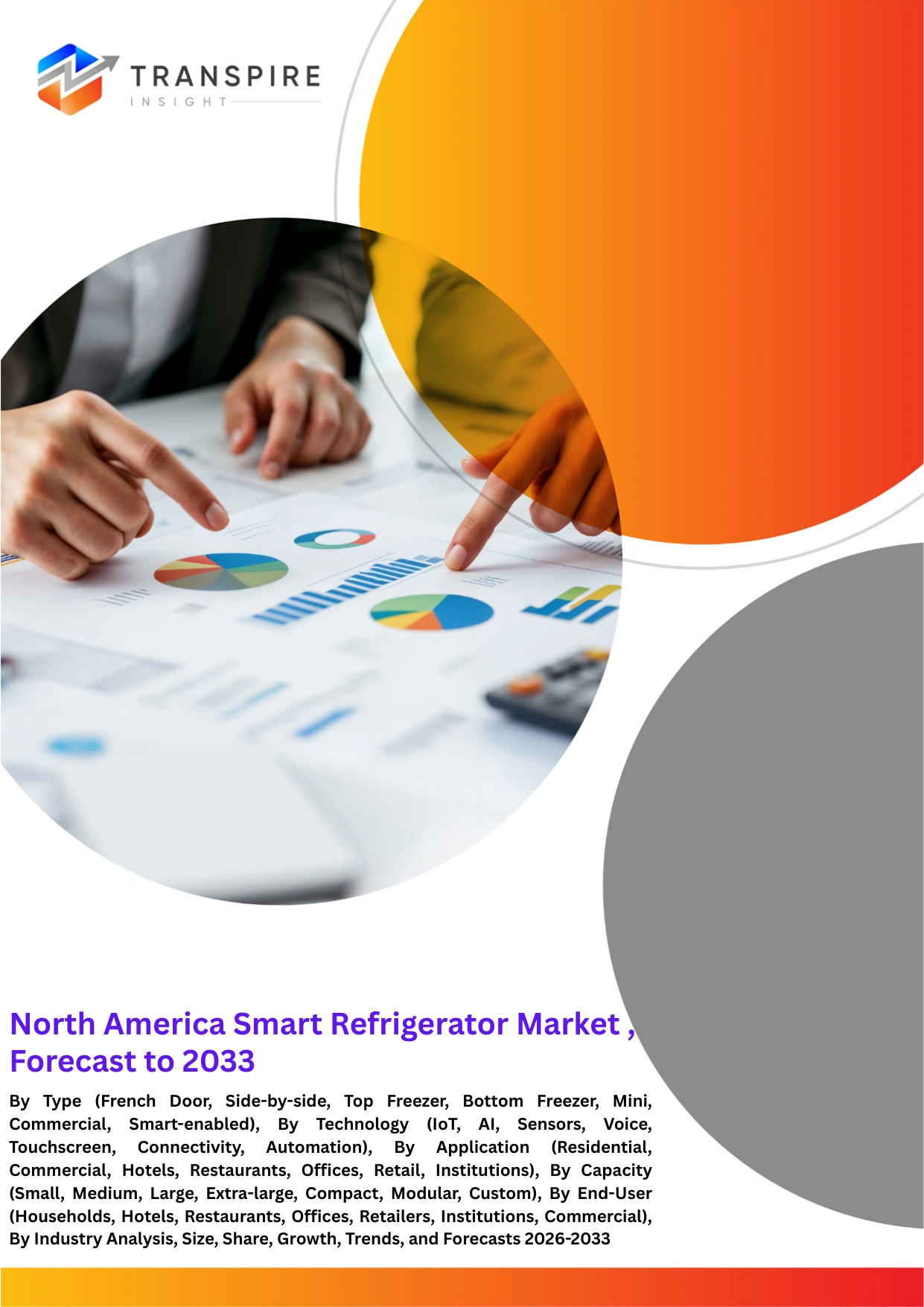
North America Smart Refrigerator Market Size & Forecast:
- North America Smart Refrigerator Market Size 2025: USD 1263.7 Million
- North America Smart Refrigerator Market Size 2033: USD 2093.4 Million
- North America Smart Refrigerator Market CAGR: 6.48%
- North America Smart Refrigerator Market Segments:By Type (French Door, Side-by-side, Top Freezer, Bottom Freezer, Mini, Commercial, Smart-enabled), By Technology (IoT, AI, Sensors, Voice, Touchscreen, Connectivity, Automation), By Application (Residential, Commercial, Hotels, Restaurants, Offices, Retail, Institutions), By Capacity (Small, Medium, Large, Extra-large, Compact, Modular, Custom), By End-User (Households, Hotels, Restaurants, Offices, Retailers, Institutions, Commercial).
To learn more about this report,  Download Free Sample Report
North America Smart Refrigerator Market Summary:
The North America Smart Refrigerator Market size is estimated at USD 1263.7 Million in 2025 and is anticipated to reach USD 2093.4 Million by 2033, growing at a CAGR of 6.48% from 2026 to 2033. The North America Smart Refrigerator Market is experiencing strong growth because more people want smart home appliances which provide both easy-to-use features and energy-saving capabilities and special food management technologies. The current generation of smart refrigerators includes Wi-Fi support and touchscreen interfaces together with AI-powered inventory management systems which enable users to track their food items and decrease waste. The North America Smart Refrigerator Market grows through its development into both residential areas and high-end market segments as smart home technology becomes common.
The North America Smart Refrigerator Market experiences growth because people now prioritize eco-friendly solutions which help them save energy. Consumers prefer intelligent refrigeration systems which connect with mobile applications and voice control systems to enable them to manage their appliances effortlessly. Manufacturers create new products which help people use their products more easily by introducing features such as automatic temperature management and instant alert systems. The growing trend of digital living will create continuous growth for the North America Smart Refrigerator Market throughout the entire region.
What Has the Impact of Artificial Intelligence Been on the North America Smart Refrigerator Market?
The North America Smart Refrigerator Market undergoes transformation through AI which enables manufacturers and analysts to comprehend consumer behavior and market trends.
AI technology in North America Smart Refrigerator Market enables businesses to conduct market research and analyze real-time data which helps them track changing consumer preferences. The North America Smart Refrigerator Market uses artificial intelligence with predictive analytics and machine learning models to enhance demand forecasting accuracy while enabling stakeholders to evaluate market trends through data-driven decision-making.
AI-powered smart automation systems deliver production efficiency improvements to the North America Smart Refrigerator Market while simultaneously reducing operational costs.
North America Smart Refrigerator Market manufacturers use artificial intelligence technology to enhance their supply chain operations and decrease inventory waste while improving their logistics processes.
North America Smart Refrigerator Market businesses use machine learning systems to create new products and deliver customized user experiences which helps them gain a competitive advantage. Digital transformation and market expansion stay accelerated through artificial intelligence technologies.
Key Market Trends & Insights:
- The United States dominates the north america smart refrigerator market with nearly 75% share in 2025 due to high smart home adoption rates.
- The North America Smart Refrigerator Market experiences its fastest growth in Canada because of increasing consumer demand for IoT-enabled appliances until 2030.
- North American Smart Refrigerator Market shows higher usage of advanced connected refrigeration systems in urban areas.
- Mexico's economy is growing at a steady pace because better retail facilities and more affordable smart appliances are becoming available.
- French-door smart refrigerators hold the leading share of ~40% in the north america smart refrigerator market due to premium design preference.
- The North America Smart Refrigerator Market shows its second biggest market share through side-by-side models which receive high demand from home users.
- The consumption of multi-door AI-integrated refrigerators shows high growth potential which will continue to increase throughout the period between 2024 and 2030.
- North America Smart Refrigerator Market sees growing interest in compact smart refrigerators which people use in urban apartments and smart offices.
- The north america smart refrigerator market shows residential usage as its main application because smart home systems lead to more than 65% market share.
- The fastest-growing area of commercial applications operates in hospitality and retail sectors which require smart inventory management solutions.
- The North America Smart Refrigerator Market develops through two main demand drivers which include energy monitoring solutions and food waste reduction technologies.
- Modern refrigeration solutions now use AI-based remote monitoring systems as their main competitive advantage.
North America Smart Refrigerator Market Segmentation
By Type
The premium household market prefers French door and side-by-side refrigerator models because these designs provide bigger storage capacity together with digital control systems and intelligent cooling technology. People increasingly demand this service because more homes now have connected devices while their daily activities require easier access to services. Retailers promote energy-saving products that include intelligent notifications which assist customers in better food management. The systems help users handle their food better while creating less environmental waste.
The food industry uses commercial smart refrigerators to enhance their tracking systems and maintain precise temperature control methods. The rising cost of smart technology now supports market expansion in this product category. Manufacturers now emphasize product strength together with wireless technology in this specific product category. The market continues to grow because both residential areas and business spaces need more products.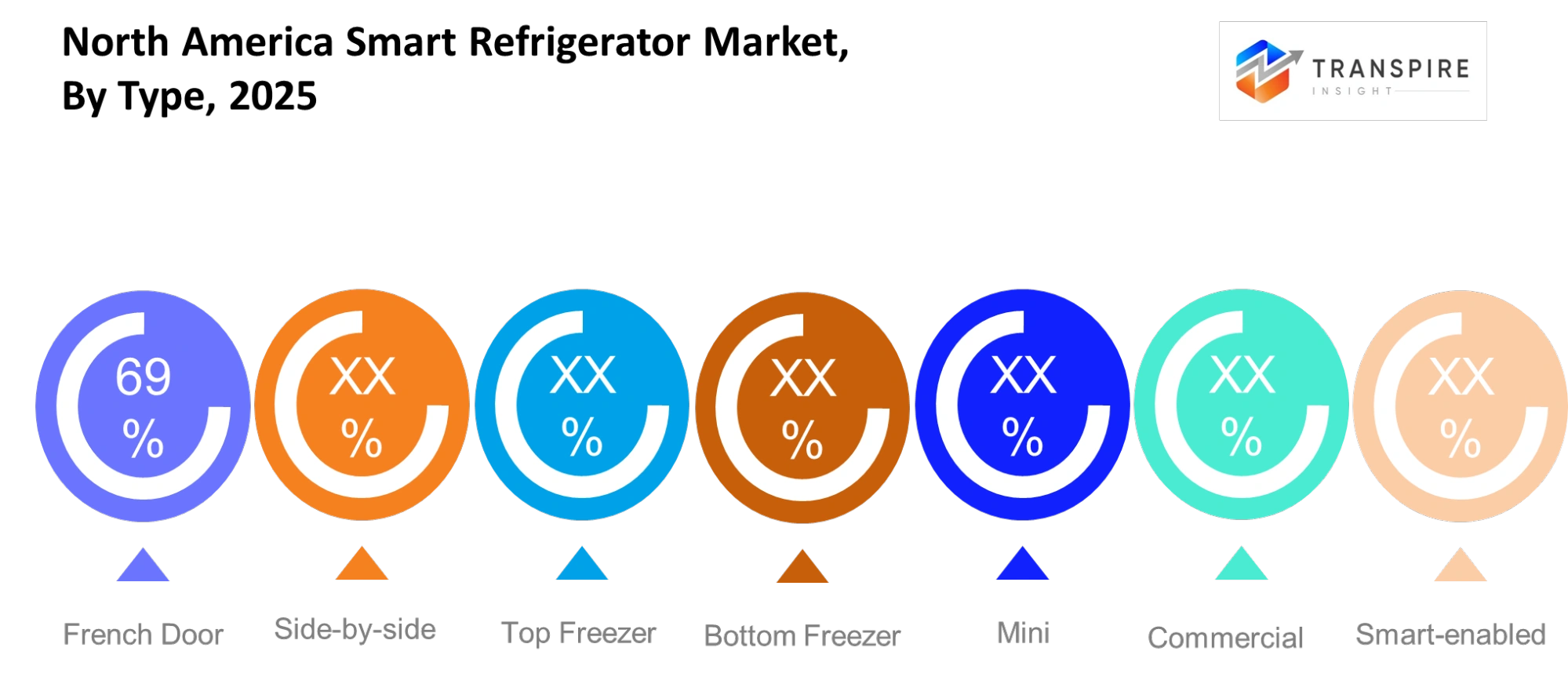
To learn more about this report, Download Free Sample Report
By Technology
Modern refrigerator systems use IoT and AI technologies which combine with voice control systems and touchscreen interfaces to create automated operation systems. The technologies enable devices to share data in real time while users can monitor their devices from mobile applications. Machine learning uses temperature adjustments to improve cooling performance by learning from user behavior. The systems provide advanced energy management capabilities, which lead to higher appliance efficiency throughout their operational lifecycle.
AI-based predictive maintenance helps reduce system failures and improves product life. Users benefit from lower operating costs because smart automation systems help them reduce energy usage. Users experience better daily convenience because voice assistants and app integration work together. The software updates that manufacturers now invest in will enhance product performance and system reliability for future use.
By Application
The market for smart home technology exists because residential areas are seeing increasing adoption of smart home systems across urban and suburban areas. Households prefer refrigerators with digital connectivity to track food inventory and reduce energy consumption. The demand for this product category continues to grow because people show increasing interest in digital appliances. People adopt modern technologies because they have better understanding of the benefits of their daily life.
The commercial sector shows rapid growth in its adoption of new technologies across restaurants and hotels as well as offices and retail establishments. The two sectors use smart refrigeration systems to maintain product temperature and manage their stock levels. Institutions use these systems to fulfill their requirements for storing large quantities of food. The service sectors experience rising demands because businesses now prioritize their operational efficiency.
By Capacity
People use medium and large-capacity refrigerators in their homes because these appliances provide optimal storage capacity while taking up minimal space. The models assist developing families with their increasing storage needs by providing advanced organizational capabilities. The smart sensors enable operators to control the building's internal temperature and storage conditions with complete accuracy. People want multi-purpose appliances because their demand for such products keeps increasing.
People who live in apartments, offices, and shared spaces prefer compact, low-capacity units. Premium installations that require special storage solutions are increasingly turning to modular and custom designs. Extra-large refrigerators serve commercial businesses and high-end homes because these establishments require storage capacity for multiple items. Business development occurs when companies combine flexible architectural solutions with intelligent storage control systems.
By End-User
Households remain the primary end-user group as smart home adoption continues to rise.Consumers prefer connected appliances that improve convenience and reduce energy use.Smart features such as alerts and remote control enhance daily usage.Demand continues to grow with increasing digital lifestyle adoption.
The hospitality industry and dining establishments and business offices and retail stores are increasing their adoption of smart refrigeration systems. The users prioritize three main areas which include operational efficiency and system monitoring and uninterrupted cooling capabilities.Organizations and business facilities implement sophisticated systems to meet their extensive storage requirements. The need for business operations has increased because companies now rely more on automated processes for their daily functions.
What are the Main Challenges for the North America Smart Refrigerator Market Growth?
The North America smart refrigerator market expansion faces delays from technical and operational problems which manufacturers encounter while implementing advanced AI and IoT and sensor-based systems. The North American Smart Refrigerator Market experiences performance issues across its connected devices due to software issues and network connectivity issues.
The process of integrating hardware with cloud systems requires complex systems which result in increased maintenance demands and decreased product stability. Electronic component supply chain restrictions create hurdles for scalability because they cause product availability delays which prevent markets from growing smoothly.
The North America Smart Refrigerator Market faces obstacles which arise from manufacturing and commercialization barriers that result from expensive production costs and complex component needs, which drive up total cost estimates. The production process becomes more complex due to the need to meet strict quality standards and comply with various regulatory requirements.
Companies in the North America Smart Refrigerator Market experience commercialization delays because they must conduct extended testing for their smart automation and energy efficiency technologies. These factors make product launch in competitive markets more difficult because they extend time-to-market while restricting development of new products.
Cost-sensitive consumer segments represent the main barrier to North America Smart Refrigerator Market growth which results from adoption and infrastructure limitations. Consumers in some regions face challenges which decrease their adoption of advanced features because of insufficient technical support and limited feature awareness.
Country Insights
The North America Smart Refrigerator Market shows strong regional variation between the United States which maintains market leadership because of its advanced retail infrastructure and high smart home adoption rates. The fastest market growth in Canada occurs because of growing IoT adoption while Mexico experiences steady market development through urbanization and better access to appliances and the modernization of retail stores.
The United States leads regional demand because consumers there have high purchasing power and they widely use connected home systems. Advanced refrigeration technologies become quickly available in the market because large retail networks and strong distribution channels of distribution partners.
Canada shows faster market growth because more urban households begin to use smart kitchen appliances. Mexico continues gradual expansion supported by improving infrastructure and rising awareness of energy-efficient appliances across modern residential developments.
North American Smart Refrigerator Market technology adoption patterns show different trends according to people income levels and their digital readiness. Households at the premium level select refrigerators which use AI technology together with touchscreen interfaces while mid-range households select refrigerators with basic smart connectivity functions.
Smart refrigeration systems which enable better inventory monitoring and waste reduction in retail and hospitality businesses, have become more popular among these sectors. Urban areas experience wider digital infrastructure adoption but rural regions face slower progress because people there have less understanding and greater price sensitivity.
Recent Development News
In January 2026, GE Profile launches an AI-powered smart refrigerator at CES 2026: GE Appliances introduced its new GE Profile 4-door smart refrigerator featuring AI-assisted kitchen assistant capabilities and a built-in barcode scanner. The product focuses on reducing food waste, improving grocery tracking, and simplifying meal planning through smart automation features. The launch highlights growing AI integration in the North American smart refrigerator market.
Source: https://pressroom.geappliances.com
In February 2026, Samsung unveils Bespoke AI refrigerator lineup at KBIS 2026: Samsung Electronics showcased its upgraded Bespoke AI refrigerators with advanced connectivity, design flexibility, and AI-powered food management systems at KBIS 2026 in the U.S. The innovation strengthens Samsung’s smart home ecosystem and expands AI-driven appliance adoption in North America Smart Refrigerator Market.
Source: https://news.samsung.com
|
Report Metrics |
Details |
|
Market size value in 2025 |
USD 1263.7 Million |
|
Market size value in 2026 |
USD 1349.5 Million |
|
Revenue forecast in 2033 |
USD 2093.4 Million |
|
Growth rate |
CAGR of 6.48% from 2026 to 2033 |
|
Base year |
2025 |
|
Historical data |
2021 – 2024 |
|
Forecast period |
2026 – 2033 |
|
Report coverage |
Revenue forecast, competitive landscape, growth factors, and trends |
|
Country scope |
North America (Canada, The United States, and Mexico) |
|
Key company profiled |
Samsung, LG, Whirlpool, GE Appliances, Bosch, Haier, Panasonic, Sharp, Electrolux, Midea, Hitachi, Toshiba, Hisense, Liebherr, Sub-Zero |
|
Customization scope |
Free report customization (country, regional & segment scope). Avail customized purchase options to meet your exact research needs. |
|
Report Segmentation |
By Type (French Door, Side-by-side, Top Freezer, Bottom Freezer, Mini, Commercial, Smart-enabled), By Technology (IoT, AI, Sensors, Voice, Touchscreen, Connectivity, Automation), By Application (Residential, Commercial, Hotels, Restaurants, Offices, Retail, Institutions), By Capacity (Small, Medium, Large, Extra-large, Compact, Modular, Custom), By End-User (Households, Hotels, Restaurants, Offices, Retailers, Institutions, Commercial). |
How Can New Companies Establish a Strong Foothold in the North America Smart Refrigerator Market?
New companies entering the North America smart refrigerator market can achieve success through two strategies which include developing niche-driven products and solving particular customer needs instead of battling established companies. Startups in the North America Smart Refrigerator Market should focus on developing smart energy management systems and food waste reduction solutions and healthcare-grade cold storage products because these technologies provide customers with distinct advantages.
Tovala and FreshSmart showcase emerging smart kitchen technologies through their dedicated product ecosystems which enable users to create meal plans and track inventory automatically thus increasing their market presence in competitive areas. The North America Smart Refrigerator Market relies on strategic partnerships for market expansion because companies need to collaborate with IoT platform providers, retail chains and smart home systems which include Google Home and Amazon Alexa.
New companies can improve their innovation capabilities by implementing AI-based predictive analytics which enables them to optimize usage patterns and perform remote system diagnostics. The North America Smart Refrigerator Market allows retail grocery platforms to establish partnerships which enable them to achieve real-time inventory synchronization that delivers smooth shopping experiences to customers while boosting product loyalty.
Key North America Smart Refrigerator Market Company Insights
The North American smart refrigerator market competition exists because global appliance leaders Whirlpool Corporation, Samsung Electronics, LG Electronics, GE Appliances, Bosch, and Haier maintain their strong market positions. Product upgrades paired with AI-driven cooling systems and smart connectivity solutions enable brands to establish their presence in both premium and mid-range markets.
The North American Smart Refrigerator Market experiences fast product development because companies compete intensely which drives them to create new features that include energy-saving and automated systems.North America smart refrigerator manufacturers use artificial intelligence and IoT systems and predictive maintenance technology to create distinct products that customers can experience in their daily life.
The implementation of smart automation features together with voice control systems and app-based monitoring systems enables users to work more efficiently while enjoying greater convenience. The pressure to maintain competitive pricing leads manufacturers to create cost-effective smart products which maintain their operational performance. The North America Smart Refrigerator Market gains competitive advantage through strategic partnerships which link smart home platforms with retail distribution networks.
Startups direct their efforts towards developing specialized innovative solutions which include methods for reducing food waste and creating compact smart appliances and designing refrigerators that meet healthcare standards. Mill and other kitchen technology startups operate in the smart kitchen sector which focuses on sustainability and data-based refrigeration systems to establish their competitive advantage. Businesses can now develop their commercial operations in sectors such as hospitality and healthcare storage and smart city infrastructure development.
Company List
- Samsung
- LG
- Whirlpool
- GE Appliances
- Bosch
- Haier
- Panasonic
- Sharp
- Electrolux
- Midea
- Hitachi
- Toshiba
- Hisense
- Liebherr
- Sub-Zero
What are the Key Use-Cases Driving the Growth of the North America Smart Refrigerator Market?
The North America smart refrigerator market experiences steady growth because actual applications of the technology now go beyond basic cooling functions to provide advanced food and energy management capabilities. The North America Smart Refrigerator Market sees widespread deployment of connected appliances which enable smart homes to conduct real-time inventory tracking and automated grocery reminders and food freshness monitoring.
Smart refrigeration systems now stand as essential elements of contemporary digital living because their capabilities decrease food waste while enabling households to operate more effectively.The North America Smart Refrigerator Market benefits from healthcare and institutional storage solutions which enable better temperature-controlled medicine and vaccine and laboratory sample storage.
Hospitals and clinics use smart monitoring systems to maintain constant cooling systems which provide immediate alerts whenever cooling systems experience temperature deviations. The north american smart refrigerator market uses this use case to meet compliance requirements while enhancing safety protocols which leads to increased adoption in environments that require accurate temperature-controlled storage solutions.
The North America Smart Refrigerator Market sees commercial development through its use in the retail and hospitality and food service sectors. Restaurants and hotels use smart refrigeration systems for inventory control, automated stock alerts, and reduced spoilage. The north america smart refrigerator market enables businesses to achieve cost reduction and supply chain efficiency improvements through its predictive analytics and smart automation systems.
North America Smart Refrigerator Market Report Segmentation
By Type
- French Door
- Side-by-side
- Top Freezer
- Bottom Freezer
- Mini
- Commercial
- Smart-enabled
By Technology
- IoT
- AI
- Sensors
- Voice
- Touchscreen
- Connectivity
- Automation
By Application
- Residential
- Commercial
- Hotels
- Restaurants
- Offices
- Retail
- Institutions
By Capacity
- Small
- Medium
- Large
- Extra-large
- Compact
- Modular
- Custom
By End-User
- Households
- Hotels
- Restaurants
- Offices
- Retailers
- Institutions
- Commercial
Frequently Asked Questions
Find quick answers to common questions.
The Approximate North America Smart Refrigerator Market size for the Market will be USD 2093.4 Million in 2033.
The key Segments of the North America Smart Refrigerator Market are By Type (French Door, Side-by-side, Top Freezer, Bottom Freezer, Mini, Commercial, Smart-enabled), By Technology (IoT, AI, Sensors, Voice, Touchscreen, Connectivity, Automation), By Application (Residential, Commercial, Hotels, Restaurants, Offices, Retail, Institutions), By Capacity (Small, Medium, Large, Extra-large, Compact, Modular, Custom), By End-User (Households, Hotels, Restaurants, Offices, Retailers, Institutions, Commercial).
Major Players in the North America Smart Refrigerator Market are Samsung, LG, Whirlpool, GE Appliances, Bosch, Haier, Panasonic, Sharp, Electrolux, Midea, Hitachi, Toshiba, Hisense, Liebherr, Sub-Zero.
The Current Market size of the North America Smart Refrigerator Market is USD 1263.7 Million in 2025.
The North America Smart Refrigerator Market CAGR is 6.48%.
- Samsung
- LG
- Whirlpool
- GE Appliances
- Bosch
- Haier
- Panasonic
- Sharp
- Electrolux
- Midea
- Hitachi
- Toshiba
- Hisense
- Liebherr
- Sub-Zero
Recently Published Reports
-
Dec 2024
Bottled Water Market
Bottled Water Market Size, Share & Analysis Report By Product Type (Still Bottled Water, Carbonated Bottled Water, Functional Bottled Water, and Others), By Packaging (PET, Cans, and Others), By Sales Channel (Supermarkets/Hypermarkets, Convenience Stores/Drug Stores, Grocery Stores/Club Stores, Foodservice, and Others) and Geography (North America, Europe, Asia-Pacific, Middle East and Africa, South and Central America), 2021 - 2032
-
Dec 2024
Color Cosmetic Packaging Market
Color Cosmetic Packaging Market Size, Share & Analysis Report By Application (Mascara Packaging, Liquid Packaging, and Liquid Face), By Type (Tubes & Bottles, Pens & Markers, Compacts & Containers, and Droppers & Pumps), and Geography (North America, Europe, Asia-Pacific, Middle East and Africa, South and Central America), 2021 - 2031
-
Dec 2024
External Microphone For Camera Market
External Microphone For Camera Market Size, Share & Analysis Report By Type (Shotgun Microphone, Lavalier Microphone, and Others), By Application (Digital Camera, Professional Video Camera, and Others), and Geography (North America, Europe, Asia-Pacific, Middle East and Africa, South and Central America), 2021 - 2031
-
Dec 2024
Foot Orthotic Insoles Market
Foot Orthotic Insoles Market Size, Share & Analysis Report By Type (Pre-fabricated, and Custom-made), By Material (Thermoplastic, Composite Carbon Fiber, and Others), By Distribution Channel (Drug Stores, Hospitals & Clinics, and Others), and Geography (North America, Europe, Asia-Pacific, Middle East and Africa, South and Central America), 2021 - 2031