

North America Non-Invasive Body Countering Market Size & Forecast:
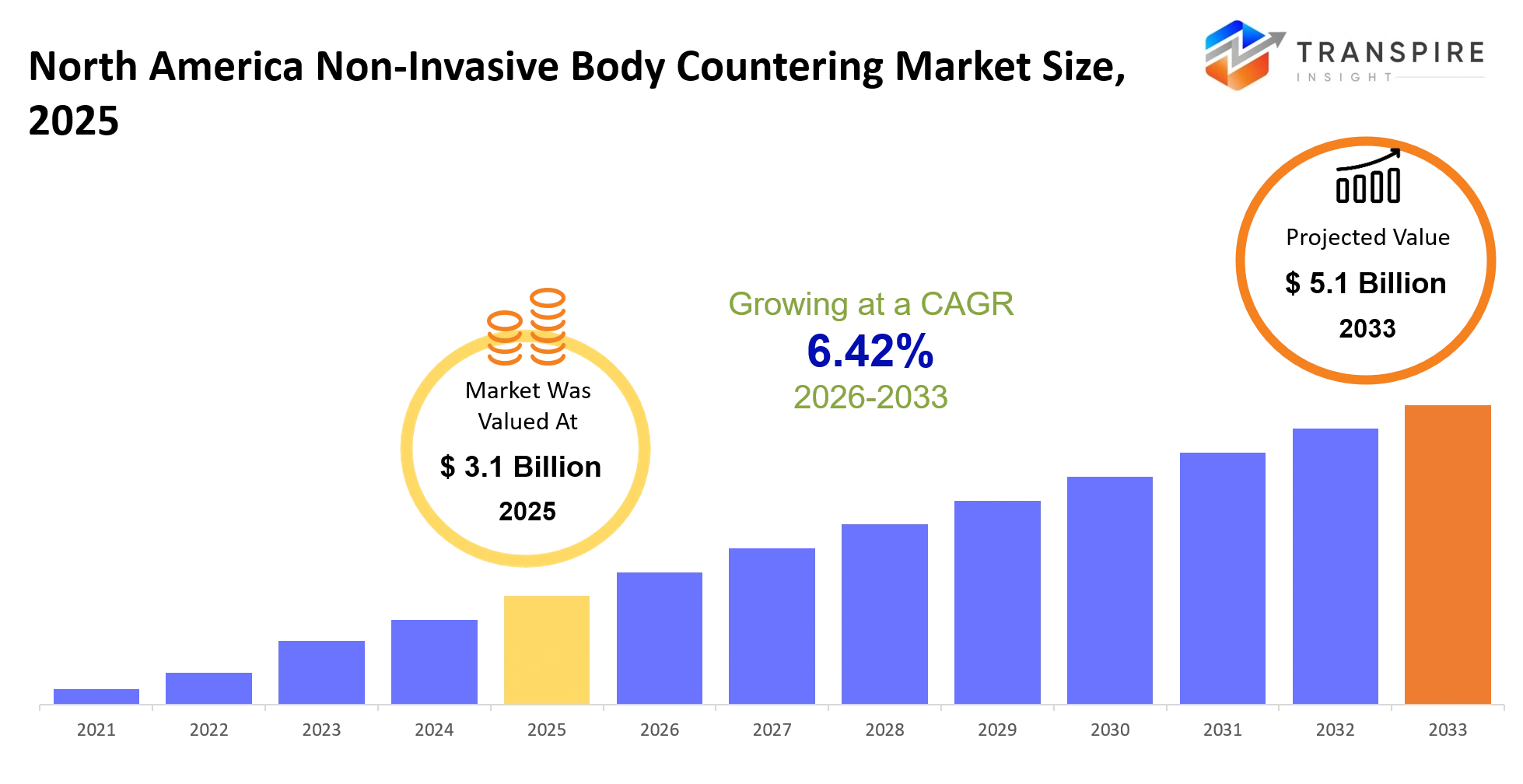
- North America Non-Invasive Body Countering Market Size 2025: USD 3.1 Billion
- North America Non-Invasive Body Countering Market Size 2033: USD 5.1 Billion
- North America Non-Invasive Body Countering Market CAGR: 6.42%
- North America Non-Invasive Body Countering Market Segments: By Procedure Type (Cryolipolysis, Radiofrequency Treatments, Ultrasound Treatments, Laser Lipolysis, Others); By Application (Fat Reduction, Skin Tightening, Cellulite Reduction, Body Sculpting, Others); By End User (Cosmetic Clinics, Hospitals, Dermatology Centers, Others); By Technology (Energy-based Devices, AI-enabled Systems, Portable Devices, Others).
To learn more about this report,  Download Free Sample Report
North America Non-Invasive Body Countering Market Summary
The North America Non-Invasive Body Countering Market was valued at USD 3.1 Billion in 2025. It is forecast to reach USD 5.1 Billion by 2033. That is a CAGR of 6.42% over the period.
The North America non-invasive body contouring market kind of tackles a real everyday issue for both consumers and aesthetic providers: how to reduce those localized fat deposits and also improve body shape… but without surgery, long recovery times, or needing hospitalization. In practice, clinics, medical spas, and dermatology centers lean on these technologies to run cosmetic body shaping procedures that can actually slide into busy, time constrained routines.
Over the last five years, the whole market has been shifting in a more structural way, moving away from single function fat reduction devices, and toward multi application platforms. These newer setups bundle fat reduction, skin tightening, muscle stimulation, and body sculpting into one treatment ecosystem. And then COVID-19 played a role too, it made people lean more toward minimally disruptive aesthetic options, plus there was more curiosity around appearance related treatments, partly because video based work and social interaction became more common, almost like “new normal” habits.
Right now, the growth makes sense when you connect technological innovation with provider economics. The advanced energy based systems tend to deliver more consistent outcomes, which pushes practitioner adoption, and it also helps clinics broaden their treatment menus. So when clinics invest in higher value platforms that support more than one kind of procedure, utilization increases and that creates recurring revenue chances. It also, in a pretty direct way, makes non-surgical body contouring services more reachable across the region.
Key Market Insights
- The United States is leading the North America non-invasive body contouring market, with something like 80%–85% of the market share in 2024, backed by really high procedure counts.
- Canada, meanwhile shows up as the fastest-growing regional space during 2025–2030, largely because disposable income is creeping higher and more medical aesthetics clinics keep opening.
- There’s still strong appetite for non-surgical fat reduction treatments, and that keeps pushing overall industry growth in many major urban hubs.
- Also, more clinics are leaning into advanced body sculpting technologies, which is helping their reach across North America to grow.
- Cryolipolysis systems are at the front, grabbing roughly 35%–40% share in 2024, mainly because the results are well proven and consumers are broadly receptive.
- Radiofrequency based body contouring devices sit as the second-largest segment, with skin tightening plus fat reduction working together in a single approach.
- High-Intensity Focused Ultrasound (HIFU) technologies are the quickest mover, and they’re expected to keep double-digit growth all the way through 2030.
- Because demand for multi-technology platforms keeps rising, clinics are more willing to invest in flexible body contouring equipment instead of just one technique.
- As for the applications, fat reduction and body sculpting dominate, together bringing in nearly 50%–55% of market revenue in 2024.
- Finally, medical aesthetic clinics are kind of leading the market, with around 60%–65% of the total revenue in 2024, and it seems mostly tied to their specialized treatment menus or offerings, that kinda narrow focus helps a lot.
What are the Key Drivers, Restraints, and Opportunities in the North America Non-Invasive Body Countering Market?
Driver: The main force speeding up growth in the North America Non-Invasive Body Contouring Market is basically the fast evolution of energy-based aesthetic technologies. With new developments in cryolipolysis, radiofrequency, and high-intensity focused ultrasound, the whole process is getting more accurate, yet it also takes less time in chair and usually shrinks the downtime a bit. This kind of tech shift, kinda lets clinics reach more people beyond the usual cosmetic surgery candidates, so they can fit more visits per day and improve equipment utilization, a lot. And because the results are starting to feel more consistent, and easy to track or verify, providers are more willing to put extra money into premium body contouring platforms. In practice that then supports higher procedure volume, and revenue momentum too.
Restraint: The biggest roadblock to expansion still comes down to the high cost of aesthetic treatments plus the patchy availability of insurance reimbursement. It’s kind of structural, because non-invasive body contouring is usually treated as elective cosmetic work rather than a medically necessary service. Because of this patients often pay out of pocket, which narrows access to higher-income consumer groups. Also, the reimbursement model probably won’t meaningfully change in the near term. That reduces adoption among price sensitive populations, and it caps the market’s reachable customer pool.
Opportunity: A notable growth opening is the integration of artificial intelligence and customized treatment planning systems. AI-based body assessment tools can evaluate body composition, forecast treatment results, and fine-tune which therapy option is best. Clinics across the United States are increasingly adopting these platforms to boost patient satisfaction,treatment consistency, and conversion rates, creating a pathway for the next phase of market expansion.
What Has the Impact of Artificial Intelligence Been on the North America Non-Invasive Body Countering Market?
Artificial intelligence, plus more advanced digital tech, is changing how marine emission control systems work, mostly by making operational visibility better, compliance management smoother, and equipment performance more reliable. Ship operators are increasingly rolling out AI enabled scrubber performance systems that keep watching exhaust gas parameters, washwater condition, pressure levels, and how well sulfur oxides are actually being removed. With automated control platforms, vessels can tweak operating settings in real time, which cuts down on manual work, and helps them stay within compliance even as emission rules keep changing. At the same time fleet management software ties in compliance tracking tools that can automatically produce environmental reporting records, along with the regulatory paperwork.
Also, machine learning models are making predictive capabilities stronger across exhaust gas cleaning technology. Instead of reacting after something goes wrong, these systems analyze past operating data, sensor readings, and maintenance logs. From there they can anticipate component failures, spot odd operating behavior, and fine tune scrubber performance before efficiency starts sliding. In practice, operators use predictive maintenance tooling to limit unplanned downtime, stretch equipment life, and reduce maintenance costs. Then there are the advanced analytics side too, which help with emissions forecasting and fuel use optimization, so fleets get steadier regulatory compliance, and better fuel efficiency.
Still, AI adoption has a real stumbling block. High integration costs, and data that isn’t always consistent across vessels operating in different maritime conditions, can reduce model accuracy. This becomes more noticeable for fleets running older equipment or those with limited digital infrastructure, because the inputs just aren’t as clean or complete.
Key Market Trends
- Since 2020, clinics kinda moved away from single-purpose machines and into these kind of multifunctional platforms that mix fat reduction, skin tightening, and body sculpting stuff.
- Cryolipolysis uptake slowed a bit after 2022, not because people stopped caring but more because providers started diversifying, adding radiofrequency and HIFU technologies that cover more kinds of needs.
- AI-based body assessment tools showed up sometime between 2021 and 2024, which sort of helped providers get better at treatment planning, and also nudged patient conversion rates upward.
- Medical spas expanded really fast across the United States, so access grew for aesthetic procedures beyond just the traditional dermatology and plastic surgery settings.
- Manufacturers started bundling software analytics with treatment systems more often, creating recurring revenue streams that were less typical, like five years back.
- Big names such as AbbVie, Cynosure, Cutera, and Alma Lasers leaned into technology upgrades, rather than competing mainly on price alone.
- Consumer preferences shifted toward procedures that take under one hour, so providers were pushed to optimize their workflows and squeeze more daily treatment capacity out of the same schedule.
- From 2021 to 2024, providers used combination therapy protocols more frequently, and that seemed to improve results compared to standalone body contouring.
- Partnerships between device manufacturers and aesthetic clinic networks picked up speed, expanding geographic reach and also strengthening practitioner training programs, more or less at the same time.
- Canada turned into a stronger growth market after 2022, helped by clinics investing more, plus advanced body contouring technologies being more widely available.
North America Non-Invasive Body Countering Market Segmentation
By Procedure Type
Cryolipolysis kind of keeps the biggest place in procedure based segmentation, mostly because it got wide clinical adoption, and people in general are aware of it pretty often too. There are set treatment protocols, and the results usually feel fairly predictable, plus you can find it pretty broadly at aesthetic clinics, which all sort of helped it stay in front of radiofrequency, ultrasound, and laser based alternatives. On top of that, brand visibility from those early commercial wins made it easier to go further into the United States and Canada market over time, more or less.
Demand is still climbing for non-surgical fat reduction, so cryolipolysis naturally benefits. Meanwhile, radiofrequency and ultrasound are getting more traction, because providers want “one session” solutions that do fat reduction and skin laxity, at least somewhat, together. Laser lipolysis stays in a smaller corner of the market, largely due to higher equipment costs and procedural difficulty, which makes it harder for smaller clinics to comfortably adopt.
Looking ahead through the forecast window, it seems demand will tilt toward combination treatment platforms, systems that blend more than one energy modality. Product developers are likely to focus on platforms meant for wider aesthetic results, and investors might lean toward companies with more varied procedure catalogs instead of a single-technology approach, even if that single approach performs well.
By Application
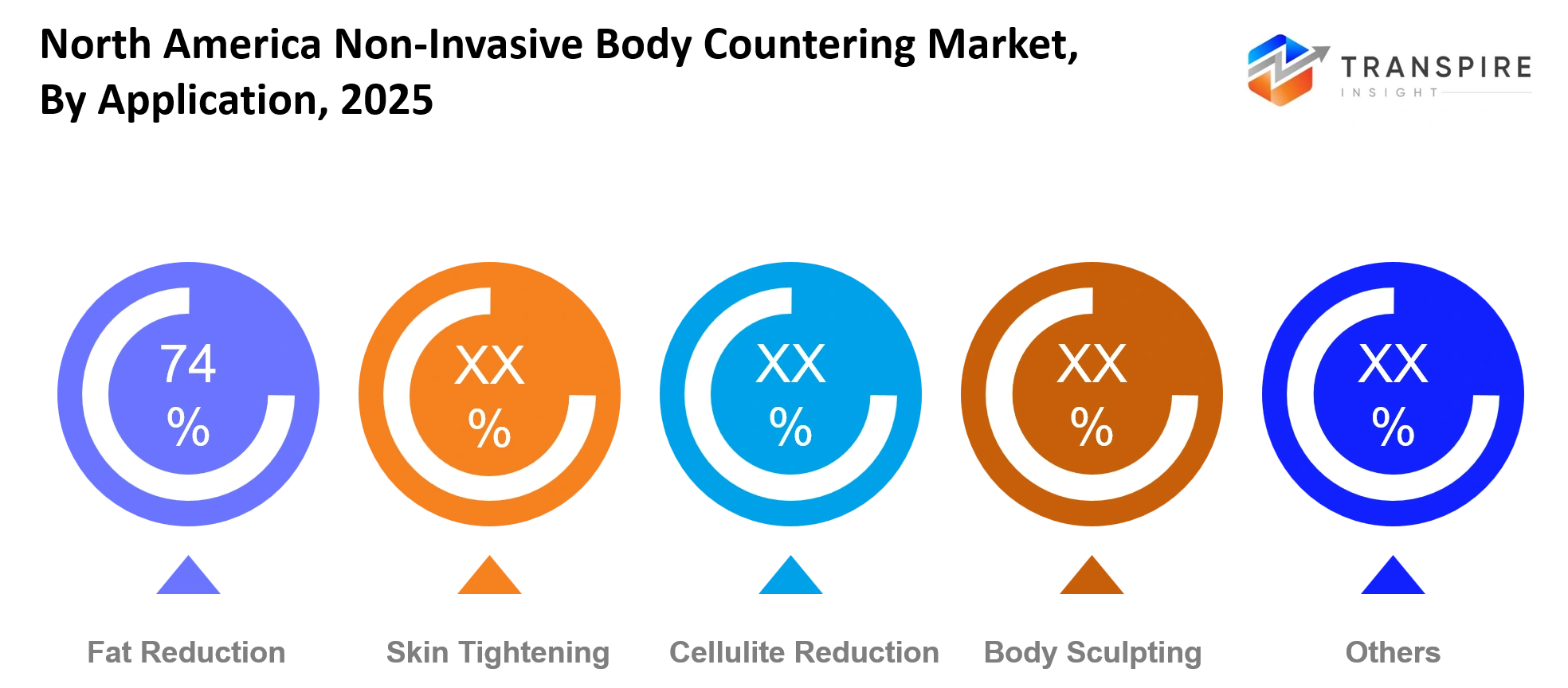
Fat reduction stays the leading application category, since excess localized fat is still the main concern patients bring to aesthetic consultations. Strong procedure volume, repeat visits, and broader eligibility have all reinforced that leadership. Clinical results that stay consistent also make it easier for both premium providers and mid-tier aesthetic clinics to keep adopting the approach without too much uncertainty.
Skin tightening is, basically, the second-largest application segment and it’s pushed along by the aging demographics and the growing wish for non-surgical rejuvenation. At the same time, cellulite reduction and body sculpting applications keep getting wider uptake as the treatment technologies get more precise, and patients seem more satisfied after sessions. Also, the interest in broader body transformation programs has made a lot of providers start mixing multiple applications together into one integrated plan, you know, instead of handling everything separately.
Looking ahead, future growth should lean toward body sculpting and skin tightening applications since the technology platforms are becoming more versatile. Equipment manufacturers will likely put money into multifunctional systems that handle several beauty concerns in one go, which ends up giving clinics and consumers a more solid value story.
To learn more about this report, Download Free Sample Report
By End User
Cosmetic clinics grab the largest share of end user demand, mostly since specialized know how, dedicated equipment investments, and high procedure volumes let them run more efficiently . They also have solid marketing skills and decent consumer engagement, so they stay up near the top in this space. A lot of clinics keep reworking and expanding their treatment range, almost always trying to remain competitive in that crowded aesthetics market where things shift fast .
Dermatology centers still keep a meaningful position, mainly from established patient trust and easier access to medically supervised aesthetic procedures. Hospitals, on the other hand hold a smaller portion, since elective body contouring treatments usually do not fit neatly into the hospital’s main priorities. Independent aesthetic providers and medical spas keep expanding too, helped by flexible pricing models and broader geographic reach.
The forecast period is expected to bring rather stronger growth for medical spas and more specialized cosmetic clinics, you know those places. Equipment suppliers may start to tailor financing programs, training initiatives, and technology packages, toward these fast expanding provider groups even more than before.
By Technology
Energy-based devices are still leading the technology segment, mainly because they’re seen as effective across fat reduction, skin tightening, and body sculpting use cases. Radiofrequency, cryolipolysis, ultrasound, and laser technologies, taken together, make up the majority of installed systems. Also the established regulatory pathways and the large amount of clinical validation have basically reinforced confidence for both providers and patients.
AI-enabled systems, right now, have a smaller share but they’re slowly becoming a strategically important category. Advanced imaging, treatment planning software and outcome prediction tools help providers raise consultation quality and fine tune treatment personalization. Portable devices are also getting more attention, since many clinics want flexible setups that cut operational costs and broaden service availability.
The next stage of market development is probably going to focus on intelligent treatment ecosystems, those that combine energy delivery with data-driven decision support. Product developers may concentrate on weaving artificial intelligence, patient analytics, and workflow automation features into their offerings, while buyers will more and more judge technology platforms based on treatment performance as well as digital functionality.
What are the Key Use Cases Driving the North America Non-Invasive Body Countering Market?
Fat reduction still seems like the main thing pushing procedure volumes across North America, more or less. In practice, cosmetic clinics pull in the bulk of that demand by rolling out non surgical treatments for localized fat deposits, think abdomen thighs flanks and arms. The short recovery times and these pretty predictable results are what make the whole thing feel like a sensible alternative to classic liposuction, honestly.
Skin tightening and cellulite reduction are also getting a lot more traction now, especially inside dermatology centers and those premium medical spas. A lot of providers are now mixing these options together with fat reduction, so they can run a more full body enhancement program instead of treating things one by one. That combo tends to raise perceived treatment value, and it also helps clinics keep patients around, with more follow ups and repeat visits.
On the newer side, you also see post weight loss body contouring showing up, plus personalized body sculpting programs supported by AI enabled assessment tools. More and more clinics are using customized treatment planning, so they can target multiple aesthetic concerns inside one single treatment pathway. These use cases are still kind of niche today, but the outlook should broaden as the digital tools get better at refining precision and outcome predictability.
|
Report Metrics |
Details |
|
Market size value in 2025 |
USD 3.1 Billion |
|
Market size value in 2026 |
USD 3.3 Billion |
|
Revenue forecast in 2033 |
USD 5.1 Billion |
|
Growth rate |
CAGR of 6.42% from 2026 to 2033 |
|
Base year |
2025 |
|
Historical data |
2021 - 2024 |
|
Forecast period |
2026 - 2033 |
|
Report coverage |
Revenue forecast, competitive landscape, growth factors, and trends |
|
Regional scope |
North America (Canada, The United States, and Mexico) |
|
Key company profiled |
AbbVie, Cynosure, Cutera, Alma Lasers, Lumenis, BTL Industries, InMode, Venus Concept, Solta Medical, Candela Medical, Fotona, Sciton, EndyMed, Zimmer MedizinSysteme, Lutronic. |
|
Customization scope |
Free report customization (country, regional & segment scope). Avail customized purchase options to meet your exact research needs. |
|
Report Segmentation |
By Procedure Type (Cryolipolysis, Radiofrequency Treatments, Ultrasound Treatments, Laser Lipolysis, Others); By Application (Fat Reduction, Skin Tightening, Cellulite Reduction, Body Sculpting, Others); By End User (Cosmetic Clinics, Hospitals, Dermatology Centers, Others); By Technology (Energy-based Devices, AI-enabled Systems, Portable Devices, Others). |
Which Regions are Driving the North America Non-Invasive Body Countering Market Growth?
The United States shows up as the dominant area in the North America Non-Invasive Body Contouring Market because it has this huge network of aesthetic clinics, strong healthcare foundation, and people who spend a lot on cosmetic procedures. Providers benefit a lot from adopting new body contouring technologies early, so they can roll out fresh treatments quickly and expand services across major city clusters. There’s also a supporting circle around the whole thing: device manufacturers, training centers, dermatology practices, and medical spas, that keeps everything moving and supports leadership. And then, good access to financing plus marketing pathways really reinforces both procedure counts and future technology investments.
Canada sits as the second-largest regional market, and it feels a bit different than the United States. Here, the focus is more on stable, medically supervised aesthetic care, with technology being adopted in a more measured way. Healthcare spending stays fairly steady and specialized aesthetic providers are increasing, so demand keeps looking reliable. In practice, many providers lean toward clinically validated technologies with known safety outcomes, which helps keep the market stable over time. That kind of disciplined spending means Canada continues to contribute dependable regional revenue, even if the patient base is smaller.
Mexico, meanwhile, is emerging as the fastest-growing market. This happens because private healthcare investments are expanding, medical tourism is gaining momentum, and advanced aesthetic technologies are becoming more available. More clinics are opening, and modernization efforts are improving access to non-invasive body contouring across major urban areas. Treatment pricing stays competitive, which keeps pulling in both local patients and international travelers looking for cosmetic upgrades. Overall growth in Mexico creates promising room for device manufacturers, clinic operators, and investors looking to expand regional presence between 2026 and 2033.
Who are the Key Players in the North America Non-Invasive Body Countering Market and How Do They Compete?
Competition in the North America Non-Invasive Body Contouring market is still kinda moderately concentrated, you know, with a small group of technology-focused manufacturers that end up controlling a lot of the premium aesthetic procedures. So yeah, rivalry is mostly about treatment efficacy and device versatility, plus clinical evidence and the level of provider support. Not so much on price. Most established players keep defending their position by pushing product upgrades, plus practitioner training programs. Meanwhile the newer tech developers tend to aim at specialized treatment niches and digital treatment planning solutions. Basically, the ability to deliver measurable outcomes across multiple aesthetic concerns is now the big buying signal, the real differentiator.
AbbVie, through its Allergan Aesthetics division, competes by leaning into technology innovation and a brand-anchored clinical adoption path. Its CoolSculpting platform gets a lot of traction because physicians already know it well, and there’s extensive clinical validation behind non-invasive fat reduction. AbbVie also keeps widening its aesthetic ecosystem by slotting in complementary treatment offerings, and then strengthening ties with cosmetic clinics via training, plus marketing support. The result is a bit like recurring demand, and it boosts customer retention across those provider networks.
Cynosure stands out with multi-application energy based platforms, covering fat reduction, skin tightening, and body sculpting all within one technology portfolio. Alma Lasers leans more on treatment customization, mixing several energy modalities to better fit patient-specific outcomes. Cutera, for its part, emphasizes advanced device engineering and workflow efficiency, which lets clinics increase treatment capacity, and improve operational productivity at the same time. These firms are also pushing ahead through strategic partnerships, product enhancements, and broader penetration into medical spas and specialty aesthetic clinics, allowing them to capture demand from rapidly evolving treatment settings.
Company List
- AbbVie
- Cynosure
- Cutera
- Alma Lasers
- Lumenis
- BTL Industries
- InMode
- Venus Concept
- Solta Medical
- Candela Medical
- Fotona
- Sciton
- EndyMed
- Zimmer MedizinSysteme
- Lutronic
Recent Development News
“In January 2026, Cynosure Lutronic secured CE MDR certification for its Mosaic 3D™ fractional resurfacing platform. The certification strengthened the company’s regulatory positioning and supported broader commercialization of advanced non-invasive aesthetic technologies across global markets, reinforcing competitive momentum in North America.
Source: https://www.prnewswire.com
What Strategic Insights Define the Future of the North America Non-Invasive Body Countering Market?
The North America Non-Invasive Body Contouring Market is heading toward pretty much highly personalized, tech infused aesthetic care over the next five to seven years. The main driver, is the coming together of advanced energy based devices, artificial intelligence, and data driven planning. This is basically moving the competition away from solo treatments and toward outcome focused treatment ecosystems. Clinics that can prove measurable results, fine tuned customization, and smoother day to day operations will likely pull in more of patient spending.
There’s also a less visible risk, namely a more concentrated market where only a handful of premium technology platforms really dominate. If providers lean heavily on a small set of manufacturers, that could bring pricing pressure to clinics. It might also slow things down on innovation, if competitive intensity just loses steam. Meanwhile, a few emerging opportunities are taking shape, especially those tied to AI powered body assessment systems. These can help with treatment selection and even forecast patient outcomes before any procedure starts, so it’s less guess work.
A practical strategic recommendation for manufacturers and investors is to put effort into integrated platforms that combine several treatment modalities with digital analytics, and not just separate tools. In theory, that kind of setup can build steadier provider loyalty, unlock recurring revenue from software related features, and support clearer differentiation as the market keeps becoming more technology driven and less purely device dependent.
North America Non-Invasive Body Countering Market Report Segmentation
By Procedure Type
- Cryolipolysis
- Radiofrequency Treatments
- Ultrasound Treatments
- Laser Lipolysis
- Others
By Application
- Fat Reduction
- Skin Tightening
- Cellulite Reduction
- Body Sculpting
- Others
By End User
- Cosmetic Clinics
- Hospitals
- Dermatology Centers
- Others
By Technology
- Energy-based Devices
- AI-enabled Systems
- Portable Devices
- Others
Frequently Asked Questions
Find quick answers to common questions.
The expected North America Non-Invasive Body Countering Market size is USD 5.1 Billion in 2033.
Key segments for the North America Non-Invasive Body Countering Market are By Procedure Type (Cryolipolysis, Radiofrequency Treatments, Ultrasound Treatments, Laser Lipolysis, Others); By Application (Fat Reduction, Skin Tightening, Cellulite Reduction, Body Sculpting, Others); By End User (Cosmetic Clinics, Hospitals, Dermatology Centers, Others);By Technology (Energy-based Devices, AI-enabled Systems, Portable Devices,Others).
Major North America Non-Invasive Body Countering Market players are AbbVie, Cynosure, Cutera, Alma Lasers, Lumenis, BTL Industries, InMode, Venus Concept, Solta Medical, Candela Medical, Fotona, Sciton, EndyMed, Zimmer MedizinSysteme, Lutronic.
The North America Non-Invasive Body Countering Market size is USD 3.1 Billion in 2025.
The North America Non-Invasive Body Countering Market CAGR is 6.42% from 2026 to 2033.
- AbbVie
- Cynosure
- Cutera
- Alma Lasers
- Lumenis
- BTL Industries
- InMode
- Venus Concept
- Solta Medical
- Candela Medical
- Fotona
- Sciton
- EndyMed
- Zimmer MedizinSysteme
- Lutronic
About the Authors

Pankaj Ghogare Patil
I am Pankaj Ghogare Patil, a Senior Research Analyst at Transpire Insight, specializing in the Pharmaceutical, Chemicals & Materials, Healthcare IT, and Biotechnology industry. My expertise lies in conducting comprehensive market research, analyzing industry trends, evaluating competitive landscapes, and translating complex data into actionable insights. At Transpire Insight, I closely follow emerging technologies, regulatory developments, and market innovations to create accurate, well-researched, and informative content that helps businesses and professionals make informed decisions. I am committed to producing credible, evidence-based articles that reflect industry best practices while making technical topics accessible and valuable for a broad audience.

Chakradhar Khansole
Chakradhar serves as the Research Director at Transpire Insight, bringing over 8 years of experience in technology, innovation, and strategic market intelligence. He specializes in transforming complex market data into actionable business insights that enable organizations to make informed, growth-oriented decisions. Recognized for his strategic vision and analytical expertise, Chakradhar leads high-impact research initiatives, delivering comprehensive market assessments, competitive intelligence, and forward-looking industry analysis.
Recently Published Reports
-
Apr 2026
AI in Diabetic Retinopathy Market
AI in Diabetic Retinopathy Market Size, Share & Analysis Report By Type (Screening AI Systems, Diagnostic AI Systems, and Predictive AI Models), By Application Segment (Hospitals, Ophthalmology Clinics, Diagnostic Centers, and Research and Development), and Geography (North America, Europe, Asia-Pacific, Middle East and Africa, South and Central America), 2021 - 2031
-
Apr 2026
Psychometric Tests Market
Psychometric Tests Market Size, Share & Analysis Report By Type (Personality Tests, Ability/Aptitude Tests, Skill/Knowledge Tests, and Others), By Application (Talent Acquisition and Talent Management), and Geography (North America, Europe, Asia-Pacific, Middle East and Africa, South and Central America), 2021 – 2031
-
Apr 2026
Rare Biological Sample Collection Market
Rare Biological Sample Collection Market Size, Share & Analysis Report By Type (Isolation Kits & Reagent, Blood Collection Tubes, and Others), By Application (Oncology, Transcriptomics, Pharmacogenomics, and Others), and Geography (North America, Europe, Asia-Pacific, Middle East and Africa, South and Central America), 2021 – 2031
-
Jul 2026
Diabetic Retinopathy Market
Diabetic Retinopathy Market Size, Share & Analysis Report By Type (Proliferative Diabetic Retinopathy, and Diabetic Macular Edema (DME)), By Treatment Type (Anti VEGF Drug, Steroid Implants, Laser Surgeries, and Vitrectomy), and Geography (North America, Europe, Asia-Pacific, Middle East and Africa, South and Central America), 2021 – 2031
Our Clients







