

North America Alternative Protein Market Size & Forecast:
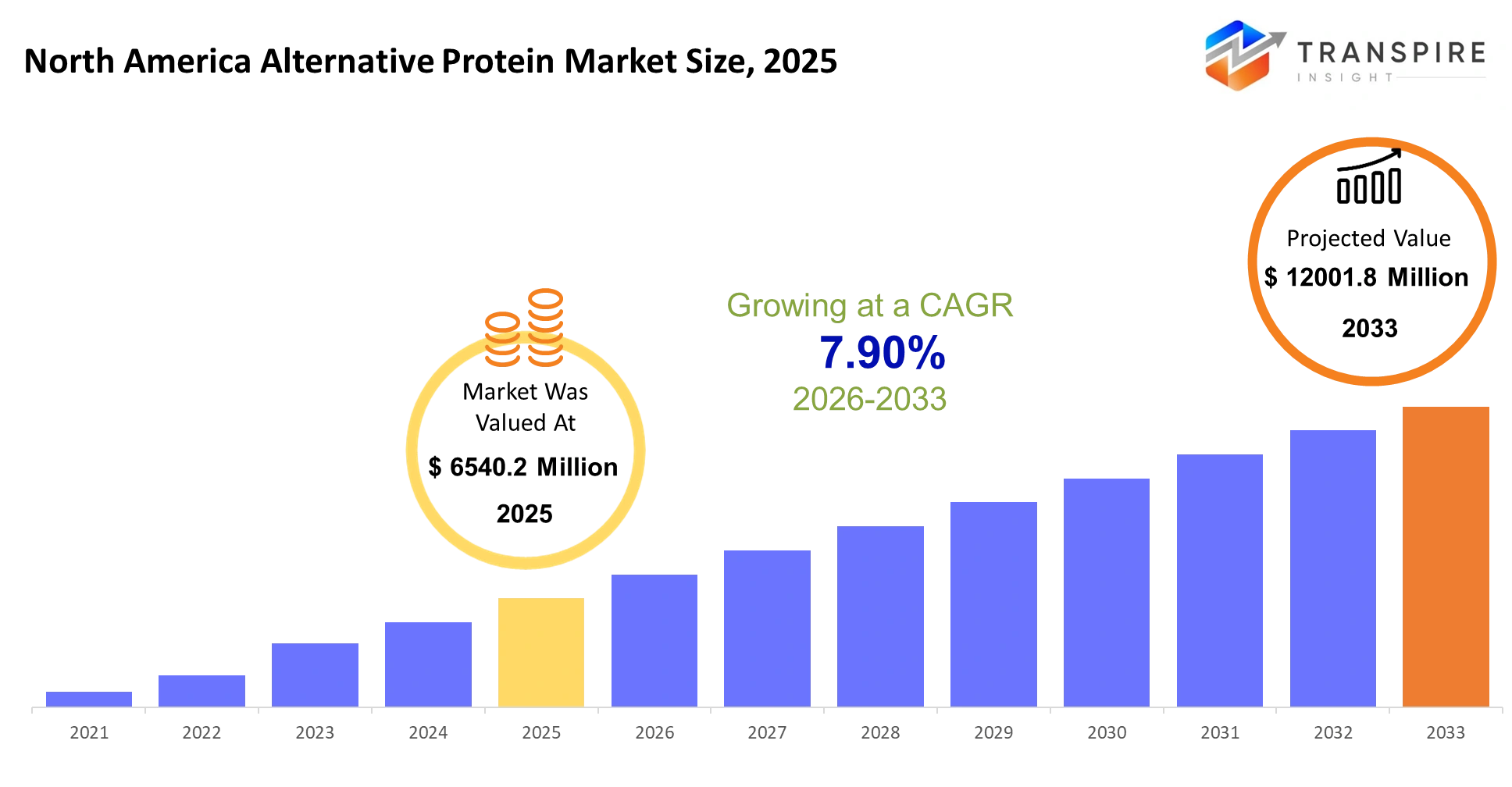
- North America Alternative Protein Market Size 2025: USD 6540.2 Million
- North America Alternative Protein Market Size 2033: USD 12001.8 Million
- North America Alternative Protein Market CAGR: 7.90%
- North America Alternative Protein Market Segments: By Type (Plant-based, Insect-based, Algae-based, Mycoprotein, Others, Cultured Meat); By Source (Soy, Pea, Wheat, Others, Algae, Insects); By Application (Food, Beverages, Animal Feed, Others, Supplements, Nutrition); By End-User (Retail, Food Service, Industrial, Others, Online, Consumers)
To learn more about this report,  Download Free Sample Report
North America Alternative Protein Market Summary:
The North America Alternative Protein Market size is estimated at USD 6540.2 Million in 2025 and is anticipated to reach USD 12001.8 Million by 2033, growing at a CAGR of 7.90% from 2026 to 2033.
The North American market for alternative protein products operates within the wider food industry and biotechnology sector because changing dietary patterns will transform both protein production methods and protein consumption practices. The United States and Canada consumer base will show growing demand for products that match their understanding of health and their commitment to ethical product selection and their dedication to environmental protection, which forces companies to develop new product strategies. The plant-based products will develop enhanced flavor and mouthfeel, while the commercial fermentation techniques and cell-based methods will achieve better understanding. New products will follow stricter labeling requirements and safety testing protocols which will determine their path to retail distribution and foodservice operations.
Food science developments will determine the methods used to extract proteins, create protein structures, and prepare proteins for use in regular meals.The food industry will see both new companies and current businesses devote resources to precision fermentation and hybrid protein systems, which will enable them to satisfy changing consumer needs while maintaining their existing taste profiles. The retailers who sell products will expand their display space because customers continue to show interest in these products which display ongoing demand. The North American market will present products that reflect cultural diversity, as product development will incorporate regional culinary traditions and dietary customs, which will lead to increased adoption of alternative proteins.
What Has the Impact of Artificial Intelligence Been on the North America Alternative Protein Market?
The North American alternative protein market experiences a transformation through artificial intelligence which enables value chain stakeholders to make more accurate and rapid decisions. The North American alternative protein market utilizes artificial intelligence to analyze extensive consumer behavior data and retail sales records and nutritional patterns which helps businesses discover new customer trends with increased precision. Businesses use advanced machine learning models and predictive analytics technology to forecast demand changes and develop effective product strategies while adapting to new market developments.
North American alternative protein market operations use artificial intelligence technology to boost production capacity while improving operational efficiency. The smart automation systems enhance production efficiency through their ability to optimize manufacturing operations and maintain high product quality standards while decreasing material wastage which results in lower production expenses. The AI-powered supply chain optimization system enables companies to predict their inventory requirements while achieving cost reductions in their logistics operations and maintaining steady product distribution.
AI technology powers both efficiency improvements and creative product development and customized solutions in the North American alternative protein market. Companies use machine learning technology to create new plant-based and cell-based products which deliver better taste and texture results while meeting individual dietary requirements. The technological advantage enables businesses to establish brand differentiation while creating a sustainable market edge because AI serves as the primary factor which drives long-term market growth in the North American alternative protein industry.
Key Market Trends & Insights:
- The United States dominates the north american alternative protein market because consumers adopted alternative proteins which resulted in 75 percent market share for the United States in 2025.
- Canada will become the fastest-growing region which will achieve a growth rate above 13% during the 2025 to 2030 forecast period.
- Plant-based proteins currently control more than 60% of the north america alternative protein market because vegan and flexitarian consumer trends drive their popularity.
- Insect-based proteins hold the second-largest share because they are becoming popular in niche nutrition and sustainable food segments.
- The market for cell-based proteins will grow at the fastest rate until 2030 because technological advancements will drive their development.
- The food and beverage sector holds 70 percent of market share because people increasingly demand meat alternatives and dairy substitutes.
- The fastest-growing application of animal feed development receives support from rising demand for sustainable solutions that provide high-protein nutrition to livestock.
- North America alternative protein market research shows that retail consumers control 65 percent market share because more people are buying plant-based products.
- Foodservice providers constitute the end-user segment that experiences the fastest growth because they create new menus and increase their vegan product selection.
- The main players in the market include Beyond Meat Impossible Foods Cargill Archer Daniels Midland Tyson Foods.
North America Alternative Protein Market Segmentation
By Type :
Plant-based protein holds a leading share because people know it well and find it simple to use in their regular eating habits. Soy and pea serve as the primary ingredients which food manufacturers use to create meat alternatives.Insect-based protein achieves recognition for its efficient protein production method which requires minimal resources, yet people from different cultures need more time to accept this protein source. Algae-based protein provides strong health benefits and sustainable advantages, which make it suitable for specialized health products.
Mycoprotein shows steady growth because its texture resembles traditional meat, which makes it ideal for ready meals and processed foods. The current status of cultured meat development shows it needs more technological progress and regulatory changes to reach its full potential.The different types of products establish various degrees of marketability and customer acceptance together with their production costs, which determine the direction of market development.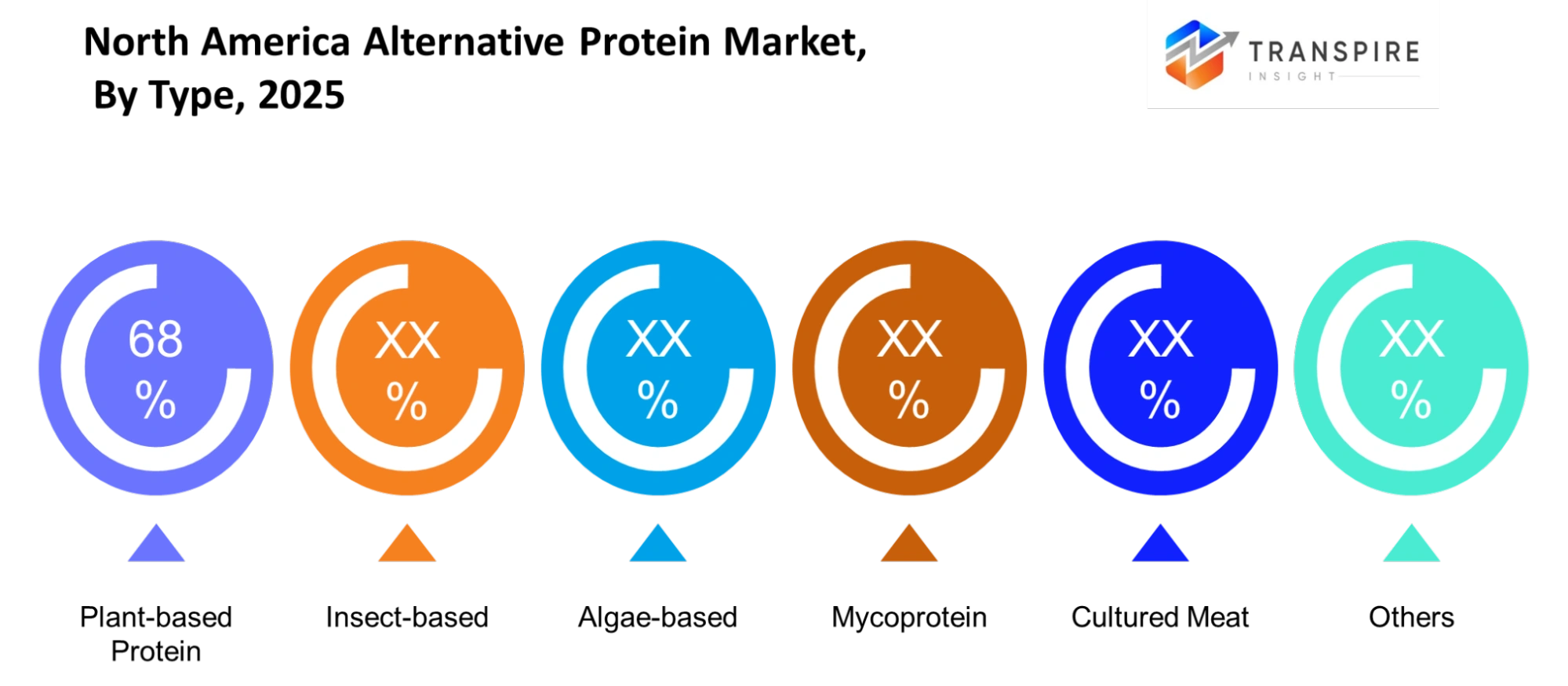
To learn more about this report, Download Free Sample Report
By Source :
Soy remains the main protein source because its supply chains are already established and it contains high protein content which people use to make meat alternatives and dairy substitutes. Pea protein has become more popular because it provides allergen-free benefits and its neutral taste allows manufacturers to create products more efficiently. Processed foods use wheat protein as gluten-based components which help create desired food textures.
Algae provides a nutrient-rich substance which contains omega fatty acids and serves as a common ingredient in dietary supplements and specialty food products. Insect protein offers efficient production capabilities together with complete amino acid content; however, its industrial adoption depends on both regulatory guidelines and consumer acceptance. Each source produces different product requirements which meet distinct customer market needs.
By Application :
The food application shows the highest demand because of plant-based meat products and dairy alternatives and ready-to-eat meals. People are adopting protein shakes and fortified drinks as their health needs drive them to choose products with easy access. Alternative protein sources help animal feed producers decrease their dependency on standard feed materials which enhances sustainability practices in livestock farming.
The market for supplements and nutrition products keeps growing because of rising fitness trends and increased health knowledge among people. The product development in this category focuses on two functional benefits which include better digestion and energy support. The various applications demonstrate different consumption patterns which result in continuous market growth across different business sectors.
By End-User :
Retail channels serve as the primary distribution method which enables customers to access packaged products through supermarkets and specialty stores. Restaurants expand their menu options with alternative protein dishes to satisfy their customers who have different dietary needs. Processed food manufacturers use these proteins to create products which leads to higher demand from industrial customers.
Smaller brands can access specific customer groups through online platforms which offer multiple product options. Health and ethical considerations and environmental concerns drive consumer demand growth according to their core values. The market purchasing patterns of each end-user segment create different effects which shape product development efforts.
What are the Main Challenges for the North America Alternative Protein Market Growth?
The growth potential of the North America alternative protein market. The North America alternative protein market development faces its main challenge through the need to achieve stable taste and texture and nutritional value that matches traditional meat and dairy products.
The current plant-based and cell-based product formulas face two main problems which affect their ability to provide stable products with attractive sensory qualities that consumers want to use. The North America alternative protein market experiences supply chain problems which arise from the need to transport pea protein and fermentation materials, which results in higher production costs and reduced ability to expand operations.
The North America alternative protein market faces two main obstacles which stop its growth. The production methods for cell-based and precision-fermented proteins need expensive equipment and specialized facilities, which results in increased production expenses. The process of regulatory compliance which includes rigorous food safety requirements leads to delays in product distribution and market introduction. The North America alternative protein market needs constant R&D funding which creates financial difficulties for both new companies and established businesses.
The problems of adoption continue to exist because of two main factors which include different pricing levels and insufficient infrastructure. The high cost of alternative protein products compared to traditional products prevents them from reaching most consumers. The market faces two main challenges because of two factors which include the shortage of trained workers and the absence of dedicated research facilities that would develop new technological solutions. The North America alternative protein market faces two main threats which arise from competition with traditional protein sources and changes in customer preferences.
Country Insights
The North American market for alternative protein products experiences continuous growth because consumers increasingly demand plant-based and environmentally friendly food products. The market experiences expansion because people become more health-conscious and protect the environment and change their eating patterns. The food industry sees increased adoption when customers from urban and semi-urban areas experience better taste through food innovation investments.
The North American market for alternative protein products shows how consumers now select their meals according to products that display transparent information through their basic composition. The demand for plant-based meat products and dairy alternatives and protein-based snacks keeps multiplying.
The North American alternative protein market consists of established food companies and new startup businesses. The competitive landscape develops through companies forming partnerships and introducing new products while expanding their retail presence. The brand strategy centers on demonstrating health benefits and sustainable practices and appealing taste. The market players of the industry seek to enhance their distribution systems while increasing their product offerings to attract more customers.
North America Alternative Protein Market demonstrates strong presence in the United States because consumers know about the products and they can find them everywhere. Canadian market shows continuing growth because government programs support the market and people show increasing interest in sustainable food systems. Urban centers lead demand, while smaller cities experience gradual growth because their retail stores become more common.
Recent Development News
In April 2026,Beyond Meat announced major financial losses which brought them close to being removed from Nasdaq trading. The company experienced a major decrease in value after its sales declined and competitors emerged and it continued to lose money from its operations. Source https://www.marketwatch.com/
In March 2026, Beyond Meat rebranded to “Beyond The Plant Protein Co.” and expanded into new product categories. The company introduced plant-based protein beverages and announced upcoming snack products to diversify beyond traditional meat alternatives in North America.Source https://apnews.com/
|
Report Metrics |
Details |
|
Market size value in 2025 |
USD 6540.2 Million |
|
Market size value in 2026 |
USD 7050.5 Million |
|
Revenue forecast in 2033 |
USD 12001.8 Million |
|
Growth rate |
CAGR of 7.90% from 2026 to 2033 |
|
Base year |
2025 |
|
Historical data |
2021 - 2024 |
|
Forecast period |
2026 - 2033 |
|
Report coverage |
Revenue forecast, competitive landscape, growth factors, and trends |
|
Regional scope |
North America (Canada, The United States, and Mexico) |
|
Key company profiled |
Beyond Meat, Impossible Foods, Cargill, ADM, Ingredion, Roquette, Kerry Group, Tyson Foods, Nestle, Unilever, DSM, DuPont, Eat Just, Perfect Day, Oatly |
|
Customization scope |
Free report customization (country, regional & segment scope). Avail customized purchase options to meet your exact research needs. |
|
Report Segmentation |
By Type (Plant-based, Insect-based, Algae-based, Mycoprotein, Others, Cultured Meat); By Source (Soy, Pea, Wheat, Others, Algae, Insects); By Application (Food, Beverages, Animal Feed, Others, Supplements, Nutrition); By End-User (Retail, Food Service, Industrial, Others, Online, Consumers) |
How Can New Companies Establish a Strong Foothold in the North America Alternative Protein Market?
New entrants can build a strong position in the north america alternative protein market by focusing on clearly defined niche segments and unmet consumer needs. Startups should concentrate their efforts on specific market segments that include allergen-free proteins and clean-label products and functional nutrition items instead of competing directly with established brands.
The new market players who adopt this method build their distinctive brand identity while they keep up with present market trends. The north america alternative protein market enables companies to achieve faster market growth through product development that meets health-conscious consumer needs and sustainability-oriented customer requirements.
The North America alternative protein market needs businesses to develop new products which combine innovative solutions with technological advancements to achieve successful sustainable growth. Startups should invest in advanced methods such as precision fermentation, AI-driven formulation, or novel protein extraction techniques to improve taste, texture, and cost efficiency.
The company can establish a competitive advantage through its solution which tackles essential industry challenges of high production expenses and restricted product sensory attributes. The north america alternative protein market benefits from research institution and ingredient supplier and foodservice chain partnerships which enable faster product development and market entry while strengthening innovation strategies.
The upcoming companies show that their focused research for innovation projects will succeed for their business operations. Perfect Day uses its microflora fermentation process to create dairy proteins that do not contain animal ingredients while Eat Just develops its cell-based meat products because of its research and development efforts and regulatory achievements. The businesses demonstrate that they can achieve market entry success through their ability to use technology solutions and business partnerships and scalable business operations to develop market presence in the North American alternative protein industry.
Key North America Alternative Protein Market Company Insights
The North America Alternative Protein Market will keep growing because more consumers are showing interest in plant-based and lab-grown protein products. The market will expand because people are adopting new eating patterns and they are becoming more aware of sustainable practices and they want to eat healthier foods. Companies will achieve their goal of attracting more customers by creating products with better taste and texture and lower prices while they continue to develop new products across different market segments.
The competitive analysis shows that major businesses will enhance their market power through partnerships and new product introductions and expansion initiatives. The established food industry players and new market entrants will compete against each other based on product pricing and product quality and their ability to develop new products. Research and development will remain the top priority for investment while retail and food service collaborations will enable businesses to enhance their brand presence and customer access.
Company List
- Beyond Meat
- Impossible Foods
- Cargill
- ADM
- Ingredion
- Roquette
- Kerry Group
- Tyson Foods
- Nestle
- Unilever
- DSM
- DuPont
- Eat Just
- Perfect Day
- Oatly
What are the Key Use-Cases Driving the Growth of North America Alternative Protein Market?
Currently, the market for substitute proteins created in North America is witnessing a great deal of progress, due to its countless applications on nutritional and food industries.Plant-based meat and dairy alternatives have become essential for food and beverage companies which drive their most crucial market growth. Retail and foodservice companies are expanding product portfolios to meet rising consumer demand for sustainable and health-conscious options.
Healthcare and specialized nutrition represent another important application which is currently driving the development of the north american alternative protein market. Alternative proteins are increasingly used in medical nutrition products, elderly care diets, and sports supplements due to their functional benefits and digestibility. Companies are developing protein formulations that treat health conditions like lactose intolerance and cardiovascular concerns which will increase their usage in clinical and wellness sectors. The focused method of application generates fresh income opportunities while it builds up the market's ability to maintain future development.
The animal feed and pet food sectors within the north american alternative protein market are developing into fast-growing markets. Insect-based and fermentation-derived proteins are being integrated into feed solutions to improve sustainability and reduce reliance on traditional sources like soy and fishmeal. The applications provide two benefits by solving environmental problems and enabling businesses to reduce costs while securing their supply chain operations.
North America Alternative Protein Market Report Segmentation
By Type
- Plant-based
- Insect-based
- Algae-based
- Mycoprotein
- Cultured Meat
By Source
- Soy
- Pea
- Wheat
- Algae
- Insects
By Application
- Food
- Beverages
- Animal Feed
- Supplements
- Nutrition
By End-User
- Retail
- Food Service
- Industrial
- Online
- Consumers
Frequently Asked Questions
Find quick answers to common questions.
The Approximate North America Alternative Protein Market size for the Market will be USD 12001.8 Million in 2033.
Key segments for the North America Alternative Protein Market are By Type (Plant-based, Insect-based, Algae-based, Mycoprotein, Others, Cultured Meat); By Source (Soy, Pea, Wheat, Others, Algae, Insects); By Application (Food, Beverages, Animal Feed, Others, Supplements, Nutrition); By End-User (Retail, Food Service, Industrial, Others, Online, Consumers).
Major North America Alternative Protein Market Players are Beyond Meat, Impossible Foods, Cargill, ADM, Ingredion, Roquette, Kerry Group, Tyson Foods, Nestle, Unilever, DSM, DuPont, Eat Just, Perfect Day, Oatly.
The Current North America Alternative Protein Market size is USD 6540.2 Million in 2025.
The North America Alternative Protein Market CAGR is 7.90%.
- Beyond Meat
- Impossible Foods
- Cargill
- ADM
- Ingredion
- Roquette
- Kerry Group
- Tyson Foods
- Nestle
- Unilever
- DSM
- DuPont
- Eat Just
- Perfect Day
- Oatly
Recently Published Reports
-
Dec 2024
Baby Infant Formula Market
Baby Infant Formula Market Size, Share & Analysis Report By ype (Infant Milk, Follow On Milk, Specialty Baby Milk, Growing-Up Milk), By Ingredient (Carbohydrate, Fat, Protein, Minerals, Vitamins, and Others), By Product Form (Powder, Liquid, and Ready-to-feed), By Distribution Channels (Supermarket/Hypermarket, Specialty Store, Pharmacies, Online Retail, and Others), and Geography (North America, Europe, Asia-Pacific, Middle East and Africa, South and Central America), 2021 - 2031
-
Apr 2026
Edible Insects for Animal Feed Market
Edible Insects for Animal Feed Market Size, Share & Analysis Report By Type (Insect Powder, Insect Meal, Insect Bar, Insect Paste, Insect Oil, and Others), By Insect Type (Beetles, Cricket, Caterpillar, Hymenoptera, Orthoptera, Tree Bugs, and Others), By Application (Livestock, Pet Food, and Aquaculture), By Livestock Type (Poultry, Swine, and Others), and Geography (North America, Europe, Asia-Pacific, Middle East and Africa, South and Central America), 2021 - 2031
-
Apr 2026
Food Industry Disinfection and Bacterial Control Market
Food Industry Disinfection and Bacterial Control Market Size, Share & Analysis Report By Type (Chemical Disinfectants, Physical Disinfectants, and Biocides and Antimicrobials), By Application (Food Processing Equipment Surface Disinfection, Food Preparation Areas Surface Disinfection, Storage Areas Surface Disinfection, Anti-microbial Coatings Food Preservation, and Preservative Solutions Food Preservation), By End User (Meat and Poultry Processing, Dairy Processing, Seafood Processing, Bakery and Confectionery, Restaurants and Commercial Kitchens, and Food Service Providers), By Sales Channel (Online, Offline), and Geography (North America, Europe, Asia-Pacific, Middle East and Africa, South and Central America), 2021 - 2031
-
Apr 2026
Freeze Dried Food Market
Freeze Dried Food Market Size, Share & Analysis Report By Product Type (Fruits, Vegetables, Freeze-Dried Dairy Products, Freeze-Dried Meat and Seafood, Freeze-Dried Pet Food, and Prepared Meal), By Nature (Organic, and Conventional), By Form (Powdered, Granules, and Diced), By End Use (Breakfast Cereals, Dairy Products, Bakery & Confectionery, Nutritional Bars & Supplements, Powdered Beverages, Snacks, and Retail (Household)), and Geography (North America, Europe, Asia-Pacific, Middle East and Africa, South and Central America), 2021 - 2031