

North America Food Hydrocolloids Market Size & Forecast:
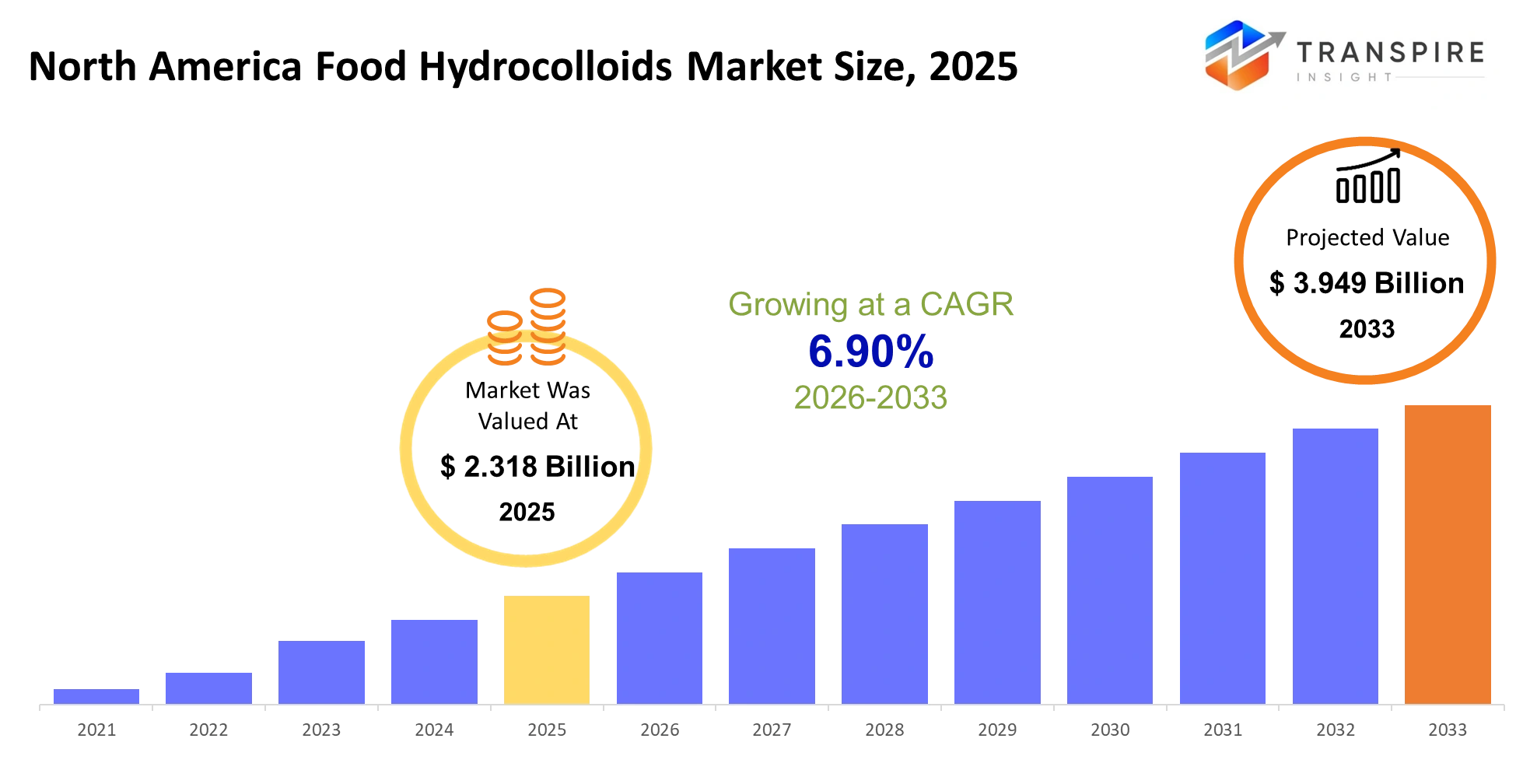
- North America Food Hydrocolloids Market Size 2025: USD 2.318 Billion
- North America Food Hydrocolloids Market Size 2033: USD 3.949 Billion
- North America Food Hydrocolloids Market CAGR: 6.90%
- North America Food Hydrocolloids Market Segments: By Type (Gelatin, Pectin, Xanthan Gum, Agar, Carrageenan, Others), By Source (Plant, Animal, Seaweed, Microbial, Synthetic, Others), By Application (Bakery, Dairy, Meat, Beverages, Confectionery, Others), By Function (Thickening, Gelling, Stabilizing, Emulsifying, Coating, Others).
To learn more about this report,  Download Free Sample Report
North America Food Hydrocolloids Market Summary:
The North America Food Hydrocolloids Market size is estimated at USD 2.318 Billion in 2025 and is anticipated to reach USD 3.949 Billion by 2033, growing at a CAGR of 6.90% from 2026 to 2033. The North America Food Hydrocolloids Market experiences continuous development because people in the region increasingly demand clean-label plant-based and functional food ingredients.
Food manufacturers use gelatin pectin xanthan gum and carrageenan as food hydrocolloids because these substances create thickening and stabilizing and gelling properties for their food products. Consumers choose packaged products that use hydrocolloids because these ingredients improve texture and extend shelf life of their food products. North American food hydrocolloids market manufacturers now develop products based on their need for natural materials with sustainable sourcing methods.
The North America Food Hydrocolloids Market receives its main growth boost from the expanding food and beverage sector which particularly focuses on developing bakery products and dairy alternatives and sauces and meat substitutes. The increasing adoption of vegan and gluten-free diets has created stronger demand for plant-based hydrocolloids which serve as suitable substitutes of animal-based ingredients.
The combination of new food processing technologies and improved formulation methods allows businesses to achieve superior performance outcomes while reducing their operational costs. North America Food Hydrocolloids Market companies continue to invest their resources into research and development which results in the creation of new multifunctional hydrocolloids that satisfy evolving consumer demands.
What Has the Impact of Artificial Intelligence Been on the North America Food Hydrocolloids Market?
Artificial intelligence now enhances decision-making processes as well as innovative activities throughout the North America Food Hydrocolloids Market which allows businesses to execute their operations with more accurate and flexible methods. The North America food hydrocolloids market uses AI technology to enhance market research capabilities through advanced data analysis which tracks changes in consumer behavior and shifts in ingredient usage. Artificial intelligence technology helps North America food hydrocolloids market manufacturers develop predictive analytics systems which enable them to estimate product demand changes and create effective inventory management systems while they identify new functional food industry developments. The data-driven method boosts strategic planning effectiveness while decreasing market risks throughout the entire industry.
Smart automation systems in production and operations work together with the North America food hydrocolloids market to improve operational efficiency by optimizing formulation workflows and minimizing the need for human operators. Machine learning models are further optimizing supply chain management within the North America Food Hydrocolloids Market, ensuring better raw material sourcing, faster delivery cycles, and reduced operational costs. AI-based systems provide product innovation capabilities through their real-time assessment of texture, stability, and performance needs which results in personalized hydrocolloid products. Artificial intelligence technologies enable the North America Food Hydrocolloids Market to gain a significant market advantage through their ability to enhance productivity while decreasing costs and speeding up innovation processes.
Key Market Trends & Insights:
- The North America food hydrocolloids market will reach a 38% market share in 2025 because North America has advanced food processing facilities and consumers have strong demand for products.
- The United States consumes more products than any other country, but Canada has the highest growth rate because its market will expand until 2030.
- The product segmentation shows that gelatin and pectin together control about 42% of the market because these substances find extensive use in confectionery and dairy products.
- The North America Food Hydrocolloids Market experiences its most rapid growth through xanthan gum because consumers demand gluten-free and plant-based products.
- The bakery and confectionery industry holds more than 30% of the market because these products require texture enhancement and shelf-life extension.
- Dairy alternatives show the fastest growth rate among application segments because more consumers choose vegan or lactose-free diets.
- Food and beverage manufacturers serve as the primary customers because they represent approximately 60% of the market, which drives demand for all processed food products.
- The dietary changes of consumers have made plant-based food companies the fastest expanding end-user category in the north america food hydrocolloids market.
North America Food Hydrocolloids Market Segmentation
By Type
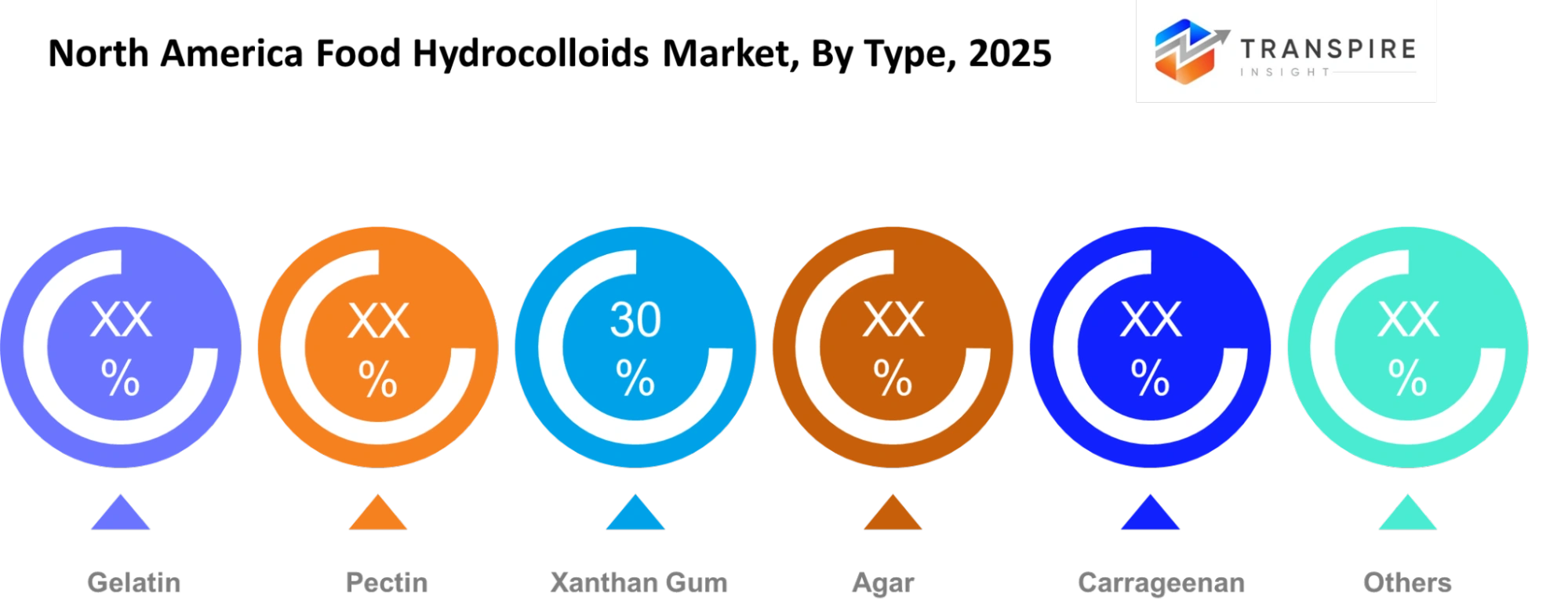
Food processing depends on gelatin because it provides excellent gelling and texturising capabilities. Pectin serves as a crucial ingredient in fruit products which helps maintain consistency in jams and jellies. Xanthan gum becomes increasingly popular among manufacturers who create gluten-free and low-fat products. The dairy and dessert industries primarily use agar and carrageenan because these substances create stable food products. Niche food formulations receive support from other hydrocolloids. People increasingly consume processed foods, which has created a demand for better texture in packaged products.
To learn more about this report, Download Free Sample Report
By Source
Plant-based sources are gaining higher acceptance due to rising demand for clean-label ingredients. The confectionery and dairy industries continue to rely on animal-based hydrocolloids which include gelatin. Seaweed-based ingredients provide natural thickening and stabilizing functions which make them popular among manufacturers. Microbial sources have become more common because they offer dependable quality and production methods that can be expanded. The food processing industry uses synthetic variants because they provide cost benefits. The market is developing a preference for plant and microbial sources because consumer expectations are shifting.
By Application
The bakery applications continue to be the strongest market element because people need better texture and longer shelf life of products. Dairy products use hydrocolloids to achieve two purposes which are stabilization and creaminess enhancement. The meat processing industry depends on hydrocolloids to maintain moisture levels and create better product binding. The beverage industry sees new growth opportunities because of increasing demand for flavored drinks and functional beverages. Confectionery products continue to depend on gelling agents for consistency and structure. The upcoming years will see packaged food consumption essential for all main application categories.
By Function
The food industry uses thickening as its primary function because it needs to create better texture in processed food products. The confectionery and dessert industries depend on gelling properties to create their products. The stabilization functions in dairy and beverage products maintain consistent product quality. Emulsifying agents help maintain uniformity in sauces and processed foods. The coating applications provide two functions which are moisture protection and shelf life extension. The food industry sees rising demand for functional products because manufacturers need to achieve product quality and maintain consistent freshness across various food categories.
What are the Main Challenges for the North America Food Hydrocolloids Market Growth?
Technical and operational challenges continue to influence the North America Food Hydrocolloids Market, especially in maintaining consistent product performance across different food applications. Raw material quality variations lead to formulation challenges because they affect texture and viscosity and stability of products.
Some hydrocolloids in the North America food hydrocolloids market require extraction and processing methods which make it difficult to achieve scalable production. Production efficiency suffers from supply chain disruptions which affect natural sources such as seaweed and plant-based materials. The North America Food Hydrocolloids Market faces growth restrictions because of manufacturing and commercialization barriers.
Food safety regulations establish strict rules which create compliance requirements that increase production expenses and lengthen approval processes. The North America food hydrocolloids market presents significant competition challenges for smaller manufacturers because of high processing costs and required quality control procedures. The limited options for cost optimization create pricing pressure which leads to decreased profit margins. The hydrocolloid-based solutions face delays in commercialization because of challenges between production scaling and regulatory compliance.
Small and mid-sized food manufacturers face adoption challenges which constitute a major issue for the North America Food Hydrocolloids Market. The lack of advanced processing infrastructure together with low access to technical expertise prevents widespread adoption of hydrocolloid technologies. The funding gaps for innovation restrict development of advanced functional ingredients in the North America food hydrocolloids market.
Regional Insights
North America Food Hydrocolloids Market North America shows strong market presence because people in the region consume high amounts of processed food and convenience food products. The United States leads demand because of advanced food manufacturing systems and strong retail distribution networks.
Canada shows steady growth which results from increased consumer demand for clean-label products and plant-based food options. The North America Food Hydrocolloids Market exists because industrial infrastructure supports the market while product development continues across all food product categories.
The United States remains the dominant contributor in the North America Food Hydrocolloids Market because food processing companies use functional ingredients at high rates. The bakery and dairy and beverage sectors all experience strong demand because these industries need products which provide both texture and stability.
Mexico is experiencing gradual economic growth because food processing operations extend into urban areas while people in cities develop higher consumption patterns. The North America Food Hydrocolloids Market in this region will continue to grow with rising investment in food technology and product development.
Recent Development News
In March 2026, U.S. Hydrocolloid Market Set for Strong Growth Through 2033 Driven by Major Industry Players: In March 2026, industry coverage highlighted strong expansion in the U.S. hydrocolloid sector, with key companies such as CP Kelco, DuPont, and Ashland Global driving innovation and capacity expansion. The report emphasizes rising demand from processed food and functional ingredient applications across the North American food hydrocolloids market.
Source: https://www.openpr.com
In April 2026, Clean-Label Demand Strengthens Hydrocolloids Adoption in U.S. Food Manufacturing: A 2026 industry update reports increasing adoption of natural hydrocolloids in U.S. food production, driven by clean-label and plant-based food trends. This shift is significantly influencing product innovation across bakery, dairy, and beverage sectors in the North American Food Hydrocolloids Market, especially among major processors.
Source: https://www.innovamarketinsights.com
|
Report Metrics |
Details |
|
Market size value in 2025 |
USD 2.318 Billion |
|
Market size value in 2026 |
USD 2.476 Billion |
|
Revenue forecast in 2033 |
USD 3.949 Billion |
|
Growth rate |
CAGR of 6.90% from 2026 to 2033 |
|
Base year |
2025 |
|
Historical data |
2021 – 2024 |
|
Forecast period |
2026 – 2033 |
|
Report coverage |
Revenue forecast, competitive landscape, growth factors, and trends |
|
Country scope |
North America (Canada, The United States, and Mexico) |
|
Key company profiled |
DuPont, Cargill, Kerry Group, Ingredion, Tate & Lyle, CP Kelco, Ashland, Darling Ingredients, DSM, BASF, Archer Daniels Midland, FMC, Givaudan, Lonza, Nexira. |
|
Customization scope |
Free report customization (country, regional & segment scope). Avail customized purchase options to meet your exact research needs. |
|
Report Segmentation |
By Type (Gelatin, Pectin, Xanthan Gum, Agar, Carrageenan, Others), By Source (Plant, Animal, Seaweed, Microbial, Synthetic, Others), By Application (Bakery, Dairy, Meat, Beverages, Confectionery, Others), By Function (Thickening, Gelling, Stabilizing, Emulsifying, Coating, Others). |
How Can New Companies Establish a Strong Foothold in the North America Food Hydrocolloids Market?
New companies can establish a strong position in the North America Food Hydrocolloids Market by focusing on niche product development and solving specific formulation challenges faced by food manufacturers. Startups that develop clean-label stabilizers and plant-based gelling agents and allergen-free alternatives will achieve faster market acceptance within the North American food hydrocolloids industry.
The U.S. market demonstrates that natural hydrocolloids enable Rousselot (Darling Ingredients innovation division) and Gelymar-inspired seaweed extract ventures to achieve market success through their specific product expertise. Companies that establish dedicated research centers will develop distinctive products which will enable them to compete against established market leaders.
The North America Food Hydrocolloids Market requires food processors and beverage manufacturers and ingredient distributors to establish strategic partnerships for successful market expansion. Companies can enhance their market presence while decreasing their entry expenses through partnerships with Cargill and Ingredion supply networks.
The North American food hydrocolloids industry will benefit from companies that develop trust through their testing and co-development partnerships with bakery and dairy brands. The combination of technology-based formulation tools and AI-powered ingredient optimization platforms will enable organizations to develop products faster while decreasing their development expenses.
Key North America Food Hydrocolloids Market Company Insights
The North America Food Hydrocolloids Market is highly competitive with strong participation from global ingredient manufacturers and specialty food solution providers. The companies Cargill, Ingredion, DuPont, CP Kelco and Kerry Group together with Ashland Global operate their businesses to develop new products for their markets.
The north american food hydrocolloids market competition exists because companies develop new clean-label ingredients while creating cost-effective products that meet the needs of food processing customers.The North America Food Hydrocolloids Market experiences growth through strategic partnerships and acquisitions which help companies to enhance their supply chain networks and build their regional operations.
The leading companies allocate substantial funds for research and development activities to develop sophisticated hydrocolloid products which serve the bakery and dairy and beverage sectors. The north america food hydrocolloids market developed sustainable sourcing practices together with plant-based product solutions to meet the changing needs of consumers.
The North America Food Hydrocolloids Market has opened its doors to smaller companies through emerging enterprises which introduce their distinctive products that include microbial fermentation-based hydrocolloids and seaweed-derived stabilizers. The market experiences rising competition because businesses face two challenges which include decreased prices and increasing consumer demand for products with multiple functions. T
Company List
- DuPont
- Cargill
- Kerry Group
- Ingredion
- Tate & Lyle
- CP Kelco
- Ashland
- Darling Ingredients
- DSM
- BASF
- Archer Daniels Midland
- FMC
- Givaudan
- Lonza
- Nexira
What are the Key Use-Cases Driving the Growth of the North America Food Hydrocolloids Market?
Hydrocolloid usage for texture stability and shelf life extension of processed foods drives strong market growth in North America Food Hydrocolloids Market. The North America food hydrocolloids market sees bakery and confectionery products using gelatin pectin and xanthan gum to improve their structural and textural properties.
Beverage manufacturers use hydrocolloids to create suspension effects and improve mouthfeel in their functional and flavored beverages. The continuous growth in demand for convenient ready-to-eat products leads to increased usage across all main food categories.The North America Food Hydrocolloids Market uses hydrocolloids for dairy production and dairy-alternativeproduction because they help maintain creaminess while preventing product separation.
The North America food hydrocolloids market requires stabilizing agents to sustain product quality in plant-based milk products and yogurt alternatives and low-fat dairy items. Hydrocolloids function as binding agents in meat processing to retain water content while enhancing the texture of processed meat products. Food manufacturing companies are increasingly adopting these functional advantages for their production processes.
The North America Food Hydrocolloids Market experiences growth from two factors: food innovation and clean-label product development. North America food hydrocolloids market companies use hydrocolloids to create gluten-free vegan and allergen-free products that match current consumer demands. The market potential for health-oriented foods and nutritional supplements has expanded through the development of new usage cases. Continued research on plant-based and microbial hydrocolloids will enable industrial food production systems to expand their operational capacity through enhanced adoption of these technologies.
North America Food Hydrocolloids Market Report Segmentation
By Type
- Gelatin
- Pectin
- Xanthan Gum
- Agar
- Carrageenan
- Others
By Source
- Plant
- Animal
- Seaweed
- Microbial
- Synthetic
- Others
By Application
- Bakery
- Dairy
- Meat
- Beverages
- Confectionery
- Others
By Function
- Thickening
- Gelling
- Stabilizing
- Emulsifying
- Coating
- Others
Frequently Asked Questions
Find quick answers to common questions.
The approximate North America Food Hydrocolloids Market size for the market will be USD 3.949 Billion in 2033.
The key segments of the North America Food Hydrocolloids Market are By Type (Gelatin, Pectin, Xanthan Gum, Agar, Carrageenan, Others), By Source (Plant, Animal, Seaweed, Microbial, Synthetic, Others), By Application (Bakery, Dairy, Meat, Beverages, Confectionery, Others), By Function (Thickening, Gelling, Stabilizing, Emulsifying, Coating, Others).
Major players in the North America Food Hydrocolloids Market are DuPont, Cargill, Kerry Group, Ingredion, Tate & Lyle, CP Kelco, Ashland, Darling Ingredients, DSM, BASF, Archer Daniels Midland, FMC, Givaudan, Lonza, Nexira.
The current market size of the North America Food Hydrocolloids Market is USD 2.318 Billion in 2025.
The North America Food Hydrocolloids Market CAGR is 6.90%.
- DuPont
- Cargill
- Kerry Group
- Ingredion
- Tate & Lyle
- CP Kelco
- Ashland
- Darling Ingredients
- DSM
- BASF
- Archer Daniels Midland
- FMC
- Givaudan
- Lonza
- Nexira
Recently Published Reports
-
Dec 2024
Baby Infant Formula Market
Baby Infant Formula Market Size, Share & Analysis Report By ype (Infant Milk, Follow On Milk, Specialty Baby Milk, Growing-Up Milk), By Ingredient (Carbohydrate, Fat, Protein, Minerals, Vitamins, and Others), By Product Form (Powder, Liquid, and Ready-to-feed), By Distribution Channels (Supermarket/Hypermarket, Specialty Store, Pharmacies, Online Retail, and Others), and Geography (North America, Europe, Asia-Pacific, Middle East and Africa, South and Central America), 2021 - 2031
-
Jan 2025
Edible Insects for Animal Feed Market
Edible Insects for Animal Feed Market Size, Share & Analysis Report By Type (Insect Powder, Insect Meal, Insect Bar, Insect Paste, Insect Oil, and Others), By Insect Type (Beetles, Cricket, Caterpillar, Hymenoptera, Orthoptera, Tree Bugs, and Others), By Application (Livestock, Pet Food, and Aquaculture), By Livestock Type (Poultry, Swine, and Others), and Geography (North America, Europe, Asia-Pacific, Middle East and Africa, South and Central America), 2021 - 2031
-
Jan 2025
Food Industry Disinfection and Bacterial Control Market
Food Industry Disinfection and Bacterial Control Market Size, Share & Analysis Report By Type (Chemical Disinfectants, Physical Disinfectants, and Biocides and Antimicrobials), By Application (Food Processing Equipment Surface Disinfection, Food Preparation Areas Surface Disinfection, Storage Areas Surface Disinfection, Anti-microbial Coatings Food Preservation, and Preservative Solutions Food Preservation), By End User (Meat and Poultry Processing, Dairy Processing, Seafood Processing, Bakery and Confectionery, Restaurants and Commercial Kitchens, and Food Service Providers), By Sales Channel (Online, Offline), and Geography (North America, Europe, Asia-Pacific, Middle East and Africa, South and Central America), 2021 - 2031
-
Jan 2025
Freeze Dried Food Market
Freeze Dried Food Market Size, Share & Analysis Report By Product Type (Fruits, Vegetables, Freeze-Dried Dairy Products, Freeze-Dried Meat and Seafood, Freeze-Dried Pet Food, and Prepared Meal), By Nature (Organic, and Conventional), By Form (Powdered, Granules, and Diced), By End Use (Breakfast Cereals, Dairy Products, Bakery & Confectionery, Nutritional Bars & Supplements, Powdered Beverages, Snacks, and Retail (Household)), and Geography (North America, Europe, Asia-Pacific, Middle East and Africa, South and Central America), 2021 - 2031