

Middle East and Africa Tungsten Carbide Powder Market Size & Forecast:
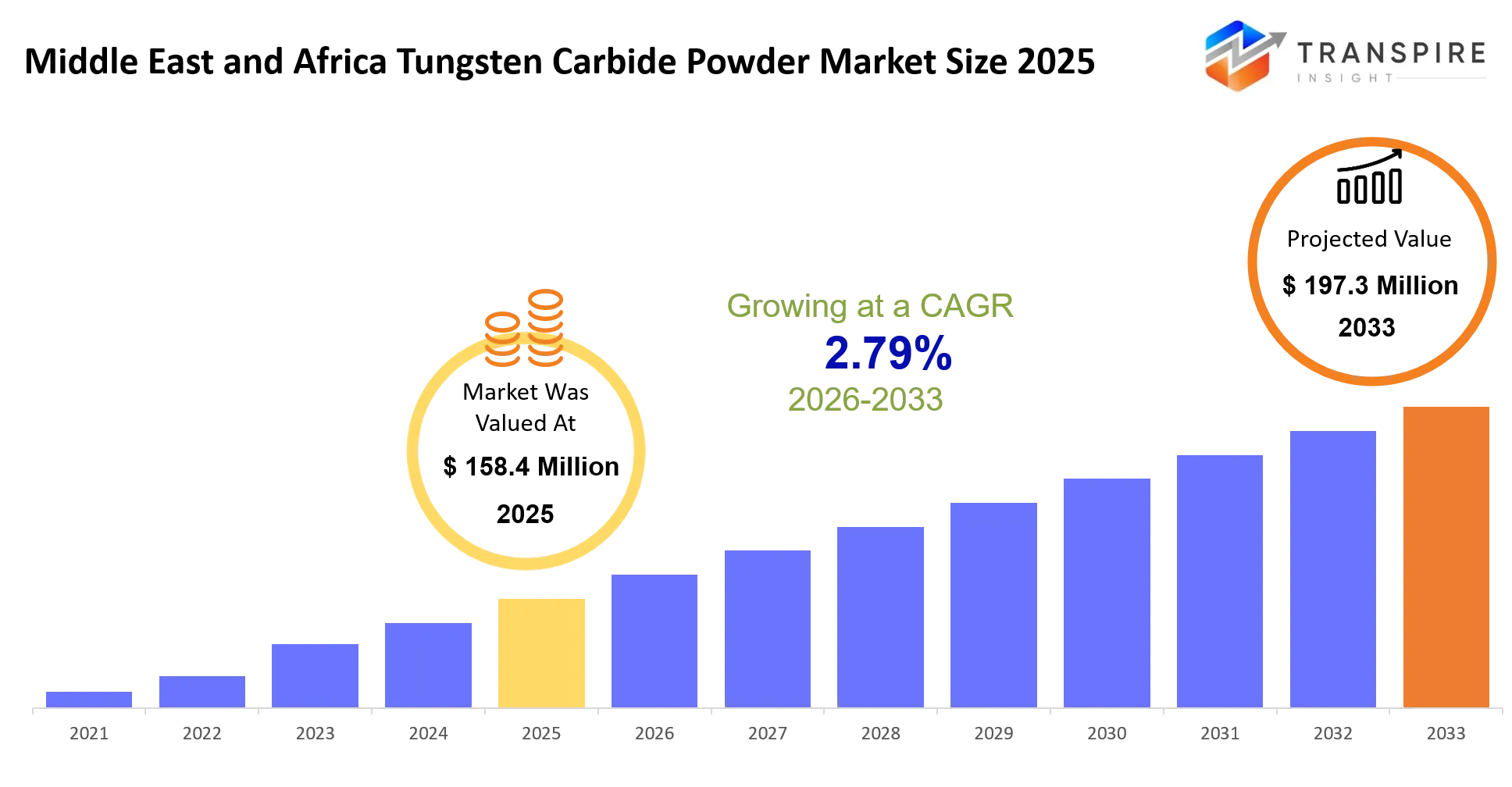
- Middle East and Africa Tungsten Carbide Powder Market Size 2025: USD 158.4 Million
- Middle East and Africa Tungsten Carbide Powder Market Size 2033: USD 197.3 Million
- Middle East and Africa Tungsten Carbide Powder Market CAGR: 2.79%
- Middle East and Africa Tungsten Carbide Powder Market Segments: By Grade (Submicron, Fine Grain, Medium Grain, Coarse Grain, Nano Grade, Others); By Application (Cutting Tools, Mining Tools, Wear Parts, Construction Equipment, Aerospace Components, Others); By Production Method (Carburization, Plasma Processing, Chemical Reduction, Others); By End User (Mining, Manufacturing, Construction, Aerospace, Oil & Gas, Others)
Middle East and Africa Tungsten Carbide Powder Market Summary
The Middle East and Africa Tungsten Carbide Powder Market was valued at USD 158.4 Million in 2025. It is forecast to reach USD 197.3 Million by 2033. That is a CAGR of 2.79% over the period.
Tungsten carbide powder is kinda central, it helps a lot with making industrial parts last longer, especially when they have to deal with extreme wear and abrasion, plus those high-pressure situations that are just not forgiving. Things like mining drill bits, cutting tools, wear resistant pieces, aerospace components ,and construction equipment typically lean on this material because it boosts durability, helps cut down downtime, and brings maintenance costs closer to manageable levels.
Over roughly the last five years, the market has been changing in a more structural way, like the whole balance moved toward higher-performance grades. In particular, submicron and nano-grade powders have become more common, since they back precision manufacturing and newer, more advanced tooling uses. One big driver behind this market behavior was the disruption of global tungsten supply chains, which came after geopolitical tensions and logistics constraints. That kind of pressure forced manufacturers to diversify where they buy from , and also to improve how efficiently they use the material.
At the same time mining, energy, and infrastructure projects ramped up across parts of the Middle East and Africa, so demand rose for industrial tools that can handle longer service intervals. All of this has made it more likely that buyers adopt premium tungsten carbide materials, which then supports consistent revenue growth while also strengthening investments in advanced production technologies.
Key Market Insights
- Look, the Middle East and Africa Tungsten Carbide Powder market is expected to hit about USD 197.3 million by 2033, kinda showing that industrial materials demand is not going away, at least not any time soon.
- In 2025 Saudi Arabia plus the UAE together took nearly 38% of the regional share , largely because of big, on going industrial and construction investments (you know, the kind that moves equipment fast).
- On the grades side, the submicron material basically led the pack with more than 30% market share in 2025, mainly tied to precision cutting and machining needs. Fine grain products stayed as the second-largest segment, because they keep a sensible balance of hardness plus toughness across a lot of industrial uses.
- For the future, nano grade powder should become the fastest-growing through 2033 , since advanced manufacturing and aerospace are pushing harder and harder for these kinds of materials.
- When it comes to application, cutting tools were roughly 35% of total demand in 2025, so that segment is still the biggest. And aerospace components are now looking like the fastest-growing application area , as regional aircraft maintenance capabilities keep expanding.
- For end users, manufacturing accounted for nearly 32% of demand in 2025 , supported by ongoing investments in machining and metalworking industries.
- Some of the major players, like Kennametal , Sandvik , Ceratizit , Mitsubishi Materials and Plansee, are expanding their high-performance powder lineups.
- Overall, the strategic push is centered on higher purity powders, improved grain control technologies, better recycling capabilities, and regional distribution partnerships that make the supply more reliable.
What are the Key Drivers, Restraints, and Opportunities in the Middle East and Africa Tungsten Carbide Powder Market?
The strongest force behind market expansion is kind of the growing use of wear-resistant materials in mining, manufacturing and energy operations . In Saudi Arabia , the United Arab Emirates, and South Africa, large infrastructure programs have boosted equipment utilization rates, and so there is higher demand for durable cutting and drilling tools . Meanwhile, higher operating costs have pushed industrial operators to extend their equipment life cycles, and that’s why tungsten carbide-based solutions look economically attractive. This shift, really directly, supports the sales of premium carbide powders and also advanced tool manufacturing , you know.
The most significant barrier still stays the same, it is the concentrated global supply of tungsten raw materials. Tungsten mining and processing capacity is heavily clustered in a small set of countries, which creates exposure to geopolitical risks export restrictions, and price volatility. This structural problem cannot be fixed quickly because setting up new mining operations needs major investment, regulatory approvals , and a long development runway. Because of that, manufacturers deal with cost uncertainty that can slow down purchasing decisions and reduce wider adoption across industries that are very price-sensitive.
A real opportunity is also showing up, especially from aerospace manufacturing and maintenance activities across the Gulf region. Investments in aviation maintenance facilities, precision machining centers, and advanced manufacturing hubs are creating demand for high-performance carbide grades. Nano-grade, as well as submicron powders, are increasingly the better fit for precision components, those parts that need superior hardness and dimensional accuracy .
What Has the Impact of Artificial Intelligence Been on the Middle East and Africa Tungsten Carbide Powder Market?
Artificial intelligence keeps improving production efficiency and quality check work across the tungsten carbide powder value chain, kind of quietly but consistently. More and more manufacturers rely on AI-enabled process monitoring so they can follow things like temperature, particle size distribution, and chemical makeup while the powder is being made. At the same time, automated inspection systems, usually driven by computer vision, can spot defects with better accuracy than the older manual reviews, which means less wasted material and steadier results in the long run.
Then there are the machine learning models being rolled out for failure predictions, especially for carburization and chemical reduction facilities. Predictive maintenance efforts pull in sensor signals from furnaces, milling equipment, and the broader processing lines. The idea is to identify what needs attention before a breakdown actually happens, not after. With this, plant uptime tends to climb, sudden shutdowns go down, and maintenance costs become more predictable, and not in a good way it’s in a “we can plan” way.
On top of that, advanced analytics tools back up production optimization by anticipating raw material needs, energy usage, and expected production yields. A few industrial sites have said they see double digit reductions in process variability once AI-assisted quality management systems get integrated. Also, the forecasting piece helps with inventory planning so there is less excess stock sitting around.
Still, adoption is not fully smooth because integration costs are high and specialized operational data is not always easy to find. Lots of facilities in the region remain tied to legacy production systems, and those usually demand significant upgrades before more advanced AI applications can work properly. Data standardization issues keep showing up too, and they make it harder to spread these tools across smaller manufacturing operations.
Key Market Trends
- Since 2021, a lot of manufacturers kinda increased their spend on submicron powders, to back precision machining and high performance tooling, not just for the short term but for the whole line.
- In the regions, mining operators raised carbide tool use by an estimated 15% from 2022 up through 2025, partly so replacement cycles stay shorter.
- After 2022, supply chain hiccups pushed procurement diversification, plus it made teams lean harder on inventory management, in a more disciplined way than before.
- For aerospace machining, the use cases grew by about 12% each year since 2023, which basically supports demand for premium powder grades, and that’s been consistent.
- Recycling efforts and tungsten recovery programs picked up real momentum, so manufacturers could strengthen raw material security and not feel as exposed.
- Sandvik and Kennametal also expanded their advanced wear resistant offerings over the recent years, adding more options and related variants.
- Digital quality control systems showed up more often, since producers wanted tighter particle-size consistency requirements, and honestly that’s become a key metric.
- Industrial buyers started looking less at tool acquisition costs, and more at lifetime operating efficiency, plus the maintenance savings that come along with it.
- After 2023, nano grade powder development sped up, because precision engineering requirements kept getting more demanding, across multiple sectors.
- And strategic partnerships between raw material suppliers and tooling manufacturers grew too, aiming to improve supply stability, and reduce the random gaps in availability.
Middle East and Africa Tungsten Carbide Powder Market Segmentation
By Grade
Submicron grade supports precision cutting tasks that need excellent hardness plus wear resistance overall. Fine grain material gives a kinda balance between toughness and strength so the usage stays suitable across a broad range of industrial tooling applications. Medium grain products usually cover general machining needs where durability and cost efficiency stay important factors, even though sometimes people expect more than that. Coarse grain variants work best for situations that call for higher impact resistance , especially when operating conditions are more demanding.
Nano grade material is getting a lot of attention in advanced manufacturing, because extremely fine particle structures can boost performance characteristics in a very noticeable way. Some other grades also exist to cover specialized industrial requirements that don’t really fit neatly into standard classifications. Material selection ends up depending on operating conditions, tool design requirements, and the expected service life. And yeah, industrial modernization keeps going, which supports demand across basically all grade categories.
By Application
Cutting tools, they’re a big application space really, because manufacturing plants need durable machining gear for metals and other industrial bits. Mining tools, for their part, depend on tungsten carbide powder so they can deal with harsh abrasive settings and still keep output up during extraction work. Wear parts also matter, since improved hardness characteristics lower how often you have to swap things out , and that means less stop-and-go downtime. For construction equipment makers, carbide-enhanced components help a lot with staying power when the jobsite gets rough and uneven.
Then you have aerospace parts, where materials must be engineered with precision to keep working well under strict duty cycles and exacting requirements. There are also niche industrial uses, like when wear resistance, heat resistance and pressure tolerance stay non negotiable. Ongoing spending on industrial production keeps the range of applications fairly broad. And in the end, each application track helps market stability because the operational needs are different but they all have to be met.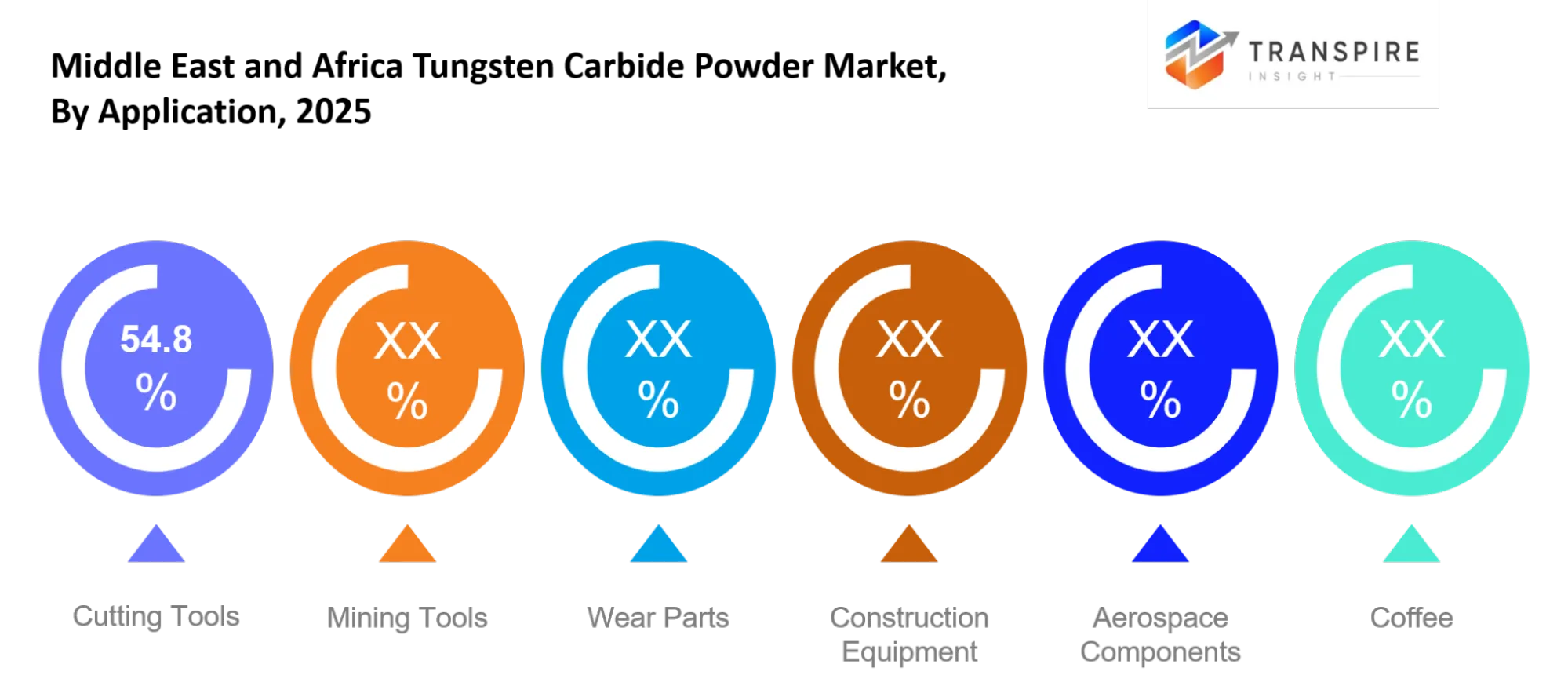
By Production Method
Carburization still stays widely used because it gives efficient conversion of tungsten materials into carbide powder, that is suitable for industrial purposes or whatever you want to call it. In parallel, plasma processing helps in making powders with very carefully tuned characteristics needed for advanced manufacturing sectors, you know those high-stakes lines. Chemical reduction approaches also contribute by reaching purity levels that are required when the engineering demands are not exactly forgiving. So, the choice of production technology is mostly tied to quality specifications along with cost thinking, and also the final end-use requirement that nobody can ignore.
Meanwhile, other manufacturing methods handle more niche production needs, plus they match up well with specialized material behavior. Ongoing technological improvements keep raising consistency , particle control and even the overall manufacturing efficiency, even if it sounds simple. When companies invest in advanced production systems they typically get higher-quality output across industrial markets. And the material producers keep trying to balance performance needs with operational efficiency, not just in theory, but in real operations.
By End User
Mining is still a big end user, mainly because drilling and extraction work need tools and components that are really resistant to wear. In manufacturing, people keep using carbide based products for machining , metalworking, and for better production efficiency too. Construction also depends on tough equipment parts that can run in abrasive settings. Aerospace meanwhile calls for precision materials, and they have to match strict performance and reliability expectations without compromise.
For oil and gas, wear-resistant tools and components show up in exploration, drilling, and maintenance tasks. Other end user groups involve more specialized industrial niches, where conditions are tough and they don’t really forgive poor material choices. As industrial expansion continues across regional economies, it keeps supporting consumption across several industries. And when there’s a wide spread of end users involved, it helps the market stay steadier, and keeps longer term demand more stable.
What are the Key Use Cases Driving the Middle East and Africa Tungsten Carbide Powder Market?
The biggest use case still feels like cutting and machining operations, especially inside manufacturing industries. Tungsten carbide powder helps enable the production of tough cutting tools that can keep precision, even with constant industrial workloads. Because tool life stays longer and replacements happen less often, this application stays the main source of demand, really.
Mining operations count as an important secondary use case too. Drilling tools, excavation equipment, and those wear resistant parts rely on carbide based materials, so they can handle super abrasive conditions. Construction equipment manufacturers also tend to use carbide enhanced components, just to improve durability, and overall day to day reliability during operation.
At the same time, emerging applications are starting to show up in aerospace manufacturing, and in advanced precision engineering. High performance powder grades support specialized machining needs where dimensional accuracy matters a lot, along with wear resistance. If investment keeps rising in advanced industrial technologies, adoption of these uses could speed up during the forecast period.
|
Report Metrics |
Details |
|
Market size value in 2025 |
USD 158.4 Million |
|
Market size value in 2026 |
USD 162.7 Million |
|
Revenue forecast in 2033 |
USD 197.3 Million |
|
Growth rate |
CAGR of 2.79% from 2026 to 2033 |
|
Base year |
2025 |
|
Historical data |
2021 - 2024 |
|
Forecast period |
2026 - 2033 |
|
Report coverage |
Revenue forecast, competitive landscape, growth factors, and trends |
|
Regional scope |
United States; Canada; Mexico; United Kingdom; Germany; France; Italy; Spain; Denmark; Sweden; Norway; China; Japan; India; Australia; South Korea; Thailand; Brazil; Argentina; South Africa; Saudi Arabia; United Arab Emirates |
|
Key company profiled |
Kennametal, Sandvik, Ceratizit, Mitsubishi Materials, Sumitomo Electric, H.C. Starck, Umicore, Federal Carbide, Wolfram Bergbau, Buffalo Tungsten, China Tungsten, Xiamen Tungsten, Betek, Plansee, GTP |
|
Customization scope |
Free report customization (country, regional & segment scope). Avail customized purchase options to meet your exact research needs. |
|
Report Segmentation |
By Grade (Submicron, Fine Grain, Medium Grain, Coarse Grain, Nano Grade, Others); By Application (Cutting Tools, Mining Tools, Wear Parts, Construction Equipment, Aerospace Components, Others); By Production Method (Carburization, Plasma Processing, Chemical Reduction, Others); By End User (Mining, Manufacturing, Construction, Aerospace, Oil & Gas, Others) |
Which Regions are Driving the Middle East and Africa Tungsten Carbide Powder Market Growth?
The Middle East kinda leads the market, backed by big industrial diversification programs, mining investments, and various infrastructure development initiatives. Saudi Arabia and the United Arab Emirates keep pushing their manufacturing capabilities that need advanced cutting plus wear-resistant materials. Government supported industrial strategies basically nudge local production and wider technology adoption. With solid logistics networks, and ongoing capital investment, there is a pretty supportive ecosystem that keeps the leadership going, longer term.
Africa comes in as the second-largest regional contributor, and it is mostly pushed by mining activity and the resource extraction segment. But unlike the Middle East, the growth here depends more on mineral production plus ongoing equipment maintenance requirements. Places like South Africa still have established industrial and mining sectors, and they help form steady demand for carbide based products. When mining operations stay stable, the consumption tends to repeat across drilling, and other wear-part applications.
Now the fastest growth momentum is expected in the Gulf Cooperation Council economies. Lately there have been investments tied to aerospace manufacturing, advanced machining facilities, and industrial technology programs, which together create fresh demand opportunities. As local production expands, it is making companies more willing to adopt higher performance carbide grades. That kind of movement opens up interesting options for suppliers, distributors and investors who want exposure to advanced industrial materials sometime between 2026 and 2033, really.
Who are the Key Players in the Middle East and Africa Tungsten Carbide Powder Market and How Do They Compete?
Competition is still fairly consolidated , with a handful of global material specialists and tooling manufacturers holding a meaningful portion of the high performance tungsten carbide powder output. In practice, technology and product quality, plus how consistently the powder behaves, tend to be the big factors, alongside application knowhow. Most established players keep their footing by doing process innovation and targeted material development, not just chasing lower prices, and honestly it stays that way for the most part.
Kennametal is centered on wear resistant materials and precision tooling use cases. They separate themselves via a lot of engineering experience, plus application specific material packages that fit how customers operate. Sandvik, on the other hand, leans on strong mining and manufacturing relationships, integrating carbide materials right into the end use tooling systems. That tighter fit helps customers stick around longer , and the results look better in real applications, not only in brochures.
Ceratizit highlights specialized hard material know-how and top tier carbide grades. Mitsubishi Materials continues to push material science innovation, together with precision engineered product lines aimed at industrial use. Plansee differentiates through its depth in refractory metals and more advanced powder processing techniques. Overall , these firms keep moving forward through product development, strategic partnerships, recycling programs, and broader regional distribution channels, sort of a full package instead of just one lever at a time.
Company List
- Kennametal
- Sandvik
- Ceratizit
- Mitsubishi Materials
- Sumitomo Electric
- H.C. Starck
- Umicore
- Federal Carbide
- Wolfram Bergbau
- Buffalo Tungsten
- China Tungsten
- Xiamen Tungsten
- Betek
- Plansee
- GTP
Recent Development News
In May 2026, Plansee Group announced a collaboration framework agreement with Manhattan Five Partners LLC to establish a strategic tungsten oxide stockpile in the United States. The joint venture will expand tungsten oxide production capacity at Global Tungsten & Powders (GTP) and strengthen long-term supply security for tungsten powder and carbide manufacturing, improving resilience across global industrial supply chains.https://ceratizit.com
In July 2025, Plansee Group announced major investment commitments to expand production capacity and secure tungsten raw material supply. The company confirmed investments in production facilities across Europe, India, and the United States while strengthening long-term tungsten concentrate sourcing through the Sangdong mine, supporting future tungsten powder and carbide production capacity.https://ceratizit.com
In January 2026, Plansee High Performance Materials and CERATIZIT received the EcoVadis Platinum sustainability rating certification. The certification recognized the companies' recycling-driven tungsten supply chain and responsible sourcing practices, reinforcing competitiveness in the tungsten carbide and advanced hard materials market while strengthening customer confidence in sustainable supply.https://plansee-group.com
What Strategic Insights Define the Future of the Middle East and Africa Tungsten Carbide Powder Market?
The market is moving toward higher-value, more performance focused applications, instead of just chasing volume driven expansion. Growth is going to lean more and more on advanced manufacturing , aerospace machining , mining productivity improvements, and industrial automation programs that actually stick. At the same time, material performance needs are getting stricter , so buyers are increasingly willing to take up premium grades, with tighter particle governance and wear properties that hold up better under real operating stress.
There is also a risk that s less noticeable. It s in the concentration of tungsten supply. When you rely on a small set of global raw material sources, you end up with exposure to trade disruptions, geopolitical strain, and price swings, and that can ripple through profitability across the whole value chain, not only at the front end.
On the other hand, there’s an opportunity that s starting to take shape around tungsten recycling and recovery technologies. If recovery rates improve, it can lower supply exposure, while also backing sustainability aims and helping with more stable costs. Firms that move early into recycling facilities and strong powder processing capabilities— especially high performance powder formulations— will likely be positioned to catch the next wave of demand.
A practical, strategic recommendation would be to set up a diversified sourcing network , while also widening the capability set in premium grade materials for aerospace, precision manufacturing, and other advanced industrial uses.
Middle East and Africa Tungsten Carbide Powder Market Report Segmentation
By Grade
- Submicron
- Fine Grain
- Medium Grain
- Coarse Grain
- Nano Grade
- Others
By Application
- Cutting Tools
- Mining Tools
- Wear Parts
- Construction Equipment
- Aerospace Components
- Others
By Production Method
- Carburization
- Plasma Processing
- Chemical Reduction
- Others
By End User
- Mining
- Manufacturing
- Construction
- Aerospace
- Oil & Gas
- Others
Frequently Asked Questions
Find quick answers to common questions.
The Expected Middle East and Africa Tungsten Carbide Powder Market size for the Market will be USD 66.8 Billion in 2033.
Key Segments for the Middle East and Africa Tungsten Carbide Powder Market are By Grade (Submicron, Fine Grain, Medium Grain, Coarse Grain, Nano Grade, Others); By Application (Cutting Tools, Mining Tools, Wear Parts, Construction Equipment, Aerospace Components, Others); By Production Method (Carburization, Plasma Processing, Chemical Reduction, Others); By End User (Mining, Manufacturing, Construction, Aerospace, Oil & Gas, Others).
Major Middle East and Africa Tungsten Carbide Powder Market Players are Kennametal, Sandvik, Ceratizit, Mitsubishi Materials, Sumitomo Electric, H.C. Starck, Umicore, Federal Carbide, Wolfram Bergbau, Buffalo Tungsten, China Tungsten, Xiamen Tungsten, Betek, Plansee, GTP
The Current Middle East and Africa Tungsten Carbide Powder Market size is USD 158.4 Million in 2025.
The Middle East and Africa Tungsten Carbide Powder Market CAGR is 2.79% from 2026 to 2033.
- Kennametal
- Sandvik
- Ceratizit
- Mitsubishi Materials
- Sumitomo Electric
- H.C. Starck
- Umicore
- Federal Carbide
- Wolfram Bergbau
- Buffalo Tungsten
- China Tungsten
- Xiamen Tungsten
- Betek
- Plansee
- GTP
About the Authors

Pankaj Ghogare Patil
I am Pankaj Ghogare Patil, a Senior Research Analyst at Transpire Insight, specializing in the Pharmaceutical, Chemicals & Materials, Healthcare IT, and Biotechnology industry. My expertise lies in conducting comprehensive market research, analyzing industry trends, evaluating competitive landscapes, and translating complex data into actionable insights. At Transpire Insight, I closely follow emerging technologies, regulatory developments, and market innovations to create accurate, well-researched, and informative content that helps businesses and professionals make informed decisions. I am committed to producing credible, evidence-based articles that reflect industry best practices while making technical topics accessible and valuable for a broad audience.

Chakradhar Khansole
Chakradhar serves as the Research Director at Transpire Insight, bringing over 8 years of experience in technology, innovation, and strategic market intelligence. He specializes in transforming complex market data into actionable business insights that enable organizations to make informed, growth-oriented decisions. Recognized for his strategic vision and analytical expertise, Chakradhar leads high-impact research initiatives, delivering comprehensive market assessments, competitive intelligence, and forward-looking industry analysis.
Recently Published Reports
-
May 2026
Healthcare Polymer Packaging Market
Healthcare Polymer Packaging Market Size, Share & Analysis Report By Packaging Type (Syringes, IV Bottles and Pouches, Clamshells, Blisters, Bottles & Jars, Containers, Tubes, IV Parental Packaging, Others), By Type (Regulated, Non-regulated), By Polymer Type (LDPE (Low-Density Polyethylene), HDPE (High-Density Polyethylene), Homo-polymer (Homo), Random Copolymer (Random), Block Copolymer (Block), PET, Polystyrene, Polyvinyl Chloride, Polyamide/EVOH, Others), and Geography (North America, Europe, Asia-Pacific, Middle East and Africa, South and Central America), 2021 - 2031
-
Apr 2026
Hydrophilic Tape (Waterstop) Market
Hydrophilic Tape (Waterstop) Market Size, Share & Analysis Report By Type (Bentonite-Based Hydrophilic Tape, Rubber-Based Hydrophilic Tape), By Application (Residential Buildings, Commercial Buildings, Infrastructure Projects), and Geography (North America, Europe, Asia-Pacific, Middle East and Africa, South and Central America), 2021 - 2031
-
Apr 2026
Metalens Market
Metalens Market Size, Share & Analysis Report By Type (Visible Light Metalens, and Infrared Metalens), By Application (Consumer Electronics, Automotive Electronics, Industrial, Medical, and Others), and Geography (North America, Europe, Asia-Pacific, Middle East and Africa, South and Central America), 2021 - 2031
-
Apr 2026
PBT Resin Market
PBT Resin Market Size, Share & Analysis Report By Type (Reinforced PBT Resin, Unreinforced PBT Resin), By Processing Method (Injection Molding, Extrusion, Blow Molding, Others), By End-User (Automotive, Electrical & Electronics, Consumer Appliances, Industrial Machinery, Medical Devices, Packaging, Others), and Geography (North America, Europe, Asia-Pacific, Middle East and Africa, South and Central America), 2021 - 2031