

Middle East and Africa Recreational Vehicle Market Size & Forecast:
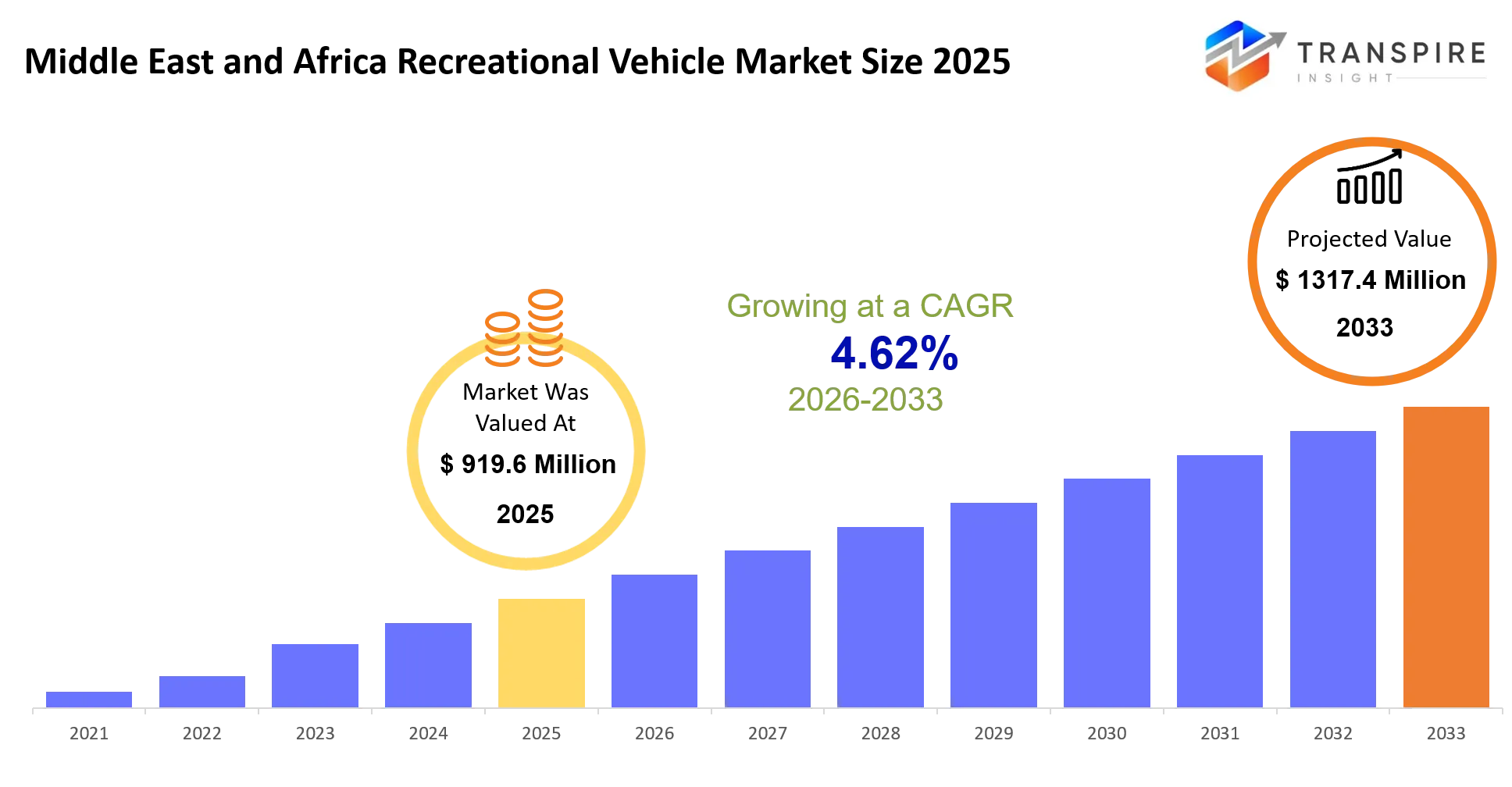
- Middle East and Africa Recreational Vehicle Market Size 2025: USD 919.6 Million
- Middle East and Africa Recreational Vehicle Market Size 2033: USD 1317.4 Million
- Middle East and Africa Recreational Vehicle Market CAGR: 4.62%
- Middle East and Africa Recreational Vehicle Market Segments: By Vehicle Type (Motorhomes, Travel Trailers, Camper Vans, Fifth Wheel Trailers, Others); By Application (Leisure Travel, Camping, Adventure Tourism, Others); By End User (Individuals, Rental Operators, Others)
Middle East and Africa Recreational Vehicle Market Summary
The Middle East and Africa Recreational Vehicle Market was valued at USD 919.6 Million in 2025. It is forecast to reach USD 1317.4 Million by 2033. That is a CAGR of 4.62% over the period.
The Middle East and Africa (MEA) recreational vehicle market kind of serves travelers , tourism operators and outdoor enthusiasts looking for flexible, self-contained mobility solutions across huge landscapes and far off places. In practice, RVs let people blend transport, lodging, and downtime activities into one kinda simple platform, so they are not so reliant on the usual hotels and similar infrastructure while still pushing longer trips, more lingering travel experiences.
Over the last five years, the market has also seen a structural change, mainly because regional tourism plans are leaning harder into domestic travel, adventure tourism, and nature based experiences. Government led funding for tourism infrastructure, especially across Gulf countries, has made RV style travel feel more realistic and possible. One big turning point was the COVID-19 pandemic, which did reshape how people think about travel, people started preferring private, self contained transportation and accommodation options. That behavior change basically boosted RV take up for both individual customers and rental operators too.
Right now, market momentum is being supported by the growth of organized camping spots, cross border tourism initiatives, and the appearance of RV rental platforms. As access keeps improving and tourism diversification stays a policy priority, RV usage rates are moving up, which then opens up fresh revenue streams for manufacturers, rental providers, and the broader tourism ecosystem players across the region.
Key Market Insights
- The market outlook stays mostly positive for the whole forecast period, mainly because infrastructure investments, campground development and domestic tourism initiatives keep speeding up. In turn this boosts recreational vehicle adoption, and it lifts industry revenue growth too, even if things feel a bit uneven in the short run.
- In the Middle East and Africa Recreational Vehicle Market, the Gulf Cooperation Council region still leads, with about 45% of the regional market share in 2025, more or less. Within that, Saudi Arabia holds a big portion, largely tied to tourism development projects, outdoor recreation initiatives, and a steady push for expanding camping infrastructure, so demand doesn’t really pause. South Africa, meanwhile, looks like the fastest growing regional market all the way through 2030, driven by adventure tourism growth and rising recreational travel spending, which makes a noticeable difference.
- The UAE keeps working on tourism ecosystems in a strategic way, strengthening recreational vehicle demand and supporting long term market growth as well. When it comes to product types, motorhomes dominate the overall recreational vehicle industry size, capturing nearly 38% market share in 2025, largely for premium travel convenience. Travel trailers rank second in size, helped by affordability and their compatibility with existing passenger vehicles, which is a pretty practical angle.
- Camper vans are the fastest growing segment across the forecast period, supported by flexible mobility needs and growing solo travel trends. Fifth-wheel trailers also are gaining traction among long-duration travelers, because they want enhanced comfort and larger living spaces, not just the basics. As for applications, leisure travel leads and accounts for roughly 55% of total Middle East and Africa Recreational Vehicle Market revenue in 2025. Camping activities remain important too, since governments invest in dedicated recreational parks and camping destinations.
What are the Key Drivers, Restraints, and Opportunities in the Middle East and Africa Recreational Vehicle Market?
- Driver: The strongest growth drive in the Middle East and Africa Recreational Vehicle Market seems tied to a kinda strategic broadening of tourism economies, specially across Gulf countries. National programs like Saudi Arabia’s tourism diversification approaches and the UAE’s outdoor recreation commitments have pushed forward the formation of campgrounds, desert tourism corridors, and other recreational assets. In turn, this change lowers real world friction for RV trips and opens additional scenarios that aren’t only about classic camping. And as more destinations get RV friendly access, rental operators keep enlarging their fleets while manufacturers, at the same time, discover fresh distribution pathways, which then feeds revenue growth across the whole value chain.
- Restraint: The biggest market holdback is basically the scarce spread of dedicated RV infrastructure across wide areas in Africa and parts of several emerging Middle Eastern locations. RV ownership, in practice, relies on the existence of service stations, parking options, repair ecosystems, and campground networks. But setting this up means heavy capital deployment and long timelines, so it turns into a structural limitation rather than a quick fix kind of issue. Because of that, many potential users tend to stick with conventional vacation choices. That slows adoption down and keeps market penetration weaker outside well known tourism routes.
- Opportunity: A notable opening is the growth of RV rental and sharing platforms. A lot of travelers want the RV lifestyle, but they still hesitate when it comes to ownership expenses. Digital rental marketplaces can connect that dot by offering short term access to recreational vehicles. Nations such as Saudi Arabia and the UAE are seeing more investment in tourism tech platforms, which creates supportive conditions for fleet led rental approaches.
What Has the Impact of Artificial Intelligence Been on the Middle East and Africa Recreational Vehicle Market?
Artificial intelligence and more advanced digital technologies are starting to sort of reshape the Middle East and Africa Recreational Vehicle Market by nudging fleet operations forward, improving vehicle reliability, and making the customer experience feel smoother. RV rental operators are now more and more rolling out AI enabled telematics systems, they end up automating vehicle health monitoring, observing driver behavior, and also coordinating fleet utilization in real time. These platforms gather signals from onboard sensors, then they flag maintenance needs automatically, which cuts down the amount of manual checks and also boosts operational visibility across fleets that are spread out in different locations.
On top of that, machine learning models are helping with predictive maintenance by reading battery performance, engine diagnostics, tire conditions, and component wear trends. Instead of staying locked into rigid service intervals, operators can spot likely malfunctions before they happen, which helps reduce those annoying unexpected breakdowns and keeps the vehicles available. AI driven route optimization is doing another layer too, it improves fuel efficiency by suggesting travel paths based on traffic, terrain, and energy consumption tendencies. Because of that, fleet operators can lower operating costs while lifting customer satisfaction and getting better use out of their assets.
Still, AI adoption has a real hiccup. A lot of recreational vehicle operators in emerging markets do not always have access to connected infrastructure, or even consistent, high quality operational data. In remote destinations, connectivity can be thin, so the predictive models may end up being less accurate, and it can also slow the full rollout of advanced fleet intelligence platforms across the whole regional RV ecosystem.
Key Market Trends
- Since 2020, Gulf states have moved their tourism budgets, kind of away from the usual indoor stuff, toward outdoor recreation infrastructure,so you see more RV friendly routes, campgrounds and desert tourism spots popping up.
- After the pandemic, RV rental platforms basically picked up speed, lowering the need for ownership, and bringing in first-time travelers who want something more flexible, like a mobile option rather than a fixed plan.
- Vehicle makers are now weaving in telematics and remote diagnostics, so fleet managers can keep an eye on vehicle health, and reduce surprise breakdown time ,which is a big deal for uptime.
- From 2021 to 2025, demand for camper vans grew faster than the bigger vehicle segments. Young travelers especially leaned into mobility, plus cheaper running costs.
- In Saudi Arabia and the UAE, tourism diversification programs steered spending into experiential travel, and that opened up new business chances for RV operators.
- Big names, like Thor Industries, Winnebago, and Hymer, expanded regional partnership efforts to strengthen distribution, and also improve after-sales support reach.
- People are increasingly choosing solar equipped recreational vehicles, which points to a broader trend toward longer off grid trips across remote desert areas, and even wildlife related destinations.
- Fleet operators have also started using AI driven route planning and predictive maintenance systems, helping them use vehicles better, and cutting down on maintenance disruptions.
- Cross-border tourism push plans have encouraged rental providers to offer multi country travel packages, and that raised vehicle deployment along regional corridors.
- Since 2022, digital reservation systems and mobile travel applications have shifted how customers are acquired, and they’ve streamlined the whole RV rental operation, end to end.
Middle East and Africa Recreational Vehicle Market Segmentation
By Vehicle Type
Motorhomes keep a strong position, mostly because full living and travel facilities basically exist in just one vehicle, so it feels self-contained. Their comfortable interiors, sleeping areas, kitchen facilities, and storage space make motorhomes ideal for extended trips across long travel routes. In fact tourism development projects and some outdoor recreation activities keep helping adoption, across several countries in the region.
Travel trailers still look like a preferred option, mainly due to lower ownership costs versus larger self-powered vehicles. The flexible towing capability helps travelers use them with existing passenger vehicles, and that ends up being an attractive choice for many people. Camper vans continue to rise in popularity too, because compact designs support easier driving, parking, and fuel management. Fifth wheel trailers pull in travelers who want bigger living spaces, plus extra comfort during long-duration journeys. Meanwhile, other vehicle categories cover specialized travel needs and more niche customer preferences.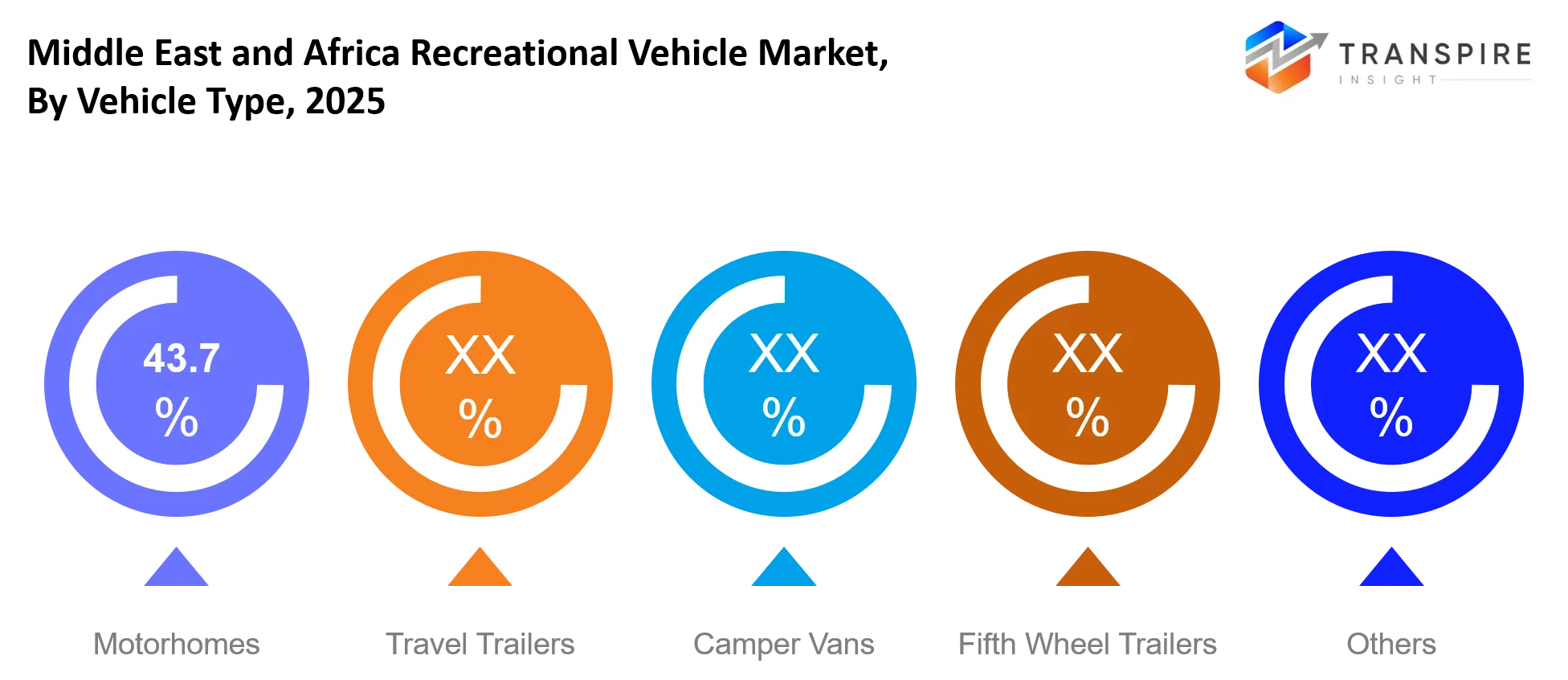
By Application
Leisure travel sits as the largest application area, since recreational vehicles bring flexibility convenience, and access to destinations beyond typical tourism routes. As tourism infrastructure expands and people become more interested in self-planned vacations, recreational vehicle usage grows across multiple countries. Travel experiences built around comfort and mobility keep strengthening demand inside this segment.
Camping remains important, as governments and private operators invest in campgrounds, desert camps, and outdoor recreation facilities. Adventure tourism shows strong momentum through activities related to wildlife destinations, mountain routes, and desert exploration. Recreational vehicles also support longer stays in remote areas while providing accommodation and transport in single solution.
By End User
People are responsible for a big part of the market movement, since recreational vehicles offer a kind of independence and also a more personalized travel vibe, well you know. Buying directly tends to suit travelers who want flexibility in how they pick routes, how long they stay, and even how they select destinations. And when the vehicle itself gets better—features plus onboard technologies—then personal recreational vehicle use feels even more appealing, honestly.
On the other side rental operators matter a lot too, because they make recreational vehicle travel reachable without having the big upfront financial commitment that ownership usually brings. Digital booking platforms and tourism-oriented rental services are still widening their reach, so availability keeps showing up in more important places. Operators also expand their fleets so they can handle both domestic visitors and international travelers with less friction. Besides regular renters, other end users show up as tourism agencies, hospitality providers, and commercial organizations that use recreational vehicles for niche travel needs and temporary lodging type requirements.
What are the Key Use Cases Driving the Middle East and Africa Recreational Vehicle Market?
Leisure tourism is still the main use case backing up adoption across the Middle East and Africa, basically. Recreational vehicles help travelers merge the trip with the place to sleep, so long-distance road journeys become more doable, and honestly more cost efficient too. Tourism development programs in places like Saudi Arabia and the UAE have also helped this a lot, by widening access to outdoor areas, plus camping facilities.
Camping, as well as adventure tourism, are now looking like key secondary use cases . Rental operators are more often catering to travelers wanting short-term reach to recreational vehicles, especially for desert excursions, wildlife viewing, and vacations that feel nature-first. At the same time, the steady increase in organized campgrounds and tourism infrastructure keeps fueling these activities in multiple regional markets.
Fresh opportunities are showing up around eco-tourism routes and higher end outdoor hospitality, in a way. Recreational vehicles are also starting to pop up for mobile event stays, and for remote tourism projects that are far from normal lodging infrastructure. With continued funding in tourism diversification initiatives, it seems likely these newer use cases will gain momentum through the forecast period.
|
Report Metrics |
Details |
|
Market size value in 2025 |
USD 919.6 Million |
|
Market size value in 2026 |
USD 960.1 Million |
|
Revenue forecast in 2033 |
USD 1317.4 Million |
|
Growth rate |
CAGR of 4.62% from 2026 to 2033 |
|
Base year |
2025 |
|
Historical data |
2021 - 2024 |
|
Forecast period |
2026 - 2033 |
|
Report coverage |
Revenue forecast, competitive landscape, growth factors, and trends |
|
Regional scope |
Middle East and Africa (Saudi Arabia, United Arab Emirates, South Africa, Rest of Middle East and Africa) |
|
Key company profiled |
Thor Industries, Winnebago, Forest River, Hymer, REV Group, Trigano, Swift Group, Knaus Tabbert, Coachmen, Dethleffs, Pilote, Jayco, Gulf Stream, Roadtrek, Adria |
|
Customization scope |
Free report customization (country, regional & segment scope). Avail customized purchase options to meet your exact research needs. |
|
Report Segmentation |
By Vehicle Type (Motorhomes, Travel Trailers, Camper Vans, Fifth Wheel Trailers, Others); By Application (Leisure Travel, Camping, Adventure Tourism, Others); By End User (Individuals, Rental Operators, Others) |
Which Regions are Driving the Middle East and Africa Recreational Vehicle Market Growth?
The Gulf Cooperation Council region leads the Middle East and Africa Recreational Vehicle Market due to strong tourism diversification programs, high consumer spending power, and substantial investment in outdoor recreation infrastructure. Countries such as Saudi Arabia and the United Arab Emirates have expanded camping destinations, tourism corridors, and recreational facilities that support recreational vehicle usage. Supportive government initiatives encourage domestic and international tourism while creating favorable conditions for rental operators and vehicle distributors. A well-developed road network, growing tourism ecosystem, and expanding hospitality sector continue to reinforce regional leadership.
Southern Africa represents the second-largest regional contributor and follows a different growth pattern. Market activity is supported by an established culture of road travel, nature tourism, and wildlife-focused tourism experiences. South Africa remains the key market due to a mature tourism sector and relatively stable recreational travel demand. Consistent investment in tourism services, rental fleets, and outdoor accommodation infrastructure provides a dependable source of revenue for industry participants.
North Africa shows the strongest growth momentum across the forecast period. Recent investments in tourism development, transportation infrastructure, and destination promotion have expanded opportunities for recreational travel. Countries including Morocco and Egypt are attracting greater interest in desert tourism, cultural tourism, and cross-country travel experiences. Continued infrastructure improvements and tourism-focused investment programs are expected to create attractive opportunities for vehicle manufacturers, rental operators, and new market entrants between 2026 and 2033.
Who are the Key Players in the Middle East and Africa Recreational Vehicle Market and How Do They Compete?
Competition in the Middle East and Africa Recreational Vehicle Market remains moderately fragmented, with global RV manufacturers, regional distributors, and rental-focused startups competing across different value chains. Established manufacturers defend their position through dealership expansion and stronger aftersales networks in tourism corridors such as the Gulf states and South Africa. At the same time, rental-based business models are disrupting traditional ownership demand, especially among first-time users. Competition is shaped mainly by product durability in harsh climates, service reach in remote tourism zones, and the ability to offer flexible financing and fleet availability.
Thor Industries focuses on high-durability motorhomes designed for long-distance desert travel and thermal stress conditions, giving it an advantage in Gulf tourism routes. Winnebago Industries differentiates through connected RV platforms that integrate navigation, energy monitoring, and remote diagnostics, strengthening its appeal among tech-driven rental operators. The company expands by partnering with regional distributors and tourism fleet providers across the UAE and Saudi Arabia.
Forest River competes through cost-efficient travel trailers tailored for rental fleets, enabling operators to scale capacity quickly in price-sensitive segments. Hymer positions itself in the premium segment with modular interiors and European safety standards, building traction through collaborations with South African adventure travel operators. Trigano expands its footprint through acquisitions of caravan brands and focuses on compact, affordable units suited for emerging tourism markets across North Africa.
Company List
- Thor Industries
- Winnebago
- Forest River
- Hymer
- REV Group
- Trigano
- Swift Group
- Knaus Tabbert
- Coachmen
- Dethleffs
- Pilote
- Jayco
- Gulf Stream
- Roadtrek
- Adria
Recent Development News
In February 2026, Alliance RV announced acquisition of Midwest Automotive Designs. The acquisition expands Alliance RV into motorized RV production and strengthens its luxury Sprinter-based Class B portfolio, enabling deeper entry into premium MEA export and rental channels."https://www.rvnews.com
In January 2026, Grech RV launched the Vacanza-ion model line. The new platform expands mid-level luxury camper van offerings using Mercedes-Benz Sprinter AWD systems, targeting first-time luxury buyers and improving accessibility in export-focused markets including the Middle East."https://www.rvnews.com
In October 2025, Karwa Motors and Daimler Truck Middle East Africa signed a strategic partnership. The agreement enables local bus and RV-adjacent vehicle assembly in Oman with export capability across Africa and the Middle East, strengthening regional manufacturing capacity and supply chains."https://www.businesswire.com
What Strategic Insights Define the Future of the Middle East and Africa Recreational Vehicle Market?
The Middle East and Africa Recreational Vehicle Market is moving toward a structurally rental-led and experience-driven model over the next 5 to 7 years, supported by tourism diversification policies and sustained investment in road-based leisure infrastructure. Demand will increasingly shift away from ownership toward flexible access models as operators scale fleet-based platforms across Gulf tourism corridors and selected African safari routes.
A key hidden risk lies in uneven infrastructure maturity, where rapid fleet expansion may outpace service networks, repair capacity, and campsite availability. This mismatch can create utilization inefficiencies and raise total operating costs even in high-demand destinations, slowing expected returns despite strong headline growth signals.
An emerging opportunity is developing around cross-border RV tourism corridors linking the UAE, Saudi Arabia, and Oman, supported by expanding visa integration and highway upgrades. This creates potential for multi-country rental packages and long-distance experiential travel networks. Market participants should prioritize integrated fleet management ecosystems combined with localized service hubs to ensure uptime reliability and capture early-mover advantage in these emerging transnational routes.
Middle East and Africa Recreational Vehicle Market Report Segmentation
-
By Vehicle Type
- Motorhomes
- Travel Trailers
- Camper Vans
- Fifth Wheel Trailers
- Others
-
By Application
- Leisure Travel
- Camping
- Adventure Tourism
- Others
-
By End User
- Individuals
- Rental Operators
- Others
Frequently Asked Questions
Find quick answers to common questions.
The Expected Middle East and Africa Recreational Vehicle Market size for the Market will be USD 1317.4 Million in 2033.
Key segments for the Middle East and Africa Recreational Vehicle Market are By Vehicle Type (Motorhomes, Travel Trailers, Camper Vans, Fifth Wheel Trailers, Others); By Application (Leisure Travel, Camping, Adventure Tourism, Others); By End User (Individuals, Rental Operators, Others).
Major Middle East and Africa Recreational Vehicle Market Players are Thor Industries, Winnebago, Forest River, Hymer, REV Group, Trigano, Swift Group, Knaus Tabbert, Coachmen, Dethleffs, Pilote, Jayco, Gulf Stream, Roadtrek, Adria.
The Current Middle East and Africa Recreational Vehicle Market size is USD 919.6 Million in 2025.
The Middle East and Africa Recreational Vehicle Market CAGR is 4.62 % from 2026 to 2033.
- Thor Industries
- Winnebago
- Forest River
- Hymer
- REV Group
- Trigano
- Swift Group
- Knaus Tabbert
- Coachmen
- Dethleffs
- Pilote
- Jayco
- Gulf Stream
- Roadtrek
- Adria
About the Authors

Mayur Shinde
I am Mayur Shinde, a Senior Research Analyst at Transpire Insight, specializing in the Automotive & Transportation and Information & Communication Technology (ICT) Industry. My work focuses on analyzing emerging market trends, technological advancements, competitive landscapes, and industry developments to deliver accurate, data-driven insights. I am passionate about transforming complex market information into clear, actionable content that helps businesses, professionals, and decision-makers stay informed and make confident strategic decisions.

Chakradhar Khansole
Chakradhar serves as the Research Director at Transpire Insight, bringing over 8 years of experience in technology, innovation, and strategic market intelligence. He specializes in transforming complex market data into actionable business insights that enable organizations to make informed, growth-oriented decisions. Recognized for his strategic vision and analytical expertise, Chakradhar leads high-impact research initiatives, delivering comprehensive market assessments, competitive intelligence, and forward-looking industry analysis.
Recently Published Reports
-
Apr 2026
ATV & UTV Market
ATV & UTV Market Size, Share & Analysis Report By Type (ATV, and UTV), By Variants (Less Than 400 CC, 400 CC To 800 CC, and More Than 800 CC), and Geography (North America, Europe, Asia-Pacific, Middle East and Africa, South and Central America), 2021 - 2031
-
Apr 2026
Automotive Central Gateway Module Market
Automotive Central Gateway Module Market Size, Share & Analysis Report By Type (Ethernet Central Gateway Module, CAN Central Gateway Module, LIN Central Gateway Module, and FlexRay), By Application (Powertrain Control, Body Control, Infotainment System, Advanced Driver Assistance Systems (ADAS), and Others), By End User (Passenger Vehicles, and Commercial Vehicles), and Geography (North America, Europe, Asia-Pacific, Middle East and Africa, South and Central America), 2021 - 2031
-
Apr 2026
Automotive Engine Oil Filter Market
Automotive Engine Oil Filter Market Size, Share & Analysis Report By Filter Type (Fuel Filter, Engine Oil Filter, Hydraulic Oil Filter, and Others), By Filter Media (Cellulose, Synthetic, and Micro), By Sales Channel (OEMs, and Aftermarket), By Vehicle Type (Passenger Cars, Light Commercial Vehicles, Heavy Duty Trucks, Buses and Coaches, and Off-road Vehicles), and Geography (North America, Europe, Asia-Pacific, Middle East and Africa, South and Central America), 2021 - 2031
-
Apr 2026
Automotive Parts Aluminium Die Casting Market
Automotive Parts Aluminium Die Casting Market Size, Share & Analysis Report By Production Process (Pressure Die Casting, Vacuum Die Casting, Squeeze Die Casting, Gravity Die Casting), By Application (Body Parts, Engine Parts, Transmission Parts, Battery And Related Components, Other Application Types), and Geography (North America, Europe, Asia-Pacific, Middle East and Africa, South and Central America), 2021 - 2031
Our Clients



