

Middle East and Africa Machining Centers Market Size & Forecast:
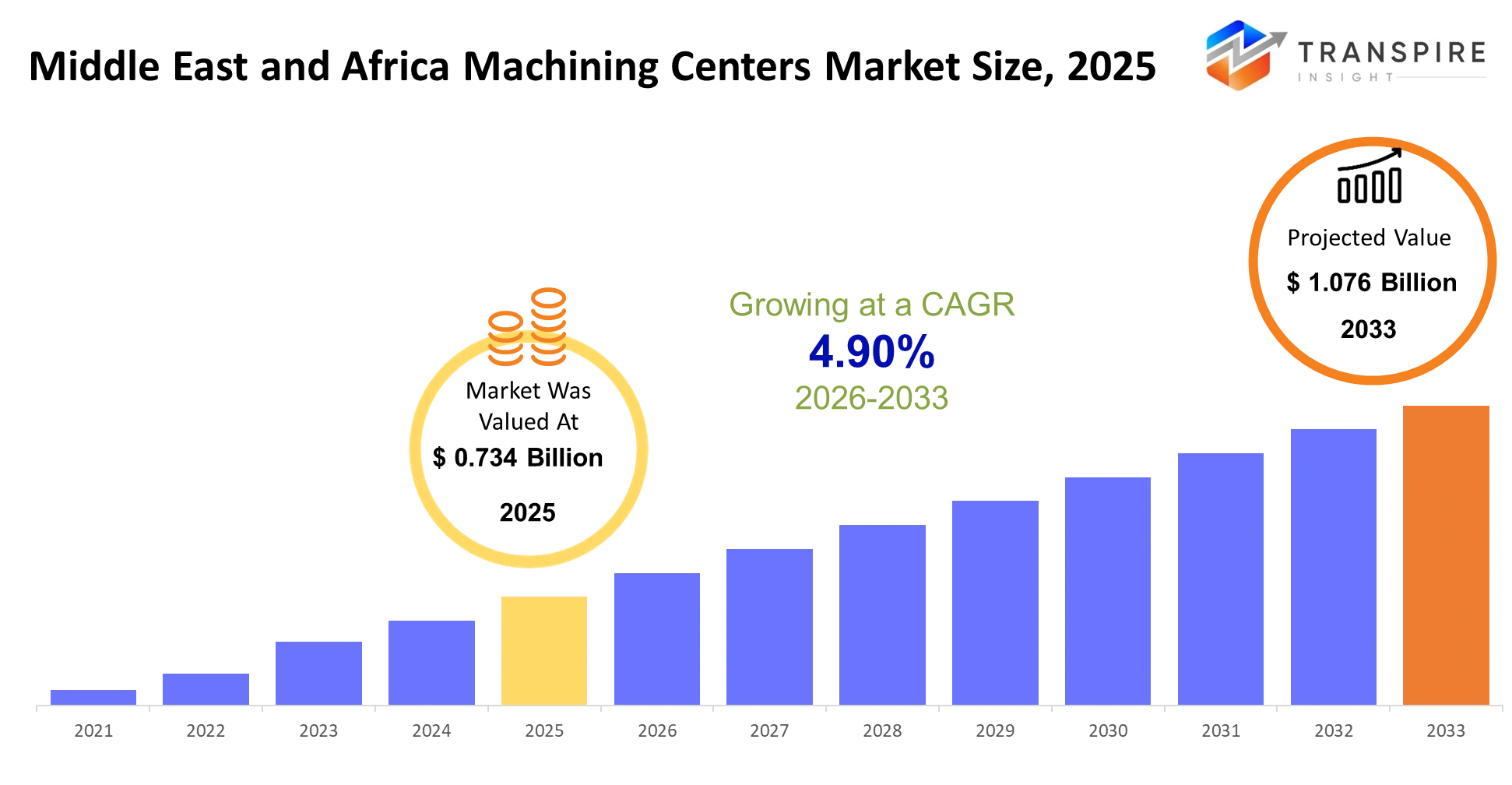
- Middle East and Africa Machining Centers Market Size 2025: USD 0.734 Billion
- Middle East and Africa Machining Centers Market Size 2033: USD 1.076 Billion
- Middle East and Africa Machining Centers Market CAGR: 4.90%
- Middle East and Africa Machining Centers Market Segments: By Type (Vertical, Horizontal, Universal, Gantry), By Axis (3-axis, 4-axis, 5-axis), By Application (Automotive, Aerospace, Heavy Machinery, Electronics), By End-User (Manufacturers, OEMs, Industrial Plants, Fabricators)
To learn more about this report,  Download Free Sample Report
Middle East and Africa Machining Centers Market Summary:
The Middle East and Africa Machining Centers Market size is estimated at USD 0.734 Billion in 2025 and is anticipated to reach USD 1.076 Billion by 2033, growing at a CAGR of 4.90% from 2026 to 2033. The Middle East and Africa market for machining centers which includes Saudi Arabia, United Arab Emirates South Africa and the rest of Middle East and Africa will undergo changes because of two requirements which include precise production capacities and local manufacturing objectives. The aerospace industry and automotive component sector and energy infrastructure field will create demand for products which require manufacturers to produce items with higher precision and shorter production times. Buyers will prioritize systems that offer multi-axis operation together with compatibility for automation and energy-efficient features. The Gulf economies' industrial diversification regulations together with South Africa's modernization efforts will shape buying practices while digital technology and operator skill requirements will determine the selection and implementation of machining solutions.
Key Market Trends & Insights:
- The market for machining centers in the Middle East and Africa region which includes Saudi Arabia and the United Arab Emirates and South Africa and other Middle Eastern and African countries is moving towards automated systems because manufacturers need to maintain their production levels. Manufacturing companies will implement intelligent machining systems which use sensors for real-time process tracking to decrease their need for human operators.
- The industry will witness another important change through the increasing demand for multi-axis machining centers which allow users to process complex shapes in one operational session. End users will increasingly seek machines that reduce downtime and improve throughput without compromising accuracy.
- The region will see sustainability factors start to influence buying patterns particularly in nations that prioritize energy-efficient solutions.The market will favor machines equipped with advanced features that deliver lower energy consumption and enhanced material efficiency.
- The availability of skilled workers throughout different parts of the region will determine which machining technologies organizations adopt. Organizations will allocate resources to develop intuitive user interfaces together with comprehensive training solutions that will assist users in overcoming their technical difficulties.Businesses in South Africa and other emerging markets will concentrate on achieving cost-effectiveness through functional solutions while Gulf nations continue their pursuit of advanced systems that receive support from government industrial development programs.
Middle East and Africa Machining Centers Market Segmentation
By Type
Vertical- Vertical machining centers will continue to be the most popular method for operators who need to create precise parts which have basic shapes. The Middle Eastern workshops and African fabrication units will select these machines because they require less time to set up and their workers already know how to operate them. The system will be used in metalworking facilities which need to produce automotive parts and general engineering components with consistent output and moderate production rates.
Horizontal- Horizontal machining centers will gain attention for handling heavier components and enabling better chip evacuation during cutting processes. The machines will find their main application in industries which require bulk material handling to produce oil equipment and industrial machinery. The systems enable manufacturers to operate continuously while they reduce their need to move between tasks which helps manufacturers achieve better efficiency in their facilities that need to optimize long production runs and decrease downtime between work procedures.
Universal- Universal machining centers will attract manufacturers seeking flexibility across diverse production requirements. The machines enable multiple cutting angles and orientations which makes them ideal for production processes that require custom or small-batch manufacturing. Companies in regions with different production requirements will choose to implement these adaptable systems. The system enables workshops to switch between different tasks without needing major equipment changes which helps them meet various client requirements and handle their changing industrial requirements.
Gantry- The use of Gantry machining centers will grow because they provide stable performance and precise machining capabilities for large components that need to maintain their properties across their complete surfaces. The systems will be essential for industries which include heavy engineering and infrastructure equipment manufacturing to manage their large workpieces. The system enables operators to handle big material loads while maintaining accuracy because its rigid design and extensive operational space enable them to work on structural components and intricate industrial assembly tasks.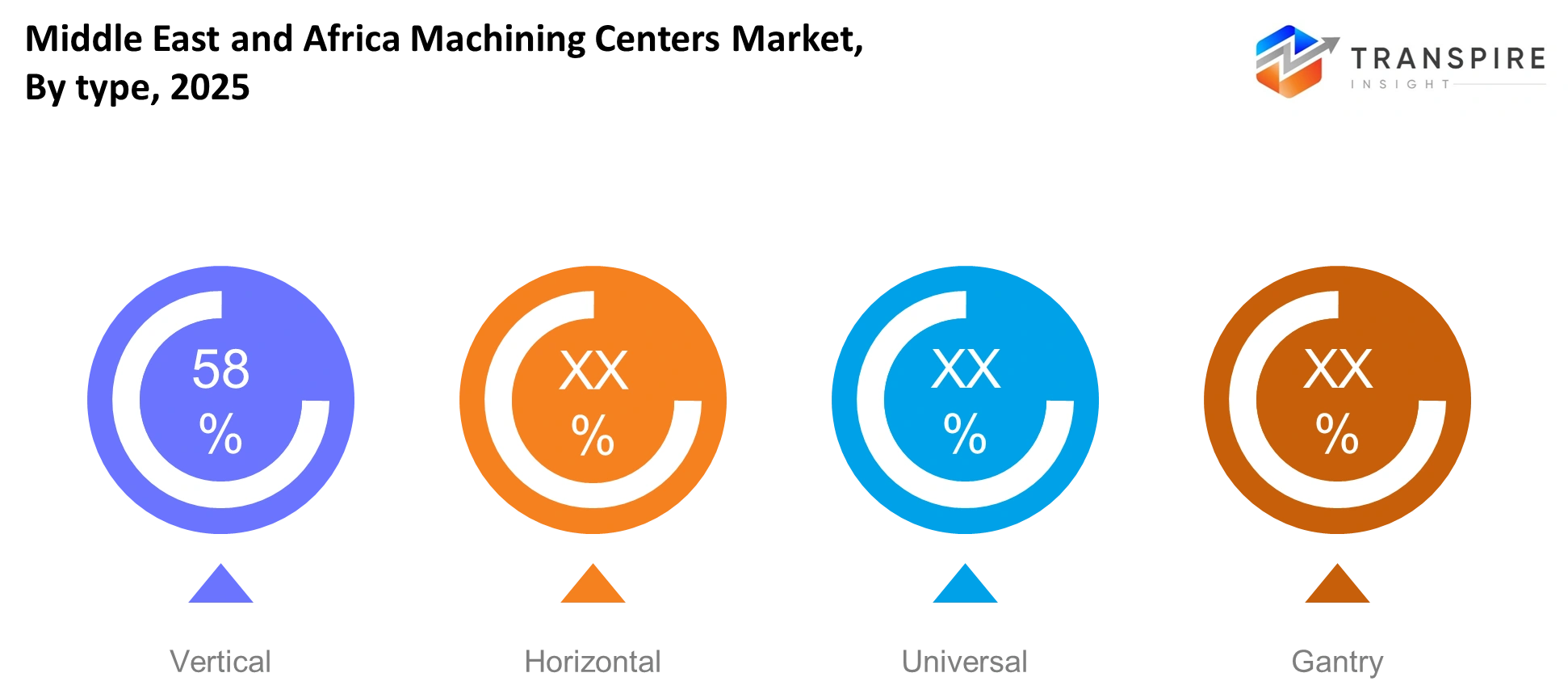
To learn more about this report, Download Free Sample Report
By Axis
3-axis- The production process needs 3-axis machining centers because these machines operate at lower costs and provide better performance than other systems. The machines will find common usage in small workshops and basic manufacturing facilities which require them for simple milling tasks. The machines will create flat surfaces and basic shapes which allow businesses to operate their production process without needing special programming abilities or advanced operator skills.
4-axis- 4-axis machining centers will introduce an additional rotational movement which enables operators to perform more complex tasks without needing to move the workpiece. The manufacturing industry will see increased adoption of these systems because they help companies achieve better precision results while decreasing the time needed for equipment installation. The system provides affordable access to advanced multi-axis technology which enables users to create cylindrical parts with complex side features.
5-axis- The introduction of 5-axis machining centers will enable manufacturers to make precise products because the machines can move in all directions at once. The aerospace industry and advanced engineering fields will use these machines because they need to create complex shapes with precise measurements. The system allows companies to produce intricate parts through one production process which results in faster output and more reliable quality control for businesses that want to meet international standards.
By Application
Automotive- Machining centers will produce engine components and transmission parts and structural elements which require precise machining to meet industry standards during automotive manufacturing. Manufacturers will focus on achieving faster production times while maintaining consistent product quality because vehicle assembly and component production facilities will expand in their respective regions. Automotive manufacturers will choose equipment which enables them to produce high quantities of products while delivering dependable performance throughout different production runs.
Aerospace- Aerospace manufacturing will require machining centers which can achieve exceptional precision while processing advanced materials like titanium and composite materials. These machines will produce essential components required for generating turbine parts and building structural frames. The aviation industry will require systems which can meet demanding safety requirements and performance standards through accurate repetition of results during complex machining operations because more money is being spent on aviation infrastructure development and maintenance facility construction.
Heavy Machinery- The production of heavy machinery will depend on powerful machining centers which can handle operations involving large and heavy materials. The applications will use components which are found in construction equipment and mining tools and industrial systems. Machines must maintain their stability when under heavy distress while maintaining their precise size measurements. Equipment manufacturers in this industry segment will focus on creating products which can withstand extended periods of use without needing maintenance because equipment breakdowns lead to major delays in project completion and work productivity.
Electronics- Electronics The electronics sector will use machining centers to create small precise components which include housings and connectors and circuit-related components. The focus will be on achieving fine tolerances and smooth surface finishes. Manufacturers in the region will need machines which can produce delicate materials and complex designs because electronic device demand continues to rise throughout the area.
By End-User
Manufacturers- Manufacturers will represent a primary user group because they will operate machining centers to create various components which serve multiple industries. The company will work to achieve both production results and cost savings by building machines which operate continuously without losing production standards. The users will select systems which provide flexible solutions because their production requirements have different order patterns and product development needs.
OEMs- Original equipment manufacturers will need machining centers which comply with their required quality standards while enabling high-precision manufacturing. Users will choose machines which deliver constant performance throughout extended production periods because their components will be used in larger system assemblies. OEMs will value advanced features which include automation compatibility and digital monitoring because these features allow them to control complex manufacturing systems while ensuring product quality.
Industrial Plants- Industrial plants will use machining centers to produce and sustain critical parts which they use in their daily operations. The facilities will select machines which provide both lasting performance and need-to-be-serviced products. The capacity, which allows for conducting both standard work and immediate work, is crucial because both industrial work and urgent tasks cause major interruptions leading to financial losses.
Fabricators- The machining centers will enable fabricators to produce custom parts and structures which meet the specific needs of their clients. The operation of their business needs machines which can handle different tasks because they will work with multiple materials and different project requirements. The fabricators need machines which allow them to switch between different tasks because they handle multiple projects while needing to produce accurate work within restricted timeframes.
Regional Insights
Saudi Arabia's industrial diversification programs will determine which machining technologies manufacturing facilities will implement. The manufacturing process will concentrate on producing energy equipment and defense components through processes that demand precise and consistent results. Manufacturing sites will implement automated machining systems to achieve international standards while government-supported funding initiatives will drive domestic production development. Business procurement methods will evolve as advanced digital machining systems gain adoption in this environment.
The United Arab Emirates will establish itself as a center for high-precision manufacturing and re-export operations that use machining centers to support aerospace maintenance and metal fabrication and specialized engineering services. The equipment selection process will focus on machines that can produce uniform results during small-scale production runs. The implementation of smart factory systems will become increasingly evident as companies establish connected networks which track their production processes to sustain productivity within competitive export-driven manufacturing sectors.
The transition process in South Africa will achieve better equilibrium because traditional manufacturing methods will operate together with selective modernization initiatives. Industrial players will focus on upgrading existing equipment rather than full-scale replacement because of their cost sensitivity and operational constraints. The mining equipment and heavy engineering sectors will require durable machining solutions that will maintain continuous operation of machining centers while organizations implement better precision technologies.
The Middle East and Africa will experience different adoption patterns because industrial development and infrastructure conditions vary across their regions. The emerging economies will select their machining solutions through two main criteria which are affordability and adaptability. Increasing investments in manufacturing zones and engineering services will support gradual expansion while the machine tools sector in the region will experience steady growth, which will foster long-term industrial development.
Recent Development News
Saudi Arabia Expands Advanced Manufacturing Ecosystem (January 2026)
The Saudi Arabian government uses its state-run Alat program dedicated to automation development to establish international partnerships which help the country achieve its goal of high-tech industrial growth. The country will strengthen local manufacturing by establishing facilities for electronics, robotics, and industrial systems. The manufacturing industry will experience a demand shift because suppliers will need to meet precise production standards. Global manufacturers will receive support to implement advanced machining technologies through their establishment of regional supply networks.
UAE Strengthens Smart Manufacturing Integration (March 2026)
The United Arab Emirates has continued investing in smart manufacturing technologies which focus on developing digital links and automated systems for its manufacturing facilities. Industrial zones are being upgraded with intelligent systems that monitor production in real time. The transition to data-driven equipment will transform machining processes because companies will use the technology to achieve better accuracy while minimizing their material waste. The United Arab Emirates functions as a regional export center which will drive demand for advanced machining centers that meet international standards.
South Africa Shows Industrial Recovery Amid Global Uncertainty (April 7, 2026 )
The manufacturing industry in South Africa has started to recover because both production levels and job opportunities have increased after previous periods of halted progress. Business confidence has decreased because external factors such as decreasing export demand and international political conflicts have affected the market. The mixed economic forecast will determine how much companies invest in machining technology because they must evaluate their growth plans against their need for safety. The domestic projects will help production activities, but companies will base their industrial equipment capital expenses on ongoing global market uncertainties.
|
Report Metrics |
Details |
|
Market size value in 2025 |
USD 0.734 Billion |
|
Market size value in 2026 |
USD 0.77 Billion |
|
Revenue forecast in 2033 |
USD 1.076 Billion |
|
Growth rate |
CAGR of 4.90% from 2026 to 2033 |
|
Base year |
2025 |
|
Historical data |
2021 – 2024 |
|
Forecast period |
2026 – 2033 |
|
Report coverage |
Revenue forecast, competitive landscape, growth factors, and trends |
|
Country scope |
Middle East and Africa (Saudi Arabia, United Arab Emirates, South Africa, Rest of Middle East and Africa) |
|
Key company profiled |
DMG Mori, Haas Automation, Mazak, Okuma, Makino, Doosan, Hyundai WIA, FANUC, Siemens, Hurco, GF Machining, Hardinge, EMAG, Chiron, Starrag |
|
Customization scope |
Free report customization (country, regional & segment scope). Avail customized purchase options to meet your exact research needs. |
|
Report Segmentation |
By Type (Vertical, Horizontal, Universal, Gantry), By Axis (3-axis, 4-axis, 5-axis), By Application (Automotive, Aerospace, Heavy Machinery, Electronics), By End-User (Manufacturers, OEMs, Industrial Plants, Fabricators) |
Key Middle East and Africa Machining Centers Market Company Insights
The middle east and africa machining centers market which includes Saudi Arabia, United Arab Emirates, South Africa, and Rest of Middle East and Africa will develop its competitive market through the combination of worldwide machine tool companies and local engineering businesses. International companies such as Okuma and Hwacheon will continue supplying advanced multi-axis systems, while regional players like Phillips, Euro Gulf Machine Tools, and Ficep Middle East will strengthen their presence through localized support, training, and service networks. The companies which provide services in the UAE and entire MENA area will dedicate their efforts to precision machining services while developing customized solutions because of the increasing demand for high-quality components in energy and aerospace and industrial sectors.
Company List
- DMG Mori
- Haas Automation
- Mazak
- Okuma
- Makino
- Doosan
- Hyundai WIA
- FANUC
- Siemens
- Hurco
- GF Machining
- Hardinge
- EMAG
- Chiron
- Starrag
Middle East and Africa Machining Centers Market Report Segmentation
By Type
- Vertical
- Horizontal
- Universal
- Gantry
By Axis
- 3-axis
- 4-axis
- 5-axis
By Application
- Automotive
- Aerospace
- Heavy Machinery
- Electronics
By End-User
- Manufacturers
- OEMs
- Industrial Plants
- Fabricators
Frequently Asked Questions
Find quick answers to common questions.
The Approximate Middle East and Africa Machining Centers Market size for the Market will be USD 1.076 Billion in 2033.
Key Segments for the Middle East and Africa Machining Centers Market By Type (Vertical, Horizontal, Universal, Gantry), By Axis (3-axis, 4-axis, 5-axis), By Application (Automotive, Aerospace, Heavy Machinery, Electronics), By End-User (Manufacturers, OEMs, Industrial Plants, Fabricators).
Major Players in the Middle East and Africa Machining Centers Market are DMG Mori, Haas Automation, Mazak, Okuma, Makino, Doosan, Hyundai WIA, FANUC, Siemens, Hurco, GF Machining, Hardinge, EMAG, Chiron, Starrag.
The current Middle East and Africa Machining Centers Market size is USD 0.734 Billion in 2025.
The Middle East and Africa Machining Centers Market CAGR is 4.90%.
- DMG Mori
- Haas Automation
- Mazak
- Okuma
- Makino
- Doosan
- Hyundai WIA
- FANUC
- Siemens
- Hurco
- GF Machining
- Hardinge
- EMAG
- Chiron
- Starrag
Recently Published Reports
-
Apr 2026
Handling and Lifting Equipment Market
Handling and Lifting Equipment Market Size, Share & Analysis Report By Product (Cranes and Hoists, Forklifts, Conveyor Systems, Aerial Work Platforms, Others), By Application (E-Commerce, Automotive and Railway, Food and Beverages, Aviation, Others), and Geography (North America, Europe, Asia-Pacific, Middle East and Africa, South and Central America), 2021 - 2031
-
Apr 2026
HVAC Equipment Market
HVAC Equipment Market Size, Share & Analysis Report By Heating Equipment Type (Boilers and Furnaces, Heat Pumps, and Unitary Heaters), By Ventilation Equipment (Air Handling Units, Humidifiers and Dehumidifiers, Air Filters, and Fan Coiling Units), By Air Conditioning Equipment (Unitary Air Conditioners, Room Air Conditioners, Packaged Terminal Air Conditioners, and Chillers), By End User (Commercial, Residential, Industrial, and others), and Geography (North America, Europe, Asia-Pacific, Middle East and Africa, South and Central America), 2021 – 2031
-
Apr 2026
Refrigeration Valves Market
Refrigeration Valves Market Size, Share & Analysis Report By Type (Solenoid Valves, Expansion Valves, Check Valves, Service Valves, Others), By Application (Commercial Refrigeration, Industrial Refrigeration, Transport Refrigeration, Residential Refrigeration, Air Conditioning Systems), By End User (Food and Beverage Industry, Pharmaceutical Industry, HVAC Industry, Chemical Industry, Others), and Geography (North America, Europe, Asia-Pacific, Middle East and Africa, South and Central America), 2021 – 2031
-
Apr 2026
E-Commerce Packaging Materials Market
E-Commerce Packaging Materials Market By Material Type (Corrugated Boxes, Paper & Paperboard, Foam & Cushioning Materials, Plastic Packaging, Flexible Packaging, Protective Packaging, Others), By Product(Primary Packaging, Secondary Packaging, Tertiary Packaging), By Packaging Function (Protective Packaging, Branding & Presentation Packaging, Transit & Logistic Packaging, Sustainable Packaging, Tamper Evidence Packaging), By End-User (Retail & Consumer Goods, Electronic Appliances, Food & Beverages, Healthcare & Pharmaceutical, Fashion & Apparel, Home & Furnishing, Others); By Industry Analysis, Size, Share, Growth, Trends, and Forecasts 2021-2033