
Middle East and Africa Gym Apparel Market Size & Forecast:
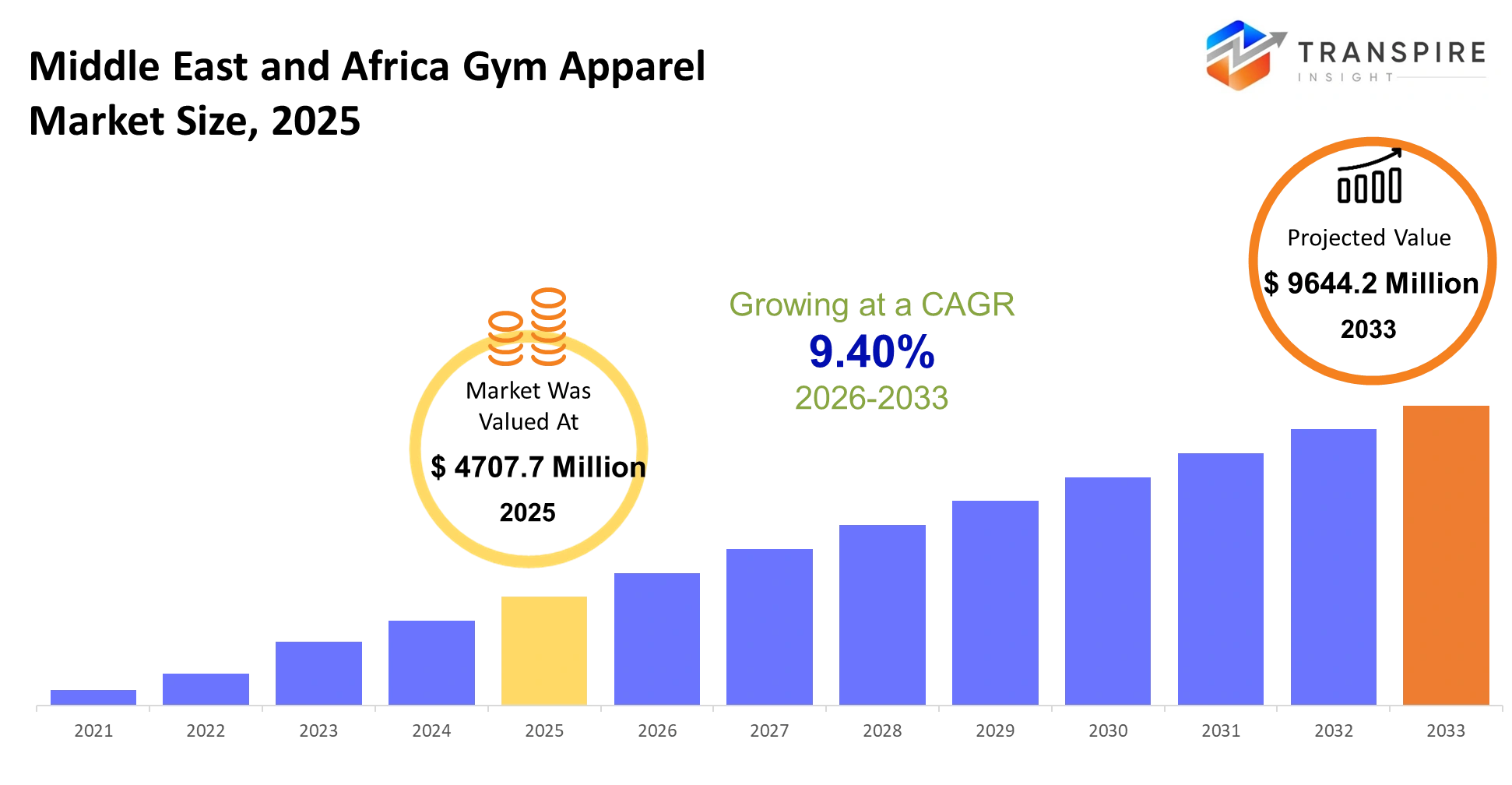
- Middle East and Africa Gym Apparel Market Size 2025: USD 4707.7 Million
- Middle East and Africa Gym Apparel Market Size 2033: USD 9644.2 Million
- Middle East and Africa Gym Apparel Market CAGR: 9.40%
- Middle East and Africa Gym Apparel Market Segments: By Product Type (T-Shirts, Leggings, Shorts, Sports Bras, Jackets, Others); By Material (Polyester, Cotton, Nylon, Spandex, Others); By Distribution Channel (Online Retail, Brand Stores, Sporting Goods Stores, Others); By End User (Men, Women, Children, Others)
To learn more about this report,  Download Free Sample Report
Middle East and Africa Gym Apparel Market Summary
The Middle East and Africa Gym Apparel Market was valued at USD 4707.7 Million in 2025. It is forecast to reach USD 9644.2 Million by 2033. That is a CAGR of 9.40% over the period.
Gym apparel really plays this kind of practical role in fitness centers, sports clubs, training facilities, and also outdoor exercise settings, mostly because it helps with comfort, movement, moisture control, and yes overall performance while people are being active. Those performance textiles help athletes and even casual users keep endurance up, balance body temperature, and lower that general training discomfort during sessions, so it’s not just “look good”.
Over the last five years the market has kind of drifted away from only basic sportswear, and now it leans into multifunctional activewear, where fitness capability is mixed up with everyday style. One big shift in structure is how athleisure culture has grown across Gulf countries, and it also spilled into different urban African markets, so in those areas people end up wearing training clothes well beyond gyms and sports arenas, like to handle errands or go to social meetups, you know.
Plus, the COVID-19 pandemic pretty much accelerated home workouts, digital fitness subscriptions, and everyday habits that feel more wellness driven. That, in turn reshaped buying behavior, while online apparel sales got a clear lift. Since fitness participation is widening among women, youth, and amateur athletes, brands are expanding their product lines and distribution channels too, not only keeping inventory for the “hard core” crowd. As a result, consumer spend is rising, brand loyalty looks stronger, and premium performance apparel is getting deeper penetration across the region.
Key Market Insights
- The Middle East and Africa Gym Apparel Market seems to ride on expanding fitness club memberships, especially across GCC countries and in the bigger African cities, it’s kind of like the whole routine is getting more organized there .
- In 2025, Gulf Cooperation Council countries contributed around 45% of the regional industry revenue, so the Gulf basically stays the dominant spot in the region.
- South Africa is still the second-largest driver, backed by long standing sports engagement and solid retail setups that are easy to access.
- Looking ahead, East Africa is forecast to be the fastest-growing regional market through 2033, mainly because urbanization keeps moving, and the fitness culture is spreading at pace too.
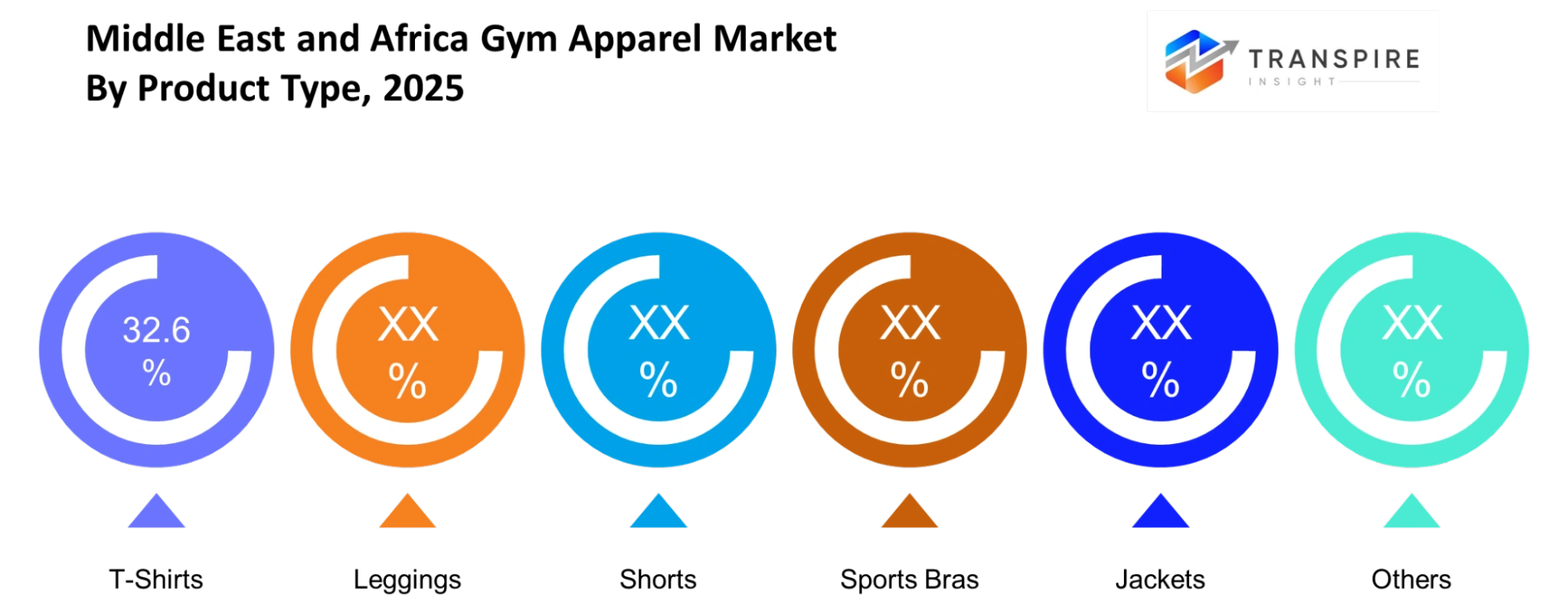
- When it comes to what people buy, T-Shirts led demand with almost 30% share in 2025, mostly because they’re broadly adopted across all sorts of training activities.
- Leggings came in next as the second-largest category, while sports bras are expected to become the category with the quickest growth from now to 2033.
- On the spending side , women represented roughly 42% of regional gym apparel spending in 2025 , which lines up with wider participation in structured fitness programs.
- Also online retail pulled in more than 35% of total sales in 2025 as mobile commerce and direct-to-consumer approaches started gaining serious traction.
- Major brands like Nike, Adidas, Puma, Under Armour, Gymshark and Decathlon keep pushing forward with localized collections, plus digital engagement initiatives that feel more targeted .
- Finally, product innovation is leaning into moisture-wicking fabrics, recycled materials, seamless construction, and performance-enhancing compression technology , which is probably why customers stay interested and keep upgrading.
What are the Key Drivers, Restraints, and Opportunities in the Middle East and Africa Gym Apparel Market?
The most convincing growth catalyst seems to show up when fitness and wellness ecosystems get commercialized quickly across the Gulf states , and also in the bigger African cities. Big money is going into health clubs, boutique fitness studios, sporting events, and wellness programs, and it ends up expanding the real consumer base for performance apparel. In places like Saudi Arabia and the UAE, national health initiatives are basically nudging people toward more active lives, so participation goes up in organized fitness. When that happens, spending shifts straight toward specialized clothing for training, running, yoga, and strength conditioning. The premium categories usually win here, since shoppers increasingly want performance features, not just plain basics.
Still , price sensitivity is the biggest structural headache. Advanced gym apparel depends on imported technical fabrics, specialized manufacturing processes, and global brand positioning, so the retail price sits higher. A lot of African markets also deal with income disparities and currency swings, which makes premium products harder to reach. And this obstacle does not get fixed overnight because it leans on broader economic development, local manufacturing capacity, and supply chain efficiency, kind of all at once. So even if demand exists, premium brand penetration stays lower than it could be, and that ends up putting a cap on revenue growth.
The strongest long-range opportunity is localized production paired with digitally driven direct-to-consumer sales. Regional manufacturing investments , such as in Egypt, South Africa , and Morocco, are improving sourcing efficiency and easing import dependence. Meanwhile mobile commerce adoption is rising, which helps brands reach consumers beyond only major urban centers.
What Has the Impact of Artificial Intelligence Been on the Middle East and Africa Gym Apparel Market?
Artificial intelligence is, like, starting to change the regional activewear business in a real way , mostly through demand forecasting, inventory optimization, and a more personal kind of consumer engagement. Retailers end up using machine learning algorithms to sift through buying patterns, seasonal demand swings, and customer tastes across both online and in-person channels. In practice, these systems let brands cut down on stockouts, speed up inventory turnover, and tune up product assortments, so it’s not just guessing all the time.
Then there are advanced analytics platforms that back predictive demand planning. They look at weather conditions, promotional pushes, social media signals, plus historical sales records. With all that combined, companies can estimate purchasing behavior more precisely. As a result , they tend to carry less excess inventory and overall profitability gets a boost. Also, AI-powered recommendation engines have turned out to be especially valuable for online retailers, because they raise conversion rates by suggesting items that fit what a shopper viewed and what they bought before.
On the operations side, automation helps warehouse efficiency, speeds up order fulfillment, and gives better supply chain visibility. Digital design tools can even shrink product development cycles too, by reading consumer trends and spotting new style directions. Several global sportswear companies reportedly use AI-driven insights to handle fabric selection, sizing strategies, and product launch timing in a more controlled manner.
Still, adoption isn’t even across the region. There are high implementation costs, fragmented retail infrastructure, inconsistent data quality, and, on top of that, shortages of specialized AI talent. Because of these issues, smaller brands and distributors often can’t roll things out at the same pace as larger players.
Key Market Trends
- Online gym clothes sales went up over 20% from 2021 through 2025, mainly because mobile shopping got more broadly accepted and honestly, people just kept using it.
- Women’s activewear lines expanded quite a bit after 2022 , with female gym participation rising across GCC markets, which kind of fed the whole cycle.
- Recycled polyester showed up more and more across the big product drops, as global brands chased sustainability targets and tried to sound a little more responsible in their messaging.
- Premium compression , plus moisture-handling features that used to be mostly for professional sports categories, moved into everyday fitness wear, you know, the kind people actually buy for the week.
- Nike, Adidas, and Puma grew their digital membership networks, to improve direct engagement with shoppers and encourage repeat purchases that feel less “one off.”
- Athleisure buying shifted from “sometimes” to daily wear, especially for consumers aged 18–35 years , who just seem to wear it everywhere now.
- After 2023, collaborations with athletes, influencers and fitness communities became a core way to bring in new customers, not just a nice marketing add-on.
- Regional distributors also started taking on omnichannel retail approaches that connect physical stores, apps, and online stores,e-commerce platforms in a smoother way.
- More localized product ranges, shaped around climate needs, gained visibility across Middle Eastern markets where the weather can really change the demand.
- Finally, performance apparel designed for functional training, yoga, and running grew faster than traditional sports uniforms, or at least that’s what the numbers suggest.
Middle East and Africa Gym Apparel Market Segmentation
By Product Type
T-Shirts still look like the most widely purchased category, because they work well across gym workouts, running sessions, group fitness classes, and just everyday casual wear. The fact that pricing is available in a pretty wide range, helps people jump in whether they’re looking for premium stuff or value minded options. Performance fabrics, with moisture management properties, just keep getting better so they feel more appealing in real use. Overall demand stays strong among men, women, and youth fitness groups.
Leggings keep a big market footprint , mainly thanks to comfort and flexibility, plus they’re a solid fit for training activities. Shorts keep pulling buyers too, especially runners and outdoor fitness participants, and that’s extra noticeable in warm climate countries. Sports Bras are also getting a lift, as more women take part in organized fitness programs. Jackets and other clothing types back up year round training needs, travel use, and that athleisure fashion trend that never really pauses.
To learn more about this report, Download Free Sample Report
By Material
Polyester kind of takes the lead, mainly due to durability, its moisture-wicking ability, and cost efficiency, you know. Often manufacturers go with polyester blends, not just because, but to juggle comfort with performance in a more practical way. The material also shows up across both mass-market and premium product lines, so it kinda fits everywhere. Plus strong availability helps, which makes adoption happen a lot more easily.
Cotton still stays popular too, especially with folks who want softness, and that everyday feel. Nylon tends to attract people who care about lightweight durability plus that stretch performance you can really notice. Then Spandex is sort of a must for compression garments, and also for flexible training apparel where movement matters. Other options, like recycled fibers and more advanced fabric blends, are getting attention as brands aim for innovation and sustainability goals, and they keep pushing it forward.
By Distribution Channel
Online Retail kind of transformed how people buy because it offers a wider product selection, plus easy price comparisons and this direct brand engagement thing. Mobile commerce platforms keep growing their footprint so they reach more customers, even across bigger cities and also those emerging markets. Digital marketing campaigns help push conversions forward and then keep customers coming back. Subscription based loyalty programs also do their part, they keep online sales performance steadier
Even so, Brand Stores still matter a lot for premium product positioning and for shaping that consumer experience. Sporting Goods Stores basically let shoppers access multiple brands and product categories in just one go, at one place. Then there are other distribution routes too, like department stores and specialty retailers, and they still help with overall market accessibility. A blended omnichannel approach is increasingly shaping retail strategies across the region, little by little.
By End User
Men, they are the largest consumer group, because they’ve been involved for years in organized sports, gym memberships,and fitness coaching programs. In practice, demand stretches across strength work, running, team based sports, and casual recreation exercise. Premium performance clothing still pulls in a lot of spend especially from those who go to the gym regularly. Also, brand loyalty stays pretty solid in this segment,overall it holds up well.
Women are the fastest growing category, since fitness involvement keeps widening across various Middle Eastern and African markets. For children, apparel gets a boost from school sports schedules and youth athletic activities. Then you also have other end user groups, like people who just want comfortable activewear for recreational sessions, or lifestyle minded consumers who lean into athleisure looks. Product variety keeps increasing too, to fit different tastes, plus different activity levels.
What are the Key Use Cases Driving the Middle East and Africa Gym Apparel Market?
The primary use case kind of centers on gym based fitness training, including strength conditioning, cardiovascular exercise, and more functional fitness programs. These activities tend to create the largest volume of apparel purchases because participants really need durable, comfortable, and performance oriented clothing, for frequent workouts. Regular replacement cycles also help keep sales moving, and sort of recurring.
Running, yoga, cycling, and group fitness classes are important adjacent applications too. Women focused training programs and boutique fitness studios keep contributing to apparel consumption more and more. Sports clubs and recreational fitness communities also sustain pretty steady demand for specialized activewear.
Some emerging opportunities are developing around hybrid lifestyle usage, where people treat the apparel as everyday gear. Consumers increasingly wear gym apparel for travel, remote work, casual social settings, and just daily activities. Corporate wellness programs and digital fitness platforms could also expand adoption over the forecast period, by encouraging active lifestyles beyond the traditional gym environment.
|
Report Metrics |
Details |
|
Market size value in 2025 |
USD 4707.7 Million |
|
Market size value in 2026 |
USD 5140.6 Million |
|
Revenue forecast in 2033 |
USD 9644.2 Million |
|
Growth rate |
CAGR of 9.40% from 2026 to 2033 |
|
Base year |
2025 |
|
Historical data |
2021 - 2024 |
|
Forecast period |
2026 - 2033 |
|
Report coverage |
Revenue forecast, competitive landscape, growth factors, and trends |
|
Regional scope |
Middle East and Africa (Saudi Arabia, United Arab Emirates, South Africa, Rest of Middle East and Africa) |
|
Key company profiled |
Nike, Adidas, Puma, Under Armour, Reebok, Lululemon, ASICS, Gymshark, Decathlon, New Balance, Columbia, Fila, Skechers, Anta Sports, Li Ning |
|
Customization scope |
Free report customization (country, regional & segment scope). Avail customized purchase options to meet your exact research needs. |
|
Report Segmentation |
By Product Type (T-Shirts, Leggings, Shorts, Sports Bras, Jackets, Others); By Material (Polyester, Cotton, Nylon, Spandex, Others); By Distribution Channel (Online Retail, Brand Stores, Sporting Goods Stores, Others); By End User (Men, Women, Children, Others) |
Which Regions are Driving the Middle East and Africa Gym Apparel Market Growth?
The Gulf area is basically in front when it comes to market revenue, it’s backed by higher disposable incomes, solid premium retail setup ,and fairly consistent government backing for health and wellness moves. Saudi Arabia and the UAE keep putting money into sports involvement and modern fitness facilities. At the same time international sports happenings plus the growing gym network help keep consumers interested, almost like a constant pull. Also, a mature retail ecosystem keeps global brands easy to find and it just helps everything run smoother.
Then South Africa shows up as the second biggest regional contributor. Its growth seems to lean more on long-standing sports participation and well established retail pathways, rather than on pure premium spending. People there are already quite familiar with international sportswear brands, so buying activity stays steady. And even if it’s not perfect, the local economic stability compared to several nearby markets gives a steadier base for ongoing sales.
Meanwhile East Africa is showing the fastest growth rhythm. Urbanization ,along with digital retail adoption and a wider middle income layer, has shifted market expectations in recent years. New fitness centers ,organized sports programs, and mobile commerce options keep expanding access to activewear. Because of that pace, there are interesting openings for new players and investors who are thinking of long term expansion somewhere between 2026 and 2033.
Who are the Key Players in the Middle East and Africa Gym Apparel Market and How Do They Compete?
Competition is still sort of moderately concentrated across global sportswear brands, yet regional distributors and digital-first newcomers keep getting more attention. In practice, what separates them most is product innovation, brand identity, athlete collaborations, and those omnichannel retail motions. Most of the time, firms do not only fight on price , they also compete with performance technologies, sustainability efforts, and more localized ways to meet consumers.
Nike leans into advanced fabric technologies, digital fitness ecosystems, and a higher-end brand stance. Their heavy spending on women’s performance apparel and connected consumer experiences keeps the edge, at least in their own framing. Adidas leans hard on sustainability oriented materials, and on lifestyle activewear collections that feel current, plus they lean on retail partnerships across the region. This mix works because they keep a decent equilibrium between sport performance and fashion appeal, which is kinda the whole point.
Puma stresses that sport-fashion overlap, and they pair it with high-profile partnerships that try to link athletic performance with everyday lifestyle trends. Gymshark differentiates via digital-first marketing, influencer-led communities, and direct-to-consumer distribution. Decathlon keeps competing through affordability, wide product availability, and vertically integrated operations that tend to support value-minded buyers. Under Armour stays more performance-first, with technical apparel and training specific innovations.
Taken together, these moves let companies aim at different consumer segments while still pushing regional market penetration, sometimes quietly but consistently.
Company List
- Nike
- Adidas
- Puma
- Under Armour
- Reebok
- Lululemon
- ASICS
- Gymshark
- Decathlon
- New Balance
- Columbia
- Fila
- Skechers
- Anta Sports
- Li Ning
Recent Development News
In January 2026, Puma entered a multi-year global partnership with McLaren Racing. The agreement expands Puma's performance and lifestyle apparel portfolio while increasing global brand visibility across motorsport audiences.https://about.puma.com
In September 2025, NikeSKIMS launched its first apparel collection developed through the Nike and SKIMS collaboration. The launch introduced 58 activewear silhouettes designed for training, gym, and lifestyle applications, strengthening Nike's position in women's performance apparel.https://about.nike.com/
In January 2026, Puma and Fluminense Football Club announced a five-year apparel partnership covering performance apparel, footwear, and accessories. The agreement expands Puma's sportswear presence and supports distribution of new team and training collections.https://mediahub.puma.com/
What Strategic Insights Define the Future of the Middle East and Africa Gym Apparel Market?
Over the next five to seven years , the market is expected to drift toward a blend of performance-driven apparel, digital retail ecosystems, and lifestyle centered activewear consumption. The main driver behind this shift is basically how fitness, wellness, and everyday fashion get stitched together into one consumer category. Brands that can mix technical functionality with lifestyle appeal will probably snag the strongest value creation openings
There is also a less obvious risk though, like the dependence on imported technical fabrics and global supply chains. Currency swings, shipping disruptions , and raw material cost volatility could end up squeezing margins and, in turn , curb affordability in price sensitive markets. Meanwhile, there is an angle that looks pretty promising too: localized manufacturing, plus region specific product development. Modest activewear, climate adapted fabrics, and women focused performance collections are still kind of underpenetrated , and they hold real long term promise
For market participants , it would help to prioritize regional sourcing partnerships, strengthen digital direct to consumer abilities, and use data driven product customization tactics. Firms that synchronize product innovation with local consumer preferences will likely be in a better spot to capture durable growth and defend market share through out the forecast period
Middle East and Africa Gym Apparel Market Report Segmentation
By Product Type
- T-Shirts
- Leggings
- Shorts
- Sports Bras
- Jackets
- Others
By Material
- Polyester
- Cotton
- Nylon
- Spandex
- Others
By Distribution Channel
- Online Retail
- Brand Stores
- Sporting Goods Stores
- Others
By End User
- Men
- Women
- Children
- Others
Frequently Asked Questions
Find quick answers to common questions.
The expected Middle East and Africa Gym Apparel Market size for the market will be USD 9644.2 Million in 2033.
Key segments for the Middle East and Africa Gym Apparel Market are By Product Type (T-Shirts, Leggings, Shorts, Sports Bras, Jackets, Others); By Material (Polyester, Cotton, Nylon, Spandex, Others); By Distribution Channel (Online Retail, Brand Stores, Sporting Goods Stores, Others); By End User (Men, Women, Children, Others).
Major Middle East and Africa Gym Apparel Market players are Nike, Adidas, Puma, Under Armour, Reebok, Lululemon, ASICS, Gymshark, Decathlon, New Balance, Columbia, Fila, Skechers, Anta Sports, Li Ning.
The Middle East and Africa Gym Apparel Market size is USD 4707.7 Million in 2025.
The Middle East and Africa Gym Apparel Market CAGR is 9.40% from 2026 to 2033.
- Nike
- Adidas
- Puma
- Under Armour
- Reebok
- Lululemon
- ASICS
- Gymshark
- Decathlon
- New Balance
- Columbia
- Fila
- Skechers
- Anta Sports
- Li Ning
About the Authors

Chetan Dhatrak
I’m Chetan Dhatrak, a Senior Research Analyst at Transpire Insight, specializing in the Consumer Goods, Foods and Beverages industry. I focus on analyzing market trends, consumer behavior, competitive landscapes, and industry developments to deliver accurate, data-driven insights. My research at Transpire Insight is built on credible sources and in-depth analysis, helping businesses and readers better understand market dynamics, emerging opportunities, and evolving consumer preferences. I’m committed to creating reliable, well-researched content that supports informed decision-making and reflects the latest developments in the consumer goods and food & beverage sectors.

Chakradhar Khansole
Chakradhar serves as the Research Director at Transpire Insight, bringing over 8 years of experience in technology, innovation, and strategic market intelligence. He specializes in transforming complex market data into actionable business insights that enable organizations to make informed, growth-oriented decisions. Recognized for his strategic vision and analytical expertise, Chakradhar leads high-impact research initiatives, delivering comprehensive market assessments, competitive intelligence, and forward-looking industry analysis.
Recently Published Reports
-
Apr 2026
Bottled Water Market
Bottled Water Market Size, Share & Analysis Report By Product Type (Still Bottled Water, Carbonated Bottled Water, Functional Bottled Water, and Others), By Packaging (PET, Cans, and Others), By Sales Channel (Supermarkets/Hypermarkets, Convenience Stores/Drug Stores, Grocery Stores/Club Stores, Foodservice, and Others) and Geography (North America, Europe, Asia-Pacific, Middle East and Africa, South and Central America), 2021 - 2032
-
Apr 2026
Color Cosmetic Packaging Market
Color Cosmetic Packaging Market Size, Share & Analysis Report By Application (Mascara Packaging, Liquid Packaging, and Liquid Face), By Type (Tubes & Bottles, Pens & Markers, Compacts & Containers, and Droppers & Pumps), and Geography (North America, Europe, Asia-Pacific, Middle East and Africa, South and Central America), 2021 - 2031
-
Apr 2026
External Microphone For Camera Market
External Microphone For Camera Market Size, Share & Analysis Report By Type (Shotgun Microphone, Lavalier Microphone, and Others), By Application (Digital Camera, Professional Video Camera, and Others), and Geography (North America, Europe, Asia-Pacific, Middle East and Africa, South and Central America), 2021 - 2031
-
Apr 2026
Foot Orthotic Insoles Market
Foot Orthotic Insoles Market Size, Share & Analysis Report By Type (Pre-fabricated, and Custom-made), By Material (Thermoplastic, Composite Carbon Fiber, and Others), By Distribution Channel (Drug Stores, Hospitals & Clinics, and Others), and Geography (North America, Europe, Asia-Pacific, Middle East and Africa, South and Central America), 2021 - 2031