

Middle East and Africa Aviation Analytics Market Size & Forecast:
- Middle East and Africa Aviation Analytics Market Size 2025: USD 193.5 Million
- Middle East and Africa Aviation Analytics Market Size 2033: USD 563.4 Million
- Middle East and Africa Aviation Analytics Market CAGR: 14.30%
- Middle East and Africa Aviation Analytics Market Segments: By Solution (Flight Analytics, Operations Analytics, Predictive Maintenance, Revenue Analytics, Passenger Analytics, Safety Analytics, Others); By Deployment (Cloud, On-Premise, Hybrid, SaaS, Others); By Application (Airlines, Airports, MRO Services, Air Traffic Management, Cargo Aviation, Others); By End User (Commercial Aviation, Defense Aviation, Cargo Operators, Private Aviation, Others)

Middle East and Africa Aviation Analytics Market Summary
The Middle East and Africa Aviation Analytics Market was valued at USD 193.5 Million in 2025. It is forecast to reach USD 563.4 Million by 2033. That is a CAGR of 14.30% over the period.
The Middle East and Africa Aviation Analytics Market kind of helps airlines, airports, maintenance providers, and aviation authorities turn operational data into decisions you can genuinely use. In the real world, aviation analytics improves aircraft utilization, predicts maintenance requirements better, supports flight schedule refinements, reduces fuel consumption, strengthens passenger experience, and makes safety supervision more consistent. Over the last five years, the market has drifted away from retrospective reporting, and has been more and more focused on real time plus predictive analytics.A lot of this is driven by cloud computing, artificial intelligence, and connected aircraft systems. One big structural shift is the digital transformation of airport and airline operations, especially across Gulf aviation hubs where they invest a lot in “smart airport” infrastructure.
At the same time, geopolitical disruptions, airspace restrictions, fuel price volatility , and supply chain frictions have pushed operators to adopt analytics tools faster, because they need operational resilience and tighter cost control. As airlines chase efficiency wins and more data driven decisions, aviation analytics platforms are turning into kind of core operational assets, which also opens new revenue pathways for software providers and expands usage across commercial, cargo, and even defense aviation ecosystems.
Key Market Insights
- The Middle East and Africa Aviation Analytics Market kinda benefits from large-scale airport modernization things going on across Gulf countries and, you know, Africa’s expanding air transport network in general.
- In 2025, Gulf Cooperation Council countries actually accounted for about 48% of the regional market revenue, mainly backed by advanced aviation infrastructure.
- Cloud-based analytics solutions took up nearly 42% market share in 2025, which shows the migration away from older legacy aviation systems, and honestly that trend is pretty visible now.
- Predictive maintenance analytics is still the leading solution segment, sitting at around 28% share, helped along by fleet optimization initiatives and better maintenance planning routines.
- Passenger analytics is forecast to grow the fastest through 2033, as airports roll out more personalized traveler engagement platforms, and try to make the experience more “on point”.
- For applications, airlines represented more than 45% of the demand in 2025, using analytics to improve route planning, plus fuel management decisions. On the deployment side, airport analytics deployments have increased by almost 30% since 2022, supported by smart terminal programs and digital passenger processing systems.
- In terms of end users, commercial aviation leads overall with over 60% market share, riding on fleet growth and operational digitization efforts. Some major players, like IBM, SAP, Oracle, Microsoft, Honeywell, and SITA, continue expanding AI-driven aviation intelligence capabilities, especially where real time insights matter.
- Overall, strategic partnerships, cloud adoption, digital twin technologies, and machine learning integration are helping companies sharpen their competitive differentiation across the Middle East and Africa Aviation Analytics Market.
What are the Key Drivers, Restraints, and Opportunities in the Middle East and Africa Aviation Analytics Market?
The main driver behind market growth is pretty much the aviation sector’s shift to operations that are data centric. Airlines are under constant pressure from shifting fuel costs, tough aircraft utilization requirements, higher maintenance expenses and route networks that are getting more and more complicated. Because of that, companies keep putting money into predictive maintenance analytics, flight optimization software and also revenue management platforms. Digital transformation efforts across Gulf aviation hubs and key African airports have helped speed up the rollout of advanced analytics platforms, which can deliver real improvements in day to day operational efficiency and better asset utilization.
Still, the biggest restraint is that digital infrastructure stays fragmented across many African aviation markets. Even though the major Gulf carriers run sophisticated data ecosystems, a lot of regional airlines and airports are still using older, legacy systems that end up producing inconsistent data. When you try to bring together operational, maintenance, passenger and financial datasets that are scattered across different tools, it takes major investment, specialized know how, and long implementation cycles. That structural issue ends up slowing adoption and it also makes it harder for smaller operators to actually capture the full analytics enabled efficiency benefits.
On the opportunity side, one standout opening is AI powered aviation operations centers, along with integrated airport intelligence platforms. Smart airport investments across Saudi Arabia, the UAE, and several African aviation hubs are creating a more favorable environment for advanced analytics to land successfully. There’s real potential in real time passenger flow management, predictive disruption management, autonomous operational planning, plus digital twin technologies. For software vendors and service providers this is, in practice, a space with plenty of traction to grab.
What Has the Impact of Artificial Intelligence Been on the Middle East and Africa Aviation Analytics Market?
Artificial intelligence has, for real, changed aviation analytics from something that just reports results, into a kind of decision-support system that can take over a few critical operational steps too. In practice airlines are more and more deploying AI algorithms for monitoring fleet performance, tuning crew scheduling, parsing flight operations, and spotting operational snags early. These automated control systems keep working in the background, they continuously ingest aircraft telemetry, maintenance records, weather feeds, and also passenger demand information, so coordination stays smoother, even when conditions shift.
Machine learning models are especially useful in predictive maintenance. They take in sensor readings from engines, avionics and different aircraft components, then they flag anomalies before failures can actually happen. Maintenance teams can plan interventions ahead of time, which tends to cut down on unscheduled downtime and boosts fleet readiness. On top of that AI-based forecasting tools are helping airlines with fuel efficiency, route selection, and forecasting passenger demand trends, often with better accuracy than older approaches.
The operational gains are pretty straightforward: lower maintenance expenses, higher aircraft utilization, faster turnaround cycles, better safety monitoring, and stronger regulatory compliance. Airports also use AI-driven passenger analytics more often now, they aim to make terminal operations more efficient and reduce crowding during those peak travel windows when lines seem unavoidable.
Still, it’s not all smooth. Operators often hit major hurdles during implementation, especially the high integration costs involved in connecting AI platforms with legacy aviation systems. Then there are data quality inconsistencies, cybersecurity worries, and a shortage of skilled analytics professionals, which together slow deployment across many parts of the region. Over time, though, these barriers should ease gradually as digital aviation ecosystems mature, and cloud adoption keeps expanding.
Key Market Trends
- Since 2021, cloud based aviation analytics deployments have grown a lot, like airlines are modernizing their legacy operational systems and kind of moving faster than before.
- AI powered predictive maintenance adoption spread across major Gulf carriers too, this has reduced more unplanned maintenance events than people expected, and also improves fleet utilization, in a more steady way.
- Airport operators are using passenger flow analytics more and more, with smart airport investments picking up across Saudi Arabia and the UAE , especially where congestion shows up.
- Over 40% of new aviation analytics projects in 2025 have already built in machine learning capabilities, for operational forecasting and kind of short term planning.
- Real time operations control platforms became a bigger deal after airspace disruptions, plus there was that fuel price volatility seen during 2024–2026, which pushed teams to move quickly.
- Analytics driven revenue management tools improved route profitability assessments, even while passenger travel patterns keep shifting.
- Airlines also shifted investment toward integrated operational dashboards, in place of disconnected reporting environments that were common before 2022 .
- Digital twin technologies came up as a fresh planning instrument, mainly for airport capacity optimization and infrastructure management.
- Partnerships between aviation technology providers and regional carriers helped speed up localized analytics solutions, tailored for local procedures and data formats.
- AI enabled disruption management platforms got more attention after operational disruptions made it clear that faster decision making is necessary, not optional.
Middle East and Africa Aviation Analytics Market Segmentation
By Solution
Flight analytics helps with route planning, fuel optimization, flight tracking, and operational performance review, it sort of ties everything together. Airlines lean on these tools to judge aircraft utilization, spot day to day operational inefficiencies and refine their scheduling decisions, almost like a feedback loop. When you get better visibility into what’s happening during flights it can cut costs and also boost service reliability.
On the other side, operations analytics is really useful for keeping an eye on airport activity, crew deployment, turnaround effectiveness, and how resources are spread around. Predictive maintenance analytics is aimed at flagging component failures before they turn into real breakdowns, this improves aircraft availability and usually lowers maintenance expenses. Revenue analytics backs pricing optimization plus profitability handling, while passenger analytics boosts traveler engagement and more tailored service personalization. Safety analytics, in particular, supports risk management and regulatory compliance, and beyond that there are other analytics applications for specialized operational needs.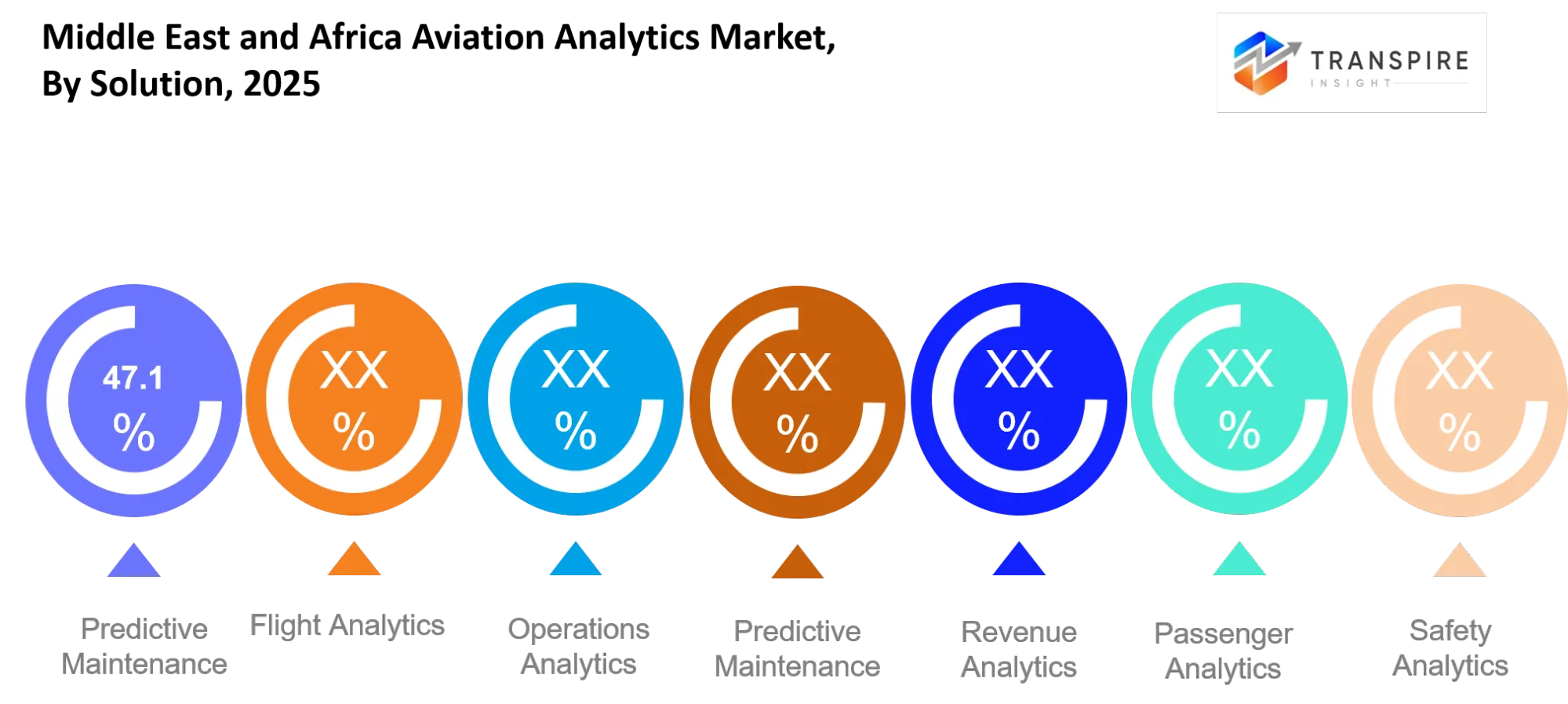
By Deployment
Cloud deployment keeps getting more attention, mainly because it scales nicely, needs less on site infrastructure, and makes software updates kinda easier. Aviation organizations are now more often choosing cloud platforms, mostly to bring their operational data together and to support real time decisions across many locations, not just one.
Still, on- premise deployment is very important for groups that have strict rules around data governance. A hybrid approach kinda mixes both worlds: you get cloud flexibility while keeping local control, and that pattern is showing up a lot in big aviation operators. SaaS solutions also help them launch sooner and avoid big upfront costs, and then there are other deployment types too, used when the work is specialized or when regulatory expectations demand something particular.
By Application
Airlines are the biggest application segment, simply because analytics directly impacts profitability, day-to-day operational efficiency, and passenger satisfaction, all at once. Analytics offerings help with timing and crew scheduling, maintenance planning, revenue management, plus fuel optimization efforts across commercial fleets.
Airports lean on analytics as well, to oversee passenger flow, terminal operations, baggage handling, and even infrastructure planning. MRO services use predictive insights to make maintenance outcomes better, and to cut down on downtime. Air traffic management organizations apply analytics to get better use of the airspace, whereas cargo aviation operators lean on data intelligence to strengthen logistics performance.
There are also other use cases that tackle more specialized aviation requirements, like narrower operational needs or unusual performance goals.
By End User
Commercial aviation ends up getting the bigg-est slice of analytics spending because it s tied to pretty extensive operational complexity and huge passenger volumes , so it’s not surprising that airlines keep putting money into more advanced data platforms. The idea is basically to raise operational visibility, and also stay competitive
Defense aviation, on the other hand, leans on analytics to help mission readiness, make maintenance planning smoother, and manage fleet operations with more discipline. Cargo operators use analytics for route optimization and shipment tracking, while private aviation organizations use analytics to refine service quality and boost day to day operational efficiency . Beyond that, the other end-user groups keep adopting analytics tools based on their own operational needs, constraints, and more niche priorities.
What are the Key Use Cases Driving the Middle East and Africa Aviation Analytics Market?
The most important use case is kinda centered on operational optimization in commercial airlines, where flight performance monitoring, predictive maintenance planning, fuel efficiency analysis, and revenue optimization all come together and basically create a lot of value. It matters because these things directly impact operating margins and fleet productivity, not just in a small way, but in a very practical, day-to-day sense.
More additional applications are spreading now across airports and maintenance organizations. Airports use analytics platforms to manage passenger flows, optimize terminal resources, and improve turnaround efficiency. Meanwhile, maintenance providers are more and more depending on predictive analytics to spot equipment issues before failures show up and then disrupt everything, again in a pretty direct chain reaction.
Then there are the emerging use cases too, like AI-driven disruption management, digital twin airport simulations, and advanced airspace optimization systems. These are still kinda early-stage, yet they hold strong long term potential as aviation stakeholders pursue smarter, more automated operational environments, and not just as a concept, but as something they actually want to run.
|
Report Metrics |
Details |
|
Market size value in 2025 |
USD 193.5 Million |
|
Market size value in 2026 |
USD 221.1 Million |
|
Revenue forecast in 2033 |
USD 563.4 Million |
|
Growth rate |
CAGR of 14.30% from 2026 to 2033 |
|
Base year |
2025 |
|
Historical data |
2021 - 2024 |
|
Forecast period |
2026 - 2033 |
|
Report coverage |
Revenue forecast, competitive landscape, growth factors, and trends |
|
Regional scope |
Middle East and Africa (Saudi Arabia, United Arab Emirates, South Africa, Rest of Middle East and Africa) |
|
Key company profiled |
IBM, SAP, Oracle, Microsoft, GE Aerospace, Honeywell, Lufthansa Systems, Airbus, Boeing, Ramco, IFS, SAS, Palantir, Amadeus, SITA |
|
Customization scope |
Free report customization (country, regional & segment scope). Avail customized purchase options to meet your exact research needs. |
|
Report Segmentation |
By Solution (Flight Analytics, Operations Analytics, Predictive Maintenance, Revenue Analytics, Passenger Analytics, Safety Analytics, Others); By Deployment (Cloud, On-Premise, Hybrid, SaaS, Others); By Application (Airlines, Airports, MRO Services, Air Traffic Management, Cargo Aviation, Others); By End User (Commercial Aviation, Defense Aviation, Cargo Operators, Private Aviation, Others) |
Which Regions are Driving the Middle East and Africa Aviation Analytics Market Growth?
The Gulf region is basically leading the market because of big aviation infrastructure investments , plus those global hub operations thing , and also aggressive digital transformation programs. Saudi Arabia, the UAE, and Qatar are still throwing a lot of funding into smart airports, more advanced air traffic systems , and airline modernization initiatives. Large fleet sizes and pretty sophisticated aviation ecosystems also make it easier for analytics adoption. With strong policy backing and solid international connectivity, the regional leadership kind of stays locked in.
South Africa , and a bunch of other established African aviation markets , show up as the next biggest contribution. The growth there comes from ongoing airport modernization , operational efficiency efforts, and a gradual digitalization of airline operations. But compared with the Gulf markets, the adoption rhythm is steadier and it leans more toward cost management and operational reliability. Basically, the consistent investment in aviation infrastructure keeps supporting long-term market participation.
East Africa is expected to see the fastest growth through 2033. The expansion of regional air transport networks, airport development programs , and digital aviation initiatives has opened new doors for analytics deployment. Investments from major regional carriers plus rising passenger traffic are pushing modernization efforts forward. And that momentum is what makes attractive opportunities for technology vendors, cloud providers, and aviation software developers who want regional expansion.
Who are the Key Players in the Middle East and Africa Aviation Analytics Market and How Do They Compete?
Competition still looks kinda moderately concentrated across global enterprise software providers, aerospace tech companies, and a few specialized aviation technology vendors. Lately, how they differ is less about plain software features only, and more about AI capabilities, cloud architecture, the way they operationally integrate, plus aviation-specific know how. In practice, most vendors try to win by showing measurable efficiency gains, delivering predictive insights, and offering smooth integration with airline and airport systems, without too much friction.
IBM is centered on AI enabled analytics, stronger data management, and predictive decision support. Microsoft leans hard on Azure cloud infrastructure and AI services, to back scalable aviation data environments. Oracle on the other hand differentiates through integrated enterprise applications that connect finance, operations, and maintenance data in one flow.
Honeywell blends avionics know how with connected aircraft analytics, which translates into operational intelligence across maintenance and flight operations. They continue expanding aerospace technology capabilities too, mainly through partnerships that support next generation connected aviation systems.
SITA is more specialized in airport and airline operational intelligence. Some recent acquisitions and partnerships have helped reinforce AI enabled disruption management, plus passenger experience capabilities, at the same time.
Amadeus tends to focus on airline retailing, passenger intelligence, and travel ecosystem analytics. Their strategic technology collaborations seem to push forward cloud enabled and AI driven aviation solutions.
Company List
- IBM
- SAP
- Oracle
- Microsoft
- GE Aerospace
- Honeywell
- Lufthansa Systems
- Airbus
- Boeing
- Ramco Systems
- IFS
- SAS Institute
- Palantir Technologies
- Amadeus
- SITA
Recent Development News
In June 2026, SITA announced acquisition of Big Blue Analytics. The acquisition expands SITA's AI-enabled disruption management capabilities and strengthens intelligent operations control solutions for airlines worldwide.https://www.sita.aero
In March 2026, Amadeus entered a strategic partnership with Tata Consultancy Services. The collaboration aims to accelerate AI-driven airline retailing, cloud transformation, and next-generation aviation analytics capabilities.https://www.tcs.com
In September 2025, SITA entered a partnership with Ethiopian Airlines. The agreement supports development of advanced digital solutions designed to improve airline operations and passenger experience across Africa.https://www.sita.aero
What Strategic Insights Define the Future of the Middle East and Africa Aviation Analytics Market?
The market is kind of shifting toward autonomous and predictive aviation operations where analytics platforms slowly evolve, from simple monitoring tools to actual decision making engines. The main driver behind all this, is the increasing availability of connected aircraft data, cloud infrastructure, and AI based operational intelligence. In the next several years, airlines and airports will likely put more weight on integrated analytics ecosystems that can coordinate maintenance, passenger services, operational planning and also commercial outcomes, from one single platform.
There’s also a risk that’s a bit less visible, and it comes from data fragmentation. A lot of operators still run their information across disconnected systems. This creates integration obstacles that can reduce the impact of advanced analytics investments. If organizations don’t put in place a unified data architecture, they may have trouble capturing the full value of AI driven aviation operations.
On the opportunity side, AI powered airport digital twins and intelligent operations centers look especially promising, and this is true, in particular across Gulf aviation hubs as well as along emerging African aviation corridors. Market participants should focus on interoperable cloud-native platforms, plus strategic airline partnerships, and industry specific AI capabilities, so they can improve their long term competitive positioning and seize the next wave of growth opportunities.
Middle East and Africa Aviation Analytics Market Report Segmentation
-
By Solution
Flight Analytics
Operations Analytics
Predictive Maintenance Analytics
Revenue Analytics
Passenger Analytics
Safety Analytics
Others -
By Deployment
Cloud
On-Premise
Hybrid
SaaS
Others -
By Application
Airlines
Airports
MRO Services
Air Traffic Management
Cargo Aviation
Others -
By End User
Commercial Aviation
Defense Aviation
Cargo Operators
Private Aviation
Others
Frequently Asked Questions
Find quick answers to common questions.
The Expected Middle East and Africa Aviation Analytics Market size for the Market will be USD 563.4 Million in 2033.
Key Segments for the Middle East and Africa Aviation Analytics Market are By Solution (Flight Analytics, Operations Analytics, Predictive Maintenance, Revenue Analytics, Passenger Analytics, Safety Analytics, Others); By Deployment (Cloud, On-Premise, Hybrid, SaaS, Others); By Application (Airlines, Airports, MRO Services, Air Traffic Management, Cargo Aviation, Others); By End User (Commercial Aviation, Defense Aviation, Cargo Operators, Private Aviation, Others).
Major Middle East and Africa Aviation Analytics Market Players are IBM, SAP, Oracle, Microsoft, GE Aerospace, Honeywell, Lufthansa Systems, Airbus, Boeing, Ramco, IFS, SAS, Palantir, Amadeus, SITA.
The Current Middle East and Africa Aviation Analytics Market size is USD 193.5 Million in 2025.
The Middle East and Africa Aviation Analytics Market CAGR is 14.30% from 2026 to 2033.
- IBM
- SAP
- Oracle
- Microsoft
- GE Aerospace
- Honeywell
- Lufthansa Systems
- Airbus
- Boeing
- Ramco Systems
- IFS
- SAS Institute
- Palantir Technologies
- Amadeus
- SITA
About the Authors

Mayur Shinde
I am Mayur Shinde, a Senior Research Analyst at Transpire Insight, specializing in the Automotive & Transportation and Information & Communication Technology (ICT) Industry. My work focuses on analyzing emerging market trends, technological advancements, competitive landscapes, and industry developments to deliver accurate, data-driven insights. I am passionate about transforming complex market information into clear, actionable content that helps businesses, professionals, and decision-makers stay informed and make confident strategic decisions.

Chakradhar Khansole
Chakradhar serves as the Research Director at Transpire Insight, bringing over 8 years of experience in technology, innovation, and strategic market intelligence. He specializes in transforming complex market data into actionable business insights that enable organizations to make informed, growth-oriented decisions. Recognized for his strategic vision and analytical expertise, Chakradhar leads high-impact research initiatives, delivering comprehensive market assessments, competitive intelligence, and forward-looking industry analysis.
Recently Published Reports
-
Apr 2026
3D Optical Profiler Market
3D Optical Profiler Market Size, Share & Analysis Report By Type (Desktop 3D Optical Profiler, and Portable 3D Optical Profiler), By Technology (Confocal Technology, and White Light Interference), By End-Use Industry (Manufacturing, Research Institutions, Automotive, Aerospace and Defense, Medical Devices, and Other), and Geography (North America, Europe, Asia-Pacific, Middle East and Africa, South and Central America), 2021 - 2031
-
Apr 2026
Depth Sensor Market
Depth Sensor Market Size, Share & Analysis Report By Type (Infrared Depth Sensors, Time-of-Flight (ToF) Sensors, Stereo Vision Sensors, Structured Light Sensors, Ultrasonic Depth Sensors), By Application (Automotive, Robotics, Gaming, Consumer Electronics, Industrial Automation, Healthcare, Security & Surveillance, Others), By End Users (Automotive Manufacturers, Consumer Electronics Companies, Healthcare Providers, Industrial Companies, Security Agencies, Gaming Companies, Robotics Companies, Others), and Geography (North America, Europe, Asia-Pacific, Middle East and Africa, South and Central America), 2021 – 2031
-
Apr 2026
Digital Manufacturing Market
Digital Manufacturing Market Size, Share & Analysis Report By Component (Hardware, Software, and Services), By Technology (Robotics, 3D Printing, Internet of Things (IoT), and Others), By Application (Automotive and Transportation, Aerospace and Defense, Consumer Electronics, Industrial Machinery, and Others), By Process Type (Computer-Based Designing, Computer-Based Simulation, Computer 3D Visualization, Analytics, and Others), and Geography (North America, Europe, Asia-Pacific, Middle East and Africa, South and Central America), 2021 – 2031
-
Apr 2026
Digital Visa Services Market
Digital Visa Services Market Size, Share & Analysis Report By Type (Individual Travelers, Group Travelers), By Application (Tourism, Business Travel, Others), and Geography (North America, Europe, Asia-Pacific, Middle East and Africa, South and Central America), 2021 – 2031