

Marine Gas Oil Market Summary:
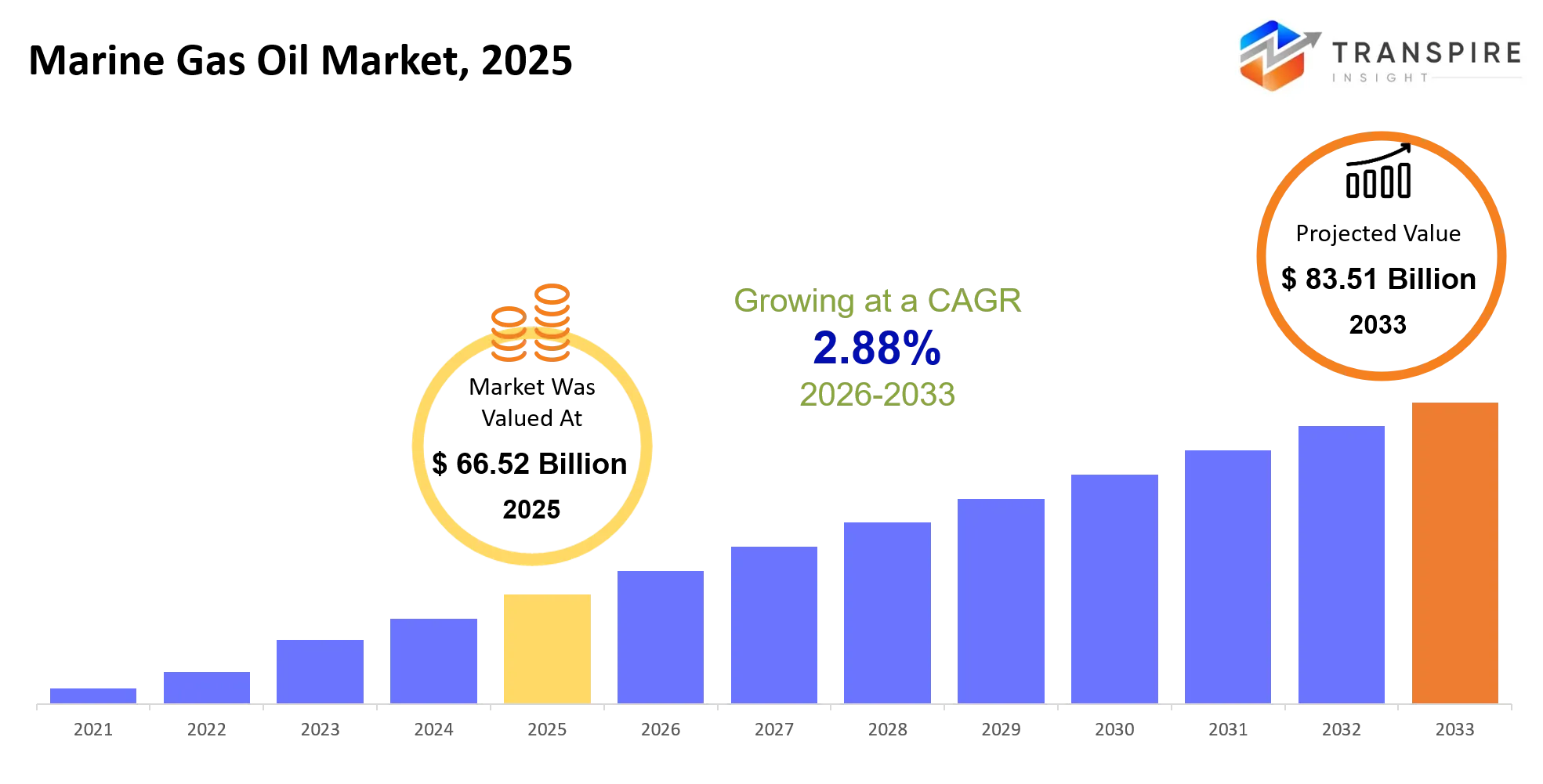
As per Transpire Insight Analysis, the Marine Gas Oil Market size is estimated at USD 66.52 billion in 2025 and is anticipated to reach USD 83.51 billion by 2033, growing at a CAGR of 11.82% from 2026 to 2033.
The marine gas oil market helps shipping, offshore work, passenger ships and port activities by providing distillate fuels that are used in marine engines and other equipment. In the three to five years choices about buying fuel have been more focused on stricter rules for emissions changes in fuel prices and the slow move towards fuels that have less carbon. A big change happening is the move to fuels for ships and more flexible ways to get fuel. One major reason for this change was the Mediterranean being made into a Sulphur Oxides Emission Control Area on 1 May 2025 which means ships in that area must use fuel that has sulphur content. This has made it more important to have fuel that meets the rules to make sure the fuel is quality and to buy fuel that is right for the route. Demand for marine gas oil is still there because some ships need fuels for moving for power and for working in areas that have rules. At the time money being put into biofuel mixes and better ways to manage fuel is making more chances, for companies that sell fuel.
Marine Gas Oil Market Size & Forecast:
- Market Size 2025: USD 66.52 Billion
- Expected Market Value (2033): USD 83.51 Billion
- Forecast CAGR (2026–2033): 2.88%
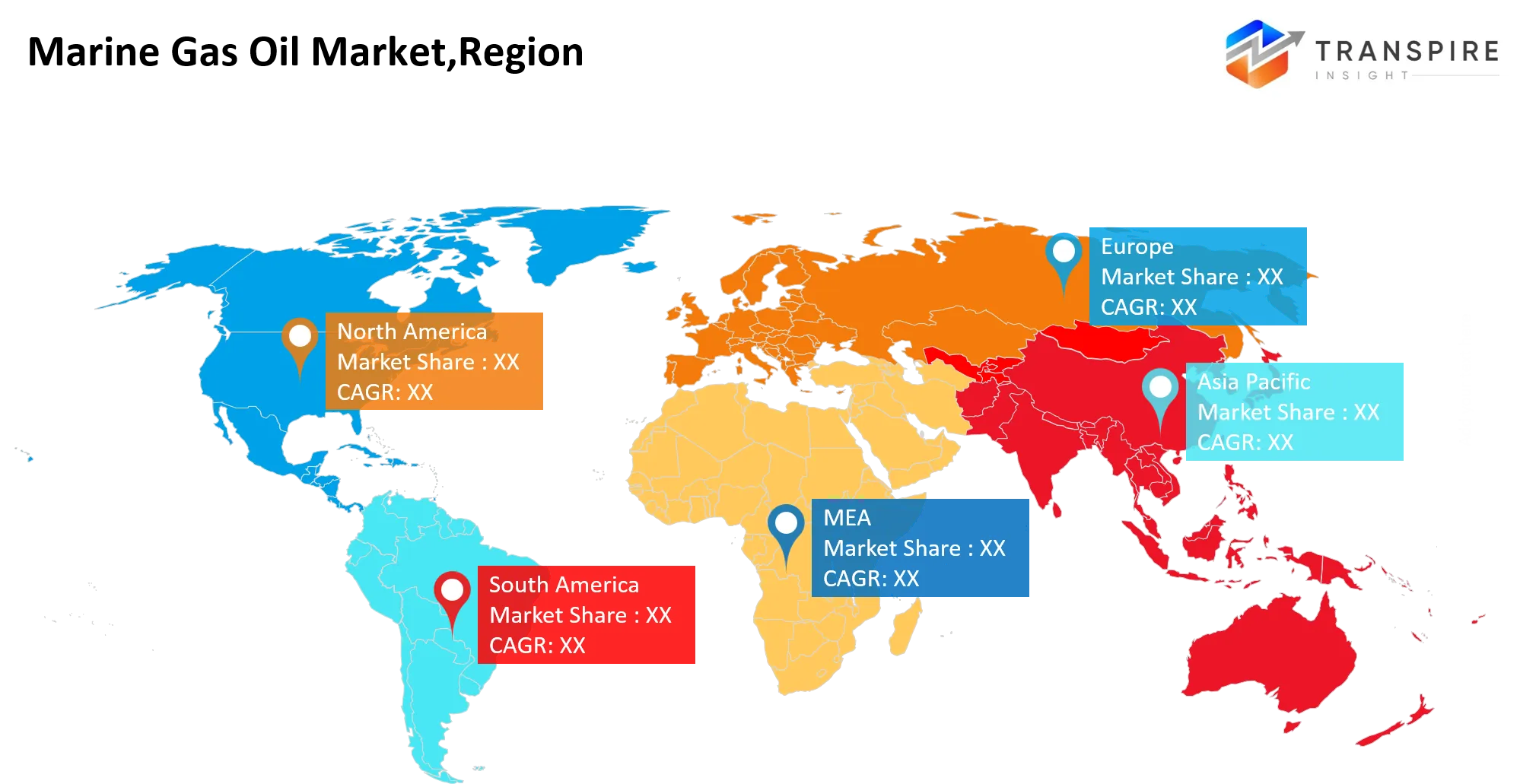
- Leading Region in 2025: Asia Pacific
- Fastest Growing Region: Europe
- Key Company Profiles: Shell, BP, ExxonMobil, Chevron, TotalEnergies, Equinor, Neste, World Fuel Services, Bunker Holding, Vitol, Glencore, Peninsula, Minerva Bunkering, Monjasa, PETRONAS
Key Market Insights:
The market is moving towards traditional distillate fuels, but stringent emissions norms are providing opportunities for alternative blends and specialised marine fuel services.
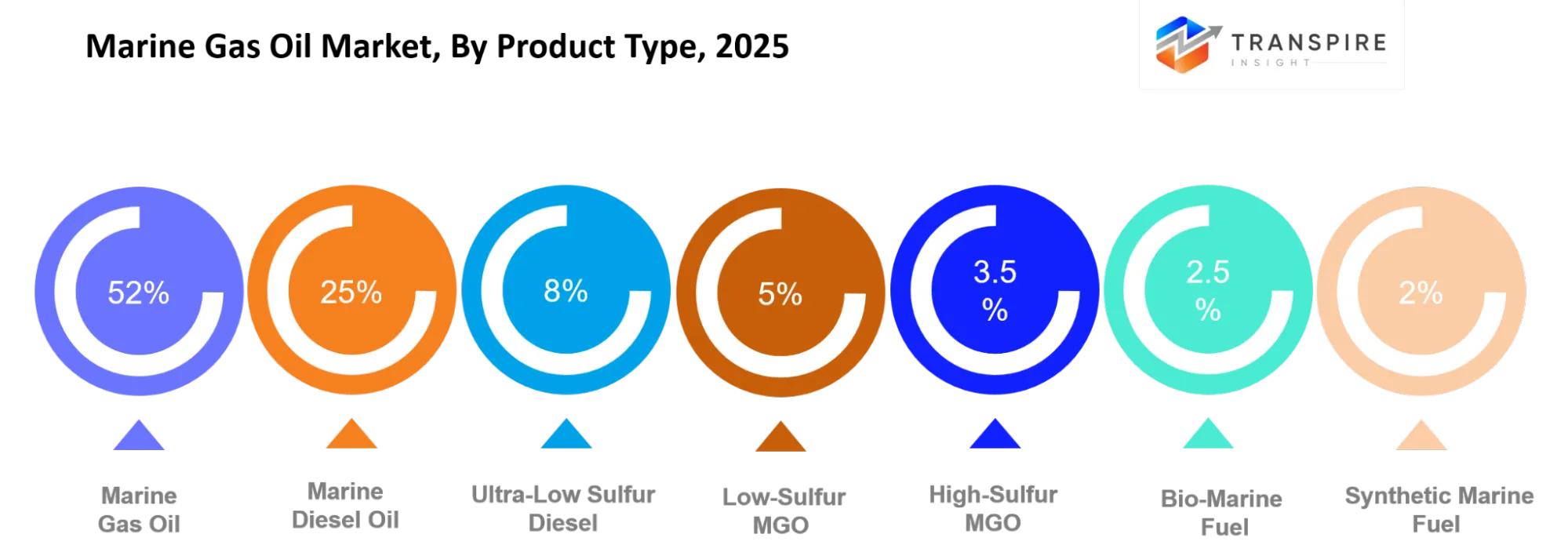
- Marine gas oil constitutes 47.0% of the reported fuel-type segment, which is indicative of the presence of the fuel in marine fuel procurement.
- Marine diesel oil is responsible for 20.0% of the share, which is another distillate option for ships based on engine and vessel specifications.
- Ultra-low-sulfur diesel comprises 12.5%, which is indicative of the significance of low-sulfur fuels in emission-sensitive operations.
- Low sulfur MGO has 8.5% share, which helps in catering to vessels that require compliance with distillate fuels in regulated waters.
- High sulfur MGO accounts for 4.0%, which is indicative of the smaller specialised segment of the reported fuel type.
- Bio-marine fuel makes up 3.5%, but its reported 11.4% CAGR shows the potential for growth due to suppliers developing alternative fuel capacity.
- Synthetic marine fuel accounts for 2.0% of the share, which is an emerging category depending on production costs and availability.
What are the Key Drivers, Restraints, and Opportunities in the Marine Gas Oil Market?
Driver
Increasing emissions standards are prompting shipping companies to consider fuel sulphur levels, routes and bunker procurement more carefully. Illustrates how local regulations can affect buying decisions. Operators working in regulated areas require a supply of compliant fuel and practical sources of supply, helping to sustain demand for marine gas oil and low-sulfur distillates. Fuel demand and confirmed fuel quality also affect supplier choice, since poor-quality fuel can have operational consequences and drive up costs.
Restraint
Fuel price swings are still a significant barrier as marine fuel is a major part of shipping companies' running costs. Variations in regional availability, refinery economics and logistics can make sourcing difficult. A shipowner can find themselves weighing up the fuel cost with the engine compatibility, storage and compliance to emissions regulations. These costs are linked and can restrict the uptake of higher-spec distillates or alternative blends, especially for operators with thin freight margins.
Opportunities
Bio-marine fuels provide an avenue for suppliers to diversify away from traditional petroleum fuels. BHP and the Centre for Maritime Decarbonisation released details of a pilot trial of biofuels, from used cooking oil and waste animal fats, fed into an existing marine fuel supply chain. Pilot projects like this could help encourage investment in certified feedstocks, blending infrastructure, fuel testing and traceability systems. Suppliers that can build reliable supply and meet fuel compatibility and quality standards may therefore be in a good position to supply shipowners seeking decarbonisation.
|
Driver |
Relative Impact on Growth (%) |
Geographic Relevance |
Impact Timeline |
Demand Strength |
Growth Mechanism |
Key Beneficiaries |
Major Constraint |
|
Stringent Marine Fuel Sulfur Regulations |
30% |
Europe, North America, Asia-Pacific |
Short-term (≤2 years) |
High |
Encourages compliant low-sulfur marine fuel consumption |
Refiners, bunker suppliers, ship operators |
Higher fuel costs pressure shipping profitability |
|
Expansion of Maritime Trade |
25% |
Asia-Pacific, Europe, North America |
Medium-term (2–4 years) |
High |
Increasing shipping activity raises marine fuel consumption |
Fuel distributors, shipping companies, port operators |
Trade disruptions weaken vessel fuel demand |
|
Emission Control Areas and Coastal Shipping Requirements |
20% |
Europe, North America, East Asia |
Short-term (≤2 years) |
High |
Regional sulfur limits increase distillate fuel requirements |
Marine refiners, bunker traders, coastal vessel operators |
Scrubbers and alternative fuels limit demand growth |
|
Expansion of Offshore Energy Operations |
15% |
North America, Middle East, Asia-Pacific |
Medium-term (2–4 years) |
Medium |
Offshore projects increase marine support vessel fuel requirements |
Offshore contractors, fuel suppliers, vessel owners |
Project delays and oil price volatility restrict demand |
|
Investment in Marine Fuel Supply Infrastructure |
10% |
Asia-Pacific, Europe, Middle East |
Long-term (≥4 years) |
Medium |
Improved bunkering networks strengthen fuel availability |
Terminal operators, bunker suppliers, fuel blenders |
Infrastructure costs and alternative fuels constrain returns |
|
Total |
100% |
— |
— |
— |
— |
— |
— |
What Has the Impact of Artificial Intelligence Been on the Marine Gas Oil Market?
Artificial intelligence is revolutionising the marine gas oil market through its application in fuel optimisation, the monitoring of vessel performance, and predictive maintenance. For instance, shipping companies can use such information like readings from sensors on engines, ship speed, weather conditions, the weight of cargo and the voyage parameters to calculate fuel consumption and discover patterns that result in an inefficient consumption of fuel. Predictive analytics enables to determine unusual engine temperature, pressure changes and abnormal consumption of fuel before the appearance of the equipment problems. Such solutions can help to lower unplanned downtime and to increase consistency in fuel procurement and operations. Artificial intelligence will not alter the chemical nature or the regulatory classification of marine gas oil. The role of AI is to optimise the way of purchasing, managing, and using the fuel. There are some limitations in its implementation, which include high costs, poor sensor data, cybersecurity issues, and compatibility with the systems installed on older vessels. Smaller operators will not find these costs justifiable without the fuel savings. With the development of digital fleet management, commercial benefits will be achieved through operational data analysis and fuel-related decisions.
Instance
In April 2025, the firm launched a vessel scheduling system based on artificial intelligence technology, which was created by ALGO ARTIS, to enhance the efficiency of coastal transport of petroleum in Japan. The system is likely to increase efficiency by about 20% and cut fuel consumption by about 5%. This shows that the use of AI can assist shipping companies to save on fuel costs and increase vessel efficiency, thus affecting marine gas oil demand.
Key Market Trends:
The market is shifting away from fuel choice that depends exclusively on the cost of the fuel and its availability to include factors like emissions compliance, efficiency and fuel transparency.
- Bunker fuel providers are now showing increasing interest in blending biofuels and hence are putting pressure on sourcing, fuel quality and delivery arrangements.
- Ship owners are more interested in engine compatibility and fuel stability when trying out new marine fuel blends.
- The fuel providers are increasingly focusing on fuel testing and traceability to assist customers with managing their compliance and operational risks.
- Port facilities are evolving to handle various kinds of fuels even though conventional distillates continue to be relevant in shipping.
- Price volatility, availability and potential supply disruptions are now part of procurement considerations.
Marine Gas Oil Market Segmentation
By Fuel
Marine Gas Oil has a market share of 47.0%, attributed to its use in marine purposes such as propulsion and auxiliary engines. Marine Diesel Oil accounts for 20.0%, while Ultra-Low Sulfur Diesel contributes 12.5%. Low-Sulfur MGO contributes 8.5%, while High-Sulfur MGO constitutes 4.0%. Bio-Marine Fuel contributes 3.5%, while Synthetic Marine Fuel constitutes 2.0% of the total. Other fuels constitute 2.5% of the total. Among all the fuel segments, Bio-Marine Fuel has been reported to be the fastest-growing one, expected to grow at an estimated rate of 11.4% CAGR.
By Vessel Type
Container ships, tankers and bulk carriers are significant users since they contribute towards international trade and operate on long maritime routes. Offshore vessels require fuel for transportation, support and specialised operations, while Passenger Ships need reliable fuel for propulsion and ship operations. Naval Vessels, Fishing Vessels and other specialised vessels have their own unique requirements.
By application
Main engines, auxiliary engines, boilers, generators, emergency systems, harbor operations, and offshore operations. Main engines propel the ship. Auxiliary engines and generators supply power for navigational purposes and equipment. Boilers supply heat to the vessel. Harbor operations and offshore activities may require a number of changes in terms of the working load and demand stability regarding fuel and equipment. The load on each of these depends on the vessel design and the offshore activity being conducted.
By sulfur content
Ultra-low sulfur, low sulfur, high sulfur, zero sulfur blends, biofuel blends, synthetic blends, renewable diesel and others. The fuel that one needs will depend on the emissions regulations in force, engine specifications and the area of operation. The stringent standards in designated emission control areas emphasize the need for compliant fuel and documentation. Other blends may be available with less emissions as long as the fuel has reliable properties and compatibility with the equipment on board the vessel.
By distribution channel
Bunkering stations, oil majors, independent suppliers, trading firms, ports, marine fuel depots, and direct agreements tie up the producers to their customers. Big ports have highly developed facilities for storage, supply, and analysis. Some flexibility might be obtained through the help of independent firms and trading organizations. Also, direct agreements are beneficial from a price point of view and can help in managing the shipping companies' volumes. The choice of the particular channel depends on several parameters: location, volume of the transaction, etc.
By end user
marine fuel demand is driven by commercial shipping via ships' fuel and propulsion requirements; there are also demands from the wider marine industry. Commercial shipping is the primary marine fuel user, comprising container, tanker and bulk cargo shipping; Oil and gas producers require fuel for support vessels and other marine assets; Navies, fishing fleets, cruise and passenger vessels all have specific patterns and timescales of operation, dependability and security needs; Ports and marine infrastructure contractors also require fuel to power the vessels and other equipment used in terminal and offshore construction activity. These end-user markets all differ in terms of supply volumes, delivery frequency, fuel qualities and potential for multi-year supply agreements.
What are the Key Use Cases Driving the Marine Gas Oil Market?
Marine gas oil is a used product in ships' main engines as well as for power generation. Therefore, this fuel has significant importance for the commercial marine industry due to its suitability to engine requirements. Moreover, container, oil and bulk carriers need a consistent fuel to ensure scheduled trips and maintenance of equipment. An increasing number of areas where marine distillate can be applied is observed. Generator systems, boilers and standby generator sets are among them. In addition, offshore oil and gas service vessels also use distillate for operations related to fuel transportation, equipment running and other processes that require dependable fuel properties. The passenger ship and fishing vessel fleet is among the new areas of use. Among growing application there are blending of biofuels, optimised fuel consumption with the help of digital solutions, bunker traceability. Tests of alternative fuel sources allow estimation of the possible implementation of low-emission fuels via traditional marine fuel infrastructure. This creates opportunities for fuel suppliers.
|
Report Metrics |
Details |
|
Market size value in 2025 |
USD 66.52 Billion |
|
Market size value in 2026 |
USD 68.44 Billion |
|
Revenue forecast in 2033 |
USD 83.51 Billion |
|
Growth rate |
CAGR of 2.88% from 2026 to 2033 |
|
Base year |
2025 |
|
Historical data |
2021 - 2024 |
|
Forecast period |
2026 - 2033 |
|
Report coverage |
Revenue forecast, competitive landscape, growth factors, and trends |
|
Regional scope |
United States; Canada; Mexico; United Kingdom; Germany; France; Italy; Spain; Denmark; Sweden; Norway; China; Japan; India; Australia; South Korea; Thailand; Brazil; Argentina; South Africa; Saudi Arabia; United Arab Emirates |
|
Key company profiled |
Shell, BP, ExxonMobil, Chevron, TotalEnergies, Equinor, Neste, World Fuel Services, Bunker Holding, Vitol, Glencore, Peninsula, Minerva Bunkering, Monjasa, PETRONAS |
|
Customization scope |
Free report customization (country, regional & segment scope). Avail customized purchase options to meet your exact research needs. |
|
Report Segmentation |
Fuel Type (Marine Gas Oil, Marine Diesel Oil, Ultra-Low Sulfur Diesel, Low-Sulfur MGO, High-Sulfur MGO, Bio-Marine Fuel, Synthetic Marine Fuel, Others)Vessel Type (Container Ships, Tankers, Bulk Carriers, Offshore Vessels, Passenger Ships, Naval Vessels, Fishing Vessels, Others)Application (Main Engines, Auxiliary Engines, Boilers, Generators, Emergency Systems, Harbor Operations, Offshore Operations, Others)Sulfur Content (Ultra-Low Sulfur, Low Sulfur, High Sulfur, Zero-Sulfur Blends, Biofuel Blends, Synthetic Blends, Renewable Diesel, Others)Distribution Channel (Bunkering Stations, Oil Majors, Independent Suppliers, Trading Companies, Ports, Marine Fuel Terminals, Direct Contracts, Others)End User (Commercial Shipping, Offshore Oil & Gas, Navy, Fishing, Passenger Transport, Port Operations, Marine Construction, Others) |
Which Regions are Driving the Marine Gas Oil Market Growth?
North America
North America constitutes 16.8% of the marine gas oil market, owing to its presence of commercial ports, coastal shipping and energy operations at sea. There exists influence of demand because of the needs for fuel for the transportation of goods, services related to energy at sea, and for passenger services. Fuel delivery channels and standards are crucial factors in the supply side and compliance with products. Opportunities can come about through investment in efficient vessels and fuel alternatives.
In May 2025 , Galveston LNG Bunker Port, a joint enterprise between Pilot LNG and Seapath Group, obtained crucial construction permits for its planned LNG bunkering facility along the Texas Gulf Coast. The development signifies investments in the construction of fuel supply infrastructure as well as fuel diversity for shipping companies, impacting the marine fuel market.
Europe
Europe constitutes the fastest-growing region within the estimates, with growth projections of a CAGR of 6.8% over the next seven years. It contributes 24.5% of the market share and influences its growth because of the need to meet emissions standards, infrastructure and pressure on shipowners to perform environmentally efficiently. There has been a recent increase in fuel requirements since the region became one of the Sulphur Oxide Emission Control Areas (SOECAs). Future investment in fuel alternatives could lead to business opportunities.
In July 2025 ,The two firms indicated that they would be forming a joint venture with regards to LNG bunkering logistics within the Amsterdam-Rotterdam-Antwerp area. Their plans involve setting up a bunker vessel, improving logistics within the marine fuel industry as an aspect of their investments in alternative fuels besides conventional fuels like marine gas oil.
Asia Pacific
Asia Pacific is the leading market share of 46.5%, due to its shipping centres, manufacturing and international trade activities. The infrastructure in Singapore and other well-established ports plays a key role in the storage, testing, trading and bunkering of marine fuel. Demand from container shipping, bulk carriers, tankers and the industrial supply chain is also contributing to the growth of the region. The development of alternative fuels infrastructure can play an important part in the next stage of marine fuel development.
In July 2025, Towngas successfully delivered 5,000 tonnes of green methanol, certified, to Golden Island in Singapore for bunkering purposes. The achievement signified growth of the region's supply chain for marine fuel, besides conventional fuels like marine gas oil.
Who are the Key Players in the Marine Gas Oil Market and how do they Compete?
The competition in the marine gas oil market globally is based on the availability of fuel, quality, price, logistics, relationships with clients and fuel delivery for vessels via major ports. Oil majors have advantages due to their refining capabilities and trade networks. The bunker suppliers specialise in flexible supply chains, market knowledge and delivery. Key players in the market are Shell, BP, ExxonMobil, Chevron, TotalEnergies, Vitol, Bunker Holding, Monjasa, World Fuel Services and Indian Oil. These competitors have different positions in the market depending on geography, supply chain and product range. Shell and BP can leverage their integrated energy companies' activities and marine clients to deliver fuel through international routes. The approach of specialists is based on services. Vitol and Bunker Holding are competitive due to their trading, sourcing and bunkering networks. Monjasa specialises in fuel deliveries for vessels. World Fuel Services operates in fuel procurement and related services for its clients. The Indian Oil Corporation works through domestic port delivery of marine fuels in India. In general, suppliers who offer competitive prices and reliable delivery, documentation and alternative fuel capabilities are likely to develop relations with customers.
Marine Gas Oil Market companies
- Shell
- BP
- ExxonMobil
- Chevron
- TotalEnergies
- Equinor
- Neste
- World Fuel Services
- Bunker Holding
- Vitol
- Glencore
- Peninsula
- Minerva Bunkering
- Monjasa
- PETRONAS
|
Company |
Est. Revenue Share Range |
Key Offerings |
Strategic Positioning |
Geographic Strength |
Technology Focus |
|
Bunker Holding |
Estimated 3–8% |
Marine gas oil, DMA distillates, low-sulfur marine fuels |
Scale-driven trading and supplier network |
Europe, Asia Pacific, Middle East & Africa |
Digital procurement and supply optimization |
|
Peninsula |
Estimated 2–7% |
Marine gas oil, marine distillates, compliant bunker fuels |
Integrated physical supply and distribution |
Europe, Asia Pacific, Middle East & Africa |
Fuel traceability and logistics optimization |
|
Minerva Bunkering |
Estimated 2–6% |
Marine gas oil, marine diesel, low-sulfur fuels |
bunker distribution and commodity trading |
Europe, Asia Pacific, Middle East & Africa |
Digital trading and quality monitoring |
|
World Fuel Services |
Estimated 2–6% |
Marine gas oil, marine diesel, compliant marine fuels |
Service-led distribution and fuel management |
North America, Europe, Asia Pacific |
Fuel analytics and delivery coordination |
|
Vitol Bunkers |
Estimated 2–5% |
Marine gas oil, marine distillates, low-sulfur fuels |
Trading-led sourcing and physical bunker supply |
Europe, Asia Pacific, Middle East & Africa |
Trading analytics and supply optimization |
|
TFG Marine |
Estimated 1–4% |
Marine gas oil, marine distillates, compliant bunker fuels |
Trading-backed marine-fuel supply |
Europe, Asia Pacific, Middle East & Africa |
Digital trading and delivery scheduling |
|
Shell plc |
Estimated 2–5% |
Marine gas oil, low-sulfur fuels, marine biofuel blends |
Integrated energy supply and marine-fuel distribution |
Europe, Asia Pacific, North America |
Fuel formulation and emissions compliance |
|
BP plc |
Estimated 1–4% |
Marine gas oil, marine distillates, compliant bunker fuels |
Refining integration and international fuel trading |
Europe, Asia Pacific, North America |
Fuel quality and supply optimization |
|
Chevron Corporation |
Estimated 1–3% |
Marine gas oil, marine distillates, low-sulfur fuels |
Refining-backed supply in strategic maritime markets |
Asia Pacific, North America, Middle East |
Refining optimization and quality control |
|
Sinopec |
Estimated 2–5% |
Marine gas oil, marine diesel, low-sulfur marine fuels |
Refining integration and Asian market reach |
Asia Pacific, Middle East, Europe |
Refinery blending and fuel testing |
Recent Development News
In February 2026, Mitsui O.S.K. Lines became part of a five-party consortium that made Japan’s first ship-to-ship methanol bunkering in anchorage at Yokohama. This project was a step toward the development of alternative fuels and marine infrastructure for a lower-emission energy supply chain development.
In April 2025, Mitsui O.S.K. Lines conducted biofuel bunkering on its Capesize bulk carrier named MIDNwereIGHT DREAM in collaboration with BHP. About 1,000 tonnes of B24 biofuel blend was used in Singapore to show how biofuel can be implemented through marine fuel infrastructure.
What Strategic Insights Define the Future of the Marine Gas Oil Market?
The market for marine gas oil globally will continue to be important as shipping firms manage cost, reliability and increasing environmental concerns. The conventional distillates will continue to be used by existing ships, but competition in the market is expected to be more focused on compliance, transparency in the source of fuel and alternative fuel preparation. One of the silent risks in the market is the inconsistency in the availability of suitable fuels at ports, which makes voyage planning difficult and exposes the operator to price discrepancies and supply risks. One of the new opportunities in the market is in the provision of certified biofuel mixes and fuel management services which allow customers to monitor their fuel consumption, quality and procurement. The suppliers should focus on providing consistent port coverage, high-quality control measures and long-term relationships with the shipping firms. They should also consider the alternative fuel investments carefully without increasing capacity ahead of securing sustainable feedstock and customers. For the marine fuel buyer, the key is to have diversified sources and efficient fuel monitoring at the voyage level.
Fuel Type
- Marine Gas Oil
- Marine Diesel Oil
- Ultra-Low Sulfur Diesel
- Low-Sulfur MGO
- High-Sulfur MGO
- Bio-Marine Fuel
- Synthetic Marine Fuel
- Others
Vessel Type
- Container Ships
- Tankers
- Bulk Carriers
- Offshore Vessels
- Passenger Ships
- Naval Vessels
- Fishing Vessels
- Others
Application
- Main Engines
- Auxiliary Engines
- Boilers
- Generators
- Emergency Systems
- Harbor Operations
- Offshore Operations
- Others
Sulfur Content
- Ultra-Low Sulfur
- Low Sulfur
- High Sulfur
- Zero-Sulfur Blends
- Biofuel Blends
- Synthetic Blends
- Renewable Diesel
- Others
Distribution Channel
- Bunkering Stations
- Oil Majors
- Independent Suppliers
- Trading Companies
- Ports
- Marine Fuel Terminals
- Direct Contracts
- Others
End User
- Commercial Shipping
- Offshore Oil & Gas
- Navy
- Fishing
- Passenger Transport
- Port Operations
- Marine Construction
- Others
Frequently Asked Questions
Find quick answers to common questions.
The marine gas oil market size was valued at USD 66.52 Billion in 2025 and is poised to reach USD 83.51 Billion by 2033, expanding at a 2.88%% CAGR.
Key segments for the marine gas oil market are Fuel Type (Marine Gas Oil, Marine Diesel Oil, Ultra-Low Sulfur Diesel, Low-Sulfur MGO, High-Sulfur MGO, Bio-Marine Fuel, Synthetic Marine Fuel, Others)Vessel Type (Container Ships, Tankers, Bulk Carriers, Offshore Vessels, Passenger Ships, Naval Vessels, Fishing Vessels, Others)Application (Main Engines, Auxiliary Engines, Boilers, Generators, Emergency Systems, Harbor Operations, Offshore Operations, Others)Sulfur Content (Ultra-Low Sulfur, Low Sulfur, High Sulfur, Zero-Sulfur Blends, Biofuel Blends, Synthetic Blends, Renewable Diesel, Others)Distribution Channel (Bunkering Stations, Oil Majors, Independent Suppliers, Trading Companies, Ports, Marine Fuel Terminals, Direct Contracts, Others)End User (Commercial Shipping, Offshore Oil & Gas, Navy, Fishing, Passenger Transport, Port Operations, Marine Construction, Others)
Growth is primarily driven by increasing international maritime trade, rising demand for marine fuel, stricter sulfur emission regulations, expanding shipping activities, and growing demand for cleaner-burning fuels across commercial vessels and naval fleets
The market is led by major manufacturers including Shell, BP, ExxonMobil, Chevron, TotalEnergies, Equinor, Neste, World Fuel Services, Bunker Holding, Vitol, Glencore, Peninsula, Minerva Bunkering, Monjasa, PETRONAS
Asia Pacific accounts for 46.5% of the world’s market share of marine gas oil, due to the presence of robust maritime trade, shipping activities, port facilities, and increasing demand for marine fuel in countries like China, Japan, South Korea, and India.
- Shell
- BP
- ExxonMobil
- Chevron
- TotalEnergies
- Equinor
- Neste
- World Fuel Services
- Bunker Holding
- Vitol
- Glencore
- Peninsula
- Minerva Bunkering
- Monjasa
- PETRONAS
About the Authors

Avinash Kumar
I’m Avinash Kumar, a Senior Research Analyst at Transpire Insight, with expertise in the Electronics and Semiconductor and Energy & Power industry. My work focuses on analyzing emerging technologies, market trends, industry developments, and innovation across these sectors. I specialize in transforming complex technical and market insights into clear, research-backed content that helps professionals, businesses, and decision-makers stay informed. Through continuous industry research and data-driven analysis, I strive to deliver accurate, reliable, and practical perspectives on the latest advancements shaping the semiconductor and energy landscape.

Chakradhar Khansole
Chakradhar serves as the Research Director at Transpire Insight, bringing over 8 years of experience in technology, innovation, and strategic market intelligence. He specializes in transforming complex market data into actionable business insights that enable organizations to make informed, growth-oriented decisions. Recognized for his strategic vision and analytical expertise, Chakradhar leads high-impact research initiatives, delivering comprehensive market assessments, competitive intelligence, and forward-looking industry analysis.
Recently Published Reports
-
Apr 2026
Active Power Filter Market
Active Power Filter Market Size, Share & Analysis Report By Type (Shunt Active Power Filters, Series Active Power Filter, Hybrid Active Power Filter), By Application (Harmonics Mitigation, Reactive Power Compensation, Voltage Regulation, Power Factor Correction), By Phase (Single Phase, Three Phase), By End-User Industry (Manufacturing, Healthcare, Commercial, Automotive, Oil and Gas, Others), and Geography (North America, Europe, Asia-Pacific, Middle East and Africa, South and Central America), 2021 - 2031
-
Apr 2026
Electrical Transformer Market
Electrical Transformer Market Size, Share & Analysis Report By Core (Closed, Shell, and Berry), By Insulation (Gas, Oil, Solid, Air, and Other), By Phase (Single, and Three), By Rating (100 MVA to 500 MVA, 501 MVA to 800 MVA, and 801 MVA to 1200 MVA), and Geography (North America, Europe, Asia-Pacific, Middle East and Africa, South and Central America), 2021 – 2031
-
Apr 2026
Hydraulic Piston Pumps Market
Hydraulic Piston Pumps Market Size, Share & Analysis Report By Type (Axial Piston Pumps, Radial Piston Pumps), By Operating Pressure (Low Pressure, Medium Pressure, High Pressure), By Application (Construction, Mining, Agriculture, Automotive, Oil & Gas, Industrial Machinery, Others), By End-User (OEMs, Aftermarket), and Geography (North America, Europe, Asia-Pacific, Middle East and Africa, South and Central America), 2021 – 2031
-
Apr 2026
Laboratory Gas Generators Market
Laboratory Gas Generators Market Size, Share & Analysis Report By Product (Nitrogen Gas Generator, Hydrogen Gas Generator, Zero Air Gas Generator, Purge Gas Generator, TOC Gas Generators, Others), By Application (Gas Chromatography, Liquid Chromatography-mass Spectrometry (LC-MS), Gas Analyzers, Others), By End-user (Life Science, Chemical & Petrochemical, Food & Beverage, Others), and Geography (North America, Europe, Asia-Pacific, Middle East and Africa, South and Central America), 2021 – 2031