
Market Summary
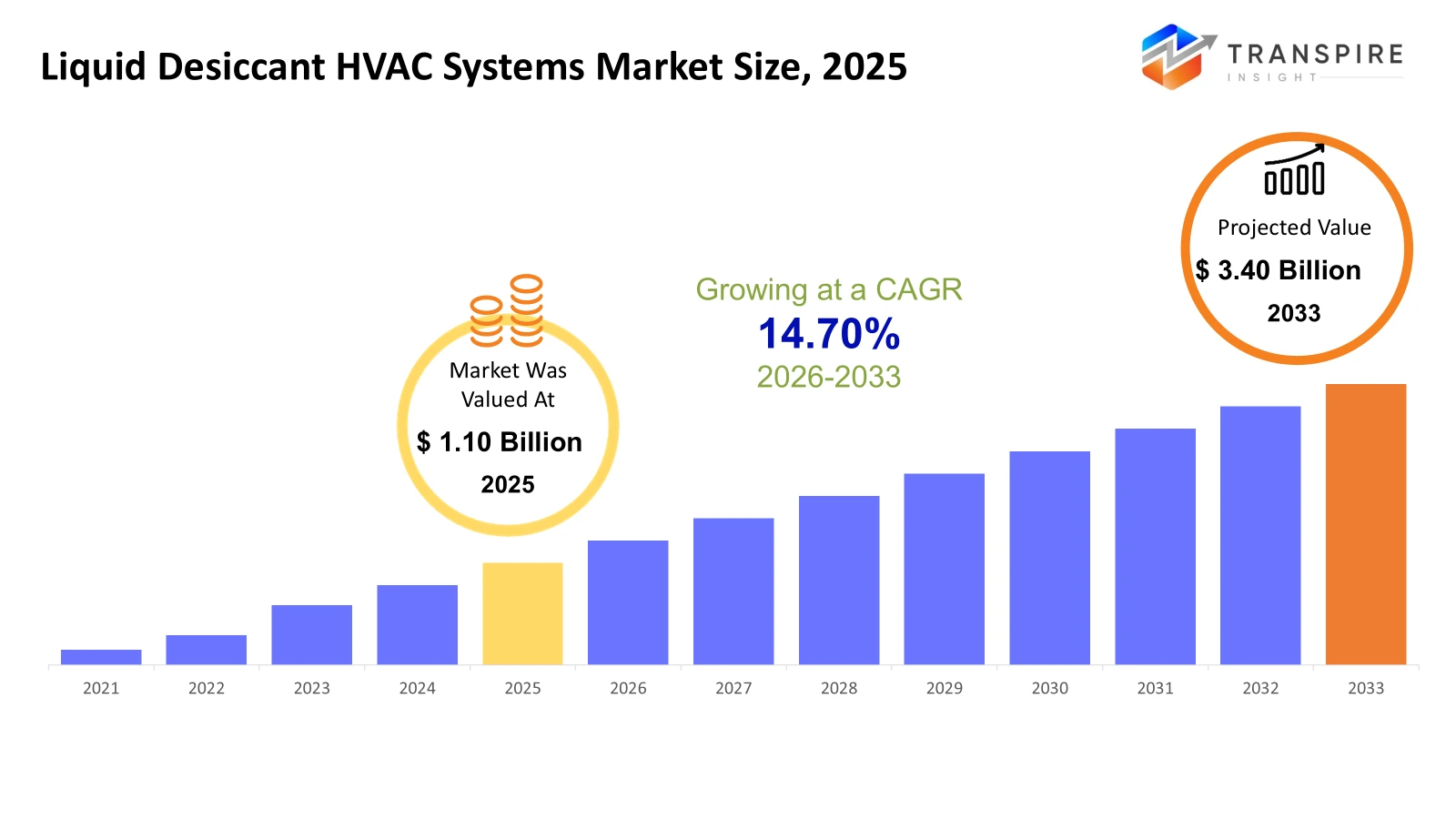
The global Liquid Desiccant HVAC Systems market size was valued at USD 1.10 billion in 2025 and is projected to reach USD 3.40 billion by 2033, growing at a CAGR of 14.70% from 2026 to 2033. The growing need for energy-efficient HVAC solutions in commercial and industrial infrastructure is driving the adoption of liquid desiccant systems, especially in high-humidity areas where the management of latent loads has a substantial effect on overall energy use.
Market Size & Forecast
- 2025 Market Size: USD 1.10 Billion
- 2033 Projected Market Size: USD 3.40 Billion
- CAGR (2026-2033): 14.70%
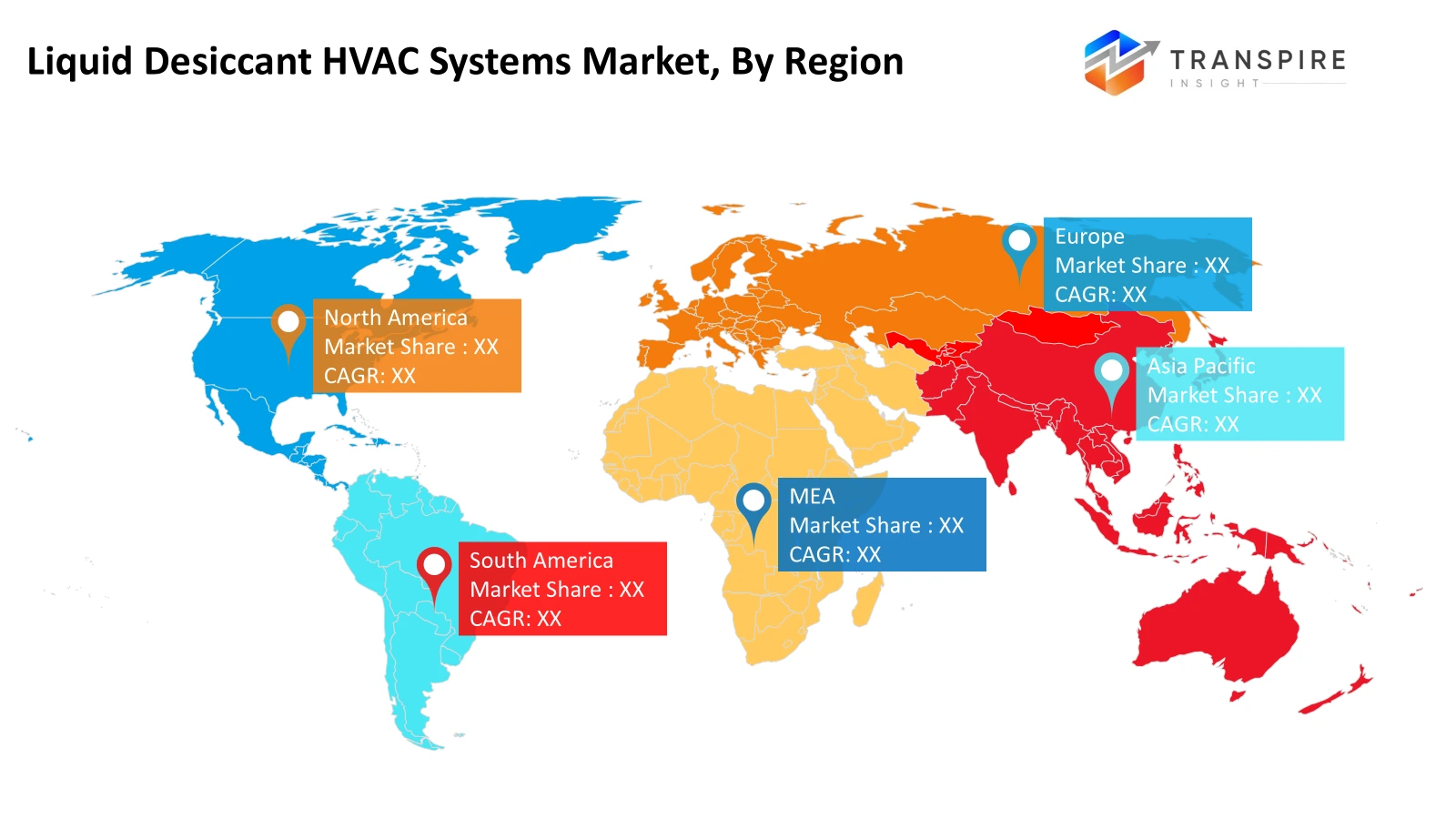
- North America: Largest Market in 2026
- Asia Pacific: Fastest Growing Market
To learn more about this report,  Download Free Sample Report
Key Market Trends Analysis
- North America is experiencing an increasing adoption rate of liquid desiccant HVAC systems due to retrofitting, green buildings, and the need for energy-efficient solutions, with commercial infrastructure upgrades and healthcare facility retrofits fueling consistent demand growth.
- The United States is at the forefront of technology adoption and development, thanks to high ventilation rates, sustainability requirements, and the development of data centers, solidifying its position as a key revenue generator in the global liquid desiccant HVAC systems market.
- The Asia Pacific market is exhibiting the highest growth rate due to urbanization, industrialization, and growing concerns about indoor air quality, with China, Japan, and India fueling large-scale commercial and industrial developments in varying climates.
- Packed towers continue to be the most prominent product type trend as facility owners and operators are most interested in achieving high mass transfer efficiency, scalability, and compatibility with energy recovery systems to handle large latent loads in commercial and industrial settings.
- Commercial buildings continue to be the most dominant application trend due to increasing ventilation needs, occupancy rates, and sustainability goals, which promote the use of systems that can separate latent and sensible cooling loads for better system performance.
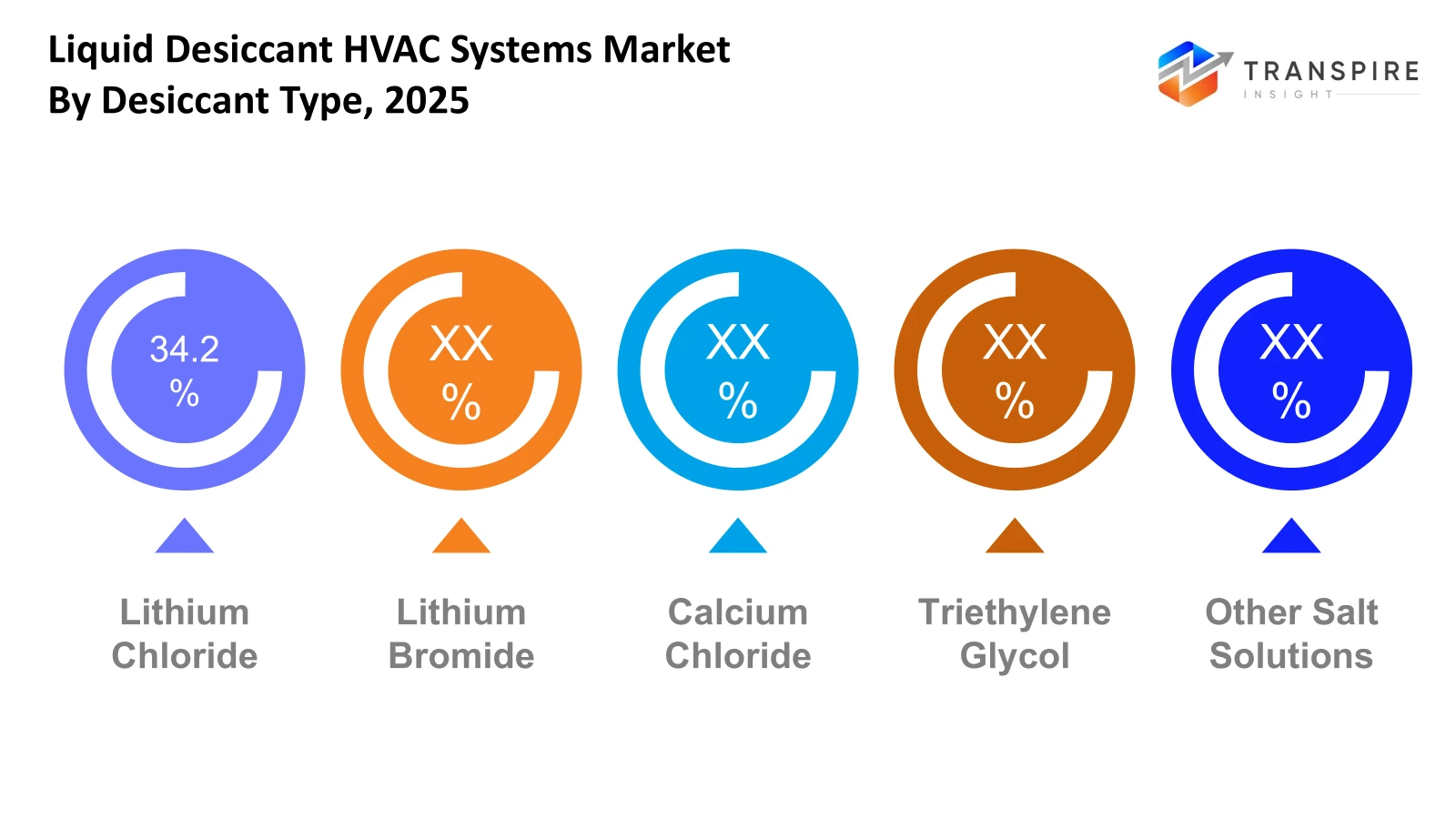
- Lithium chloride continues to be the most prominent desiccant type due to its high hygroscopicity, thermal stability, and ability to handle high-efficiency systems that require consistent humidity control in changing ambient conditions.
- Hospitals and laboratories continue to be the most significant end-use trend as infection control requirements, regulatory compliance, and continuous operation needs promote the use of advanced humidity control systems.
So, The Liquid Desiccant HVAC Systems Market includes innovative air conditioning solutions that use liquid hygroscopic agents to dehydrate air streams prior to cooling. In contrast to traditional air conditioning systems, which are heavily dependent on vapor compression to manage the latent load, these systems decouple the management of humidity and sensible cooling, leading to greater energy efficiency. These systems are being increasingly adopted in commercial, industrial, and institutional facilities that require a controlled indoor climate. Market growth is driven by the increasing need for indoor air quality, particularly in the healthcare, pharmaceutical, data center, and food processing industries. The technology is compatible with improved ventilation without imposing significant energy costs, making it ideal for applications with high outdoor air requirements. Hybrid systems that combine desiccant and conventional air conditioning systems further improve the performance parameters of the technology, such as the coefficient of performance and energy recovery rate. Technological innovation, modularization, and integration with renewable heat sources are disrupting the competitive landscape. With the increasing focus on sustainability, the industry is adopting solutions that lower carbon emissions and improve cost efficiency. Emerging markets are adding incremental demand to the industry through infrastructure development and climate-related HVAC investments.
Liquid Desiccant HVAC Systems Market Segmentation
By Product Type
- Packed Tower Systems
Packed tower systems use structured or random packing media to increase air-desiccant contact surface area, thus improving moisture removal efficiency. These systems are commonly used in large commercial and industrial applications because of their scalability and steady-state performance. The system design is suitable for continuous operation and heat recovery unit integration. Demand is driven by applications requiring humidity control.
- Spray Tower Systems
Spray tower systems use liquid desiccant spray in small droplets to increase mass transfer rates between air and solution. They have simpler design and lower capital costs than packed towers. However, carryover and maintenance issues affect adoption. These systems are suitable for medium-capacity and low-cost applications.
- Internally Cooled Dehumidifiers
Internally cooled dehumidifiers use heat exchange surfaces inside the dehumidification chamber to improve thermal management. This improves moisture absorption efficiency and lowers regeneration energy costs. They are increasingly used in high-performance buildings and process industries. Their compact design facilitates integration into modern HVAC systems.
- Hybrid Liquid Desiccant-Vapor Compression Systems
Hybrid systems are a combination of liquid desiccant dehumidification and traditional vapor compression cooling systems. This helps in the optimal management of latent and sensible loads, thus increasing the overall system COP. The use of such systems is increasing in energy-efficient commercial buildings and green buildings. Such systems meet the requirements of indoor air quality.
- Modular/Integrated Units
Modular units are pre-manufactured systems that can be easily installed in a plug-and-play manner. These systems simplify the installation process and provide standardized performance characteristics. These systems are increasingly being used in retrofitted applications.
By Desiccant Type
- Lithium Chloride
Lithium chloride is preferred for its high hygroscopicity and moisture absorption rate. It has stable performance in humid environments. But it is not preferred on cost-effectiveness for large-scale applications. It is used in high-efficiency commercial applications.
- Lithium Bromide
Lithium bromide is preferred for its dehumidification capacity and is often linked with absorption cooling systems. It has good thermal stability and is suitable for hybrid systems. Corrosion control is a technical aspect. It has moderate and increasing adoption in industrial and institutional applications.
- Calcium Chloride
Calcium chloride is cost-effective and widely available. It is preferred for applications that are cost-sensitive. It has slightly lower efficiency in absorption but is acceptable. It is used in industrial and medium-scale commercial applications. Market growth is based on cost-effectiveness.
- Triethylene Glycol
Triethylene glycol is mainly used in applications that require both moisture control and air sterilization. It has chemical stability and less risk of crystallization. However, its adoption is selective. Its market share is moderate but steady.
- Other Salt Solutions
Other salt solutions are being developed to enhance thermal efficiency and minimize corrosion. Research and development in composite and low-corrosion solutions drive innovation. These emerging solutions are gaining popularity in pilot demonstrations. Market penetration is still emerging.
To learn more about this report, Download Free Sample Report
By Application
- Commercial Buildings
Commercial buildings are a substantial market due to the high density of occupancy and ventilation rates. Liquid desiccant systems improve humidity management and reduce energy use in malls, offices, and airports. Mandates for energy-efficient infrastructure are an added incentive. Building management system integration improves operational efficiency.
- Industrial Facilities
Industrial facilities require humidity control for process consistency and equipment preservation. Liquid desiccant HVAC systems are employed in electronics, chemical, and textile manufacturing facilities. The systems' capacity to manage high latent loads makes them suitable for large-scale industrial applications. Compatibility with energy recovery systems further improves their marketability.
- Healthcare Facilities
Healthcare facilities require strict humidity and air quality management to prevent the growth of microorganisms. Liquid desiccant systems support infection control measures and provide a stable indoor environment. Hospitals and specialty care facilities benefit from improved indoor air quality and reduced cross-contamination risks. Conformity with healthcare industry standards is a major adoption driver.
- Educational Institutions
Educational institutions demand an economical climate control solution for classrooms, laboratories, and auditoriums. Liquid desiccant systems help create a healthier indoor environment and enhance user comfort. Cost considerations lean towards energy-efficient and easy-to-maintain designs. Demand is rising in regions with a sensitive climate.
- Data Centers
Data centers demand tight humidity control to avoid condensation and electrostatic discharge. Liquid desiccant systems allow for humidity control without overcooling. Their energy efficiency meets the sustainability requirements of the IT sector. The trend is associated with the growth of cloud and hyperscale data centers.
- Residential Buildings
The residential market is currently a niche market but is gaining momentum in humid climates. The system offers better comfort and lower mold growth compared to traditional HVAC systems. Increasing concern for indoor air quality fuels the penetration of the market. The system's integration with smart home technology increases its attractiveness to consumers.
By End User
- Hospitals & Laboratories
Hospitals and laboratories need humidity control to prevent infections. Liquid desiccant systems offer a stable indoor climate and energy-efficient ventilation. Meeting regulatory requirements drives the market. The adoption rate is high in large hospital chains.
- Pharmaceuticals
Pharmaceutical production needs humidity control to preserve product stability. Liquid desiccant HVAC systems ensure process consistency and regulatory requirements. The increasing number of biopharmaceuticals drives the market. Energy efficiency and contamination protection continue to be major market drivers.
- Food Processing
Food processing plants need humidity control to prevent spoilage. These systems improve shelf life and maintain cleanliness. Demand is high in cold storage and packaging facilities. Efficiency benefits continue to drive adoption.
- Hospitality
Hotels and resorts focus on the comfort of their occupants and the prevention of mold growth in humid environments. Liquid desiccant systems enhance comfort levels and lower operating expenses. Green building ratings also encourage the use of liquid desiccant systems. The market is more established in high-end and large-scale hotels and resorts.
- Manufacturing
Humidity stability is essential in manufacturing plants to safeguard equipment and materials. Liquid desiccant systems effectively control high latent loads. The market is substantial in precision manufacturing and the electronics industry. Connectivity with industrial HVAC systems improves system efficiency.
- IT & Telecom
IT and telecom infrastructure demand strict environmental control to safeguard sensitive equipment. Liquid desiccant systems provide reliable humidity control without cooling. Growth in digital infrastructure supports a steady market. Energy efficiency remains a key influencing factor in purchasing decisions.
Regional Insights
North America, comprising the United States, Canada, and Mexico, is a mature and innovation-driven market with retrofit sales, green building ratings, and healthcare infrastructure upgrades. The United States is the main Tier 1 market, while Canada and Mexico have moderate but growing adoption rates, driven by commercial real estate development. Europe, including Germany, the United Kingdom, France, Spain, Italy, and the Rest of Europe, focuses on low-carbon HVAC solutions that meet climate change regulations. The United Kingdom and Germany are Tier 1 markets because of their industrial bases and ability to enforce policies, while Southern and Eastern Europe are Tier 2 regions with growth potential. The Asia/Pacific region, including Japan, China, Australia & New Zealand, South Korea, India, and the Rest of Asia/Pacific, has the quickest growth rate. China and Japan are Tier 1 markets because of their industrial bases and technology adoption, while India and Southeast Asia are high-growth Tier 2 markets because of infrastructure development.
South America, primarily driven by Brazil and Argentina, showcases the early adoption trend associated with commercial construction and food processing industries. Brazil is identified as the Tier 1 market in this region, while Argentina and the rest of the countries generate incremental Tier 2 demand. Middle East & Africa, comprising Saudi Arabia, United Arab Emirates, South Africa, and the Rest of the Middle East & Africa, exhibits robust climatic factors. Saudi Arabia and UAE are identified as Tier 1 markets because of massive infrastructure development, while South Africa and the rest of the countries form the developing Tier 2 markets.
To learn more about this report, Download Free Sample Report
Recent Development News
- January 2026, Mojave Energy Systems has announced that it will feature its ArctiDry line of liquid desiccant HVAC products at the AHR Expo 2026 in Las Vegas. The press release notes that the company has accumulated more than 150,000 cumulative hours of operating time with 99.5% uptime and has developed additional product enhancements based on market demand.
- In January 2025, Mojave Energy Systems has confirmed its geographical expansion into the Latin American market by hiring a regional sales manager in Miami to facilitate business expansion in Mexico, Central America, and the Caribbean. The press release highlights the energy-saving, easy-to-install, and commercial building application features of the ArctiDry liquid desiccant system.
|
Report Metrics |
Details |
|
Market size value in 2025 |
USD 1.10 Billion |
|
Market size value in 2026 |
USD 1.30 Billion |
|
Revenue forecast in 2033 |
USD 3.40 Billion |
|
Growth rate |
CAGR of 14.70% from 2026 to 2033 |
|
Base year |
2025 |
|
Historical data |
2021 – 2024 |
|
Forecast period |
2026 – 2033 |
|
Report coverage |
Revenue forecast, competitive landscape, growth factors, and trends |
|
Regional scope |
North America; Europe; Asia Pacific; Latin America; Middle East & Africa |
|
Country scope |
United States; Canada; Mexico; United Kingdom; Germany; France; Italy; Spain; Denmark; Sweden; Norway; China; Japan; India; Australia; South Korea; Thailand; Brazil; Argentina; South Africa; Saudi Arabia; United Arab Emirates |
|
Key company profiled |
Mojave Energy Systems, Alfa Laval, Copeland LP, Blue Frontier, 5AC Technologies, Inc. (Emerson), AirGreen, Inc., Ventilex, AOLAN, Thermair, Munters AB, Advantix Systems, Kathabar Dehumidification Systems, Bry-Air Inc., DuCool Ltd., and Desiccant Rotors International Pvt. Ltd. |
|
Customization scope |
Free report customization (country, regional & segment scope). Avail customized purchase options to meet your exact research needs. |
|
Report Segmentation |
By Product Type (Packed Tower Systems, Spray Tower Systems, Internally Cooled Dehumidifiers, Hybrid Liquid Desiccant–Vapor Compression Systems, Modular / Integrated Units), By Desiccant Type (Lithium Chloride, Lithium Bromide, Calcium Chloride, Triethylene Glycol, Other Salt Solutions), By Application (Commercial Buildings, Industrial Facilities, Healthcare Facilities, Educational Institutions, Data Centers, Residential Buildings) and By End User (Hospitals & Laboratories, Pharmaceuticals, Food Processing, Hospitality, Manufacturing, IT & Telecom) |
Key Liquid Desiccant HVAC Systems Company Insights
Munters AB has emerged as a prominent player in the liquid desiccant HVAC market with its broad portfolio of energy-efficient air treatment and moisture management solutions. The company’s solutions are designed for demanding commercial, industrial, and institutional applications where accurate humidity management has a direct effect on system performance, indoor air quality, and energy efficiency. Munters applies its deep research and development knowledge to combine innovative desiccant materials, modular solutions, and intelligent control solutions that maximize performance and minimize life-cycle costs. Munters’ global footprint and service capabilities help the company address varied regulatory and evolving sustainability needs in developed and emerging regions.
Key Liquid Desiccant HVAC Systems Companies:
- Mojave Energy Systems
- Alfa Laval
- Copeland LP
- Blue Frontier
- 5AC Technologies, Inc. (Emerson)
- AirGreen, Inc.
- Ventilex
- AOLAN
- Thermair
- Munters AB
- Advantix Systems
- Kathabar Dehumidification Systems
- Bry-Air Inc.
- DuCool Ltd.
- Desiccant Rotors International Pvt. Ltd.
Global Liquid Desiccant HVAC Systems Market Report Segmentation
By Product Type
- Packed Tower Systems
- Spray Tower Systems
- Internally Cooled Dehumidifiers
- Hybrid Liquid Desiccant–Vapor Compression Systems
- Modular / Integrated Units
By Desiccant Type
- Lithium Chloride
- Lithium Bromide
- Calcium Chloride
- Triethylene Glycol
- Other Salt Solutions
By Application
- Commercial Buildings
- Industrial Facilities
- Healthcare Facilities
- Educational Institutions
- Data Centers
- Residential Buildings
By End User
- Hospitals & Laboratories
- Pharmaceuticals
- Food Processing
- Hospitality
- Manufacturing
- IT & Telecom
Regional Outlook
- North America
- United States
- Canada
- Mexico
- Europe
- Germany
- United Kingdom
- France
- Spain
- Italy
- Rest of Europe
- Asia Pacific
- Japan
- China
- Australia & New Zealand
- South Korea
- India
- Rest of Asia Pacific
- South America
- Brazil
- Argentina
- Rest of South America
- Middle East & Africa
- Saudi Arabia
- United Arab Emirates
- South Africa
- Rest of the Middle East & Africa
Frequently Asked Questions
Find quick answers to common questions.
The approximate Liquid Desiccant HVAC Systems Market size for the market will be USD 3.40 billion in 2033.
Key segments for the Liquid Desiccant HVAC Systems Market By Product Type (Packed Tower Systems, Spray Tower Systems, Internally Cooled Dehumidifiers, Hybrid Liquid Desiccant–Vapor Compression Systems, Modular / Integrated Units), By Desiccant Type (Lithium Chloride, Lithium Bromide, Calcium Chloride, Triethylene Glycol, Other Salt Solutions), By Application (Commercial Buildings, Industrial Facilities, Healthcare Facilities, Educational Institutions, Data Centers, Residential Buildings) and By End User (Hospitals & Laboratories, Pharmaceuticals, Food Processing, Hospitality, Manufacturing, IT & Telecom).
Major Liquid Desiccant HVAC Systems Market players are Mojave Energy Systems, Alfa Laval, Munters AB, 5AC Technologies, Inc. (Emerson), Copeland LP.
The North America region is leading the Liquid Desiccant HVAC Systems Market.
The CAGR of the Liquid Desiccant HVAC Systems Market is 14.70%.
- Mojave Energy Systems
- Alfa Laval
- Copeland LP
- Blue Frontier
- 5AC Technologies, Inc. (Emerson)
- AirGreen, Inc.
- Ventilex
- AOLAN
- Thermair
- Munters AB
- Advantix Systems
- Kathabar Dehumidification Systems
- Bry-Air Inc.
- DuCool Ltd.
- Desiccant Rotors International Pvt. Ltd.
Recently Published Reports
-
Apr 2026
Handling and Lifting Equipment Market
Handling and Lifting Equipment Market Size, Share & Analysis Report By Product (Cranes and Hoists, Forklifts, Conveyor Systems, Aerial Work Platforms, Others), By Application (E-Commerce, Automotive and Railway, Food and Beverages, Aviation, Others), and Geography (North America, Europe, Asia-Pacific, Middle East and Africa, South and Central America), 2021 - 2031
-
Apr 2026
HVAC Equipment Market
HVAC Equipment Market Size, Share & Analysis Report By Heating Equipment Type (Boilers and Furnaces, Heat Pumps, and Unitary Heaters), By Ventilation Equipment (Air Handling Units, Humidifiers and Dehumidifiers, Air Filters, and Fan Coiling Units), By Air Conditioning Equipment (Unitary Air Conditioners, Room Air Conditioners, Packaged Terminal Air Conditioners, and Chillers), By End User (Commercial, Residential, Industrial, and others), and Geography (North America, Europe, Asia-Pacific, Middle East and Africa, South and Central America), 2021 – 2031
-
Apr 2026
Refrigeration Valves Market
Refrigeration Valves Market Size, Share & Analysis Report By Type (Solenoid Valves, Expansion Valves, Check Valves, Service Valves, Others), By Application (Commercial Refrigeration, Industrial Refrigeration, Transport Refrigeration, Residential Refrigeration, Air Conditioning Systems), By End User (Food and Beverage Industry, Pharmaceutical Industry, HVAC Industry, Chemical Industry, Others), and Geography (North America, Europe, Asia-Pacific, Middle East and Africa, South and Central America), 2021 – 2031
-
Apr 2026
E-Commerce Packaging Materials Market
E-Commerce Packaging Materials Market By Material Type (Corrugated Boxes, Paper & Paperboard, Foam & Cushioning Materials, Plastic Packaging, Flexible Packaging, Protective Packaging, Others), By Product(Primary Packaging, Secondary Packaging, Tertiary Packaging), By Packaging Function (Protective Packaging, Branding & Presentation Packaging, Transit & Logistic Packaging, Sustainable Packaging, Tamper Evidence Packaging), By End-User (Retail & Consumer Goods, Electronic Appliances, Food & Beverages, Healthcare & Pharmaceutical, Fashion & Apparel, Home & Furnishing, Others); By Industry Analysis, Size, Share, Growth, Trends, and Forecasts 2021-2033