
Light-Sport Aircraft Market Summary:
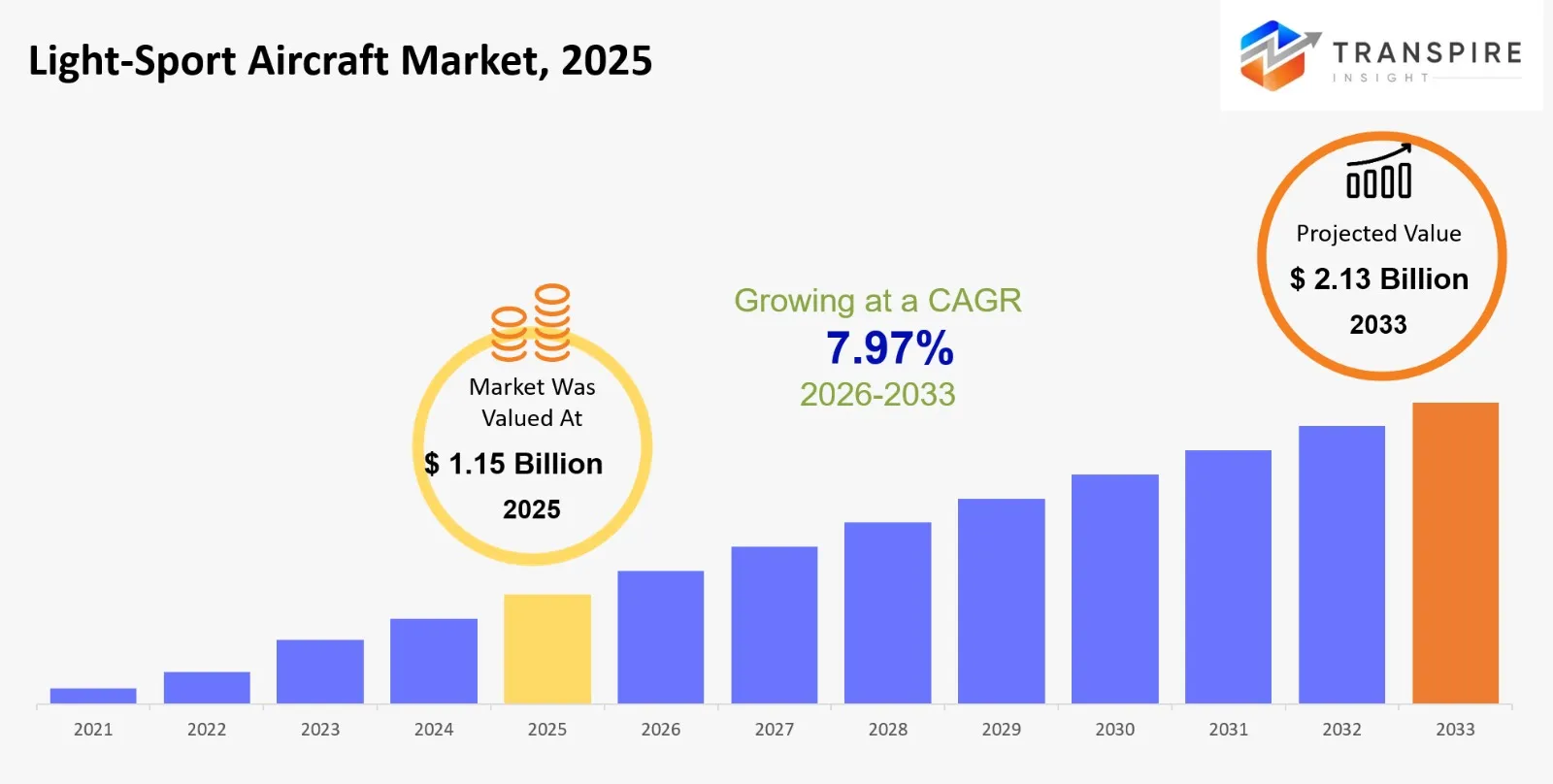
As per Transpire Insight Analysis, the Light-Sport Aircraft Market size is estimated at USD 1.15 billion in 2025 and is anticipated to reach USD 2.13 billion by 2033, growing at a CAGR of 7.97% from 2026 to 2033.
The light-sport aircraft market provides a range of needs, including flying, pilot training, personal aviation, aircraft rental and specialised aerial activities. Over the past years, there has been a significant trend toward changing conventional piston-powered planes. The current developments in aviation include electric propulsion systems, innovative lightweight composite materials, and cutting-edge cockpit equipment. One of the important trends in the industry is connected with the shift to low-emission planes and easier flight operations. The recent progress in the field of battery technologies, aircraft avionics and manufacturing has helped businesses create more energy-efficient models for personal use as well as flight schools. Changes in regulations have also affected the product development in the light-sport aircraft industry. The rising interest in the flight training business is the other important driving force for the industry. This increased demand has helped boost the industry.
Light-Sport Aircraft Market Size & Forecast:
- Market Size 2025: USD 1.15 Billion
- Expected Market Value (2033): USD 2.13 Billion
- Forecast CAGR (2026–2033): 7.97%
- Leading Region in 2025: North America
- Fastest Growing Region: Europe
- Key Company Profiles: Textron Aviation, Flight Design, Pipistrel, ICON Aircraft, Tecnam, CubCrafters, RANS Designs, Van's Aircraft, Aeroprakt, BRM Aero, Czech Sport Aircraft, Evektor, Jabiru Aircraft, Aeromot, Pipistrel
Key Market Insights
The market is moving towards being driven by recreational aviation and pilot training, with technology advancements slowly transforming the aircraft design and operational preferences.
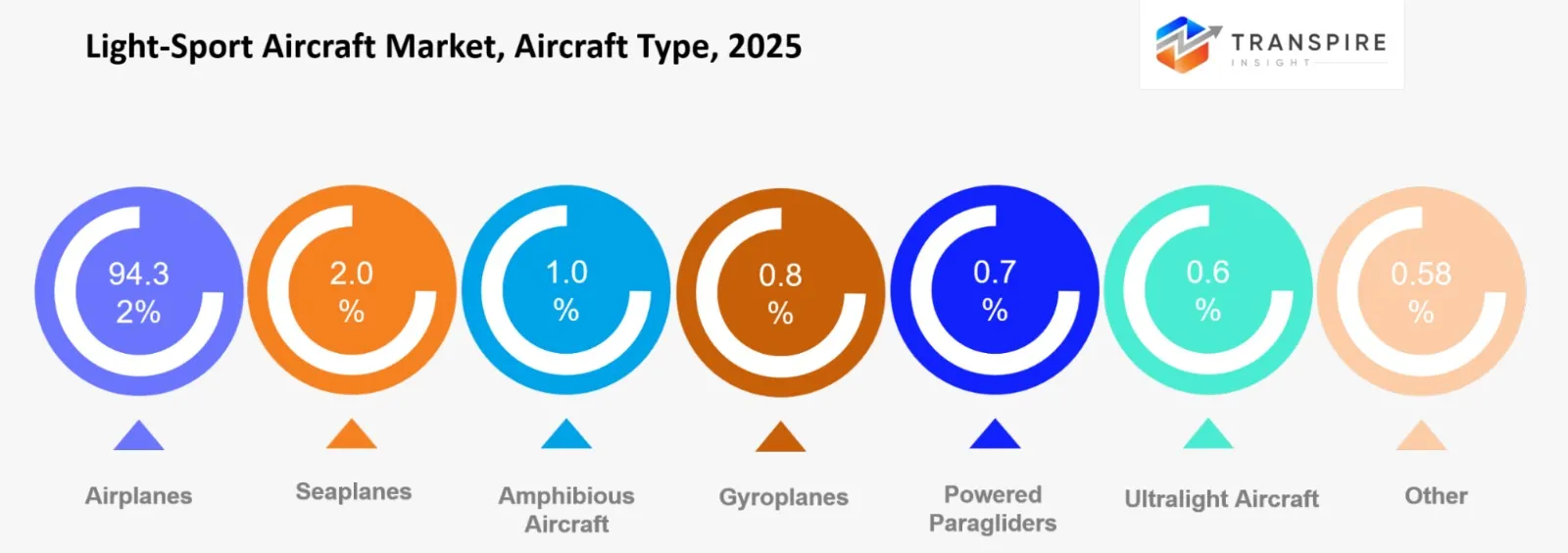
- Aeroplanes account for 94.32% of the market share owing to their well-established position in recreational flying, flight training and personal aviation.
- Seaplanes account for 2.0% of the market share due to their unique applications in specialised tourism, coastal transportation and recreational flying.
- Amphibians make up 1.0% of the market share since they attract buyers who want an aircraft that can operate on both land and water.
- Gyroplanes constitute 0.8% of the market due to their specialised applications and unique flight characteristics.
- Powered Paragliders constitute 0.7% of the market due to demand from adventure aviation enthusiasts who want simple aircraft to fly.
- Ultralights constitute 0.6% of the market due to demand from recreational pilots who want lightweight aircraft to fly.
What are the Key Drivers, Restraints, and Opportunities in the Light-Sport Aircraft Market?
Drivers
The increase in recreational flying clubs, pilot training programs, and private aviation activities is driving aircraft purchases. Flight schools need aircraft that are economical and can perform regular training activities without facing maintenance issues. Regulatory changes are one of the major drivers for growth, and the FAA’s Modernisation of Special Airworthiness Certification (MOSAIC) rule is one of them. This rule opens up the possibilities of using light-sport aircraft for various purposes.
Restraints
High cost of aircraft acquisition, high cost of insurance and maintenance continue to act as barriers for market accessibility. Small-scale manufacturers also have problems with certification processes, component procurement and specialised manufacturing requirements. Lack of charging infrastructure and batteries also hampers the commercial viability of electric aircraft.
Opportunities
Manufacturers have an opportunity to design aircraft using electric and hybrid power plants, which will help in reducing emissions and increasing energy efficiency. Investments in battery technology, lightweight composites and avionics will assist them in achieving this goal. They can also tap into new aviation markets in Asia Pacific through flight school partnerships, distribution channels and local training programs.
|
Driver |
Relative Impact on Growth (%) |
Geographic Relevance |
Impact Timeline |
Demand Strength |
Growth Mechanism |
Key Beneficiaries |
Major Constraint |
|
Regulatory modernization and expanded light-sport aircraft certification |
28% |
North America, Europe |
Medium-term |
High |
Expands aircraft eligibility and simplifies certification pathways |
Aircraft manufacturers, pilots, certification and maintenance providers |
Certification complexity and varying international aviation standards |
|
Rising demand for pilot training and flight schools |
24% |
North America, Europe, Asia Pacific |
Short-term |
High |
Increases demand for affordable aircraft used in pilot training |
Flight schools, aircraft manufacturers, pilot training institutions |
Instructor shortages and high aircraft operating expenses |
|
Growing recreational aviation and private aircraft ownership |
20% |
North America, Europe |
Medium-term |
High |
Encourages affordable personal flying and recreational aircraft purchases |
Private owners, aircraft manufacturers, aviation dealers |
High acquisition costs and limited disposable income |
|
Expanding applications in aerial surveillance and utility operations |
16% |
North America, Asia Pacific, Europe |
Medium-term |
High |
Creates additional demand for specialized low-cost aerial operations |
Aircraft operators, manufacturers, aerial service providers |
Operational restrictions and limited commercial operating approvals |
|
Technological advancements in lightweight materials, avionics and electric propulsion |
12% |
Europe, North America, Asia Pacific |
Long-term |
Medium |
Improves aircraft efficiency, safety and environmental performance |
Technology developers, manufacturers, component suppliers, aircraft operators |
Battery limitations and expensive technology development |
|
Total |
100% |
— |
— |
— |
— |
— |
— |
What Has the Impact of Artificial Intelligence Been on the Light-Sport Aircraft Market?
The use of artificial intelligence technologies is gradually penetrating into the light-sport aircraft industry with regard to flight monitoring, maintenance planning, navigation support, and aircraft performance evaluation. There is an attempt to design intelligent systems capable of analysing flight data and making recommendations for pilots. AI-based monitoring would be able to evaluate engine performance, temperature changes, vibration levels and other operational parameters in order to spot abnormalities in the operation of an aircraft before a serious technical issue arises. There is a possibility to use AI technologies for predictive maintenance since intelligent software would be able to analyse the history of previous maintenance operations and the sensor data in order to determine when the parts of the aircraft would need to be replaced. The implementation of AI in light-sport aircraft is hindered by the necessity of certification, high costs of system integration and the requirement for reliable aviation data. The use of AI should not lead to the automation of pilots' responsibilities and safety measures. With the advancement of on-board computing and sensing capabilities, artificial intelligence could become a useful supplement.
Instance
In March 2026, Navi AI launched an AI-based aviation training system which evaluates flight data and performance of pilots to prepare automated post-flight reports. This innovation assists flight instructors to detect errors, optimise the training process, and increase flight safety, thus promoting the use of AI solutions in the light-sport aircraft industry. https://www.prnewswire.com/news-releases/navi-ai-emerges-from-stealth-to-accelerate-pilot-training-with-ai-302724509.html
Key Market Trends:
The market moves towards the production of easier, safer, and more efficient aircraft. This includes efforts geared towards digitising, lightweight and even alternate propulsions for changes in customer requirements.
- Traditional instrument panels of aircraft manufacturers have progressively shifted towards glass cockpits providing pilots with flight information and navigation features.
- Metal components of an aircraft have progressively been replaced with more advanced composite materials, allowing for more efficient, durable and lighter aircraft.
- Development of electric propulsion has been gaining momentum as firms explore battery propulsion and alternative solutions to cut operational emissions.
- Flight training institutions have been increasingly exploring light sport aircraft as a replacement for training aircraft which are expensive and unavailable for training purposes.
- Amphibian aircraft development has continued to be an interesting trend, with specialised manufacturers developing aircraft for recreational and water-based flying.
Light-Sport Aircraft Market Segmentation
By Aircraft Type
Aeroplanes lead the market with a 94.32% share because of their popularity in recreational flying, pilot training, and personal flying. The existing production infrastructure, well-known operational features, and maintenance services explain their high popularity in the market. The seaplanes make up 2.0%, meeting the needs of people who are interested in recreational flying on water. The amphibious aircraft have 1.0% share, providing flexibility in operations due to the opportunity to land both on the water surface and on the land one. The gyroplanes comprise 0.8%, which is explained by their specialized application in recreational flying and aviation, while the powered paragliders make up 0.7% of the market. The ultralights make up 0.6%, satisfying the needs of customers interested in compact aircraft. Other types of aircraft represent 0.58%. Future innovations in aircraft materials, security, and design will stimulate diversification of the products.
By Propulsion
Internal Combustion is still popular due to the reliable engine technology and availability of fuel. Electric Propulsion has gained popularity and is expected to record the highest growth rate with 14.43% CAGR. Hybrid-Electric is also an emerging form of propulsion system as manufacturers are experimenting for power source alternatives. Turboprop, Piston, Other and Experimental forms of propulsion are designed for specialised applications of aircraft. Advanced battery technology and development in charging stations can impact future propulsion types.
By Application
Flight Training and Sports & Recreation have been identified as major segments driving the market growth, driven by aviation schools, flying clubs and individual aircraft owners. Aircraft Rental has emerged as an application segment that will make it possible to use aircraft without owning one. Personal Transport and Tourism can be considered another application segment which includes private transportation and sightseeing tours. Aerial Work and other specialised applications can add value to the market as well.
By Configuration
The popularity of Single-engine aircraft lies in their ease of operation and suitability for recreational flying and training. On the other hand, twin-engine aircraft cater to certain specialised aviation needs. High-wing and Low-wing aircraft have their own unique designs depending upon the type of customers attracted by them based on visibility and handling. Conventional, amphibious and special-purpose configurations cater to other aviation requirements of customers.
By Ownership
Individuals are an essential category of customers that purchase aircraft for certain personal needs of aviation. The flight schools and rental firms also contribute towards demand through their training and access to aircraft services. The aero clubs promote joint-use of the aircraft for recreational purposes whereas government and commercial operators buy aircraft based on their needs. Leasing and shared ownership might help further increase aircraft accessibility and adoption.
By Technology
Conventional avionics continue to play their role for current aircraft operations, whereas glass cockpit & digital avionics are becoming popular with improvements in navigation, monitoring and flight information. Electric propulsion encourages companies to design alternative power systems for aircraft. Advanced composites assist in reducing weight and improving structural characteristics of the aircraft, whereas connected aircraft are for information exchange and monitoring. Improved technological efficiencies will definitely increase the efficiency and safety of aircraft.
What are the Key Use Cases Driving the Light-Sport Aircraft Market?
Flight training is one of the use cases that drive the light-sport aircraft market. The aeroplanes are used for practical education as well as providing pilot experience and opportunities for leisure. As such, their known design and experience of use make them good for regular use in flight training exercises. Another significant use case is that of sports and recreation, whereby the aeroplanes may be used for leisure flights as well as in competitions. In addition, through aeroplane rentals and travel operators, the customers get the chance to use the aircraft without actually owning one. The emerging use cases in this regard include aerial work, personal mobility, and electric-powered recreative flying. Further innovations of avionics as well as other forms of aircraft technology may increase the range of applications.
|
Report Metrics |
Details |
|
Market size value in 2025 |
USD 1.15 Billion |
|
Market size value in 2026 |
USD 1.24 Billion |
|
Revenue forecast in 2033 |
USD 2.13 Billion |
|
Growth rate |
CAGR of 7.97% from 2026 to 2033 |
|
Base year |
2025 |
|
Historical data |
2021 - 2024 |
|
Forecast period |
2026 - 2033 |
|
Report coverage |
Revenue forecast, competitive landscape, growth factors, and trends |
|
Regional scope |
United States; Canada; Mexico; United Kingdom; Germany; France; Italy; Spain; Denmark; Sweden; Norway; China; Japan; India; Australia; South Korea; Thailand; Brazil; Argentina; South Africa; Saudi Arabia; United Arab Emirates |
|
Key company profiled |
Textron Aviation, Flight Design, Pipistrel, ICON Aircraft, Tecnam, CubCrafters, RANS Designs, Van's Aircraft, Aeroprakt, BRM Aero, Czech Sport Aircraft, Evektor, Jabiru Aircraft, Aeromot, Pipistrel |
|
Customization scope |
Free report customization (country, regional & segment scope). Avail customized purchase options to meet your exact research needs. |
|
Report Segmentation |
Aircraft Type (Airplanes, Seaplanes, Amphibious Aircraft, Gyroplanes, Powered Paragliders, Ultralight Aircraft, Other); Propulsion (Internal Combustion, Electric, Hybrid-Electric, Turboprop, Piston, Other, Experimental); Application (Flight Training, Sports & Recreation, Aircraft Rental, Personal Transport, Aerial Work, Tourism, Other); Configuration (Single-Engine, Twin-Engine, High-Wing, Low-Wing, Conventional, Amphibious, Special-Purpose); Ownership (Individual, Flight Schools, Rental Operators, Aero Clubs, Government, Commercial Operators, Other); Technology (Conventional Avionics, Glass Cockpit, Digital Avionics, Electric Propulsion, Advanced Composites, Connected Aircraft, Other) |
Which Regions are Driving the Light-Sport Aircraft Market Growth?
North America
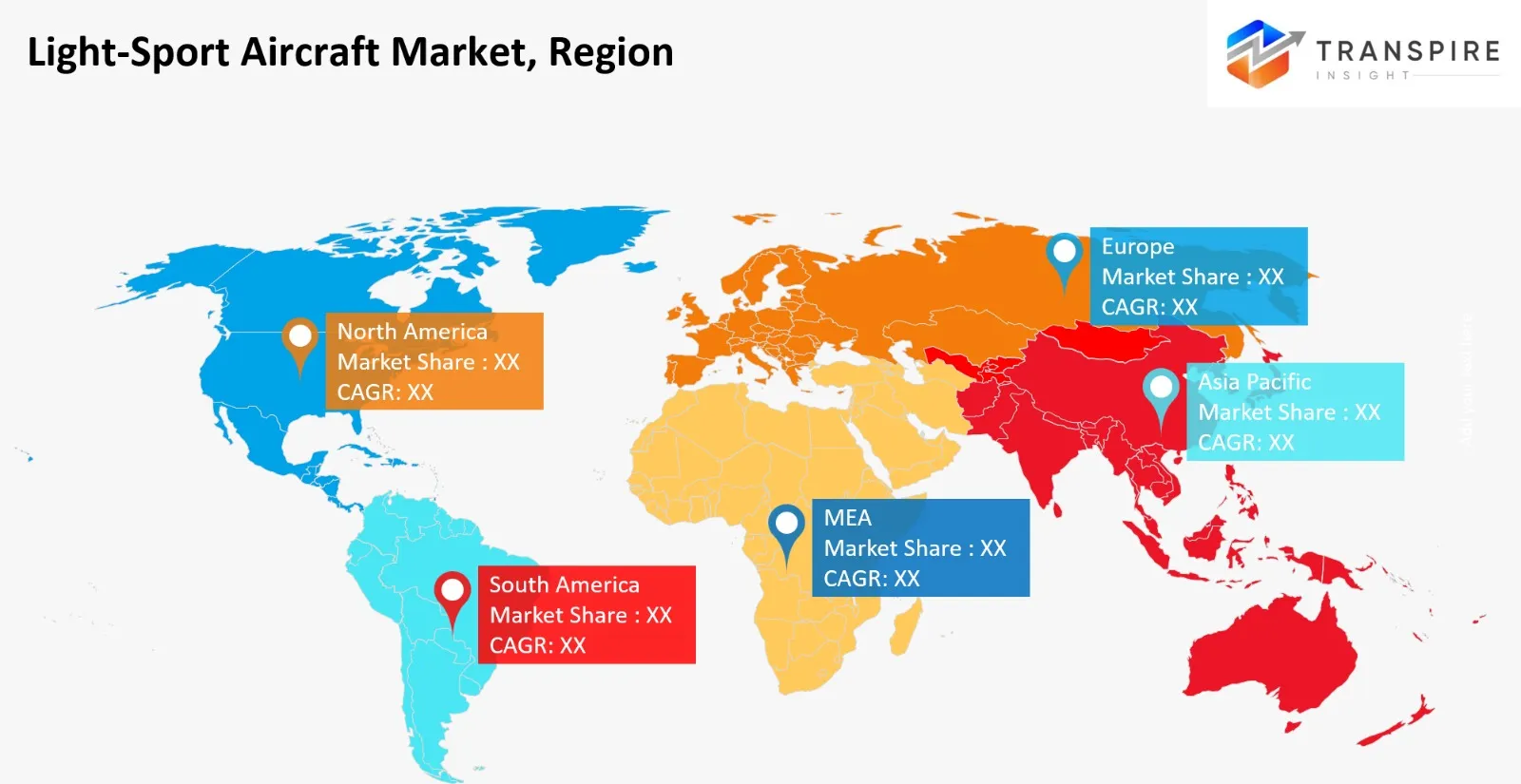
North America holds the leading position in the light sport aircraft market with a 40.03% share owing to a well-established general aviation industry and a healthy recreational flying culture in the region. The United States has a huge number of airports, training facilities as well as aircraft manufacturers and flying clubs. The MOSAIC framework developed by the FAA is providing another opportunity for manufacturers through the introduction of new aircraft design and applications in light sport regulations.
In July 2026, Cosmic Aerospace launched the COSMIC ONE, an electrically powered aircraft developed under the new FAA MOSAIC design philosophy. In addition, the company announced Centennial Flyers as the initial launch customer in the United States for its electric light aircraft. https://www.cosmicaerospace.com/news/cosmic-aerospace-unveils-cosmic-one-an-all-electric-aircraft-built-for-the-faa-s-new-mosaic
Europe
Europe constitutes a 31.0% share and also holds the position of the fastest-growing regional market in the coming years with a projected CAGR of 7.88%. The region enjoys the advantages of well-established aircraft manufacturing capacity, engineering companies, as well as a strong recreational flying culture. Countries like Germany, Italy, France and the Czech Republic have a strong presence in aircraft manufacturing and aviation technologies.
In April 2026, Czech aircraft operator OK AVIATION placed the first firm order for the INTEGRAL S aircraft from AURA AERO at AERO Friedrichshafen 2026. This demonstrates increased interest in modern light aircraft from European flight schools, flying clubs, and private owners. https://www.aura-aero.com/en/actualites/aero-friedrichshafen-2026-%3A-aura-aero-enregistre-la-premi%C3%A8re-commande-ferme-d%E2%80%99integral-s-par-l%E2%80%99op%C3%A9rateur-tch%C3%A8que-ok-aviation
Asia Pacific
Asia Pacific accounts for a 17.5% share of the market with the backing of growing aviation infrastructure as well as pilot training programs. N,ations such as China, India, Australia, and South Korea present scope in aviation education, recreational flying, and private flying. With an increase in flight training institutions as well as aircraft manufacturing companies operating across Asia-Pacific in association with one another, it is getting easier to access better-quality aircraft in the region.
In March 2026, SA60L Aurora light-sport aircraft built by Starair Aircraft Co., Ltd., based in China, was exported to Australia for pilot training and recreational flights. This shows the rising prominence of Asian light aircraft manufacturers in the international aviation industry. https://enghunan.gov.cn/hneng/News/Localnews/202603/t20260310_33930364.html
Who are the Key Players in the Light-Sport Aircraft Market and how do they compete?
Light-sport aircraft market competition involves established aircraft manufacturers and specialised companies competing based on aircraft performance, price, design and customer support. Such companies include Textron Aviation, Tecnam, Pipistrel, Flight Design and CubCrafters, among others. Each company caters to different customer needs, including flight training, recreational aviation and specialised aircraft operations. Tecnam offers unique aircraft designs due to its wide range of aircraft designs and specialisation in training and personal aviation. Its product development process involves modern avionics and collaborations with avionics technology suppliers. Pipistrel specialises in lightweight aircraft engineering and electric aviation innovations, which attract customers who prefer alternative aircraft propulsion systems. ICON Aircraft specialises in amphibious recreational aircraft using its A5 aircraft. Van's Aircraft has established itself in the kit-built and experimental aircraft segment, due to its established aircraft designs. These companies compete through product differentiation, dealer networks, engineering innovations and customer support instead of aircraft prices only.
Light-Sport Aircraft Market companies
- Textron Aviation
- Flight Design
- Pipistrel
- ICON Aircraft
- Tecnam
- CubCrafters
- RANS Designs
- Van's Aircraft
- Aeroprakt
- BRM Aero
- Czech Sport Aircraft
- Evektor
- Jabiru Aircraft
- Aeromot
|
Company |
Est. Revenue Share Range |
Key Offerings |
Strategic Positioning |
Geographic Strength |
Technology Focus |
|
Flight Design general aviation GmbH |
6–9% (Estimated) |
CTLS, F2, F2-M160, CT Super |
Established brand with diversified LSA portfolio |
Europe, North America, Asia Pacific |
Composite airframes, advanced avionics, flight safety systems |
|
Costruzioni Aeronautiche TECNAM S.p.A. |
6–9% (Estimated) |
P2008, P92, P2002 Sierra, P2006T |
Broad product portfolio targeting training and recreational aviation |
Europe, North America, Asia Pacific |
Aerodynamic efficiency, composite structures, digital cockpit systems |
|
CubCrafters, Inc. |
5–8% (Estimated) |
Carbon Cub UL, Sport Cub, Carbon Cub SS, Carbon Cub ULT |
Premium specialist in high-performance backcountry sport aircraft |
North America, Europe, Asia Pacific |
Lightweight structures, short-takeoff technology, turbine propulsion development |
|
ICON Aircraft, Inc. |
4–7% (Estimated) |
ICON A5, A5 LSA |
Premium recreational amphibious aircraft manufacturer |
North America, Asia Pacific, Europe |
Carbon-fiber composites, spin-resistant design, integrated parachute systems |
|
Pipistrel |
4–7% (Estimated) |
Alpha Trainer, Virus, Sinus, Velis Electro |
Innovation-led manufacturer emphasizing efficient and electric aviation |
Europe, North America, Asia Pacific |
Electric propulsion, lightweight composites, energy-efficient aerodynamics |
|
Van's Aircraft, Inc. |
3–6% (Estimated) |
RV-12iS, RV-12, RV-12iST |
Strong kit-building ecosystem with factory-built aircraft options |
North America, Europe, Asia Pacific |
Rotax-powered configurations, glass cockpits, modular aircraft construction |
|
Aeroprakt Ltd. |
2–4% (Estimated) |
A-22LS, A-22L2, A-32, A-32L |
Value-oriented manufacturer serving recreational and training segments |
Europe, North America, Asia Pacific |
High-wing configurations, lightweight structures, economical flight performance |
|
Evektor-Aerotechnik a.s. |
2–4% (Estimated) |
Harmony LSA, SportStar RTC, SportStar UL |
Certified aircraft specialist focused on training and personal aviation |
Europe, North America, Asia Pacific |
Advanced aerodynamics, composite components, integrated cockpit avionics |
|
BRM Aero s.r.o. |
2–4% (Estimated) |
Bristell LSA, Bristell Classic, Bristell RG, Bristell B23 |
Premium European manufacturer targeting private owners and flight schools |
Europe, North America, Asia Pacific |
Composite wing structures, retractable landing gear, glass cockpit integration |
|
Sling Aircraft (The Airplane Factory) |
2–4% (Estimated) |
Sling LSA, Sling 2, Sling High Wing, Sling TSi |
Performance-oriented manufacturer with kit and aircraft distribution |
Africa, North America, Europe |
Efficient airframes, Rotax engine integration, advanced Garmin avionics |
Recent Development News
In July 2025, TL Sport Aircraft revealed their strategic alliance with Turbotech in order to offer another option of propulsion system for their aircraft range. The joint venture aims to implement regenerative turbine technology in the light aviation industry as an alternative to traditional piston propulsion systems. https://tlsportaircraft.com/wp-content/uploads/2025/08/TL-Sport-Aircraft-and-Turbotech-Press-Release.pdf
In February 2026, Tecnam made a partnership with Blue Skies Aviation Solutions in order to create a new Approved Training Organisation in Sri Lanka. The training aircraft range will include three P-Mentor and one P2006T NG. https://tecnam.com/
What Strategic Insights Define the Future of the Light-Sport Aircraft Market?
The market of light sport aircraft is evolving towards a more technology-focused and application-oriented competitive environment. While conventional aircraft will continue to play a role in recreational flights and pilot training, it is expected that electric engines, modern avionics and composite materials will shape future product development. The main opportunity is the development of affordable aircraft for new aviation markets and cooperation with flight schools and rental firms. On the other hand, an underestimated challenge is the gap between fast technological progress and the need for certification by aviation authorities, which may cause delays in commercial release and additional costs for manufacturers. Technical issues related to batteries, supply problems with components and maintenance are also important. It is advisable for manufacturers to pay more attention to aircraft reliability, cost-effectiveness and good after-sales service instead of advanced technologies only.
Aircraft Type
- Airplanes
- Seaplanes
- Amphibious Aircraft
- Gyroplanes
- Powered Paragliders
- Ultralight Aircraft
- Other
Propulsion
- Internal Combustion
- Electric
- Hybrid-Electric
- Turboprop
- Piston
- Other
- Experimental
Application
- Flight Training
- Sports & Recreation
- Aircraft Rental
- Personal Transport
- Aerial Work
- Tourism
- Other
Configuration
- Single-Engine
- Twin-Engine
- High-Wing
- Low-Wing
- Conventional
- Amphibious
- Special-Purpose
Ownership
- Individual
- Flight Schools
- Rental Operators
- Aero Clubs
- Government
- Commercial Operators
- Other
Technology
- Conventional Avionics
- Glass Cockpit
- Digital Avionics
- Electric Propulsion
- Advanced Composites
- Connected Aircraft
- Other
By Regional Analysis
North America
- US
- Canada
- Mexico
Europe
- Germany
- UK
- France
- Italy
- Spain
- Russia
- Rest of Europe
Asia Pacific
- China
- Japan
- India
- South Korea
- Australia
- Rest of Asia Pacific
South America
- Brazil
- Argentina
- Rest of South America
Middle East & Africa
- UAE
- Saudi Arabia
- Qatar
- South Africa
- Rest of the Middle East & Africa
Frequently Asked Questions
Find quick answers to common questions.
The light-sport aircraft market size was valued at USD 1.15 billion in 2025 and is poised to reach USD 2.13 billion by 2033, expanding at a 7.97% CAGR.
Key segments for the light-sport aircraft market are Aircraft Type (Airplanes, Seaplanes, Amphibious Aircraft, Gyroplanes, Powered Paragliders, Ultralight Aircraft, Other); Propulsion (Internal Combustion, Electric, Hybrid-Electric, Turboprop, Piston, Other, Experimental); Application (Flight Training, Sports & Recreation, Aircraft Rental, Personal Transport, Aerial Work, Tourism, Other); Configuration (Single-Engine, Twin-Engine, High-Wing, Low-Wing, Conventional, Amphibious, Special-Purpose); Ownership (Individual, Flight Schools, Rental Operators, Aero Clubs, Government, Commercial Operators, Other); Technology (Conventional Avionics, Glass Cockpit, Digital Avionics, Electric Propulsion, Advanced Composites, Connected Aircraft, Other)
Growth is primarily driven by increasing demand for recreational aviation, rising interest in affordable personal aircraft, expansion of pilot training programs, growing popularity of aerial tourism, technological advancements in aircraft design, and the development of fuel-efficient electric and hybrid propulsion systems.
The market is led by major manufacturers including Textron Aviation, Flight Design, Pipistrel, ICON Aircraft, Tecnam, CubCrafters, RANS Designs, Van's Aircraft, Aeroprakt, BRM Aero, Czech Sport Aircraft, Evektor, Jabiru Aircraft, Aeromot, Pipistrel
North America holds a dominant position in the light-sport aircraft market and holds a market share of 40.03%. Factors responsible for holding the leadership position in the market include demand for recreational aviation, the general aviation market, the presence of major aircraft manufacturers, aviation regulations, advanced flight training, and growing private/sport flights.
Commercial prospects in the light-sport aircraft industry include the manufacture of electric and hybrid planes, high demand for cost-effective recreational flights, establishment of more pilot training centres, aircraft tourism, and increased use of avionics and light materials. Other commercial prospects in the emerging markets include maintenance, repair, and upgrading of aircraft.
- Textron Aviation
- Flight Design
- Pipistrel
- ICON Aircraft
- Tecnam
- CubCrafters
- RANS Designs
- Van's Aircraft
- Aeroprakt
- BRM Aero
- Czech Sport Aircraft
- Evektor
- Jabiru Aircraft
- Aeromot
About the Authors

Tejashri Dhatrak
I am Tejashri Dhatrak, a Senior Research Analyst at Transpire Insight, specializing in the Aerospace and Defence sector. My work focuses on analyzing industry trends, defence technologies, market developments, and emerging innovations that shape the global aerospace and security landscape. At Transpire Insight, I research complex topics, evaluate credible sources, and transform technical insights into accurate, well-structured, and easy-to-understand content for industry professionals and decision-makers. My goal is to provide reliable, research-backed information that helps readers stay informed about defence capabilities, aerospace advancements, strategic developments, and the evolving dynamics of the global defence ecosystem.

Chakradhar Khansole
Chakradhar serves as the Research Director at Transpire Insight, bringing over 8 years of experience in technology, innovation, and strategic market intelligence. He specializes in transforming complex market data into actionable business insights that enable organizations to make informed, growth-oriented decisions. Recognized for his strategic vision and analytical expertise, Chakradhar leads high-impact research initiatives, delivering comprehensive market assessments, competitive intelligence, and forward-looking industry analysis.
Recently Published Reports
-
Apr 2026
Aerospace Fluoropolymers Market
Aerospace Fluoropolymers Market Size, Share & Analysis Report By Type (PTFE, FEP, PFA, ETFE, and Others), By Application (Electrical Insulation, Seals & Gaskets, Coatings, and Others), By End User (Commercial Aviation, Military Aviation, General Aviation, and Others), and Geography (North America, Europe, Asia-Pacific, Middle East and Africa, South and Central America), 2021 - 2031
-
Apr 2026
Airborne SATCOM System Market
Airborne SATCOM System Market Size, Share & Analysis Report By Type (SATCOM Terminals, Transceivers, Airborne Radio, Modems and Routers, SATCOM Radomes, and Other), By Application (Government and Defense and Commercial), and Geography (North America, Europe, Asia-Pacific, Middle East and Africa, South and Central America), 2021 – 2031
-
Apr 2026
Ship Leasing Market
Ship Leasing Market Size, Share & Analysis Report By Vessel Type (Container Ships, Bulk Carriers, Tankers, and Specialized Vessels), By Lease Duration (Short-Term Lease (Less than 1 year), Medium-Term Lease (1-5 years), and Long-Term Lease (More than 5 years)), By Lease Type (Bareboat Charter, Time Charter, Financial Lease, and Others), By End-User Industry (Oil and Gas, Manufacturing and Industrial, Automotive, Agriculture and Food, Retail and Consumer Goods, and Others), and Geography (North America, Europe, Asia-Pacific, Middle East and Africa, South and Central America), 2021 – 2031
-
Apr 2026
Thread Rolling Dies Market
Thread Rolling Dies Market Size, Share & Analysis Report By Type (Flat Thread Rolling Dies, Circular (Cylindrical) Dies, Tangential Thread Rolling Dies, Planetary Thread Rolling Dies, and Other Types), By Material Type (High-Speed Steel (HSS), Carbide, Tool Steel, Alloy Steel, and Other Specialized Alloys), By Distribution Channel (Direct Sales, Distributors and Dealers, and Online Platforms), By Application (Automotive Industry, Aerospace and Defense, Construction and Infrastructure, Industrial Machinery, Electronics and Electrical Components, Medical Devices, and Fastener Production), and Geography (North America, Europe, Asia-Pacific, Middle East and Africa, South and Central America), 2021 – 2031
Our Clients