

Laboratory Informatics Market Summary:
According to Transpire Insights, a detailed research report on the market reflects that the Laboratory Information Management Systems (LIMS) application segment dominates the Laboratory Informatics Market, accounting for approximately 45% of the total market share worldwide. Thermo Fisher Scientific Inc. leads the market with approximately USD 44 billion in annual revenue and a significant global market presence, making it a major contributor to Laboratory Informatics Market development, innovation, advanced laboratory software solutions, expanding digital capabilities, and growth dynamics.
Market Snapshot
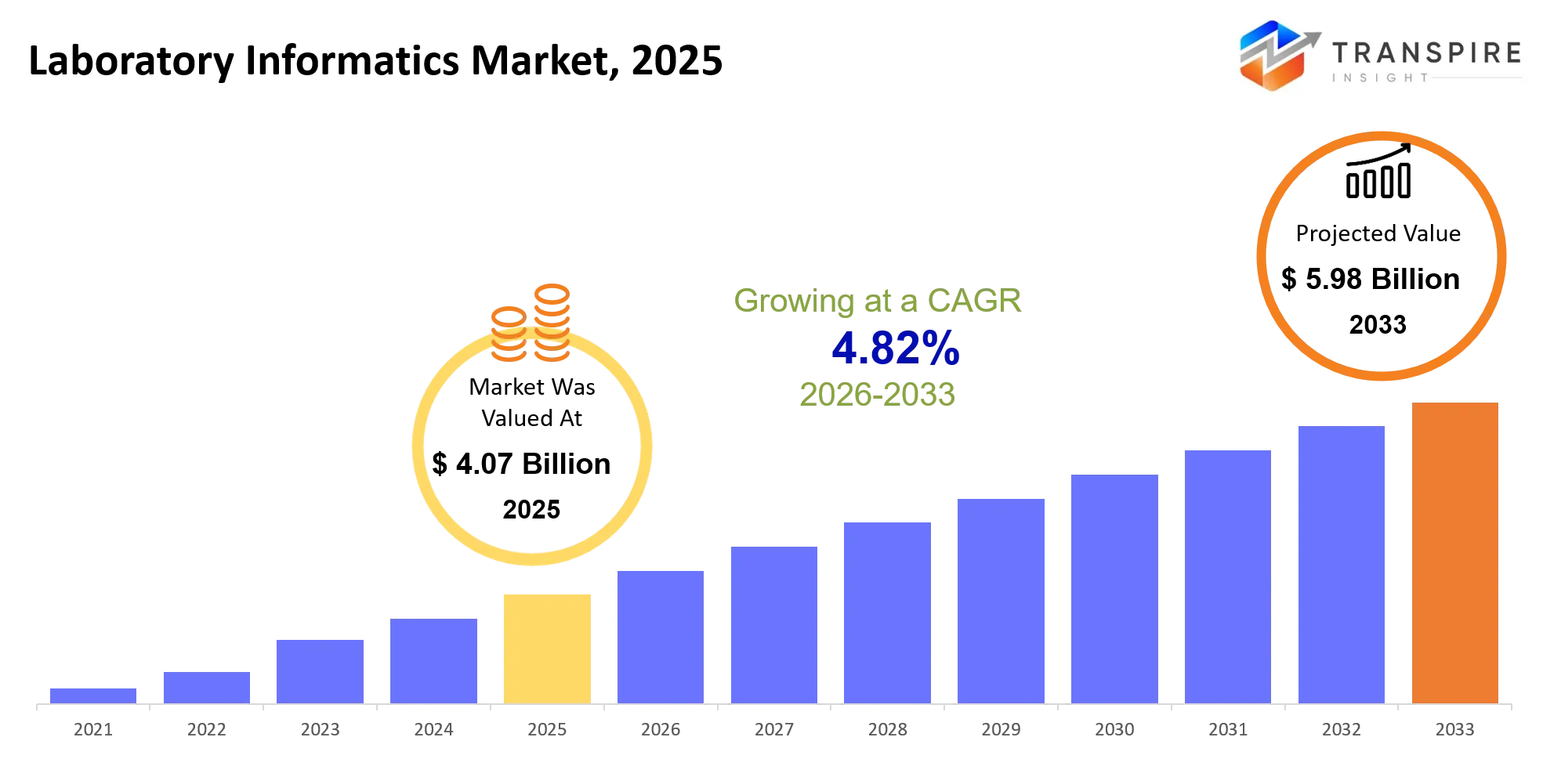
- Global Market Value (2025): USD 4.07 Billion.
- Expected Market Value (2026): USD 4.30 Billion.
- Estimated Market Value (2033): USD 5.98 Billion.
- Forecast CAGR (2026–2033): 4.82%
- Leading Region in 2025: North America
- Second-largest Region: Europe
- Fastest Growing Region: Asia Pacific
Introduction
Laboratory informatics refers to the specialized use of information technology including computer software and hardware, and data management platforms, to collect, manage, analyze and store scientific data and laboratory workflows. This process guarantees high data integrity and efficiency in the scientific environment. Laboratory Informatics refers to the specialized use of information technology, specialized software, and digital data management platforms to optimize and manage scientific and clinical laboratory data and processes. The Laboratory Informatics Market is catching up as laboratories focus on automating their systems and making them efficient, effective, and compliant. Automation helps reduce the chances of human error during data entry, while sample tracking ensures efficient testing procedures. Integrated informatics systems facilitate effective management of samples, instrumentation, and laboratory operations. Electronic audit trails and electronic records ensure that laboratories comply with strict regulatory requirements such as FDA 21 CFR Part 11 and ISO standards. Cloud-based solutions provide a centralized way of managing scientific data in a secure and scalable manner. Additionally, AI and machine learning improve anomaly detection, resource utilization, forecasting, and research output.
For instance:-As a result of the federal digital initiatives implemented, the Russian market for laboratory informatics is growing. In view of the fact that there are certain geopolitical restrictions, limiting foreign access, the emphasis will be put on the production of software locally, biopharmaceutical research and development, as well as laboratory automation.
Market Highlights: -
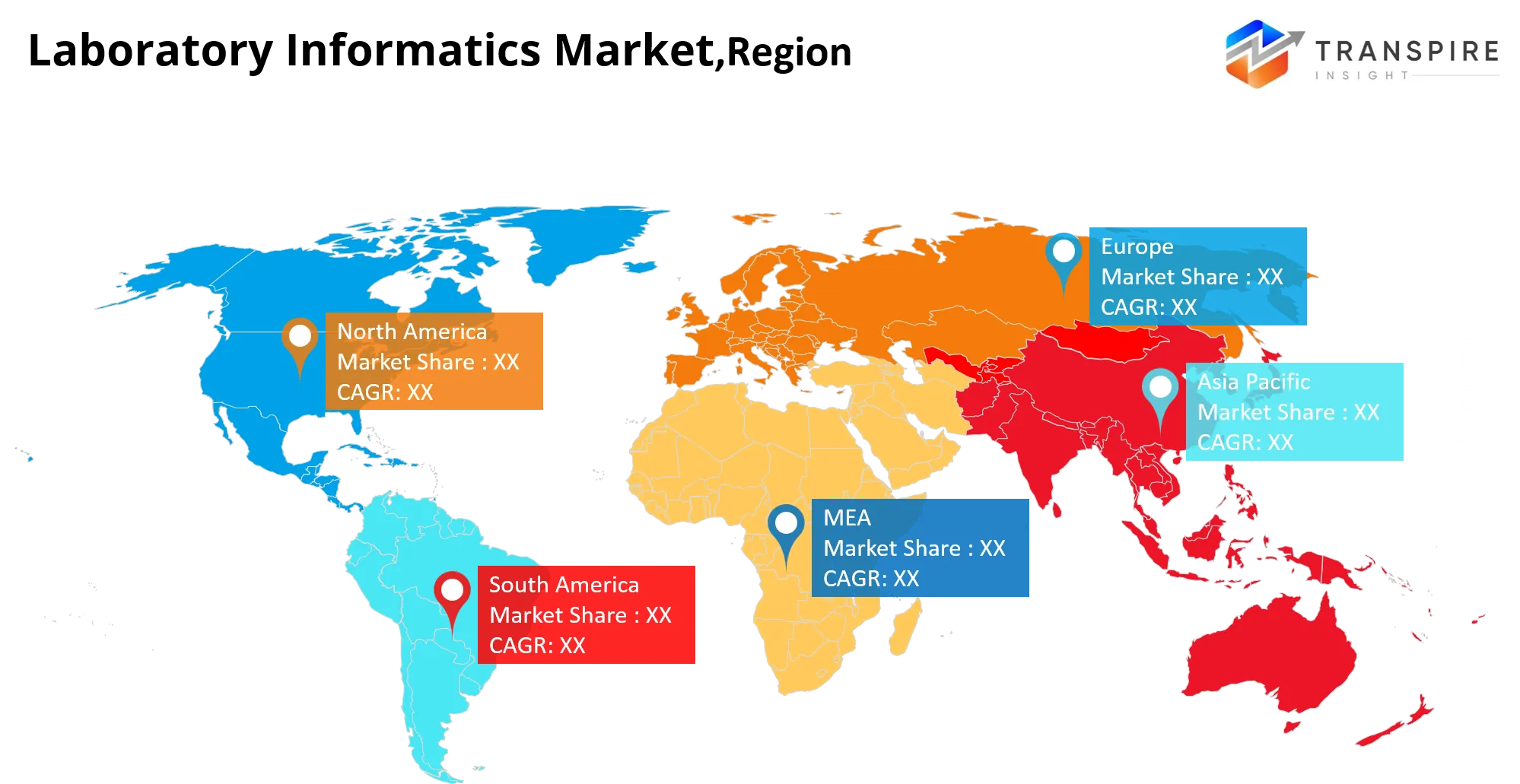
- North America is anticipated to hold around 42% share of the Laboratory Informatics Market over the predicted timeframe.
- Europe is expected to grow at a rapid CAGR in the Laboratory Informatics Market by holding around32% of the share during the forecast period.
- Asia Pacific is anticipated to hold around20% share of the Laboratory Informatics Market over the predicted timeframe.
- By product, the LIMS segment dominated the market and holds nearly 45% share in 2025 and is projected to grow at a substantial CAGR during the forecast period.
- By end use, the Pharmaceuticals segment dominated the market and holds nearly 35% share in 2025 and is projected to grow at a substantial CAGR during the forecast period.
- By application, the Data Management segment dominated the market and holds nearly 40% share in 2025 and is projected to grow at a substantial CAGR during the forecast period.
- Scheme for Promotion of Research and Innovation in Pharma MedTech Sector (PRIP): PRIP is an initiative that facilitates the development and innovation in research and technology in the pharma and MedTech sectors; indirectly facilitating the growth of the Laboratory Informatics Market in the form of LIMS systems, etc.
How is Technology Driving Growth in the Laboratory Informatics Market?
Laboratory Informatics Market development includes cloud computing, laboratory automation, instrument interfacing, artificial intelligence, and regulation-centric digitalization. Cloud computing provides the benefit of scalable infrastructure, access, and IT reduction for various sizes of laboratories. Connecting informatics tools, robots, and analytical instruments through automation facilitates smooth data acquisition and increases the efficiency of the workflow. Artificial intelligence and machine learning are used in the analysis of huge amounts of scientific data in the domains of genomics, personalized medicine, and digital pathology. Advanced informatics tools enhance data integrity, traceability, electronic record keeping, and FDA 21 CFR Part 11 and GxP compliance.
|
Report Metrics |
Details |
|
Market size value in 2025 |
USD 4.07 Billion |
|
Market size value in 2026 |
USD 4.30 Billion |
|
Revenue forecast in 2033 |
USD 5.98 Billion |
|
Growth rate |
CAGR of 4.82% from 2026 to 2033 |
|
Base year |
2025 |
|
Historical data |
2021 - 2024 |
|
Forecast period |
2026 - 2033 |
|
Report coverage |
Revenue forecast, competitive landscape, growth factors, and trends |
|
Regional scope |
United States; Canada; Mexico; United Kingdom; Germany; France; Italy; Spain; Denmark; Sweden; Norway; China; Japan; India; Australia; South Korea; Thailand; Brazil; Argentina; South Africa; Saudi Arabia; United Arab Emirates |
|
Key company profiled |
LabWare, Thermo Fisher Scientific, LabVantage, STARLIMS, Abbott Informatics, Dassault Systèmes, Waters, Agilent Technologies, PerkinElmer, Siemens Healthineers, Benchling, IDBS, Labguru, Autoscribe Informatics, Shimadzu |
|
Customization scope |
Free report customization (country, regional & segment scope). Avail customized purchase options to meet your exact research needs. |
|
Report Segmentation |
By Product (LIMS, ELN, LES, SDMS, CDS, ECM, Scientific Data Management, Others); By Component (Software, Services, Hardware, Consulting, Implementation, Integration, Training, Support); By Delivery Mode (Web-based, Cloud-based, On-premise, Hybrid, Hosted, SaaS, Mobile, Others); By End Use (Life Sciences, Pharmaceuticals, Biotechnology, Chemicals, Food & Beverage, Environmental Testing, Clinical Research, Others); By Application (Sample Management, Data Management, Laboratory Automation, Compliance, Quality Management, Research Management, Inventory Management, Others); By Enterprise Size (Large Enterprises, SMEs, Mid-sized Enterprises, Startups, Research Institutions, Government Laboratories, Academic Laboratories, Others); By Function (Data Capture, Data Analysis, Workflow Management, Reporting, Documentation, Instrument Integration, Collaboration, Others) |
Market Drivers
Market growth in the Laboratory Informatics Market is happening due to an increase in lab automation, paperless processes, and use of cloud LIMS and SaaS applications. The need for regulatory compliance of the laboratory processes in terms of data integrity, electronic documentation, traceability, and audit management is pushing the laboratories to adopt better informatics systems. The integration of artificial intelligence is helping in the interpretation of data, detection of anomalies, predictive maintenance, and improved research process efficiency. Additionally, the increased use of outsourcing by the pharmaceutical and biotechnology companies to CROs is fueling the demand for laboratory informatics software. Laboratory informatics provides practical advantages in today’s labs. Automation and electronic recording eliminate transcription mistakes, increase process reliability, and improve the precision of data collection. Modern LIMS and ELNs facilitate compliance with FDA 21 CFR Part 11, EMA Annex 11, and ISO 17025 standards by providing audit trail capabilities, electronic signatures, and data traceability. Cloud computing and AI technologies help to speed up research processes, data analysis, and bring new products to the market faster. Instrument connectivity integrates analytical instruments with enterprise software systems and creates centralized data management environments. Besides, cloud technology decreases IT costs and increases deployment flexibility.
For Instance: -
- The South African laboratory informatics market had The driving forces of investments are the twin health care requirements along with workflow modernization and Public Private Partnership initiatives with LIMS taking the lead among segments.
- Europe’s Lab Informatics Market is growing steadily, due to huge investments made in lab automation, AI, and cloud computing. The growth drivers in the region’s market include stringent EU data laws and increasing pharma R&D. The European market is estimated to be worth around $1.64 billion by 2035, with Germany being the leader
Restrain
The Laboratory Informatics Market is constrained by factors such as expensive installation and maintenance cost, issues of cybersecurity that may pose a threat to laboratory data, difficulty of integration with old equipment and software, and lack of laborers with knowledge of laboratory informatics. The shortage of laborers can lead to delays in implementation and user acceptance of the systems.
|
Driver |
Relative Impact on Growth (%) |
Geographic Relevance |
Impact Timeline |
Demand Strength |
Growth Mechanism |
Key Beneficiaries |
Major Constraint |
|
Laboratory automation and workflow digitization |
27% |
North America, Europe, Asia Pacific |
Short-term |
High |
Automates workflows, reducing errors and improving throughput |
LIMS vendors, automation providers, pharmaceutical laboratories |
High implementation and integration costs |
|
Cloud-based LIMS, SaaS, and scalable informatics adoption |
22% |
North America, Europe, Asia Pacific |
Short-term |
High |
Enables scalable data access while reducing infrastructure requirements |
Cloud vendors, LIMS providers, SMEs, multi-site laboratories |
Cybersecurity and data privacy concerns |
|
AI, machine learning, and advanced laboratory analytics |
20% |
North America, Europe, Asia Pacific |
Medium-term |
High |
Enhances predictive analytics, decision-making, and workflow optimization |
AI vendors, LIMS providers, pharmaceutical R&D laboratories |
Validation, governance, and explainability requirements |
|
Regulatory compliance and laboratory data integrity requirements |
17% |
North America, Europe |
Short-term |
High |
Drives electronic records, audit trails, traceability, and controlled workflows |
Compliance software vendors, regulated laboratories, pharmaceutical companies |
Compliance increases deployment complexity |
|
Instrument interoperability and integrated scientific data management |
14% |
North America, Europe, Asia Pacific |
Medium-term |
High |
Connects instruments and systems, eliminating data silos |
Integration providers, LIMS vendors, research laboratories |
Legacy-system compatibility and integration costs |
Analysis of Prices and Consumer Behaviour
The Laboratory Informatics Market is dominated by Laboratory Information Management Systems (LIMS), contributing to an estimated market share of around 51.2% in 2025 owing to the growing demand for sample management, laboratory automation, data integrity, regulatory compliance, and integration of instruments in pharmaceuticals, biotech, healthcare, and testing laboratories. Cloud-based laboratory informatics solutions contributed to an estimated market share of around 43.3% of revenue in 2025, attributed to factors such as scalability, accessibility, reduced infrastructure consulting requirement, and centralized management of laboratory data. The services segment contributed to an estimated market share of around 58.5% in 2025, attributed to rising demand for services such as implementation, integration, validation, consultation, and maintenance. Pharmaceutical and biotech companies contributed to an estimated market share of around 53.1% in 2025, attributed to regulated workflows, research, quality management, and laboratory digitalization. Organizations prefer platforms that ensure security, interoperability, regulatory compliance, workflow automation, and integration when making decisions regarding laboratory informatics platform selection, while subscription-based and cloud deployments are increasingly preferred owing to minimal initial infrastructure requirement and scalable laboratory operations.
|
Investment Factor |
Why It Matters to Investors |
Opportunity |
Investment Implication |
|
LIMS-Led Market Expansion |
LIMS remains the largest product segment, supporting recurring laboratory workflow and data-management requirements. |
Invest in configurable LIMS platforms serving pharmaceutical, biotechnology, clinical, environmental, and research laboratories. |
Short-term: Prioritize established LIMS products; long-term: expand integrated informatics ecosystems. |
|
Cloud-Based & SaaS Adoption |
Cloud deployment improves scalability, remote accessibility, multi-site management, and lowers infrastructure requirements. |
Subscription-based cloud LIMS, ELN, SDMS, and integrated laboratory platforms offer recurring revenue potential. |
Favor scalable SaaS models, while maintaining hybrid options for regulated laboratories requiring greater data control. |
|
AI, Automation & Intelligent Workflows |
AI can automate data interpretation, workflow execution, predictive quality control, and laboratory decision support. |
AI-enabled LIMS, predictive analytics, agentic workflows, and automated compliance monitoring create higher-value software opportunities. |
Medium-term: build AI capabilities; long-term: differentiate through validated, explainable, production-grade automation. |
|
Pharma, Biotech & CRO Digitalization |
Research-intensive laboratories require traceability, sample management, data integrity, and integration across complex workflows. |
Specialized informatics for drug discovery, quality control, clinical research, genomics, and CRO operations can support higher-value contracts. |
Target regulated, data-intensive laboratories where workflow complexity creates stronger software adoption requirements. |
|
Asia-Pacific & Emerging-Market Expansion |
Asia-Pacific is identified as the fastest-growing regional market, while India offers expanding laboratory automation and outsourcing opportunities. |
Localized cloud LIMS, implementation services, integration, cybersecurity, and managed informatics can address under-digitized laboratories. |
Medium-to-long term: expand through regional partnerships, local implementation expertise, and scalable SaaS offerings. |
|
Interoperability & Compliance Infrastructure |
Legacy instruments, fragmented data, auditability, and regulatory requirements create persistent demand for integration and governance solutions. |
Instrument connectivity, SDMS, ELN-LIMS integration, data governance, validation, cybersecurity, and compliance services provide additional revenue streams. |
Favor vendors combining informatics software with integration and compliance services; assess legacy-system complexity as a key entry risk. |
Who are the Key Players in the Laboratory Informatics Market and how do they compete?
International competitiveness in the market of laboratory informatics will depend on the specialization of these companies in LIMS, ELN, scientific data management, laboratory automation, cloud, analytics, and instrument integration. Modern competition does not only include the functional characteristics of software products but also compliance with regulations, data integrity, interoperability, automation of laboratory workflow processes, and cloud-based architectures that help laboratories increase operational efficiency, improve data visibility, and traceability.
By creating integrated LIMS, SDMS, ELN, LES, cloud deployment, and laboratory analytics, Thermo Fisher Scientific improves its competitive position in the market. SampleManager software helps to integrate laboratory instrumentation and enterprise systems and support regulated workflow processes, data analytics, and compliance needs. Enterprise LIMS platforms, laboratory workflow management, instrument connectivity, and scientific data solutions allow LabWare and LabVantage Solutions to distinguish themselves among pharmaceutical, biotechnological, manufacturing, and testing laboratories. STARLIMS enhances its competitive position by offering laboratory information management and quality-oriented informatics solutions, whereas Agilent Technologies offers laboratory software, analytical instrument integration, data management, and OpenLab solutions.
Top Companies in the Laboratory Informatics Market
- LabWare
- Thermo Fisher Scientific
- LabVantage
- STARLIMS
- Abbott Informatics
- Dassault Systèmes
- Waters
- Agilent Technologies
- PerkinElmer
- Siemens Healthineers
- Benchling
- IDBS
- Labguru
- Autoscribe Informatics
- Shimadzu
|
Company |
Est. Revenue Share Range |
Key Offerings |
Strategic Positioning |
Geographic Strength |
Technology Focus |
|
Thermo Fisher Scientific |
1.0–1.2% |
SampleManager LIMS, SDMS, ELN, LES, analytics |
Integrated enterprise informatics and instrument ecosystem |
North America, Europe, Asia Pacific |
Cloud LIMS, analytics, instrument integration |
|
LabWare |
0.9–1.1% |
LabWare LIMS, ELN, Mobile, Integration Platform |
LIMS-focused global enterprise specialization |
North America, Europe, Asia Pacific |
Configurable LIMS, integration, cloud, automation |
|
LabVantage Solutions |
0.8–1.0% |
LabVantage LIMS, ELN, LES, SDMS, CORTEX |
Integrated platform with AI-led differentiation |
North America, Europe, Asia Pacific |
AI, cloud-native, analytics, automation |
|
STARLIMS |
0.6–0.8% |
LIMS, ELN, SDMS, LES, Advanced Analytics |
Broad laboratory informatics platform specialization |
North America, Europe, Asia Pacific |
Workflow automation, analytics, interoperability |
|
Agilent Technologies |
0.6–0.7% |
OpenLab CDS, OpenLab ECM, OpenLab Sync, SLIMS |
Instrument-linked informatics and analytical workflow leadership |
North America, Europe, Asia Pacific |
Data management, LES, cloud, instrument integration |
|
Waters Corporation |
0.6–0.7% |
NuGenesis SDMS, LMS, Sample Management, Empower |
Analytical informatics integrated with laboratory instruments |
North America, Europe, Asia Pacific |
Scientific data management, CDS, workflow integration |
|
Dassault Systèmes |
0.5–0.7% |
BIOVIA electronic lab solutions, scientific data management |
Scientific platform and digital R&D ecosystem strategy |
North America, Europe, Asia Pacific |
Cloud, scientific modeling, data management |
|
Revvity |
0.4–0.6% |
Signals Notebook, Signals Research Suite, Signals AI |
Cloud-native R&D informatics and scientific collaboration |
North America, Europe, Asia Pacific |
SaaS, AI, scientific analytics, collaboration |
|
IDBS |
0.4–0.6% |
E-WorkBook, data management, workflow solutions |
R&D informatics specialization for regulated industries |
North America, Europe, Asia Pacific |
Cloud R&D, ELN, data workflows |
|
LabLynx |
0.3–0.5% |
ELab LIMS, ELN, laboratory management solutions |
Flexible web-based LIMS and specialized laboratory solutions |
North America, Europe |
Web LIMS, cloud deployment, workflow automation |
Market Segmentation
The Laboratory Informatics Market share is divided into seven categories: By product, component, delivery mode, end use, application, enterprise size and function.
The LIMS dominated the market, accounting for nearly 45% in 2025 and is expected to rise at a significant CAGR during the forecast period.
The Laboratory Informatics Market is segmented by product into LIMS, ELN, LES, SDMS, CDS, ECM, Scientific Data Management, Others. Among these, the LIMS segment dominated the market, accounting for nearly 45% in 2025 and expected to increase at a significant CAGR during the forecast period. LIMS held the dominant position in the market owing to increasing demand for managing laboratory data centrally, automation, sample tracking, regulatory compliance, and integration with instruments. Higher use in the pharmaceutical industry, biotechnology, healthcare, and research labs is enabling faster digital transformation. Cloud-based LIMS, artificial intelligence, and scalable platforms help further in market expansion and growth.
The Pharmaceuticals dominated the market, accounting for nearly 35% in 2025, and is expected to rise at a significant CAGR during the forecast period.
The Laboratory Informatics Market is segmented by end use into Life Sciences, Pharmaceuticals, Biotechnology, Chemicals, Food & Beverage, Environmental Testing, Clinical Research, Others. Among these, the Pharmaceuticals segment dominated the market, accounting for nearly 35% in 2025 and expected to increase at a significant CAGR during the forecast period. The dominance of pharmaceuticals in the market was a result of growing need for laboratory testing, drug discovery, quality control, research, and compliance with regulations. The increased use of LIMS, ELN, and laboratory automation helps pharmaceuticals improve their data integrity, workflow, sample handling, and traceability.
The Data Management dominated the market, accounting for nearly 40% in 2025 and is expected to rise at a significant CAGR during the forecast period.
The Laboratory Informatics Market is segmented by application into Sample Management, Data Management, Laboratory Automation, Compliance, Quality Management, Research Management, Inventory Management, Others). Among these, the Data Management segment dominated the market, accounting for nearly 40% in 2025 and expected to increase at a significant CAGR during the forecast period. Data management held the lion’s share in the market owing to rising volume of laboratory data, growing demands for information centralization, and increasing need for data integrity and security. The availability of high-end laboratory informatics solutions helps to integrate data and make workflows efficient and easily accessible for analysis.

Regional Segment Analysis of the Laboratory Informatics Market:
- North America (U.S., Canada, Mexico)
- Europe (Germany, France, U.K., Italy, Spain, Rest of Europe)
- Asia-Pacific (China, Japan, India, Rest of APAC)
- South America (Brazil and the Rest of South America)
- The Middle East and Africa (UAE, South Africa, Rest of MEA)
North America is the fastest-growing region in the Laboratory Informatics Market during the period, holding around 42% share.
North America is expected to grow at a rapid CAGR in the Laboratory Informatics Market holding around 42% share during the forecast period. North America is currently at the forefront of the market owing to its highly developed health care system, well-developed pharmaceutical and biotech industries, high rate of lab automation usage, and strict regulatory norms. Investments in the digital transformation of laboratories, cloud LIMS systems, artificial intelligence (AI) analysis, and data management technologies are speeding up informatics adoption.
Europe is expected to grow at a rapid CAGR in theLaboratory Informatics Market, holding around 32% of the share during the forecast period.
Europe is expected to grow at a rapid CAGR in the Laboratory Informatics Market holding around 32% share during the forecast period. Rapid growth is anticipated in Europe owing to the increased studies on pharmaceuticals and biotechnology, strict data integrity laws, and laboratory automation. The use of cloud-based LIMS, ELN, and other efficient data management technologies in laboratories is contributing to improved efficiency and compliance. Investment in digital healthcare facilities and research facilities is contributing to market growth in the region.
Asia Pacific is the fastest-growing region in the Laboratory Informatics Market during the period, holding around 20% share.
Asia Pacific is the fastest-growing region in the Laboratory Informatics Market during the forecast period, holding around 20% share during the forecast period. The Asia Pacific region is witnessing high growth owing to the increase in pharmaceuticals and biotech industry, increased healthcare investments, and fast-moving digitization of laboratories. The increasing use of LIMS, ELN, cloud-based informatics, and laboratory automation is helping improve the efficiency of operations. Increased research activity, manufacturing ability, and need for regulatory compliance are driving the market.
Strategies for Market Growth in Non-Leading Regions:
The creation of non-leading territories through the use of effective and scalable laboratory informatics technologies will positively influence small and medium laboratories, research institutions, and testing centers. The local installation of LIMS, ELN, SDMS, and laboratory automation technologies can help decrease dependence on dispersed software and increase operational effectiveness. The creation of strategic alliances with laboratories in the region, with pharmaceuticals, with biotechnologies, with healthcare providers, and with technology providers will enhance the penetration of the market by laboratory informatics solutions. Furthermore, additional training and enhancement of technical skills to increase understanding of laboratory digitalization, data management, system integration, cybersecurity, regulations, and workflow automation will be needed. In addition, the use of flexible financing, subscription software models, implementation partnerships, and managed services will help make laboratory informatics solutions more accessible and encourage their adoption. The development of partnership programs with government agencies, healthcare providers, pharmaceuticals, research institutions, and technology providers, as well as using digital channels of sales, will facilitate the accessibility of laboratory informatics solutions.
Future Market Trends for the Laboratory Informatics Market: -
- Cloud-Native & SaaS Implementation: The labs are quickly moving from the traditional on-premises infrastructure to the cloud-native, web-hosted software-as-a-service (SaaS), which helps in lowering the expenses and provides seamless scaling.
- AI & Machine Learning Utilization: The next-generation AI-enabled software is revolutionizing data analytics, automating decision making, and assisting laboratories in improving their experiment methodologies.
- Instrument Interoperability Enhancement: A huge emphasis has been placed in the market on the elimination of data silos through improved plug-and-play capability of various laboratory instruments.
- Scientific Data Platforms for Unification: Vendors are combining functionalities, such as integrating the features of electronic lab notebooks (ELN) and LIMS, into one integrated platform.
- Data Integrity & Compliance: The strict regulations set globally have forced laboratories to move towards systems with automated audit trails, enhanced security features, and FAIR principles for the data.
Recent Development
- In March 2026: LabVantage Solutions announced the launch of LabVantage CORTEX, which is an intelligent platform utilizing artificial intelligence that brings together agentic AI, predictive analytics, and automated workflow execution to LIMS. This will be a significant boost to laboratory digitalization through improved workflow automation, informed decision making, efficiency, and effective laboratory management.
- In February 2026: A report by Research and Markets named "Laboratory Informatics Market (2026 Edition)" was released. It focuses on the trends regarding the areas of interoperability, cybersecurity, cloud-based data storage, analytics, regulatory compliance, and laboratory digitalization. The report identifies the technology advancements that facilitate the effective workflow and fast implementation of LIMS, ELN, and integrated laboratory informatics solutions.
This study forecasts revenue at global, regional and country levels from 2020 to 2033. Transpire Insights has segmented the Laboratory Informatics Market based on the below-mentioned segments:
Laboratory Informatics Market, By Product
- LIMS
- ELN
- LES
- SDMS
- CDS
- ECM
- Scientific Data Management
- Others
Laboratory Informatics Market, By Component
- Software
- Services
- Hardware
- Consulting
- Implementation
- Integration
- Training
- Support
Laboratory Informatics Market, By Delivery Mode
- Web-based
- Cloud-based
- On-premise
- Hybrid
- Hosted
- SaaS
- Mobile
- Others
Laboratory Informatics Market, By End Use
- Life Sciences
- Pharmaceuticals
- Biotechnology
- Chemicals
- Food & Beverage
- Environmental Testing
- Clinical Research
- Others
Laboratory Informatics Market, By Application
- Sample Management
- Data Management
- Laboratory Automation
- Compliance
- Quality Management
- Research Management
- Inventory Management
- Others
Laboratory Informatics Market, Enterprise Size
- Large Enterprises
- SMEs
- Mid-sized Enterprises
- Startups
- Research Institutions
- Government Laboratories
- Academic Laboratories
- Others
Laboratory Informatics Market, By Function
- Data Capture
- Data Analysis
- Workflow Management
- Reporting
- Documentation
- Instrument Integration
- Collaboration
- Others
Laboratory Informatics Market, By Regional Analysis
North America
- Mexico
- Canada
- US
Europe
- Germany
- UK
- France
- Italy
- Spain
- Russia
- Rest of Europe
Asia Pacific
- China
- Japan
- India
- South Korea
- Australia
- Rest of Asia Pacific
South America
- Brazil
- Argentina
- Rest of South America
Middle East & Africa
- UAE
- Saudi Arabia
- Qatar
- South Africa
- Rest of the Middle East & Africa
Frequently Asked Questions
Find quick answers to common questions.
The market is projected to reach USD 5.98 billion by 2033, growing at a 4.82% CAGR.
LIMS dominates, accounting for nearly 45% share in 2025, driven by automation, sample tracking, compliance, and centralized data management.
Pharmaceuticals lead with nearly 35% share in 2025, supported by drug discovery, quality control, testing, compliance, and laboratory digitalization.
Asia Pacific is expected to grow fastest, supported by pharmaceutical expansion, healthcare investments, digitalization, automation, and increasing LIMS adoption.
Key trends include cloud-based LIMS, AI, machine learning, instrument interoperability, unified data platforms, automation, and stronger regulatory compliance.
- LabWare
- Thermo Fisher Scientific
- LabVantage
- STARLIMS
- Abbott Informatics
- Dassault Systèmes
- Waters
- Agilent Technologies
- PerkinElmer
- Siemens Healthineers
- Benchling
- IDBS
- Labguru
- Autoscribe Informatics
- Shimadzu
About the Authors

Pankaj Ghogare Patil
I am Pankaj Ghogare Patil, a Senior Research Analyst at Transpire Insight, specializing in the Pharmaceutical, Chemicals & Materials, Healthcare IT, and Biotechnology industry. My expertise lies in conducting comprehensive market research, analyzing industry trends, evaluating competitive landscapes, and translating complex data into actionable insights. At Transpire Insight, I closely follow emerging technologies, regulatory developments, and market innovations to create accurate, well-researched, and informative content that helps businesses and professionals make informed decisions. I am committed to producing credible, evidence-based articles that reflect industry best practices while making technical topics accessible and valuable for a broad audience.

Chakradhar Khansole
Chakradhar serves as the Research Director at Transpire Insight, bringing over 8 years of experience in technology, innovation, and strategic market intelligence. He specializes in transforming complex market data into actionable business insights that enable organizations to make informed, growth-oriented decisions. Recognized for his strategic vision and analytical expertise, Chakradhar leads high-impact research initiatives, delivering comprehensive market assessments, competitive intelligence, and forward-looking industry analysis.
Recently Published Reports
-
Apr 2026
AI in Diabetic Retinopathy Market
AI in Diabetic Retinopathy Market Size, Share & Analysis Report By Type (Screening AI Systems, Diagnostic AI Systems, and Predictive AI Models), By Application Segment (Hospitals, Ophthalmology Clinics, Diagnostic Centers, and Research and Development), and Geography (North America, Europe, Asia-Pacific, Middle East and Africa, South and Central America), 2021 - 2031
-
Apr 2026
Psychometric Tests Market
Psychometric Tests Market Size, Share & Analysis Report By Type (Personality Tests, Ability/Aptitude Tests, Skill/Knowledge Tests, and Others), By Application (Talent Acquisition and Talent Management), and Geography (North America, Europe, Asia-Pacific, Middle East and Africa, South and Central America), 2021 – 2031
-
Apr 2026
Rare Biological Sample Collection Market
Rare Biological Sample Collection Market Size, Share & Analysis Report By Type (Isolation Kits & Reagent, Blood Collection Tubes, and Others), By Application (Oncology, Transcriptomics, Pharmacogenomics, and Others), and Geography (North America, Europe, Asia-Pacific, Middle East and Africa, South and Central America), 2021 – 2031
-
Jul 2026
Diabetic Retinopathy Market
Diabetic Retinopathy Market Size, Share & Analysis Report By Type (Proliferative Diabetic Retinopathy, and Diabetic Macular Edema (DME)), By Treatment Type (Anti VEGF Drug, Steroid Implants, Laser Surgeries, and Vitrectomy), and Geography (North America, Europe, Asia-Pacific, Middle East and Africa, South and Central America), 2021 – 2031
Our Clients







