
Healthcare Software as a Service (SaaS) Market Summary:
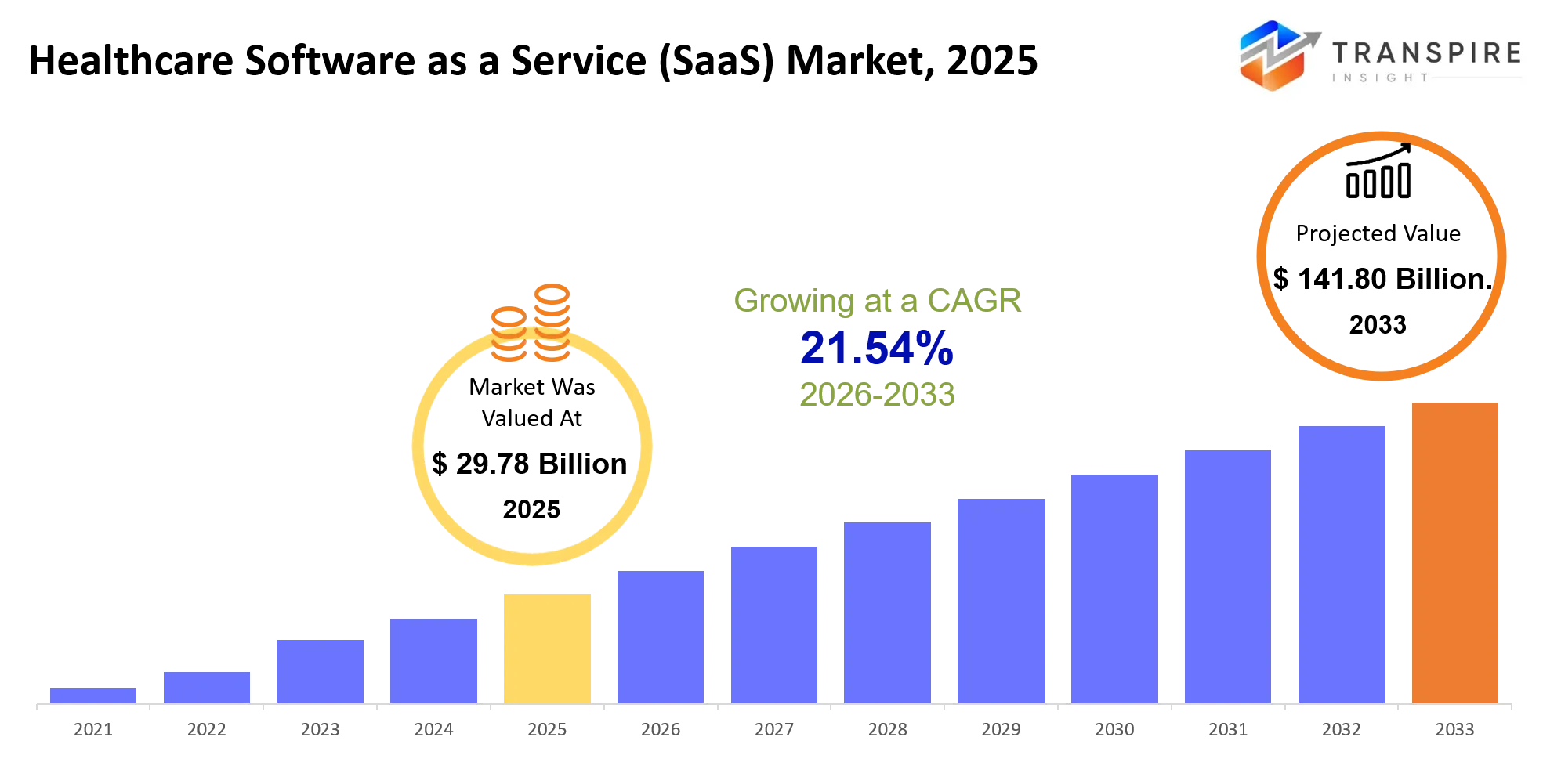
As per Transpire Insight Analysis, the Healthcare Software as a Service (SaaS) Market size is estimated at USD 29.78 billion in 2025 and is anticipated to reach USD 141.80 billion by 2033, growing at a CAGR of 21.54% from 2026 to 2033.
Healthcare Software as a Service (SaaS) Market is providing healthcare organisations with an opportunity to put their clinical, administrative, financial and patient-facing operations on cloud-based platforms. Healthcare facilities have been increasingly using SaaS for electronic health records, revenue management, telemedicine, patient engagement, analytics and other daily process coordination. During the last three to five years, the market has been changing from simple cloud hosting to more advanced platforms that connect data, applications and healthcare professionals. Expansion of remote care and digitisation of healthcare services has been one of the factors driving this process, while increased demand for interoperability has motivated providers to abandon non-integrated software. At the moment, artificial intelligence is being integrated into cloud platforms for automated documentation, pattern discovery in patients' data and decision-making. It improves software utilisation in this way, as providers get access to updated applications without having much infrastructure on site.
Healthcare Software as a Service (SaaS) Market Size & Forecast:
- Market Size 2025: USD 29.78 Billion
- Expected Market Value (2033): USD 141.80 Billion
- Forecast CAGR (2026–2033): 21.54%
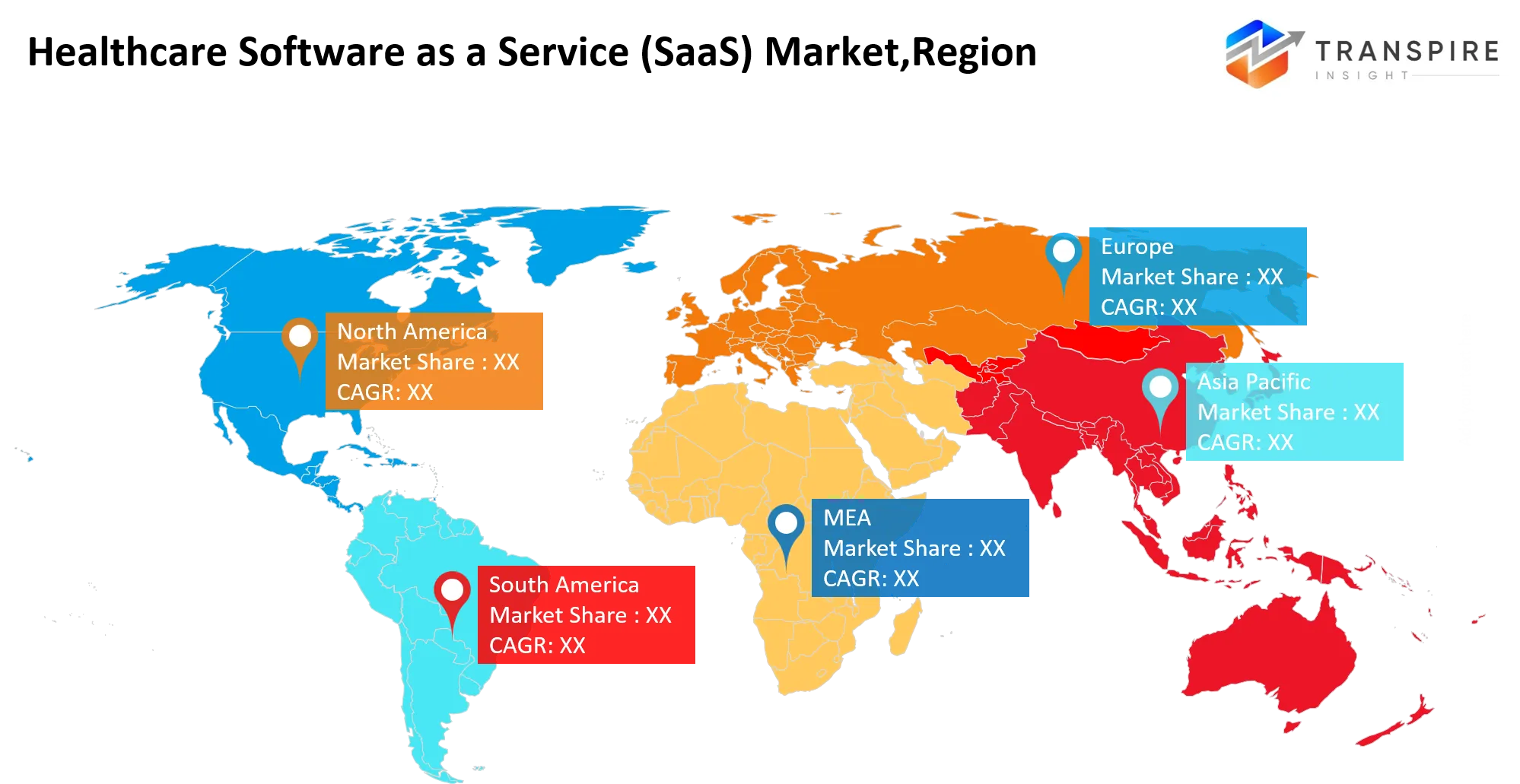
- Leading Region in 2025: North America
- Fastest-Growing Region: Asia Pacific
- Key Company Profiles: Microsoft, Oracle, Salesforce, SAP, Athenahealth, Epic Systems, Cerner, Allscripts, GE HealthCare, Philips, IBM, Siemens Healthineers, eClinicalWorks, NextGen Healthcare, Teladoc
Key Market Insights:
The market is shifting from individual software solutions to integrated healthcare systems. The robustness of non-clinical solutions suggests that business processes continue to be an important avenue for SaaS implementation.
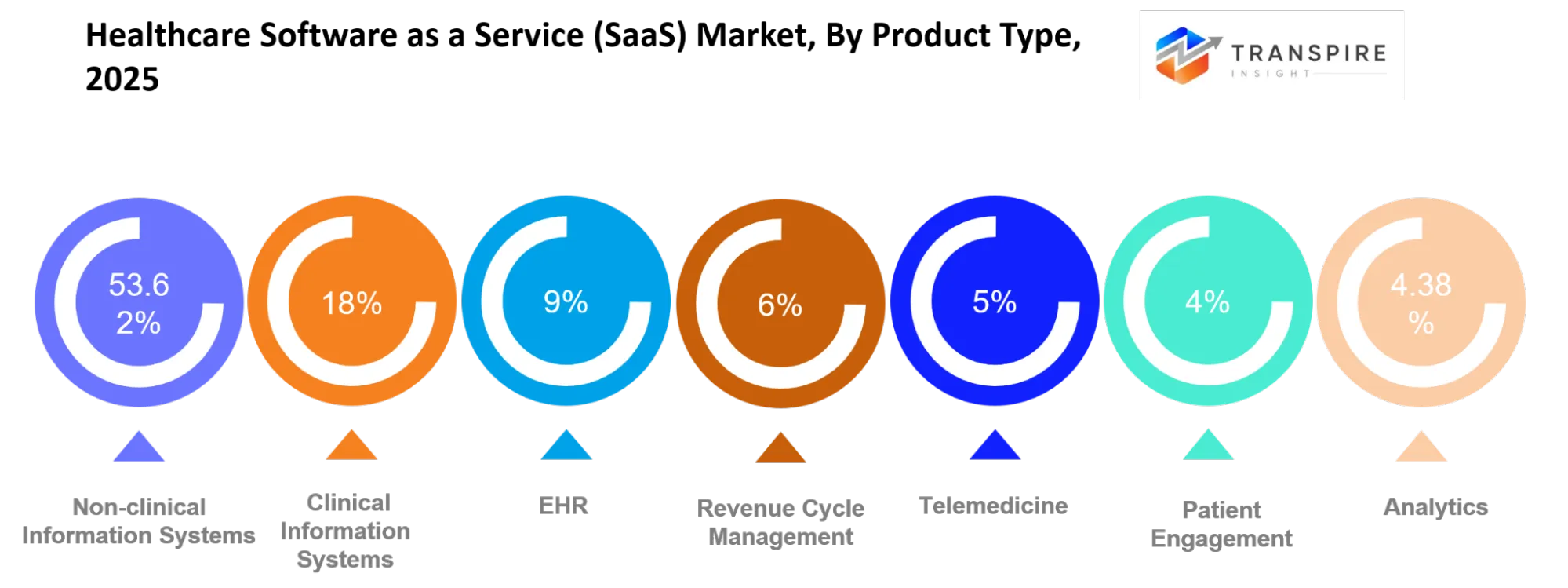
- Non-Clinical Information Systems constitute 53.62% as there is high reliance on cloud software solutions for administrative and operations purposes.
- Clinical Information Systems show growth at 18.12% CAGR owing to the increased digitisation of clinical processes and practices.
- EHR constitutes 9%, with providers looking for software that can link patient information with clinical and administrative processes.
- Revenue Cycle Management constitutes 6%, with automation becoming more prevalent to increase the efficiency of billing and payments.
- Telemedicine is 5%, as there are more digital consultations and facilities to provide care remotely.
- Patient Engagement is 4%, with providers using more digital channels to communicate and offer self-service facilities.
What are the Key Drivers, Restraints, and Opportunities in the Healthcare Software as a Service (SaaS) Market?
Drivers
The increasing growth of the healthcare SaaS market is being triggered by the transition from on-premises fragmented solutions to scalable solutions delivered in the cloud environment, where changes and upgrades do not require expensive infrastructure upgrades. The fast adoption of remote healthcare solutions amid the current pandemic has become a strong catalyst for providers to adopt digital processes and ensure their continuity. With more data available in an organisation, the SaaS solution can become helpful in managing information centrally, automating processes, and facilitating collaboration within different departments.
Restraints
The difficulty of incorporating newly developed SaaS technologies into current healthcare solutions. Most providers have outdated software, posing difficulties for the integration of new cloud-based technologies. The security and compliance of the new cloud solutions are further complicating implementation and may lead to delays in purchase decisions.
Opportunities
The opportunity for vendors is the integration of SaaS, artificial intelligence, interoperability, and advanced analytics technologies. Providers of cloud technologies that offer modular platforms that can integrate EHR, financials, patient apps, and clinical systems in one solution can address different workflow needs through the use of one technology solution. Growth in the Asia Pacific region is another strategic opportunity.
What Has the Impact of Artificial Intelligence Been on the Healthcare Software as a Service (SaaS) Market?
AI will be revolutionising SaaS for the healthcare industry through automation, predictive analytics, and decision support. Rather than merely relying on software for storage and processing of data, healthcare organisations can now rely on such platforms for identifying trends, summarising information, automating processes, and making recommendations. A typical example is clinical documentation, where AI can help clinicians in transforming conversations and data into documented notes. Revenue cycle management processes are other examples where AI can help in detecting billing problems, enhancing claims management, and minimising administrative burden. Predictive ability will enhance the use of SaaS platforms beyond the simple reporting function, as healthcare organisations can predict operational bottlenecks, resource requirements, and areas of risk that should be addressed. There are limitations associated with AI adoption in the healthcare industry. The complexity involved in integration with existing systems, the cost of implementation, data quality, privacy requirements, and the need to verify the AI-generated output can be a challenge to rapid adoption of AI. It is for this reason that AI is expected to grow through controlled adoption into existing healthcare software systems.
Instance
In June 2026, Mayo Clinic and Microsoft came up with an AI model that is tailored for healthcare use through the application of both Mayo Clinic’s clinical knowledge and Microsoft’s AI and cloud computing technologies. This development illustrates how AI is being applied in cloud-based healthcare services.
Key Market Trends
The healthcare SaaS market is shifting from cloud software applications to connected and intelligent platforms that integrate several healthcare processes.
- The cloud migration trend is intensifying. Healthcare facilities are switching from standalone on-premises solutions to cloud-based architectures.
- Integrated systems have become highly valued. It has become a preference for providers to adopt integrated platforms that can cover clinical, administrative, financial and patient workflows.
- AI is being integrated more deeply. AI-related functionality is transitioning from experimental use to actual use cases such as documentation, workflow and data analytics.
- Interoperability is becoming a priority. More and more healthcare providers are looking for software that integrates well with their current EHR and third-party systems.
- Software subscriptions have become more common. Recurring payments enable organisations to utilize the latest software updates without making significant capital investments.
Healthcare Software as a Service (SaaS) Market Segmentation
By Application
Non-clinical Information Systems hold a 53.62% share in the market owing to the high requirement for cloud computing capabilities within administrative and operational processes. Clinical Information Systems comprise 18%, and these are currently witnessing the highest growth among all application categories with a CAGR of 18.12%, driven by digitisation within clinical processes. Electronic Health Records make up 9%, while Revenue Cycle Management accounts for 6% as healthcare providers look for automated means of managing their finances. Telemedicine accounts for 5%, Patient Engagement 4%, Analytics 2%, and Others 2.38%.
By Deployment
Private cloud, Public cloud, Hybrid cloud, Multi-cloud, Community cloud, SaaS, PaaS, etc., fulfil varied requirements of security, scalability, and integration. Public and hybrid cloud environments will be able to support organisations looking for a flexible infrastructure, while private and community clouds will be relevant where control is needed. Increasing preference for SaaS based application delivery will compel vendors to offer modular and interoperable applications.
By End user
Healthcare providers, Hospitals, Clinics, diagnostic centres, Pharmacies, Payers, Government agencies, and others may use SaaS based applications according to their requirements. While hospitals and other large healthcare providers need comprehensive platforms that cover various business workflows, clinics and small organisations can benefit from scalable applications without making huge infrastructural investment. Payers and government agencies may also use cloud infrastructure to manage their information and administrative processes.
By Component
Software constitutes the key product, complemented by Services, Integration, Support, Analytics, Security, Infrastructure, and Others. Integration and security have become increasingly relevant due to the integration of different healthcare systems and management of highly confidential data. Future healthcare software is anticipated to integrate software with implementation, analytics, security, and support.
By Healthcare Function
the market involves Clinical, Administrative, Financial, Operational, Patient Engagement, Compliance, Research, and Others. Applications that are administered on the administrative and operational level share many similarities with the present-day 53.62% Non-clinical Information Systems segment, whereas clinical applications will gain traction due to fast-paced digitisation.
By Enterprise Size
Large Enterprises, Mid-Sized Enterprises, SMEs, Start-ups, Hospital Networks, Government Organisations, Research Institutions, and Others denote varied adopter categories. Complex platform solutions are required by large enterprises and hospital networks due to the presence of several locations and users. The use of SaaS solutions can enable SMEs and start-ups to make use of health-care technology by lowering infrastructural needs.
By Pricing
Subscription model, Usage-Based, Tiered pricing, per-user, Enterprise License, Freemium, transaction-based, and Other models give varied options for software acquisition. The subscription-based model allows recurring payments, whereas the usage-based and transaction-based models are apt for organisations that require changing software requirements. The enterprise license is still applicable for healthcare organisations that require wide coverage.
What are the Key Use Cases Driving the Healthcare Software as a Service (SaaS) Market?
SaaS Information Systems Not Clinician-Facing use cases for healthcare SaaS. Organisations leverage such solutions to conduct administrative, financial processes, scheduling, operations, and communication without full dependence on the organization's own infrastructure. The wide range of possible uses makes SaaS a great solution for hospitals, clinics, and healthcare organisations. Healthcare solutions grow in variety, including electronic medical records, clinical information systems, telemedicine, and analytics used by healthcare professionals to gain access to information and to cooperate. Some possible future use cases may be AI-assisted documentation, predictive analytics, revenue process automation, patient engagement solutions, and other healthcare workflow solutions. With better interoperability, such applications will be able to integrate more and not remain separate products.
|
Report Metrics |
Details |
|
Market size value in 2025 |
USD 29.78 Billion |
|
Market size value in 2026 |
USD 36.19 Billion |
|
Revenue forecast in 2033 |
USD 141.80 Billion |
|
Growth rate |
CAGR of 21.54% from 2026 to 2033 |
|
Base year |
2025 |
|
Historical data |
2021 - 2024 |
|
Forecast period |
2026 - 2033 |
|
Report coverage |
Revenue forecast, competitive landscape, growth factors, and trends |
|
Regional scope |
United States; Canada; Mexico; United Kingdom; Germany; France; Italy; Spain; Denmark; Sweden; Norway; China; Japan; India; Australia; South Korea; Thailand; Brazil; Argentina; South Africa; Saudi Arabia; United Arab Emirates |
|
Key company profiled |
Microsoft, Oracle, Salesforce, SAP, Athenahealth, Epic Systems, Cerner, Allscripts, GE HealthCare, Philips, IBM, Siemens Healthineers, eClinicalWorks, NextGen Healthcare, Teladoc |
|
Customization scope |
Free report customization (country, regional & segment scope). Avail customized purchase options to meet your exact research needs. |
|
Report Segmentation |
By Application (Clinical Information Systems, Non-clinical Information Systems, EHR, Revenue Cycle Management, Telemedicine, Patient Engagement, Analytics, Others); By Deployment (Private Cloud, Public Cloud, Hybrid Cloud, Multi-cloud, Community Cloud, SaaS, PaaS, Others); By End User (Healthcare Providers, Hospitals, Clinics, Diagnostic Centers, Pharmacies, Payers, Government Agencies, Others); By Component (Software, Services, Integration, Support, Analytics, Security, Infrastructure, Others); By Healthcare Function (Clinical, Administrative, Financial, Operational, Patient Engagement, Compliance, Research, Others); By Enterprise Size (Large Enterprises, Mid-sized Enterprises, SMEs, Startups, Hospital Networks, Government Systems, Academic Centers, Others); By Pricing Model (Subscription, Usage-based, Tiered, Per-user, Enterprise License, Freemium, Transaction-based, Others) |
Which Regions are Driving the Healthcare Software as a Service (SaaS) MarketGrowth?
North America
North America dominates the SaaS for healthcare market with 54.88%, which is attributed to an established healthcare IT infrastructure, high adoption rate of the cloud, and the wide usage of digital healthcare systems in the region. There exists a well-established ecosystem comprising healthcare providers, software firms, cloud service providers, and technology partners in the region. Investments in healthcare digitisation and AI technologies are also motivating businesses to adopt the SaaS model.
In July 2026,WellSpan Health successfully migrated more than 300 clinical applications and 7.5 petabytes of clinical and non-clinical data to Amazon Web Services (AWS). WellSpan Health migrated its Epic electronic medical record environment with plans to embrace AWS native offerings for cloud operations and AI applications. The migration is an indication that cloud platforms are increasingly being adopted by healthcare providers in North America.
Europe
Europe holds a 23% market share of the SaaS for healthcare market and has established itself with its established healthcare system and investments in digital infrastructure. As compared to the North American region, Europe places greater importance on the management of healthcare data, data privacy and security, interoperability, and regulated deployment of healthcare technology solutions. Such aspects may create a more structured environment for the implementation of the SaaS solution while also driving demand for such solutions.
In March 2026, Digital pathology solutions portfolio of Royal Philips grew with the release of cloud-enabled Philips IntelliSite Pathology Solution on HealthSuite, built on AWS. With this cloud-based technology, pathology labs can store, manage, analyse, and access large volumes of data digitally.
Asia Pacific
The Asia Pacific represents 15.00% of the market share and is regarded as the fastest-growing region, having a CAGR of 18.97%. The reason behind growth in the region can be seen in terms of developments made in the healthcare industry, technological advancement, cloud computing and hospital modernisation. Countries present in the region are gradually using digital healthcare systems due to higher operational efficiency and technological benefits.
In April 2025, Manipal Hospitals has partnered with Google Cloud to make AI-based digital health possible in India. Google Cloud's infrastructure and AI services are used by Manipal Hospitals in its ePharmacy and nurse handoff systems. Manipal Hospital's ePharmacy system has been built using Google Cloud infrastructure.
Who are the Key Players in the Healthcare Software as a Service (SaaS) Marketand how do they compete?
The competition in the international SaaS healthcare software market has shifted towards platform integration, interoperability, AI-powered functionalities, security, and the ability to work within existing healthcare environments. Companies are developing beyond standalone applications to develop an integrated portfolio of solutions that includes cloud infrastructure, clinical software, analytics, automation, and patient applications. It enables vendors to compete based on more functionalities while avoiding the burden for healthcare organisations to deal with standalone applications. Oracle Health is growing the healthcare technology ecosystem with EHR, cloud infrastructure, data intelligence, patient applications, and AI-powered tools. The expansion strategy of the company is aimed at the integration of clinical, operational, and financial technologies in wider enterprise environments. Collaboration with healthcare organisations, such as Baystate Health, is one of the pieces of evidence of the continuing trend towards the connected and AI-powered healthcare operations of the company.
Healthcare Software as a Service (SaaS) Market companies
- Microsoft
- Oracle
- Salesforce
- SAP
- Athenahealth
- Epic Systems
- Cerner
- Allscripts
- GE HealthCare
- Philips
- IBM
- Siemens Healthineers
- eClinicalWorks
- NextGen Healthcare
- Teladoc
Recent Development News
In July 2026, Salesforce has partnered with Vivekananda Hospital to integrate data of patients and doctors, field services, outreach, and AI onto one common platform. This effort is aimed at fostering increased engagement of patients and creating more connected healthcare workflows.
In February 2025, athenahealth joined hands with Abridge to incorporate the functionality of ambient listening and generative AI into their ambulatory care workflows. This partnership is focused on improving the process of clinical documentation and reducing administrative burdens at healthcare practices.
https://www.athenahealth.com/press-releases/athenahealth-and-abridge-partner
What Strategic Insights Define the Future of the Healthcare Software as a Service (SaaS) Market?
The future of the healthcare SaaS market, it will be determined by the development of connected platforms incorporating clinical applications, administration systems, analytics, cloud computing, and artificial intelligence. Healthcare organisations will continue to shift their focus from stand-alone software solutions to more integrated technologies. One of the underlying challenges associated with the integration of AI-based applications into existing healthcare systems, which will become more acute with time, is the ability to ensure data security, privacy, integrity, and regulatory compliance at the same time. Another opportunity that has not been fully developed yet consists of designing flexible SaaS platforms that can be easily connected with existing healthcare infrastructure, especially in digital healthcare markets under development. Such vendors should consider making modular solutions, reliable integration, good cybersecurity and effective use of AI among their strengths. Reduced administrative burden and increased access to healthcare information will be significant factors in technological development in the future.
By Application
- Clinical Information Systems
- Non-clinical Information Systems
- HER
- Revenue Cycle Management
- Telemedicine
- Patient Engagement
- Analytics
By Deployment
- Private Cloud
- Public Cloud
- Hybrid Cloud
- Multi-cloud
- Community Cloud
- SaaS
- PaaS
By End User
- Healthcare Providers
- Hospitals
- Clinics
- Diagnostic Centers
- Pharmacies
- Payers
- Government Agencies
By Component
- Softwar
- Ervices
- Integration
- Support,
- Nalytics
- Security
- Infrastructure
By Healthcare Function
- Clinical
- Administrative
- Financial
- Operational
- Patient Engagement
- Compliance
- Research
By Enterprise Size
- Large Enterprises
- Mid-sized Enterprises
- Mes
- Startups
- Hospital Networks
- Government Systems
- Academic Centres
By Pricing Model
- Subscription
- Usage-based
- Tiered
- Per-use
- Enterprise License
- Reemiu
- Transaction-based
Frequently Asked Questions
Find quick answers to common questions.
The healthcare software as a service (SAAS) market size was valued at USD 29.78 billion in 2025 and is poised to reach USD 141.80 billion by 2033, expanding at a 21.54% CAGR.
Key segments for the healthcare software as a service (SAAS) market are By Application (Clinical Information Systems, Non-clinical Information Systems, EHR, Revenue Cycle Management, Telemedicine, Patient Engagement, Analytics, Others); By Deployment (Private Cloud, Public Cloud, Hybrid Cloud, Multi-cloud, Community Cloud, SaaS, PaaS, Others); By End User (Healthcare Providers, Hospitals, Clinics, Diagnostic Centers, Pharmacies, Payers, Government Agencies, Others); By Component (Software, Services, Integration, Support, Analytics, Security, Infrastructure, Others); By Healthcare Function (Clinical, Administrative, Financial, Operational, Patient Engagement, Compliance, Research, Others); By Enterprise Size (Large Enterprises, Mid-sized Enterprises, SMEs, Startups, Hospital Networks, Government Systems, Academic Centers, Others); By Pricing Model (Subscription, Usage-based, Tiered, Per-user, Enterprise License, Freemium, Transaction-based, Others)
Growth is primarily driven by increasing use of cloud computing in the healthcare industry, reduction in IT costs, increasing demand for remote healthcare, increasing use of AI and data analytics, and digitisation of healthcare institutions.
The o amarket is led by major manufacturers including Microsoft, Oracle, Salesforce, SAP, Athenahealth, Epic Systems, Cerner, Allscripts, GE HealthCare, Philips, IBM, Siemens Healthineers, eClinicalWorks, NextGen Healthcare, Teladoc
North America accounts for 54.88% of the SaaS in the healthcare IT sector, owing to its superior healthcare IT infrastructure, adoption of cloud technology, high expenditure in the healthcare segment, and large technology & healthcare players.
SaaS market opportunities in the healthcare industry worldwide include cloud-based healthcare software platforms, AI-enabled healthcare software, remote patient monitoring software, electronic healthcare records software, and data analytics software. Increasing demand for scalable and cost-effective healthcare digital solutions is another opportunity that exists for the SaaS industry.
- Microsoft
- Oracle
- Salesforce
- SAP
- Athenahealth
- Epic Systems
- Cerner
- Allscripts
- GE HealthCare
- Philips
- IBM
- Siemens Healthineers
- eClinicalWorks
- NextGen Healthcare
- Teladoc
About the Authors

Pankaj Ghogare Patil
I am Pankaj Ghogare Patil, a Senior Research Analyst at Transpire Insight, specializing in the Pharmaceutical, Chemicals & Materials, Healthcare IT, and Biotechnology industry. My expertise lies in conducting comprehensive market research, analyzing industry trends, evaluating competitive landscapes, and translating complex data into actionable insights. At Transpire Insight, I closely follow emerging technologies, regulatory developments, and market innovations to create accurate, well-researched, and informative content that helps businesses and professionals make informed decisions. I am committed to producing credible, evidence-based articles that reflect industry best practices while making technical topics accessible and valuable for a broad audience.

Chakradhar Khansole
Chakradhar serves as the Research Director at Transpire Insight, bringing over 8 years of experience in technology, innovation, and strategic market intelligence. He specializes in transforming complex market data into actionable business insights that enable organizations to make informed, growth-oriented decisions. Recognized for his strategic vision and analytical expertise, Chakradhar leads high-impact research initiatives, delivering comprehensive market assessments, competitive intelligence, and forward-looking industry analysis.
Recently Published Reports
-
Apr 2026
AI in Diabetic Retinopathy Market
AI in Diabetic Retinopathy Market Size, Share & Analysis Report By Type (Screening AI Systems, Diagnostic AI Systems, and Predictive AI Models), By Application Segment (Hospitals, Ophthalmology Clinics, Diagnostic Centers, and Research and Development), and Geography (North America, Europe, Asia-Pacific, Middle East and Africa, South and Central America), 2021 - 2031
-
Apr 2026
Psychometric Tests Market
Psychometric Tests Market Size, Share & Analysis Report By Type (Personality Tests, Ability/Aptitude Tests, Skill/Knowledge Tests, and Others), By Application (Talent Acquisition and Talent Management), and Geography (North America, Europe, Asia-Pacific, Middle East and Africa, South and Central America), 2021 – 2031
-
Apr 2026
Rare Biological Sample Collection Market
Rare Biological Sample Collection Market Size, Share & Analysis Report By Type (Isolation Kits & Reagent, Blood Collection Tubes, and Others), By Application (Oncology, Transcriptomics, Pharmacogenomics, and Others), and Geography (North America, Europe, Asia-Pacific, Middle East and Africa, South and Central America), 2021 – 2031
-
Jul 2026
Diabetic Retinopathy Market
Diabetic Retinopathy Market Size, Share & Analysis Report By Type (Proliferative Diabetic Retinopathy, and Diabetic Macular Edema (DME)), By Treatment Type (Anti VEGF Drug, Steroid Implants, Laser Surgeries, and Vitrectomy), and Geography (North America, Europe, Asia-Pacific, Middle East and Africa, South and Central America), 2021 – 2031
Our Clients







