

Japan Orexin Receptor Antagonists Market Size & Forecast:
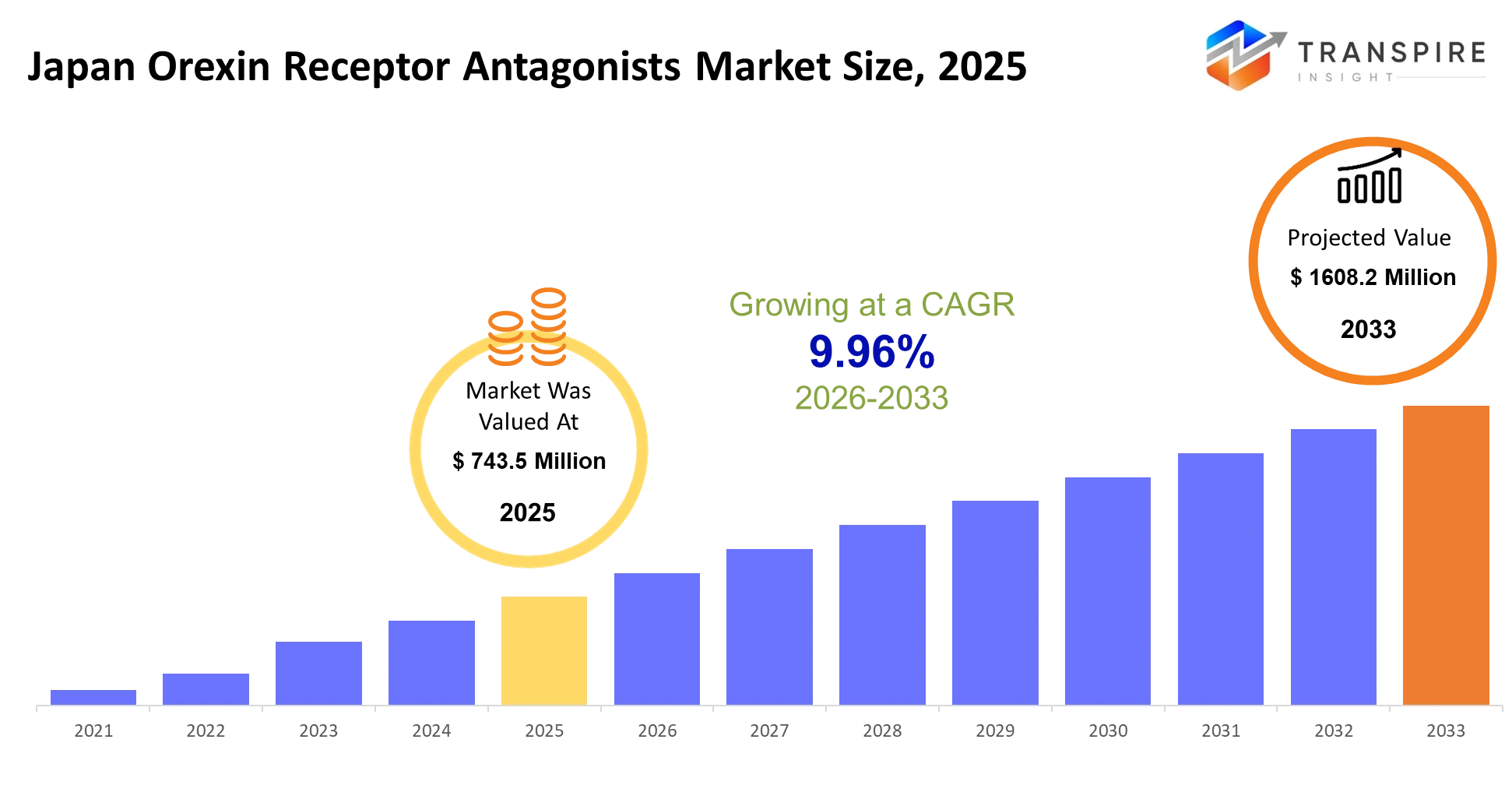
- Japan Orexin Receptor Antagonists Market Size 2025: USD 743.5 Million
- Japan Orexin Receptor Antagonists Market Size 2033: USD 1608.2 Million
- Japan Orexin Receptor Antagonists Market CAGR: 9.96%
- Japan Orexin Receptor Antagonists Market Segments:By Drug Type (Suvorexant, Lemborexant, Daridorexant, Others), By Application (Insomnia, Sleep Disorders, Neurological Disorders, Anxiety), By End-User (Hospitals, Clinics, Sleep Centers, Patients)
To learn more about this report,  Download Free Sample Report
Japan Orexin Receptor Antagonists Market Summary:
The Japan Orexin Receptor Antagonists Market size is estimated at USD 743.5 Million in 2025 and is anticipated to reach USD 1608.2 Million by 2033, growing at a CAGR of 9.96% from 2026 to 2033. Naturally, this is growth associated with greater public awareness of sleep problems and the diagnosis of insomnia, especially as regards the drug-hungry Japanese market for orexins. The newer drug category of orexin receptor antagonists functions by blocking the orexin neuropeptide system which controls human wakefulness to create a sleep process that more closely resembles natural sleep than standard sedatives do. The Japanese population faces rising demand for effective and safe insomnia solutions because its people experience increasing stress and changing traditional ways of life. The market growth process receives support from healthcare policies that create favorable conditions while enabling companies to access modern pharmaceutical products.
Pharmaceutical companies maintain ongoing research and development activities which lead to new treatment options that provide better safety and reduced adverse effects. The main business stakeholders focus on product development which requires them to obtain regulatory authorization for their products which they want to use as a method for expanding their business operations in Japan. The market expansion receives support from two trends which include doctors choosing specific treatments and patients showing increased approval for prescribed sleep medications. The market faces two obstacles which will impede its development during the next few years because of expensive medication prices and complex rules that govern drug development.
Key Market Trends & Insights:
- The rising number of people with insomnia demonstrates how increased understanding of sleep disorders particularly affects the elderly population. This trend drives demand for orexin receptor antagonists which deliver specific treatment that results in fewer adverse reactions than conventional sedatives.
- Pharmaceutical companies focus on R&D for next-generation orexin antagonists with improved efficacy and reduced dependency risk and enhanced safety profiles. This research effort boosts market competitiveness and patient adoption.
- Japan's advanced healthcare system together with its supporting policies allows for efficient distribution and regulatory approvals and patient access to orexin receptor antagonists which drives market expansion.
- Physicians now prefer orexin receptor antagonists as their first-choice insomnia treatment because these medications treat the condition directly and maintain patient safety while presenting less chance of addiction.
- The high cost of medications together with strict regulations and competition from generic sleep medications present obstacles to market growth. This situation leads companies to concentrate on their pricing methods while they conduct market awareness initiatives to develop their market presence.
Japan Orexin Receptor Antagonists Market Segmentation
By Drug Type
- Suvorexant: The first orexin receptor antagonist in Japan which doctors commonly prescribe to patients, Suvorexant, helps people with chronic insomnia by controlling their sleep-wake patterns. Its minimal dependence risk and proven efficacy make it a preferred choice in hospitals, clinics, and specialized sleep treatment centers.
- Lemborexant: Lemborexant works as an innovative orexin receptor blocker which helps users achieve faster sleep initiation together with improved sleep patterns. The treatment reduces daytime sleepiness together with side effects which has resulted in its growing use for treating long-term insomnia particularly among patients and doctors who prefer safer treatment options.
- Daridorexant: The drug Daridorexant treats extreme insomnia, which helps users achieve better sleep results through longer sleep periods and improved sleep quality. The drug's safety record with limited side effects enables its use in specialist medical environments because Japanese patients increasingly need modern oral uxorex receptor treatments.
- Others: The segment contains both new and specialized orexin receptor antagonists which are currently undergoing research or entering the market about. The products aim to create additional insomnia treatment solutions which address unfulfilled medical requirements, thereby creating additional treatment options for sleep disorders and neurological conditions within the Japanese medical community.
By Application
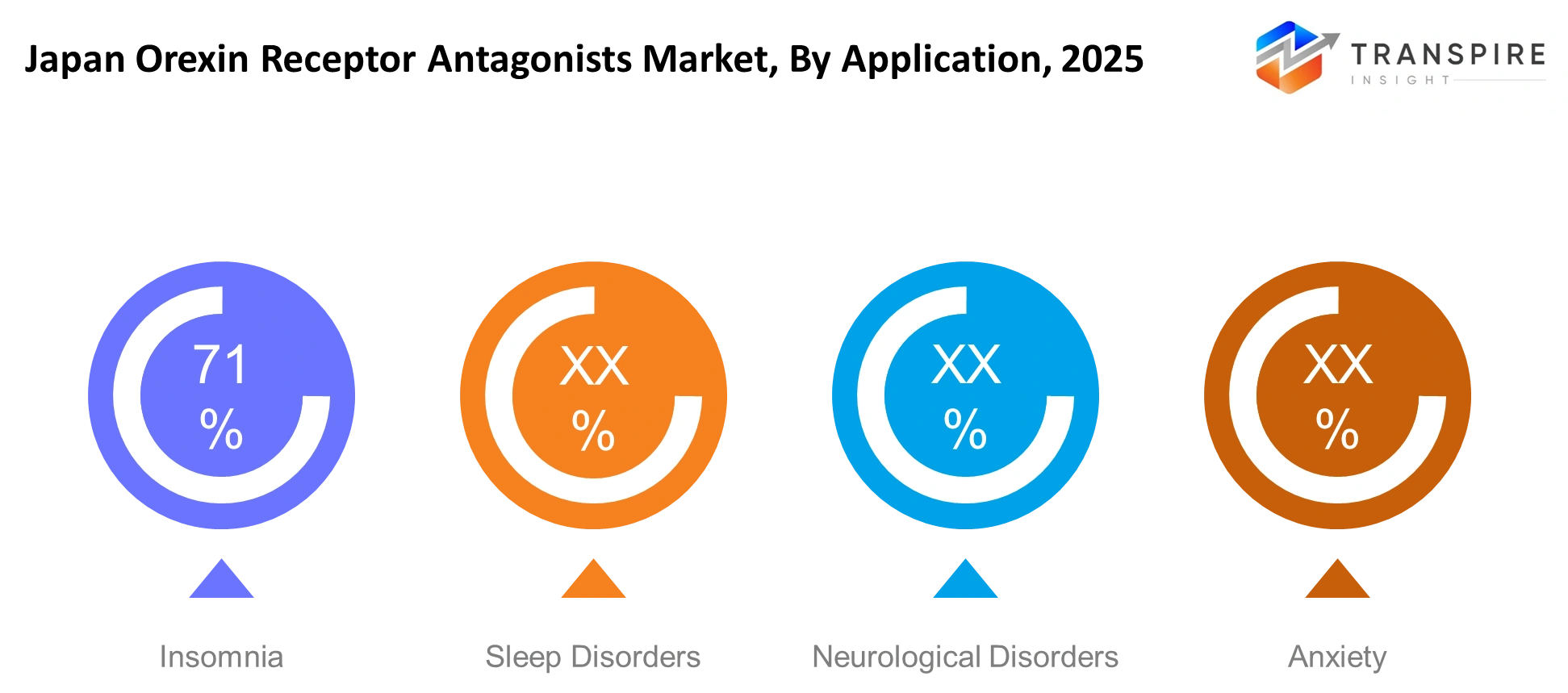
- Insomnia: Suvorexant prescribes its first orexin receptor antagonist to Japanese patients who suffer from chronic insomnia because the drug enables them to control their sleep and wake patterns. The drug establishes its status as the primary medication for hospitals and clinics and sleep disorder centers because it needs minimal dependency and produces effective results.
- Sleep Disorders: Lemborexant serves as a new type of orexin receptor antagonist which enables users to fall asleep more quickly while showing better results than previous treatments. The treatment decreases daytime sleepiness and negative side effects which has made it more popular among patients and doctors who want to use it as an extended solution for insomnia.
- Neurological Disorders: Daridorexant provides a solution for patients who suffer from severe insomnia because it delivers major enhancements to their sleep experience through increased sleep time and better sleep quality. The treatment gains acceptance within specialized medical facilities because it shows safe results with minor side effects which people in Japan now demand for newer orexin receptor therapies.
- Anxiety: This segment includes emerging or niche orexin receptor antagonists under clinical trials or early market entry. The products aim to create new treatment methods for insomnia and sleep disorders and neurological disorders which will meet medical requirements and create new treatment options in Japan.
To learn more about this report, Download Free Sample Report
By End-User
- Hospitals: The main purpose of hospitals serves as their primary function to distribute orexin receptor antagonist medications which doctors use to treat patients with severe insomnia and complex sleep disorders. The medications enable hospitals to provide proper patient care through their ability to manage sleep disorders which needs specialized treatment from trained medical professionals who need to observe their patients during the procedure.
- Clinics: Clinics together with general practitioners deliver customized insomnia treatment through their prescription of orexin receptor antagonists which they use to track patient development. The treatment facilities provide immediate access to medical care which enables medical personnel to provide urgent care and therapeutic adjustments for patients suffering from both immediate and ongoing sleep disorders.
- Sleep Centers: Diagnostic facilities at specialized sleep centers provide assessment capabilities together with focused treatment methods which address complicated sleep disorders that do not respond to standard therapies. In this facility orexin receptor antagonists restore normal sleep patterns which enable doctors to achieve optimal patient results through targeted medical treatment.
- Patients: Patients receive prescribed orexin receptor antagonists directly for home management of moderate to mild insomnia or sleep disturbances. Self-administration under physician guidance enables patients to manage their treatment safely while achieving better life quality through efficient medication use.
Country Insights
The increasing number of sleep disorders which affect the elderly population brings insomnia as the most common sleep disorder to Japan. The market expands continuously because advanced healthcare systems and patients who understand their health conditions and new treatment methods become more widely adopted by physicians who choose safer targeted treatments for sleep disorders.
The pharmaceutical research and development ecosystem in the country enables ongoing development of next-generation orexin receptor antagonists which help pharmaceutical companies obtain regulatory approval and create additional treatment options. The market expansion faces major obstacles because high drug prices and strict regulations limit access to specialty sleep centers and clinics which help patients accept treatment.
Recent Development News
- Dec 2024-The companies Shionogi & Co. and Nxera Pharma introduced QUVIVIQ™ at dosages of 25 mg and 50 mg for adult insomnia treatment in Japan, which established the first dual orexin receptor antagonists as available treatment options in the Japanese market.
- Sep 2025-The World Sleep 2025 conference in Singapore will feature Eisai Co. Ltd. presenting clinical research information about lemborexant (DAYVIGO®) and E2086, their new orexin receptor agonist.
|
Report Metrics |
Details |
|
Market size value in 2025 |
USD 743.5 Million |
|
Market size value in 2026 |
USD 827.4 Million |
|
Revenue forecast in 2033 |
USD 1608.2 Million |
|
Growth rate |
CAGR of 9.96% from 2026 to 2033 |
|
Base year |
2025 |
|
Historical data |
2021 – 2024 |
|
Forecast period |
2026 – 2033 |
|
Report coverage |
Revenue forecast, competitive landscape, growth factors, and trends |
|
Country scope |
Japan |
|
Key company profiled |
Eisai, Idorsia, Merck, Pfizer, Takeda, Astellas, Otsuka, Daiichi Sankyo, Sumitomo Pharma, Sanofi, Novartis, Roche, GSK, AstraZeneca, Teva |
|
Customization scope |
Free report customization (country, regional & segment scope). Avail customized purchase options to meet your exact research needs. |
|
Report Segmentation |
By Drug Type (Suvorexant, Lemborexant, Daridorexant, Others), By Application (Insomnia, Sleep Disorders, Neurological Disorders, Anxiety), By End-User (Hospitals, Clinics, Sleep Centers, Patients) |
Key Japan Orexin Receptor Antagonists Market Company Insights
The Japan orexin receptor antagonists market is dominated by global and domestic pharmaceutical leaders who develop new insomnia treatments while expanding their operations through research activities and product development and strategic partnerships. Companies such as Eisai and Merck and Pfizer and Takeda and Idorsia lead in R&D because they create next-generation dual orexin receptor antagonists which use improved safety and efficacy to treat severe insomnia and chronic insomnia. Domestic players like Otsuka and Daiichi Sankyo and Astellas and Sumitomo Pharma use their extensive local networks to improve hospital and clinic and sleep center access for physicians.
Multinational companies such as Novartis and Roche and Sanofi and GSK and AstraZeneca and Teva conduct clinical trials while forming partnerships to enhance their market presence. The competitive landscape expands through product introduction and regulatory approval and formulation development which creates multiple orexin receptor antagonists for Japanese patients whose demand for treatment and specialized sleep care solutions continues to grow.
Company List
- Eisai
- Idorsia
- Merck
- Pfizer
- Takeda
- Astellas
- Otsuka
- Daiichi Sankyo
- Sumitomo Pharma
- Sanofi
- Novartis
- Roche
- GSK
- AstraZeneca
- Teva
Japan Orexin Receptor Antagonists Market Report Segmentation
By Drug Type
- Suvorexant
- Lemborexant
- Daridorexant
- Others
By Application
- Insomnia
- Sleep Disorders
- Neurological Disorders
- Anxiety
By End-User
- Hospitals
- Clinics
- Sleep Centers
- Patients
Frequently Asked Questions
Find quick answers to common questions.
The Approximate Japan Orexin Receptor Antagonists Market size for the Market will be USD 1608.2 Million in 2033.
Key Segments for the Japan Orexin Receptor Antagonists Market are By Drug Type (Suvorexant, Lemborexant, Daridorexant, Others), By Application (Insomnia, Sleep Disorders, Neurological Disorders, Anxiety), By End-User (Hospitals, Clinics, Sleep Centers, Patients).
Major Japan Orexin Receptor Antagonists Market Players are Eisai, Idorsia, Merck, Pfizer, Takeda, Astellas, Otsuka, Daiichi Sankyo, Sumitomo Pharma, Sanofi, Novartis, Roche, GSK, AstraZeneca, Teva.
The Current Japan Orexin Receptor Antagonists Market size is USD 743.5 Million in 2025.
The Japan Orexin Receptor Antagonists Market CAGR is 9.96%.
- Eisai
- Idorsia
- Merck
- Pfizer
- Takeda
- Astellas
- Otsuka
- Daiichi Sankyo
- Sumitomo Pharma
- Sanofi
- Novartis
- Roche
- GSK
- AstraZeneca
- Teva
Recently Published Reports
-
May 2026
Biosimilars Market
Biosimilars Market By Product Type (Monoclonal Antibodies, Recombinant Hormones, Erythropoietin, G-CSF, Others), By Indication (Oncology, Autoimmune Diseases, Blood Disorders, Diabetes, Others), By Manufacturing Type (In-House Manufacturing, Contract Manufacturing), By Distribution Channel (Hospital Pharmacies, Retail Pharmacies, Online Pharmacies), By Industry Analysis, Size, Share, Growth, Trends, and Forecasts 2021-2033
-
Apr 2026
Gastrointestinal Endoscopy Market
Gastrointestinal Endoscopy Market By Type (Rigid Gastrointestinal Endoscope, Flexible Gastrointestinal Endoscopes, Disposable Gastrointestinal Endoscope), By Procedure Type (Colonoscopy, Gastroscopy, Duodenoscopy, Enteroscopy, Flexible Sigmoidoscopy, Others), By Application (Diagnosis, Treatment), By End-Users (Hospitals, Ambulatory Surgical Centers, Specialty Clinics, Laboratories, Others), By Industry Analysis, Size, Share, Growth, Trends, and Forecasts 2021-2033
-
Apr 2026
Rare Inherited Metabolic Disorder Drug Market
Rare Inherited Metabolic Disorder Drug Market By Drug Class (Enzyme Replacement Drugs, Gene Therapy Drugs, Substrate Reduction Drugs, Small Module Drugs, Protein Drugs), By Route of Administration(Parenteral, Oral, Intrathecal), By Clinical Development (Marketed Drugs, Late Stage Clinical Phase III, Early Stage Clinical Phase I-II, Preclinical Candidates), By Indication (Lysosomal Storage Disorders, Urea Cycle Disorders, Amino Acid Metabolic Disorders, organic Acidemias, Peroximal Disorders), By Industry Analysis, Size, Share, Growth, Trends, and Forecasts 2021-2033
-
Jan 2026
Pharmaceutical Cleanroom Technology Market
Pharmaceutical Cleanroom Technology Market By Product (Equipment, Consumables, Services); By Cleanroom Type (Standard Cleanrooms, Modular Cleanrooms); By End Use (Pharmaceutical Companies, Biotechnology Companies), By Industry Analysis, Size, Share, Growth, Trends, and Forecasts 2021-2033