

Japan Microparticulated Whey Protein Market Summary:
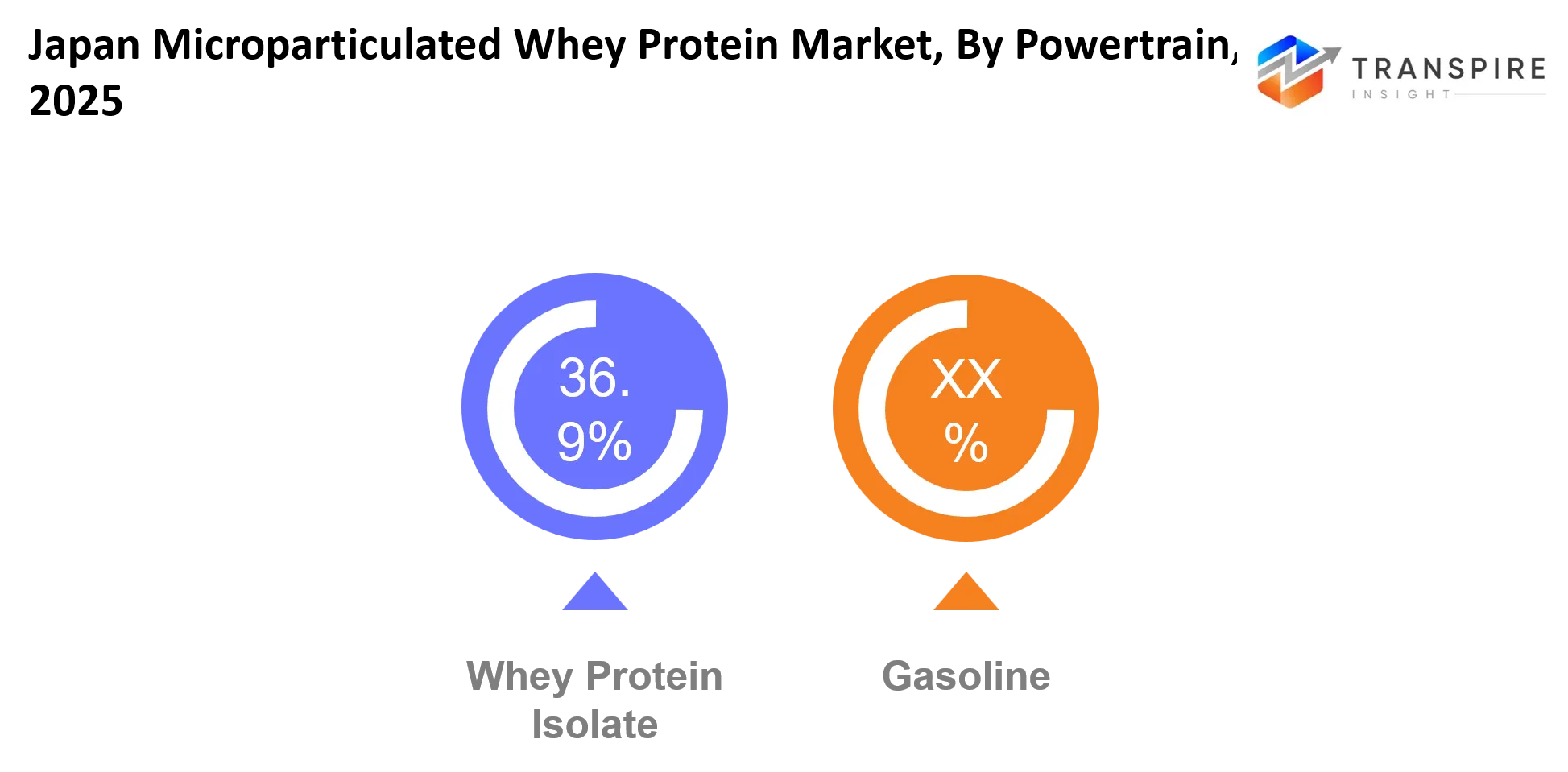
According to Transpire Insight, a detailed research report on the market reflects that the isolate segment dominates the Japan Microparticulated Whey Protein Market, accounting for approximately 50% of the market revenue in 2024. FrieslandCampina Ingredients is a key player in the market, supported by its Nutri Whey™ ProHeat Microparticulated whey protein, advanced microparticulation technology, and investments in high-value whey protein production, making it an important contributor to Japan market development, innovation, advanced Microparticulated whey protein production, expanding manufacturing capabilities, and growth dynamics.
Market Snapshot
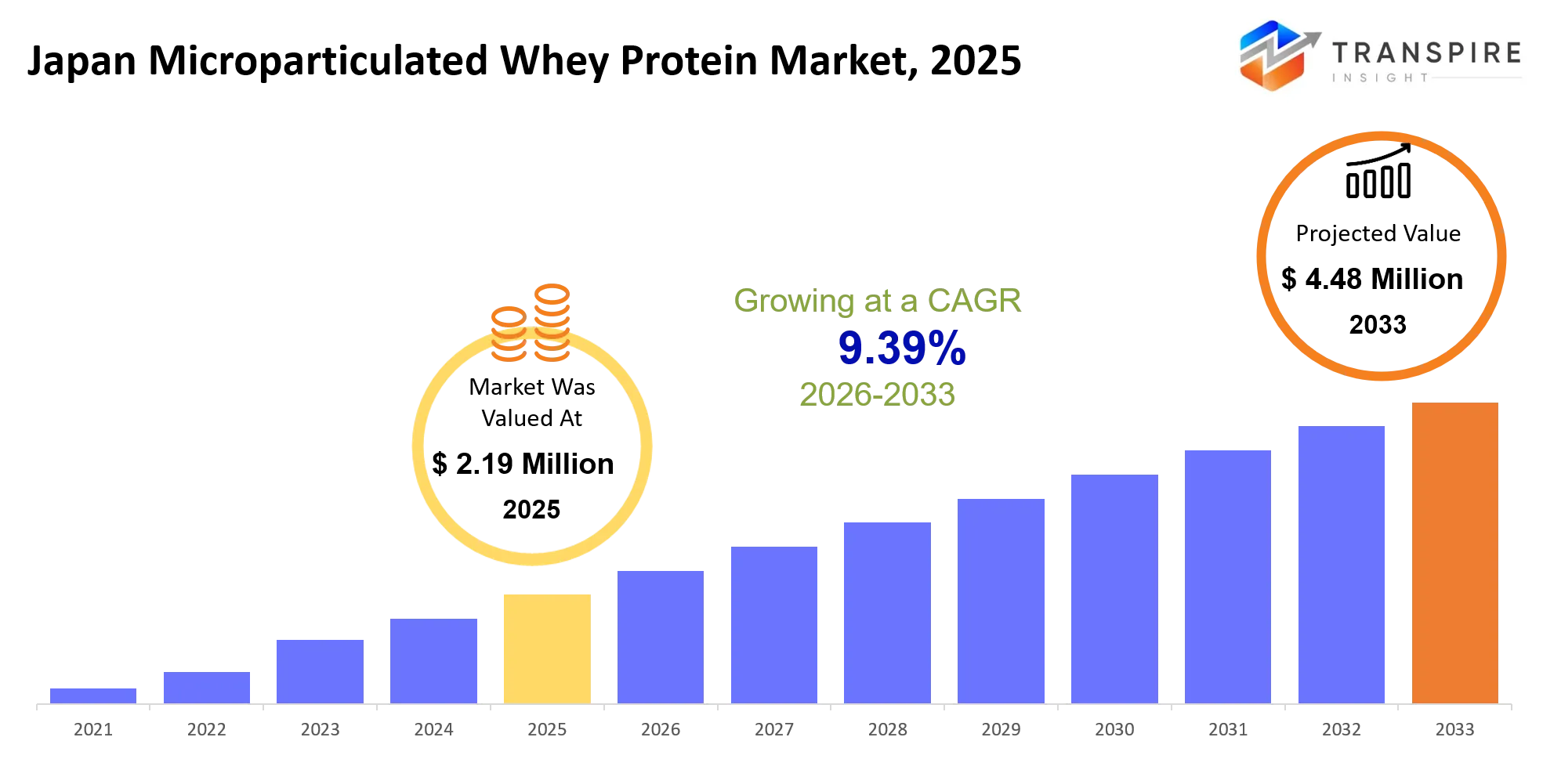
- Market Value (2025): USD 2.19 Million.
- Expected Market Value (2026): USD 2.39 Million.
- Estimated Market Value (2033): USD 4.48 Million.
- Forecast CAGR (2026–2033): 9.39%
Introduction
Microparticulated Whey Proteins include the processing, selling and usage of specific dairy ingredients that are obtained through transformation of whey proteins into micro particles via heat and mechanical force. The small particles are designed to mimic the smooth mouth feel of the fats making them natural fat substitutes while providing protein without additional fats in products such as yoghurt, beverages and ice cream. Microparticulated Whey Proteins (MWP) can be defined as highly processed, functional whey proteins which have been restructured via a concurrent thermal/mechanical process. The advantages of using microparticulated whey protein include enhanced digestion due to better particle uniformity and dispersibility. The high heat stability of microparticulated whey protein ensures that protein functionality remains intact even after the process of pasteurization or thermal processing without aggregation. Controlled particle size ensures good mouthfeel and allows smooth and creamy texture development in high protein ready-to-drink beverages and functional dairy beverages. Moreover, it is highly versatile from a functional perspective and allows increased protein content in low-calorie food and beverages, sports nutrition, and medical nutrition products.
Key Market Highlights: -
- By product type, the Microparticulated Whey Protein Concentrate segment dominated the market and holds nearly 47% share in 2025 and is projected to grow at a substantial CAGR during the forecast period.
- By application, the Functional Foods segment dominated the market and holds nearly 35% share in 2025 and is projected to grow at a substantial CAGR during the forecast period.
- By end user, the Food Manufacturers segment dominated the market and holds nearly 55% share in 2025 and is projected to grow at a substantial CAGR during the forecast period.
- Food Tech Strategy: Japan has made Food Tech a strategic priority sector by facilitating innovations in functional foods, food technology and alternative proteins via public and private sector investment programs. This strategy will bolster Japan’s food innovation system while simultaneously driving the innovation in protein and creating adjacent business opportunities for Japan Microparticulated Whey Protein Market.
How is Technology Driving Growth in the Japan Microparticulated Whey Protein Market?
Membrane filtration and micronization technologies help in increasing the purity, solubility, functionality, and texture of proteins. The use of such technologies enables the development of applications for protein-based beverages and nutrition products catering to the elderly generation of Japan. Technologies associated with industry 4.0, such as automation, robotics, artificial intelligence, and digital twins, increase efficiency and safety in production, along with overcoming challenges related to the shortage of laborers. Digitized supply chain systems are useful in improving the level of compliance with strict food safety standards prevalent in Japan. E-commerce and direct-to-consumer platforms help reach people beyond major metropolitan cities, while digital nutrition technologies can develop personalized products according to individual needs.
Market Drivers
Several structural and consumer trends are influencing the growth of Japan’s Microparticulated Whey Protein Market. The aging population is leading to an increasing need for protein products rich in leucine that make it easier to stay fit while providing consumers with all the advantages of muscle maintenance and a healthy lifestyle. The growth of health and fitness trends allows the sports nutrition sector to develop actively among consumers of all ages. The growth of the functional food sector is positively affecting the demand for high-protein drinks and meals. Clean-label trends favour Microparticulated whey protein due to its excellent nutritional values and convenient use in food production. Meanwhile, innovative technologies in the food processing industry, automation, and precision technology are bringing the following advantages to the companies in this area: high solubility, consistent quality, and excellent performance level. The unique technology of Microparticulated whey protein brings notable advantages to the market in Japan relating to the ingredient. The features of Microparticulated whey protein in terms of digestibility and solubility are explained by the uniformity in the protein structure, which helps with the formulation and is accepted by consumers well. The process of fat and texture replacement results in the product with a creamy texture while lowering the fat content, which promotes low-fat food and on-the-go beverages. Thanks to the excellent properties of heat stability of Microparticulated whey, the process of protein aggregation takes place minimally during the pasteurization and other processes at high temperatures. These technologies existing in Japan are known for supporting modern production, which is oriented on strict requirements that innovate other segments of products.
Restrain
The Japan Microparticulated Whey Protein Market faces several restraints, including high processing and equipment costs, import dependence, currency and logistics volatility, and competition from plant-based proteins. Stringent food-safety regulations and functional-claim requirements can increase compliance expenses and commercialization timelines. Additionally, lactose sensitivity and premium pricing may limit consumer adoption, particularly among price-conscious consumers, despite advances in highly digestible whey formulations.
|
Driver |
Relative Impact on Growth (%) |
Geographic Relevance |
Impact Timeline |
Demand Strength |
Growth Mechanism |
Key Beneficiaries |
Major Constraint |
|
Driver 1: Rising Demand for High-Protein Functional Foods and Beverages |
28% |
Nationwide; strongest in Tokyo, Osaka, Nagoya |
Short-term |
High |
Expands protein fortification across convenient nutrition products. |
Protein manufacturers, food processors, beverage companies, retailers |
Higher ingredient costs can limit formulation adoption. |
|
Driver 2: Aging Population and Healthy-Aging Nutrition Demand |
23% |
Nationwide; particularly urban and elderly-populated regions |
Long-term |
High |
Supports protein products targeting muscle maintenance and healthy aging. |
Medical nutrition firms, dairy manufacturers, senior-care providers |
Taste, affordability, and consumer acceptance constrain adoption. |
|
Driver 3: Advanced Microparticulation and Protein Processing Technologies |
20% |
Nationwide manufacturing and technology clusters |
Medium-term |
High |
Improves solubility, texture, heat stability, and protein functionality. |
Ingredient manufacturers, processing-equipment vendors, food formulators |
Specialized equipment and processing expertise increase investment requirements. |
|
Driver 4: Expansion of Food Tech and Functional Food Innovation |
16% |
Nationwide; strongest around innovation and manufacturing hubs |
Medium-term |
Medium |
Accelerates commercialization of innovative protein-based food solutions. |
Food-tech startups, ingredient suppliers, research institutions, manufacturers |
Technology commercialization requires substantial R&D and validation. |
|
Driver 5: Growth of Sports Nutrition and Convenient RTD Protein Products |
13% |
Major metropolitan areas and nationwide retail channels |
Short-term |
Medium |
Increases demand for smooth, convenient, protein-rich beverage formulations. |
Sports nutrition brands, beverage manufacturers, retailers, ingredient suppliers |
Competition from alternative protein ingredients pressures pricing. |
|
Total |
100% |
— |
— |
— |
— |
— |
— |
Analysis of Prices and Consumer Behaviour
Isolate accounts for nearly 50% of total market revenues from Microparticulated whey protein in 2024, mainly because of its demand in sports nutrition, functional food, and nutritional applications. Premium pricing of 30-50% above standard whey protein concentrate (WPC80) in Japan will apply because of the advanced nature of manufacturing process, particle size control, and functional performance in applications. Around 10-15% of Microparticulated whey protein sales volume is accounted for by agglomerated or instantized forms of Microparticulated whey protein used for quick dispersibility in beverages. Sales volumes are based on the multi-usefulness of the Microparticulated whey protein in making reduced-fat dairy products, nutritional beverages, and functional foods with improved texture and protein functionality. Health and wellness food manufacturing contributes 50-55% of total Microparticulated whey protein usage. The consumer purchasing pattern shows that protein functionality, product quality, and nutrition performance are among the factors to consider when buying whey protein products, whereas demand in Japan increasingly relies on convenient protein formats and functional nutrition. Clean-label product development contributes another 20-25% of total Microparticulated whey protein consumption.
Who are the Key Players in the Japan Microparticulated Whey Protein Market and how do they compete?
Competition within the Japanese market for microparticulated whey proteins is dependent upon companies that are focused on innovative protein technologies, applications-specific formulations, quality products, and efficient distribution channels. Not only competing based on pricing, but rather based on improved protein functionality, solubility, texture, digestion, clean label, and formulation flexibility, such a type of competition helps ensure the continuous development of products and helps food manufacturers to deliver nutritional benefits, sensory and process efficiencies.
The development of advanced whey protein ingredients and innovative technologies gives FrieslandCampina Ingredients the competitive advantage in the market. Providing high quality whey protein ingredients for sports nutrition, functional foods, beverages, and medical nutrition, companies gain competitive advantages in terms of application-specific functionalities and formulations. Arla Foods Ingredients builds its competitive advantage through the development of specialized whey protein ingredients and nutritional solutions aimed at food, beverages, sports nutrition and health applications.
Top Companies in the Japan Microparticulated Whey Protein Market
- Fonterra
- Arla Foods Ingredients
- Glanbia Nutritionals
- FrieslandCampina Ingredients
- Lactalis Ingredients
- Hilmar Ingredients
- Agropur
- Milk Specialties Global
- Kerry Group
- Leprino Foods
- Carbery
- Tatua
- Davisco
- DMK Group
- Morinaga Milk Industry
|
Company |
Est. Revenue Share Range |
Key Offerings |
Strategic Positioning |
Geographic Strength |
Technology Focus |
|
FrieslandCampina Ingredients |
12–18% |
Nutri Whey™ ProHeat; heat-stable microparticulated whey; RTD protein solutions; medical nutrition |
Technology-led premium MWP specialist |
Europe; Asia Pacific; North America |
Patent-pending microparticulation and heat stabilization |
|
Arla Foods Ingredients |
8–13% |
Lacprodan® whey proteins; WPI; WPC; hydrolysates; medical nutrition ingredients |
Premium whey innovation and application expertise |
Europe; Asia Pacific; North America |
Membrane filtration, fractionation and protein functionality |
|
CP Kelco |
6–10% |
SIMPLESSE® microparticulated whey protein concentrate; dairy beverages; sports beverages; texture systems |
Texture-focused specialty ingredient differentiation |
North America; Europe; Asia Pacific |
Microparticle engineering, stabilization and mouthfeel optimization |
|
Leprino Foods |
5–9% |
Whey protein concentrates; whey protein isolates; dairy protein ingredients; functional nutrition solutions |
Vertically integrated dairy ingredient supplier |
North America; Asia Pacific; Europe |
Advanced whey fractionation and dairy processing |
|
Fonterra Co-operative Group |
5–9% |
NZMP™ whey proteins; WPC; WPI; dairy protein ingredients; application solutions |
Global dairy supply and regional distribution strength |
Asia Pacific; North America; Europe |
Membrane separation, fractionation and dairy processing |
|
Glanbia plc |
4–8% |
Whey protein isolates; concentrates; specialized nutrition ingredients; RTD solutions |
Nutrition portfolio diversification and formulation expertise |
North America; Europe; Asia Pacific |
Protein processing, filtration and formulation technology |
|
Lactalis Ingredients |
3–7% |
Whey protein concentrates; whey protein isolates; dairy ingredients; nutritional formulations |
Integrated dairy sourcing and ingredient specialization |
Europe; Asia Pacific; North America |
Dairy fractionation and ingredient processing |
|
Carbery Group |
2–5% |
Whey protein ingredients; Optipep®; Carbelac®; sports and functional nutrition |
Specialty protein and formulation-led differentiation |
Europe; North America; Asia Pacific |
Hydrolysis, filtration and sensory optimization |
|
Hilmar Ingredients |
2–5% |
Whey protein concentrates; whey protein isolates; dairy protein ingredients; nutritional solutions |
High-quality whey ingredient specialization |
North America; Asia Pacific; Europe |
Whey fractionation, filtration and drying technologies |
|
Sooro Renner |
1–4% |
Whey protein concentrates; whey isolates; dairy ingredients; nutritional applications |
Regional dairy protein expansion and cost efficiency |
Latin America; North America; Asia Pacific |
Whey processing, concentration and drying technology |
Japan Microparticulated Whey Protein Market Segmentation
The Japan Microparticulated Whey Protein Market share is divided into six categories: By product type, protein content, application, form, end user and distributed channel.
The Microparticulated Whey Protein Concentrate dominated the market, accounting for nearly 47% in 2025 and is expected to rise at a significant CAGR during the forecast period.
The Japan Microparticulated Whey Protein Market is segmented by product type into Microparticulated Whey Protein Concentrate, Microparticulated Whey Protein Isolate, Microparticulated Whey Protein Hydrolysate, Instantized Whey, Native Whey, Low-Fat Whey, High-Protein Whey, Specialty Whey. Among these, the Microparticulated Whey Protein Concentrate segment dominated the market, accounting for nearly 47% in 2025 and expected to increase at a significant CAGR during the forecast period. In addition, the popularity of Microparticulated Whey Protein Concentrate was attributed to its high protein content, excellent solubility, and smooth texture. This whey protein concentrate accounted for about 47% of the entire market in 2025 owing to its high efficiency and effectiveness in sports nutrition and dietary supplements among others.
The Functional Foods dominated the market, accounting for nearly 35% in 2025, and is expected to rise at a significant CAGR during the forecast period.
The Japan Microparticulated Whey Protein Market is segmented by application into Sports Nutrition, Functional Foods, Beverages, Infant Nutrition, Clinical Nutrition, Dairy Products, Bakery, Nutraceuticals. Among these, the Functional Foods segment dominated the market, accounting for nearly 35% in 2025 and expected to increase at a significant CAGR during the forecast period. Functional Foods were the major products held by the market share, having nearly 35% of the market share in 2025, because of the growing need for products that were high on proteins and had better texture and were more nutritious. The microparticulation process for whey protein is good for the development of such products.
The Food Manufacturers dominated the market, accounting for nearly 55% in 2025 and is expected to rise at a significant CAGR during the forecast period.
The Japan Microparticulated Whey Protein Market is segmented by end user into Sports Nutrition Companies, Food Manufacturers, Beverage Companies, Dairy Producers, Infant Formula Companies, Pharmaceutical Companies, Nutraceutical Companies, Foodservice. Among these, the Food Manufacturers segment dominated the market, accounting for nearly 55% in 2025 and expected to increase at a significant CAGR during the forecast period. The Food Manufacturers segment occupied almost 55% of the global whey protein market share in 2025 owing to rising usage of whey protein microparticles in functional foods, milk-based products, beverages, and nutrition mixes. Better solubility, better texture, protein fortification, and fat reduction properties of microparticulated whey protein facilitate food production, and hence, its application in innovative food products is encouraged among manufacturers.
Future Market Trends for the Japan Microparticulated Whey Protein Market: -
- Elderly Population Demographics: Increasing need for specialized dietary foods and medical use of food to eliminate muscle loss (sarcopenia).
- Intelligent Manufacturing: automation processes and technologies in creating protein products that can enhance protein solubility and digestibility.
- Clean products and sustainability: tendency of consumers towards the use of ingredients that are natural and organic and contain the least amount of processing.
- Individual needs in food: movement towards providing customized healthy proteins matching special dietary and way of living needs of each client.
- Product range diversification: growing popularity of Microparticulated whey in such products as dairy fortified products and beverages and snacks instead of using only traditional dry powder form.
Recent Development
- In August 2026: VINEGAR PROTEIN is a newly released product by KINS, a Japanese brand specializing in the production of microbiome products. This functional drink is in powder form, and its uniqueness is seen in the taste that resembles vinegar. The release of this product is driven by the increasing need for functional proteins beverages in Japan.
- In February 2026: In Danone's report, the strong performance of its high-protein products has been noted in the Asia-Pacific region with Japan being seen as an important market. This is because of Danone's continued development of new products that can cater to the increasing consumer preference for convenient, functional, and nutritionally fortified protein products.
Market Segment
This study forecasts revenue at Japan, regional and country levels from 2020 to 2033. Transpire Insight has segmented the Japan Microparticulated Whey Protein Market based on the below-mentioned segments:
Japan Microparticulated Whey Protein Market, By Product Type
- Microparticulated Whey Protein Concentrate
- Microparticulated Whey Protein Isolate
- Microparticulated Whey Protein Hydrolysate
- Instantized Whey
- Native Whey
- Low-Fat Whey
- High-Protein Whey
- Specialty Whey
Japan Microparticulated Whey Protein Market, By Protein Content
- Below 70%
- 70–80%
- 80–85%
- 85–90%
- 90–95%
- Above 95%
- Low-Lactose
- Lactose-Free
Japan Microparticulated Whey Protein Market, By Application
- Sports Nutrition
- Functional Foods
- Beverages
- Infant Nutrition
- Clinical Nutrition
- Dairy Products
- Bakery
- Nutraceuticals
Japan Microparticulated Whey Protein Market, By Form
- Powder
- Instant Powder
- Granules
- Liquid
- Concentrate
- Isolate
- Hydrolysate
- Blended Form
Japan Microparticulated Whey Protein Market, By End User
- Sports Nutrition Companies
- Food Manufacturers
- Beverage Companies
- Dairy Producers
- Infant Formula Companies
- Pharmaceutical Companies
- Nutraceutical Companies
- Foodservice
Japan Microparticulated Whey Protein Market, By Distribution channel
- Direct Sales
- Ingredient Distributors
- Supermarkets
- Specialty Nutrition Stores
- Pharmacies
- Online Retail
- Wholesale
- E-Commerce
Frequently Asked Questions
Find quick answers to common questions.
The market is projected to grow at 9.39% CAGR from 2026–2033, reaching approximately USD 4.48 million by 2033
Microparticulated Whey Protein Concentrate dominates, accounting for approximately 47% in 2025, driven by solubility, protein content, and formulation flexibility.
Functional Foods lead the application segment with approximately 35% share in 2025, supported by demand for protein-enriched, nutritious products.
Major Drivers include healthy-aging nutrition, functional foods, sports nutrition, RTD protein beverages, food-tech innovation, and advanced microparticulation technologies
Key players include FrieslandCampina Ingredients, Arla Foods Ingredients, Fonterra, Glanbia Nutritionals, Lactalis Ingredients, Hilmar Ingredients, and Leprino Foods.
- Fonterra
- Arla Foods Ingredients
- Glanbia Nutritionals
- FrieslandCampina Ingredients
- Lactalis Ingredients
- Hilmar Ingredients
- Agropur
- Milk Specialties Global
- Kerry Group
- Leprino Foods
- Carbery
- Tatua
- Davisco
- DMK Group
- Morinaga Milk Industry
About the Authors

Chetan Dhatrak
I’m Chetan Dhatrak, a Senior Research Analyst at Transpire Insight, specializing in the Consumer Goods, Foods and Beverages industry. I focus on analyzing market trends, consumer behavior, competitive landscapes, and industry developments to deliver accurate, data-driven insights. My research at Transpire Insight is built on credible sources and in-depth analysis, helping businesses and readers better understand market dynamics, emerging opportunities, and evolving consumer preferences. I’m committed to creating reliable, well-researched content that supports informed decision-making and reflects the latest developments in the consumer goods and food & beverage sectors.

Chakradhar Khansole
Chakradhar serves as the Research Director at Transpire Insight, bringing over 8 years of experience in technology, innovation, and strategic market intelligence. He specializes in transforming complex market data into actionable business insights that enable organizations to make informed, growth-oriented decisions. Recognized for his strategic vision and analytical expertise, Chakradhar leads high-impact research initiatives, delivering comprehensive market assessments, competitive intelligence, and forward-looking industry analysis.
Recently Published Reports
-
Apr 2026
Baby Infant Formula Market
Baby Infant Formula Market Size, Share & Analysis Report By ype (Infant Milk, Follow On Milk, Specialty Baby Milk, Growing-Up Milk), By Ingredient (Carbohydrate, Fat, Protein, Minerals, Vitamins, and Others), By Product Form (Powder, Liquid, and Ready-to-feed), By Distribution Channels (Supermarket/Hypermarket, Specialty Store, Pharmacies, Online Retail, and Others), and Geography (North America, Europe, Asia-Pacific, Middle East and Africa, South and Central America), 2021 - 2031
-
Apr 2026
Edible Insects for Animal Feed Market
Edible Insects for Animal Feed Market Size, Share & Analysis Report By Type (Insect Powder, Insect Meal, Insect Bar, Insect Paste, Insect Oil, and Others), By Insect Type (Beetles, Cricket, Caterpillar, Hymenoptera, Orthoptera, Tree Bugs, and Others), By Application (Livestock, Pet Food, and Aquaculture), By Livestock Type (Poultry, Swine, and Others), and Geography (North America, Europe, Asia-Pacific, Middle East and Africa, South and Central America), 2021 - 2031
-
Apr 2026
Food Industry Disinfection and Bacterial Control Market
Food Industry Disinfection and Bacterial Control Market Size, Share & Analysis Report By Type (Chemical Disinfectants, Physical Disinfectants, and Biocides and Antimicrobials), By Application (Food Processing Equipment Surface Disinfection, Food Preparation Areas Surface Disinfection, Storage Areas Surface Disinfection, Anti-microbial Coatings Food Preservation, and Preservative Solutions Food Preservation), By End User (Meat and Poultry Processing, Dairy Processing, Seafood Processing, Bakery and Confectionery, Restaurants and Commercial Kitchens, and Food Service Providers), By Sales Channel (Online, Offline), and Geography (North America, Europe, Asia-Pacific, Middle East and Africa, South and Central America), 2021 - 2031
-
May 2026
Freeze Dried Food Market
Freeze Dried Food Market Size, Share & Analysis Report By Product Type (Fruits, Vegetables, Freeze-Dried Dairy Products, Freeze-Dried Meat and Seafood, Freeze-Dried Pet Food, and Prepared Meal), By Nature (Organic, and Conventional), By Form (Powdered, Granules, and Diced), By End Use (Breakfast Cereals, Dairy Products, Bakery & Confectionery, Nutritional Bars & Supplements, Powdered Beverages, Snacks, and Retail (Household)), and Geography (North America, Europe, Asia-Pacific, Middle East and Africa, South and Central America), 2021 - 2031