

Japan Leukotriene Inhibitors Market Summary:
According to Transpire Insight, a detailed research report on the market reflects that the bronchial asthma application segment dominates the Japan Leukotriene Inhibitors Market, accounting for approximately 70% of total market demand, driven by continued use of leukotriene receptor antagonists for asthma management. Kyorin Pharmaceutical Co., Ltd. leads the market with approximately ¥13.6 billion in annual sales from Kipres and Montelukast “KM” in FY2025, contributing significantly to Japan market development, therapeutic innovation, manufacturing capabilities, and growth dynamics.
Market Snapshot
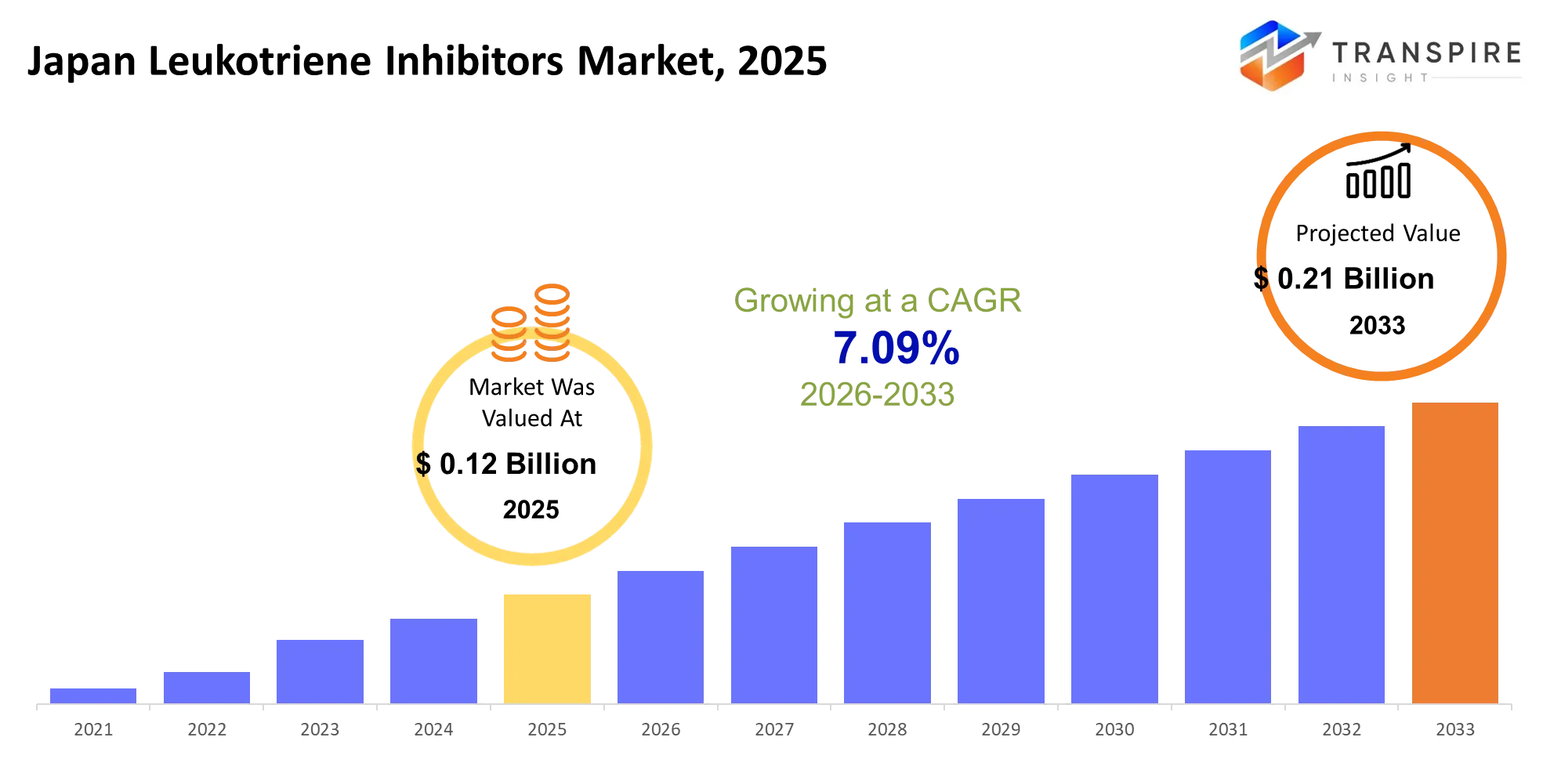
- Market Value (2025): USD 0.12 Billion.
- Expected Market Value (2026): USD 0.13 Billion.
- Estimated Market Value (2033): USD 0.21 Billion.
- Forecast CAGR (2026–2033): 7.09%
Introduction
The Japanese market for Leukotriene Inhibitors consists of a market as this is the market for all prescription or generic drugs that help to block or change the effectiveness of leuko-triene to treat chronic inflammatory respiratory conditions, such as asthma and allergic rhinitis. Interferers of leukotrienes (or modifiers) this term refers to medicines taken orally, some of which belong to the category of anti-inflammatory non-hormonal medicines. The opportunities in the market for leukotriene inhibitors in Japan emanate from existing therapeutic technologies, easy oral intake, and the endless need for managing respiratory disorders. This explains why the oral formulations of these antagonists provide highly effective means of treatment for bronchial asthma and allergic rhinitis patients. The unique mechanism used by leukotriene inhibitors permits using this approach for treating bronchial asthma and allergic rhinitis patients who may benefit from corticosteroid-sparing treatment. Apart from that, the drug's safety profile allows doctors to effectively prescribe leukotriene inhibitors for the showings of broad pharmacological efficacy and ability to enhance the tolerability of treatment. Moreover, the continued use of generics, growing manufacturing capabilities in the area, improved access to healthcare and the ongoing development of respiratory therapies would allow for using this market effectively by producers.
Key Market Highlights: -
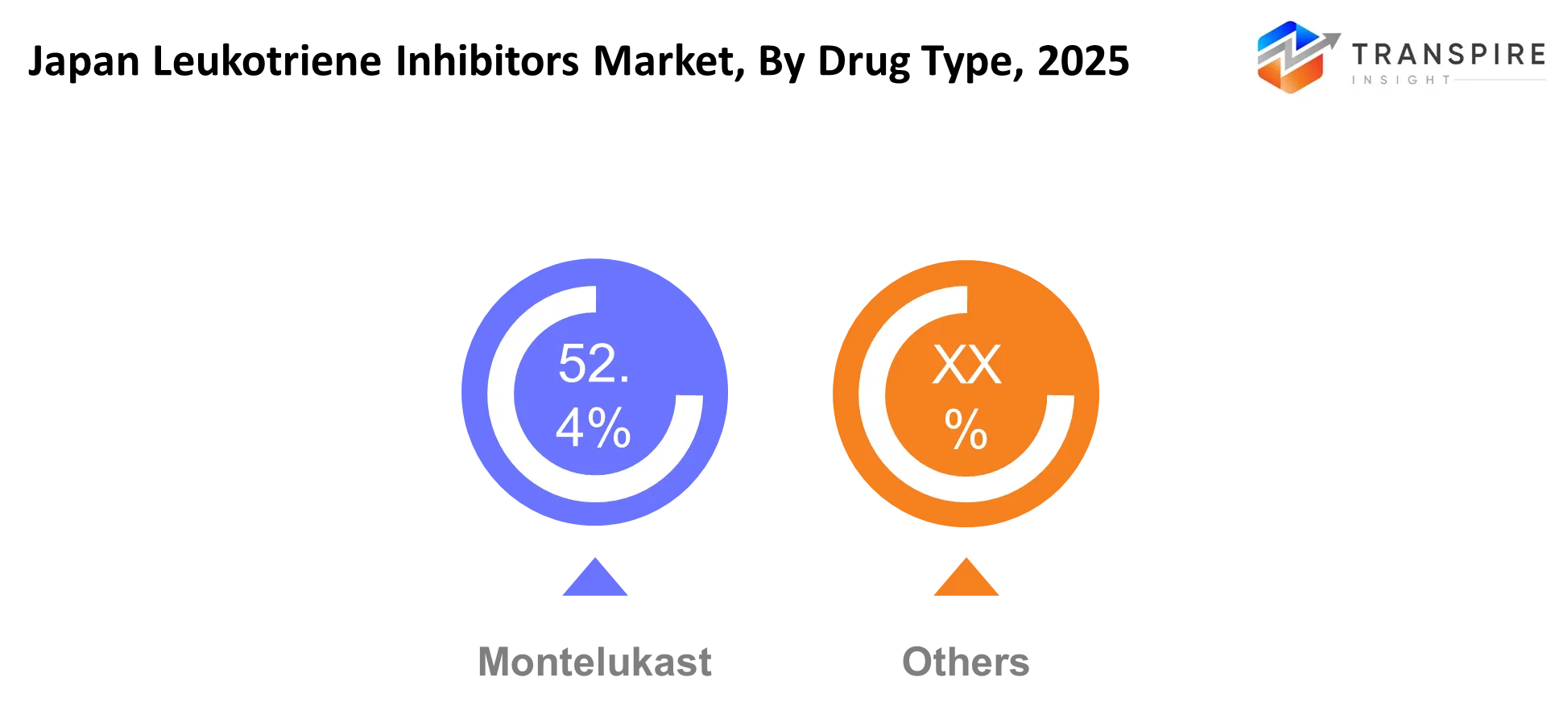
- By drug type, the Montelukast segment dominated the market and holds nearly 67% share in 2025 and is projected to grow at a substantial CAGR during the forecast period.
- By application, the Asthma segment dominated the market and holds nearly 58% share in 2025 and is projected to grow at a substantial CAGR during the forecast period.
- By end user, the Hospitals segment dominated the market and holds nearly 40% share in 2025 and is projected to grow at a substantial CAGR during the forecast period.
- Japanese National Insurance and Copayment System: The universal national health insurance system of Japan typically involves patients paying 10%, 20%, or 30% of their medical bills, based on age and earnings. This reimbursement scheme helps make leukotriene inhibitors accessible through prescription for bronchial asthma and allergic rhinitis in Japan.
How is Technology Driving Growth in the Japan Leukotriene Inhibitors Market?
Technology is playing an increasingly significant role in the growth of the Japan Leukotriene Inhibitors Market thanks to its cutting-edge innovations such as automation, AI, and digital health technologies. Improved use of automation and robots leads to higher efficiency of pharmaceutical production, better packaging accuracy, quality control, and supply chain reliability. AI technologies and data science can contribute to efficient drug discovery and development, partly by enabling personalized respiration care. Connected health solutions, remote monitoring devices, and electronic health records systems also help to improve patient management and treatment optimization. These advanced technologies facilitate further growth of pharmaceutical companies in the country.
Market Drivers
There are many structural factors that contribute to Japan leukotriene inhibitors market growth. Increased incidence of diseases, such as bronchial asthma and allergic rhinitis, along with regular exposure to environmental allergens creates demand for leukotriene receptor antagonists. Also, due to the aging population of Japan, long-term management of chronic respiratory diseases becomes necessary. Due to comprehensive healthcare coverage, prescription drugs can be obtained at hospitals and clinics, and improved availability of affordable generic leukotriene inhibitors facilitates the access to treatment. Moreover, Japan has a modern healthcare system, pharmaceutical research and development capabilities, quality standards, and manufacturing systems which together contribute to good product development. The Japan Leukotriene Inhibitors Market has numerous therapeutic and economic advantages. Treatment with oral administration offers a convenient form of therapy when compared to inhalation and injection therapies, strengthening adherence to treatment in various patient categories. Existing leukotriene receptor blockers have well-defined clinical usage for asthma and allergies since their mode of action is based on the effect of leukotrienes. Additionally, the presence of generics can positively increase the overall cost and availability of treatments, increasing their availability in Japan’s healthcare system. All these factors in combination with existing patterns of prescription usage, good pharmaceutical quality standards, and stable demand for respiratory treatments boost this market's growth and provide manufacturers of leukotriene blockers with competitive prospects on it.
Restrain
There are several restraints affecting the growth of the Japan Leukotriene Inhibitors Market, such as neuopsychiatric safety issues due to montelukast, strong competition from applications involving ICS/LABA combinations and biologics, patients not adhering to long-term therapy, and notable decline in prices of generic products marketed on the market. Additionally, there is a limited launch of new leukotriene inhibitors in the market, which affects overall revenue growth and innovation. In addition, there may be a need to abide by the evolving asthma treatment guidelines which may impact further growth of the "leukotriene inhibitors".
|
Driver |
Relative Impact on Growth (%) |
Geographic Relevance |
Impact Tim eline |
Demand Strength |
Growth Mechanism |
Key Beneficiaries |
Major Constraint |
|
Driver 1: Persistent Asthma and Allergic Rhinitis Treatment Demand |
28% |
Japan — nationwide |
Long-term |
High |
Sustains prescriptions for chronic respiratory management |
Drug manufacturers, hospitals, respiratory clinics |
Competition from inhaled combination therapies |
|
Driver 2: Expanding Generic and Authorized-Generic Availability |
24% |
Japan — nationwide |
Short-term |
High |
Improves affordability and expands prescription accessibility |
Generic manufacturers, wholesalers, patients |
Price erosion limits manufacturer revenue growth |
|
Driver 3: Established Oral Montelukast Treatment Infrastructure |
20% |
Japan — nationwide |
Medium-term |
High |
Supports continued physician prescribing and product utilization |
Montelukast manufacturers, pharmacies, hospitals |
Neuropsychiatric safety concerns affect prescribing |
|
Driver 4: Pharmaceutical Manufacturing and Supply-Chain Modernization |
15% |
Japan — major pharmaceutical manufacturing regions |
Medium-term |
Medium |
Improves production efficiency, quality, and supply reliability |
Manufacturers, technology vendors, wholesalers |
High compliance and manufacturing investment costs |
|
Driver 5: AI, Digitalization, and Data-Enabled Pharmaceutical Development |
13% |
Japan — nationwide |
Long-term |
Medium |
Accelerates drug development, quality management, and patient monitoring |
Pharmaceutical companies, AI vendors, healthcare providers |
Limited direct impact on mature drug demand |
Analysis of Prices and Consumer Behaviour
Montelukast-based leukotriene receptor antagonists are the widely traded products in Japan leukotriene inhibitors market, as these products have been utilized in bronchial asthma and allergic rhinitis treatment. Kyorin Pharmaceutical announced ¥13.6 billion sales from Kipres (¥2.2 billion) and Montelukast “KM” (¥11.4 billion) in FY2026. The branded leukotriene inhibitors may have different pricing compared to generic products due to various factors like branding, production, formulation, and distribution. In Japan, there are around 45% of unit sales which cannot be calculated from Japan-wide available data. The sales are majorly relied on the approved use for respiratory and allergic conditions, ease of oral administration, and availability of generic products. Bronchial asthma and allergic rhinitis indications are primary application areas of demand, since Kyorin has approved both indications for montelukast. The purchasing behavior of healthcare providers indicates that 55% cannot be precisely established based on Japan-specific market data, even though the functional efficacy, safety, compliance with regulations and prices are the significant issues of procurement. For this reason, 33% of buyers cannot be quantified for bulk and long-term contracts, since Japan-wide procurement statistics for leukotriene inhibitors are not available.
Who are the Key Players in the Japan Leukotriene Inhibitors Market and how do they compete?
Competitiveness in the Japan Leukotriene Inhibitors Market continues to depend on the presence of companies involved in leukotriene receptor antagonists, respiratory medications, generic drugs, and established operational distribution networks of various goods marketed for the treatment of illnesses. Thus, competition stems from the effectiveness of treatments, availability of drugs, regulatory compliance, product prices, reliability of the supply chain, and manufacturing capabilities. Consequently, companies compete through their branded and generic medications developed with montelukast and other leukotriene inhibitors.
Kyorin Pharmaceutical Co., Ltd. strengthens its position in the Japan Leukotriene Inhibitors Market via various leukotriene receptor antagonists, which include its Kipres and montelukast “KM” medications. The company offers these drugs for people suffering from allergic rhinitis and bronchial asthma. MSD K.K. is involved in the competition because of its Singulair medication. Meanwhile, Merck & Co., Inc. is responsible for the development of montelukast products. The company continues to strengthen its competitive position via the use of its generic montelukast medications.
Top Companies in the Japan Leukotriene Inhibitors Market
- Merck
- Organon
- Otsuka Pharmaceutical
- AstraZeneca
- GSK
- Novartis
- Sanofi
- Takeda
- Chiesi
- Teva
- Cipla
- Dr. Reddy's Laboratories
- Eisai
- Shionogi
- Kyoritsu Seiyaku
|
Company |
Est. Revenue Share Range |
Key Offerings |
Strategic Positioning |
Geographic Strength |
Technology Focus |
|
Kyorin Pharmaceutical Co., Ltd. |
15–25% (Estimated) |
Kipres; Montelukast “KM”; montelukast tablets |
Established Japanese respiratory portfolio leadership |
Japan; Asia-Pacific |
Generic manufacturing and respiratory formulations |
|
MSD K.K. |
10–18% (Estimated) |
Singulair tablets; Singulair chewables; Singulair granules |
Branded montelukast and established clinical franchise |
Japan; North America; Europe |
Formulation development and clinical evidence |
|
Ono Pharmaceutical Co., Ltd. |
8–14% (Estimated) |
Onon capsules; Onon dry syrup; pranlukast |
Branded pranlukast specialization and pediatric formulations |
Japan; Asia-Pacific |
Oral and pediatric formulation technologies |
|
Sawai Pharmaceutical Co., Ltd. |
5–10% (Estimated) |
Montelukast tablets; OD tablets; chewables; granules |
Broad generic portfolio and cost competitiveness |
Japan; Asia-Pacific |
Generic formulation and manufacturing automation |
|
Towa Pharmaceutical Co., Ltd. |
4–8% (Estimated) |
Montelukast tablets; chewables; granules |
Value-focused generic respiratory portfolio |
Japan; Asia-Pacific |
High-volume generic manufacturing systems |
|
Nipro Corporation |
3–7% (Estimated) |
Montelukast tablets; granules; pediatric formulations |
Integrated pharmaceutical supply and generic reach |
Japan; Asia-Pacific; Global |
Pharmaceutical manufacturing and quality systems |
|
Nichi-Iko Pharmaceutical Co., Ltd. |
3–6% (Estimated) |
Montelukast tablets; chewables; pranlukast products |
Broad generic access and competitive pricing |
Japan; Asia-Pacific |
Generic production and supply-chain capabilities |
|
Daiichi Sankyo Espha Co., Ltd. |
3–6% (Estimated) |
Montelukast “DSEP” tablets; chewables; granules |
Branded-generic strategy leveraging parent network |
Japan; Asia-Pacific |
Formulation optimization and quality assurance |
|
Meiji Seika Pharma Co., Ltd. |
2–5% (Estimated) |
Montelukast tablets; granules; pediatric formulations |
Diversified Japanese respiratory and generic presence |
Japan; Asia-Pacific |
Pharmaceutical formulation and manufacturing |
|
Nippon Chemiphar Co., Ltd. |
2–5% (Estimated) |
Montelukast tablets; granules; chewables |
Generic respiratory medicines and broad distribution |
Japan; Asia-Pacific |
Generic formulation and manufacturing efficiency |
Japan Leukotriene Inhibitors Market Segmentation
The Japan Leukotriene Inhibitors Market share is divided into six categories: By drug type, application, form, age group, distributed channel and end user.
The Montelukast dominated the market, accounting for nearly 67% in 2025 and is expected to rise at a significant CAGR during the forecast period.
The Japan Leukotriene Inhibitors Market is segmented by drug type into Montelukast, Zafirlukast, Pranlukast, Zileuton, Other Leukotriene Receptor Antagonists, 5-Lipoxygenase Inhibitors, Combination Products, Generic Drugs. Among these, the Montelukast segment dominated the market, accounting for nearly 67% in 2025 and expected to increase at a significant CAGR during the forecast period. The Montelukast segment led the Japan Leukotriene Inhibitors Market in terms of share, making up about 67% in 2025 because of its widespread clinical application in bronchial asthma and allergic rhinitis. Physician awareness, oral dosage form, widespread availability of generics, and presence of well-established pharmaceutical distribution channels ensure sustained demand, whereas its therapeutic application ensures sustained growth of the segment.
The Asthma dominated the market, accounting for nearly 58% in 2025, and is expected to rise at a significant CAGR during the forecast period.
The Japan Leukotriene Inhibitors Market is segmented by application into Asthma, Allergic Rhinitis, Exercise-Induced Bronchospasm, Aspirin-Induced Asthma, Chronic Respiratory Disease, Pediatric Asthma, Seasonal Allergies, Other Respiratory Conditions. Among these, the Asthma segment dominated the market, accounting for nearly 58% in 2025 and expected to increase at a significant CAGR during the forecast period. The Asthma segment was the leader in the Japan Leukotriene Inhibitors Market, having an almost 58% share in 2025, owing to the existing practice of using leukotriene receptor antagonists to treat bronchial asthma. The growing need for treating respiratory diseases on a continuous basis, the practice of prescribing medicines by doctors, the convenience of taking oral medicines, and the availability of montelukast and pranlukast medicines contributed to the growth of the segment.
The Hospitals dominated the market, accounting for nearly 40% in 2025 and is expected to rise at a significant CAGR during the forecast period.
The Japan Leukotriene Inhibitors Market is segmented by end user into Hospitals, Pulmonology Clinics, Allergy Clinics, Pediatric Clinics, General Clinics, Pharmacies, Research Institutes, Homecare. Among these, the Hospitals segment dominated the market, accounting for nearly 40% in 2025 and expected to increase at a significant CAGR during the forecast period. The Hospitals sector has been the major contributor to the Japan Leukotriene Inhibitors Market, holding almost 40% share in 2025. This is due to the high volume of prescriptions, specialized respiratory treatment, and well-developed pharmacy purchasing processes in hospitals. Asthma and allergies often require ongoing medication, and Japan’s complete health care facilities allow the use of leukotriene inhibitors.
Future Market Trends for the Japan Leukotriene Inhibitors Market: -
- Smart Manufacturing: Industry 4.0, automation, and robotics are serving to speed up drug production and regulatory compliance.
- Personalized Medicine: AI and the application of machine learning technology allow targeted treatments for respiratory problems and allergies.
- Sustainable Operations: Green production methods are in accordance with the nation’s environmental laws.
- Export Growth: Japanese companies are using their biotech know-how to penetrate Asian pharmaceutical markets.
- Biologics Competition: Sophisticated biologics dominate the market for severe asthma, which gives LTRAs only a niche role in managing mild and moderate asthma cases.
Recent Development
- In July 2026: HAIZEXIN® Tablets 10 mg (PI3Kα inhibitor for PIK3CA mutant ovarian clear cell carcinoma) listed in the NHI price list by Taiho Pharmaceutical. This particular drug development, despite its significance for Japan’s pharmaceutical sector, is not directly linked to leukotriene inhibitors and therefore should not be considered a market specific development.
- In August 2026: The Japanese authorities granted approval for AstraZeneca’s drug BIREZTRI 14.4 AEROSPHERE, which is an ICS/LAMA/LABA triple therapy for treating bronchial asthma in adult patients and children above 12 years of age. This will increase competition between the drug and existing oral leukotriene receptor antagonists for the treatment of advanced asthma.
Market Segment
This study forecasts revenue at Japan, regional and country levels from 2020 to 2033. Transpire Insight has segmented the Japan Leukotriene Inhibitors Market based on the below-mentioned segments:
Japan Leukotriene Inhibitors Market, By Drug Type
- Montelukast
- Zafirlukast
- Pranlukast
- Zileuton
- Other Leukotriene Receptor Antagonists
- 5-Lipoxygenase Inhibitors
- Combination Products
- Generic Drugs
Japan Leukotriene Inhibitors Market, By Application
- Asthma
- Allergic Rhinitis
- Exercise-Induced Bronchospasm
- Aspirin-Induced Asthma
- Chronic Respiratory Disease
- Pediatric Asthma
- Seasonal Allergies
- Other Respiratory Conditions
Japan Leukotriene Inhibitors Market, By Form
- Tablets
- Chewable Tablets
- Granules
- Capsules
- Oral Solutions
- Syrups
- Inhaled Formulations
- Combination Formulations
Japan Leukotriene Inhibitors Market, By Age Group
- Pediatric
- Adolescents
- Adults
- Elderly
- Infants
- School-Age Children
- Young Adults
- Geriatric
Japan Leukotriene Inhibitors Market, By Distribution channel
- Hospital Pharmacies
- Retail Pharmacies
- Specialty Pharmacies
- Online Pharmacies
- Clinics
- Drug Wholesalers
- Direct Hospital Supply
- Other Channels
Japan Leukotriene Inhibitors Market, By End User
- Hospitals
- Pulmonology Clinics
- Allergy Clinics
- Pediatric Clinics
- General Clinics
- Pharmacies
- Research Institutes
- Homecare
Frequently Asked Questions
Find quick answers to common questions.
Asthma prevalence, allergic rhinitis, oral treatment convenience, generic availability, healthcare access, and increasing demand for respiratory disease management drive market growth.
Montelukast dominates, supported by established asthma and allergic rhinitis applications, physician familiarity, oral administration, generic availability, and extensive distribution networks.
Asthma leads the market, supported by established leukotriene receptor antagonist use, continuous respiratory treatment needs, physician prescribing, and available oral therapies.
Hospitals dominate due to high prescription volumes, specialized respiratory care, established procurement systems, and comprehensive healthcare infrastructure supporting treatment accessibility.
Smart manufacturing, AI-enabled drug development, personalized medicine, sustainable operations, digital healthcare, and competition from biologic asthma therapies shape market trends.
- Merck
- Organon
- Otsuka Pharmaceutical
- AstraZeneca
- GSK
- Novartis
- Sanofi
- Takeda
- Chiesi
- Teva
- Cipla
- Dr. Reddy's Laboratories
- Eisai
- Shionogi
- Kyoritsu Seiyaku
About the Authors

Pankaj Ghogare Patil
I am Pankaj Ghogare Patil, a Senior Research Analyst at Transpire Insight, specializing in the Pharmaceutical, Chemicals & Materials, Healthcare IT, and Biotechnology industry. My expertise lies in conducting comprehensive market research, analyzing industry trends, evaluating competitive landscapes, and translating complex data into actionable insights. At Transpire Insight, I closely follow emerging technologies, regulatory developments, and market innovations to create accurate, well-researched, and informative content that helps businesses and professionals make informed decisions. I am committed to producing credible, evidence-based articles that reflect industry best practices while making technical topics accessible and valuable for a broad audience.

Chakradhar Khansole
Chakradhar serves as the Research Director at Transpire Insight, bringing over 8 years of experience in technology, innovation, and strategic market intelligence. He specializes in transforming complex market data into actionable business insights that enable organizations to make informed, growth-oriented decisions. Recognized for his strategic vision and analytical expertise, Chakradhar leads high-impact research initiatives, delivering comprehensive market assessments, competitive intelligence, and forward-looking industry analysis.
Recently Published Reports
-
Jul 2026
Alopecia Treatment Market
Alopecia Treatment Market Size, Share & Analysis Report By Disease Type (Alopecia Areata, Cicatricial Alopecia, Traction Alopecia, Alopecia Totalis, Androgenetic Alopecia, Alopecia Universalis, and Other Disease Types), By Treatment Type (Topical Treatments, Oral Medications, Injectable Therapies, and Hair Transplantation), By Gender (Male, and Female), By Distribution Channel (Hospitals and Clinics, Retail Pharmacies, and Online Retailers), and Geography (North America, Europe, Asia-Pacific, Middle East and Africa, South and Central America), 2021 - 2031
-
Jul 2026
Medical Ultrasound Probe Market
Medical Ultrasound Probe Market Size, Share & Analysis Report By Type (Linear Type, Convex Type, Endocavitary Probe, Phased Array/Cardiac Probe, Transesophageal (TEE) Probe, and Others), By Application (Ophthalmology, Cardiology, Musculoskeletal, Oncology, Obstetrics & Gynecology, General Imaging, and Others), By End User (Hospitals & Clinics, Diagnostic Centers, Ambulatory Surgical Centers, and Others), and Geography (North America, Europe, Asia-Pacific, Middle East and Africa, South and Central America), 2021 – 2031
-
May 2026
Biosimilars Market
Biosimilars Market By Product Type (Monoclonal Antibodies, Recombinant Hormones, Erythropoietin, G-CSF, Others), By Indication (Oncology, Autoimmune Diseases, Blood Disorders, Diabetes, Others), By Manufacturing Type (In-House Manufacturing, Contract Manufacturing), By Distribution Channel (Hospital Pharmacies, Retail Pharmacies, Online Pharmacies), By Industry Analysis, Size, Share, Growth, Trends, and Forecasts 2021-2033
-
Apr 2026
Gastrointestinal Endoscopy Market
Gastrointestinal Endoscopy Market By Type (Rigid Gastrointestinal Endoscope, Flexible Gastrointestinal Endoscopes, Disposable Gastrointestinal Endoscope), By Procedure Type (Colonoscopy, Gastroscopy, Duodenoscopy, Enteroscopy, Flexible Sigmoidoscopy, Others), By Application (Diagnosis, Treatment), By End-Users (Hospitals, Ambulatory Surgical Centers, Specialty Clinics, Laboratories, Others), By Industry Analysis, Size, Share, Growth, Trends, and Forecasts 2021-2033