

Japan Lactose-Free Products Market Size & Forecast:
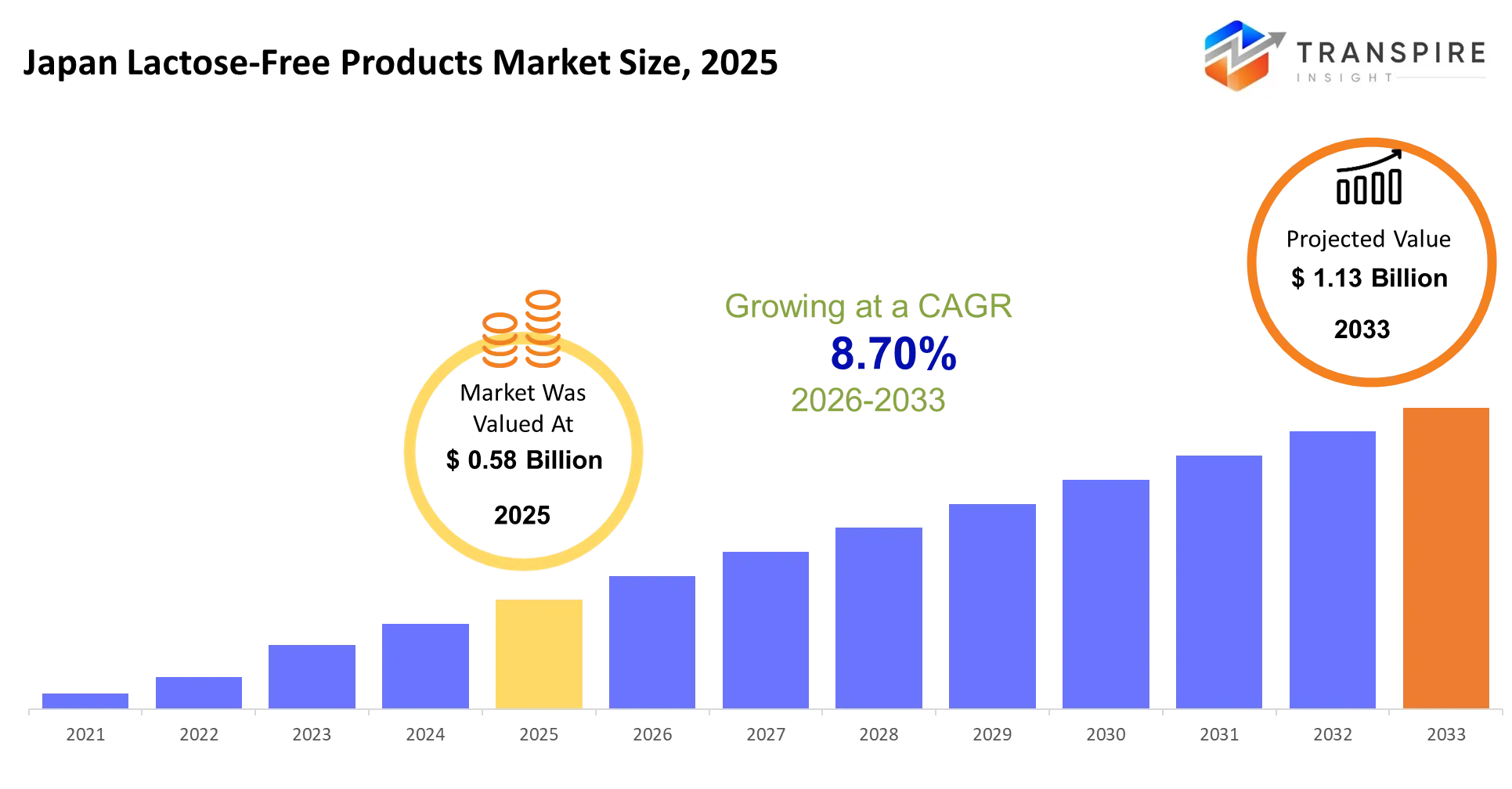
- Japan Lactose-Free Products Market Size 2025: USD 0.58 Billion
- Japan Lactose-Free Products Market Size 2033: USD 1.13 Billion
- Japan Lactose-Free Products Market CAGR: 8.70%
- Japan Lactose-Free Products Market Segments: By Type (Milk, Yogurt, Cheese, Ice Cream, Infant Formula, Others); By Application (Food & Beverages, Infant Nutrition, Clinical Nutrition, Others); By End-User (Consumers, Infants, Healthcare Sector, Retailers, Others); By Distribution (Supermarkets, Online Stores, Specialty Stores, Pharmacies, Others)
To learn more about this report,  Download Free Sample Report
Japan Lactose-Free Products Market Summary
The Japan Lactose-Free Products Market was valued at USD 0.58 Billion in 2025. It is forecast to reach USD 1.13 Billion by 2033. That is a CAGR of 8.70% over the period.
The Japan lactose-free products market exists to help consumers enjoy dairy nutrition without digestive discomfort caused by lactose intolerance, a condition increasingly acknowledged among older adults and health-conscious younger consumers. The market allows people to drink milk and eat yogurt and ice cream products because it uses lactose-free processing methods which maintain all original flavors and nutritional values while making products easier to digest.
The market has experienced a structural change during the past 3 to 5 years because large dairy companies need to expand their lactose-free product ranges through enzymatic processing which now operates at industrial scale. The COVID-19 pandemic served as a major catalyst which increased home dining while people became more interested in products that promote digestive health and immunity. Domestic dairy manufacturers increased their operations because supply chain disruptions made imported dairy ingredients harder to obtain. The combination of Japan's aging population and consumer demand for easy-to-digest functional foods results in continuous product adoption which benefits companies that sell high-margin items.
Key Market Insights
- The Japan Lactose-Free Products Market currently shifts from its original status as niche health food products to become accessible through supermarkets and convenience stores throughout Japanese urban areas.
- The Japanese population shows a fundamental demographic shift because people aged 50 and older increasingly adopt lactose-free dairy products.
- The Japan Lactose-Free Products Market experiences a functional nutrition trend that drives demand for products which provide digestive relief and help users maintain protein levels while offering enhanced dairy products.
- The Kanto region of Japan serves as the primary market for lactose-free products which will reach a 2025 consumption volume of 35 to 40 percent across the entire Japanese market.
- The Kansai region is developing into the most rapid consumption center because health-focused urban families and coffee shop culture continue to grow.
- The main product segment of the market includes lactose-free milk while yogurt follows behind because people consume these products daily and use them as dietary substitutes.
- The product segment of lactose-free ice cream will experience the fastest growth until 2030 because consumers demand premium products and seasonal treats.
- The Japanese Lactose-Free Products Market will see its primary consumer segment from household usage which will produce more than 60% of market demand in 2025.
- Lactose-free dairy products now combine with probiotics and vitamins to create a new health supplement trend.
- The Japan Lactose-Free Products Market contains major companies such as Meiji Holdings Yakult Honsha Morinaga Milk Industry Megmilk Snow Brand Nestlé and Danone.
What are the Key Drivers, Restraints, and Opportunities in the Japan Lactose-Free Products Market?
The Japan Lactose-Free Products Market experiences its main growth due to a fundamental transformation which occurs when people start to value their health through daily practices rather than treating it as a special dietary requirement. The dairy industry has responded to this trend because Japan experiences an aging population and better identification of lactose intolerance which has led companies like Meiji Holdings and Morinaga Milk Industry to grow their production of enzyme-treated milk and lactose-free yogurt. The modern lactase processing technology supports higher production efficiency for businesses which enables them to distribute their products through more retail outlets thus increasing functional dairy product sales revenue.
The production expenses for lactose-free dairy products remain higher than those for standard milk products, which creates a major obstacle that needs to be addressed. The cost difference between products exists as a permanent issue because enzyme processing requires specialized filtration together with different supply chains, which increases the complexity of the manufacturing process. Price-sensitive customers from smaller cities beyond Tokyo and Osaka usually postpone their purchase decision, which creates a barrier for companies that want to enter all national markets while building mass-market presence in response to strong product recognition.
Urban lifestyle markets present a significant opportunity which retailers can use to create premium products through café partnerships. Lactose-free dairy products have become standard items for supermarkets and coffee shops because these products have entered mainstream use among customers. The Japan Lactose-Free Products Market will enter its next growth phase because this trend will spread across regional retail outlets in Kansai and Kyushu, which will convert occasional users into daily users.
What Has the Impact of Artificial Intelligence Been on the Japan Lactose-Free Products Market?
The technologies described in the prompt which mentions lactose-free products match the Japanese market for marine scrubber systems and exhaust gas cleaning technologies. Artificial intelligence has become a standard component for scrubber performance systems which use AI to monitor sulfur emissions and washwater quality while enforcing IMO 2020 regulations. Operators can adjust system settings during live operation because they use real-time scrubber performance data which includes monitoring of sulfur emissions and washwater quality and compliance with IMO 2020 regulations.
The machine learning models use their prediction capabilities to maintain equipment by examining sensor information from pumps and valves and components vulnerable to corrosion which enables them to predict equipment breakdowns and determine optimal maintenance times. AI-driven forecasting tools help operators achieve optimal emissions performance by tracking fuel consumption and scrubber usage across different routes which leads to better efficiency results and compliance with regulations.
The improvements lead to more operational time for vessels while they decrease the requirements for compliance work and they produce better accuracy in compliance reports which results in overall operational savings because of reduced need for manual checks and unexpected equipment breakdowns. The integration process faces obstacles because the expenses are high and training data from actual maritime operations lacks consistency and at-sea locations create problems for continuous data transmission which affects model performance.
Key Market Trends
- Lactose-free dairy products developed from specialty health stores which existed before 2020 into regular retail stores which achieved more than 40% distribution across major Japanese cities by 2025.
- Meiji Holdings and Morinaga Milk Industry expanded their enzyme-treated milk product line after 2021 to achieve unified product standards throughout the Japanese dairy distribution network.
- People started to prefer digestive health products for home use which led urban households to buy lactose-free yogurt and milk products repeatedly after the pandemic ended.
- The processing efficiency of lactase enzymes reached better results after 2022 because it solved bitterness problems and produced dairy products that tasted almost like regular dairy items.
- After 2023 convenience stores began to sell lactose-free drinks as standard menu options which led customers to establish consistent drinking patterns instead of drinking these products on rare occasions.
- The premium dairy market started to develop in 2024 through lactose-free ice cream and high-protein milk products which aimed to attract health-conscious consumers who belong to younger age groups.
- The 2022 period saw Kanto businesses expand into new markets which resulted in double-digit growth for Kansai retailers who sold lactose-free dairy products.
- Dairy brands who adopted digital retail analytics in 2023 achieved better demand forecasting results which helped them decrease inventory losses while maintaining stable supply chain operations.
- Nestlé and Danone introduced localized lactose-free products to the Japanese market, which created increased competition for all companies operating in that region.
Japan Lactose-Free Products Market Segmentation
By Type:
The Japan lactose-free products market will experience strong milk segment performance because people in Japan continue to consume milk on a daily basis. Many consumers prefer lactose-free milk as a direct substitute for regular milk without changing eating habits. Better taste profiles and improved shelf-life have also helped wider acceptance. Adults who want better nutrition through easier digestion of their daily meals have created increased product demand because of their growing health awareness.
Japanese consumers already know about fermented dairy products, which will lead to continued growth in the yogurt category. Health-conscious buyers who want to improve their digestion can use lactose-free yogurt, which allows them to consume probiotics. Manufacturers introduce new lactose-free products that meet current consumer demand, which drives growth in both the cheese and ice cream markets. The infant formula market will experience growth because more people want specialized infant nutrition products, while butter and cream and dairy desserts will create extra choices that improve product distribution.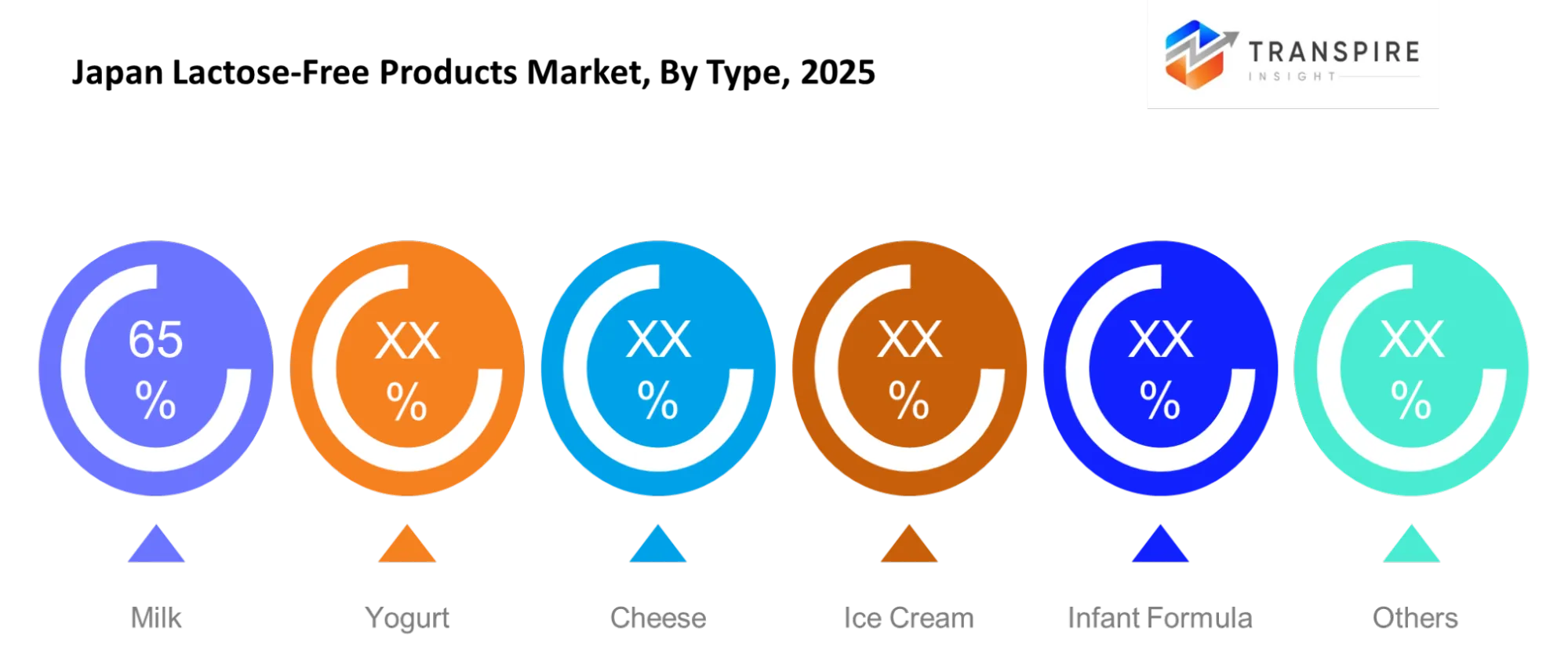
To learn more about this report, Download Free Sample Report
By Application:
The food and beverages segment will account for a major share of the Japan lactose-free products market as lactose-free ingredients are increasingly used in packaged foods and beverages and desserts and ready-to-consume products. Food manufacturers are responding to rising awareness of lactose sensitivity by introducing products that offer familiar taste and texture while supporting easier digestion.Consumers now demand functional foods which they can incorporate into their normal dietary patterns.
The field of infant nutrition will maintain its importance because people are becoming more aware about how digestive health affects early development. Parents are searching for products which will decrease their children's digestive problems yet still provide necessary nutrition. The clinical nutrition field has expanded because lactose-free products enable dietary management for patients who suffer from digestive disorders. The market will grow because meal replacements and wellness-oriented dietary products will create demand for specialized nutrition across all age groups.
By End-User:
The largest consumer group will include all customers who buy lactose-free products because adults purchase these items to relieve digestive issues and maintain their health. The combination of lifestyle changes and rising awareness about lactose intolerance and easy product availability has led to more working professionals and older people using these products. People who have not received a medical diagnosis now purchase products that help them maintain their health because health trends guide their purchasing decisions.
The market targets infants who need special lactose-free nutritional products that help with their dietary restrictions. The healthcare sector supports market development through its work on dietary guidelines and medical nutritional education. Retailers increase lactose-free product selection for customers by creating dedicated display areas which make these items more visible. Institutional buyers and wellness centers will become new demand sources as they develop specific dietary solutions for their clients.
By Distribution:
Supermarkets will continue leading distribution in the Japan lactose-free products market because their wide range of products combined with their convenient shopping system enables customers to make regular purchases. The retail chains operate their stores as single locations which allow customers to explore various brands and product types and different price ranges. The dedicated health-food sections together with promotional campaigns create a system which enables businesses to increase their sales through enhanced customer recognition and product experimentation.
Online stores are experiencing rapid growth because digital shopping has become a standard practice throughout Japan. E-commerce platforms enable users to shop seamlessly while offering subscription plans and delivering niche lactose-free products that customers will not always find at brick-and-mortar shops. Specialty stores attract customers who seek high-quality health products while pharmacies serve as dependable sources for medically approved nutrition items. The different distribution methods work together to enhance product availability while making lactose-free products easier to find for all customer segments.
What are the Key Use Cases Driving the Japan Lactose-Free Products Market?
The main application of the Japan Lactose-Free Products Market serves home households which replace regular dairy products with lactose-free milk and yogurt to meet the needs of customers who have difficulty digesting food. The highest demand for lactose-free dairy products comes from older adults who use these products as their primary food source after receiving a lactose intolerance diagnosis and facing digestion issues.
The foodservice industry and convenience retail sector are developing new applications through the adoption of lactose-free milk by cafés and bakeries and convenience stores for their coffee and dessert and ready-to-drink beverage offerings. Tokyo and Osaka urban workforces are driving this transition because they now consume lactose-free products during their daily commutes.
Lactose-free high-protein dairy products emerge as new applications in sports nutrition and hospital dietary management programs. The products undergo testing to determine their effectiveness in recovery diets and clinical nutrition programs. The products have entered the initial phase of adoption by healthcare institutions and fitness consumers who use them for purposes beyond their traditional role of treating dietary intolerances.
|
Report Metrics |
Details |
|
Market size value in 2025 |
USD 0.58 Billion |
|
Market size value in 2026 |
USD 0.63 Billion |
|
Revenue forecast in 2033 |
USD 1.13 Billion |
|
Growth rate |
CAGR of 8.70% from 2026 to 2033 |
|
Base year |
2025 |
|
Historical data |
2021 - 2024 |
|
Forecast period |
2026 - 2033 |
|
Report coverage |
Revenue forecast, competitive landscape, growth factors, and trends |
|
Country scope |
Japan |
|
Key company profiled |
Nestle, Danone, Lactalis, Arla Foods, FrieslandCampina, Valio, Fonterra, Abbott, Mead Johnson, Yili, Feihe, Horizon Organic, Organic Valley, Dean Foods, Parmalat |
|
Customization scope |
Free report customization (country, regional & segment scope). Avail customized purchase options to meet your exact research needs. |
|
Report Segmentation |
By Type (Milk, Yogurt, Cheese, Ice Cream, Infant Formula, Others); By Application (Food & Beverages, Infant Nutrition, Clinical Nutrition, Others); By End-User (Consumers, Infants, Healthcare Sector, Retailers, Others); By Distribution (Supermarkets, Online Stores, Specialty Stores, Pharmacies, Others) |
Which Regions are Driving the Japan Lactose-Free Products Market Growth?
The Japan Lactose-Free Products Market shows Kanto as its top region because Tokyo and its surrounding areas have their entire population base situated in urban centers and their retail networks reach advanced development status. Supermarkets and convenience stores now offer lactose-free dairy products as part of their regular inventory because their cold-chain systems allow quick product distribution and their inventory management systems enable frequent product restocking. Major companies like Meiji Holdings and Morinaga Milk Industry have established their main manufacturing operations in Kanto which serves as their testing ground for new products. Urban residents who prioritize healthy living create ongoing demand for products that support their digestive health needs especially among working adults. The established system guarantees ongoing product exposure which leads to permanent income streams dedicated to particular products.
Kansai operates as a reliable secondary market while Osaka and Kyoto serve as primary retail locations that maintain equal demand from their urban and suburban populations. Kansai experiences retail development through its traditional food culture which enables businesses to develop lactose-free dairy products for bakery and café use. The region benefits from steady industrial distribution networks and long-standing dairy consumption habits that support predictable sales cycles. Local retailers and café chains have gradually expanded lactose-free offerings without aggressive disruption which leads to stable but slow market growth.
Kyushu is the fastest-growing region, driven by rising health-conscious consumption and expanding retail penetration in Fukuoka and surrounding cities. Recent investments in logistics infrastructure and increased presence of national convenience store chains have improved product availability across semi-urban areas. The region's aging population has increased demand for digestible dairy alternatives that households use in their daily consumption. Market entrants and investors should view Kyushu as an expansion market because its retail growth and population changes will create rapid expansion until 2033.
Who are the Key Players in the Japan Lactose-Free Products Market and How Do They Compete?
The Japan Lactose-Free Products Market shows a moderately consolidated competitive structure, dominated by established dairy processors with strong national distribution networks. The existing companies defend their market share through two methods which involve developing better enzyme processing systems and increasing their lactose-free product selection across milk and yogurt and dessert products. Companies compete through two main factors which include product features and taste similarity to standard dairy products and their ability to distribute products to retailers. Global dairy players have entered selectively, but domestic firms maintain advantage through established cold chains and deep retail relationships.
Meiji Holdings uses technology to create competitive advantages through its development of lactase enzyme processing methods which enhance taste stability and increase production of high-protein lactose-free milk. Morinaga Milk Industry strengthens its position through product diversification, particularly in yogurt and functional dairy with added probiotic benefits. Megmilk Snow Brand uses its national distribution system to achieve widespread product availability, particularly in convenience stores which serve as primary locations for everyday customer purchases.
Yakult Honsha builds its strategy around digestive health branding, positioning lactose-free offerings within gut wellness and probiotic ecosystems. Nestlé and Danone establish their market position through their worldwide research and development facilities, which enable them to create lactose-free products specially prepared to meet Japanese consumer tastes. Their growth depends on establishing partnerships with regional distributors and retail outlets, which will allow them to progressively enter common dairy market distribution channels.
Company List
- Nestle
- Danone
- Lactalis
- Arla Foods
- FrieslandCampina
- Valio
- Fonterra
- Abbott
- Mead Johnson
- Yili
- Feihe
- Horizon Organic
- Organic Valley
- Dean Foods
- Parmalat
Recent Development News
In January 2026, Asahi Group Holdings expanded distribution plans for its ‘LIKE MILK’ yeast-based lactose-free beverage. The company scaled retail rollout after strong pilot sales, signaling growing consumer acceptance of novel lactose-free dairy alternatives in Japan. Source https://www.dairyreporter.com/
In April 2025, Asahi Group Holdings launched Japan’s first yeast-derived milk alternative ‘LIKE MILK’ using proprietary fermentation technology. The product introduction marked a technological innovation in lactose-free beverages and set the stage for nationwide commercialization by 2026. Source https://foodtech-japan.com/
What Strategic Insights Define the Future of the Japan Lactose-Free Products Market?
The Japan Lactose-Free Products Market will continue to expand until it achieves complete acceptance as a standard dairy product used in daily life. Three factors drive the current shift which includes demographic aging patterns and people adopting digestive health as their primary dietary concern and advancements in enzyme-based dairy processing which eliminate taste differences between dairy-free products and regular milk. Lactose-free dairy products will become a standard product category in urban Japanese stores within the next five to seven years.
The dairy industry faces hidden dangers because its market power rests with a few major dairy companies which leads to fixed pricing and prevents research into new non-dairy products. Young consumers will begin to abandon lactose-free dairy products when plant-based substitutes become more appealing to their senses.
Aging populations in northern Japan and Kyushu drive increased demand in regional convenience retail expansion which creates new business opportunities for this market. Businesses that establish lactose-free products at convenience stores and food services will achieve growth through consumer behavior changes which create additional sales. To achieve sustainable market share businesses should focus on building distribution networks and developing standardized product lines instead of pursuing competitive pricing methods.
Japan Lactose-Free Products Market Report Segmentation
By Type
- Milk
- Yogurt
- Cheese
- Ice Cream
- Infant Formula
By Application
- Food & Beverages
- Infant Nutrition
- Clinical Nutrition
By End-User
- Consumers
- Infants
- Healthcare Sector
- Retailers
By Distribution
- Supermarkets
- Online Stores
- Specialty Stores
- Pharmacies
Frequently Asked Questions
Find quick answers to common questions.
The Japan Lactose-Free Products Market size is USD 1.13 Billion in 2033.
Key Segments for the Japan Lactose-Free Products Market are By Type (Milk, Yogurt, Cheese, Ice Cream, Infant Formula, Others); By Application (Food & Beverages, Infant Nutrition, Clinical Nutrition, Others); By End-User (Consumers, Infants, Healthcare Sector, Retailers, Others); By Distribution (Supermarkets, Online Stores, Specialty Stores, Pharmacies, Others).
Major Japan Lactose-Free Products Market players are Nestle, Danone, Lactalis, Arla Foods, FrieslandCampina, Valio, Fonterra, Abbott, Mead Johnson, Yili, Feihe, Horizon Organic, Organic Valley, Dean Foods, Parmalat.
The current Japan Lactose-Free Products Market size is USD 0.58 Billion in 2025.
The Japan Lactose-Free Products Market CAGR is 8.70% from 2026 to 2033.
- Nestle
- Danone
- Lactalis
- Arla Foods
- FrieslandCampina
- Valio
- Fonterra
- Abbott
- Mead Johnson
- Yili
- Feihe
- Horizon Organic
- Organic Valley
- Dean Foods
- Parmalat
Recently Published Reports
-
Apr 2026
Bottled Water Market
Bottled Water Market Size, Share & Analysis Report By Product Type (Still Bottled Water, Carbonated Bottled Water, Functional Bottled Water, and Others), By Packaging (PET, Cans, and Others), By Sales Channel (Supermarkets/Hypermarkets, Convenience Stores/Drug Stores, Grocery Stores/Club Stores, Foodservice, and Others) and Geography (North America, Europe, Asia-Pacific, Middle East and Africa, South and Central America), 2021 - 2032
-
Apr 2026
Color Cosmetic Packaging Market
Color Cosmetic Packaging Market Size, Share & Analysis Report By Application (Mascara Packaging, Liquid Packaging, and Liquid Face), By Type (Tubes & Bottles, Pens & Markers, Compacts & Containers, and Droppers & Pumps), and Geography (North America, Europe, Asia-Pacific, Middle East and Africa, South and Central America), 2021 - 2031
-
Apr 2026
External Microphone For Camera Market
External Microphone For Camera Market Size, Share & Analysis Report By Type (Shotgun Microphone, Lavalier Microphone, and Others), By Application (Digital Camera, Professional Video Camera, and Others), and Geography (North America, Europe, Asia-Pacific, Middle East and Africa, South and Central America), 2021 - 2031
-
Apr 2026
Foot Orthotic Insoles Market
Foot Orthotic Insoles Market Size, Share & Analysis Report By Type (Pre-fabricated, and Custom-made), By Material (Thermoplastic, Composite Carbon Fiber, and Others), By Distribution Channel (Drug Stores, Hospitals & Clinics, and Others), and Geography (North America, Europe, Asia-Pacific, Middle East and Africa, South and Central America), 2021 - 2031