

Japan Industrial Gases Market Size & Forecast:
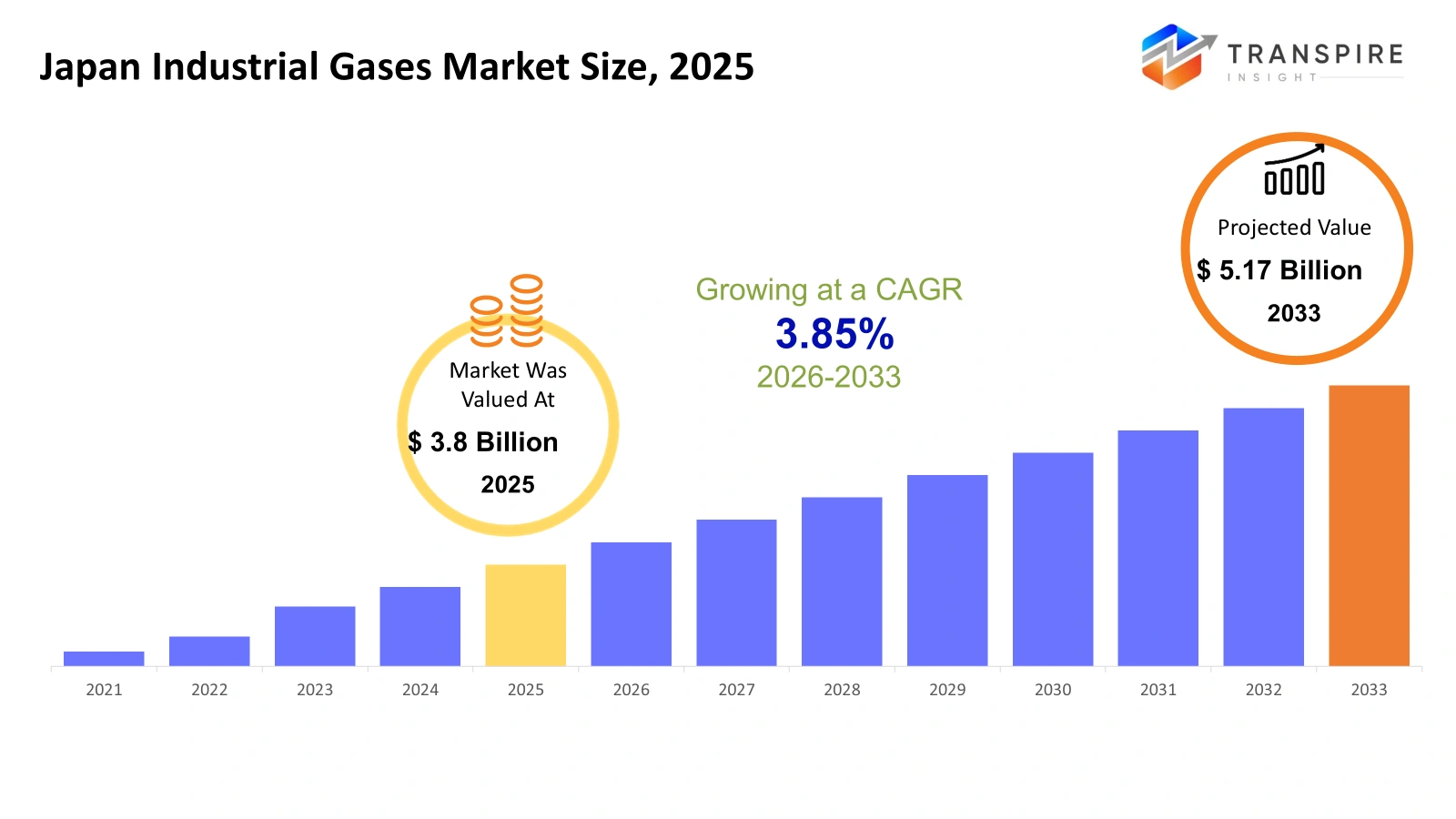
- Japan Industrial Gases Market Size 2025: USD 3.8 Billion
- Japan Industrial Gases Market Size 2033: USD 5.17 Billion
- Japan Industrial Gases Market CAGR: 3.85%
- Japan Industrial Gases Market Segments: By Gas Type (Oxygen, Nitrogen, Hydrogen, Carbon Dioxide, Argon), By Application (Manufacturing, Healthcare, Electronics, Chemicals), By Distribution Mode (Pipeline, Bulk, Packaged)
To learn more about this report,  Download Free Sample Report
Japan Industrial Gases Market Summary:
The Japan Industrial Gases Market size is estimated at USD 3.8 Billion in 2025 and is anticipated to reach USD 5.17 Billion by 2033, growing at a CAGR of 3.85% from 2026 to 2033. The industrial gases market in Japan shows consistent growth because the manufacturing, healthcare, electronics and energy sectors demonstrate strong demand for industrial gases. Oxygen, nitrogen, hydrogen and carbon dioxide serve essential functions in industrial operations and semiconductor manufacturing and medical usage. The market expansion results from both technological advancements and the nation's commitment to developing hydrogen and clean energy solutions. Key suppliers make strategic investments while they modernise production facilities, which enables them to enhance supply efficiency and sustainability throughout Japan's developing industrial sector.
Key Market Trends & Insights:
- The semiconductor industry is experiencing heightened demand. Japan's semiconductor and electronics manufacturing sector requires ultra-high purity gases, which include nitrogen, argon, and specialty gases for chip fabrication and advanced electronics production.
- Japan supports hydrogen-based energy systems which aim to decrease carbon emissions. The national focus on hydrogen production and storage and distribution facilities results in increased investments which drive market growth for industrial gases.
- The demand for medical gases, which include oxygen and nitrous oxide, is increasing because of the rising need for healthcare services and the expansion of healthcare facilities. Hospitals and home-care services increasingly rely on stable medical gas supply systems.
- The gas production industry is experiencing changes through technological progress, which develops advanced air separation technologies and digital monitoring systems as companies seek better operational efficiency and lower operational expenses. The industry is moving towards automation which uses energy-efficient plants as its primary technology.
- Japanese industries are practising production methods which minimise carbon emissions and protect the environment. Industrial gases such as hydrogen and carbon capture gases are gaining importance in supporting cleaner industrial operations.
Japan Industrial Gases Market Segmentation
By Gas Type
- Oxygen: Japan uses oxygen throughout its steel production process, its healthcare system, and its wastewater treatment facilities. The material's strong oxidising capabilities improve combustion in industrial furnaces and enable critical medical procedures. The need for oxygen in hospitals and metal production sites drives its growing share in the industrial gases industry.
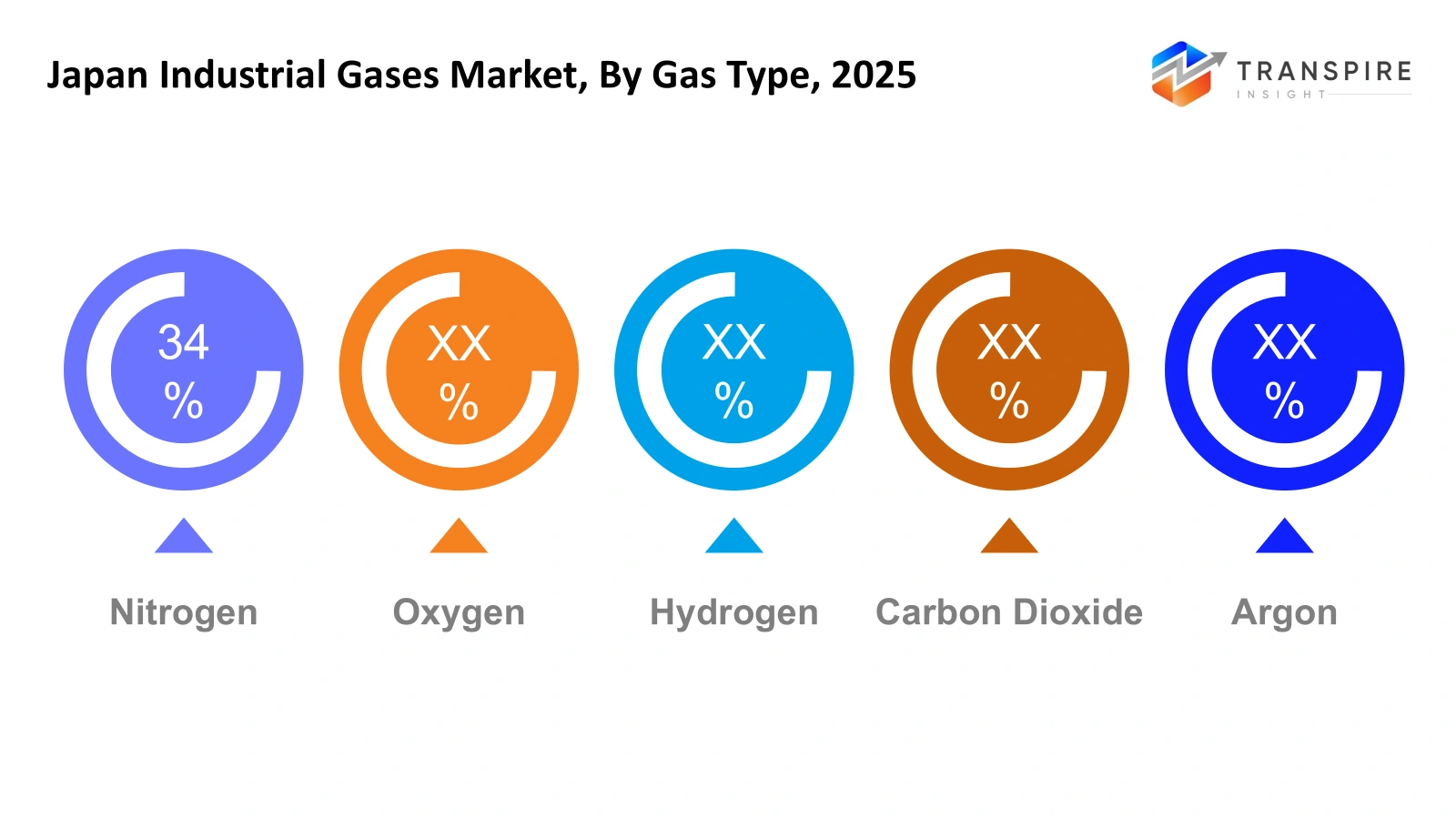
- Nitrogen: Nitrogen holds a significant share of Japan’s industrial gases market due to its versatile applications. The substance finds common use in food processing, electronics production, and chemical manufacturing for its inerting, blanketing, and cooling functions. The expansion of semiconductor production facilities in Japan creates a greater demand for nitrogen that meets high-purity standards.
- Hydrogen: Japan's hydrogen energy strategy receives growing public interest through hydrogen development initiatives. Hydrogen serves a vital role in energy production while also functioning as a key element in refining, chemical production and electronics manufacturing processes. The market is seeing new development opportunities as hydrogen infrastructure research and funding efforts continue.
- Carbon Dioxide: Multiple industries in Japan use carbon dioxide for food and beverage carbonation, refrigeration, and welding applications. The substance serves two purposes: it functions as a fire-extinguishing agent and provides environmental benefits through water treatment. The country's food processing industry is experiencing continuous growth, leading to increased carbon dioxide demand.
- Argon: Japan's manufacturing industry highly values argon because of its essential function in welding and metalworking processes. The material's inert properties prevent oxidation, which enables protection of materials during high-temperature industrial activities. The electronics manufacturing sector and advanced metal processing industry both drive increasing demand for argon, which results in higher market consumption.
To learn more about this report, Download Free Sample Report
By Application
- Manufacturing: Japan's industrial sector uses industrial gases because manufacturing processes depend on these gases. Metal processing and fabrication and automotive production processes require gases that include oxygen, nitrogen and argon. The need for a dependable industrial gas delivery system in Japan stays strong because the country emphasises advanced manufacturing techniques and precise engineering methods.
- Healthcare: Japanese healthcare facilities depend on medical gases, which include oxygen, nitrous oxide and carbon dioxide, for their respiratory treatment and anaesthesia and medical operations. The country's growing elderly population, together with its expanding healthcare facilities, creates an increasing requirement for superior medical gases.
- Electronics: The electronic and semiconductor sectors in Japan depend on ultra-high purity gases which enable them to execute their manufacturing operations with exacting standards. For chip manufacturing and component creation, nitrogen together with hydrogen and special gases needs to be present. The electronics industry in Japan maintains its industrial gas requirements as the country develops its semiconductor industry.
- Chemicals: Japanese chemical manufacturing processes heavily depend on industrial gases which serve as essential components. Hydrogen functions as a core element in both refining and hydrogenation processes, while nitrogen creates necessary conditions for producing inert materials through various production techniques. The ongoing research and innovation in specialty chemicals and petrochemicals lead to consistent requirements for industrial gases within this industry.
By Distribution Mode
- Pipeline: The pipeline distribution system helps Japanese industrial plants which need permanent access to high-capacity gas supplies. This system provides an economical and dependable solution which enables gas distribution from production facilities to steel mills and refineries, and chemical manufacturing plants which are located nearby.
- Bulk: Bulk distribution involves transporting liquefied industrial gases in large tanks to customers who require significant but not constant volumes. Manufacturing plants and hospitals and food processing units in Japan use this method because they need regular deliveries without needing to build pipeline systems.
- Packaged: Packaged gas distribution includes cylinders and smaller containers used by businesses with lower consumption needs. Laboratories and small manufacturing units and healthcare facilities use packaged gases as their primary gas source. The flexible distribution system enables all Japanese industries to conveniently store, move and access their products.
Country Insights
Japan's industrial gases market develops through its advanced industrial base and its commitment to technological research. The gases oxygen, nitrogen, hydrogen and argon serve as essential resources which drive production and operational activities in the electronics and automotive manufacturing and healthcare and chemicals industries. The semiconductor industry in Japan, which has achieved worldwide recognition, has a strong need for ultra-high-purity gases to support chip manufacturing.
The market experiences another significant change because the country pursues its sustainability goals and develops its energy transition plan. Japan develops hydrogen infrastructure, which it considers a key element of its strategy to establish a hydrogen economy while decreasing carbon emissions. The initiative motivates industrial gas suppliers to increase their production capacity and create environmentally friendly gas solutions.
The combination of established manufacturing hubs and sophisticated transportation systems and ongoing industrial upgrades creates continuous requirements for industrial gas supplies. The industrial gases market in Japan will continue to develop because businesses demand efficient, accurate and environmentally friendly solutions.
Recent Development News
Japan Advances Hydrogen Supply Chain with Large Liquefied Hydrogen Carrier Project.
Japan Strengthens Global Partnerships to Scale Hydrogen Economy.
|
Report Metrics |
Details |
|
Market size value in 2025 |
USD 3.8 Billion |
|
Market size value in 2026 |
USD 3.97 Billion |
|
Revenue forecast in 2033 |
USD 5.17 Billion |
|
Growth rate |
CAGR of 3.85% from 2026 to 2033 |
|
Base year |
2025 |
|
Historical data |
2021 – 2024 |
|
Forecast period |
2026 – 2033 |
|
Report coverage |
Revenue forecast, competitive landscape, growth factors, and trends |
|
Country scope |
Japan |
|
Key company profiled |
Air Liquide SA, Linde PLC, Air Products and Chemicals Inc., Taiyo Nippon Sanso Corporation, Messer Group GmbH, Iwatani Corporation, Matheson Tri-Gas Inc., Praxair Inc., Gulf Cryo, BASF SE, SOL Group, Yingde Gases Group, Universal Industrial Gases Inc., Air Water Inc., Showa Denko K.K. |
|
Customization scope |
Free report customization (country, regional & segment scope). Avail customized purchase options to meet your exact research needs. |
|
Report Segmentation |
By Gas Type (Oxygen, Nitrogen, Hydrogen, Carbon Dioxide, Argon), By Application (Manufacturing, Healthcare, Electronics, Chemicals), By Distribution Mode (Pipeline, Bulk, Packaged). |
Key Japan Industrial Gases Company Insights
The Japan Industrial Gases market operates through the combined efforts of pharmaceutical companies and diagnostic laboratories and healthcare innovators who develop better allergy detection methods and enhance patient treatment capabilities. As Alpha-gal Syndrome awareness increases, companies develop diagnostic tests for accurate results and they create allergy treatment medications and emergency medical response products. Many firms are also collaborating with hospitals and research institutions to expand clinical understanding of this rare condition. The Japanese healthcare system receives support from industry stakeholders through their dedication to research and technology development and the creation of patient-centred medical solutions which combat new allergy-related health issues.
Company List
- Air Liquide SA
- Linde PLC
- Air Products and Chemicals Inc.
- Taiyo Nippon Sanso Corporation
- Messer Group GmbH
- Iwatani Corporation
- Matheson Tri-Gas Inc.
- Praxair Inc.
- Gulf Cryo
- BASF SE
- SOL Group
- Yingde Gases Group
- Universal Industrial Gases Inc.
- Air Water Inc.
- Showa Denko K.K.
Japan Industrial Gases Market Report Segmentation
By Gas Type
- Oxygen
- Nitrogen
- Hydrogen
- Carbon Dioxide
- Argon
By Application
- Manufacturing
- Healthcare
- Electronics
- Chemicals
By Distribution Mode
- Pipeline
- Bulk
- Packaged
Frequently Asked Questions
Find quick answers to common questions.
The approximate Japan Industrial Gases Market size for the market will be USD 5.17 Billion in 2033.
The key segments of the Japan Industrial Gases Market are By Gas Type (Oxygen, Nitrogen, Hydrogen, Carbon Dioxide, Argon), By Application (Manufacturing, Healthcare, Electronics, Chemicals), By Distribution Mode (Pipeline, Bulk, Packaged).
Major players in the Japan Industrial Gases Market are Air Liquide SA, Linde PLC, Air Products and Chemicals Inc., Taiyo Nippon Sanso Corporation, Messer Group GmbH, Iwatani Corporation, Matheson Tri-Gas Inc., Praxair Inc., Gulf Cryo, BASF SE, SOL Group, Yingde Gases Group, Universal Industrial Gases Inc., Air Water Inc., Showa Denko K.K.
The current market size of the Japan Industrial Gases Market is USD 3.8 Billion in 2025.
The Japan Industrial Gases Market CAGR is 3.85%.
- Air Liquide SA
- Linde PLC
- Air Products and Chemicals Inc.
- Taiyo Nippon Sanso Corporation
- Messer Group GmbH
- Iwatani Corporation
- Matheson Tri-Gas Inc.
- Praxair Inc.
- Gulf Cryo
- BASF SE
- SOL Group
- Yingde Gases Group
- Universal Industrial Gases Inc.
- Air Water Inc.
- Showa Denko K.K.
Recently Published Reports
-
Apr 2026
Healthcare Polymer Packaging Market
Healthcare Polymer Packaging Market Size, Share & Analysis Report By Packaging Type (Syringes, IV Bottles and Pouches, Clamshells, Blisters, Bottles & Jars, Containers, Tubes, IV Parental Packaging, Others), By Type (Regulated, Non-regulated), By Polymer Type (LDPE (Low-Density Polyethylene), HDPE (High-Density Polyethylene), Homo-polymer (Homo), Random Copolymer (Random), Block Copolymer (Block), PET, Polystyrene, Polyvinyl Chloride, Polyamide/EVOH, Others), and Geography (North America, Europe, Asia-Pacific, Middle East and Africa, South and Central America), 2021 - 2031
-
Apr 2026
Hydrophilic Tape (Waterstop) Market
Hydrophilic Tape (Waterstop) Market Size, Share & Analysis Report By Type (Bentonite-Based Hydrophilic Tape, Rubber-Based Hydrophilic Tape), By Application (Residential Buildings, Commercial Buildings, Infrastructure Projects), and Geography (North America, Europe, Asia-Pacific, Middle East and Africa, South and Central America), 2021 - 2031
-
Apr 2026
Metalens Market
Metalens Market Size, Share & Analysis Report By Type (Visible Light Metalens, and Infrared Metalens), By Application (Consumer Electronics, Automotive Electronics, Industrial, Medical, and Others), and Geography (North America, Europe, Asia-Pacific, Middle East and Africa, South and Central America), 2021 - 2031
-
Apr 2026
PBT Resin Market
PBT Resin Market Size, Share & Analysis Report By Type (Reinforced PBT Resin, Unreinforced PBT Resin), By Processing Method (Injection Molding, Extrusion, Blow Molding, Others), By End-User (Automotive, Electrical & Electronics, Consumer Appliances, Industrial Machinery, Medical Devices, Packaging, Others), and Geography (North America, Europe, Asia-Pacific, Middle East and Africa, South and Central America), 2021 - 2031