

Japan Industrial Automation And Control Systems Market Size & Forecast:
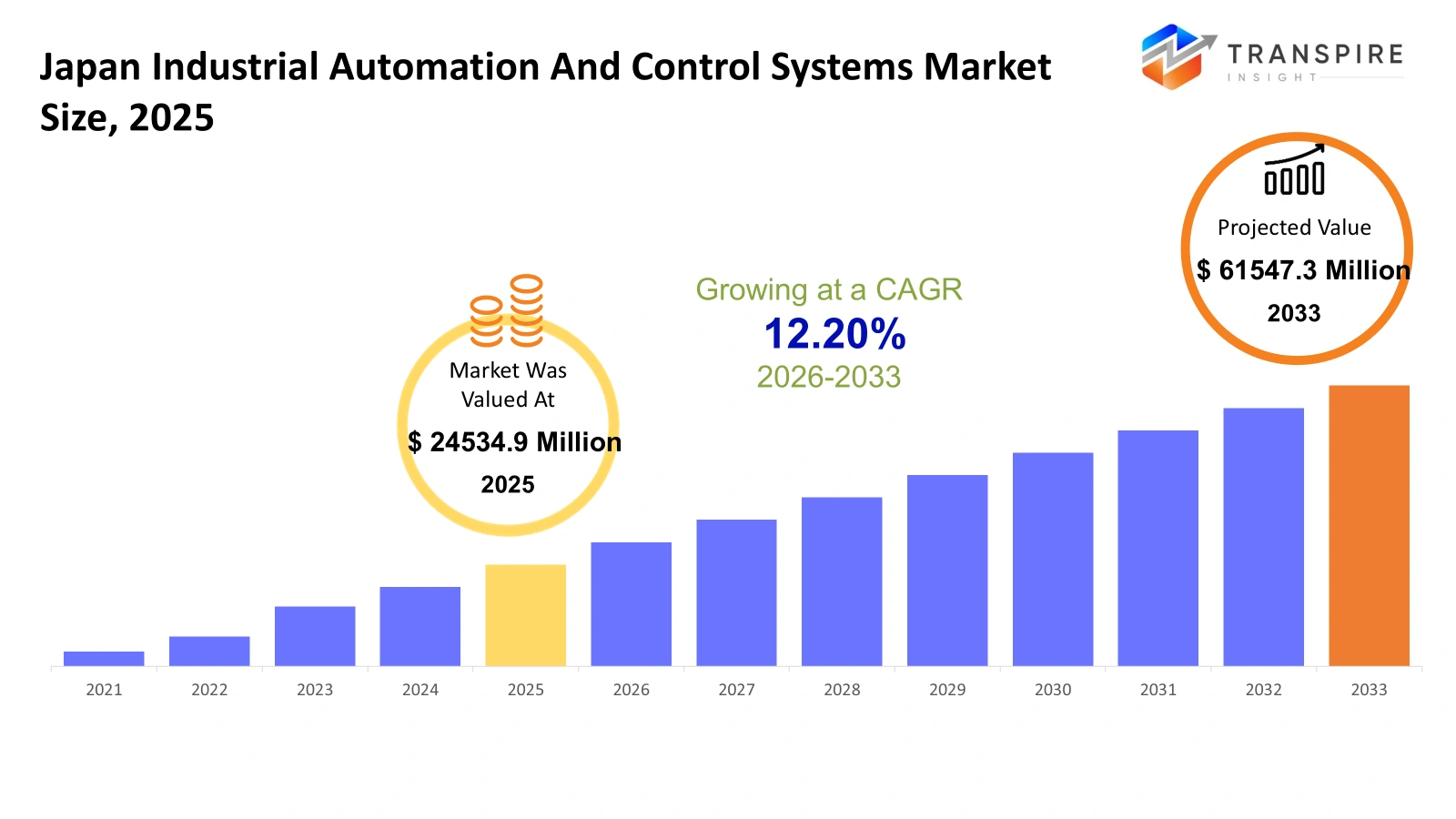
- Japan Industrial Automation And Control Systems Market Size 2025: USD 24534.9 Million
- Japan Industrial Automation And Control Systems Market Size 2033: USD 61547.3 Million
- Japan Industrial Automation And Control Systems Market CAGR: 12.20%
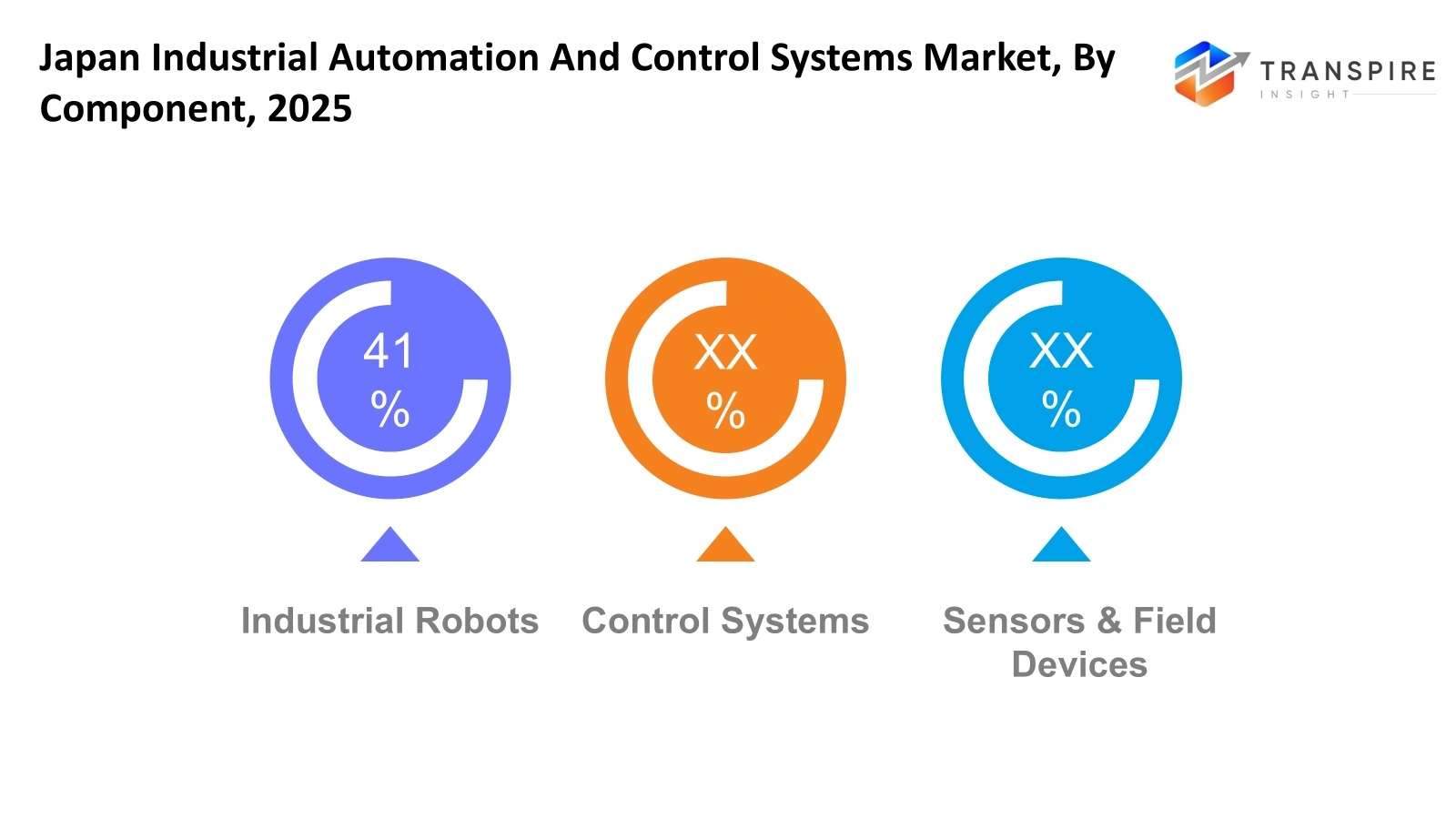
- Japan Industrial Automation And Control Systems Market Segments: By Component (Industrial Robots, Control Systems, Sensors & Field Devices), By Industry Vertical (Automotive, Electronics, Chemicals, Food & Beverage).
To learn more about this report,  Download Free Sample Report
Japan Industrial Automation And Control Systems Market Summary:
The Japan Industrial Automation And Control Systems Market size is estimated at USD 24534.9 Million in 2025 and is anticipated to reach USD 61547.3 Million by 2033, growing at a CAGR of 12.20% from 2026 to 2033. The Japan Industrial Automation and Control Systems market shows experts' precise engineering skills combined with their ability to create future-orientated technological solutions. Industries implement smart automation systems because they need to sustain operational productivity and product quality during labour shortages which result from an older workforce. Japanese manufacturers establish themselves as industry leaders through their development of dependable robotics systems and their advanced control software solutions. The market develops through sustainable development objectives which compel businesses to adopt energy-saving technologies. The system shows continuous development because it combines historical methods with modern automation technologies to enable sustainable industrial development.
Key Market Trends & Insights:
- Japanese manufacturers are steadily moving toward smart factory models which use IoT technology and real-time data analytics. The production floor operations experience improved performance because this new approach reduces downtime while providing better production-related information.
- Japan uses robotics as its primary automation technology, which now operates with AI-powered features. The production lines become more flexible because these technologies enable exact movements, and they can perform complicated tasks without needing human assistance.
- Automation has become a necessity because robots now fill voids created by an ageing population and workforce decline. Companies are implementing advanced control systems to sustain their operational efficiency, which allows them to produce at the same level despite having reduced staffing.
- Modern industrial systems operate through software because it enables machines to work together with operational processes. This system integration improves operational efficiency because it provides complete visible information about operations, and it lets users use predictive maintenance to decrease unplanned interruptions.
- The implementation of IIoT technology creates improved connectivity between different parts of manufacturing ecosystems. The system enables organisations to gather operational information which they can examine immediately; this leads to enhanced productivity outcomes and continuous operational progress.
Japan Industrial Automation And Control Systems Market Segmentation
By Component
- Industrial Robots: Japan uses industrial robots as essential technology for manufacturing processes through both assembly and packaging functions. The robots enable manufacturers to achieve high-quality results because of their precise and consistent operations, which decrease the need for human work. The development of technology has led to the creation of robots which can work together with humans and handle specialized manufacturing tasks which involve multiple steps.
- Control Systems: Automated systems depend on control systems, which function as their central command systems that enable seamless operation of machines and workflows. Japanese industries depend on advanced PLCs and distributed control systems for their performance monitoring and accuracy maintenance needs. The systems enable productivity increases through their ability to make instant changes which boost efficiency while reducing expensive business mistakes.
- Sensors & Field Devices: Production environments depend on sensors and field devices to gather real-time data which functions as essential information. The devices measure temperature, pressure and motion, which enables them to maintain accurate control throughout ongoing operations. In Japan, their growing adoption supports smarter decision-making, predictive maintenance, and improved safety across highly automated industrial setups.
To learn more about this report, Download Free Sample Report
By Industry Vertical
- Automotive: The automotive industry in Japan requires automated systems to sustain its worldwide reputation for producing high-quality products and operating efficient processes. The combination of advanced robotics and control systems create efficient assembly lines which deliver exact results at high operational speeds. The industry uses automation to create electric and autonomous vehicles which meet the requirements of developing market trends.
- Electronics: The electronics industry in Japan uses automation to produce electronic devices which need delicate components to be handled with high precision. Through its combination of fast production lines and sophisticated control systems, the system ensures continuous production while generating few defects. The increasing market demand for semiconductors and smart devices drives companies to use automation as their solution for expanding production capacity while upholding their quality control requirements.
- Chemicals: Chemical companies use automation to protect their workers and maintain uniform product standards while meeting all safety regulations. Advanced control systems enable organisations to control their complicated operational systems while decreasing employee contact with dangerous work environments. Japanese companies use automation to achieve better production results while they control both product quality and environmental pollution.
- Food & Beverage: Japanese food and beverage companies use automation to achieve three main goals, which are sanitary operations, effective production, and steady product quality. The advanced systems maintain high standards throughout all processing and packaging stages. The shift in consumer preferences, together with labour shortages, drives companies to implement automation solutions, which help them produce safe, high-quality products while increasing their work efficiency.
Country Insights
The market for industrial automation and control systems in Japan demonstrates the nation's fundamental dedication to accurate operations and efficient processes and its advanced technological capabilities. Japan maintains its position as a top global manufacturing center by using automation technologies to solve its workforce shortages and maintain business operations. The ecosystem receives enhancement through the presence of well-known automation firms which drive ongoing research and development for robotic systems and control technologies and intelligent manufacturing systems.
The adoption of digital transformation and Industry 4.0 systems receives an additional boost from government programmes that support these digital initiatives across various business sectors. Businesses across various sectors, from automotive to electronics, implement advanced systems which improve operational efficiency while enabling them to achieve their quality goals. Japan's market trends show a strong link between sustainability efforts and company adoption of energy-efficient automation systems that reduce their environmental impact.
The market experiences continuous expansion because traditional business practices work together with new technological developments which drive automated systems to meet changing demands from contemporary industrial operations.
Recent Development News
Japan robotics industry records highest-ever orders: Japan’s robotics sector is expanding rapidly due to global labour shortages and increasing export demand for automation systems.
TSMC to make advanced AI semiconductors in Japan: Japan is strengthening its semiconductor ecosystem to support automation, AI, and robotics industries. This move is expected to boost advanced manufacturing capabilities.
|
Report Metrics |
Details |
|
Market size value in 2025 |
USD 24534.9 Million |
|
Market size value in 2026 |
USD 27503.6 Million |
|
Revenue forecast in 2033 |
USD 61547.3 Million |
|
Growth rate |
CAGR of 12.20% from 2026 to 2033 |
|
Base year |
2025 |
|
Historical data |
2021 – 2024 |
|
Forecast period |
2026 – 2033 |
|
Report coverage |
Revenue forecast, competitive landscape, growth factors, and trends |
|
Country scope |
Japan |
|
Key company profiled |
Mitsubishi Electric Corporation, Omron Corporation, FANUC Corporation, Yaskawa Electric Corporation, Siemens AG, ABB Ltd., Rockwell Automation Inc., Schneider Electric SE, Honeywell International Inc., Bosch Rexroth AG, Hitachi Ltd., Toshiba Corporation, Emerson Electric Co., Yokogawa Electric Corporation, Fuji Electric Co. Ltd. |
|
Customization scope |
Free report customization (country, regional & segment scope). Avail customized purchase options to meet your exact research needs. |
|
Report Segmentation |
By Component (Industrial Robots, Control Systems, Sensors & Field Devices), By Industry Vertical (Automotive, Electronics, Chemicals, Food & Beverage). |
Key Japan Industrial Automation And Control Systems Company Insights
The Japan Industrial Automation and Control Systems market develops through the presence of international companies which generate respect for their advanced technological precision, their dependable system performance and their ongoing product development activities. The companies develop advanced robotics systems together with intelligent control systems and complete automation systems which meet current industrial requirements. Companies allocate resources to develop artificial intelligence systems and Internet of Things technology and digital platforms which will improve their operational systems and support advanced decision-making capabilities. The organisations increase their effectiveness because of their international partnerships, which work to promote environmental sustainability. Japanese companies use traditional practices and current technological advancements to drive their business development while maintaining their status as leaders in automation technology.
Company List
- Mitsubishi Electric Corporation
- Omron Corporation
- FANUC Corporation
- Yaskawa Electric Corporation
- Siemens AG
- ABB Ltd.
- Rockwell Automation Inc.
- Schneider Electric SE
- Honeywell International Inc.
- Bosch Rexroth AG
- Hitachi Ltd.
- Toshiba Corporation, Emerson Electric Co.
- Yokogawa Electric Corporation
- Fuji Electric Co. Ltd.
Japan Industrial Automation And Control Systems Market Report Segmentation
By Component
- Industrial Robots
- Control Systems
- Sensors & Field Devices
By Industry Vertical
- Automotive
- Electronics
- Chemicals
- Food & Beverage
Frequently Asked Questions
Find quick answers to common questions.
The approximate Japan Industrial Automation And Control Systems Market size for the market will be USD 61547.3 Million in 2033.
The key segments of the Japan Industrial Automation And Control Systems Market are By Component (Industrial Robots, Control Systems, Sensors & Field Devices), By Industry Vertical (Automotive, Electronics, Chemicals, Food & Beverage).
Major players in the Japan Industrial Automation And Control Systems Market are Mitsubishi Electric Corporation, Omron Corporation, FANUC Corporation, Yaskawa Electric Corporation, Siemens AG, ABB Ltd., Rockwell Automation Inc., Schneider Electric SE, Honeywell International Inc., Bosch Rexroth AG, Hitachi Ltd., Toshiba Corporation, Emerson Electric Co., Yokogawa Electric Corporation, Fuji Electric Co. Ltd.
The current market size of the Japan Industrial Automation And Control Systems Market is USD 24534.9 Million in 2025.
The Japan Industrial Automation And Control Systems Market CAGR is 12.20%.
- Mitsubishi Electric Corporation
- Omron Corporation
- FANUC Corporation
- Yaskawa Electric Corporation
- Siemens AG
- ABB Ltd.
- Rockwell Automation Inc.
- Schneider Electric SE
- Honeywell International Inc.
- Bosch Rexroth AG
- Hitachi Ltd.
- Toshiba Corporation, Emerson Electric Co.
- Yokogawa Electric Corporation
- Fuji Electric Co. Ltd.
Recently Published Reports
-
Apr 2026
Handling and Lifting Equipment Market
Handling and Lifting Equipment Market Size, Share & Analysis Report By Product (Cranes and Hoists, Forklifts, Conveyor Systems, Aerial Work Platforms, Others), By Application (E-Commerce, Automotive and Railway, Food and Beverages, Aviation, Others), and Geography (North America, Europe, Asia-Pacific, Middle East and Africa, South and Central America), 2021 - 2031
-
Apr 2026
HVAC Equipment Market
HVAC Equipment Market Size, Share & Analysis Report By Heating Equipment Type (Boilers and Furnaces, Heat Pumps, and Unitary Heaters), By Ventilation Equipment (Air Handling Units, Humidifiers and Dehumidifiers, Air Filters, and Fan Coiling Units), By Air Conditioning Equipment (Unitary Air Conditioners, Room Air Conditioners, Packaged Terminal Air Conditioners, and Chillers), By End User (Commercial, Residential, Industrial, and others), and Geography (North America, Europe, Asia-Pacific, Middle East and Africa, South and Central America), 2021 – 2031
-
Apr 2026
Refrigeration Valves Market
Refrigeration Valves Market Size, Share & Analysis Report By Type (Solenoid Valves, Expansion Valves, Check Valves, Service Valves, Others), By Application (Commercial Refrigeration, Industrial Refrigeration, Transport Refrigeration, Residential Refrigeration, Air Conditioning Systems), By End User (Food and Beverage Industry, Pharmaceutical Industry, HVAC Industry, Chemical Industry, Others), and Geography (North America, Europe, Asia-Pacific, Middle East and Africa, South and Central America), 2021 – 2031
-
Apr 2026
E-Commerce Packaging Materials Market
E-Commerce Packaging Materials Market By Material Type (Corrugated Boxes, Paper & Paperboard, Foam & Cushioning Materials, Plastic Packaging, Flexible Packaging, Protective Packaging, Others), By Product(Primary Packaging, Secondary Packaging, Tertiary Packaging), By Packaging Function (Protective Packaging, Branding & Presentation Packaging, Transit & Logistic Packaging, Sustainable Packaging, Tamper Evidence Packaging), By End-User (Retail & Consumer Goods, Electronic Appliances, Food & Beverages, Healthcare & Pharmaceutical, Fashion & Apparel, Home & Furnishing, Others); By Industry Analysis, Size, Share, Growth, Trends, and Forecasts 2021-2033