

Japan Hose Market Size & Forecast:
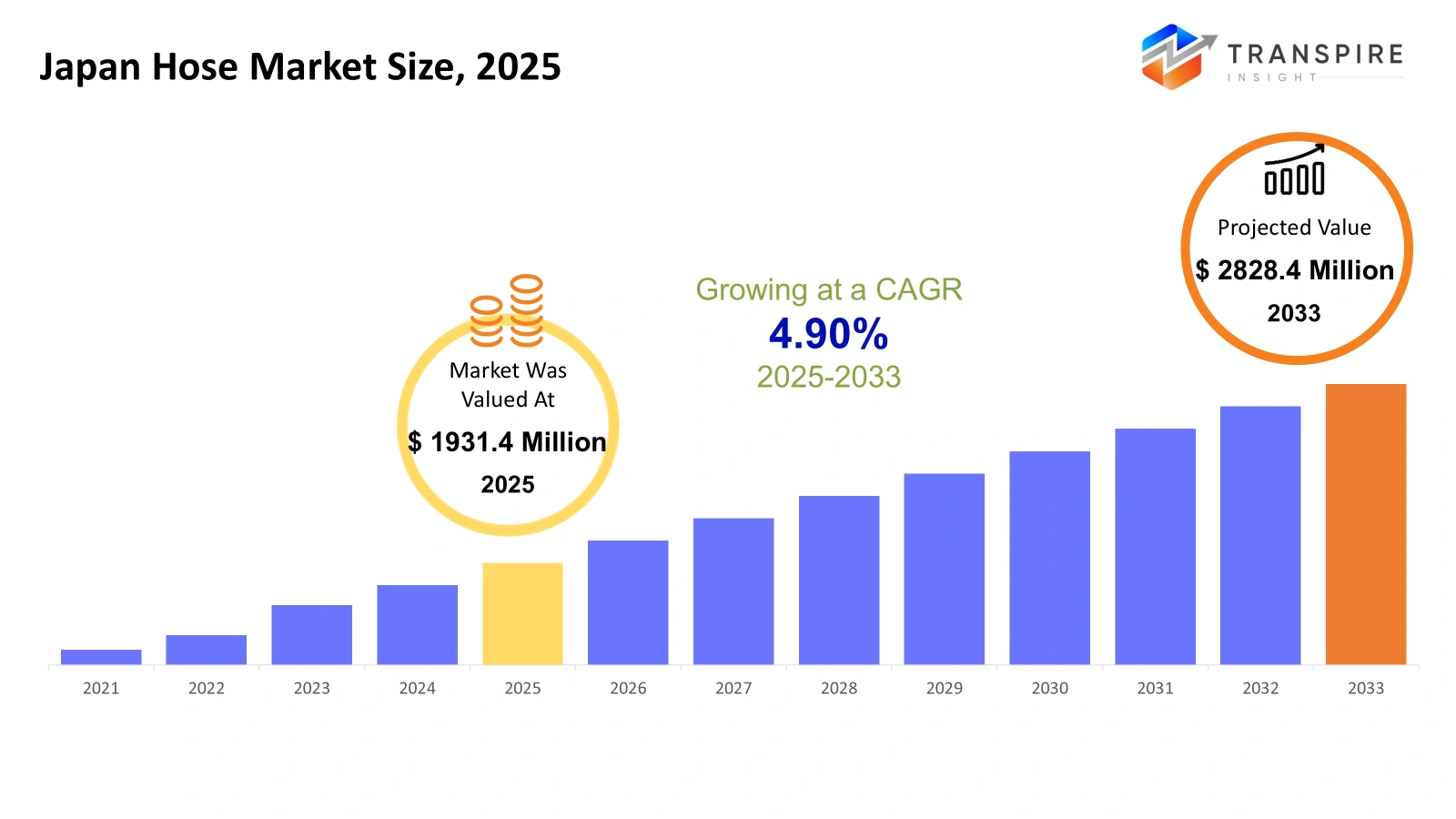
- Japan Hose Market Size 2025: USD 1931.4 Million
- Japan Hose Market Size 2033: USD 2828.4 Million
- Japan Hose Market CAGR: 4.90%
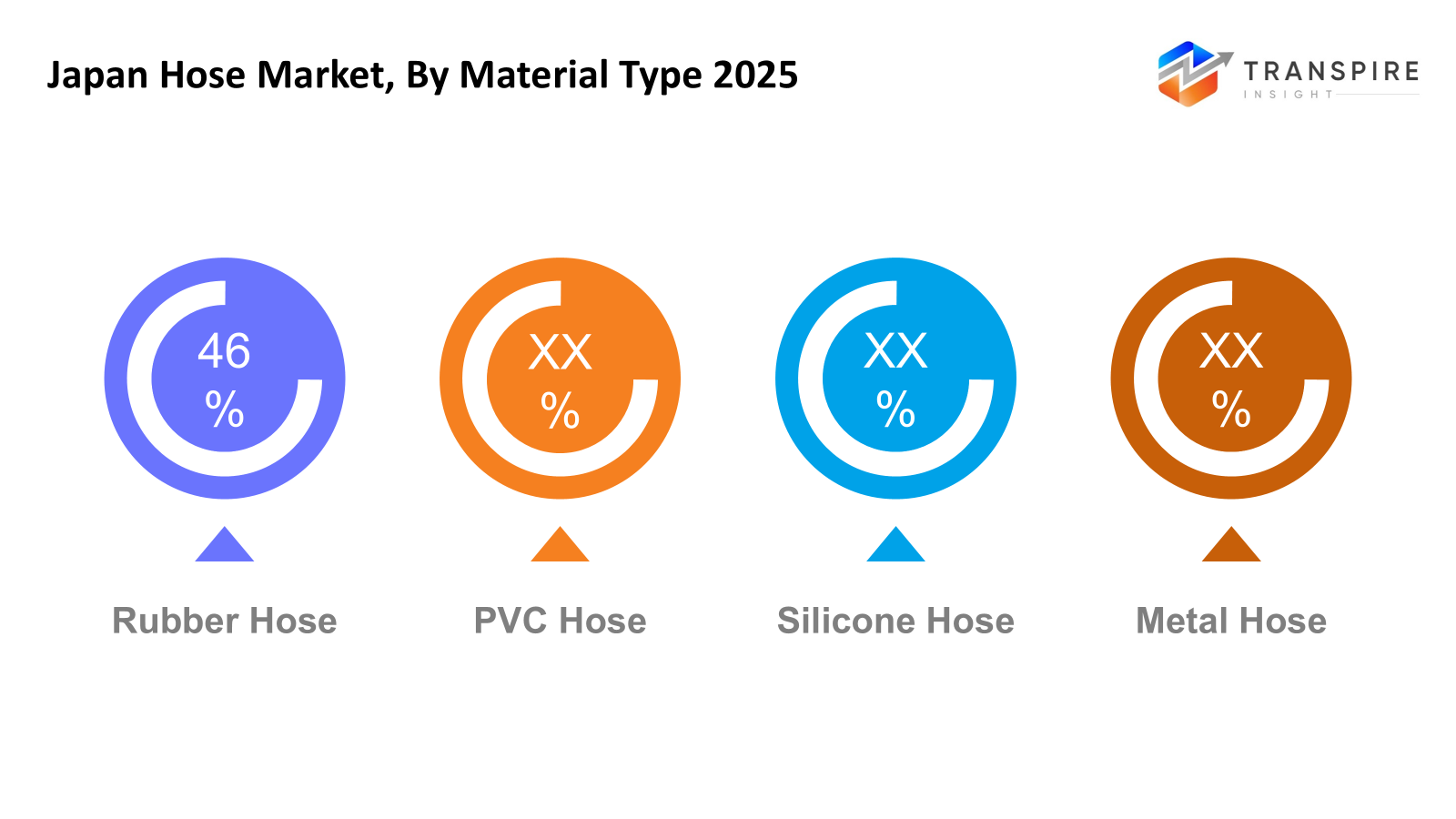
- Japan Hose Market Segments:By Material Type (Rubber Hose, PVC Hose, Silicone Hose, Metal Hose), By Application (Automotive, Industrial, Agricultural, Construction), By End User (OEMs, Aftermarket).
To learn more about this report,  Download Free Sample Report
Japan Hose Market Summary:
The Japan Hose Market size is estimated at USD 1931.4 Million in 2025 and is anticipated to reach USD 2828.4 Million by 2033, growing at a CAGR of 4.90% from 2026 to 2033. The Japan hose market is steadily evolving because strong demand exists from various industries which include automotive and construction and agricultural and manufacturing sectors. The development of products is driven by companies who must meet high standards which require them to develop advanced materials and create new product designs. The market expansion is being driven by two factors, which include infrastructure development and the modernisation of industrial equipment. The market in Japan experiences stable and sustainable growth because multiple sectors increasingly use efficient fluid transfer systems.
Key Market Trends & Insights:
- The automotive sector shows increasing demand for high-performance hoses which Japanese automotive manufacturers require to fuel their operations. Automotive manufacturers develop new vehicle technologies which require hoses to achieve improved heat protection and extended operational life and increased performance stability.
- The manufacturing sector requires specialised hoses which operate in hydraulic and pneumatic systems because factories and production facilities implement automation technologies. Automated systems use these hoses to control the movement of liquid and gas between different parts of their equipment.
- Manufacturers are developing hoses with high-performance materials that include reinforced rubber thermoplastics and composite polymers. The materials provide increased flexibility and chemical resistance together with extended product lifespan capabilities.
- Japanese construction activities continue to require durable hoses which handle water transfer and concrete pumping and heavy equipment operations.
- Japanese industries require hose manufacturers to meet strict quality standards because they prioritise product safety and operational reliability. The development process follows a pattern which results in ongoing product design advancements and manufacturing process enhancements.
Japan Hose Market Segmentation
By Material Type
- Rubber Hose: Rubber hoses stay popular in Japan because of their combination of durability, flexibility, and pressure and temperature resistance properties. Automotive cooling systems and industrial machines and hydraulic systems use these products as their primary function. The product serves as the ideal solution for multiple heavy-duty applications because it maintains dependable operation in challenging conditions.
- PVC Hose: Customers prefer PVC hoses because they provide a lightweight design and affordable pricing and simple usability. The product sees extensive use across Japan for water distribution and gardening and light industrial operations. The material permits agricultural and small manufacturing facilities to use it for transferring fluids because of its ability to withstand corrosion and chemical exposure.
- Silicone Hose: People choose silicone hoses because they provide outstanding heat protection and can function for extended periods. You can find these materials in automotive engines and medical devices and industrial systems that operate at high temperatures. Japanese manufacturers select silicone hoses because they need components which maintain performance under extreme operational conditions.
- Metal Hose: Metal hoses serve industrial applications which need both strong materials and protection against severe pressure and temperature conditions. The industrial sector of Japan utilizes these systems throughout chemical plants and energy facilities and heavy equipment operations. The product enables specialised industrial processes because it maintains durability while handling demanding industrial fluids.
To learn more about this report, Download Free Sample Report
By Application
- Automotive: The hose market in Japan receives an extensive portion of its share from the automotive industry. Hoses function as vital components in vehicles because they enable fuel transportation and cooling system operations and air intake functions. Japanese automakers require superior hose products which can endure elevated temperatures and vibrations and high-pressure conditions because they strive to achieve operational efficiency and system reliability.
- Industrial: Hoses function as essential components in industrial applications because they enable manufacturing facilities to move air and water and oil and chemicals through their systems. Japanese industrial operations need hoses which provide long-lasting power and stable performance throughout their entire service life. The equipment functions with all types of machinery and automated systems that operate inside industrial plants and manufacturing sites.
- Agricultural: Hoses serve crucial functions in agriculture through their use in irrigation systems, water distribution networks and equipment control systems. Japanese farmers use flexible and lightweight hoses because these products enable them to handle water resources with efficiency. The rising demand for contemporary agricultural methods together with effective irrigation solutions drives ongoing growth in this market segment.
- Construction: Hoses serve various construction purposes in Japan because they are needed for water pumping and concrete handling and equipment operations throughout the country. Building sites require durable hoses which can withstand harsh conditions. Hoses remain crucial for construction projects because they support ongoing infrastructure maintenance and development initiatives.
By End User
- OEMs (Original Equipment Manufacturers): OEMs use hoses as integral components in vehicles, machinery and industrial equipment which they use during their production process. The strict quality standards in Japan force manufacturers to obtain hoses which meet their demands for reliability and long-term performance. The ongoing partnership between hose manufacturers and OEMs results in new product development and improved product quality.
- Aftermarket: The aftermarket segment focuses on replacement hoses which technicians use for maintenance and repair work. The hoses used in vehicles and machinery become worn out after extended use, which creates a need for replacement. The extensive automotive and industrial equipment installed base in Japan creates continuous demand for aftermarket hose products.
Country Insights
Japan's hose market demonstrates the nation's powerful industrial base together with its dedication to producing superior products. The automotive, construction, agricultural, and advanced manufacturing sectors need different types of hoses, which create continuous demand for these products. The automotive industry in Japan needs dependable hoses to operate its cooling systems and fuel transfer systems and hydraulic systems, which drives ongoing development of new products.
The country demands manufacturers create durable, high-performance hose solutions because it values precision engineering and enforces rigorous safety standards. Japan's infrastructure maintenance and modernisation efforts create constant demand from construction and industrial sectors. The agricultural sector, which operates on a smaller scale than other industries, generates market expansion through its need for irrigation systems and agricultural equipment.
Product development now relies on technological progress which enables the creation of better materials, including reinforced rubber and thermoplastics. The hose market in Japan maintains its steady state through industrial demand and product innovations and its status as a leading engineering centre.
Recent Development News
Japan Manufacturing Activity Expands After 13 Months, Boosting Industrial Supply Chains.
Japanese Automotive Hose Maker Nichirin Faces Ransomware Attack Impacting Production Systems
|
Report Metrics |
Details |
|
Market size value in 2025 |
USD 1,931.4 Million |
|
Market size value in 2026 |
USD 2,024.2 Million |
|
Revenue forecast in 2033 |
USD 2,828.4 Million |
|
Growth rate |
CAGR of 4.90% from 2026 to 2033 |
|
Base year |
2025 |
|
Historical data |
2021 – 2024 |
|
Forecast period |
2026 – 2033 |
|
Report coverage |
Revenue forecast, competitive landscape, growth factors, and trends |
|
Country scope |
Japan |
|
Key company profiled |
Bridgestone Corporation, Yokohama Rubber Co. Ltd., Sumitomo Riko Company Ltd., Parker Hannifin Corporation, Eaton Corporation, Gates Corporation, Continental AG, Trelleborg AB, Toyox Co. Ltd., Kuriyama Holdings, Kanaflex Corporation, Semperit AG, NORRES Group, ALFAGOMMA SpA, Manuli Hydraulics. |
|
Customization scope |
Free report customization (country, regional & segment scope). Avail customized purchase options to meet your exact research needs. |
|
Report Segmentation |
By Material Type (Rubber Hose, PVC Hose, Silicone Hose, Metal Hose), By Application (Automotive, Industrial, Agricultural, Construction), By End User (OEMs, Aftermarket). |
Key Japan Hose Company Insights
The Japanese hose market establishes its boundaries through established manufacturers and specialised industrial suppliers who prioritise quality and innovation. Japanese companies in this market use durable materials together with advanced manufacturing methods and strict product testing to achieve the country's industrial standards. Companies in this industry collaborate with automotive and construction and machinery manufacturers to design hoses which meet particular performance specifications. Businesses dedicate resources to research and development efforts in order to produce products which enhance flexibility and temperature resistance and extend product durability in their quest to maintain competitiveness against tough industrial challenges.
Company List
- Bridgestone Corporation
- Yokohama Rubber Co. Ltd.
- Sumitomo Riko Company Ltd.
- Parker Hannifin Corporation
- Eaton Corporation
- Gates Corporation
- Continental AG
- Trelleborg AB
- Toyox Co. Ltd.
- Kuriyama Holdings
- Kanaflex Corporation
- Semperit AG
- NORRES Group
- ALFAGOMMA SpA
- Manuli Hydraulics.
Japan Hose Market Report Segmentation
By Material Type
- Rubber Hose
- PVC Hose
- Silicone Hose
- Metal Hose
By Application
- Automotive
- Industrial
- Agricultural
- Construction
By End User
- OEMs
- Aftermarket
Frequently Asked Questions
Find quick answers to common questions.
The approximate Japan Hose Market size for the market will be USD 2828.4 Million in 2033.
The key segments of theJapan Hose Market are By Material Type (Rubber Hose, PVC Hose, Silicone Hose, Metal Hose), By Application (Automotive, Industrial, Agricultural, Construction), By End User (OEMs, Aftermarket).
Major players in the Japan Hose Market are Bridgestone Corporation, Yokohama Rubber Co. Ltd., Sumitomo Riko Company Ltd., Parker Hannifin Corporation, Eaton Corporation, Gates Corporation, Continental AG, Trelleborg AB, Toyox Co. Ltd., Kuriyama Holdings.
The current market size of the Japan hose Market is USD 1931.4 Million in 2025.
The Japan Hose Market CAGR is 4.90%.
- Bridgestone Corporation
- Yokohama Rubber Co. Ltd.
- Sumitomo Riko Company Ltd.
- Parker Hannifin Corporation
- Eaton Corporation
- Gates Corporation
- Continental AG
- Trelleborg AB
- Toyox Co. Ltd.
- Kuriyama Holdings
- Kanaflex Corporation
- Semperit AG
- NORRES Group
- ALFAGOMMA SpA
- Manuli Hydraulics.
Recently Published Reports
-
Apr 2026
Healthcare Polymer Packaging Market
Healthcare Polymer Packaging Market Size, Share & Analysis Report By Packaging Type (Syringes, IV Bottles and Pouches, Clamshells, Blisters, Bottles & Jars, Containers, Tubes, IV Parental Packaging, Others), By Type (Regulated, Non-regulated), By Polymer Type (LDPE (Low-Density Polyethylene), HDPE (High-Density Polyethylene), Homo-polymer (Homo), Random Copolymer (Random), Block Copolymer (Block), PET, Polystyrene, Polyvinyl Chloride, Polyamide/EVOH, Others), and Geography (North America, Europe, Asia-Pacific, Middle East and Africa, South and Central America), 2021 - 2031
-
Apr 2026
Hydrophilic Tape (Waterstop) Market
Hydrophilic Tape (Waterstop) Market Size, Share & Analysis Report By Type (Bentonite-Based Hydrophilic Tape, Rubber-Based Hydrophilic Tape), By Application (Residential Buildings, Commercial Buildings, Infrastructure Projects), and Geography (North America, Europe, Asia-Pacific, Middle East and Africa, South and Central America), 2021 - 2031
-
Apr 2026
Metalens Market
Metalens Market Size, Share & Analysis Report By Type (Visible Light Metalens, and Infrared Metalens), By Application (Consumer Electronics, Automotive Electronics, Industrial, Medical, and Others), and Geography (North America, Europe, Asia-Pacific, Middle East and Africa, South and Central America), 2021 - 2031
-
Apr 2026
PBT Resin Market
PBT Resin Market Size, Share & Analysis Report By Type (Reinforced PBT Resin, Unreinforced PBT Resin), By Processing Method (Injection Molding, Extrusion, Blow Molding, Others), By End-User (Automotive, Electrical & Electronics, Consumer Appliances, Industrial Machinery, Medical Devices, Packaging, Others), and Geography (North America, Europe, Asia-Pacific, Middle East and Africa, South and Central America), 2021 - 2031