Japan Gastric Antral Vascular Ectasia (GAVE) Treatment Market Size & Forecast:
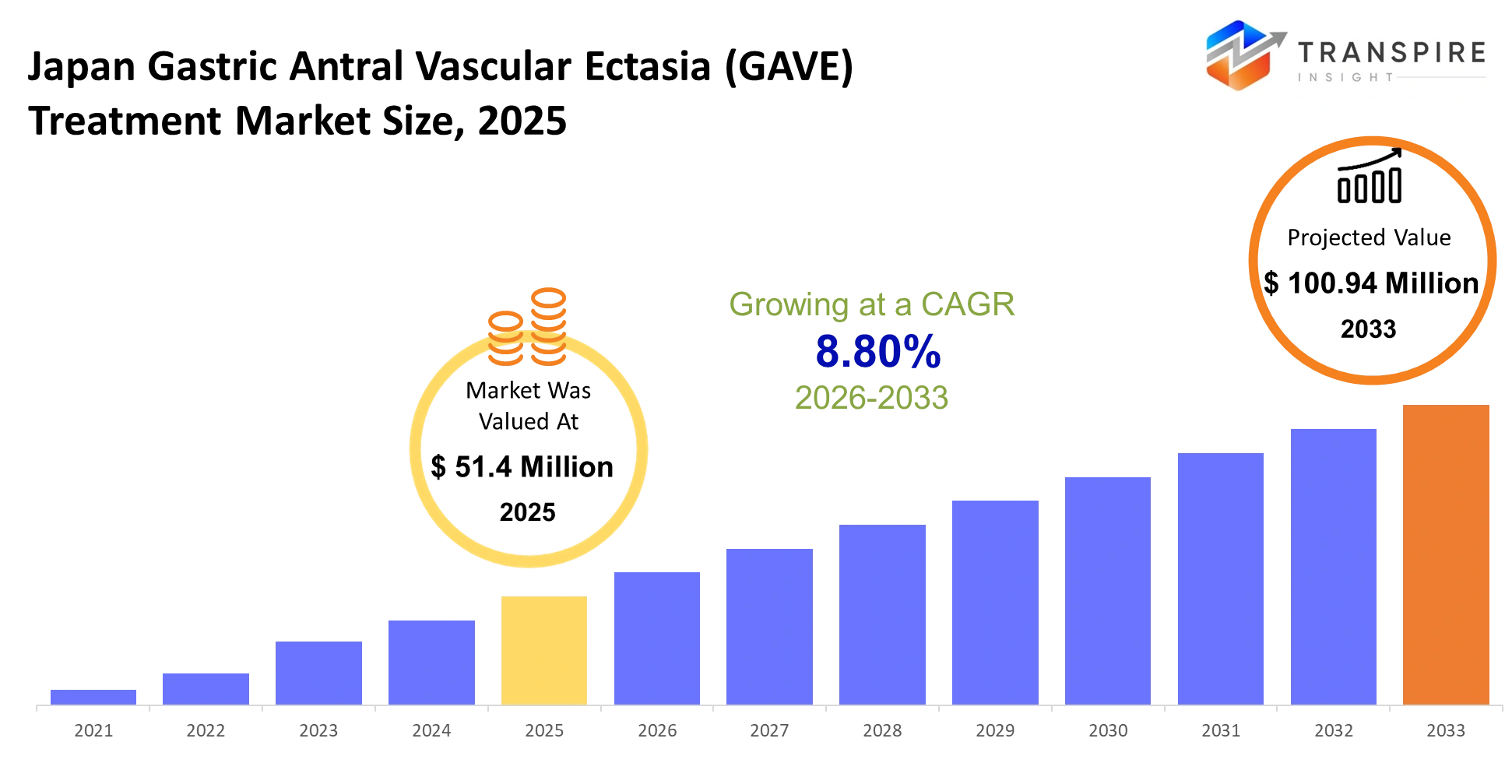
- Japan Gastric Antral Vascular Ectasia (GAVE) Treatment Market Size 2025: USD 51.4 Million
- Japan Gastric Antral Vascular Ectasia (GAVE) Treatment Market Size 2033: USD 100.94 Million
- Japan Gastric Antral Vascular Ectasia (GAVE) Treatment Market CAGR: 8.80%
- Japan Gastric Antral Vascular Ectasia (GAVE) Treatment Market Segments: By Treatment (Endoscopic Therapy, Medication, Surgery, Laser Therapy), By Diagnosis (Endoscopy, Imaging, Lab Tests, Biopsy), By End-User (Hospitals, Clinics, Specialty Centers, Research Institutes)
To learn more about this report,  Download Free Sample Report
Japan Gastric Antral Vascular Ectasia (GAVE) Treatment Market Summary:
The Japan Gastric Antral Vascular Ectasia (GAVE) Treatment Market size is estimated at USD 51.4 Million in 2025 and is anticipated to reach USD 100.94 Million by 2033, growing at a CAGR of 8.80% from 2026 to 2033. The Japan Gastric Antral Vascular Ectasia (GAVE) treatment market is showing continuous growth because more people develop gastrointestinal bleeding disorders and the elderly population develops more chronic diseases such as liver cirrhosis and autoimmune disorders. GAVE, commonly called "watermelon stomach" requires doctors to identify the disease through early diagnosis procedures which enable doctors to treat the patient before they develop anemia. The market expansion in Japan receives support from three factors which include healthcare professionals gaining more knowledge about their work, endoscopy development of better diagnostic methods, and medical facilities providing argon plasma coagulation (APC) treatment endoscopic band ligation treatment and drug-based treatment.
The market development receives advantages from Japan's established healthcare system and its numerous pharmaceutical and medical device companies which work together with research dedicated to creating less invasive medical techniques. Hospitals serve as the main locations for medical treatment while gastroenterology clinics provide specialized medical services. Medical facilities achieve better patient results through their use of new endoscopic technology and medical equipment. The market will experience some limitations because people do not know about the disease until its advanced stage and because treatment costs are too high. The market will grow steadily because medical research keeps creating new treatments and more people want effective ways to treat their gastrointestinal disorders.
Key Market Trends & Insights:
- The rising number of chronic liver diseases and autoimmune disorders and age-related gastrointestinal disorders in Japan has created a strong need for effective GAVE treatments. Advanced endoscopic procedures enable doctors to identify medical conditions at an earlier stage which leads to better patient results and increased use of less invasive treatment methods in both hospitals and specialized clinics.
- The development of endoscopic treatment technologies with argon plasma coagulation (APC) and endoscopic band ligation has created new possibilities for GAVE treatment. The healthcare industry has embraced these procedures because they provide better safety and shorter recovery times while delivering more accurate results.
- Japan's healthcare system delivers advanced diagnostic tools and treatment methods through its robust medical facilities and high healthcare spending. The presence of skilled gastroenterologists and well-equipped hospitals is supporting early intervention, enhancing treatment success, and contributing to overall market growth.
- The expanding research and development programs of pharmaceutical and medical device companies have led to the development of new treatment options. New treatments which combine different therapies with better drug development methods will improve GAVE management and provide comprehensive care for patients.
- The market growth faces two main challenges which include expensive treatments and insufficient knowledge about uncommon gastrointestinal disorders such as GAVE and the potential for treatment failure. The ongoing awareness programs combined with continuous medical progress will help to decrease these obstacles as time passes.
Japan Gastric Antral Vascular Ectasia (GAVE) Treatment Market Segmentation
By Treatment
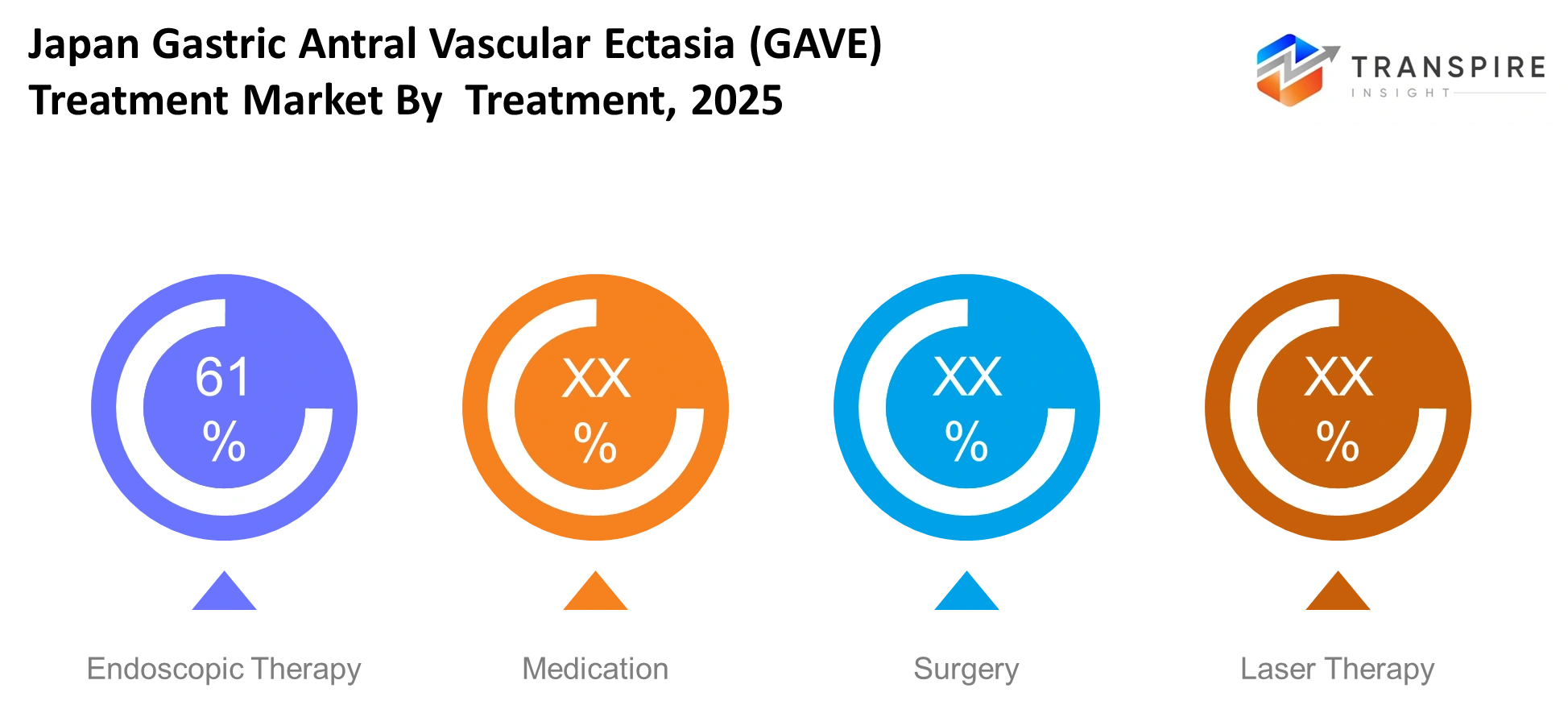
- Endoscopic Therapy: Japanese GAVE treatment market research shows endoscopic therapy as the leading treatment method because it delivers effective results through its less invasive treatment approach. Hospitals and specialty clinics use argon plasma coagulation and band ligation techniques because these methods enable patients to recover faster while experiencing fewer complications and better health results.
- Medication: GAVE treatment relies on medication as a vital element which doctors use to support patients who cannot undergo invasive medical procedures. The combination of hormonal therapy and corticosteroids with antifibrinolytics treats patients by stopping their bleeding while decreasing their chances of future episodes. Medications function as supplementary treatments that medical professionals use together with endoscopic procedures instead of using them independently.
- Surgery: Doctors recommend surgical treatment for patients with severe GAVE who do not respond to other available therapies. Antrectomy surgery provides patients with extended relief from their symptoms but doctors avoid this procedure because it involves elevated dangers and requires extended recovery and brings about higher medical expenses. Surgery functions as the final medical treatment option available in critical stages of patient illness.
- Laser Therapy: Laser therapy introduces a new treatment method which allows doctors to accurately attack abnormal blood vessels present in the gastric antrum. The method achieves successful coagulation results while causing minimal harm to nearby tissues. The method sees less frequent application when compared to endoscopic methods yet it continues to grow in popularity because of better technological developments and safer operational procedures.
To learn more about this report, Download Free Sample Report
By Diagnosis
- Endoscopy: The main way to diagnose GAVE in Japan uses endoscopy because it shows doctors the special blood vessel patterns that appear in stomach lining. The method provides doctors with a trustworthy diagnostic tool which enables them to detect diseases early and treat their patients effectively.
- Imaging: GAVE cases use CT scans and ultrasound as additional diagnostic methods. The tests do not provide conclusive results about the condition but they help doctors understand the patient's existing health issues and their subsequent complications. The process of imaging allows doctors to assess how severe the illness has progressed while they use endoscopic results to determine the right treatment methods.
- Lab Tests: GAVE testing needs laboratory tests to find anemia and track blood loss. Blood tests which include hemoglobin and iron studies help doctors understand the patient's health status and make treatment choices. The tests are typically used together with diagnostic tests to provide a complete assessment of the patient's condition.
- Biopsy: Doctors use biopsy during endoscopy to establish a diagnosis while eliminating the possibility of other gastric diseases. Histological examination helps identify vascular ectasia and associated abnormalities. The procedure of biopsy provides extra diagnostic information which becomes essential for GAVE cases that involve complicated situations or uncertainty.
By End-User
- Hospitals: Hospitals function as the primary user group because they have access to modern diagnostic and medical treatment equipment. The organization treats GAVE patients who need special medical attention through endoscopic and surgical procedures. The combination of skilled medical staff and complete medical facilities allows for successful patient monitoring and disease treatment.
- Clinics: Clinics function as essential facilities which provide GAVE patients with their first diagnosis while also providing them with ongoing medical treatment. They provide fundamental diagnostic tests while sending complicated medical cases to hospitals. Clinics help hospitals treat patients by monitoring their treatment results while making healthcare services more available to people living throughout Japan.
- Specialty Centers: Specialty centers that concentrate on gastroenterology treat GAVE patients through their specialized medical services. The centers use their specialized equipment and specialized knowledge to provide exceptional endoscopic medical procedures and individualized patient treatment. Experts who need to treat complex cases are choosing this method because it provides expert medical services.
- Research Institutes: Research institutes develop groundbreaking GAVE treatment methods and diagnostic technologies. The organization performs clinical studies while testing new medical treatments and developing modern medical technologies. Their main responsibility involves developing methods which enhance treatment success rates while developing understanding about uncommon gastrointestinal diseases such as GAVE.
Country Insights
Japan's Gastric Antral Vascular Ectasia GAVE treatment market operates through its advanced healthcare system which receives financial support from the government while patients can access diagnostic tools throughout the country. The country's growing elderly population creates a higher need for medical services because it leads to more gastrointestinal disorders which include GAVE and requires doctors to find ways to treat patients through early detection methods. Endoscopic procedures receive high adoption rates because gastroenterologists use modern hospital facilities to deliver fast treatment solutions which benefit patients in both urban and semi-urban hospitals.
Japan receives economic advantages from its top pharmaceutical companies and medical device manufacturers who dedicate their resources to create new treatment options through ongoing research and development efforts. Government initiatives that promote early disease detection together with their support for routine health examinations provide healthcare organizations with tools to improve their diagnostic capabilities. The market for GAVE treatment faces two main obstacles because it needs to address both expensive treatment options and poor public knowledge about rare diseases yet the sector will keep expanding because of new surgical methods and better treatment access to medical services in the future.
Recent Development News
Researchers presented their findings from the Japanese cohort study which examined GAVE in systemic scleroderma patients during their 2026 research study. The research establishes Japan as a leader in developing medical knowledge regarding uncommon gastrointestinal diseases.
The 2025 introduction of a new endoscopic classification system for GAVE which uses upper gastrointestinal findings has improved diagnostic accuracy and assisted doctors in choosing better treatment methods. The medical community is beginning to adopt endoscopic band ligation and radiofrequency ablation as alternatives to traditional treatment methods.
|
Report Metrics |
Details |
|
Market size value in 2025 |
USD 51.4 Million |
|
Market size value in 2026 |
USD 55.93 Million |
|
Revenue forecast in 2033 |
USD 100.94 Million |
|
Growth rate |
CAGR of 8.80% from 2026 to 2033 |
|
Base year |
2025 |
|
Historical data |
2021 – 2024 |
|
Forecast period |
2026 – 2033 |
|
Report coverage |
Revenue forecast, competitive landscape, growth factors, and trends |
|
Country scope |
Japan |
|
Key company profiled |
Olympus, Fujifilm, Boston Scientific, Medtronic, Cook Medical, Pentax Medical, Karl Storz, Hoya, Canon Medical, GE Healthcare, Philips, Abbott, Siemens Healthineers, Terumo, Shimadzu |
|
Customization scope |
Free report customization (country, regional & segment scope). Avail customized purchase options to meet your exact research needs. |
|
Report Segmentation |
By Treatment (Endoscopic Therapy, Medication, Surgery, Laser Therapy), By Diagnosis (Endoscopy, Imaging, Lab Tests, Biopsy), By End-User (Hospitals, Clinics, Specialty Centers, Research Institutes) |
Key Japan Gastric Antral Vascular Ectasia (GAVE) Treatment Market Company Insights
The Japan Gastric Antral Vascular Ectasia (GAVE) treatment market has become a competitive field which both domestic companies and international medical technology firms actively participate in. The endoscopic equipment market which serves as the primary diagnostic and treatment tool for GAVE shows Olympus, Fujifilm, and Hoya (Pentax Medical) as the leading companies. The companies establish their market position through their development of advanced imaging technologies and their creation of AI-empowered endoscopy products and their ongoing work to develop less invasive medical treatments which enhance patient treatment results and their ability to identify medical conditions. The market in Japan remains strong for domestic companies because they possess technical skills and they have established complete operational networks throughout the nation.
Boston Scientific Medtronic and Cook Medical as global enterprises deliver advanced therapeutic devices which enhance treatment choices for gastrointestinal disorders including GAVE. The market receives support from Karl Storz, GE Healthcare, Philips, Siemens Healthineers, Terumo, and Shimadzu, who provide imaging systems and diagnostic tools and medical support technologies. The market environment develops through companies that establish their competitive advantage by investing in research and development and adopting artificial intelligence and entering partnerships.
Company List
- Olympus
- Fujifilm
- Boston Scientific
- Medtronic
- Cook Medical
- Pentax Medical
- Karl Storz
- Hoya
- Canon Medical
- GE Healthcare
- Philips
- Abbott
- Siemens Healthineers
- Terumo
- Shimadzu
Japan Gastric Antral Vascular Ectasia (GAVE) Treatment Market Report Segmentation
By Treatment
- Endoscopic Therapy
- Medication
- Surgery
- Laser Therapy
By Diagnosis
- Endoscopy
- Imaging
- Lab Tests
- Biopsy
By End-User
- Hospitals
- Clinics
- Specialty Centers
- Research Institutes
Frequently Asked Questions
Find quick answers to common questions.
The approximate Japan Gastric Antral Vascular Ectasia (GAVE) Treatment Market size for the market will be USD 100.94 Million in 2033.
Key segments for the Japan Gastric Antral Vascular Ectasia (GAVE) Treatment Market are By Treatment (Endoscopic Therapy, Medication, Surgery, Laser Therapy), By Diagnosis (Endoscopy, Imaging, Lab Tests, Biopsy), By End-User (Hospitals, Clinics, Specialty Centers, Research Institutes).
Major Japan Gastric Antral Vascular Ectasia (GAVE) Treatment Market players are Olympus, Fujifilm, Boston Scientific, Medtronic, Cook Medical, Pentax Medical, Karl Storz, Hoya, Canon Medical, GE Healthcare, Philips, Abbott, Siemens Healthineers, Terumo, Shimadzu.
The Japan Gastric Antral Vascular Ectasia (GAVE) Treatment Market size is USD 51.4 Million in 2025.
The Japan Gastric Antral Vascular Ectasia (GAVE) Treatment Market CAGR is 8.80%.
- Olympus
- Fujifilm
- Boston Scientific
- Medtronic
- Cook Medical
- Pentax Medical
- Karl Storz
- Hoya
- Canon Medical
- GE Healthcare
- Philips
- Abbott
- Siemens Healthineers
- Terumo
- Shimadzu
Recently Published Reports
-
Apr 2026
AI in Diabetic Retinopathy Market
AI in Diabetic Retinopathy Market Size, Share & Analysis Report By Type (Screening AI Systems, Diagnostic AI Systems, and Predictive AI Models), By Application Segment (Hospitals, Ophthalmology Clinics, Diagnostic Centers, and Research and Development), and Geography (North America, Europe, Asia-Pacific, Middle East and Africa, South and Central America), 2021 - 2031
-
Apr 2026
Psychometric Tests Market
Psychometric Tests Market Size, Share & Analysis Report By Type (Personality Tests, Ability/Aptitude Tests, Skill/Knowledge Tests, and Others), By Application (Talent Acquisition and Talent Management), and Geography (North America, Europe, Asia-Pacific, Middle East and Africa, South and Central America), 2021 – 2031
-
Apr 2026
Rare Biological Sample Collection Market
Rare Biological Sample Collection Market Size, Share & Analysis Report By Type (Isolation Kits & Reagent, Blood Collection Tubes, and Others), By Application (Oncology, Transcriptomics, Pharmacogenomics, and Others), and Geography (North America, Europe, Asia-Pacific, Middle East and Africa, South and Central America), 2021 – 2031
-
May 2026
Patient Lift Pendant Market
Patient Lift Pendant Market By Product Type (Wired Pendants, Wireless, Programmable), By Operation Type(Manual, Electric), By End-Users (Healthcare Professionals, Patients), By Application (Hospitals, Homecare, Rehabilitation Centers, Others), By Industry Analysis, Size, Share, Growth, Trends, and Forecasts 2021-2033
Our Clients
.jpg)