

Japan Fetal Alcohol Syndrome (FAS) Market Size & Forecast:
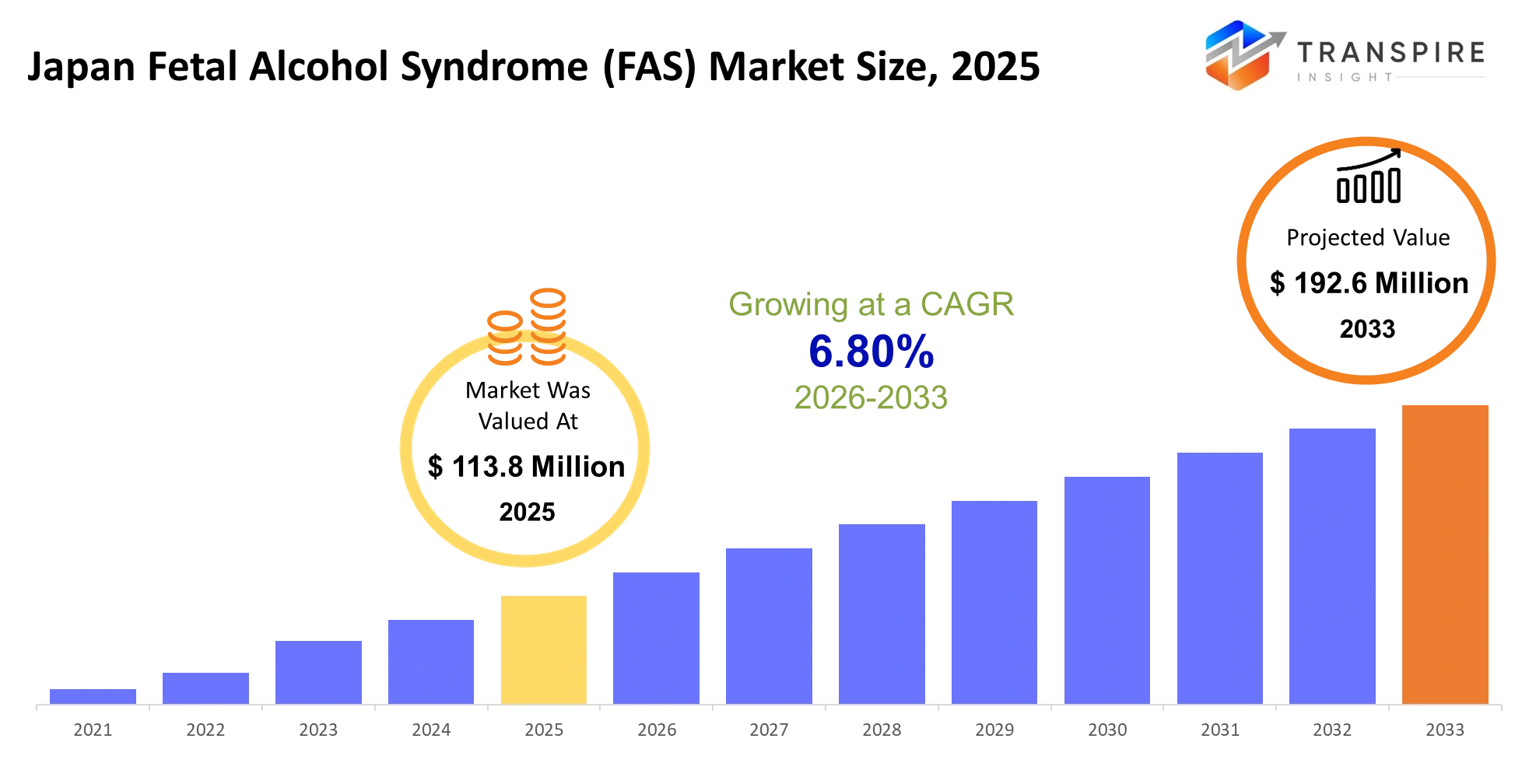
- Japan Fetal Alcohol Syndrome (FAS) Market Size 2025: USD 113.8 Million
- Japan Fetal Alcohol Syndrome (FAS) Market Size 2033:USD 192.6 Million
- Japan Fetal Alcohol Syndrome (FAS) Market CAGR: 6.80%
- Japan Fetal Alcohol Syndrome (FAS) Market Segments:By Type (Diagnosis, Treatment, Therapy, Support Services), By Application (Hospitals, Clinics, Rehab Centers, Homecare), By End-User (Hospitals, Patients, NGOs, Healthcare Providers).
To learn more about this report,  Download Free Sample Report
Japan Fetal Alcohol Syndrome (FAS) Market Summary:
The Japan Fetal Alcohol Syndrome (FAS) Market size is estimated at USD 113.8 Million in 2025 and is anticipated to reach USD 192.6 Million by 2033, growing at a CAGR of 6.80%from 2026 to 2033. The Japan Fetal Alcohol Syndrome (FAS) market exists as an essential niche market which operates within the larger framework of maternal and child healthcare systems. FAS, a severe form of fetal alcohol spectrum disorders caused by prenatal alcohol exposure, remains relatively underdiagnosed in Japan due to limited awareness and social stigma surrounding alcohol consumption during pregnancy. The public health campaigns which the government agencies run together with their initiatives and their focus on early childhood development, create a positive impact through improved diagnosis rates and rising demand for screening and diagnostic tools and supportive care services.
Market expansion occurs due to better pediatric healthcare services, increased healthcare provider participation in early intervention programs, and the healthcare system's transition towards preventive care. The market for FAS treatment exists because there are no permanent solutions to the disorder, yet organizations work to develop management methods which include behavioral therapy and special education and caregiver support systems. The partnerships which healthcare institutions form with research organizations and policymakers will create better treatment options which lead to increased market growth in Japan throughout the next years.
Key Market Trends & Insights:
- The detection of FAS in Japan is becoming more effective because people are learning about the dangers of drinking alcohol during pregnancy and the importance of prenatal health. The government educational programs and maternal health initiatives lead to improved public health through their delivery of educational content and assessment services and their support of enhanced behavioral changes.
- The development of pediatric diagnostic tools together with neurodevelopmental assessment tools leads to better identification of FAS and its associated disorders. The healthcare system now uses structured screening methods which help discover medical problems at an earlier stage while delivering necessary therapeutic and educational services to children who need them throughout their growth period.
- The market environment is changing due to the growing need for early intervention services and rehabilitation programs. The demand for speech therapy and behavioral therapy, along with special education programs is increasing because families and healthcare systems recognize that ongoing assistance is essential for helping children with FAS achieve cognitive and social development.
- The Japanese government, together with healthcare organizations and research institutions is forming stronger partnerships to achieve their shared objectives. The partnerships aim to develop clinical research activities while creating better diagnostic standards and building better healthcare systems to treat fetal alcohol spectrum disorders and related developmental disabilities.
- The social stigma that persists in society, together with limited clinical knowledge about FAS, makes it difficult to accurately diagnose and document FAS. The current policy initiatives together with public health programs are working to make prenatal alcohol exposure a normal topic of discussion which will boost both detection rates and industry expansion.
Japan Fetal Alcohol Syndrome (FAS) Market Segmentation
By Type
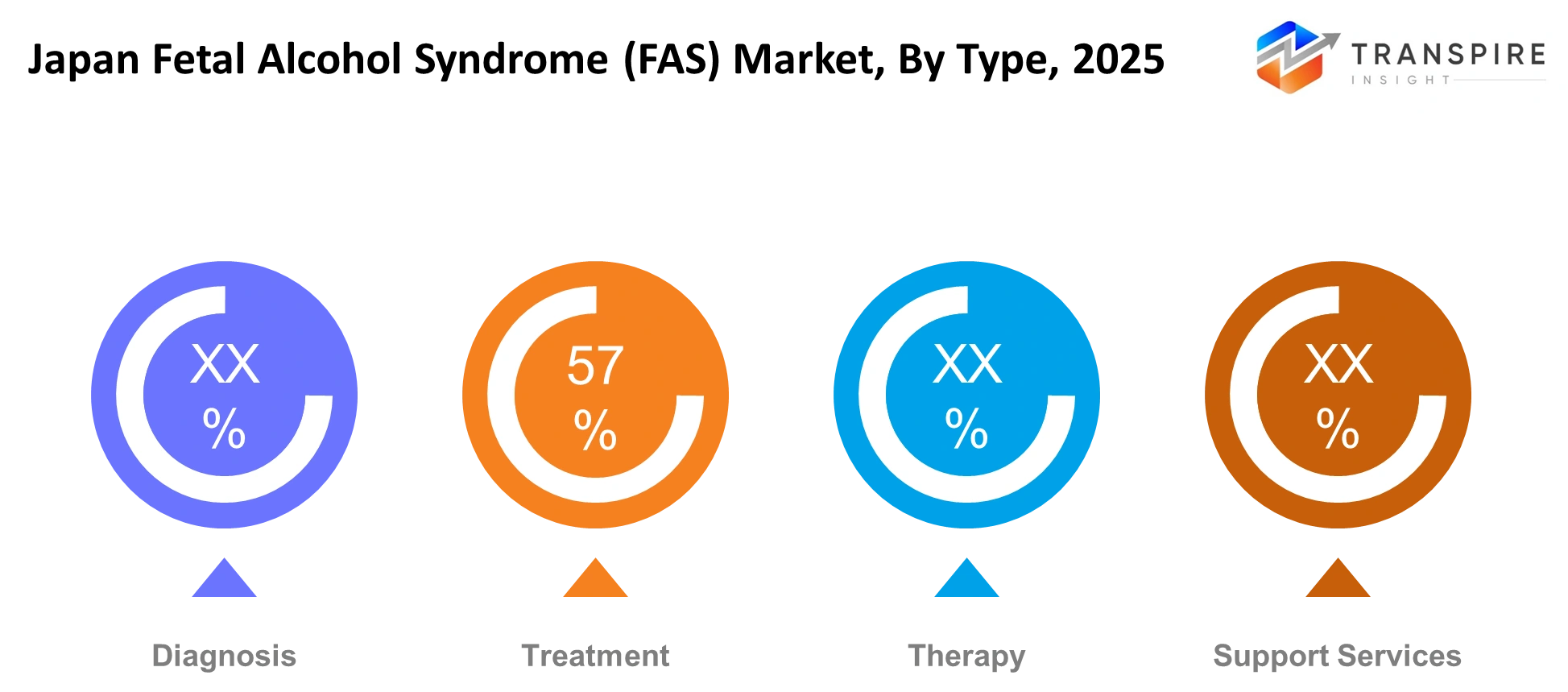
- Diagnosis: The diagnosis segment tests FAS through clinical assessments and physical examinations and neurodevelopmental evaluations. Japan's augmented public awareness combined with better screening methods now creates a need for precise early assessments which lead to prompt medical treatment and enhanced developmental results for affected children.
- Treatment: The FAS market provides treatment through medical procedures which address symptoms that include growth deficiencies and cognitive impairments and behavioral issues. Japanese healthcare providers use personalized care plans which combine medication and nutritional support with ongoing patient observation to boost their life quality because no treatment exists.
- Therapy: FAS treatment requires three essential therapies, which include speech therapy and occupational therapy, and behavioral interventions. The Japanese public now understands the advantages of early intervention which leads to increased usage of structured therapeutic programs that develop children's communication abilities, motor skills and social behavior.
- Support Services: Support services provide counseling services together with caregiver training and educational assistance programs to support families who face FAS challenges. The expansion of these services in Japan occurs because people now prioritize holistic care which enables families to face their challenges while maintaining long-term support for their development needs.
To learn more about this report, Download Free Sample Report
By Application
- Hospitals: The main FAS diagnostic center and its initial treatment facilities in Japan operate through hospital systems. The hospital system uses its specialized pediatric and neurological departments to provide complete medical evaluations together with multiple treatment options and early medical treatment for patients who have complicated FAS conditions.
- Clinics: Clinics function as essential facilities which conduct initial FAS screening tests and provide FAS patients with ongoing medical treatment. The clinics become the most suitable option for users who need to conduct regular health assessments and track their growth, and receive subsequent medical treatment because of their availability and affordable rates which meet the needs of people living in urban and semi-urban areas of Japan.
- Rehab Centers: The rehabilitation centers provide their patients with continuous medical treatment and assistance for health development throughout their lives. The facilities offer their patients organized treatment programs which include behavioral therapy and cognitive training and social skill development to help them achieve greater independence and improved life quality.
- Homecare: The Japanese market experiences rising demand for home care services because families need customized healthcare options which offer them flexible treatment times. The services provide in-home therapy together with caregiver assistance and patient monitoring which enables patients to receive their care at home while their families avoid taking them to the hospital frequently.
By End-User
- Hospitals: Hospitals as end-users employ diagnostic tools and treatment protocols and therapy services to handle FAS case management. Their responsibilities include both patient treatment and research activities and training programs and public awareness initiatives which help develop FAS treatment facilities throughout Japan.
- Patients: The FAS market focuses on treating patients who are infants and children. The demand for early diagnosis, therapeutic interventions, and long-term support services is increasing as Japanese parents and caregivers become more aware of their value in improving developmental outcomes.
- NGOs: Non-governmental organizations play an important role in raising awareness and providing support services and advocating for better healthcare policies related to FAS. NGOs in Japan support educational campaigns while helping families obtain essential healthcare services and resources.
- Healthcare Providers: Healthcare providers which include pediatricians and neurologists and therapists represent the main stakeholder group for the FAS market. Their increasing participation in early detection and intervention and ongoing care processes improves the entire FAS treatment system used in Japan.
Country Insights
Japan currently operates its Fetal Alcohol Syndrome (FAS) market because of its developed healthcare system, its advanced maternal healthcare work and its rising governmental efforts to educate people about prenatal health. Pregnant women should not drink alcohol according to social norms, but people have not reported FAS cases because of existing social stigmas and their difficulties with public dialogue. The national health programs together with maternal education programs, are creating better awareness about health issues which leads to early medical screening and promotes preventive health measures throughout the nation.
The government has increased efforts to improve pregnancy outcomes and child development outcomes due to Japan's growing elderly population and declining birth rates. The situation has led hospitals to increase funding for pediatric medical services, early treatment programs, and caregiver education. Urban areas such as Tokyo and Osaka now have better access to modern medical testing and treatment centers while rural regions are developing their healthcare systems through telemedicine and community healthcare programs which help the entire country achieve equal market expansion.
Recent Development News
- Recent clinical research in Japan has strengthened the understanding of prenatal alcohol exposure impacts, showing links between alcohol exposure and developmental issues which include placental abnormalities and neurological impairments. The findings from this research are motivating healthcare practitioners to implement more rigorous screening procedures while they work to increase preventive health measures for expectant mothers.
- Population-based cohort studies in Japan have established connections between prenatal alcohol consumption and hearing impairment which develops during early childhood. The increasing evidence base is leading to greater emphasis on both early identification practices and standard pediatric assessment procedures and ongoing observation systems which track children who face developmental risks.
|
Report Metrics |
Details |
|
Market size value in 2025 |
USD 113.8 Million |
|
Market size value in 2026 |
USD 121.5 Million |
|
Revenue forecast in 2033 |
USD 192.6 Million |
|
Growth rate |
CAGR of 6.80% from 2026 to 2033 |
|
Base year |
2025 |
|
Historical data |
2021 – 2024 |
|
Forecast period |
2026 – 2033 |
|
Report coverage |
Revenue forecast, competitive landscape, growth factors, and trends |
|
Country scope |
Japan |
|
Key company profiled |
Pfizer, Novartis, Roche, Merck, Johnson & Johnson, AbbVie, Sanofi, Takeda, Astellas, Daiichi Sankyo, Bayer, GSK, Eli Lilly, Teva, Bristol Myers Squibb. |
|
Customization scope |
Free report customization (country, regional & segment scope). Avail customized purchase options to meet your exact research needs. |
|
Report Segmentation |
By Type (Diagnosis, Treatment, Therapy, Support Services), By Application (Hospitals, Clinics, Rehab Centers, Homecare), By End-User (Hospitals, Patients, NGOs, Healthcare Providers). |
Key Japan Fetal Alcohol Syndrome (FAS) Market Company Insights
The Japan FAS market does not have drugs specifically approved for treating fetal alcohol syndrome; instead, major pharmaceutical players such as Pfizer, Novartis, and Roche allow their products to treat the disease through their pediatric neurology and rare disease (orphan drug) and central nervous system (CNS) treatment portfolios. The companies operate within Japan's healthcare system by using their research and development capabilities and their clinical trials and their partnerships with Japanese institutions to develop treatments for developmental and neurological disorders that result from FAS. Multinational companies establish a strong presence in Japan's pharmaceutical sector because medical institutions spend heavily on healthcare while patients seek out sophisticated medical solutions.
Other key players including Merck & Co., Johnson & Johnson, AbbVie, and Sanofi are strengthening their roles through innovations in behavioral health, immunology, and pediatric care solutions. Takeda Pharmaceutical Company operates as the dominant competitor in the Japanese market because it possesses effective distribution systems and complete understanding of Japan's regulatory framework. The companies are making financial commitments to develop orphan drugs while conducting pediatric research because these studies address conditions that affect a large number of patients with rare diseases and underserved medical needs.
Company List
- Pfizer
- Novartis
- Roche
- Merck
- Johnson & Johnson
- AbbVie
- Sanofi
- Takeda
- Astellas
- Daiichi Sankyo
- Bayer
- GSK
- Eli Lilly
- Teva
- Bristol Myers Squibb
Japan Fetal Alcohol Syndrome (FAS) Market Report Segmentation
By Type
- Diagnosis
- Treatment
- Therapy
- Support Services
By Application
- Hospitals
- Clinics
- Rehab Centers
- Homecare
By End-User
- Hospitals
- Patients
- NGOs
- Healthcare Providers
Frequently Asked Questions
Find quick answers to common questions.
The approximate Japan Fetal Alcohol Syndrome (FAS) Market size for the market will be USD 192.6 Million in 2033.
Key segments for the Japan Fetal Alcohol Syndrome (FAS) Market are By Type (Diagnosis, Treatment, Therapy, Support Services), By Application (Hospitals, Clinics, Rehab Centers, Homecare), By End-User (Hospitals, Patients, NGOs, Healthcare Providers).
Major Japan Fetal Alcohol Syndrome (FAS) Market players are Pfizer, Novartis, Roche, Merck, Johnson & Johnson, AbbVie, Sanofi, Takeda, Astellas, Daiichi Sankyo, Bayer, GSK, Eli Lilly, Teva, Bristol Myers Squibb.
The Japan Fetal Alcohol Syndrome (FAS) Market size is USD 113.8 Million in 2025.
The Japan Fetal Alcohol Syndrome (FAS) Market CAGR is 6.80%.
- Pfizer
- Novartis
- Roche
- Merck
- Johnson & Johnson
- AbbVie
- Sanofi
- Takeda
- Astellas
- Daiichi Sankyo
- Bayer
- GSK
- Eli Lilly
- Teva
- Bristol Myers Squibb
Recently Published Reports
-
May 2026
Biosimilars Market
Biosimilars Market By Product Type (Monoclonal Antibodies, Recombinant Hormones, Erythropoietin, G-CSF, Others), By Indication (Oncology, Autoimmune Diseases, Blood Disorders, Diabetes, Others), By Manufacturing Type (In-House Manufacturing, Contract Manufacturing), By Distribution Channel (Hospital Pharmacies, Retail Pharmacies, Online Pharmacies), By Industry Analysis, Size, Share, Growth, Trends, and Forecasts 2021-2033
-
Apr 2026
Gastrointestinal Endoscopy Market
Gastrointestinal Endoscopy Market By Type (Rigid Gastrointestinal Endoscope, Flexible Gastrointestinal Endoscopes, Disposable Gastrointestinal Endoscope), By Procedure Type (Colonoscopy, Gastroscopy, Duodenoscopy, Enteroscopy, Flexible Sigmoidoscopy, Others), By Application (Diagnosis, Treatment), By End-Users (Hospitals, Ambulatory Surgical Centers, Specialty Clinics, Laboratories, Others), By Industry Analysis, Size, Share, Growth, Trends, and Forecasts 2021-2033
-
Apr 2026
Rare Inherited Metabolic Disorder Drug Market
Rare Inherited Metabolic Disorder Drug Market By Drug Class (Enzyme Replacement Drugs, Gene Therapy Drugs, Substrate Reduction Drugs, Small Module Drugs, Protein Drugs), By Route of Administration(Parenteral, Oral, Intrathecal), By Clinical Development (Marketed Drugs, Late Stage Clinical Phase III, Early Stage Clinical Phase I-II, Preclinical Candidates), By Indication (Lysosomal Storage Disorders, Urea Cycle Disorders, Amino Acid Metabolic Disorders, organic Acidemias, Peroximal Disorders), By Industry Analysis, Size, Share, Growth, Trends, and Forecasts 2021-2033
-
Jan 2026
Pharmaceutical Cleanroom Technology Market
Pharmaceutical Cleanroom Technology Market By Product (Equipment, Consumables, Services); By Cleanroom Type (Standard Cleanrooms, Modular Cleanrooms); By End Use (Pharmaceutical Companies, Biotechnology Companies), By Industry Analysis, Size, Share, Growth, Trends, and Forecasts 2021-2033