
Japan Automotive Bumpers Market Size & Forecast:
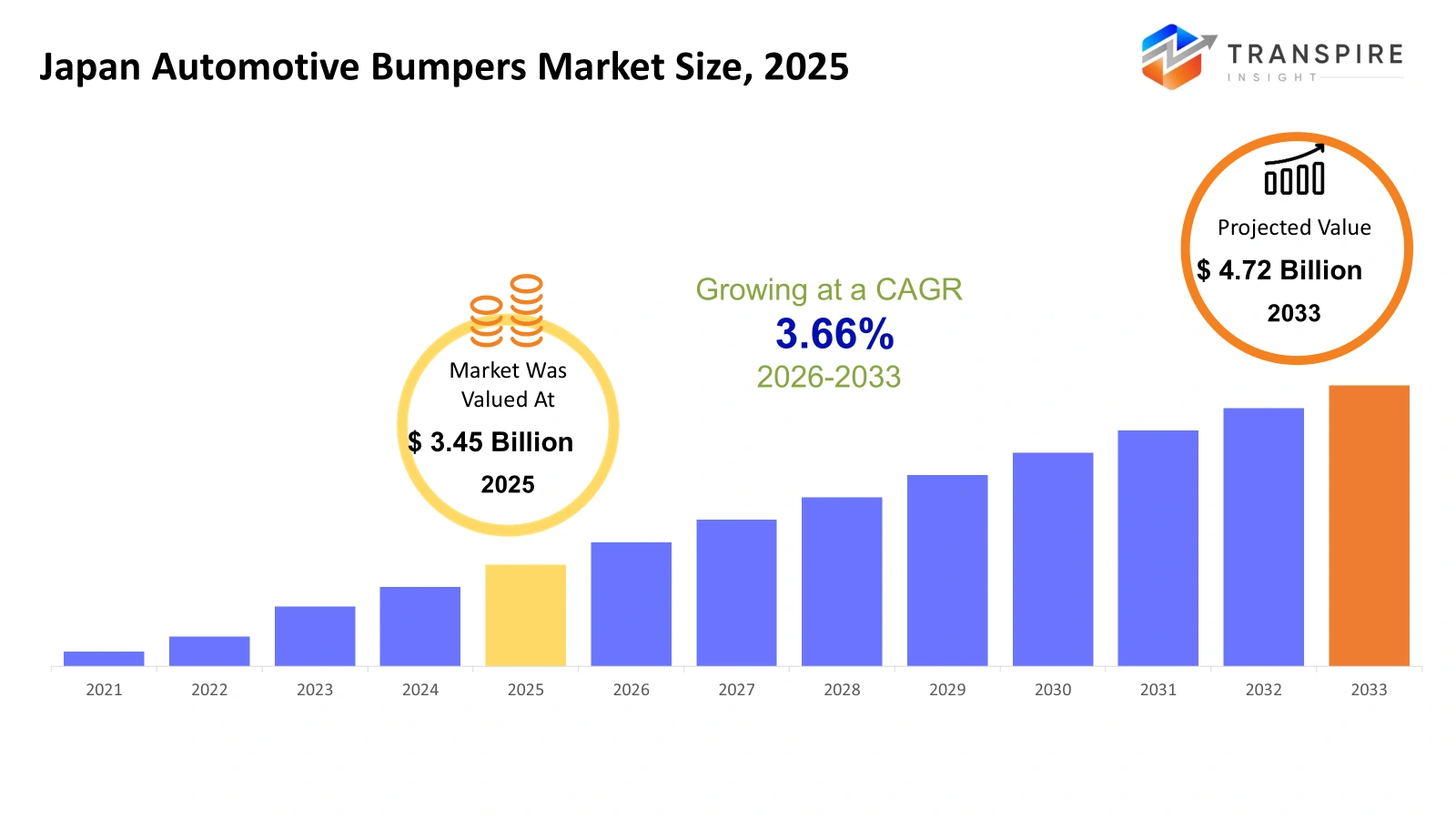
- Japan Automotive Bumpers Market Size 2025: USD 3.45 Billion
- Japan Automotive Bumpers Market Size 2033: USD 4.72 Billion
- Japan Automotive Bumpers Market CAGR: 3.66%
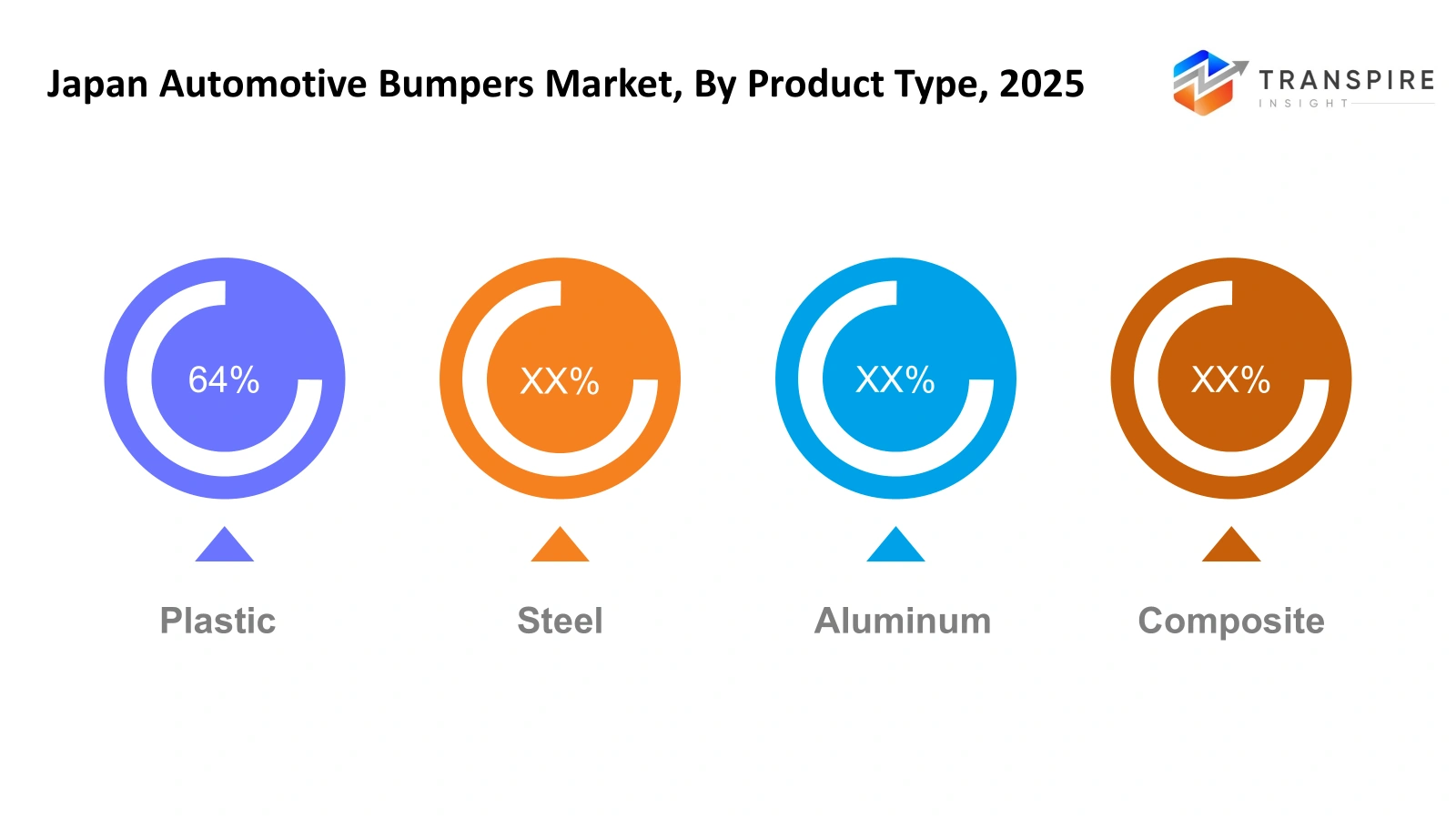
- Japan Automotive Bumpers Market Segments:By Material Type (Plastic, Steel, Aluminum, Composite), By Vehicle Type (Passenger Cars, Commercial Vehicles), By Position (Front Bumper, Rear Bumper).
To learn more about this report,  Download Free Sample Report
Japan Automotive Bumpers Market Summary:
The Japan Automotive Bumpers Market size is estimated at USD 3.45 Billion in 2025 and is anticipated to reach USD 4.72 Billion by 2033, growing at a CAGR of 3.66% from 2026 to 2033. The automotive bumper market in Japan showcases precision engineering methods which meet the changing needs of consumers. The strong automotive sector in Japan drives manufacturers to develop lightweight materials which improve safety while creating visually appealing products. The increasing electric vehicle market and the implementation of more rigorous safety standards drive research and development which focuses on using advanced polymers and intelligent design solutions. The Japanese automotive industry uses automated systems to guarantee product durability while maintaining environmentally friendly practices that meet their strict quality requirements. The automotive market maintains its steady growth because of technological progress and Japan's dedication to automotive engineering perfection.
Key Market Trends & Insights:
- Production growth of electric vehicles implies that bumpers are changing their products. Electric vehicles need parts that have both aerodynamic properties and minimal weight, which creates a need for manufacturers to develop new designs for bumper systems.
- Japanese safety regulations require an impact-absorbing technology system to be used in all vehicles. Bumper systems now serve two functions because they combine aesthetic design elements with improved pedestrian safety and collision defence capabilities.
- Bumper systems now include sensors and cameras and radar technology to enable advanced driver-assistance systems (ADAS) operation. Bumpers are evolving into essential elements which enhance the technological capabilities of vehicles.
- Japan's established automobile manufacturers maintain their market position by delivering premium bumper systems to customers. The company achieves continuous market expansion through its dedication to innovation and development of precise engineering solutions.
- The aftermarket segment experiences steady growth because customers need bumper replacements to fix worn parts and repair damages and create customised designs. The demand for visually appealing designs creates a market opportunity which customers find attractive.
Japan Automotive Bumpers Market Segmentation
By Product Type
- Plastic: The Japanese automotive industry utilises plastic bumpers because these components weigh less and offer multiple design options. The system enables better fuel consumption while providing an affordable solution for factories to produce their products. The system enables customers and automotive manufacturers to select their preferred product because it can handle minor collisions while supporting contemporary design trends.
- Steel: The development of steel bumpers enables their use in heavy-duty situations because their steel composition provides protection against impacts, which makes them ideal for essential applications. The system provides exceptional protection against impacts, which proves especially valuable for commercial vehicle applications. Steel maintains its importance because it enables safety and structural integrity to be protected, which organisations need when they develop essential structures and weight distribution systems.
- Aluminum: The widespread burgeoning reputation of the aluminium bumpers arises from the fact that they offer a winning combination of strength with a very undeniably low weight. The materials provide benefits of better fuel efficiency together with protection against corrosion. The automotive industry in Japan is now using aluminium as an environmentally friendly solution that helps achieve Japanese environmental regulations while developing strong and efficient vehicle technologies.
- Composite: Composite bumpers use several materials to create products that achieve superior strength together with flexible movement and lightweight construction. The system provides high performance together with sustainable benefits, which makes it a popular choice for contemporary vehicles. The growing focus on environmental issues, together with innovation, has led Japanese companies to adopt composite materials for their bumper production process.
To learn more about this report, Download Free Sample Report
By Vehicle Type
- Passenger Cars: The market for passenger cars shows dominant performance because customers want more vehicles while manufacturers keep introducing new models. The bumpers in this segment serve three purposes because they need to look good while being lightweight and providing safety features. Japanese automakers design their vehicles with stylish appearances and modern technological capabilities because they want their bumpers to create better visual appeal and functional performance.
- Commercial Vehicles: Commercial vehicles require bumpers that offer maximum durability and protection. The design of these bumpers allows them to withstand severe impacts and operate under extreme usage conditions. The Japanese logistics and transportation sectors continue to grow, which creates a constant demand for dependable and robust bumper systems used in this vehicle category.
By Position
- Front Bumper: Front bumpers create essential safety functions for vehicles because they absorb collisions while shielding vital vehicle parts. The systems typically come with built-in sensors and cameras together with their specialised safety equipment. Front bumper design development in Japan takes its direction from new safety rules and the increased use of advanced driver-assistance systems.
- Rear Bumper: Rear bumpers serve their main purpose to safeguard vehicles from damage that occurs during slow-speed crashes and accidents. The products have been developed to withstand heavy use while remaining simple to fix. Japanese designers create rear bumper designs that show current fashion trends while maintaining a range of practical benefits, including cost efficiency and design attractiveness in contemporary automobiles.
Country Insights
The Japanese automotive bumper industry demonstrates the country's longstanding automotive superiority, which its manufacturers use to create innovative new designs. The market benefits from international car manufacturers and their complete supply network because they maintain steady product requirements while delivering superior manufacturing outcomes. Vehicle manufacturers need to create strong bumpers which can withstand impacts because urban areas with heavy traffic develop their need for these features.
Bumper design now needs to adopt lightweight materials which create better aerodynamic structures because electric and hybrid vehicle adoption continues to grow. Japanese safety rules require manufacturers to implement advanced technologies which include sensor systems and pedestrian safety measures. Companies focus on sustainability by using materials that can be recycled and implementing environmentally friendly manufacturing processes.
The Japanese automotive bumper market demonstrates technological progress through dependable products for which research and development work together to meet customer needs in both domestic and international markets.
Recent Development News
Japanese Auto Customisation Trend Revives Retro Bumper Designs: Japanese tuning firms are introducing wider and stylised bumpers in retro body kits, blending nostalgia with modern performance. This reflects rising aftermarket demand for aesthetic bumper modifications in Japan.
Japan Sees Growing Demand for Sensor-Integrated Automotive Components: Rising adoption of ADAS technologies is increasing the integration of sensors into vehicle structures, including bumpers, enhancing safety and automation capabilities.
|
Report Metrics |
Details |
|
Market size value in 2025 |
USD 3.45 Billion |
|
Market size value in 2026 |
USD 3.67 Billion |
|
Revenue forecast in 2033 |
USD 4.72 Billion |
|
Growth rate |
CAGR of 3.66% from 2026 to 2033 |
|
Base year |
2025 |
|
Historical data |
2021 – 2024 |
|
Forecast period |
2026 – 2033 |
|
Report coverage |
Revenue forecast, competitive landscape, growth factors, and trends |
|
Country scope |
Japan |
|
Key company profiled |
Toyota Boshoku Corporation, Plastic Omnium Group, Magna International Inc., Hyundai Mobis Co. Ltd., Flex-N-Gate Corporation, Samvardhana Motherson Group, Faurecia SE, Valeo SA, Toyoda Gosei Co. Ltd., SMP Deutschland GmbH, Futaba Industrial Co. Ltd., Denso Corporation, KIRCHHOFF Automotive, Gestamp Automoción, Calsonic Kansei Corporation. |
|
Customization scope |
Free report customization (country, regional & segment scope). Avail customized purchase options to meet your exact research needs. |
|
Report Segmentation |
By Material Type (Plastic, Steel, Aluminum, Composite), By Vehicle Type (Passenger Cars, Commercial Vehicles), By Position (Front Bumper, Rear Bumper). |
Key Japan Automotive Bumpers Company Insights
The automotive bumper market in Japan exists through the combination of traditional manufacturers and new suppliers who prioritise accurate production methods. The automotive industry requires companies to develop products which combine lightweight materials with advanced safety systems and attractive designs. The automotive industry achieves product innovation and manufacturing efficiency through strong partnerships between car manufacturers and their parts suppliers. Environmental sustainability practices and recyclable materials usage are becoming essential for companies to achieve their environmental objectives. The automotive industry in Japan depends on these companies, which develop reliable products and advanced technologies to sustain its global market competitiveness.
Company List
- Toyota Boshoku Corporation
- Plastic Omnium Group
- Magna International Inc.
- Hyundai Mobis Co. Ltd.
- Flex-N-Gate Corporation
- Samvardhana Motherson Group
- Faurecia SE
- Valeo SA
- Toyoda Gosei Co. Ltd.
- SMP Deutschland GmbH
- Futaba Industrial Co. Ltd.
- Denso Corporation
- KIRCHHOFF Automotive
- Gestamp Automoción
- Calsonic Kansei Corporation.
Japan Automotive Bumpers Market Report Segmentation
By Material Type
- Plastic
- Steel
- Aluminum
- Composite
By Vehicle Type
- Passenger Cars
- Commercial Vehicles
By Position
- Front Bumper
- Rear Bumper
Frequently Asked Questions
Find quick answers to common questions.
The Approximate Japan Automotive Bumpers Market size for the Market will be USD 4.72 Billion in 2033.
The key Segments of the Japan Automotive Bumpers Market are By Material Type (Plastic, Steel, Aluminum, Composite), By Vehicle Type (Passenger Cars, Commercial Vehicles), By Position (Front Bumper, Rear Bumper).
Major Players in the Japan Automotive Bumpers Market are Toyota Boshoku Corporation, Plastic Omnium Group, Magna International Inc., Hyundai Mobis Co. Ltd., Flex-N-Gate Corporation, Samvardhana Motherson Group, Faurecia SE, Valeo SA, Toyoda Gosei Co. Ltd., SMP Deutschland GmbH, Futaba Industrial Co. Ltd., Denso Corporation, KIRCHHOFF Automotive, Gestamp Automoción, Calsonic Kansei Corporation.
The Current Market size of the Japan Automotive Bumpers Market is USD 3.45 Billion in 2025.
The Japan Automotive Bumpers Market CAGR is 3.66%.
- Toyota Boshoku Corporation
- Plastic Omnium Group
- Magna International Inc.
- Hyundai Mobis Co. Ltd.
- Flex-N-Gate Corporation
- Samvardhana Motherson Group
- Faurecia SE
- Valeo SA
- Toyoda Gosei Co. Ltd.
- SMP Deutschland GmbH
- Futaba Industrial Co. Ltd.
- Denso Corporation
- KIRCHHOFF Automotive
- Gestamp Automoción
- Calsonic Kansei Corporation.
Recently Published Reports
-
Apr 2026
ATV & UTV Market
ATV & UTV Market Size, Share & Analysis Report By Type (ATV, and UTV), By Variants (Less Than 400 CC, 400 CC To 800 CC, and More Than 800 CC), and Geography (North America, Europe, Asia-Pacific, Middle East and Africa, South and Central America), 2021 - 2031
-
Apr 2026
Automotive Central Gateway Module Market
Automotive Central Gateway Module Market Size, Share & Analysis Report By Type (Ethernet Central Gateway Module, CAN Central Gateway Module, LIN Central Gateway Module, and FlexRay), By Application (Powertrain Control, Body Control, Infotainment System, Advanced Driver Assistance Systems (ADAS), and Others), By End User (Passenger Vehicles, and Commercial Vehicles), and Geography (North America, Europe, Asia-Pacific, Middle East and Africa, South and Central America), 2021 - 2031
-
Apr 2026
Automotive Engine Oil Filter Market
Automotive Engine Oil Filter Market Size, Share & Analysis Report By Filter Type (Fuel Filter, Engine Oil Filter, Hydraulic Oil Filter, and Others), By Filter Media (Cellulose, Synthetic, and Micro), By Sales Channel (OEMs, and Aftermarket), By Vehicle Type (Passenger Cars, Light Commercial Vehicles, Heavy Duty Trucks, Buses and Coaches, and Off-road Vehicles), and Geography (North America, Europe, Asia-Pacific, Middle East and Africa, South and Central America), 2021 - 2031
-
Apr 2026
Automotive Parts Aluminium Die Casting Market
Automotive Parts Aluminium Die Casting Market Size, Share & Analysis Report By Production Process (Pressure Die Casting, Vacuum Die Casting, Squeeze Die Casting, Gravity Die Casting), By Application (Body Parts, Engine Parts, Transmission Parts, Battery And Related Components, Other Application Types), and Geography (North America, Europe, Asia-Pacific, Middle East and Africa, South and Central America), 2021 - 2031
Our Clients