

Hydrolyzed Whey Protein Market Summary:
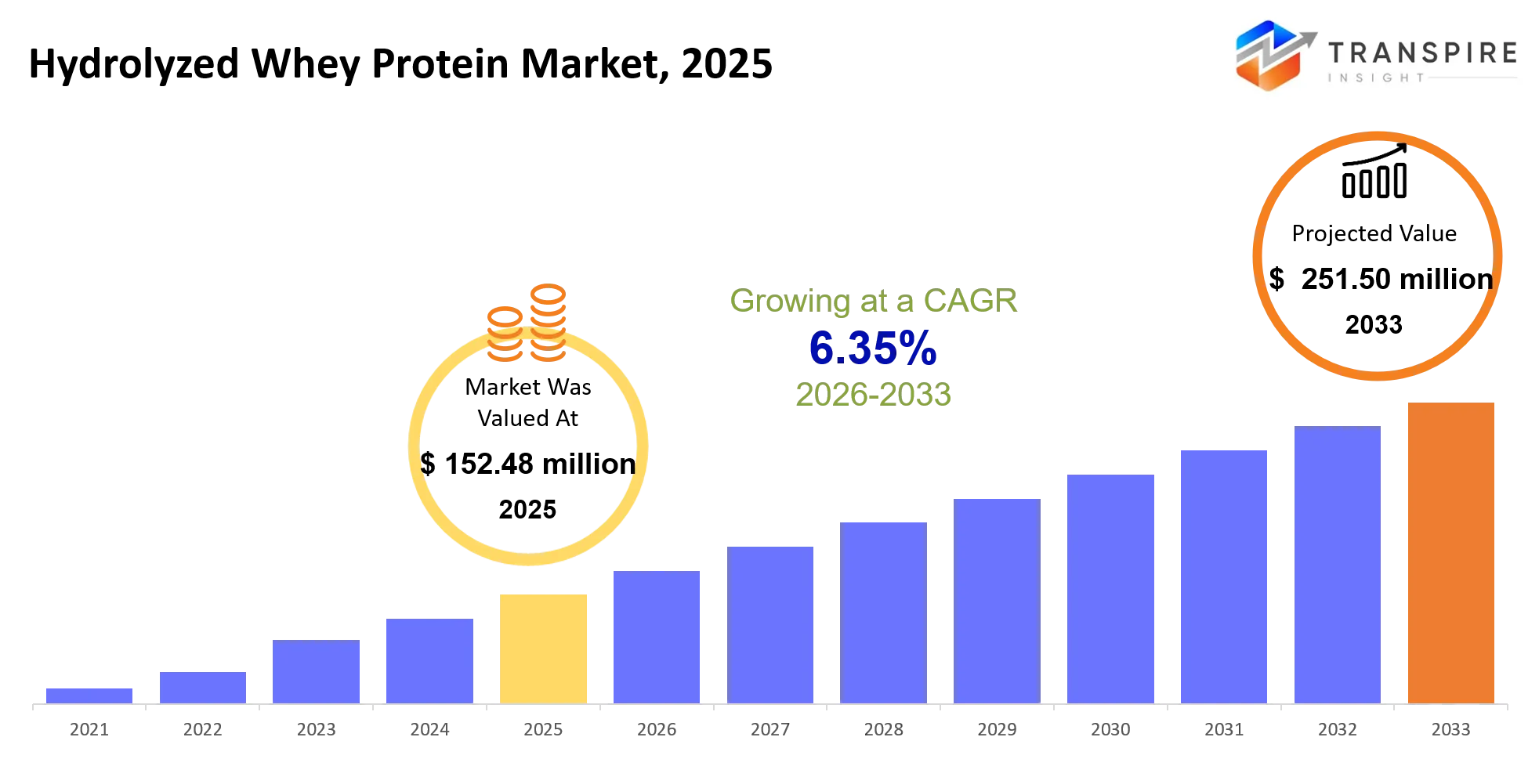
As per Transpire Insight Analysis, the Hydrolyzed Whey Protein Market size is estimated at USD 152.48 million in 2025 and is anticipated to reach USD 251.50 million by 2033, growing at a CAGR of 6.35% from 2026 to 2033.
The hydrolyzed whey protein market is changing. Nutrition manufacturers are focusing on creating protein ingredients that're easier to digest absorb quickly and deliver better nutrition. These ingredients are now commonly used in sports supplements, clinical nutrition, infant formula and functional food products. In the past three to five years, the industry has moved from simple protein powders. Now, it is heading towards the use of hydrolysates for the satisfaction of individual needs. One major step has been the emergence of enzymatic hydrolysis and filtration technologies. Such technologies enable the industry to control the peptide structure as well as the functionality of its components. The recent launch of products from companies such as Arla Foods Ingredients and Hilmar demonstrates such an approach where the protein powders are used for specific applications. The rising interest in muscle recovery, medical nutrition for specific purposes and convenient consumption of protein products is motivating the manufacturers to expand their range of products. Thus, there has been an increase in investments in whey processing and special protein formulas. As a result, hydrolyzed whey proteins have become widely popular.
Hydrolyzed Whey Protein Market Size & Forecast:
- Market Size 2025: USD 152.48 million
- Expected Market Value (2033): USD 251.50 million
- Forecast CAGR (2026–2033): 6.35%
- Leading Region in 2025: North America
- Fastest Growing Region: Asia Pacific
- Key Company Profiles: Arla Foods Ingredients, Glanbia Nutritionals, Fonterra, Lactalis Ingredients, FrieslandCampina, Hilmar Ingredients, Agropur, Milk Specialties Global, Carbery Group, Leprino Foods, Saputo, Davisco Foods International, AMCO Proteins, MuscleTech, Kerry Group
Key Market Insights:
The market is moving toward specialised protein ingredients that offer quality, digestibility, and applicability.
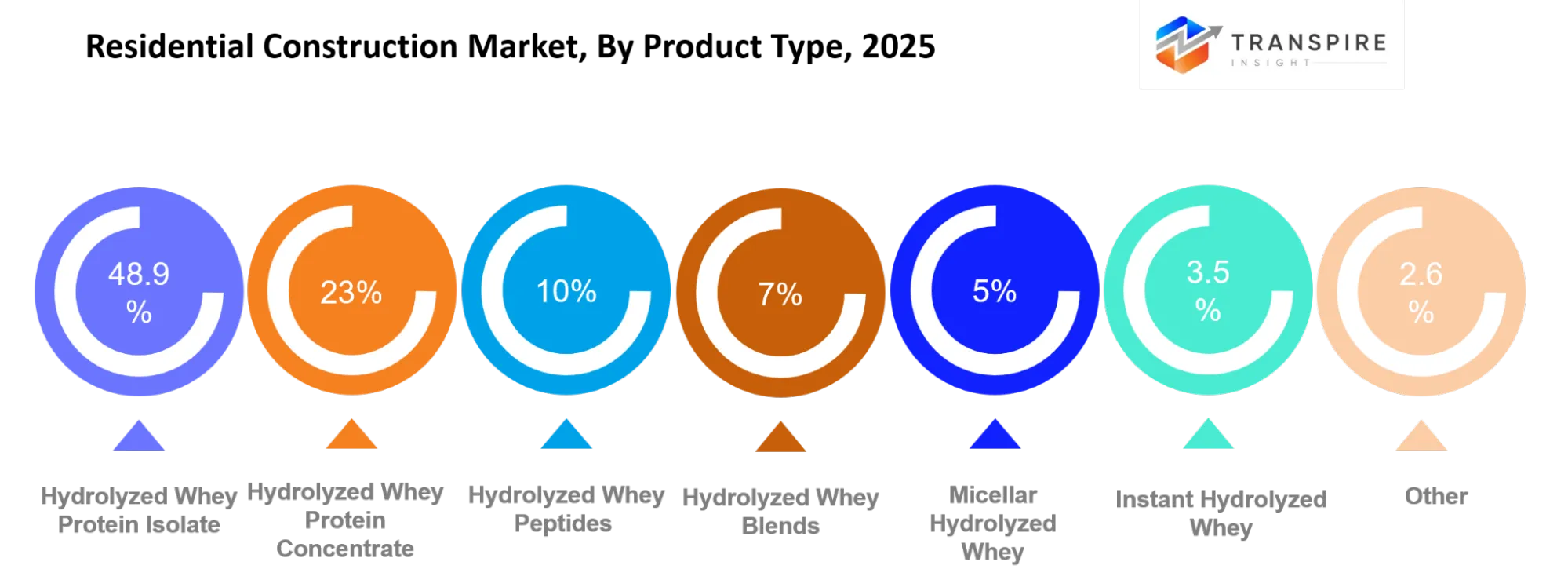
- Hydrolysed Whey Protein Isolate occupies the leading product segment with 48.9% market share due to its high protein content and use in premium sports nutrition formulas.
- Hydrolysed Whey Protein Concentrate accounts for 23.0%, retaining its place in applications where protein quality has to be balanced against formula cost considerations.
- Hydrolysed Whey Peptides occupy 10.0% of the market and are forecast to grow at an 11.2% CAGR as there is an increasing interest in peptide-based nutrition products.
- Hydrolysed Whey Blends make up 7.0%, as companies combine different protein ingredients to obtain desired characteristics.
- Micellar Hydrolysed Whey constitutes 5.0% market share and attracts formulators' attention due to its potential applications in specialised protein delivery.
- Instant Hydrolysed Whey constitutes 3.5%, and the manufacturers pay special attention to making the product more soluble for better daily consumption.
- The remaining 2.6% is attributed to other specialised products that allow for customised formulas and applications.
What are the Key Drivers, Restraints, and Opportunities in the Hydrolyzed Whey Protein Market?
Drivers
The growing adoption of specialised protein blends in sports and clinical nutrition is driving market growth. There is an increasing demand among athletes for proteins that facilitate muscle repair and efficient delivery of nutrients. Companies are responding through enzyme technology that helps to create smaller peptide structures. This trend is leading to the development of premium products and generating new revenue streams for ingredient providers.
Restraint
Manufacturing costs are high due to the fact that hydrolysed whey production uses specialised enzymes, specific processing, purification and testing equipment. There is also the risk of developing bitterness and formulating problems during the process, especially in beverage applications.
Opportunities
An opportunity exists in the expansion of the uses of hydrolysed whey in medical nutrition, healthy ageing, and functional food. Businesses can focus on better hydrolysis methods, taste masking and tailored peptide formulations. One such initiative is seen in the introduction of PROtelyze Bio-Brain by Hilmar in October 2026, which showcases the use of whey peptides in brain wellness products.
|
Driver |
Relative Impact on Growth (%) |
Geographic Relevance |
Impact Timeline |
Demand Strength |
Growth Mechanism (5–10 words) |
Key Beneficiaries (5–10 words) |
Major Constraint (5–10 words) |
|
Rising demand for easily digestible and rapidly absorbed protein |
27% |
North America, Europe, Asia-Pacific |
Short-term |
High |
Supports faster protein absorption and digestive tolerance |
Whey processors, sports nutrition brands, supplement manufacturers |
Higher processing costs increase finished product prices |
|
Growing adoption of sports nutrition and performance supplements |
24% |
North America, Europe, Asia-Pacific |
Short-term |
High |
Improves muscle recovery and post-exercise protein delivery |
Sports nutrition brands, ingredient suppliers, fitness consumers |
Competition from conventional whey protein products |
|
Increasing demand for specialized infant and clinical nutrition |
19% |
Europe, North America, Asia-Pacific |
Medium-term |
High |
Provides tailored protein solutions for specialized nutrition |
Infant formula producers, medical nutrition companies, ingredient manufacturers |
Strict safety requirements and clinical validation |
|
Technological advancements in enzymatic hydrolysis and protein processing |
17% |
Europe, North America, Asia-Pacific |
Medium-term |
High |
Enhances peptide consistency, solubility and functional performance |
Ingredient processors, biotechnology firms, food manufacturers |
High capital investment and process optimization costs |
|
Expansion of premium functional foods and clean-label nutrition |
13% |
Asia-Pacific, North America, Europe |
Long-term |
Medium |
Enables protein enrichment across functional food applications |
Functional food brands, dairy processors, retail nutrition companies |
Taste limitations and premium ingredient pricing |
|
Total |
100% |
What Has the Impact of Artificial Intelligence Been on the Hydrolyzed Whey Protein Market?
AI technologies are increasingly affecting the production of hydrolysed whey protein due to optimisation of the planning process, control of quality and innovation of ingredients. Artificial intelligence tools can be used by processors to analyse information about production, to find differences in the quality of materials used and to choose optimum conditions for the enzymatic hydrolysis process. Such technologies enable manufacturers to preserve consistent peptides and avoid unnecessary waste of both time and material. Demand forecasting in sports nutrition, clinical nutrition and functional foods can also be performed using predictive analytics to forecast purchasing trends in these sectors. This tool will allow processors to plan production volume, to keep inventories of whey protein powder and to coordinate the work of the supply chain. Artificial intelligence technologies can be used in the research and development stage for assessment of enzymes, degree of hydrolysis and formulation performance. Automation and artificial intelligence can make equipment monitoring more effective and will make it possible to detect abnormal processing and avoid manual monitoring. Implementation of such technologies will positively affect efficiency and consistency of manufacture, but considerable investments in infrastructure, employees and data integration will be required. Therefore, smaller companies producing ingredients are unlikely to follow large companies in
Instance
In June 2025, Researchers published a study in Applied Food Research on the use of an Artificial Neural Network (ANN) model in optimising whey protein processing. In this study, the ANN model used hydrolysis time, pH, and temperature to find optimal processing conditions that would enhance protein yield and antioxidant properties. This is one way AI helps in reducing trial and error, increasing efficiency in processing, and developing functional whey protein hydrolysates.
Key Market Trends:
There is a shift within the worldwide hydrolysed whey protein industry towards specific protein ingredients which provide greater digestibility, enhanced taste and nutritional functionality.
- Enzymatic hydrolysis innovations. Manufacturers are turning towards enzyme-based processing for the purpose of enhancing the peptide profile, digestibility and protein functionality.
- Enhanced taste of the product. Manufacturers are using various techniques of taste masking and processing to reduce the bitterness of the product.
- Clinical nutrition applications. The product is being used not only for sports nutrition but also in the field of clinical nutrition.
- Clean label ingredients. Nutritional brands are working towards clean and clear ingredient labels.
- Protein beverages. Manufacturers are working to enhance the solubility and stability of the product so as to be used in protein beverages.
- Bioactive whey peptides: Producers of ingredients are working towards the development of various applications of whey peptides in functional and cognitive wellness products.
- Protein processing innovations. Various techniques of filtration, drying and hydrolysis are being used by manufacturers to increase consistency and efficiency.
Hydrolyzed Whey Protein MarketSegmentation
By Product Type
Hydrolysed Whey Protein Isolate is the largest product type segment, accounting for a 48.9% share due to the presence of a high level of protein and its use in premium nutritional formulations. The Hydrolysed Whey Protein Concentrate segment holds a 23.0% share in the market owing to its cost-effectiveness and applicability in different types of protein products. The Hydrolysed Whey Peptides segment has the smallest share, accounting for 10.0% of the market but is the fastest-growing segment with a projected CAGR of 11.2%. It is followed by the Hydrolysed Whey Blends segment with a 7.0% share, Micellar Hydrolysed Whey with 5.0%, Instant Hydrolysed Whey with 3.5% and Other segments with 2.6%.
By Degree of Hydrolysis
the market comprises the segments of Low-DH, Medium-DH, High-DH, Partial Hydrolysis, Extensive Hydrolysis, Enzymatic Hydrolysis and Speciality Hydrolysis. The Low-DH segment has larger protein structures, while Medium-DH formulations have an equilibrium of peptides and functional properties. The High-DH and Extensive Hydrolysis segments are applicable in cases of protein breakdown. The Partial Hydrolysis segment allows for the customisation of the ingredients, while Enzymatic Hydrolysis assists in controlling peptide composition. The Speciality Hydrolysis segment facilitates the formulation of nutritional products.
By Application
Sports Nutrition also remains an important application, as hydrolyzed whey ingredients are incorporated into protein supplements and muscle rebuilding products. Clinical Nutrition and Medical Nutrition are helping to open more opportunities with specific formulations for people who have specific dietary needs. Infant Formula is another key sector where the quality of the protein sources and safe ingredients continue to be important. Weight Management products are beginning to include protein ingredients into their nutritional products and Functional Foods are increasing their use of our ingredients in commercial food products. Dietary Supplements are supporting this trend with convenient protein products.
By Form
Powder remains the dominant format in the sports nutrition market because of its ease of storage, longer shelf life and relative flexibility of nutritional compositions. Capsules have benefits in offering a measured dose to consumers, whereas Liquid formats help offer greater flexibility to the market for specialised nutritional compositions. RTD products are becoming more popular among consumers wanting an easy way of consuming a protein rather than preparing or mixing the powder themselves. Bars are appreciated by sports consumers and athletes looking for portable nutrition, while Sachets can be used to control portions and for convenience when travelling. Other formats can include tailored products designed to deliver specific nutritional compositions. Advances in product stability, solubility and ease of packaging will drive further innovation in this area.
By End User
Athletes are a significant user group as they are frequent users of protein during exercise and muscle recovery. The Fitness Consumers also can stimulate market penetration, with the trend for healthier diets and interest in protein supplementation. Babies are a category in need of specific baby nutrition products. Patients require targeted nutritional applications based on their dietary needs, with older consumers making the case for products that address their specific needs for protein intake and a range of easy-to-consume options to help them maintain muscle mass. The General Wellness Consumers are more and more easily adding these kinds of products to their diet. Healthcare Institutions are also a feature of the healthcare space, with specific clinical and medical nutrition applications.
By Distribution Channel
Supermarkets deliver easy access to conventional nutritional products and well-known protein brands. Speciality Stores continue to play a key role in the provision of premium sporting supplements and products needing special guidance for consumers. Clinical nutrition products, as well as speciality nutrition products, can be supplied by Pharmacies, while Online Retail provides easy purchase and a large product variety and brand interactions. Health Stores meet the needs of consumers that require specialised health and nutrition products. Direct Sales helps ingredient suppliers develop business ties with brands in the supplementary products sector, food manufacturers and health care companies. Foodservice opens additional markets by protein-enhanced drinks and nutrition products.
What are the Key Use Cases Driving the Hydrolyzed Whey Protein Market?
The significance of hydrolysed whey protein isolate is widespread in sports nutrition products like protein powder or post-workout drinks. The product has higher protein content, along with small peptides, making it apt for muscle recovery or easy protein intake applications. Consumers who work out or are fitness enthusiasts are key customers in such products. Areas of clinical nutrition and infant formula are adding new areas to its use in nutritional segments. Various hydrolysis processes have led to the creation of new products depending upon the formulator's needs and nutrient content requirements. Newer uses can be protein-fortified ready-to-drink beverages, nutrition bars and peptide-based products too. Scientific research on bioactive whey peptides will add new areas of health and wellness like cognitive wellness and healthy aging products.
|
Report Metrics |
Details |
|
Market size value in 2025 |
USD 152.48 million |
|
Market size value in 2026 |
USD 162.16 million |
|
Revenue forecast in 2033 |
USD 251.50 million |
|
Growth rate |
CAGR of 6.35% from 2026 to 2033 |
|
Base year |
2025 |
|
Historical data |
2021 - 2024 |
|
Forecast period |
2026 - 2033 |
|
Report coverage |
Revenue forecast, competitive landscape, growth factors, and trends |
|
Regional scope |
United States; Canada; Mexico; United Kingdom; Germany; France; Italy; Spain; Denmark; Sweden; Norway; China; Japan; India; Australia; South Korea; Thailand; Brazil; Argentina; South Africa; Saudi Arabia; United Arab Emirates |
|
Key company profiled |
Arla Foods Ingredients, Glanbia Nutritionals, Fonterra, Lactalis Ingredients, FrieslandCampina, Hilmar Ingredients, Agropur, Milk Specialties Global, Carbery Group, Leprino Foods, Saputo, Davisco Foods International, AMCO Proteins, MuscleTech, Kerry Group |
|
Customization scope |
Free report customization (country, regional & segment scope). Avail customized purchase options to meet your exact research needs. |
|
Report Segmentation |
Product Type (Hydrolyzed Whey Protein Isolate, Hydrolyzed Whey Protein Concentrate, Hydrolyzed Whey Peptides, Hydrolyzed Whey Blends, Micellar Hydrolyzed Whey, Instant Hydrolyzed Whey, Other); Degree of Hydrolysis (Low-DH, Medium-DH, High-DH, Partial Hydrolysis, Extensive Hydrolysis, Enzymatic Hydrolysis, Specialty Hydrolysis); Application (Sports Nutrition, Clinical Nutrition, Infant Formula, Weight Management, Functional Foods, Dietary Supplements, Medical Nutrition); Form (Powder, Capsule, Liquid, Ready-to-Drink, Bar, Sachet, Other); End User (Athletes, Fitness Consumers, Infants, Patients, Elderly Consumers, General Wellness Consumers, Healthcare Institutions); Distribution Channel (Supermarkets, Specialty Stores, Pharmacies, Online Retail, Health Stores, Direct Sales, Foodservice) |
Which Regions are Driving the Hydrolyzed Whey Protein Market Growth?
North America
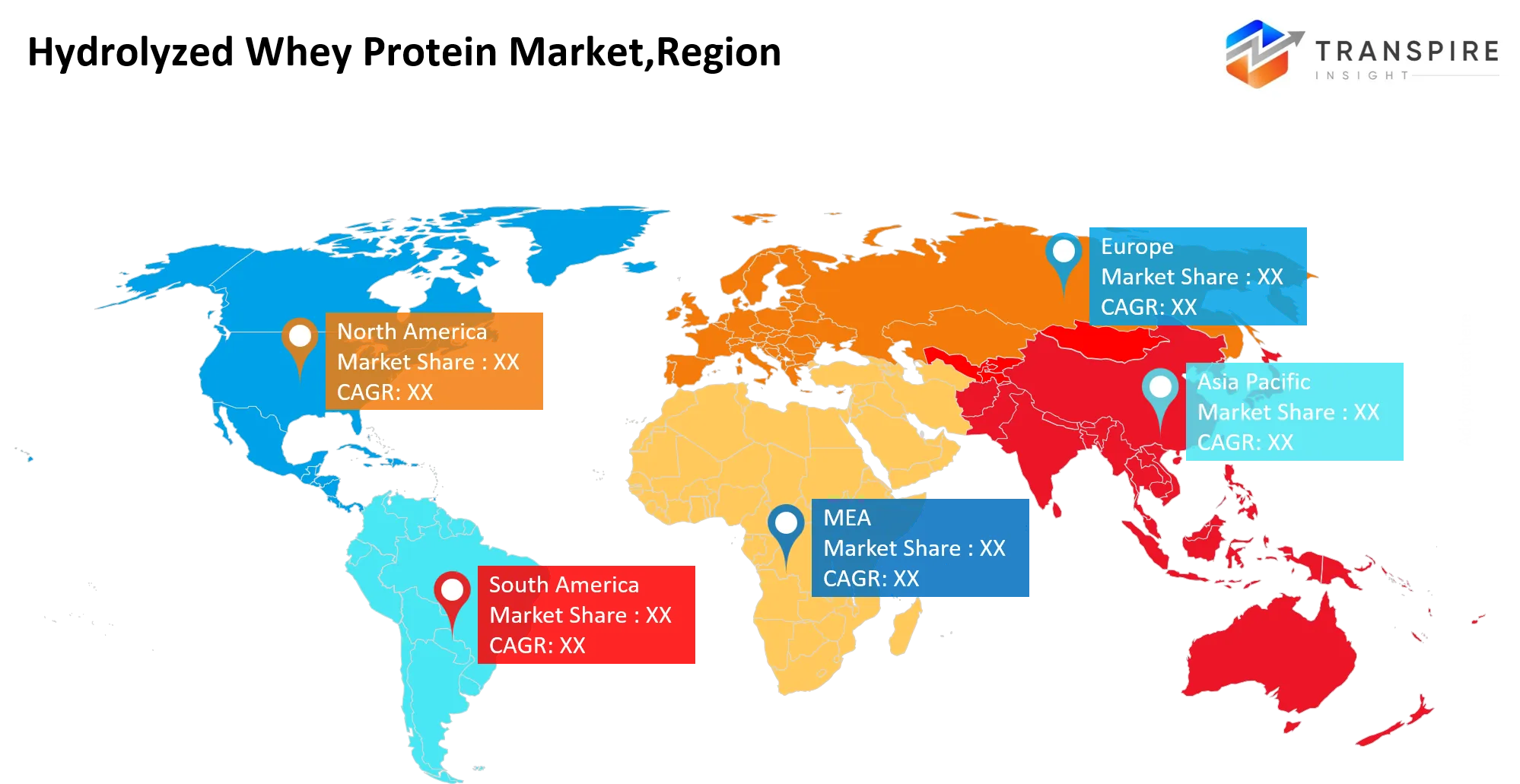
North America leads the hydrolysed whey protein market with a 56.3% share due to the presence of the sports nutrition industry and specialised dairy ingredients manufacturers in the region. The United States has an important role in the region with its developed protein processing facilities, well-established supplement brands and advanced distribution network. Fitness consciousness and interest in muscle recovery and nutritional supplements among consumers drive the product demand in the region. Investments in the processing capacity and specialised proteins enhance the competitive position of the region.
In March 2025,The Hilmar Cheese Company set up a new manufacturing plant in Kansas, USA, thus increasing its capability of whey protein ingredient production and also supporting regional dairy protein manufacturing operations.
Europe
Europe holds the second largest regional market share with 24.0%. The role of Europe in the market can be attributed to the presence of the dairy processing industry, specialised ingredients manufacturers and companies developing clinical and infant nutrition products in the region. Regulatory norms and food safety systems in the region drive the manufacturers to make investments in quality, traceability and processing of the products. Arla Foods Ingredients and FrieslandCampina Ingredients are some of the key players in the region.
In November 2025, Arla Foods Ingredients launched a drinking yoghurt based on hydrolysed whey protein, which is rich in 25g of protein in each serving at the Fi Europe 2025 event.
Asia Pacific
The Asia Pacific represents 12.5% of the market share and is the fastest-growing segment with a projected CAGR of 10.6%. The growth of the fitness industry, the rise in urban population and the increasing availability of packaged nutritional products are driving market growth. Investment in health and wellness products is prompting companies to focus on regional distribution and protein formulation. Prospects will be highly pertinent for China, India, Japan and other developing countries through sports nutrition, clinical nutrition and functional food applications.
In May 2025, Ausnutria Dairy launched hydrolysed goat whey protein powder in China, manufactured via an enzymatic hydrolysis process and used for infant nutrition and medical food purposes.
Who are the Key Players in the Hydrolyzed Whey Protein Market and how do they compete?
Market competition among the dairy ingredient manufacturers, speciality protein manufacturers and sports nutrition companies. Companies engage in competition on the basis of the quality of ingredients used, the technique of hydrolysis, functionality of ingredients, manufacturing capability and associations with nutritional product manufacturers. The key market players in the industry include Arla Foods Ingredients, Hilmar Ingredients, FrieslandCampina Ingredients, Glanbia plc, Agropur, Carbery Group, Fonterra, Lactalis Ingredients, Milk Specialities and Glanbia Performance Nutrition. Arla Foods Ingredients has an emphasis on speciality hydrolysates for use in sports and medicinal nutrition by using their differentiating factor of taste improvement and specialised protein ingredients. Hilmar Ingredients has expertise in enzymatic hydrolysis processes as well as customisation of whey peptides in their PROtelyze portfolio. The strategy of FrieslandCampina Ingredients is that of capacity development with respect to whey ingredients of high value and supply to customers in performance, early-life and medicinal nutrition segments. Competition in Glanbia is based on the integrated sports nutrition and ingredient businesses and their branded products like Optimum Nutrition. Agropur and Fonterra enjoy strengths because of dairy processing capabilities. Carbery and Lactalis Ingredients excel in their specialisation in dairy ingredients and formulations for specific
Hydrolyzed Whey Protein Market companies
- Arla Foods Ingredients
- Glanbia Nutritionals
- Fonterra
- Lactalis Ingredients
- FrieslandCampina
- Hilmar Ingredients
- Agropur
- Milk Specialties Global
- Carbery Group
- Leprino Foods
- Saputo
- Davisco Foods International
- AMCO Proteins
- MuscleTech
- Kerry Group
|
Company |
Est. Revenue Share Range |
Key Offerings |
Strategic Positioning |
Geographic Strength |
Technology Focus |
|
Arla Foods Ingredients |
8–10% |
Lacprodan hydrolysates, Peptigen, sports nutrition proteins, clinical nutrition ingredients |
leadership through specialized nutrition ingredients |
Europe, North America, Asia Pacific |
Enzymatic hydrolysis and peptide optimization |
|
Glanbia Nutritionals |
5–7% |
Hydrolyzed whey proteins, whey protein isolates, customized protein ingredients |
Premium ingredient solutions for performance nutrition |
North America, Europe, Asia Pacific |
Protein fractionation and formulation technology |
|
Hilmar Ingredients |
4–6% |
PROtelyze Advance, whey protein hydrolysates, whey protein concentrates |
Large-scale production with application-specific customization |
North America, Asia Pacific |
Advanced enzymatic hydrolysis and peptide control |
|
Fonterra Co-operative Group |
3–5% |
NZMP WPH 821, NZMP WPH 917, specialty whey hydrolysates |
Dairy-scale integration with specialized protein development |
Asia Pacific, North America, Europe |
Controlled hydrolysis and protein functionality |
|
Kerry Group |
2–4% |
Whey protein hydrolysates, nutritional protein ingredients, customized formulations |
Diversified nutritional ingredient and formulation solutions |
Europe, North America, Asia Pacific |
Ingredient processing and nutritional formulation |
|
FrieslandCampina Ingredients |
1–3% |
Hyvital Whey EtD 120, Hyvital Whey HA 300, Hyvital Whey CMA 500 |
Specialized infant and medical nutrition positioning |
Europe, Asia Pacific, North America |
Targeted hydrolysis and allergenicity management |
|
Carbery Group |
1–3% |
Optipep 90 PRO, Optipep 4Power, Optipep RTD, Optipep 4Bars |
Premium peptide performance and taste differentiation |
Europe, North America, Asia Pacific |
Peptide profiling and sensory optimization |
|
Agropur Ingredients |
1–3% |
BiPRO hydrolysates, BioZate proteins, whey protein hydrolysates |
High-quality whey processing and specialty ingredients |
North America, Asia Pacific |
Ion-exchange purification and enzymatic processing |
|
Lactalis Ingredients |
1–2% |
Whey protein hydrolysates, specialty whey proteins, nutritional dairy ingredients |
Integrated dairy sourcing and ingredient supply |
Europe, North America, Asia Pacific |
Dairy protein processing and ingredient refinement |
|
Milk Specialties Global |
1–2% |
Hydrolyzed whey proteins, whey protein isolates, customized protein blends |
Flexible supply for sports and specialty nutrition |
North America, Europe |
Custom hydrolysis and protein processing |
Recent Development News
In May 2026, FrieslandCampina made an investment plan of more than EUR 90 million to enhance its high-value whey protein production in the Netherlands. The plan will help increase the company’s manufacturing capability and ensure the supply of its unique ingredients for performance, early-life and medical nutrition.
In February 2025, FrieslandCampina announced its plans to buy Wisconsin Whey Protein, a producer of whey protein isolate in the USA. The planned acquisition would help expand its presence in North America and increase the company’s whey protein manufacturing capability to serve its customers in the performance, active and medical nutrition markets.
What Strategic Insights Define the Future of the Hydrolyzed Whey Protein Market?
The future of the hydrolyzed whey protein market seems headed in the direction of ingredients catering specifically to the sports recovery segment, clinical nutrition and ageing well, along with functional foods. The emphasis is going to be more on advanced enzyme technology, taste improvements and peptide formulas rather than high levels of protein concentration only. The less obvious risk to consider is that of raw material availability in the form of dairy products and the effect of milk production variations, processing costs and energy costs on the cost of ingredients and manufacturing. A potential opportunity that can be considered is that of bioactive peptides from whey, which will cater to specific nutritional needs such as brain health or clinical nutrition needs. Companies need to make better use of their research alliances, improve efficiency in production and produce application-specific ingredients in order to gain an advantage in their portfolio. Expansion in Asia Pacific can give manufacturers access to new customers.
Product Type
- Hydrolyzed Whey Protein Isolate
- Hydrolyzed Whey Protein Concentrate
- Hydrolyzed Whey Peptides
- Hydrolyzed Whey Blends
- Micellar Hydrolyzed Whey
- Instant Hydrolyzed Whey
- Other
Degree of Hydrolysis
- Low-DH
- Medium-DH
- High-DH
- Partial Hydrolysis
- Extensive Hydrolysis
- Enzymatic Hydrolysis
- Specialty Hydrolysis
Application
- Sports Nutrition
- Clinical Nutrition
- Infant Formula
- Weight Management
- Functional Foods
- Dietary Supplements
- Medical Nutrition
Form
- Powder
- Capsule
- Liquid
- Ready-to-Drink
- Bar
- Sachet
- Other
End User
- Athletes
- Fitness Consumers
- Infants
- Patients
- Elderly Consumers
- General Wellness Consumers
- Healthcare Institutions
Distribution Channel
- Supermarkets
- Specialty Stores
- Pharmacies
- Online Retail
- Health Stores
- Direct Sales
- Foodservice
Frequently Asked Questions
Find quick answers to common questions.
The hydrolyzed whey protein market size was valued at USD 152.48 billion in 2025 and is poised to reach USD 251.50 billion by 2033, expanding at a 6.35% CAGR.
Key segments for the hydrolyzed whey protein market are Product Type (Hydrolyzed Whey Protein Isolate, Hydrolyzed Whey Protein Concentrate, Hydrolyzed Whey Peptides, Hydrolyzed Whey Blends, Micellar Hydrolyzed Whey, Instant Hydrolyzed Whey, Other); Degree of Hydrolysis (Low-DH, Medium-DH, High-DH, Partial Hydrolysis, Extensive Hydrolysis, Enzymatic Hydrolysis, Specialty Hydrolysis); Application (Sports Nutrition, Clinical Nutrition, Infant Formula, Weight Management, Functional Foods, Dietary Supplements, Medical Nutrition); Form (Powder, Capsule, Liquid, Ready-to-Drink, Bar, Sachet, Other); End User (Athletes, Fitness Consumers, Infants, Patients, Elderly Consumers, General Wellness Consumers, Healthcare Institutions); Distribution Channel (Supermarkets, Specialty Stores, Pharmacies, Online Retail, Health Stores, Direct Sales, Foodservice)
Growth is primarily driven by increasing demand for sports nutrition and protein supplements, rising health and fitness awareness, growing consumption of high-protein functional foods, and increasing preference for easily digestible protein products. Rising demand from clinical nutrition and elderly care applications further supports market growth.
The market is led by major manufacturers including Arla Foods Ingredients, Glanbia Nutritionals, Fonterra, Lactalis Ingredients, FrieslandCampina, Hilmar Ingredients, Agropur, Milk Specialties Global, Carbery Group, Leprino Foods, Saputo, Davisco Foods International, AMCO Proteins, MuscleTech, Kerry Group
North America has a leading presence in the world's hydrolyzed whey protein industry, as its market share stands at 56.3%. This region boasts strong demand from sports nutrition, protein supplements, and functional food segments. Additionally, the presence of manufacturers for whey proteins, health consciousness, advanced dairy processing equipment, and rising fitness activities are aiding North America.
- Arla Foods Ingredients
- Glanbia Nutritionals
- Fonterra
- Lactalis Ingredients
- FrieslandCampina
- Hilmar Ingredients
- Agropur
- Milk Specialties Global
- Carbery Group
- Leprino Foods
- Saputo
- Davisco Foods International
- AMCO Proteins
- MuscleTech
- Kerry Group
About the Authors

Chetan Dhatrak
I’m Chetan Dhatrak, a Senior Research Analyst at Transpire Insight, specializing in the Consumer Goods, Foods and Beverages industry. I focus on analyzing market trends, consumer behavior, competitive landscapes, and industry developments to deliver accurate, data-driven insights. My research at Transpire Insight is built on credible sources and in-depth analysis, helping businesses and readers better understand market dynamics, emerging opportunities, and evolving consumer preferences. I’m committed to creating reliable, well-researched content that supports informed decision-making and reflects the latest developments in the consumer goods and food & beverage sectors.

Chakradhar Khansole
Chakradhar serves as the Research Director at Transpire Insight, bringing over 8 years of experience in technology, innovation, and strategic market intelligence. He specializes in transforming complex market data into actionable business insights that enable organizations to make informed, growth-oriented decisions. Recognized for his strategic vision and analytical expertise, Chakradhar leads high-impact research initiatives, delivering comprehensive market assessments, competitive intelligence, and forward-looking industry analysis.
Recently Published Reports
-
Apr 2026
Baby Infant Formula Market
Baby Infant Formula Market Size, Share & Analysis Report By ype (Infant Milk, Follow On Milk, Specialty Baby Milk, Growing-Up Milk), By Ingredient (Carbohydrate, Fat, Protein, Minerals, Vitamins, and Others), By Product Form (Powder, Liquid, and Ready-to-feed), By Distribution Channels (Supermarket/Hypermarket, Specialty Store, Pharmacies, Online Retail, and Others), and Geography (North America, Europe, Asia-Pacific, Middle East and Africa, South and Central America), 2021 - 2031
-
Apr 2026
Edible Insects for Animal Feed Market
Edible Insects for Animal Feed Market Size, Share & Analysis Report By Type (Insect Powder, Insect Meal, Insect Bar, Insect Paste, Insect Oil, and Others), By Insect Type (Beetles, Cricket, Caterpillar, Hymenoptera, Orthoptera, Tree Bugs, and Others), By Application (Livestock, Pet Food, and Aquaculture), By Livestock Type (Poultry, Swine, and Others), and Geography (North America, Europe, Asia-Pacific, Middle East and Africa, South and Central America), 2021 - 2031
-
Apr 2026
Food Industry Disinfection and Bacterial Control Market
Food Industry Disinfection and Bacterial Control Market Size, Share & Analysis Report By Type (Chemical Disinfectants, Physical Disinfectants, and Biocides and Antimicrobials), By Application (Food Processing Equipment Surface Disinfection, Food Preparation Areas Surface Disinfection, Storage Areas Surface Disinfection, Anti-microbial Coatings Food Preservation, and Preservative Solutions Food Preservation), By End User (Meat and Poultry Processing, Dairy Processing, Seafood Processing, Bakery and Confectionery, Restaurants and Commercial Kitchens, and Food Service Providers), By Sales Channel (Online, Offline), and Geography (North America, Europe, Asia-Pacific, Middle East and Africa, South and Central America), 2021 - 2031
-
May 2026
Freeze Dried Food Market
Freeze Dried Food Market Size, Share & Analysis Report By Product Type (Fruits, Vegetables, Freeze-Dried Dairy Products, Freeze-Dried Meat and Seafood, Freeze-Dried Pet Food, and Prepared Meal), By Nature (Organic, and Conventional), By Form (Powdered, Granules, and Diced), By End Use (Breakfast Cereals, Dairy Products, Bakery & Confectionery, Nutritional Bars & Supplements, Powdered Beverages, Snacks, and Retail (Household)), and Geography (North America, Europe, Asia-Pacific, Middle East and Africa, South and Central America), 2021 - 2031