Market Summary
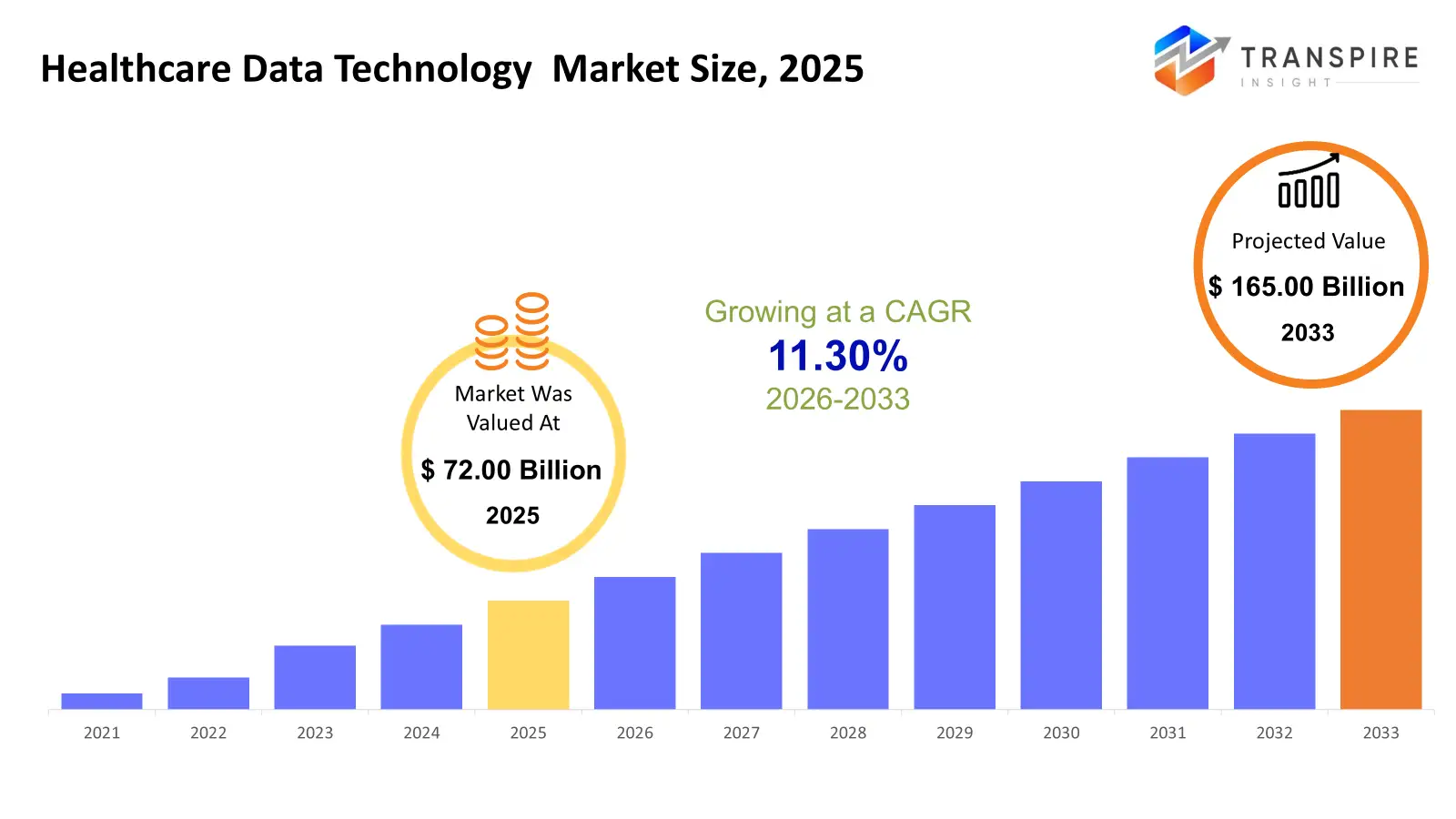
The global Healthcare Data Technology market size was valued at USD 72.00 billion in 2025 and is projected to reach USD 165.00 billion by 2033, growing at a CAGR of 11.30% from 2026 to 2033. The surge in the digitalization of healthcare systems and the mandatory use of interoperable electronic health records are acting as major accelerators in the adoption of technologies by healthcare providers and payers, thus contributing to market growth with a positive CAGR over the forecast period. Increasing demand for cloud-based infrastructure, AI analytics solutions, and remote patient monitoring services is creating greater operational efficiencies; hence, the revenue growth potential will continue
Market Size & Forecast
- 2025 Market Size: USD 72.00 Billion
- 2033 Projected Market Size: USD 165.00 Billion
- CAGR (2026-2033): 11.30%
- North America: Largest Market in 2026
- Asia Pacific: Fastest Growing Market
To learn more about this report,  Download Free Sample Report
Key Market Trends Analysis
- North America retains its position because of better healthcare IT infrastructure, high healthcare expenditure in the region, strong vendor presence, as well as regulatory efforts in the region to increase interoperability, incorporation of artificial intelligence, and the use of secure cloud environments in healthcare settings, payers, and research environments
- Segments will be driven primarily by the dominance of the United States, fueled by high rates of EHR adoption, cloud migrations, the addition of AI DSS technology, and robust reimbursement models for telehealth and RPM
- Asia Pacific has an optimistic outlook with key drivers like increased investments in health infrastructures, government-led digital health initiatives, the surge in chronic conditions, and the adoption of cloud-based technologies and telemedicine services in China, India, and Japan
- Software segment leads as healthcare organizations seek to deploy highly scalable EHR systems, analytics solutions, and revenue cycle management tools that help facilitate greater interoperability, automation, and predictive decision-making across the complex care continuum.
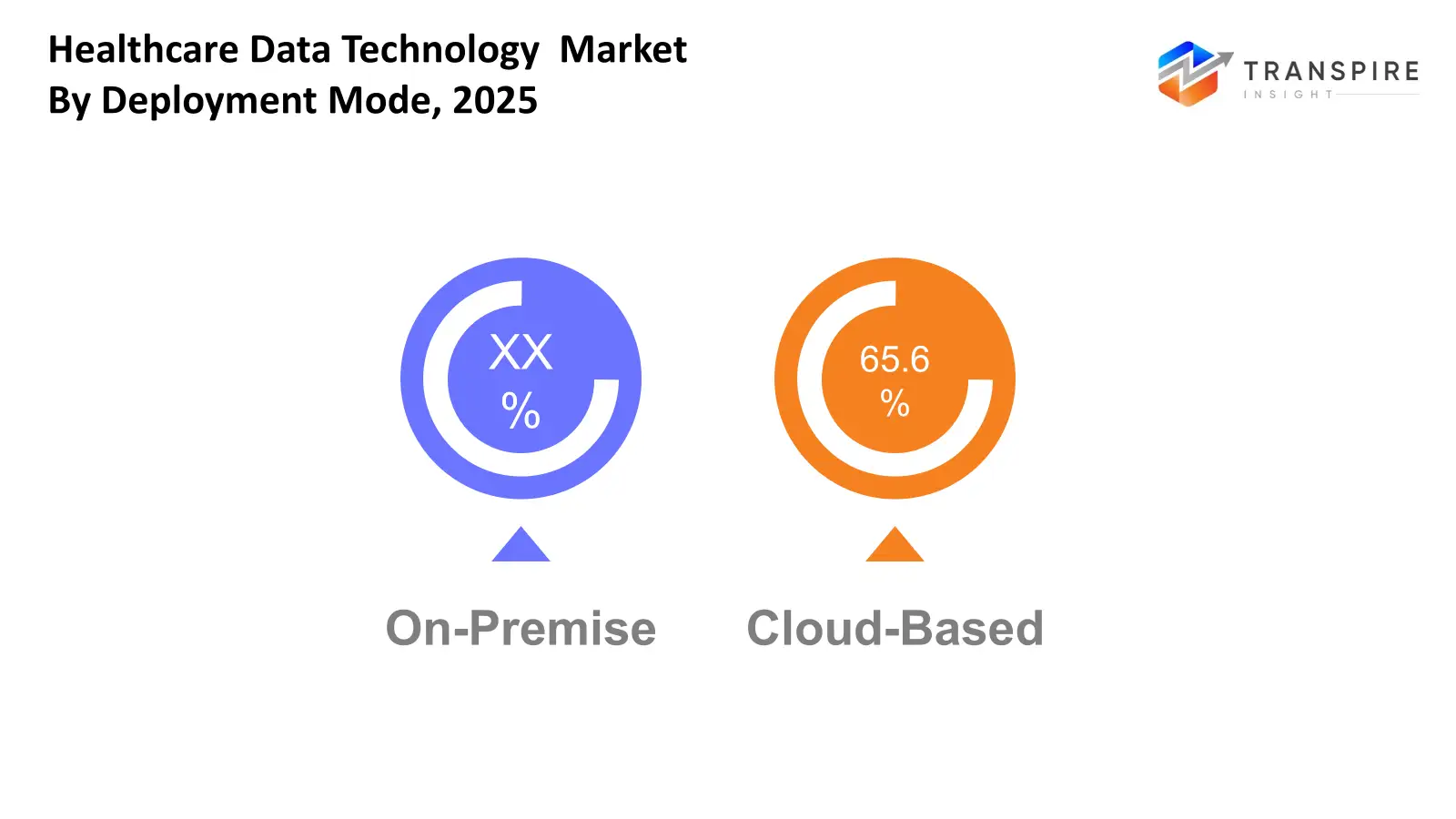
- The cloud-based model maintains the fastest rate of growth driven by the need for cost efficiency, accessibility for remote populations, centralized management of data, and integration with artificial intelligence and machine learning tools for the delivery of real-time analytics and population health strategies
- Electronic Health Records continue to be the dominant application, and providers continue to seek complete patient data systems that enhance clinical accuracy, regulatory compliance, and coordination with telehealth and decision support systems.
- Hospitals/Clinics forms the major end-user segment due to the large number of patients treated on a daily basis with complex operational requirements, growing digital transformation activities, and increasing need for integrated data platforms to manage value-based and patient-centric models of delivery.
So, A broad range of healthcare data technology products can be involved in the healthcare data technology market. These products may focus on clinical data, operations-related data, or financial data. The rise of healthcare data technology can be driven by the increasing rate of digitalization of healthcare operations, the increasing need for patients to have their monitoring done in real time, and the use of telemedicine services. EHR system, clinical decision support, revenue cycle management, and healthcare analytics systems are revolutionizing the way healthcare providers manage patient information, with complete interoperability and predictive capabilities. Cloud technology is enabling scalability and access, and on-premise is key to security-focused healthcare organizations with regard to their data holdings. Services such as consulting, implementation, and integration are essential when it comes to healthcare technology adoption, considering the various healthcare environments. Additionally, healthcare is affected by mandates, government initiatives, and increased awareness of digital healthcare solutions driving the market. Pharmaceutical organizations, research institutions, hospitals, diagnostic centers, and insurance companies are investing in digital healthcare technologies for improving patient services, reducing operational costs, and harnessing the power of big data analytics for population health management, thereby ensuring growth of the healthcare market.
Healthcare Data Technology Market Segmentation
By Component
- Hardware
Hardware in health data technology comprises various hardware elements like data servers, storage media, networking hardware, and medical equipment, through which data collection, storage, and transfer can be achieved. With the increase in IoT-enabled devices and intelligent diagnostic technologies, healthcare hardware is also witnessing high growth, especially in hospitals and healthcare centers.
- Software
Software is the dominant segment in the market, as it helps in the efficient management of data, analysis, and interoperability between health systems. The use of various health applications such as EHRs, decision support, or revenue cycle management is significant in efficient health operations.
- Services
These services may include implementation, integration, maintenance, and consultancy related to healthcare data solutions. There is an increasing need for managed IT services and cloud migration support, especially within the hospitals and research institutes segment.
By Deployment Mode
- On-Premise
On-premise deployment enables healthcare organizations to completely own their infrastructure and their information. Despite the initial high costs, this model is popular with hospitals and research centers as it has high security requirements.
- Cloud-Based
Cloud-based deployment model advantages include scalability, accessibility, and cost-effectiveness for IT support. The adoption of cloud-based solutions continues to be driven by the need for telemedicine, RPM, and real-time analytics.
To learn more about this report, Download Free Sample Report
By Application
- Electronic Health Records (EHR)
EHR systems centralize patient information and grant clinicians and administrators easy access. Increasing regulatory requirements, like the meaningful use policies, along with a rise in integrated patient care, fuel the adoption of EHR systems.
- Telemedicine & Telehealth
Telemedicine platforms power virtual consultations, remote monitoring, and management of chronic diseases. Expansion is driven by post-pandemic adoption trends and government incentives for digital healthcare services.
- Remote Patient Monitoring
Remote monitoring solutions track patient vitals and health metrics from outside clinical settings. Key growth drivers include an increase in the prevalence of a number of chronic diseases and the desire to decrease hospital readmissions.
- Clinical Decision Support Systems
These systems help clinicians with diagnostics, treatment planning, and predictive analytics. Integration of AI with machine learning improves decision accuracy and helps in better patient outcomes.
- Revenue Cycle Management:
The soaring healthcare costs and complexities in healthcare administration call for efficient revenue management systems. The utilization of automated billing, claims processing, and reimbursement is making revenue cycle management attractive.
- Population Health Management
PHM solutions decipher the trends in health prevalent in the population, thereby providing better means of prevention and hence reducing healthcare costs. Data-driven healthcare insights are now more important than ever.
- Healthcare Analytics
The analytics platforms use the processed clinical, operational, and financial data to drive strategic decision-making. The demand for predictive analytics, AI-based insights, real-time analytics, etc., in hospitals, institutions, etc., is on the rise.
By End User
- Hospitals & Clinics:
The segment with the highest adoption of healthcare data technologies is hospitals and clinics. This is due to the need for data-driven patient-centric approaches, regulatory compliance, and efficiency. Advanced analytics technologies are also widely used by this segment.
- Diagnostic Centers:
Healthcare data technology is used in the form of diagnostic centers where faster and accurate test results, reporting, and patient management are facilitated.
- Research & Academic Institutes
Healthcare data technology is used in research and academic institutes to facilitate clinical trials, medical research, and educational applications. Data analytics and data storage are important aspects in the field of big data.
- Pharmaceutical & Biotechnology Companies
These organizations specialize in the application of data technologies for drug development, trials, and regulatory compliance. Advanced analytics and predictive modeling are some of the key needs for this segment.
- Payers & Insurance Providers
Insurers deploy healthcare data technology to improve claims processing, risk assessment, and population health management initiatives. Real-time analytics, as well as automated RCM technology, are being implemented to decrease healthcare costs and improve services.
Regional Insights
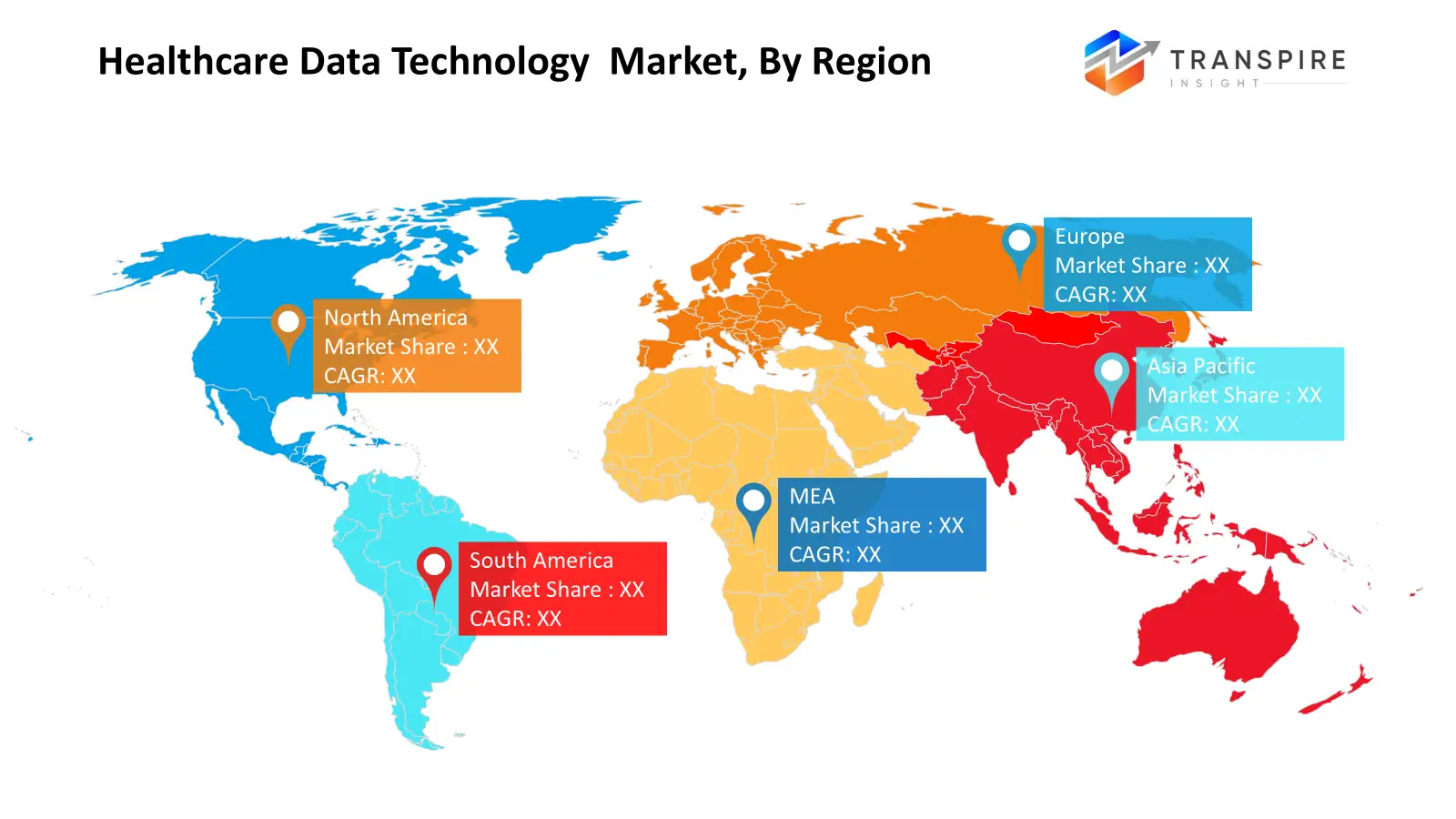
North America, led by the United States, Canada, and Mexico, leads the market due to high healthcare infrastructure, adoption rates of IT technologies by these countries, and incentives by the governments to incorporate EHRs and telemedicine with the use of IT technology. A significant growth contributor in the global market is the United States. Europe, including countries such as Germany, the UK, France, Spain, Italy, and others, is witnessing growth due to the digitalization of healthcare initiatives, migrant interoperability standards, and the adoption of telehealth. Germany and the UK are two major markets using sophisticated software and analytics tools.
Asia Pacific, including China, Japan, India, South Korea, Australia & New Zealand, as well as the remainder, is a growing market driven by population increases, increases in chronic diseases, and investment in digital health infrastructure by governments. A significant growth rate is noted in countries including China, India, and Japan for services like remote monitoring, telemedicine, and cloud computing. South America, including Brazil, Argentina, and the rest of the region, is slowly embracing digital healthcare solutions enabled by modernization programs coupled with telehealth initiatives; again, Brazil is leading the way in the adoption of digital health solutions in the region. The Middle East & Africa, including Saudi Arabia, UAE, South Africa, and the rest of the region, is expanding the adoption of information technology solutions in the region for the purpose of care delivery as well as operational efficiency with the onset of population health management solutions.
To learn more about this report, Download Free Sample Report
Recent Development News
- September 2025, Milliman MedInsight, the industry-leading healthcare data and analytics platform of Milliman, an independent risk management, benefits, and technology firm, is proud to introduce its next-generation Data Science Portal, The MedInsight Innovation Portal. Purpose-built for healthcare organizations operating in increasingly complex environments, the MedInsight Innovation Portal provides powerful new capabilities, intuitive workflows, and managed cloud services that drive innovation, accelerate analytics, and empower data-driven decision-making.
- In February 2025, Milliman MedInsight, a leading data and analytics division of consultancy Milliman, has achieved the 2025 Best in KLAS designation for the Data Analytics Platform (Payer) category. KLAS Research, a prominent healthcare information technology research firm recognized for its unbiased research on the industry’s vendors, selected Milliman MedInsight for its 2025 Best in KLAS: Software and Services report. This designation comes shortly after the launch of the new analytics and integration features of Milliman MedInsight’s Health Cloud solution.
|
Report Metrics |
Details |
|
Market size value in 2025 |
USD 72.00 Billion |
|
Market size value in 2026 |
USD 78.00 Billion |
|
Revenue forecast in 2033 |
USD 165.00 Billion |
|
Growth rate |
CAGR of 11.30% from 2026 to 2033 |
|
Base year |
2025 |
|
Historical data |
2021 – 2024 |
|
Forecast period |
2026 – 2033 |
|
Report coverage |
Revenue forecast, competitive landscape, growth factors, and trends |
|
Regional scope |
North America; Europe; Asia Pacific; Latin America; Middle East & Africa |
|
Country scope |
United States; Canada; Mexico; United Kingdom; Germany; France; Italy; Spain; Denmark; Sweden; Norway; China; Japan; India; Australia; South Korea; Thailand; Brazil; Argentina; South Africa; Saudi Arabia; United Arab Emirates |
|
Key company profiled |
Epic Systems Corporation, Cerner Corporation, Allscripts Healthcare Solutions, Inc., eClinicalWorks, NextGen Healthcare, Inc., McKesson Corporation, Athenahealth, Inc., Meditech, IQVIA Holdings, Inc., CitiusTech, IBM Watson Health, GE Healthcare, Siemens Healthineers, Oracle Corporation, and Veradigm LLC |
|
Customization scope |
Free report customization (country, regional & segment scope). Avail customized purchase options to meet your exact research needs. |
|
Report Segmentation |
By Component (Hardware, Software, Services), By Deployment Mode (On-Premise, Cloud-Based), By Application (Electronic Health Records (EHR), Telemedicine & Telehealth, Remote Patient Monitoring, Clinical Decision Support Systems, Revenue Cycle Management, Population Health Management, Healthcare Analytics) and By End User (Hospitals & Clinics, Diagnostic Centers, Research & Academic Institutes, Pharmaceutical & Biotechnology Companies, Payers & Insurance Providers) |
Key Healthcare Data Technology Company Insights
Epic Systems Corporation is a leading independent software vendor specializing in electronic health records and healthcare data solutions with one of the largest global acute care system reach, managing patient records of hundreds of millions of people around the world. The comprehensive software bundle from Epic Systems Corporation aims to improve efficiency for clinicians, enhance software interoperability, as well as data analytics. Its MyChart service and analytics services provide the organization’s population health programs and predictive care management strategies with a powerful boost. The collaboration between Epic Systems Corporation and its top-tier partners in cloud computing and artificial intelligence is expected to build upon its technology stack by improving real-time analytics, data sharing, and clinician efficiency solutions.
Key Healthcare Data Technology Companies:
- Epic Systems Corporation
- Cerner Corporation
- Allscripts Healthcare Solutions, Inc.
- eClinicalWorks
- NextGen Healthcare, Inc.
- McKesson Corporation
- Athenahealth, Inc.
- Meditech
- IQVIA Holdings, Inc.
- CitiusTech
- IBM Watson Health
- GE Healthcare
- Siemens Healthineers
- Oracle Corporation
- Veradigm LLC
Global Healthcare Data Technology Market Report Segmentation
By Component
- Hardware
- Software
- Services
By Deployment Mode
- On-Premise
- Cloud-Based
By Application
- Electronic Health Records (EHR)
- Telemedicine & Telehealth
- Remote Patient Monitoring
- Clinical Decision Support Systems
- Revenue Cycle Management
- Population Health Management
- Healthcare Analytics
By End User
- Hospitals & Clinics
- Diagnostic Centers
- Research & Academic Institutes
- Pharmaceutical & Biotechnology Companies
- Payers & Insurance Providers
Regional Outlook
- North America
- United States
- Canada
- Mexico
- Europe
- Germany
- United Kingdom
- France
- Spain
- Italy
- Rest of Europe
- Asia Pacific
- Japan
- China
- Australia & New Zealand
- South Korea
- India
- Rest of Asia Pacific
- South America
- Brazil
- Argentina
- Rest of South America
- Middle East & Africa
- Saudi Arabia
- United Arab Emirates
- South Africa
- Rest of the Middle East & Africa
Frequently Asked Questions
Find quick answers to common questions.
The approximate Healthcare Data Technology Market size for the market will be USD 165.00 billion in 2033.
Key segments for the Healthcare Data Technology Market By Component (Hardware, Software, Services), By Deployment Mode (On-Premise, Cloud-Based), By Application (Electronic Health Records (EHR), Telemedicine & Telehealth, Remote Patient Monitoring, Clinical Decision Support Systems, Revenue Cycle Management, Population Health Management, Healthcare Analytics) and By End User (Hospitals & Clinics, Diagnostic Centers, Research & Academic Institutes, Pharmaceutical & Biotechnology Companies, Payers & Insurance Providers).
Major Healthcare Data Technology Market players are Epic Systems Corporation, Cerner Corporation, Allscripts Healthcare Solutions, Inc., IBM Watson Health, IQVIA Holdings, Inc.
The North America region is leading the Healthcare Data Technology Market.
The CAGR of the Healthcare Data Technology Market is 11.30%.
- Epic Systems Corporation
- Cerner Corporation
- Allscripts Healthcare Solutions, Inc.
- eClinicalWorks
- NextGen Healthcare, Inc.
- McKesson Corporation
- Athenahealth, Inc.
- Meditech
- IQVIA Holdings, Inc.
- CitiusTech
- IBM Watson Health
- GE Healthcare
- Siemens Healthineers
- Oracle Corporation
- Veradigm LLC
Recently Published Reports
-
Apr 2026
AI in Diabetic Retinopathy Market
AI in Diabetic Retinopathy Market Size, Share & Analysis Report By Type (Screening AI Systems, Diagnostic AI Systems, and Predictive AI Models), By Application Segment (Hospitals, Ophthalmology Clinics, Diagnostic Centers, and Research and Development), and Geography (North America, Europe, Asia-Pacific, Middle East and Africa, South and Central America), 2021 - 2031
-
Apr 2026
Psychometric Tests Market
Psychometric Tests Market Size, Share & Analysis Report By Type (Personality Tests, Ability/Aptitude Tests, Skill/Knowledge Tests, and Others), By Application (Talent Acquisition and Talent Management), and Geography (North America, Europe, Asia-Pacific, Middle East and Africa, South and Central America), 2021 – 2031
-
Apr 2026
Rare Biological Sample Collection Market
Rare Biological Sample Collection Market Size, Share & Analysis Report By Type (Isolation Kits & Reagent, Blood Collection Tubes, and Others), By Application (Oncology, Transcriptomics, Pharmacogenomics, and Others), and Geography (North America, Europe, Asia-Pacific, Middle East and Africa, South and Central America), 2021 – 2031
-
Apr 2026
Patient Lift Pendant Market
Patient Lift Pendant Market By Product Type (Wired Pendants, Wireless, Programmable), By Operation Type(Manual, Electric), By End-Users (Healthcare Professionals, Patients), By Application (Hospitals, Homecare, Rehabilitation Centers, Others), By Industry Analysis, Size, Share, Growth, Trends, and Forecasts 2021-2033
Our Clients
.jpg)