Market Summary
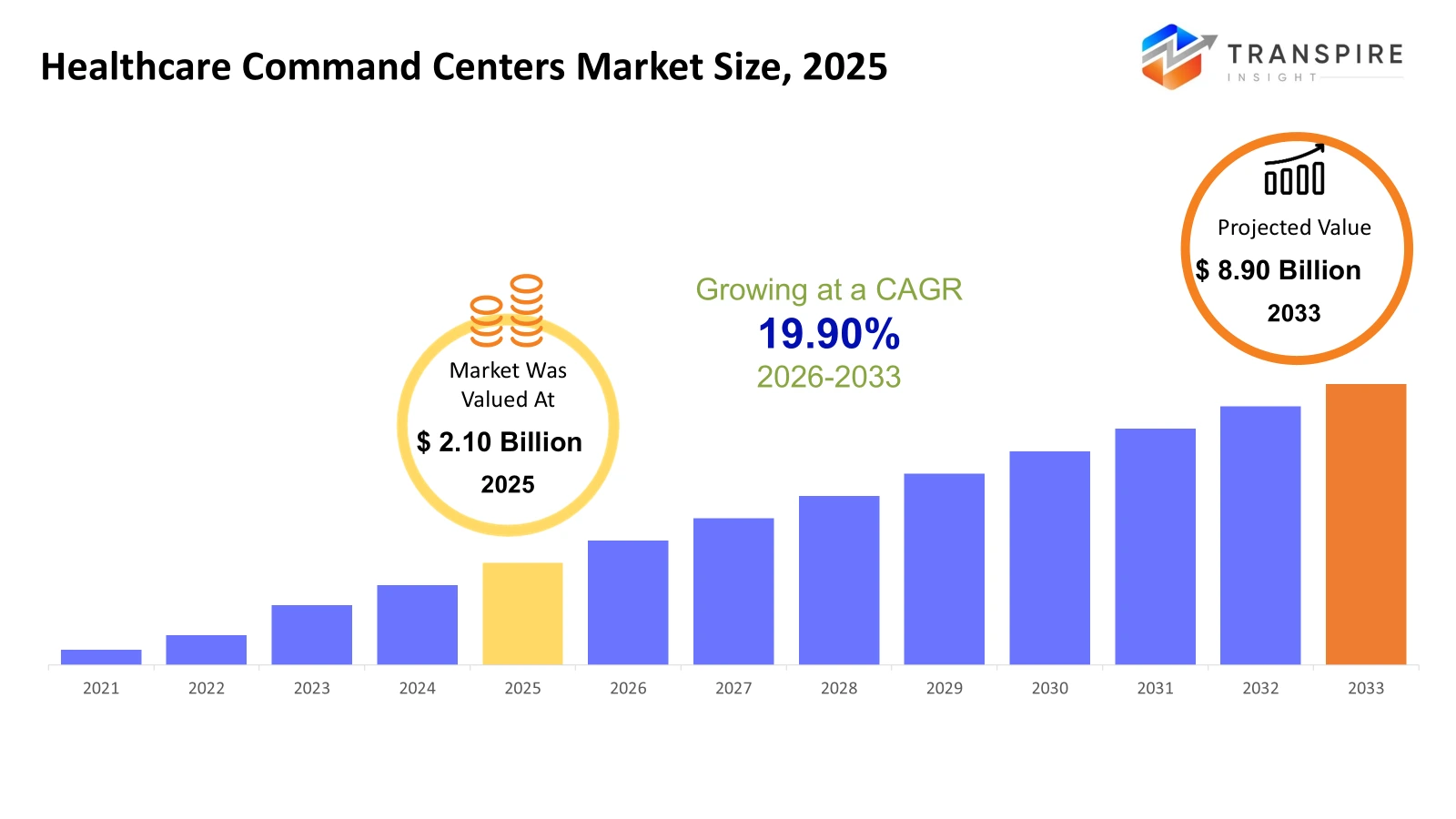
The global Healthcare Command Centers market size was valued at USD 2.10 billion in 2025 and is projected to reach USD 8.90 billion by 2033, growing at a CAGR of 19.90% from 2026 to 2033. The Healthcare Command Centers market is expected to grow at a robust CAGR as a result of the rising complexity of hospital operations and the growing number of patients. Healthcare organizations are focusing on real-time visibility, predictive analytics, and command center solutions.
Market Size & Forecast
- 2025 Market Size: USD 2.10 Billion
- 2033 Projected Market Size: USD 8.90 Billion
- CAGR (2026-2033): 19.90%
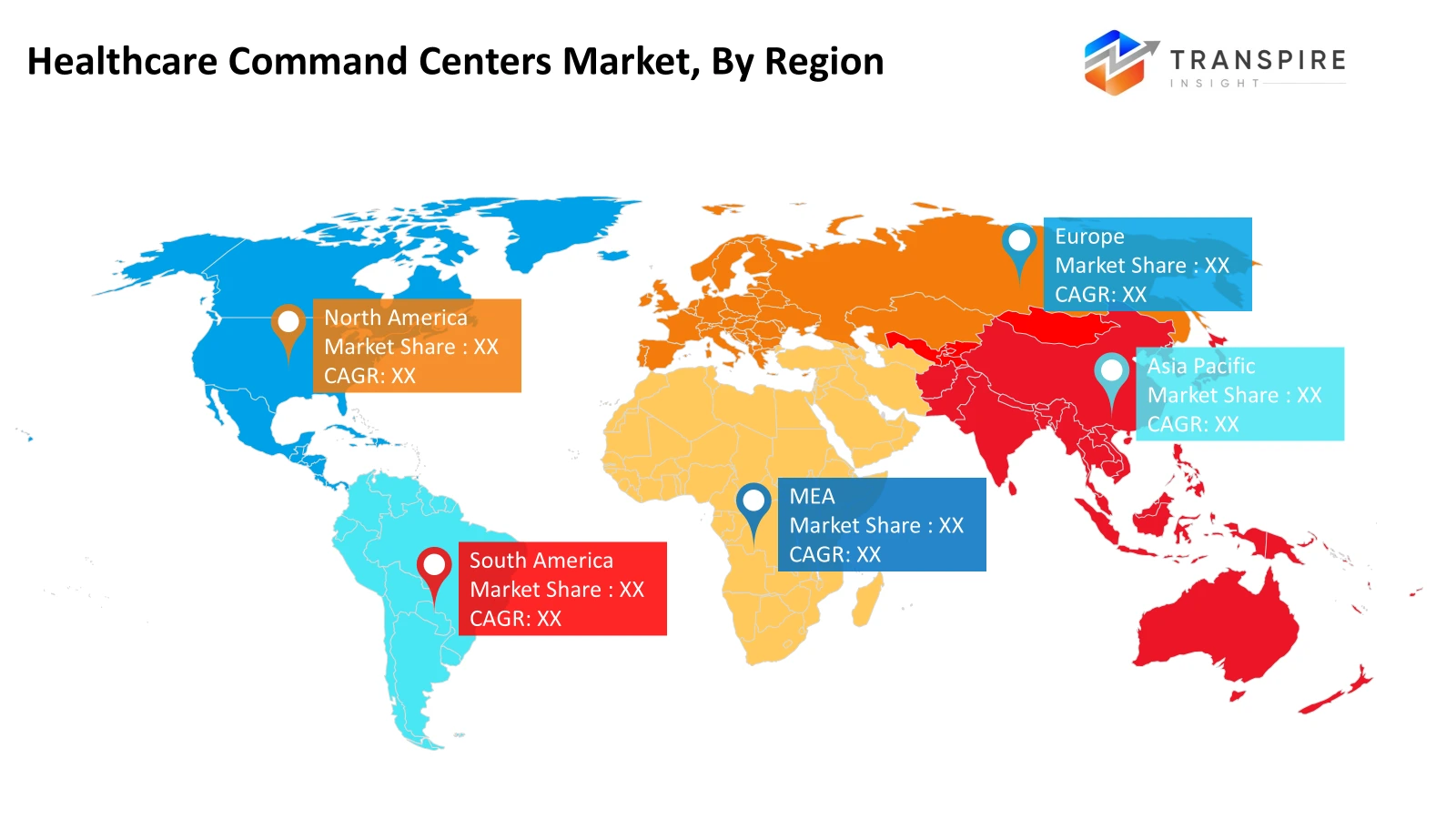
- North America: Largest Market in 2026
- Asia Pacific: Fastest Growing Market
To learn more about this report,  Download Free Sample Report
Key Market Trends Analysis
- North America sustains its leadership position because of the mature healthcare IT infrastructure, robust reimbursement systems, and early adoption of AI-driven operational analytics. Large integrated healthcare delivery networks are increasingly adopting system-wide coordination from centralized command centers to optimize patient flow and minimize operational bottlenecks.
- The United States of America is at the forefront of innovation with cutting-edge predictive analytics, interoperability regulations, and intelligent hospital investments. Healthcare organizations are expanding their enterprise command centers to combine clinical, operational, and administrative information to facilitate value-based care transformation and optimization.
- The Asia Pacific region is experiencing a rapid growth phase due to the development of hospital infrastructure, government-driven digital health strategies, and increasing patient volumes. Countries like China and India are adopting cloud-based solutions to enhance scalability and optimize costs.
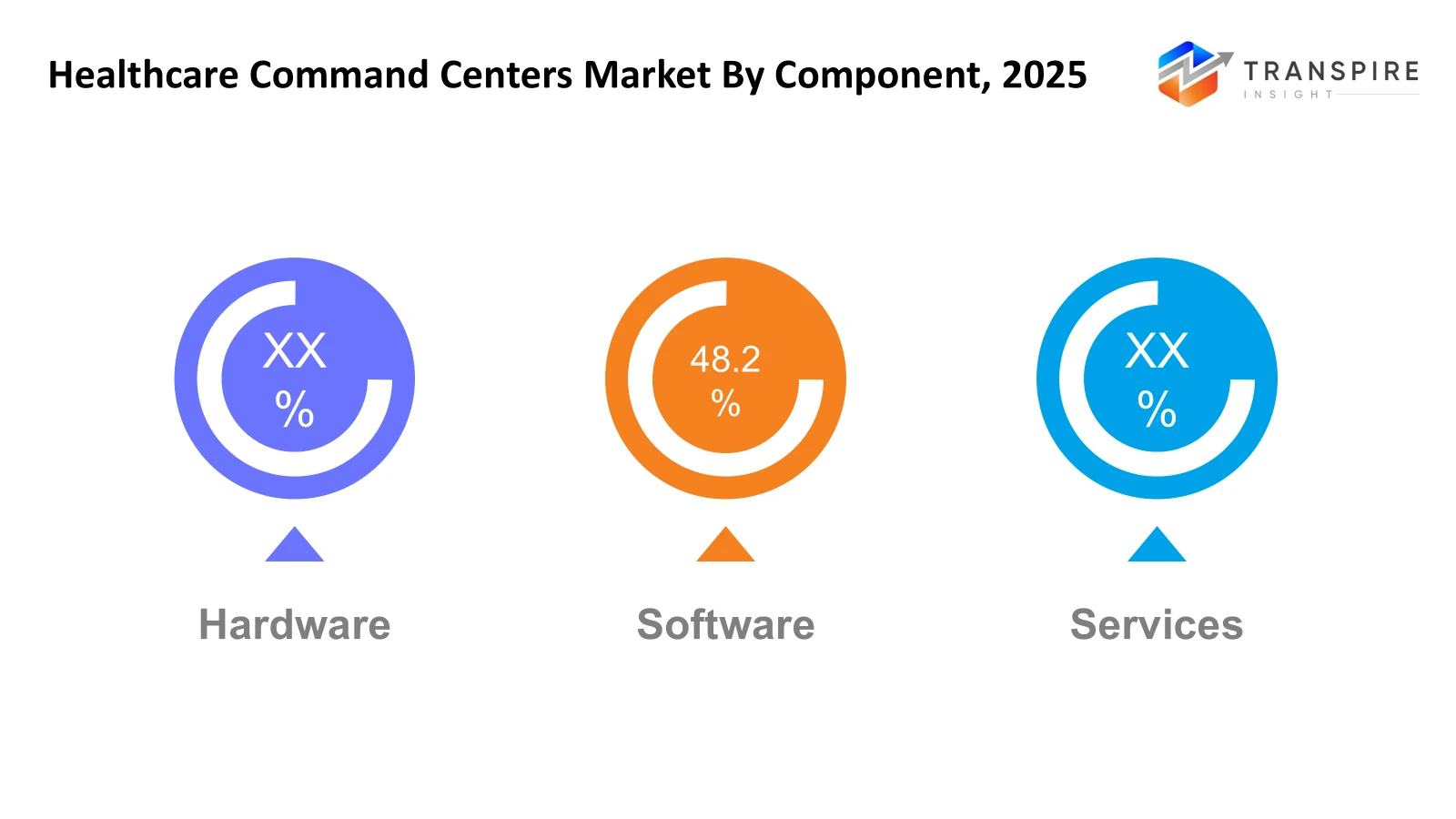
- Software segment leads due to the availability of analytics platforms that support real-time dashboards, predictive analytics, and easy integration with hospital information systems. The demand is fueled by the need for actionable insights that can enhance operational decision-making and improve the efficiency of clinical workflows.
- Cloud-based deployment is emerging as the preferred option due to low capital costs, scalability, and ease of integration across multiple sites. Hospitals are adopting hybrid approaches to strike a balance between regulatory requirements and operational flexibility and remote accessibility.
- Patient Flow Management is a prominent segment as hospitals are focusing on minimizing wait times and streamlining admission and discharge processes. Advanced forecasting solutions are being leveraged to manage bed capacity and emergency department crowding.
- Operational Command Centers command the largest application segment as healthcare providers are emphasizing the need for centralized command and control of logistics, personnel, and resource management. These command centers support real-time coordination across departments, and this has improved efficiency and reduced cost burdens.
So, The Healthcare Command Centers market is defined as a set of integrated platforms that combine clinical, operational, and administrative information to enable real-time visibility within healthcare facilities. Command centers in the healthcare industry use analytics, visualization, and interoperability to improve the coordination and decision-making processes. They help hospitals optimize patient flow, resource management, and quality of care by integrating various sources of disparate data. The Healthcare Command Centers market is gaining traction due to the adoption of command center solutions by healthcare providers to overcome operational inefficiencies, increased patient volumes, and staff shortages. The integration of command centers with electronic health records, IoT devices, and predictive analytics enables the early detection of bottlenecks and risk factors. With the shift towards value-based care in the healthcare industry, command centers act as strategic assets to align clinical performance with financial sustainability.
Technological innovations such as artificial intelligence, machine learning, and cloud computing are transforming the market landscape. Companies are developing scalable command center solutions that can handle multi-site networks and remote monitoring. The market is also driven by regulations regarding data security and interoperability, which are promoting standardized, secure, and compliant command center solutions in the healthcare industry.
Healthcare Command Centers Market Segmentation
By Component
- Hardware
Hardware used in command centers involves servers, monitors, networking devices, and sensors that enable the visualization of data. Its adoption is still high in developed healthcare environments (U.S. and Germany) because of investments in infrastructure development. Sales of hardware are driven by the need for interoperability and the size of the facility.
- Software
Software is the backbone of command center solutions, providing analytics, dashboards, AI insights, and EHR integration. Cloud-based solutions are increasingly popular. Market expansion is driven by the need for predictive analytics and workflow analysis in various regions, especially North America and Europe.
- Services
Services offered include consulting, implementation, system integration, and support. Professional services ensure customized implementation, alignment with regional healthcare regulations, and command center optimization. The emerging markets in Asia Pacific and the Middle East are increasingly adopting managed services because of a lack of in-house IT expertise.
To learn more about this report, Download Free Sample Report
By Deployment Mode
- On-Premises
On-premises solutions are preferred by hospitals that value data control and security, particularly in North America and Europe. Such solutions are common in regions where the regulatory environment requires hospitals to be extremely strict about data management. Capital outlays and in-house IT management are major factors.
- Cloud-Based
Cloud-based command centers are more flexible, with lower capital costs and simpler upgrades. Cloud-based solutions are gaining popularity in Asia Pacific and South America, where there is limited IT infrastructure in the region and more digital transformation projects. Cloud solutions also facilitate multi-facility coordination.
- Hybrid
Hybrid solutions integrate on-premises and cloud solutions to provide a balance of control and scalability. This is particularly attractive in regions with varying data privacy regulations, such as the EU and the Middle East. Hybrid solutions facilitate migration plans and help institutions make the most of their investments.
By Type
- Patient Flow Management
Patient flow management solutions help optimize patient admissions, transfers, and discharges to minimize wait times and overcrowding. North American and European hospitals are increasingly adopting these solutions to improve patient flow and satisfaction. Interoperability of data and predictive analytics are major differentiators in this segment.
- Clinical Workflow Management
This sub-segment helps improve clinical workflow management by integrating teams with the status of tasks and resources in real-time. Adoption of this sub-segment is high in advanced technology areas, resulting in better patient care and minimized clinical errors. The Middle East and APAC are investing in this sub-segment as part of overall quality improvement initiatives.
- Capacity & Bed Management
This sub-segment helps optimize bed management and resource allocation, which is essential during peak times such as pandemics. Demand forecasting solutions are becoming increasingly important in all regions, with North America at the forefront because of well-developed data infrastructure. Emerging regions are adopting these solutions to improve their resilience.
- Asset & Inventory Management
Command center solutions that monitor and track essential medical assets and inventories optimize business operations and minimize expenses. The solution has been more widely adopted in large hospital systems in Europe and North America, but APAC markets are experiencing fast adoption with the digitization of supply chains.
Quality & Performance Management
- This segment assesses KPIs to optimize care quality, regulatory, and financial outcomes. Command centers utilize dashboards and benchmarking analytics to facilitate performance optimization. European markets focus on quality because of the high standards of healthcare in their countries.
- Emergency & Disaster Response Management
Solutions that manage responses to emergencies such as pandemics and natural disasters are essential. Adoption is strong in areas where emergencies are common, such as South Asia and the Middle East. Situational awareness and integration with public health infrastructure are key differentiators.
By Application
- Operational Command Centers
Operational centers revolve around hospital logistics and operational tracking. They are commonly found in North America, thanks to the need for operational efficiency. European solutions also concentrate on operational analytics to achieve performance goals.
- Clinical Command Centers
Clinical centers help with patient care delivery by consolidating clinical information. These are more common in developed healthcare environments (e.g., U.S., UK). Investment in AI and predictive analytics improves clinical decision-making and outcomes.
- Administrative Command Centers
Administrative command centers combine financial, personnel, compliance, and strategic planning information. Adoption is increasing in all regions as healthcare organizations demand a single view of administrative operations. Middle East & Africa exhibit growing interest in command centers as part of overall modernization initiatives.
Regional Insights
North America, including the United States, Canada, and Mexico, is the most mature market. The United States is the leader because of its well-developed IT infrastructure and large integrated delivery networks, while Canada focuses on interoperability and public health integration. Mexico is slowly increasing its digital hospital programs, especially in Tier 1 healthcare facilities. Europe, including Germany, United Kingdom, France, Spain, Italy, and Rest of Europe, shows high adoption rates because of quality standards and regulatory requirements. Germany and the United Kingdom are Tier 1 markets with highly integrated analytics capabilities, while Southern and Eastern Europe are Tier 2 markets with a focus on step-by-step digital transformation.
Asia Pacific includes Japan, China, Australia & New Zealand, South Korea, India, and Rest of Asia Pacific. Japan and Australia are Tier 1 markets with highly advanced digital health solutions. China and India are high-growth Tier 2 markets because of the growing number of hospitals and government-led digitization initiatives. South America, including Brazil, Argentina, and the Rest of South America, is an emerging market with Brazil as Tier 1 in terms of adoption. Argentina and other countries in South America are Tier 2 markets, where cloud-based and cost-effective solutions are increasingly adopted. Middle East & Africa includes Saudi Arabia, United Arab Emirates, South Africa, and the Rest of the Middle East & Africa. Saudi Arabia and UAE are Tier 1 markets, which are driven by investments in smart hospitals, while South Africa and other countries are Tier 2 markets with a gradual expansion of digital healthcare.
To learn more about this report, Download Free Sample Report
Recent Development News
- October 2024, Medically Home has released an official press release announcing its partnership with SCP Health to provide virtual clinical command center services in support of hospital at-home programs. This allows for the scalable execution of command center operations.
- In October 2024, GE HealthCare launched the Hospital Pulse Tile, which is an operational dashboard in real time as part of its Command Center solution, allowing the aggregation of data from different systems in the hospital to improve decision-making. Duke Health was announced as the first global user of this new functionality.
|
Report Metrics |
Details |
|
Market size value in 2025 |
USD 2.10 Billion |
|
Market size value in 2026 |
USD 2.50 Billion |
|
Revenue forecast in 2033 |
USD 8.90 Billion |
|
Growth rate |
CAGR of 19.90% from 2026 to 2033 |
|
Base year |
2025 |
|
Historical data |
2021 – 2024 |
|
Forecast period |
2026 – 2033 |
|
Report coverage |
Revenue forecast, competitive landscape, growth factors, and trends |
|
Regional scope |
North America; Europe; Asia Pacific; Latin America; Middle East & Africa |
|
Country scope |
United States; Canada; Mexico; United Kingdom; Germany; France; Italy; Spain; Denmark; Sweden; Norway; China; Japan; India; Australia; South Korea; Thailand; Brazil; Argentina; South Africa; Saudi Arabia; United Arab Emirates |
|
Key company profiled |
GE HealthCare, Koninklijke Philips N.V., Siemens Healthineers, TeleTracking Technologies, Qventus, Epic Systems Corporation, Oracle Health (formerly Cerner), LeanTaaS, Dedalus S.p.A., ABOUT Healthcare Inc., KenSci, Care Logistics, Care.ai, Medtronic plc, and McKesson Corporation |
|
Customization scope |
Free report customization (country, regional & segment scope). Avail customized purchase options to meet your exact research needs. |
|
Report Segmentation |
By Component (Hardware, Software, Services), By Deployment Mode (On-Premises, Cloud-Based, Hybrid), By Type (Patient Flow Management, Clinical Workflow Management, Capacity & Bed Management, Asset & Inventory Management, Quality & Performance Management, Emergency & Disaster Response Management) and By Application (Operational Command Centers, Clinical Command Centers, Administrative Command Centers) |
Key Healthcare Command Centers Company Insights
GE HealthCare is one of the largest players in the healthcare command center marketplace, due to its highly integrated use of real-time analytics, AI platforms, and scalable IT infrastructures to drive both operational and clinical decision-making. The company's Command Center capabilities use predictive forecasting and interoperable dashboards that help hospitals create more efficient patient flows, improve bed utilization and support the allocation of resources across multiple hospital systems. Ongoing strategic partnerships have augmented GE HealthCare’s position in North America, Europe, and into Emerging Asia Pacific regions. Additionally, GE HealthCare's wide regional presence, current use of EHR (electronic health record) integrations, and large client base position the company for sustained market leadership and faster rates of use.
Key Healthcare Command Centers Companies:
- GE HealthCare
- Koninklijke Philips N.V.
- Siemens Healthineers
- TeleTracking Technologies
- Qventus
- Epic Systems Corporation
- Oracle Health (Cerner)
- LeanTaaS
- Dedalus S.p.A.
- ABOUT Healthcare Inc.
- KenSci
- Care Logistics
- ai
- Medtronic plc
- McKesson Corporation
Global Healthcare Command Centers Market Report Segmentation
By Component
- Hardware
- Software
- Services
By Deployment Mode
- On-Premises
- Cloud-Based
- Hybrid
By Type
- Patient Flow Management
- Clinical Workflow Management
- Capacity & Bed Management
- Asset & Inventory Management
- Quality & Performance Management
- Emergency & Disaster Response Management
By Application
- Operational Command Centers
- Clinical Command Centers
- Administrative Command Centers
Regional Outlook
- North America
- United States
- Canada
- Mexico
- Europe
- Germany
- United Kingdom
- France
- Spain
- Italy
- Rest of Europe
- Asia Pacific
- Japan
- China
- Australia & New Zealand
- South Korea
- India
- Rest of Asia Pacific
- South America
- Brazil
- Argentina
- Rest of South America
- Middle East & Africa
- Saudi Arabia
- United Arab Emirates
- South Africa
- Rest of the Middle East & Africa
Frequently Asked Questions
Find quick answers to common questions.
The approximate Healthcare Command Centers Market size for the market will be USD 8.90 billion in 2033.
Key segments for the Healthcare Command Centers Market By Component (Hardware, Software, Services), By Deployment Mode (On-Premises, Cloud-Based, Hybrid), By Type (Patient Flow Management, Clinical Workflow Management, Capacity & Bed Management, Asset & Inventory Management, Quality & Performance Management, Emergency & Disaster Response Management) and By Application (Operational Command Centers, Clinical Command Centers, Administrative Command Centers).
Major Healthcare Command Centers Market players are GE HealthCare, Koninklijke Philips N.V., Siemens Healthineers, Epic Systems Corporation, TeleTracking Technologies.
The North America region is leading the Healthcare Command Centers Market.
The CAGR of the Healthcare Command Centers Market is 19.90%.
- GE HealthCare
- Koninklijke Philips N.V.
- Siemens Healthineers
- TeleTracking Technologies
- Qventus
- Epic Systems Corporation
- Oracle Health (Cerner)
- LeanTaaS
- Dedalus S.p.A.
- ABOUT Healthcare Inc.
- KenSci
- Care Logistics
- ai
- Medtronic plc
- McKesson Corporation
Recently Published Reports
-
Apr 2026
AI in Diabetic Retinopathy Market
AI in Diabetic Retinopathy Market Size, Share & Analysis Report By Type (Screening AI Systems, Diagnostic AI Systems, and Predictive AI Models), By Application Segment (Hospitals, Ophthalmology Clinics, Diagnostic Centers, and Research and Development), and Geography (North America, Europe, Asia-Pacific, Middle East and Africa, South and Central America), 2021 - 2031
-
Apr 2026
Psychometric Tests Market
Psychometric Tests Market Size, Share & Analysis Report By Type (Personality Tests, Ability/Aptitude Tests, Skill/Knowledge Tests, and Others), By Application (Talent Acquisition and Talent Management), and Geography (North America, Europe, Asia-Pacific, Middle East and Africa, South and Central America), 2021 – 2031
-
Apr 2026
Rare Biological Sample Collection Market
Rare Biological Sample Collection Market Size, Share & Analysis Report By Type (Isolation Kits & Reagent, Blood Collection Tubes, and Others), By Application (Oncology, Transcriptomics, Pharmacogenomics, and Others), and Geography (North America, Europe, Asia-Pacific, Middle East and Africa, South and Central America), 2021 – 2031
-
May 2026
Patient Lift Pendant Market
Patient Lift Pendant Market By Product Type (Wired Pendants, Wireless, Programmable), By Operation Type(Manual, Electric), By End-Users (Healthcare Professionals, Patients), By Application (Hospitals, Homecare, Rehabilitation Centers, Others), By Industry Analysis, Size, Share, Growth, Trends, and Forecasts 2021-2033
Our Clients
.jpg)