Health And Medical Insurance Market Summary:
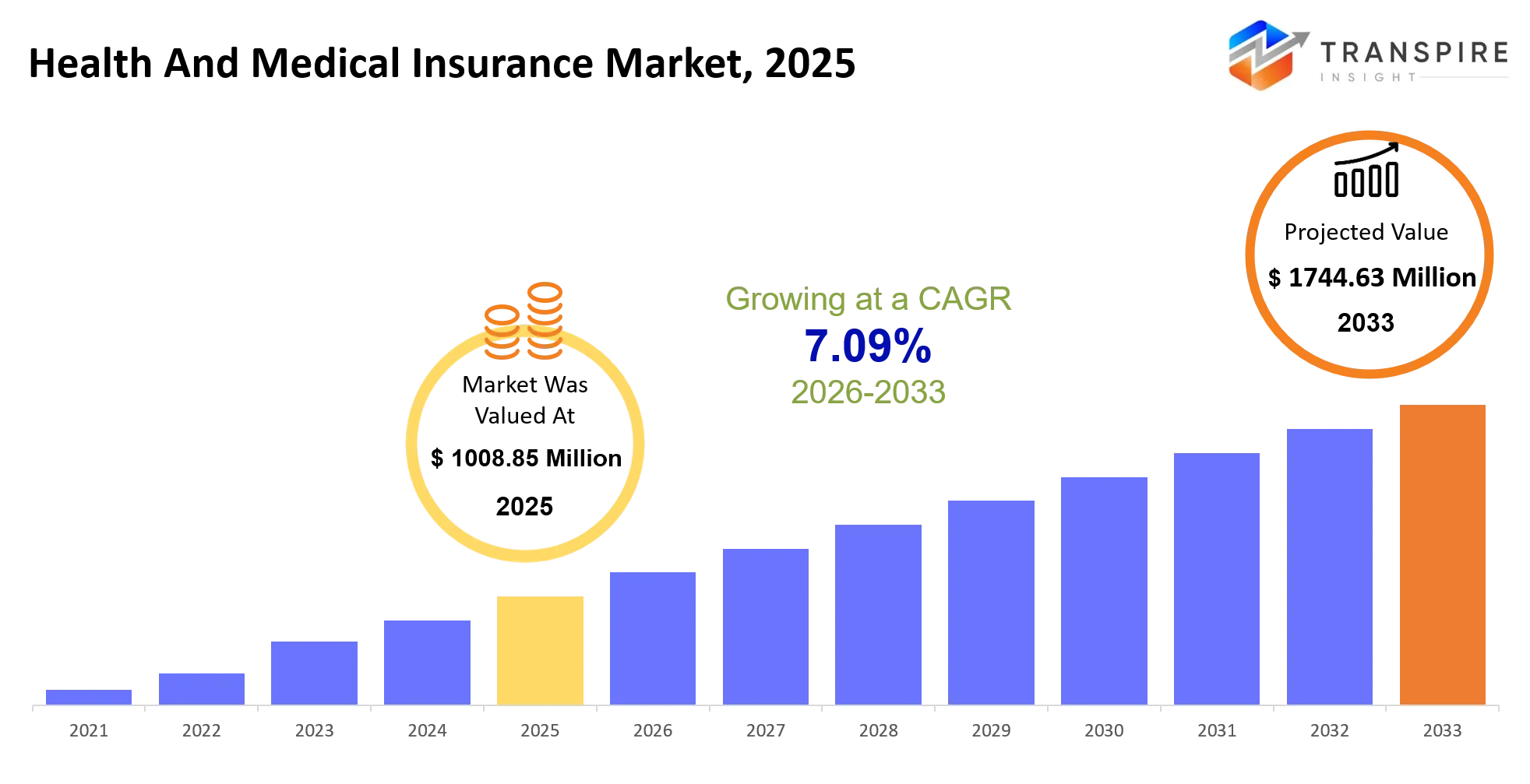
As per the Transpire Insight Analysis, The Health and Medical Insurance Market size is estimated at USD 1008.85 million in 2025 and is anticipated to reach USD 1744.63 million by 2033, growing at a CAGR of 7.09% from 2026 to 2033.
The market is evolving from pure reimbursement-based protection to an evolved formula of integrated healthcare financing, digital management, and prevention. In the last few years, especially the last 3-5 years, insurers have incorporated telemedicine, digital enrollment, individual-centric coverage, and data-driven claim management. We are witnessing a fundamental structural change where technology-enabled insurance is gaining momentum, and insurers are not just reimbursing the treatment cost but seem to orchestrate access to health services. With inflation in medical costs, higher prescription drug costs, and increased utilisation of healthcare services, the financial protection burden on employers and individuals has increased. For example, the family health insurance premium inflation for employers in the United States rose by 6%, thereby further increasing worries about affordability. This is prompting insurers to extend private coverage, introduce several benefit designs, and improve efficiencies.
Health And Medical Insurance Market Size & Forecast:
- Market Size 2025: USD 1008.85 Billion
- Expected Market Value (2033): USD 1744.63 Billion
- Forecast CAGR (2026–2033): 7.09%
- Leading Region in 2025: North America
- Fastest Growing Region: Asia Pacific
- Key Company Profiles: UnitedHealth Group, Elevance Health, Cigna, CVS Health/Aetna, Humana, Centene, Kaiser Permanente, Allianz, AXA, Bupa, Ping An Insurance, China Life Insurance, Zurich Insurance, HBF Health, Molina Healthcare.
Key Health And Medical Insurance Market Insights:
Health insurance is transforming into a service and data business: insurers are now pitching on speed of authorization, member support on digital platforms and prevention, as well as price. The leaders are transforming AI and provider integration into frictionless, deeper retention.
- Private health insurance accounts for 58.0% of the market, and insurers are integrating wellness, chronic-care and digital navigation into their regular policies.
- The individual health insurance segment is expanding at ~7.0% CAGR, fueled by online channels and portability features for the self-employed.
- North America holds 46.0% of the share of premiums, with the United States holding over 70% of health premiums.
- UnitedHealth Group is spending $1.5 billion on technology, and by 2026, more than 50% of calls will be directed by AI agents.
- With a single data source for provider, laboratory, and pharmacy, Elevance Health has cut prior authorisations by nearly 70%.
- CVS Health/Aetna is standing out by integrating with pharmacies, virtual care, and using a voice-activated generative-AI assistant.
- Cigna has developed a proprietary provider-matching tool and real-time cost tracking for deductibles, out-of-pocket expenses, and bill payment.
- Humana is expanding its partnership with Google Cloud with Agent Assist, intending to accelerate care-support workflows.
- Ping An is expanding its “AI + Physician” service to 90 million monthly active users, and it has formed partnerships with 100% of the country's top 100 hospitals.
- Asia-Pacific is projected to increase its market share by 5% over the next decade, whereas Europe's share could fall by 4%.
What are the Key Drivers, Restraints, and Opportunities in the Health And Medical Insurance Market?
Driver:
Medical cost inflation and expanding chronic disease management requirements are driving insurers, employers, and households toward broader financial protection. Rising hospital charges, expensive speciality medicines, and recurring treatment requirements increase the financial consequences of remaining uninsured. This encourages premium collection through private policies, employer-sponsored benefits, and supplementary coverage. Allianz reported that health insurance premiums expanded by 12.3% in 2025, reflecting medical inflation and stronger protection requirements.
Restraint:
Premium increases can suppress enrollment among younger and lower-income consumers, especially in unsubsidized individual plans. The constraint persists because medical inflation, higher utilisation, expensive speciality therapies, and ageing risk pools continually push claims costs upward; insurers cannot lower premiums without narrowing benefits, raising deductibles, or tightening utilisation management. Complex policy terms and claims procedures further reduce perceived value and accessibility.
Opportunity:
Regulated, interoperable AI and embedded distribution. The next growth unlock is AI used within clear governance: automated triage, risk adjustment, fraud prevention, and prior authorisation, with clinician oversight for adverse medical-necessity decisions. CMS’s WISeR model is testing AI-enabled prior authorisation in Medicare, while the CMS Ecosystem initiative has brought together more than 60 providers, payers, and software companies to improve data exchange and consumer digital tools. Embedded insurance is another opening: AXA Partners and bolttech expanded their collaboration, signalling a shift from traditional brokerage toward platform-led distribution.
Driver Impact Analysis – Health and Medical Insurance Market
|
Driver |
Relative Impact on Growth (%) |
Geographic Relevance |
Impact Timeline |
Demand Strength |
Growth Mechanism |
Key Beneficiaries |
Major Constraint |
|
Rising Healthcare Costs and Medical Inflation |
28% |
North America, Asia Pacific, Europe |
Short-term (≤2 years) |
High |
Medical inflation increases premiums and coverage demand. |
Health insurers, healthcare providers, policyholders |
Affordability pressures, premium resistance, escalating claims |
|
Expanding Insurance Penetration and Protection Gaps |
24% |
Asia Pacific, Latin America, Africa |
Long-term (≥4 years) |
High |
Underserved populations create opportunities for coverage expansion. |
Insurers, brokers, digital insurance platforms, consumers |
Low awareness, affordability barriers, limited distribution infrastructure |
|
Ageing Population and Rising Chronic Disease Burden |
20% |
North America, Europe, Asia Pacific |
Long-term (≥4 years) |
High |
Ageing populations increase demand for comprehensive medical coverage. |
Health insurers, hospitals, pharmaceutical companies, elderly consumers |
Adverse selection, chronic care costs, sustainability challenges |
|
Government Healthcare Reforms and Employer-Sponsored Coverage |
16% |
North America, Europe, Asia Pacific |
Medium-term (2–4 years) |
High |
Healthcare reforms and employee benefits expand insured populations. |
Insurance providers, employers, healthcare administrators, employees |
Regulatory complexity, fiscal constraints, compliance costs |
|
Digital Insurance Platforms, AI and Personalized Healthcare |
12% |
North America, Europe, Asia Pacific |
Medium-term (2–4 years) |
High |
AI-driven underwriting and digital enrollment improve insurance accessibility. |
Insurers, InsurTech firms, technology vendors, policyholders |
Data privacy concerns, cybersecurity risks, integration costs |
|
Total |
100% |
Global |
— |
— |
— |
— |
— |
What Has the Impact of Artificial Intelligence Been on the Health And Medical Insurance Market?
Health insurance companies are leveraging artificial intelligence to automate labour-intensive processes, optimise risk rating, and improve customer experience. Many insurers are turning to machine learning to automate claims classification, fraud detection, underwriting, risk adjustment, prior authorisations, and more. Natural language processing is also being used to extract relevant data from insurance claims and medical documents to help administrators identify missing data and assign cases more efficiently. Additionally, predictive analytics help insurers recognise members at high risk for expensive conditions, predict health service utilisation, and create targeted programs of care to better inform their pricing, resource planning, and benefit design. Automated customer care can be used for policy questions, enrollment and renewals, and service request tracking to create a more responsive insurance operation. However, there are considerable hurdles to implementing artificial intelligence, including integrating with existing legacy insurance systems, inconsistent data on medical treatment, lack of explanations for model decisions, and development expenses. Algorithmic bias can also compromise underwriting and authorisation decisions and disproportionately impact disadvantaged groups. Following research published in 2026 revealed a lack of explanations, lack of human supervision, and the propagation of history, artificial intelligence use in insurance must include transparent models, clinical validation, continuous monitoring, and human oversight.
In November 2026, AmeriLife Group entered into an enterprise partnership with Palantir Technologies. The agreement integrates Palantir's Foundry and Artificial Intelligence Platform (AIP) across AmeriLife's health and wealth distribution networks to automate case management, back-office workflows, and policy administration.
Key Health And Medical Insurance Market Trends:
Insurers have moved away from reimbursement-based products to digitally managed, preventative, and personalized insurance. The competitive edge relies on becoming more affordable, accessible to healthcare, efficient with claims, and trustworthy to customers.
- Prior authorization is shifting from manual to API-based, time-limited workflows with payer API mandates set for January 1, 2027.
- AI is not just for back-office experiments, but also woven into utilization management, disease management, fraud detection, and risk adjustment.
- However, human oversight is being placed on adverse coverage decisions, moving AI from an autonomous decision-maker to a decision support role.
- The employers continue to be the key purchasers, and their role is to control the health care costs, retention, and productivity of their workforces through plans.
- Distribution is shifting towards Direct-to-Consumer and Embedded distribution, which is making it less dependent on agents and branches.
- Insurers are increasingly aiming to cut long-term claims severity and are making chronic-disease management a core part of their products.
- Consumers are increasingly expecting self-service enrollment, real-time claim status, and digital care navigation.
- In the face of pressure on public systems, private insurance is becoming a supplement to state coverage.
- Interoperability is emerging as a competitive ability, facilitating more efficient provider-payer interaction and enhanced member experiences.
- Asia-Pacific is proving to be the fastest-growing regional opportunity, driven by private coverage growth and access-friendly regulatory access.
Health And Medical Insurance Market Segmentation
Insurance Type:
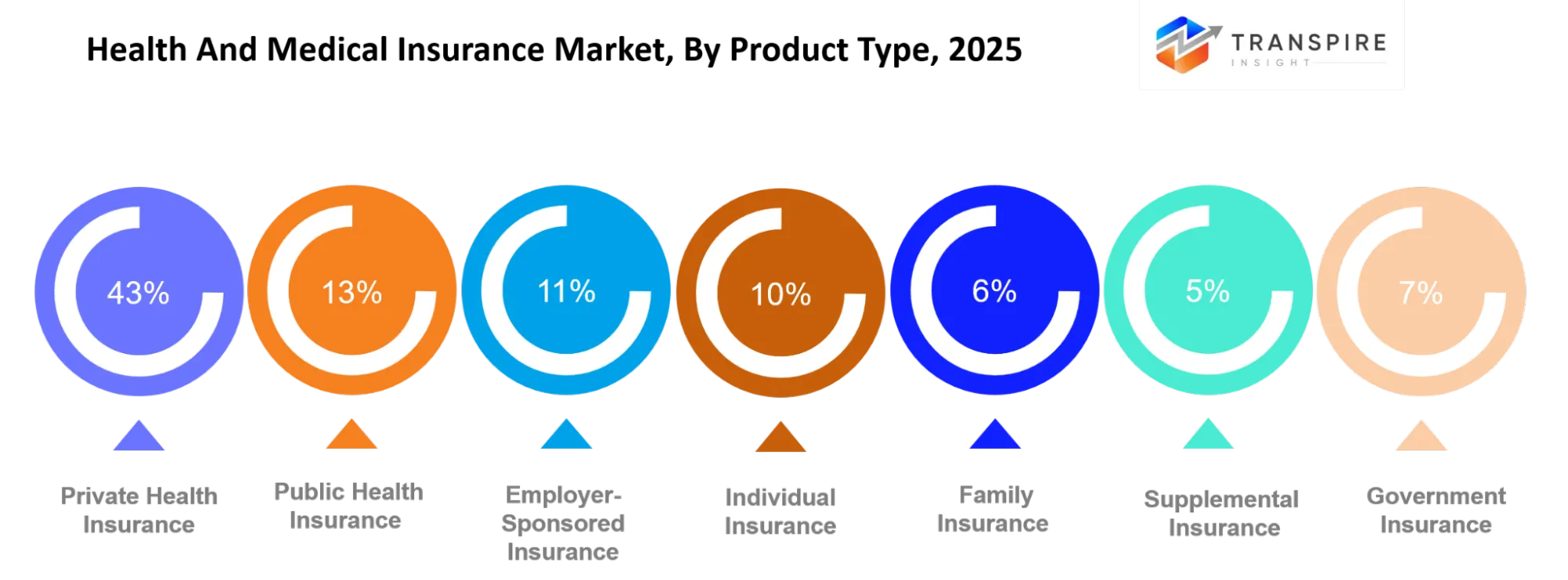
Private health insurance leads with 58.0% of the market because it captures employer groups, individual purchasers, and supplemental coverage where public systems leave financing gaps. Its growth logic rests on recurring premiums, risk pooling, and benefit customization; over time, it will likely absorb more digital care-management and wellness services. Public health insurance holds 18.0% and remains essential for universal access, though fiscal pressure may push governments toward managed-care contracting and co-financing. Employer-sponsored insurance accounts for 10.0%, supported by stable group renewal cycles and workplace wellness integration. Individual insurance, at 6.0%, is the fastest-moving distribution-led category, with an estimated ~7.0% CAGR as online platforms lower acquisition costs. Family insurance represents 4.0%, supplemental insurance 2.5%, and government insurance 1.5%, reflecting niche but strategically important roles in household protection and targeted public programs.
Coverage:
Hospitalization remains the primary coverage component, supported by outpatient care, prescription drugs, dental, vision, maternity, and preventive services. Outpatient benefits are gaining importance as insurers seek to manage recurring treatment expenses and reduce avoidable admissions. Preventive-care coverage also supports early diagnosis and chronic disease management, potentially improving long-term claims outcomes. Future product development will increasingly balance essential hospitalization protection with accessible supplementary benefits, allowing insurers to address diverse healthcare requirements while maintaining cost discipline and improving policyholder satisfaction across different customer groups.
Plan Type:
HMO, PPO, POS, EPO, high-deductible, indemnity, and managed-care plans address varying affordability, provider access, and reimbursement preferences. HMOs emphasize coordinated care, while PPOs offer broader provider flexibility. High-deductible plans appeal to cost-conscious customers but can increase out-of-pocket exposure. Insurers are refining these structures through customized benefits, network arrangements, and flexible cost-sharing mechanisms. Future adoption will depend on balancing premium affordability, treatment accessibility, customer expectations, and sustainable claims management across increasingly diverse healthcare financing requirements.
Distribution Channel:
Insurance companies remain important distribution channels, alongside brokers, agents, banks, online platforms, employers, and government exchanges. Digital platforms are simplifying enrollment, policy comparisons, premium payments, and claims tracking, reducing administrative friction. Brokers and agents continue supporting complex coverage decisions, while employers facilitate group enrollment. Banks and government exchanges provide additional customer access. Future distribution strategies will increasingly combine digital convenience with personalized assistance, enabling insurers to reach underserved populations, improve conversion rates, and strengthen customer retention across different insurance purchasing environments.
Customer Type:
Individuals, families, employers, governments, seniors, children, and self-employed customers represent distinct purchasing groups. Ageing populations increase demand for hospitalization, prescription, and chronic-care benefits, while families prioritize maternity, pediatric, and comprehensive household protection. Employers use insurance to attract and retain employees, whereas self-employed customers require flexible premiums and portable coverage. Government purchasers emphasise population protection and financial accessibility. Future product differentiation will depend on demographic targeting, employment flexibility, household affordability, and changing healthcare requirements across customer categories.
Coverage Duration:
Annual, multi-year, short-term, long-term, renewable, group-term, and individual-term policies accommodate varying financial commitments and healthcare requirements. Annual coverage supports conventional policy renewals, while multi-year arrangements can improve continuity and reduce administrative interruptions. Short-term products appeal to temporary workers, expatriates, and individuals between employment arrangements. Renewable and long-term policies support sustained protection, while group-term coverage simplifies employer enrollment. Future adoption will depend on balancing flexibility, premium affordability, regulatory requirements, and uninterrupted healthcare access as employment patterns and customer mobility evolve.
What are the Key Use Cases Driving the Health And Medical Insurance Market?
Private health insurance and hospitalisation coverage remain core use cases, protecting individuals and families against expensive procedures, emergency admissions, and unexpected medical expenses. These applications reinforce the dominant private insurance segment through financial security, hospital access, and treatment reimbursement.
Expanding applications include employer-sponsored healthcare, outpatient consultations, prescription drugs, maternity, dental, vision, and chronic disease management. Employers use healthcare benefits to strengthen workforce retention, while insurers integrate preventive services to control avoidable treatment costs and improve member outcomes.
Emerging applications include AI-assisted claims management, telemedicine-linked insurance, personalised wellness incentives, and digital health monitoring. These technologies connect individual, family, and employer coverage with coordinated healthcare delivery, enabling flexible insurance products and proactive healthcare financing.
|
Report Metrics |
Details |
|
Market size value in 2025 |
USD 1008.85 Million |
|
Market size value in 2026 |
USD 1080.34 Million |
|
Revenue forecast in 2033 |
USD 1744.63 Million |
|
Growth rate |
CAGR of 7.09% from 2026 to 2033 |
|
Base year |
2025 |
|
Historical data |
2021 - 2024 |
|
Forecast period |
2026 - 2033 |
|
Report coverage |
Revenue forecast, competitive landscape, growth factors, and trends |
|
Regional scope |
United States; Canada; Mexico; United Kingdom; Germany; France; Italy; Spain; Denmark; Sweden; Norway; China; Japan; India; Australia; South Korea; Thailand; Brazil; Argentina; South Africa; Saudi Arabia; United Arab Emirates |
|
Key companies profiled |
UnitedHealth Group, Elevance Health, Cigna, CVS Health/Aetna, Humana, Centene, Kaiser Permanente, Allianz, AXA, Bupa, Ping An Insurance, China Life Insurance, Zurich Insurance, HBF Health, Molina Healthcare. |
|
Customization scope |
Free report customization (country, regional & segment scope). Available customized purchase options to meet your exact research needs. |
|
Report Segmentation |
Insurance Type (Private Health Insurance, Public Health Insurance, Employer-Sponsored Insurance, Individual Insurance, Family Insurance, Supplemental Insurance, Government Insurance); Coverage (Hospitalization, Outpatient Care, Prescription Drugs, Dental, Vision, Maternity, Preventive Care); Plan Type (HMO, PPO, POS, EPO, High-Deductible Plans, Indemnity Plans, Managed Care); Distribution Channel (Insurance Companies, Brokers, Agents, Banks, Online Platforms, Employers, Government Exchanges); Customer Type (Individuals, Families, Employers, Government, Seniors, Children, Self-Employed); Coverage Duration (Annual, Multi-Year, Short-Term, Long-Term, Renewable, Group-Term, Individual-Term) |
Which Regions are Driving the Health And Medical Insurance Market Growth?
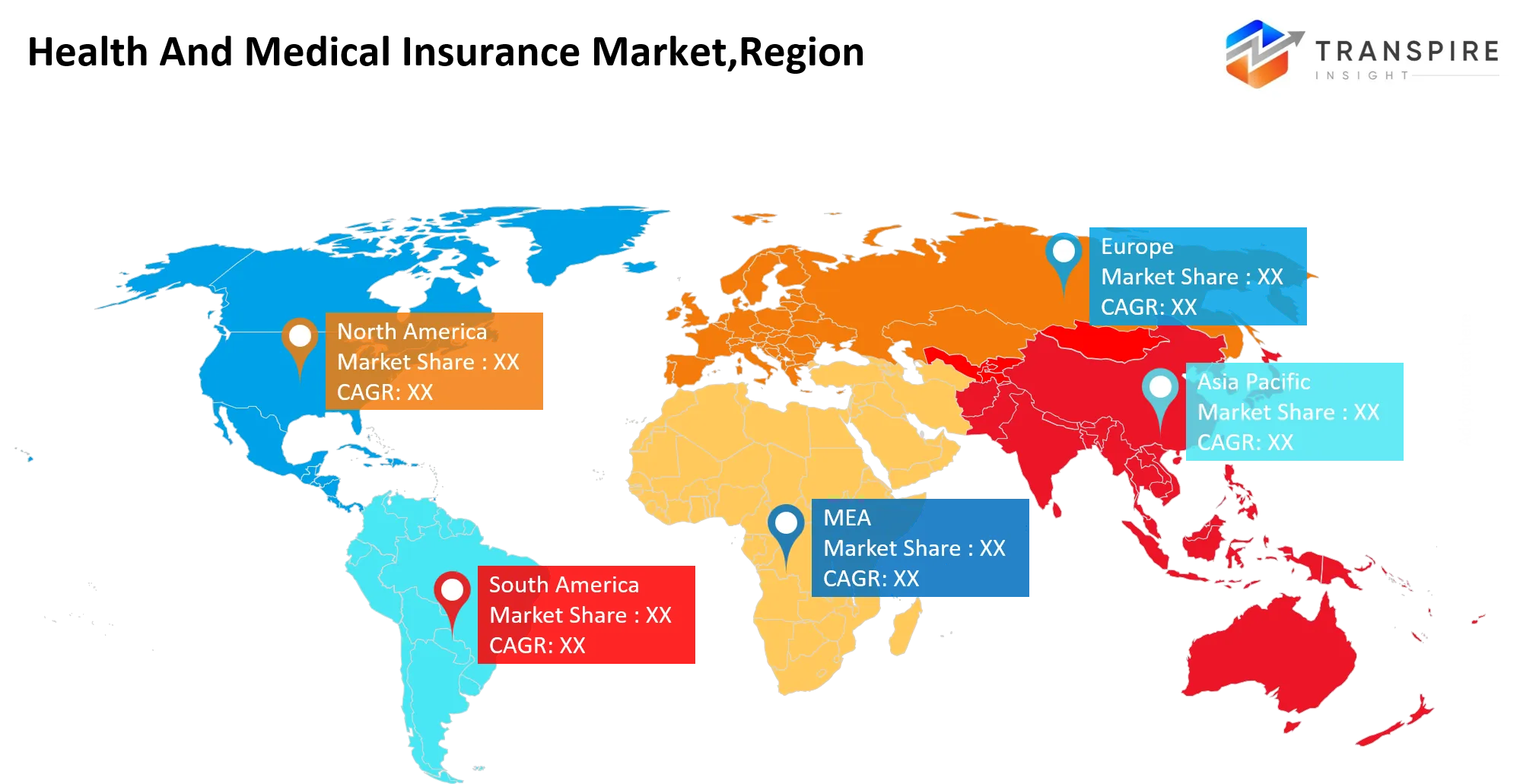
North America carries 46.0% of the market share, driven by high healthcare spending, private coverage penetration, and a mature employer-sponsored insurance market. Over 70% of health premiums are written in the US, offering the region immense advantage when it comes to claims data, provider network, and digital health investments. Policy and infrastructure are also working to accelerate digital growth: the Centers for Medicare and Medicaid Services' previous authorisation reforms and payer API mandates are loosening digital workflows; AI adoption across big carriers such as UnitedHealth and Elevance is scaled; high chronic disease rates and employer willingness to pay for coverage to strengthen employee retention and productivity demand these services.
In March 2026, UnitedHealthcare launched Avery, its advanced customer-facing generative AI companion. This deployment scales AI workflows to millions of members, automating personalized benefit tracking, cost estimates, and real-time claims navigation to lower administrative overhead.
Europe accounts for 25.0% of the market and offers a model of largely stability-led growth, with services offered alongside strong public systems and branded private products, notably in dental, vision and priority care. Demand for comprehensive health coverage is being boosted by an ageing population, rising treatment costs and technological advancements. Europe's stability is underpinned by strong regulatory insurance markets and established distribution systems, and broad social-protection schemes that protect clients against catastrophic out-of-pocket expenses. Europe is forecast to lose some four percentage points of market share by 2033, requiring innovation in premium offerings and enhancements to digital services.
In March 2026, Alan partnered with football star Kylian Mbappé as a strategic investor and brand ambassador to launch its international "Health Can't Wait" advertising campaign across France, Spain, and Belgium.
Asia-Pacific Region Growth CAGR 8.0% 20.0% Asia-Pacific region is experiencing rapid growth. The recent shift is primarily driven by rising demand from the rising middle class, low insurance penetration, and government programs to improve healthcare services. China and India are anticipated to add five percentage points to the Asia-Pacific market share, making it the largest growth driver in the region. In addition, AI-enabled services are used in 90% of business scenarios; the AI Doctor has helped consumers in the first nine months of 2026 and has partnered with 100% of the top 100 hospitals in China. It also showed that the future growth for the industry will be driven by mobile-first distribution, chronic disease management, and insurance products bundled with healthcare services.
In October 2026 launched an AI-enabled brain health management programme targeting Alzheimer's disease prevention and care in China. The newly integrated system combines digital cognitive assessments, biomarker screening, and remote monitoring technology to establish a comprehensive care workflow spanning early screening, medical treatment, home rehabilitation, and insurance financing.
Who are the Key Players in the Health and Medical Insurance Market, and how do they compete?
Competition includes competitive scale, provider access, pricing discipline, healthcare integration, and customer switching. United Health Group is differentiated by Optum's technology-enabled healthcare delivery and platform expertise, and Elevance Health's healthcare insurer- provider integration via its Carelon platform. Cigna is focused on international scale and its pharmacy-benefit-manager presence, and CVS Health/ Aetna compete by integrating with a range of healthcare providers and pharmacy and clinical services. Humana relies more heavily on senior market share in the Medicare Advantage segment, with Centene and Molina Healthcare tailoring to government-funded and more cost-sensitive populations.
Kaiser Permanente competes in the insurance-provider integration model focused on avoiding the healthcare-coverage divide, and Allianz and AXA are differentiated by their international footprint, broad diversification of insurance products, and their direct-to-consumer digital platform. Bupa and other international healthcare providers compete by providing direct services to customers and integrated healthcare solutions. Ping An Insurance and China Life Insurance are focused on broad-based distribution channels, technology-enabled service offerings, and scale domestic operations, with Zurich Insurance differentiating through its international risk expertise and corporate partnerships, and HBF Health through regional health insurers. Increasingly, market share growth depends on specific customer segments, direct-to-customer digital servicing, healthcare partnerships, and a reduction of expensive medical claims, rather than intense price competition.
Key Players are:
- UnitedHealth Group
- Elevance Health
- Cigna
- CVS Health/Aetna
- Humana
- Centene
- Kaiser Permanente
- Allianz
- AXA
- Bupa
- Ping An Insurance
- China Life Insurance
- Zurich Insurance
- HBF Health
- Molina Healthcare
Health and Medical Insurance Market — Enhanced Competitive Benchmarking
|
Company |
Est. Revenue Share Range |
Key Offerings |
Strategic Positioning |
Geographic Strength |
Technology Focus |
|
UnitedHealth Group |
Estimated 3–6% |
UnitedHealthcare employer plans, Medicare Advantage, Medicaid managed care, individual health insurance |
Vertically integrated insurance and healthcare services leader |
North America, selected international markets |
AI-enabled claims analytics, predictive risk modelling, integrated digital health platforms |
|
CVS Health (Aetna) |
Estimated 2–4% |
Aetna commercial insurance, Medicare Advantage, Medicaid plans, employer health benefits |
Pharmacy-integrated insurer leveraging healthcare delivery and benefit management. |
North America, particularly the United States |
Digital claims processing, pharmacy data analytics, personalised care management, automated benefit administration |
|
The Cigna Group |
Estimated 1.5–3% |
Cigna Healthcare, international medical insurance, employer health plans, supplemental medical coverage |
International health insurance specialist with employer-focused diversification |
North America, Europe, Asia Pacific |
Digital health engagement, AI-supported claims automation, predictive analytics, virtual care integration |
|
Elevance Health |
Estimated 1–2.5% |
Anthem Blue Cross and Blue Shield plans, employer insurance, Medicare Advantage, Medicaid managed care. |
Blue Cross network leadership combined with integrated care delivery |
North America, primarily United States |
Care coordination analytics, AI-enabled utilization management, digital member engagement |
|
Allianz SE |
Estimated 1–2.5% |
Allianz Care international health insurance, individual medical plans, corporate expatriate coverage |
insurer emphasising premium international medical coverage |
Europe, Asia Pacific, Middle East |
Digital policy administration, automated claims processing, medical assistance platforms |
|
AXA Group |
Estimated 0.8–2% |
AXA Healthcare, international private medical insurance, corporate health plans, expatriate coverage |
International insurer competing through provider access and service differentiation. |
Europe, Asia Pacific, Middle East |
Digital health services, virtual consultations, automated claims handling, provider-network platforms |
|
Ping An Insurance |
Estimated 0.8–2% |
Individual commercial medical insurance, corporate supplementary medical insurance, health insurance-linked services |
China-focused insurance and healthcare ecosystem integrating financial services. |
Asia Pacific, particularly China |
AI medical models, digital health platforms, intelligent underwriting, predictive health-risk analytics |
|
Humana Inc. |
Estimated 0.8–1.8% |
Medicare Advantage, Medicare prescription coverage, employer-sponsored plans, supplemental health insurance |
Medicare-focused specialist with integrated senior healthcare delivery |
North America, primarily United States |
AI-enabled care management, population health analytics, digital member services |
|
Centene Corporation |
Estimated 0.8–1.8% |
Medicaid managed care, marketplace insurance, Medicare Advantage, government-sponsored health plans |
Government-program specialist competing through affordability and localized coverage |
North America, primarily United States |
Predictive population health analytics, digital care coordination, automated claims management |
|
Bupa Group |
Estimated 0.5–1.5% |
Bupa international medical insurance, UK private medical insurance, corporate health coverage, healthcare-linked insurance |
Premium healthcare-focused insurer combining coverage and medical service delivery. |
Europe, Asia Pacific, Latin America |
Digital healthcare platform Blua, virtual consultations, AI-supported clinical decision-making, connected-care systems |
Recent Development News
In June 2026, Star Health and Allied Insurance partnered with Amplify Health to deploy AI-led claims intelligence and healthcare analytics across its insurance operations. The three-year partnership aims to strengthen claims governance, improve fraud and misuse detection, and enhance operational efficiency and customer outcomes.
In May 2026, Orient Insurance and Allianz Partners launched Sphera, a new suite of international healthcare insurance plans for expatriates and their families in Dubai and the Northern Emirates. The product launch aims to simplify international healthcare coverage through clearer insurance options and customer-oriented plans tailored to individual and family requirements.
In August 2026, Prudential Health India, a joint venture between Prudential plc and HCL Group, commenced operations as a standalone health insurer in India. The launch strengthens Prudential’s regional healthcare insurance presence through digital-first services, AI-enabled customer experiences, and access to a network of over 12,000 hospitals.
What Strategic Insights Define the Future of the Health And Medical Insurance Market?
The market is advancing toward more integrated coverage. In the future, insurers will package financing with primary care, chronic disease management, pharmacy, and digital triage. Consequently, payer rivalry will pivot away from claims reimbursement toward measurable health outcomes and member lifetime value. A hidden hazard of this transition: regulatory and reputational risks associated with artificial intelligence-based coverage decisions. Regulations in many markets require a human clinical review for adverse determinations, which means that botched automation will expose insurers to denial disputes, mounting compliance costs, and declining levels of trust. The most promising markets to tap are in Asia-Pacific, where private coverage is relatively scarce, and digital platforms could provide an affordable way to attract consumers. China and India alone could drive a further five percentage points of growth for the region. To succeed, insurers should establish interoperable artificial intelligence, transparently engage members, and embrace provider-aligned care models. The best course of action is to implement automation that creates fewer hurdles without losing clinical responsibility.
Key Segmentations are:
Insurance Type
- Private Health Insurance
- Public Health Insurance
- Employer-Sponsored Insurance
- Individual Insurance
- Family Insurance
- Supplemental Insurance
- Government Insurance
Coverage
- Hospitalisation
- Outpatient Care
- Prescription Drugs
- Dental
- Vision
- Maternity
- Preventive Care
Plan Type
- HMO
- PPO
- POS
- EPO
- High-Deductible Plans
- Indemnity Plans
- Managed Care
Distribution Channel
- Insurance Companies
- Brokers
- Agents
- Banks
- Online Platforms
- Employers
- Government Exchanges
Customer Type
- Individuals
- Families
- Employers
- Government
- Seniors
- Children
- Self-Employed
Coverage Duration
- Annual
- Multi-Year
- Short-Term
- Long-Term
- Renewable
- Group-Term
- Individual-Term
Frequently Asked Questions
Find quick answers to common questions.
The health and medical insurance market size was valued at USD 1008.85 million in 2025 and is poised to reach USD 1744.63 million by 2033, expanding at a 7.09% CAGR.
Key segments for the health and medical insurance market are Insurance Type (Private Health Insurance, Public Health Insurance, Employer-Sponsored Insurance, Individual Insurance, Family Insurance, Supplemental Insurance, Government Insurance); Coverage (Hospitalization, Outpatient Care, Prescription Drugs, Dental, Vision, Maternity, Preventive Care); Plan Type (HMO, PPO, POS, EPO, High-Deductible Plans, Indemnity Plans, Managed Care); Distribution Channel (Insurance Companies, Brokers, Agents, Banks, Online Platforms, Employers, Government Exchanges); Customer Type (Individuals, Families, Employers, Government, Seniors, Children, Self-Employed); Coverage Duration (Annual, Multi-Year, Short-Term, Long-Term, Renewable, Group-Term, Individual-Term).
Growth is primarily driven by rising medical costs, increasing chronic disease prevalence, expanding healthcare coverage, digital insurance adoption, and growing demand for preventive care and financial protection.
The health and medical insurance market is led by major manufacturers including UnitedHealth Group, Elevance Health, Cigna, CVS Health/Aetna, Humana, Centene, Kaiser Permanente, Allianz, AXA, Bupa, Ping An Insurance, China Life Insurance, Zurich Insurance, HBF Health, and Molina Healthcare.
North America holds 46.0% of the market, driven by established insurance infrastructure, extensive employer-sponsored coverage, high healthcare expenditure, advanced digital capabilities, and strong private insurance penetration.
Commercial opportunities include AI-enabled claims automation, telemedicine-linked insurance, personalized coverage, preventive healthcare integration, digital distribution, and expanding insurance penetration across Asia Pacific.
- UnitedHealth Group
- Elevance Health
- Cigna
- CVS Health/Aetna
- Humana
- Centene
- Kaiser Permanente
- Allianz
- AXA
- Bupa
- Ping An Insurance
- China Life Insurance
- Zurich Insurance
- HBF Health
- Molina Healthcare
About the Authors

Pankaj Ghogare Patil
I am Pankaj Ghogare Patil, a Senior Research Analyst at Transpire Insight, specializing in the Pharmaceutical, Chemicals & Materials, Healthcare IT, and Biotechnology industry. My expertise lies in conducting comprehensive market research, analyzing industry trends, evaluating competitive landscapes, and translating complex data into actionable insights. At Transpire Insight, I closely follow emerging technologies, regulatory developments, and market innovations to create accurate, well-researched, and informative content that helps businesses and professionals make informed decisions. I am committed to producing credible, evidence-based articles that reflect industry best practices while making technical topics accessible and valuable for a broad audience.

Chakradhar Khansole
Chakradhar serves as the Research Director at Transpire Insight, bringing over 8 years of experience in technology, innovation, and strategic market intelligence. He specializes in transforming complex market data into actionable business insights that enable organizations to make informed, growth-oriented decisions. Recognized for his strategic vision and analytical expertise, Chakradhar leads high-impact research initiatives, delivering comprehensive market assessments, competitive intelligence, and forward-looking industry analysis.
Recently Published Reports
-
Apr 2026
AI in Diabetic Retinopathy Market
AI in Diabetic Retinopathy Market Size, Share & Analysis Report By Type (Screening AI Systems, Diagnostic AI Systems, and Predictive AI Models), By Application Segment (Hospitals, Ophthalmology Clinics, Diagnostic Centers, and Research and Development), and Geography (North America, Europe, Asia-Pacific, Middle East and Africa, South and Central America), 2021 - 2031
-
Apr 2026
Psychometric Tests Market
Psychometric Tests Market Size, Share & Analysis Report By Type (Personality Tests, Ability/Aptitude Tests, Skill/Knowledge Tests, and Others), By Application (Talent Acquisition and Talent Management), and Geography (North America, Europe, Asia-Pacific, Middle East and Africa, South and Central America), 2021 – 2031
-
Apr 2026
Rare Biological Sample Collection Market
Rare Biological Sample Collection Market Size, Share & Analysis Report By Type (Isolation Kits & Reagent, Blood Collection Tubes, and Others), By Application (Oncology, Transcriptomics, Pharmacogenomics, and Others), and Geography (North America, Europe, Asia-Pacific, Middle East and Africa, South and Central America), 2021 – 2031
-
Jul 2026
Diabetic Retinopathy Market
Diabetic Retinopathy Market Size, Share & Analysis Report By Type (Proliferative Diabetic Retinopathy, and Diabetic Macular Edema (DME)), By Treatment Type (Anti VEGF Drug, Steroid Implants, Laser Surgeries, and Vitrectomy), and Geography (North America, Europe, Asia-Pacific, Middle East and Africa, South and Central America), 2021 – 2031
Our Clients