Dental 3D Scanners Market Summary:
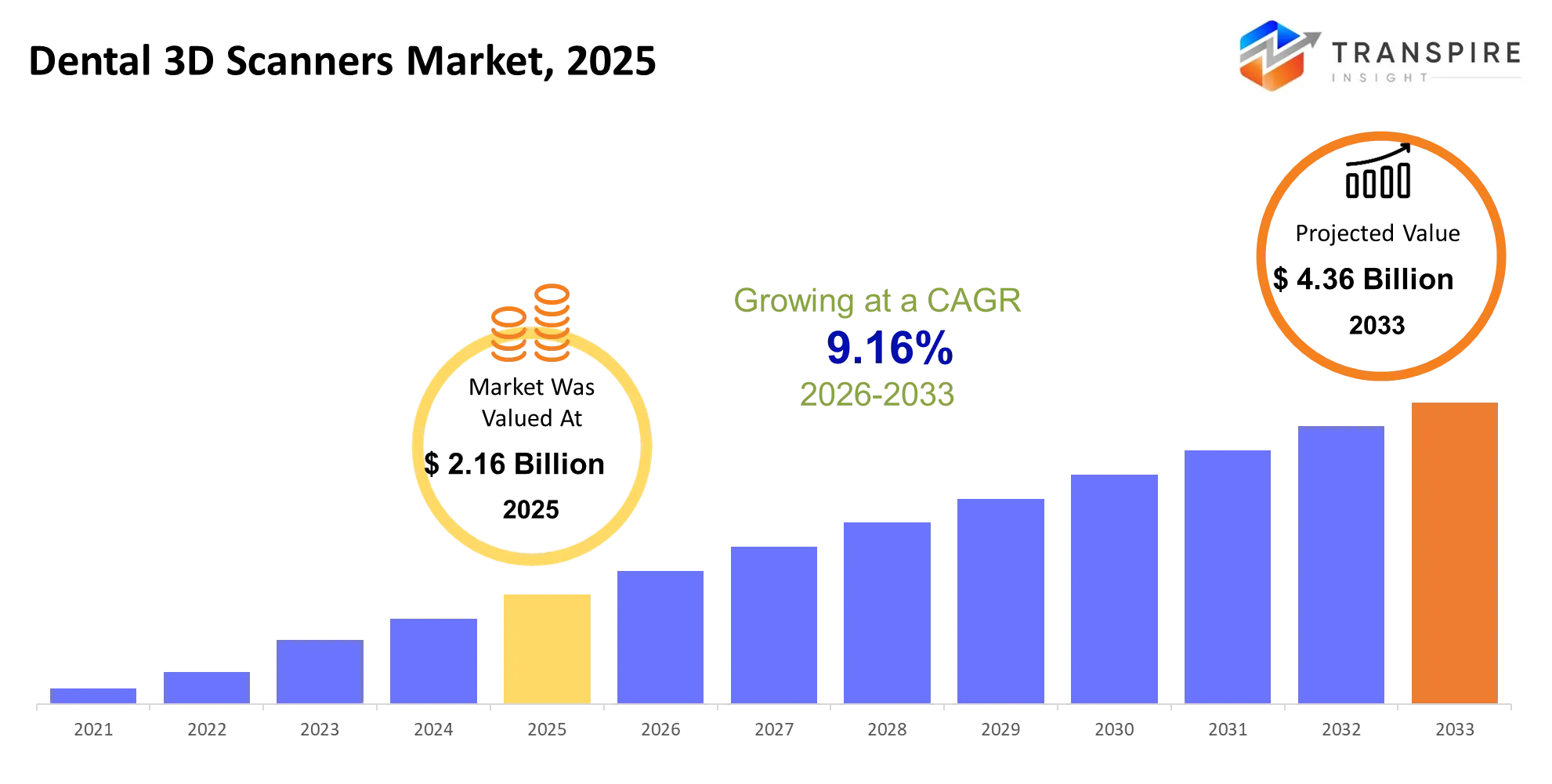
As per Transpire Insight, The Dental 3D Scanners Market size is estimated at USD 2.16 billion in 2025 and is anticipated to reach USD 4.36 billion by 2033, growing at a CAGR of 9.16% from 2026 to 2033.
Dentistry 3D scanners have enabled the replacement of analogue impressions by digital scans of teeth, jaws, and soft tissues. This has allowed dental clinics and laboratories to deliver crowns, aligners, dental implants, and dentures with less need for rework and in less time. In the last three to five years, the market has evolved from scanner-led digitisation into connected, AI-supported treatment workflows. The key structural change has been integrating intraoral scanning with cloud-based platforms, CAD/CAM, 3D printing, and AI-based analysis, enabling same-day restorations and remote collaboration between clinics and laboratories. A real-world driver has been the rapid scale-up of clear-aligner and implant workflows for which precise digital impressions impact fit, speed of production, and patient acceptance. Growth is thus driven by a straightforward cause-and-effect chain: higher scan accuracy reduces manual correction, digital file management cuts laboratory turnaround, and better patient experience encourages regular adoption in all clinics, DSOs, and speciality centres.
Dental 3D Scanners Market Size & Forecast:
- Market Size 2025: USD 2.16 Billion
- Expected Market Value (2033): USD 4.36 Billion
- Forecast CAGR (2026–2033): 9.16%
- Leading Region in 2025: North America
- Fastest Growing Region: Asia Pacific
- Key Company Profiles: 3Shape, Align Technology, Dentsply Sirona, Carestream Dental, Medit, Planmeca, Dental Wings, Shining 3D, Straumann, iTero, Vatech, GC Corporation, Ivoclar, Kulzer, Condor Technologies.
Key Dental 3D Scanners Market Insights:
The market is changing from a single scanner to a digital dentistry platform where software interfaces and clinical value are a consideration when buying a scanner. The ability to connect scans to treatment planning and dental manufacturing, along with validated performance and affordability, is becoming more important for regional adoption.
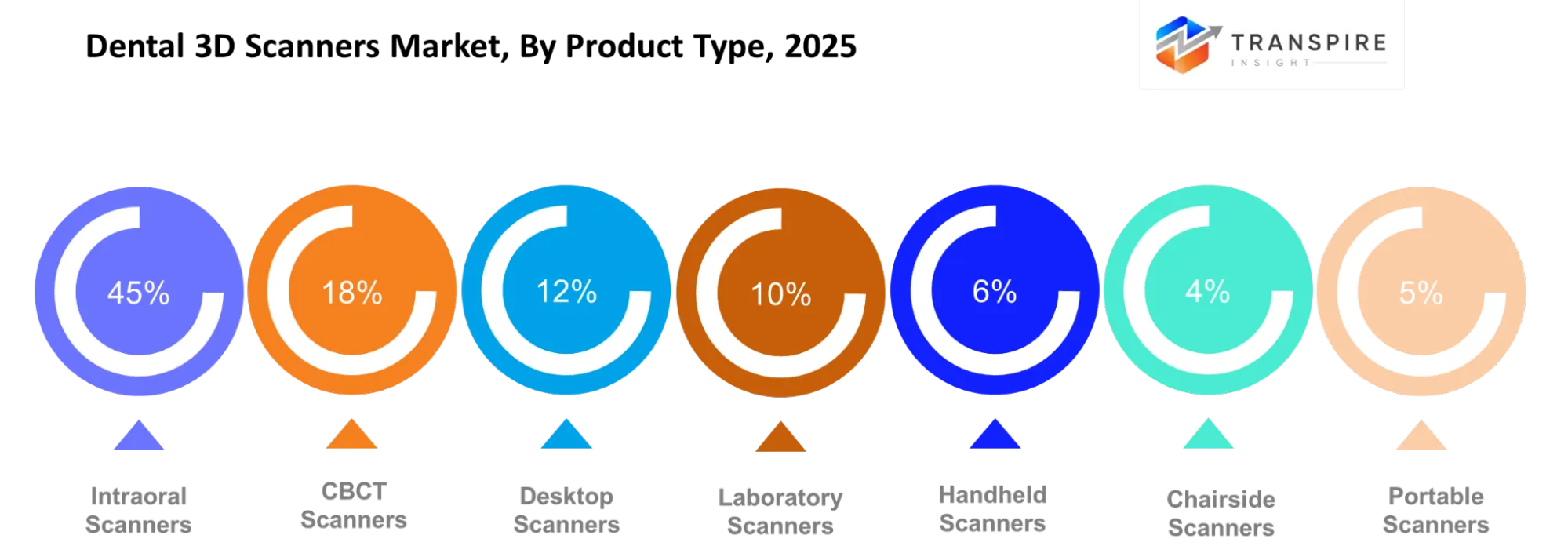
- Intraoral scanners make up 44.80% of the market, with 3Shape and Align Technology's iTero leading the way in the realm of AI-driven treatment simulation and orthodontic workflow integration.
- CBCT scanners account for 18.00% and are joining imaging with implant-planning and surgical-guide software, with Dentsply Sirona, Planmeca and Vatech leading the way.
- Desktops (12.00%) are also growing, and Shining 3D is building on integrated scan-to-print ecosystems in labs.
- Laboratory scanners account for 10.00%, and Dental Wings specialises in open CAD/CAM interoperability and lab production workflows.
- Handheld scanners make up 6.00% of the market, and Carestream Dental is focusing on flexible imaging in clinical and mobile environments.
- Chairside scanners are 4.00% of the total, with both Straumann and Ivoclar expanding on same-day restorative and prosthetic workflows.
- Portable scanners account for 3.00%, and Medit is looking for lightweight, subscription-based hardware for smaller clinics.
- AI Design Service by Shining 3D is now adding automated retainer and crown design with cloud-based workflows, as AI-enabled and wireless scanning is gaining a 10.27% CAGR.
- The technology mix is dominated by optical, structured-light, and hybrid technologies, and cloud, Wi-Fi, and networked connectivity are taking the place of case transfer via USB.
- The digital procurement process is becoming more standardised and is being rolled out faster through multi-site clinical networks, including DSO and speciality centres.
What are the Key Drivers, Restraints, and Opportunities in the Dental 3D Scanners Market?
Driver:
The transition toward digital impressions is a primary growth driver, reinforced by clear-aligner treatment, implant planning, and same-day restorative workflows. As dental practices handle more digitally planned cases, physical impressions create additional handling, shipping, and remaking steps. Intraoral scanning reduces these handoffs and allows clinicians to share patient models electronically with laboratories. This improves workflow efficiency and supports scanner adoption across general dentistry and specialist practices.
Restraint:
High upfront costs remain a barrier, particularly for independent clinics and smaller laboratories. Beyond purchasing the scanner, providers must budget for software subscriptions, compatible computers, staff training, maintenance, and integration with existing practice-management systems. The investment is harder to justify where patient volumes are low, or reimbursement does not adequately reward digital workflows. Accuracy also depends on operator technique, calibration, and reliable capture of difficult anatomical areas.
Opportunity:
AI-enabled scanning, wireless devices, and cloud-based collaboration offer opportunities to expand adoption beyond premium clinics. Automated scan validation can reduce repeat captures, while integrated design and printing workflows can shorten restoration turnaround times. Emerging dental-care infrastructure in India and Southeast Asia offers scope for affordable mid-range systems and subscription-based models. Manufacturers that combine dependable accuracy, open software compatibility, and local training can reach cost-sensitive providers. Regulatory scrutiny of AI-enabled medical software also creates an opportunity for vendors that demonstrate validated performance, transparent limitations, and reliable data governance.
Driver Impact Analysis – Dental 3D Scanners Market
|
Driver |
Relative Impact on Growth (%) |
Geographic Relevance |
Impact Timeline |
Demand Strength |
Growth Mechanism |
Key Beneficiaries |
Major Constraint |
|
Shift from Conventional Impressions to Digital Dentistry |
28% |
North America, Europe, Asia-Pacific |
Short-term (≤2 years) |
High |
Replaces physical impressions with faster, accurate digital scans |
Scanner manufacturers, dental clinics, laboratories |
High equipment costs and staff training requirements |
|
Rising Demand for Orthodontics, Implants, and Cosmetic Dentistry |
24% |
North America, Europe, Asia-Pacific |
Medium-term (2–4 years) |
High |
Enables precise treatment planning and customised dental restorations |
Orthodontists, implant specialists, scanner manufacturers |
Affordability barriers and uneven treatment reimbursement |
|
Integration with CAD/CAM, 3D Printing, and Digital Workflows |
20% |
North America, Europe, East Asia |
Medium-term (2–4 years) |
High |
Connects scanning with automated design and restoration production |
CAD/CAM vendors, dental laboratories, scanner manufacturers |
Interoperability issues and incompatible software ecosystems |
|
Advancements in AI, Wireless Scanning, and Imaging Accuracy |
16% |
North America, Europe, East Asia |
Long-term (≥4 years) |
High |
Improves scan speed, image quality, and workflow efficiency |
Technology developers, dental clinics, equipment manufacturers |
Development costs and clinical validation requirements |
|
Expanding Dental Infrastructure and Digital Investments in Emerging Markets |
12% |
Asia-Pacific, Latin America, Middle East |
Long-term (≥4 years) |
Medium |
Expands scanner installations through clinic modernisation and financing |
Regional distributors, dental service providers, equipment suppliers |
Limited budgets and uneven digital infrastructure |
|
Total |
100% |
— |
— |
— |
— |
— |
— |
What Has the Impact of Artificial Intelligence Been on the Dental 3D Scanners Market?
AI is evolving from tools that primarily capture impressions toward becoming decision aids and workflow automation. In dental 3D scanners, this means the ability to automatically identify margin lines, clean up artefacts, record bite registrations, stitch together multiple scans, eliminate the need for refinements, and increase the success rate for the initial capture. AI can also enable prediction, as algorithms will be able to predict the risks of caries, bone loss, wear on occlusal surfaces, or treatment planning issues by combining scan and radiographic data. Operationally, by using a cloud platform, all members of the team-dentist, specialist, and laboratory- can review cases remotely, thus reducing iteration cycles and supporting same-day restorative or aligner workflows.
The main barrier for AI will be integration and cost. AI-enabled features often require high-priced hardware, ongoing software licenses, compatible CAD/CAM systems, and personnel training. Accuracy may also vary depending on the patient's anatomy and the quality of the scans and images; until challenges with validation, interoperability, and affordability are addressed, AI adoption will probably be limited to larger practices, Dental Service Organisations, and more digital labs.
In September 2026, Pearl launched Second Opinion 3D, bringing its FDA-cleared AI technology for cone-beam computed tomography (CBCT) imaging to general dental practices, with automated anatomical identification, on-demand specialist radiology reports, and insurance-ready documentation.
Key Dental 3D Scanners Market Trends:
The market is shifting from imaging hardware to software-based dentistry workflows. Workflow integration, ease of use, and the ability to convert scans into clinically actionable outputs are becoming key factors in competitive differentiation.
- Chairside scanning is becoming the new norm, enabling fewer remakes and quicker case completion as clinics focus on these outcomes.
- Wireless intraoral scanners are becoming the norm, offering enhanced mobility, ergonomics, and infection-control workflows.
- Manual digital design work is being reduced with AI-assisted margin detection and bite registration.
- Cloud connectivity enables real-time collaboration among clinics, labs and remote specialists.
- Full digital implant and prosthetic workflows are becoming commonplace, with integration with CBCT, CAD/CAM and 3D printing.
- High-volume, repeatable digital scanning is becoming a necessity for orthodontic practices as clear-aligner demand grows.
- DSOs are consolidating scanner purchases, speeding up standardisation across multi-site dental networks.
- Subscription software and AI diagnostics are shifting vendor revenue from hardware sales to services.
- As hardware costs continue to drop, emerging markets are increasingly adopting entry-level and mid-range systems.
- Patient-facing 3D visualisation is enhancing treatment acceptance by making outcomes more understandable.
Dental 3D Scanners Market Segmentation
Product Type:
The intraoral scanners segment has the largest market share of 44.80% in the overall dental 3D scanners market owing to the integration of these systems directly with the orthodontic, restorative, and implant procedures. 3D CBCT scanners make up the second largest market share of 18.00% due to demand for three-dimensional imaging, which is integral to the planning and placement of implants and surgeries. Desktop scanners comprise 12.00%, laboratory scanners 10.00%, handheld scanners 6.00%, chairside scanners 4.00%, portable scanners 3.00%, and other scanners 2.20%. The fastest-growing technological trend is AI-enabled and wireless scanning with a CAGR of 10.27% due to growing demand for mobility, automated scan analysis, and integrated digital workflows.
Technology:
Optical scanning remains central to non-invasive dental surface capture, while laser scanning, structured light, confocal imaging, and photogrammetry serve different precision and reconstruction requirements. AI-assisted scanning automates quality checks, and hybrid systems combine complementary imaging inputs to improve workflow reliability. AI-enabled and wireless scanning is projected to grow at a 10.27% CAGR as clinics prioritise faster capture, fewer rescans, and flexible operatory layouts. Future technology development will focus on consistent performance across complex anatomy, software interoperability, and simpler integration with computer-aided design and manufacturing systems, helping clinics reduce manual processing and improve laboratory coordination.
Application:
Orthodontics uses repeatable digital models for aligner design, progress monitoring, and treatment simulation, supporting more coordinated patient journeys. Restorative dentistry and prosthodontics rely on accurate scans to design crowns, bridges, and dentures while reducing impression-related remakes. Implantology and oral surgery benefit from aligning intraoral models with CBCT data to support anatomical assessment and surgical-guide preparation. Cosmetic dentistry uses digital visualisation for treatment planning, while pediatric dentistry benefits from faster, more comfortable capture. Further adoption will depend on clinical accuracy, workflow efficiency, and integration with planning software and manufacturing systems.
End User:
Dental clinics prioritise rapid chairside capture, patient comfort, and integration with treatment-planning software to reduce appointment friction. Dental laboratories require precise digital inputs that minimise design corrections and improve coordination with referring practices. Hospitals and speciality dental centres use scanning alongside advanced imaging for complex restorative, implant, and surgical cases. Academic institutions and research institutes support professional training, clinical validation, and technology evaluation. Dental service organisations can standardise scanning protocols across multiple locations, improving consistency and purchasing efficiency. Future adoption will depend on staff competency, equipment utilisation, reliable technical support, and demonstrable reductions in workflow costs.
Connectivity:
Wired and USB-connected scanners remain relevant where stable connections and established workstation setups are priorities. Wireless devices offer greater movement around the operatory, reduce cable management, and support flexible scanning positions. Wi-Fi and networked systems facilitate case transfers, while cloud-connected platforms enable collaboration between clinicians, specialists, and laboratories across locations. Bluetooth may support selected peripheral connections, depending on device design and compatibility. As connectivity expands, cybersecurity, patient-data protection, network reliability, and integration with practice-management software become more important. Vendors that combine dependable transmission with open workflows can reduce administrative friction and strengthen adoption.
Price Category:
Entry-level scanners appeal to budget-conscious practices transitioning from conventional impressions, while mid-range systems balance affordability with practical clinical functionality. Premium and professional devices target clinics requiring advanced imaging, software capabilities, and high case throughput. Enterprise solutions support multi-site dental organisations through standardised workflows, centralised management, and scalable deployment. Laboratory-grade systems prioritise precision, repeatability, and integration with digital manufacturing, whereas speciality scanners address particular clinical or technical requirements. Future purchasing decisions will increasingly reflect total ownership costs, including subscriptions, training, maintenance, and upgrades. Flexible financing and dependable after-sales support can improve accessibility without compromising clinical performance or long-term operational value.
What are the Key Use Cases Driving the Dental 3D Scanners Market?
The core use case is digital impression capture for intraoral scanners, which hold a 44.80% market share. Clinics use these scans for crowns, bridges, veneers, clear aligners, and implant planning, where accurate digital models reduce remakes and support chairside or laboratory-based CAD/CAM production.
Expanding applications include CBCT-guided implant placement, digital dentures, orthodontic monitoring, and full-arch rehabilitation. Desktop and laboratory scanners support model digitisation, while AI-enabled wireless systems allow faster case transfer and remote collaboration between clinics and production partners.
Emerging use cases include AI-based caries and periodontal-risk assessment, cloud-based treatment simulation, 3D-printed surgical guides, and preventive monitoring in DSO networks and speciality dental centres.
|
Report Metrics |
Details |
|
Market size value in 2025 |
USD 2.16 Billion |
|
Market size value in 2026 |
USD 2.36 Billion |
|
Revenue forecast in 2033 |
USD 4.36 Billion |
|
Growth rate |
CAGR of 9.16% from 2026 to 2033 |
|
Base year |
2025 |
|
Historical data |
2021 - 2024 |
|
Forecast period |
2026 - 2033 |
|
Report coverage |
Revenue forecast, competitive landscape, growth factors, and trends |
|
Regional scope |
United States; Canada; Mexico; United Kingdom; Germany; France; Italy; Spain; Denmark; Sweden; Norway; China; Japan; India; Australia; South Korea; Thailand; Brazil; Argentina; South Africa; Saudi Arabia; United Arab Emirates |
|
Key companies profiled |
3Shape, Align Technology, Dentsply Sirona, Carestream Dental, Medit, Planmeca, Dental Wings, Shining 3D, Straumann, iTero, Vatech, GC Corporation, Ivoclar, Kulzer, Condor Technologies. |
|
Customization scope |
Free report customization (country, regional & segment scope). Available customized purchase options to meet your exact research needs. |
|
Report Segmentation |
Product Type (Intraoral Scanners, Cone Beam CT Scanners, Desktop Scanners, Laboratory Scanners, Handheld Scanners, Chairside Scanners, Portable Scanners); Technology (Optical Scanning, Laser Scanning, Structured Light, Confocal Imaging, Photogrammetry, AI-Assisted Scanning, Hybrid Scanning); Application (Orthodontics, Restorative Dentistry, Implantology, Prosthodontics, Oral Surgery, Cosmetic Dentistry, Pediatric Dentistry); End User (Dental Clinics, Dental Laboratories, Hospitals, Academic Institutions, Research Institutes, Specialty Dental Centers, DSOs); Connectivity (Wired, Wireless, Cloud-Connected, USB, Wi-Fi, Bluetooth, Networked); Price Category (Entry-Level, Mid-Range, Premium, Professional, Enterprise, Laboratory Grade, Specialty). |
Which Regions are Driving the Dental 3D Scanners Market Growth?
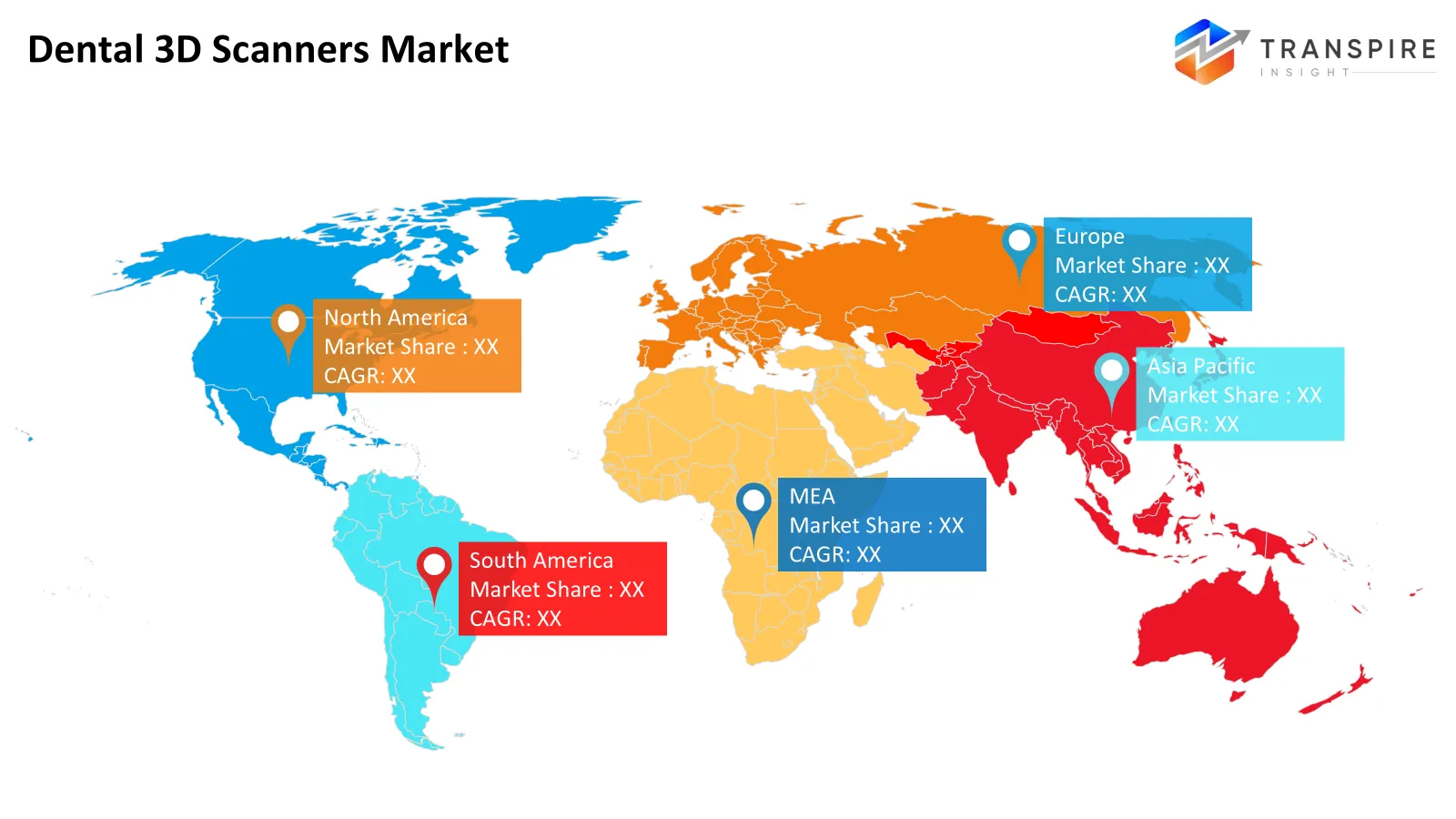
North America dominates the market with a 38.10% share, owing to high levels of penetration of digital dentistry in restorative, orthodontic, and implantology practices. High purchasing power of DSS, robust CAD/CAM and 3Dprinting capacity, existing reimbursement pathways, and adoption of digitally driven AI-enabled software by dentists establish demand pull, which, in turn, creates a virtuous circle of adoption. Further, the acceptance of validated dental AI tools by regulatory bodies also motivates vendors to roll out the latest scanning and diagnostic solutions initially in the United States and Canada.
In September 2026, Orca Dental AI and Planet DDS announced a strategic partnership to integrate CephX's AI-powered services into the Cloud 9 platform. This collaboration provides orthodontists and large dental support organisations (DSOs) with real-time, cloud-based cephalometric analysis and advanced 3D diagnostic tools directly within their existing workflows.
Europe has a 29.00% market share and a growth model of stability, unlike North America. The primary markets of Germany, France, Italy, Spain and the United Kingdom are still characterised by well-established networks of dental laboratories, mature healthcare systems and advanced precision manufacturing. While not yet as DSO-led as North America, volume purchasing support comes from laboratory digitisation, cross-border CAD/CAM workflow and demand for high-value prosthetic and implant workflows.
In February 2026, the European laboratory consolidator Corus expanded its cross-border footprint through the strategic acquisition of Byrnes Dental Lab alongside five subsequent UK laboratories. This rapid consolidation accelerates regional digitisation by standardising open CAD/CAM dental solutions.
https://www.dental-tribune.com/news/integrating-leading-dental-laboratories-across-europe/
Asia Pacific, accounting for 23.00%, is expected to exhibit the fastest growth due to recent growth in dental tourism, new investments in private clinics, and inward manufacturing investments from players such as Shining 3D. China, Japan, South Korea, India, and Australia all hold potential for growth, with affordable scanners, cloud services, and 3D printing helping to bring new markets into the mid-tier clinic and lab segments. In contrast, Latin America holds 5.00% and Middle East & Africa 4.90%, and these regions will depend more on affordable pricing, training, and distributor service coverage than on an AI ecosystem.
In October 2026, SprintRay expanded its digital dentistry platform by unveiling the "Foundation" wireless intraoral scanner alongside the "NanoPrint" compact chairside 3D printer and an expanded materials partnership with GC Corporation.
https://finance.yahoo.com/healthcare/articles/sprintray-expands-beyond-3d-printing-133600427.html
Who are the Key Players in the Dental 3D Scanners Market, and how do they compete?
The race is on for control of the wider ecosystem, not just the scanner: 3Shape and Align Technology's iTero lead with software subscriptions, AI enhancements, cloud teamwork, and processing scanner data for milling and 3D printing, but much of this is about locking in customers and providers into software subscriptions that generate recurring revenue over years. Hardware accuracy still matters, but long-term market position comes from repeated sales of workhorse software. Suppliers all advocate native or third-party ecosystems as integrated platforms, often incorporating CBCT as well as intraoral; they are competing on the ability to keep the entire clinical workflow within one contractor; and via AI, automation, and new data sources - both hardware and software. Suppliers competing solely on hardware are Medit and Shining 3D, competing on affordability, speed of iteration, software openness, and subscription-based licensing. Other suppliers, Dentsply Sirona, Planmeca, Carestream Dental, Vatech, and Straumann, are using integrated platform strategies: CBCT, intraoral imaging, software, implants, and planning to capture the workflow. Dental Wings, GC Corporation, Ivoclar, Kulzer, and Condor Technologies, meanwhile, are optimising laboratory interoperability, materials integration, and specialised digital prosthetics workflow.
Key Players are:
- 3Shape
- Align Technology
- Dentsply Sirona
- Carestream Dental
- Medit
- Planmeca
- Dental Wings
- Shining 3D
- Straumann
- iTero
- Vatech
- GC Corporation
- Ivoclar
- Kulzer
- Condor Technologies
Dental 3D Scanners Market — Enhanced Competitive Benchmarking
|
Company |
Est. Revenue Share Range |
Key Offerings |
Strategic Positioning |
Geographic Strength |
Technology Focus |
|
Dentsply Sirona |
Estimated 12–18% |
Primescan, Primescan 2, CEREC digital scanning workflows |
Integrated chairside scanning and restorative dentistry ecosystem |
North America, Europe, Asia Pacific |
High-speed optical capture and cloud-connected digital workflows |
|
3Shape A/S |
Estimated 10–16% |
TRIOS 5, TRIOS 6, E-series laboratory scanners, Dental System |
Premium scanning specialist with comprehensive open digital workflows |
Europe, North America, Asia Pacific |
AI-assisted scanning, optical capture, and advanced CAD/CAM integration |
|
Align Technology |
Estimated 8–14% |
iTero Element 5D, iTero Lumina, iTero Element Flex |
Orthodontic ecosystem differentiation and restorative workflow expansion |
North America, Europe, Asia Pacific |
Intraoral imaging, visualization, and Invisalign workflow integration |
|
Planmeca Oy |
Estimated 6–10% |
Planmeca Emerald S, Planmeca Onyx, Planmeca FIT |
Integrated imaging, scanning, and chairside CAD/CAM solutions |
Europe, North America, Asia Pacific |
Optical scanning, digital impression capture, and connected imaging systems |
|
Medit Corp. |
Estimated 5–9% |
Medit i900, i900 Classic, i700 Wireless, Medit Link |
Value-oriented performance with flexible digital interoperability |
Asia Pacific, North America, Europe |
Wireless scanning, AI-assisted processing, and open data exchange |
|
Envista Holdings (DEXIS) |
Estimated 4–8% |
DEXIS IS 3800, IS 3700, IS 3600 scanner portfolio |
Dental imaging distribution and connected digital practice workflows |
North America, Europe, Asia Pacific |
Optical impression capture and integrated imaging software |
|
SHINING 3D |
Estimated 4–8% |
Aoralscan Elite, Aoralscan 3, Aoralscan 3 Wireless |
Competitive pricing with expanding intraoral and specialist scanning capabilities |
Asia Pacific, Europe, North America |
Structured-light scanning, photogrammetry, and wireless capture |
|
Vatech |
Estimated 3–7% |
Green X CBCT systems, Smart Plus imaging systems, dental 3D imaging solutions |
Imaging-led competition supported by established dental equipment channels |
Asia Pacific, North America, Europe |
Cone-beam computed tomography and 3D maxillofacial reconstruction |
|
Straumann Group |
Estimated 3–6% |
Virtuo Vivo, Virtuo Vivo 2 intraoral scanning portfolio, digital implant workflows |
Implant-focused digital dentistry and restorative workflow integration |
Europe, North America, Asia Pacific |
Implant scanning, digital prosthetic workflows, and treatment planning |
|
Amann Girrbach |
Estimated 2–5% |
Ceramill Map 600+, Ceramill Map FX, Ceramill digital workflows |
Laboratory-focused precision scanning and integrated restoration production |
Europe, North America, Asia Pacific |
Blue-light scanning, automated laboratory digitization, and CAD/CAM integration |
Recent Development News
- In June 2026, Planmeca made its Planmeca Onyx intraoral scanner available for orders, offering wired and wireless operation alongside integration with the Romexis software platform. The launch strengthens digital dentistry workflows by connecting precise intraoral scanning with treatment planning, restoration design, and dental 3D printing. http://prod.promodel.planmeca.com/news-and-events/newsroom/2026/planmecas-new-intraoral-scanner-now-available--planmeca-onyx-offers-unforeseen-flexibility-for-every-clinic
- In October 2026, SprintRay unveiled its Foundation wireless intraoral scanner and ScanOS platform at 3DNext 2026. The launch connects digital impression capture with cloud-based design and dental 3D printing workflows, helping practices streamline the transition from scanning to production. https://www.prnewswire.com/news-releases/sprintray-expands-beyond-3d-printing-with-connected-digital-dentistry-platform-unveiled-at-3dnext-2026-302906373.html
- In February 2026, SHINING 3D Dental launched the Aoralscan Elf, a next-generation lightweight intraoral 3D scanner. This ergonomic 106-gram device integrates the company's proprietary IntelliBite AI occlusion optimisation and an Intelligent Plaque Management Suite. The launch improves clinical precision and workflow efficiency for clinicians by removing heavy physical hardware restrictions while delivering data-driven preventive care data directly into digital restoration systems. https://www.shining3ddental.com/news-post/aoralscan-elf-by-shining-3d-dental-a-new-era-of-smart-intraoral-scanning-for-digital-dentistry
What Strategic Insights Define the Future of the Dental 3D Scanners Market?
The market is shifting toward integrated digital dentistry, with scanners becoming the primary step in diagnosis, treatment planning, and restoration fabrication. Scanning time is no longer relevant; vendors should lead with measurable real-world workflow benefits, such as fewer repeat scans, faster case transfer, and assured restoration fit. A hidden risk is ecosystem dependence: proprietary software, recurring subscription fees, and limited file exports create all-in costs over the system's life, preventing clinic uptake and upgrades. Emerging markets such as Asia Pacific, where low-cost systems and local training & service networks make digital affordable, can also leverage multimodal integration with CBCT for clinical benefits in implantology and complex restorations, and AI in scan validity checks and restoration design. Innovations must be led by a clear regulatory, clinical validation, and security roadmap with software improvements. Vendors should develop interoperable platforms, flexible pricing, and evidence-based AI tools to broaden uptake while maintaining customer loyalty and sustainable profits.
Key Segmentations are:
Product Type
- Intraoral Scanners
- Cone Beam CT Scanners
- Desktop Scanners
- Laboratory Scanners
- Handheld Scanners
- Chairside Scanners
- Portable Scanners
Technology
- Optical Scanning
- Laser Scanning
- Structured Light
- Confocal Imaging
- Photogrammetry
- AI-Assisted Scanning
- Hybrid Scanning
Application
- Orthodontics
- Restorative Dentistry
- Implantology
- Prosthodontics
- Oral Surgery
- Cosmetic Dentistry
- Pediatric Dentistry
End User
- Dental Clinics
- Dental Laboratories
- Hospitals
- Academic Institutions
- Research Institutes
- Specialty Dental Centres
- DSOs
Connectivity
- Wired
- Wireless
- Cloud-Connected
- USB
- Wi-Fi
- Bluetooth
- Networked
Price Category
- Entry-Level
- Mid-Range
- Premium
- Professional
- Enterprise
- Laboratory Grade
- Speciality
By Regional Analysis
North America
- US
- Canada
- Mexico
Europe
- Germany
- UK
- France
- Italy
- Spain
- Russia
- Rest of Europe
Asia Pacific
- China
- Japan
- India
- South Korea
- Australia
- Rest of Asia Pacific
South America
- Brazil
- Argentina
- Rest of South America
Middle East & Africa
- UAE
- Saudi Arabia
- Qatar
- South Africa
- Rest of the Middle East & Africa
Frequently Asked Questions
Find quick answers to common questions.
The dental 3D scanners market size was valued at USD 2.16 billion in 2025 and is poised to reach USD 4.36 billion by 2033, expanding at a 9.16% CAGR.
Key segments for the dental 3D scanners market are Product Type (Intraoral Scanners, Cone Beam CT Scanners, Desktop Scanners, Laboratory Scanners, Handheld Scanners, Chairside Scanners, Portable Scanners); Technology (Optical Scanning, Laser Scanning, Structured Light, Confocal Imaging, Photogrammetry, AI-Assisted Scanning, Hybrid Scanning); Application (Orthodontics, Restorative Dentistry, Implantology, Prosthodontics, Oral Surgery, Cosmetic Dentistry, Pediatric Dentistry); End User (Dental Clinics, Dental Laboratories, Hospitals, Academic Institutions, Research Institutes, Specialty Dental Centers, DSOs); Connectivity (Wired, Wireless, Cloud-Connected, USB, Wi-Fi, Bluetooth, Networked); Price Category (Entry-Level, Mid-Range, Premium, Professional, Enterprise, Laboratory Grade, Specialty).
Growth is primarily driven by the shift from conventional impressions to digital dentistry, rising demand for cosmetic and orthodontic treatments, increasing implant procedures, AI-enabled scanning, and integration with CAD/CAM systems and 3D printing.
The dental 3D scanners market is led by major manufacturers, including 3Shape, Align Technology, Dentsply Sirona, Carestream Dental, Medit, Planmeca, Dental Wings, Shining 3D, Straumann, iTero, Vatech, GC Corporation, Ivoclar, Kulzer, and Condor Technologies.
North America holds a 38.10% market share, supported by advanced dental infrastructure, early adoption of digital dentistry, strong demand for cosmetic and restorative procedures, and established clinical technology ecosystems.
Key opportunities include affordable wireless and AI-enabled scanners, cloud-connected dental workflows, integration with 3D printing, and expansion across emerging Asia Pacific markets.
- 3Shape
- Align Technology
- Dentsply Sirona
- Carestream Dental
- Medit
- Planmeca
- Dental Wings
- Shining 3D
- Straumann
- iTero
- Vatech
- GC Corporation
- Ivoclar
- Kulzer
- Condor Technologies
About the Authors

Pankaj Ghogare Patil
I am Pankaj Ghogare Patil, a Senior Research Analyst at Transpire Insight, specializing in the Pharmaceutical, Chemicals & Materials, Healthcare IT, and Biotechnology industry. My expertise lies in conducting comprehensive market research, analyzing industry trends, evaluating competitive landscapes, and translating complex data into actionable insights. At Transpire Insight, I closely follow emerging technologies, regulatory developments, and market innovations to create accurate, well-researched, and informative content that helps businesses and professionals make informed decisions. I am committed to producing credible, evidence-based articles that reflect industry best practices while making technical topics accessible and valuable for a broad audience.

Chakradhar Khansole
Chakradhar serves as the Research Director at Transpire Insight, bringing over 8 years of experience in technology, innovation, and strategic market intelligence. He specializes in transforming complex market data into actionable business insights that enable organizations to make informed, growth-oriented decisions. Recognized for his strategic vision and analytical expertise, Chakradhar leads high-impact research initiatives, delivering comprehensive market assessments, competitive intelligence, and forward-looking industry analysis.
Recently Published Reports
-
Apr 2026
AI in Diabetic Retinopathy Market
AI in Diabetic Retinopathy Market Size, Share & Analysis Report By Type (Screening AI Systems, Diagnostic AI Systems, and Predictive AI Models), By Application Segment (Hospitals, Ophthalmology Clinics, Diagnostic Centers, and Research and Development), and Geography (North America, Europe, Asia-Pacific, Middle East and Africa, South and Central America), 2021 - 2031
-
Apr 2026
Psychometric Tests Market
Psychometric Tests Market Size, Share & Analysis Report By Type (Personality Tests, Ability/Aptitude Tests, Skill/Knowledge Tests, and Others), By Application (Talent Acquisition and Talent Management), and Geography (North America, Europe, Asia-Pacific, Middle East and Africa, South and Central America), 2021 – 2031
-
Apr 2026
Rare Biological Sample Collection Market
Rare Biological Sample Collection Market Size, Share & Analysis Report By Type (Isolation Kits & Reagent, Blood Collection Tubes, and Others), By Application (Oncology, Transcriptomics, Pharmacogenomics, and Others), and Geography (North America, Europe, Asia-Pacific, Middle East and Africa, South and Central America), 2021 – 2031
-
Jul 2026
Diabetic Retinopathy Market
Diabetic Retinopathy Market Size, Share & Analysis Report By Type (Proliferative Diabetic Retinopathy, and Diabetic Macular Edema (DME)), By Treatment Type (Anti VEGF Drug, Steroid Implants, Laser Surgeries, and Vitrectomy), and Geography (North America, Europe, Asia-Pacific, Middle East and Africa, South and Central America), 2021 – 2031
Our Clients