
Global Ready to Drink Beverages Market Size & Forecast:
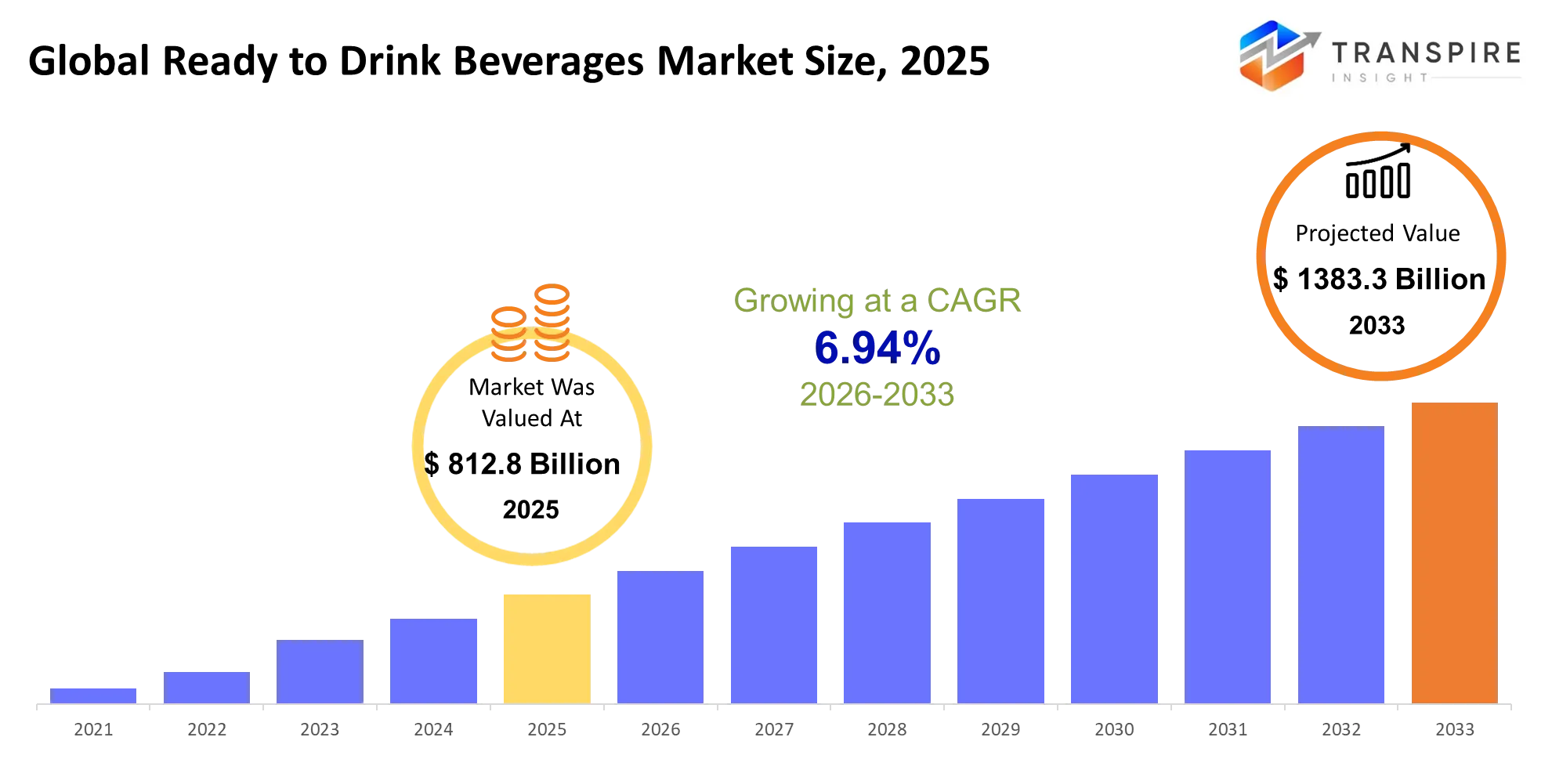
- Global Ready to Drink Beverages Market Size 2025: USD 812.8 Billion
- Global Ready to Drink Beverages Market Size 2033: USD 1383.3 Billion
- Global Ready to Drink Beverages Market CAGR: 6.94%
- Global Ready to Drink Beverages Market Segments: By Type (Energy Drinks, Tea-based Beverages, Coffee-based Beverages, Functional Drinks, Dairy-based Drinks, Alcoholic RTD Drinks, Others); By Application (Convenience Stores, Supermarkets, Online Retail, Foodservice, Others); By End-User (Adults, Teenagers, Fitness Consumers, Working Professionals, Others); By Packaging (Cans, Bottles, Cartons, Others)
Global Ready to Drink Beverages Market Summary:
As per Transpire Insight Analysis, the global ready-to-drink beverages market size is estimated at USD 812.8 billion in 2025 and is anticipated to reach USD 1383.3 billion by 2033, growing at a CAGR of 6.94% from 2026 to 2033.
The RTD beverages market has shifted from a ‘convenience-focused’ sector to a lifestyle-centric category centred on health, energy boosts, hydration, and a refreshing experience.RTD now encompasses RTD tea, energy drink, iced tea, RTD coffee, plant-based, conventional dairy drink, fortifier, and premium drinks in this category sold via conventional distribution channels, ecommerce and impulse. In the past five years, consumers have been moving towards RTDs with fewer ingredients, cleaner labels, better-for-me choices, and benefits such as cognitive health, protein, and immunity. Significant structural changes include the switch from the traditional sugary beverages market to functional and low-calorie RTDs backed by newer food formulations and a better understanding of labelling standards. The impact of the pandemic, leading to preventative health-related behaviour and an increasing number of individuals using portable, ready-to-consume beverages to replace snacking and homemade concoctions, is the key on-the-ground change, driving manufacturers to focus on healthier products as brand loyalties rise and product penetrations increase at an exponential rate across the planet.
Key Global Ready to Drink Beverages Market Insights:
'Ready to Drink Beverages' Market to Shift from Convenience to Higher Functionality and Wellness, With Key Players Offering Premium Experiences. Global companies re-evaluate competitive strategy with ingredient innovations, packaging and direct-to-consumer engagement strategies in mind.
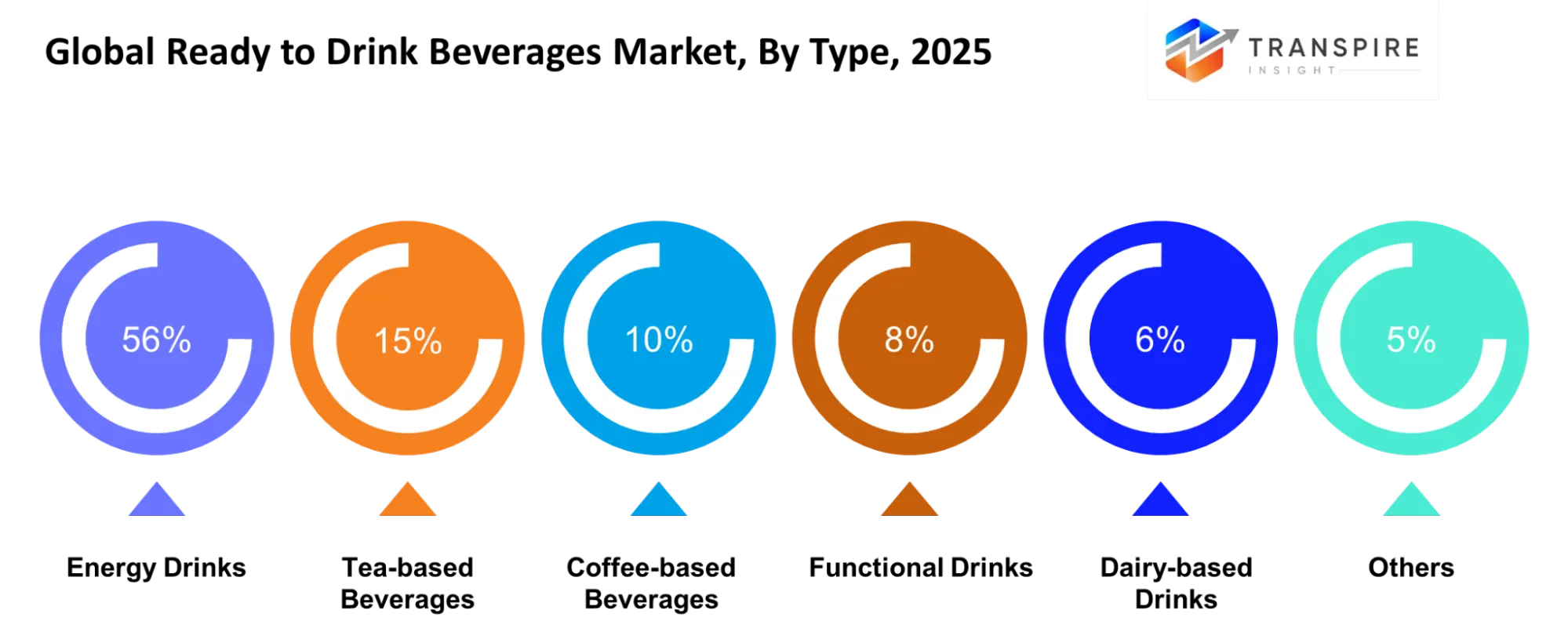
- Energy Drinks account for 56% share, as PepsiCo, Red Bull and Monster Beverage are growing their sugar-free lines to cater for the demand for longer-lasting energy and performance.
- Tea based Beverages has 15% share, and both Coca-Cola and Suntory are launching botanical and low-calorie options to match clean-label consumer demand.
- Coffee-based Beverages account for 10% of the market, and Starbucks and Nestlé have capitalised on high-quality RTD coffee formats as café quality convenience trends.
- Functional Drinks account for 8% share and are growing at 13.8% CAGR, with Danone and Yakult pushing for probiotic and immunity products for preventive wellness.
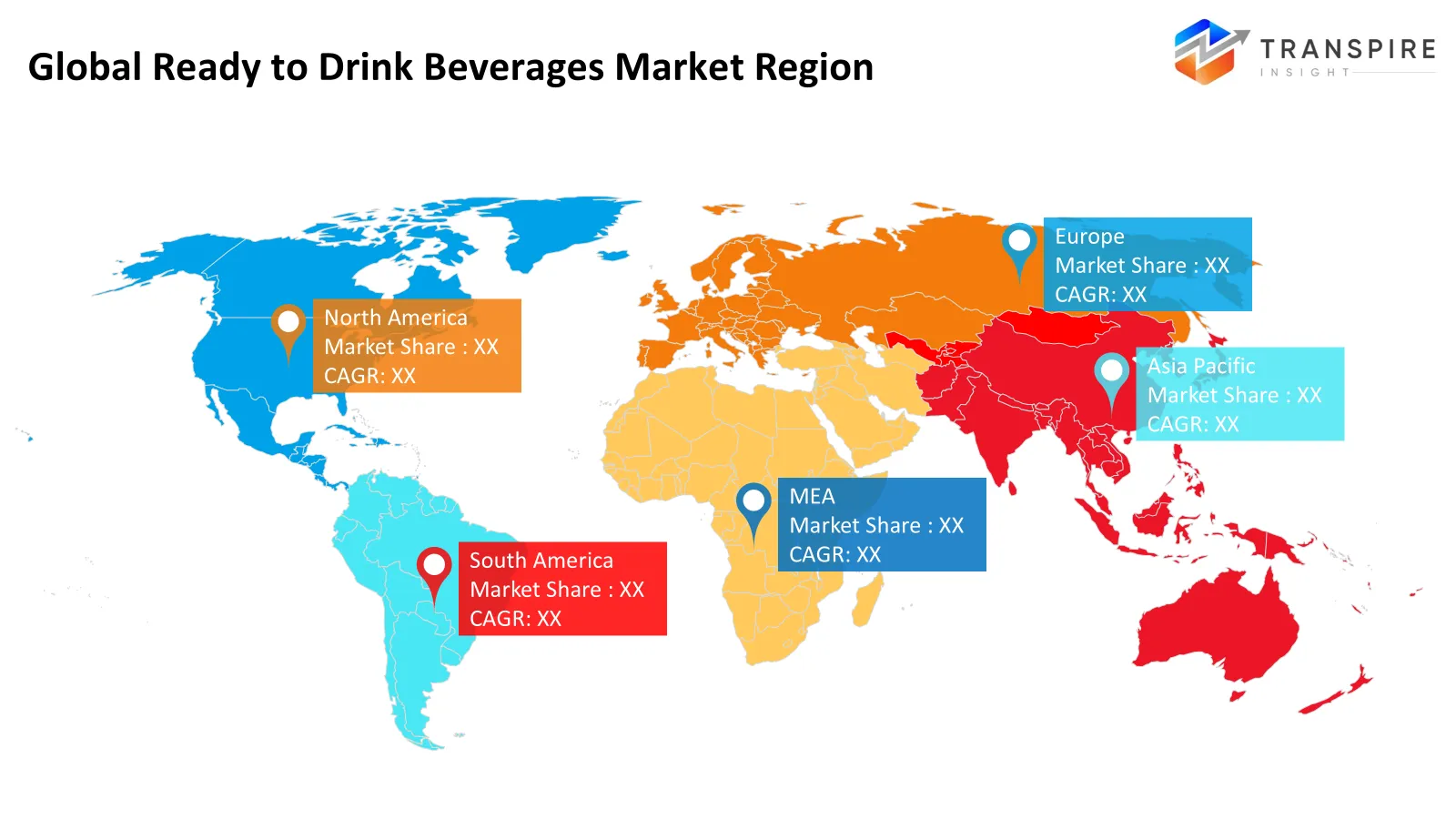
- North America has 37% share of global revenue and is bolstered by robust retail networks and the swift uptake of premium and practical beverage innovations.
- Asia Pacific accounts for 33% and shows a CAGR of 12.9%, with companies going local with flavours and tapping into the growth of e-commerce to access younger consumers.
- Oatly and other innovators continue to produce plant-based products to satisfy changing dietary desires, with Dairy-based Drinks accounting for 6% share.
- Big beverage producers are implementing AI-powered demand forecasting and smart supply-chain systems to boost inventory accuracy, minimise waste and speed up product launches.
What are the Key Drivers, Restraints, and Opportunities in the Global Ready to Drink Beverages Market?
Driver:
Another is the strong demand for functional beverages with specific added value over basic rehydration. A rise in popularity of fitness, healthy habits and dietary support means consumers now look for a boost from their RTDs – whether that includes additional protein, probiotics, vitamins, adaptogens or plant-based energy solutions. This increased appetite after the pandemic (when immunity became top of mind) means a greater proportion of health-conscious beverage buyers from several age groups will be drawn to RTDs offering higher added value, which translates to higher margin opportunities for many brands in this growing sector.
In May 2026, PepsiCo launched its "Pure Leaf Mental Focus" functional ready-to-drink sparkling iced tea formulated with L-theanine and natural black tea caffeine. The product is launched in partnership with gymnast Jordan Chiles.
Restraint:
Fluctuation in raw material and packaging cost: Raw materials such as coffee and tea extracts, fruits, milk proteins and aluminium for the packaging are prone to climate changes, geopolitical tensions and supply disruptions. These remain structural issues due to the global sourcing model manufacturers often employ, and a lack of direct influence over agricultural output. High input prices reduce profit margins or increase prices, affecting affordability.
Opportunity:
Personalised and functional nutrition drinks pose one of the largest areas for future growth. The intersection of enhanced ingredient technology, digital consumer intelligence and science-backed product development will help brands cater to the demand for specific RTD solutions that focus on managing energy levels, digestive health, sports and muscle recovery and healthy ageing. The area that offers an opportunity is investing in plant-based products and new regions in the Asia Pacific, Latin America and the Middle East. Brands that can reach a balance between the health-oriented, sustainability-oriented and flavours locally relevant will drive significant opportunities in future.
What Has the Impact of Artificial Intelligence Been on the Global Ready to Drink Beverages Market?
As artificial intelligence becomes more prevalent, many companies in the ready-to-drink beverages industry are using artificial intelligence to optimise how they plan new products, how they develop new products and supply chain logistics. Beverage companies analyse data on the basis of customer satisfaction and to identify market trends of the different flavours. This leads to faster new products. AI’s automated capabilities streamline quality checks and support preventative maintenance and inventory management by providing insights into demand, consumption habits, seasonal variations and promotion effects. Within manufacturing facilities, AI helps brands sustain a uniform product quality standard while diminishing production costs and interruptions. AI has provided remarkable advances when forecasting demand for such seasonally driven items as energy drinks, coffee, and flavoured beverages. Personalised campaigns leveraging AI also enable brand promotions better tailored toward enhancing the purchasing experience and purchase rates of individual consumers.
As one would expect, these advanced functions do face the same adoption constraints with beverage entrepreneurs that present themselves in other industries; cost to install the software program, as well as complexity in merging files, in combination with the requirement to possess a sturdy consumer database, pose considerable hurdles, particularly when it comes to smaller organisations in the beverage industry. In January 2026, Krones highlighted the industry-wide transition toward using predictive AI-driven digital twins to process real-time factory data within beverage manufacturing setups. This technological integration optimises production line filling and packaging configurations while eliminating costly warehouse supply chain interruptions and localised inventory imbalances.
Key Global Ready to Drink Beverages Market Trends:
RTD beverages are now being marketed as more than just a drink of water. The focus of innovation is shifting towards functionality, personalisation, sustainability, and premium consumption experiences.
- Low sugar and sugar-free options have hit the market because consumers are keenly aware of calories and metabolic health.
- It has come a long way from convenience products to speciality coffee and flavoured options at the café.
- Plant-based RTD beverages are no longer just about replacing dairy but also about whole nutrition and protein-rich beverages.
- As brands switch to recyclable packaging materials and lighten packages, the number of sustainable packaging initiatives has risen.
- E-commerce channels are vital growth drivers, allowing direct engagement with consumers and sales of beverages through subscriptions.
- AI-based product development is reducing the innovation time, as it can pick up on trends in ingredient and flavour preferences before traditional methods.
- There is a growing preference for “clean label” drinks that are known for their ingredients and lack of artificial additives.
- Organic, craft-inspired and limited-edition beverage portfolios have been introduced as a result of premiumization trends.
- Regional flavour localisation strategies are growing with companies adapting their products to the cultural and taste preferences in the region.
Global Ready to Drink Beverages Market Segmentation
By Type:
Energy drinks hold the largest share (56%) in the overall market of the global market size and demand for drinks with readily available and refreshing tastes. Coffee-based beverages hold a market share of 10% for the global Ready-to-Drink beverages industry, and tea-based beverages hold a market share of 15%. Functional drinks captured 8% market share and are projected to grow with a remarkable CAGR of 13.8% due to their increasing importance for health and wellness purposes.
By Application:
Supermarkets and convenience stores are the dominant distribution channels thanks to the high product visibility and tendency for impulse purchases. E-commerce is on a steady rise with a high share for online RTD purchases and beverage subscription services, while the foodservice sector caters to premium indulgence and on-the-go consumption patterns.
By End-User:
Adults and professionals constitute the biggest consumer base due to their busy lifestyles and need for convenient options. Fitness enthusiasts often switch to protein-rich and functional RTD beverages, and teen consumers drive the sales of the energy drinks segment.
By Packaging:
Cans remain popular due to their convenience and product-protecting qualities. Bottles still hold a significant place, particularly for bigger consumption volumes, and packs and cartons are more popular for RTD products targeting dairy and health-based RTDs.
What are the Key Use Cases Driving the Global Ready to Drink Beverages Market?
The main application is for ready-to-consume beverage products for everyday use, specifically in energy drinks, ready-to-drink coffee & tea categories. These drinks are consumed by beverage consumers as a grab-and-go beverage to refresh and to provide energy while at work/office, commuting, travelling, studying or reading. Further Applications: Sports nutrition, wellness supplements & meal replacements.
Functional beverages for athletes as they contain functional ingredients like protein, probiotics, vitamins, as well as minerals and electrolytes that assist in sports training as well as wellness.
The ready-to-drink beverages are used in fitness training. Health supplements used for overall health and well-being.
|
Report Metrics |
Details |
|
Market size value in 2025 |
USD 812.8 Billion |
|
Market size value in 2026 |
USD 864.5 Billion |
|
Revenue forecast in 2033 |
USD 1383.2 Billion |
|
Growth rate |
CAGR of 6.94% from 2026 to 2033 |
|
Base year |
2025 |
|
Historical data |
2021 - 2024 |
|
Forecast period |
2026 - 2033 |
|
Report coverage |
Revenue forecast, competitive landscape, growth factors, and trends |
|
Regional scope |
United States; Canada; Mexico; United Kingdom; Germany; France; Italy; Spain; Denmark; Sweden; Norway; China; Japan; India; Australia; South Korea; Thailand; Brazil; Argentina; South Africa; Saudi Arabia; United Arab Emirates |
|
Key company profiled |
PepsiCo, Coca-Cola, Red Bull, Nestlé, Monster Beverage, Suntory, Danone, Keurig Dr Pepper, Starbucks, Unilever, Asahi Group, Kirin Holdings, Arizona Beverages, Oatly, Yakult. |
|
Customization scope |
Free report customisation (country, regional & segment scope). Avail customised purchase options to meet your exact research needs. |
|
Report Segmentation |
By Type (Energy Drinks, Tea-based Beverages, Coffee-based Beverages, Functional Drinks, Dairy-based Drinks, Alcoholic RTD Drinks, Others); By Application (Convenience Stores, Supermarkets, Online Retail, Foodservice, Others); By End-User (Adults, Teenagers, Fitness Consumers, Working Professionals, Others); By Packaging (Cans, Bottles, Cartons, Others) |
Which Regions are Driving the Global Ready to Drink Beverages Market Growth?
North America represents the world's 37% of global market share and is the strongest performer on a regional level, supported by good purchasing power among consumers, high store coverage in the retail channel and high popularity for premium and functional beverages. Availability of highly penetrated categories of Energy drinks, RTD Coffee, functional and health beverage drinks helps in maintaining sales. Major beverage companies continue to introduce new and exciting beverage options in North American markets, which helps keep this trend ongoing.
Europe commands a 22% share in the global Ready-to-Drink Beverages Market. Although slower in growth as compared to other regions, the mature market of Europe is characterised by the strong demand for premium, organic, and low-sugar beverage products. The region’s stable and growing market conditions have been facilitated by mature distribution networks, quality control and standards in food production, and growing demand for functional beverages and RTD coffees. Ongoing product innovation and commitment towards environmentally friendly practices are also enabling greater market stability. In March 2026, Costa Coffee responded to this evolving demand by rolling out its Sweet Ube Frappe and Sweet Ube Hot Chocolate across UK stores.
Asia-Pacific led the Ready-to-Drink Beverages Market at 33%, marking its place as the 2nd Largest as well as the fastest-growing region with 12.9% CAGR. Factors like rising urbanisation, augmenting income levels, burgeoning middle class & the increasing health consciousness contribute majorly towards market expansion, along with high preference for RTD tea, RTD coffee and functional RTD beverages. The rapid development of Modern Retail channels and the growing e-commerce, coupled with significant investments in local, plant-based, and premium beverages, is fueling the RTD beverages market growth in this region.
In June 2026, Asahi Group Holdings, Ltd. established a strategic partnership by signing a franchising agreement with Varun Beverages Limited to debut its CALPIS brand in the Indian market.
Who are the Key Players in the Global Ready to Drink Beverages Market and how do they Compete?
Innovation, brand power, distribution channels, and product range continue to influence RTD competitive positioning. Product differentiation on functional positioning, premiumisation and innovation, sustainability efforts and on digital presence now play a larger part than simple cost reduction strategies for the leading players in the market.
Coca-Cola Company (KO), PepsiCo (PEP) and Keurig Dr Pepper (KDP) maintain dominance by using wide global distribution networks and broad drink variety. They are expanding from low-sugar options to healthier and gourmet drinks and using business arrangements to enter into various kinds of beverages. Red Bull and Monster Beverage Companies utilise robust and trendy brands, energetic brand identities and the ceaseless introduction of beverages that suit the drinks sector. Nestlé S.A. (NESN), Danone S.A. (DANO), Starbucks Corporation (SBUX), and Unilever PLC (ULVR) highlight and focus on healthy and luxury beverage choices, as the latter company emphasises diet science, coffee developments, and the trends associated with client wellbeing to maintain higher dollar values among beverages. Such market expansions incorporate the product premiumization as well as regional versions and omnichannel provision.
Key Players are:
- PepsiCo
- The Coca-Cola Company
- Red Bull
- Nestlé
- Monster Beverage
- Suntory
- Danone
- Keurig Dr Pepper
- Starbucks
- Unilever
- Asahi Group Holdings
- Kirin Holdings
- Arizona Beverages
- Oatly
- Yakult Honsha
Recent Development News
- In June 2026, FlavorSum acquired Beverage Flavours International (BFI) to significantly deepen its proprietary system capabilities and scale its turnkey formulation reach. This acquisition expands FlavorSum's international toolkit by absorbing BFI's specialised sweetener solutions and fruit-based beverage flavour bases across 30+ countries.
https://www.perfumerflavorist.com
- In June 2026, Varun Beverages Limited partnered with Asahi Group Holdings to establish a strategic franchise alliance aimed at introducing Japan's iconic "Calpis" fermented milk-based drink to the Indian market. This manufacturing and distribution integration enables Varun Beverages to leverage its extensive 53-facility network to tap into the high-margin.
- In June 2026, PepsiCo launched its customizable "House of Treats" automated beverage platform to deliver experience-first, curated drink options in high-traffic public entertainment venues. This nationwide product rollout provides rapid flavour-mixing personalisation to elevate standard consumer refreshment interactions without sacrificing operational distribution speeds.
What Strategic Insights Define the Future of the Global Ready to Drink Beverages Market?
A shift to prioritising functionality, customisation, and sustainability as competitive drivers over core product differentiators is well underway within the category. Brands that can effectively deliver both functionality and convenience into consumers’ daily lives are likely to win at the high-value end of the market. Watch for increasing scrutiny into sugar content, health claims and ingredient transparency. The risk of not reformulating and relabeling products will grow along with the potential for lost consumer trust. Emerging digital and scientific advancements, such as data-enabled insights, advanced ingredient capabilities and new digital-health integrated platforms, can support personalisation at a greater scale and open opportunities for higher-priced premium products, creating increased consumer engagement. Functionality, sustainable packing and regionalisation are the priorities in the strategies of the manufacturers. Long-term sustainable growth of the brand will be achieved with smart manufacturing and logistics processes and health-oriented solutions grounded in customer data.
Global Ready to Drink Beverages Market Segmentations:
By Type
- Energy Drinks
- Tea-based Beverages
- Coffee-based Beverages
- Functional Drinks
- Dairy-based Drinks
- Alcoholic RTD Drinks
- Others
By Application
- Convenience Stores
- Supermarkets
- Online Retail
- Foodservice
- Others
By End-User
- Adults
- Teenagers
- Fitness Consumers
- Working Professionals
- Others
By Packaging
- Cans
- Bottles
- Cartons
- Others
Regional Outlook
North America
- United States
- Canada
- Mexico
Europe
- Germany
- United Kingdom
- France
- Spain
- Italy
- Rest of Europe
Asia Pacific
- Japan
- China
- Australia & New Zealand
- South Korea
- India
- Rest of Asia Pacific
South America
- Brazil
- Argentina
- Rest of South America
Middle East & Africa
- Saudi Arabia
- United Arab Emirates
- South Africa
- Rest of the Middle East & Africa
Frequently Asked Questions
Find quick answers to common questions.
The global ready to drink beverages market size was valued at USD 812.8 billion in 2025 and is poised to reach USD 1383.2 billion by 2033, expanding at a 6.94% CAGR.
Key segments for the global ready to drink beverages market are By Type (Energy Drinks, Tea-based Beverages, Coffee-based Beverages, Functional Drinks, Dairy-based Drinks, Alcoholic RTD Drinks, Others); By Application (Convenience Stores, Supermarkets, Online Retail, Foodservice, Others); By End-User (Adults, Teenagers, Fitness Consumers, Working Professionals, Others); By Packaging (Cans, Bottles, Cartons, Others).
Growth is primarily driven by Growth is primarily driven by rising demand for functional and health-focused beverages, increasing on-the-go consumption, premium product innovation, and expanding digital retail channels.
The global ready to drink beverages market is led by major manufacturers, including PepsiCo, Coca-Cola, Red Bull, Nestlé, Monster Beverage, Suntory, Danone, Keurig Dr Pepper, Starbucks, Unilever, Asahi Group, Kirin Holdings, Arizona Beverages, Oatly, and Yakult.
North America holds 37% market share and influences market dynamics through strong consumer spending, advanced retail infrastructure, high adoption of functional beverages, and continuous product innovation by major beverage brands.
Opportunities exist in personalised nutrition beverages, plant-based RTD products, AI-driven consumer targeting, premium functional drinks, and expansion into rapidly growing Asia-Pacific markets.
- PepsiCo
- The Coca-Cola Company
- Red Bull
- Nestlé
- Monster Beverage
- Suntory
- Danone
- Keurig Dr Pepper
- Starbucks
- Unilever
- Asahi Group Holdings
- Kirin Holdings
- Arizona Beverages
- Oatly
- Yakult Honsha
About the Authors

Chetan Dhatrak
I’m Chetan Dhatrak, a Senior Research Analyst at Transpire Insight, specializing in the Consumer Goods, Foods and Beverages industry. I focus on analyzing market trends, consumer behavior, competitive landscapes, and industry developments to deliver accurate, data-driven insights. My research at Transpire Insight is built on credible sources and in-depth analysis, helping businesses and readers better understand market dynamics, emerging opportunities, and evolving consumer preferences. I’m committed to creating reliable, well-researched content that supports informed decision-making and reflects the latest developments in the consumer goods and food & beverage sectors.

Chakradhar Khansole
Chakradhar serves as the Research Director at Transpire Insight, bringing over 8 years of experience in technology, innovation, and strategic market intelligence. He specializes in transforming complex market data into actionable business insights that enable organizations to make informed, growth-oriented decisions. Recognized for his strategic vision and analytical expertise, Chakradhar leads high-impact research initiatives, delivering comprehensive market assessments, competitive intelligence, and forward-looking industry analysis.
Recently Published Reports
-
Apr 2026
Baby Infant Formula Market
Baby Infant Formula Market Size, Share & Analysis Report By ype (Infant Milk, Follow On Milk, Specialty Baby Milk, Growing-Up Milk), By Ingredient (Carbohydrate, Fat, Protein, Minerals, Vitamins, and Others), By Product Form (Powder, Liquid, and Ready-to-feed), By Distribution Channels (Supermarket/Hypermarket, Specialty Store, Pharmacies, Online Retail, and Others), and Geography (North America, Europe, Asia-Pacific, Middle East and Africa, South and Central America), 2021 - 2031
-
Apr 2026
Edible Insects for Animal Feed Market
Edible Insects for Animal Feed Market Size, Share & Analysis Report By Type (Insect Powder, Insect Meal, Insect Bar, Insect Paste, Insect Oil, and Others), By Insect Type (Beetles, Cricket, Caterpillar, Hymenoptera, Orthoptera, Tree Bugs, and Others), By Application (Livestock, Pet Food, and Aquaculture), By Livestock Type (Poultry, Swine, and Others), and Geography (North America, Europe, Asia-Pacific, Middle East and Africa, South and Central America), 2021 - 2031
-
Apr 2026
Food Industry Disinfection and Bacterial Control Market
Food Industry Disinfection and Bacterial Control Market Size, Share & Analysis Report By Type (Chemical Disinfectants, Physical Disinfectants, and Biocides and Antimicrobials), By Application (Food Processing Equipment Surface Disinfection, Food Preparation Areas Surface Disinfection, Storage Areas Surface Disinfection, Anti-microbial Coatings Food Preservation, and Preservative Solutions Food Preservation), By End User (Meat and Poultry Processing, Dairy Processing, Seafood Processing, Bakery and Confectionery, Restaurants and Commercial Kitchens, and Food Service Providers), By Sales Channel (Online, Offline), and Geography (North America, Europe, Asia-Pacific, Middle East and Africa, South and Central America), 2021 - 2031
-
May 2026
Freeze Dried Food Market
Freeze Dried Food Market Size, Share & Analysis Report By Product Type (Fruits, Vegetables, Freeze-Dried Dairy Products, Freeze-Dried Meat and Seafood, Freeze-Dried Pet Food, and Prepared Meal), By Nature (Organic, and Conventional), By Form (Powdered, Granules, and Diced), By End Use (Breakfast Cereals, Dairy Products, Bakery & Confectionery, Nutritional Bars & Supplements, Powdered Beverages, Snacks, and Retail (Household)), and Geography (North America, Europe, Asia-Pacific, Middle East and Africa, South and Central America), 2021 - 2031