

Global Micronutrient Fertilizer Market Size & Forecast
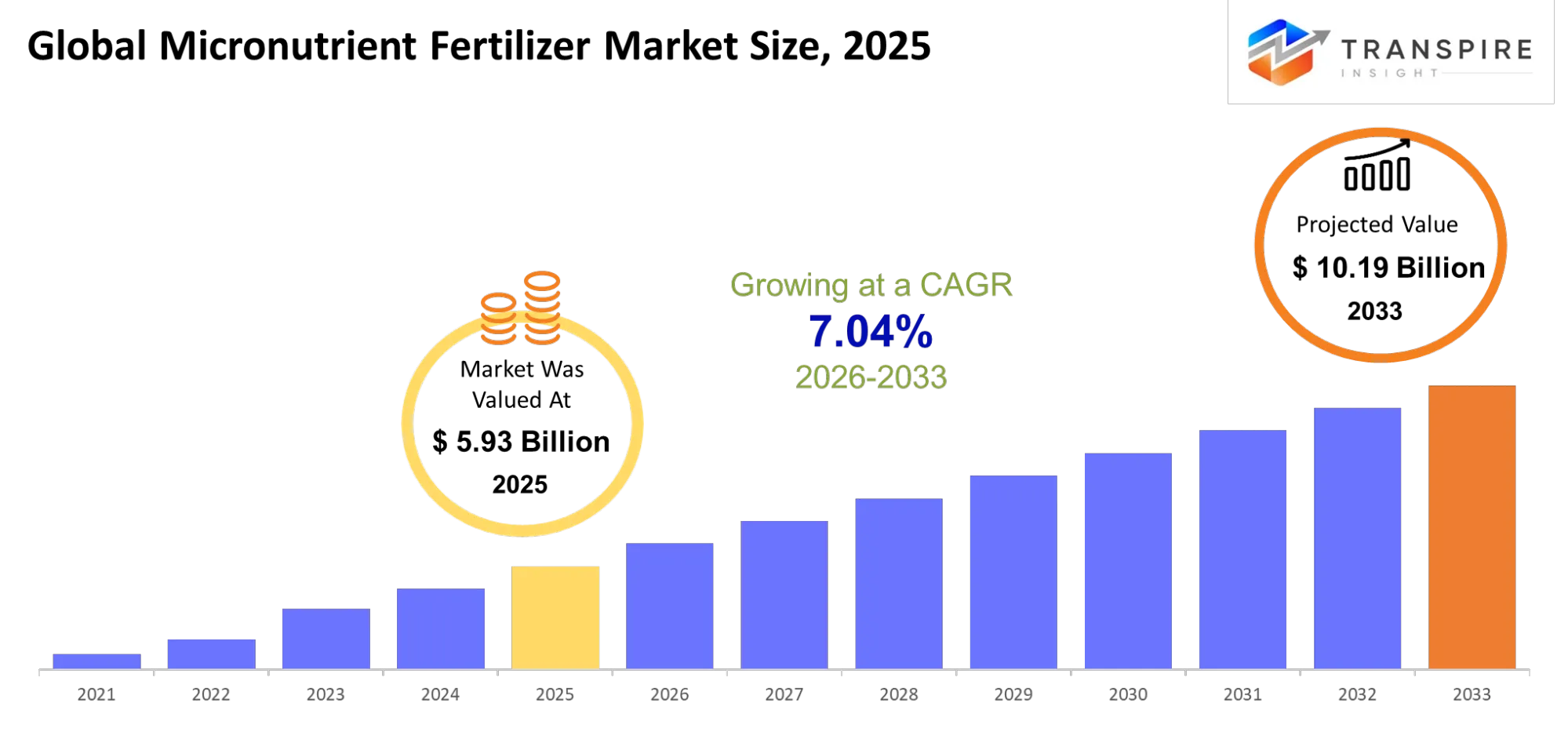
- Global Micronutrient Fertilizer Market Size 2025: USD 5.93 Billion
- Global Micronutrient Fertilizer Market Size 2033: USD 10.19 Billion
- Global Micronutrient Fertilizer Market CAGR: 7.04%
- Global Micronutrient Fertilizer Market Segments: By Nutrient Type (Zinc, Boron, Iron, Manganese, Copper, Molybdenum), By Form (Chelated Micronutrients, Non-Chelated Micronutrients), By Application Method (Soil Application, Foliar Spray, Fertigation), By Crop Type (Cereals & Grains, Fruits & Vegetables, Oilseeds & Pulses)
To learn more about this report,  Download Free Sample Report
Global Micronutrient Fertilizer Market Summary
The Global Micronutrient Fertilizer puts numbers to this shift: USD 5.93 Billion in 2025, growing to USD 5.21 Billion by 2033 at a 7.04% CAGR. Micronutrient fertilizers provide those critical elements crops need in very small amounts - yet can't quite create themselves without outside help. Zinc, boron, iron, manganese, copper, and molybdenum really control enzyme function, photosynthesis, nitrogen fixing, and disease resistance in plant tissue itself. Unlike macronutrients like nitrogen, phosphorus, and potassium - which get extensively applied in the soil - micronutrients are still scarce over about 30 to 40 percent of all arable land worldwide. The difference between what's naturally in the soil and what plants actually need creates a continuous demand for specially formulated micronutrient products in both developed and new agricultural economies all the time.
The global micronutrient fertilizer market is driven by three pretty closely related structural factors. First, intensive farming really degrades soil, reducing the amount of micronutrients we have in the soil every year - increasing the gap between what's naturally available and what plants extract. Second, global yield intensification projects in Asia, Africa, and Latin America push farmers into more productive cultivation methods that exhaust our micronutrient supplies much faster than traditional farming does. Third, regulatory requirements in the European Union, Australia, and North America are becoming more common, demanding that farmers document their soil health metrics and show how they manage nutrients - thus generating a formal need for carefully targeted micronutrient application instead of just relying on custom or habit.
The market is pretty divided across different regional manufacturers, specialty chemical companies, and some big, integrated global fertilizer producers - all competing based on the type of product, nutrient absorption, and how well it performs in actual field conditions.
Key Global Micronutrient Fertilizer Market Insights
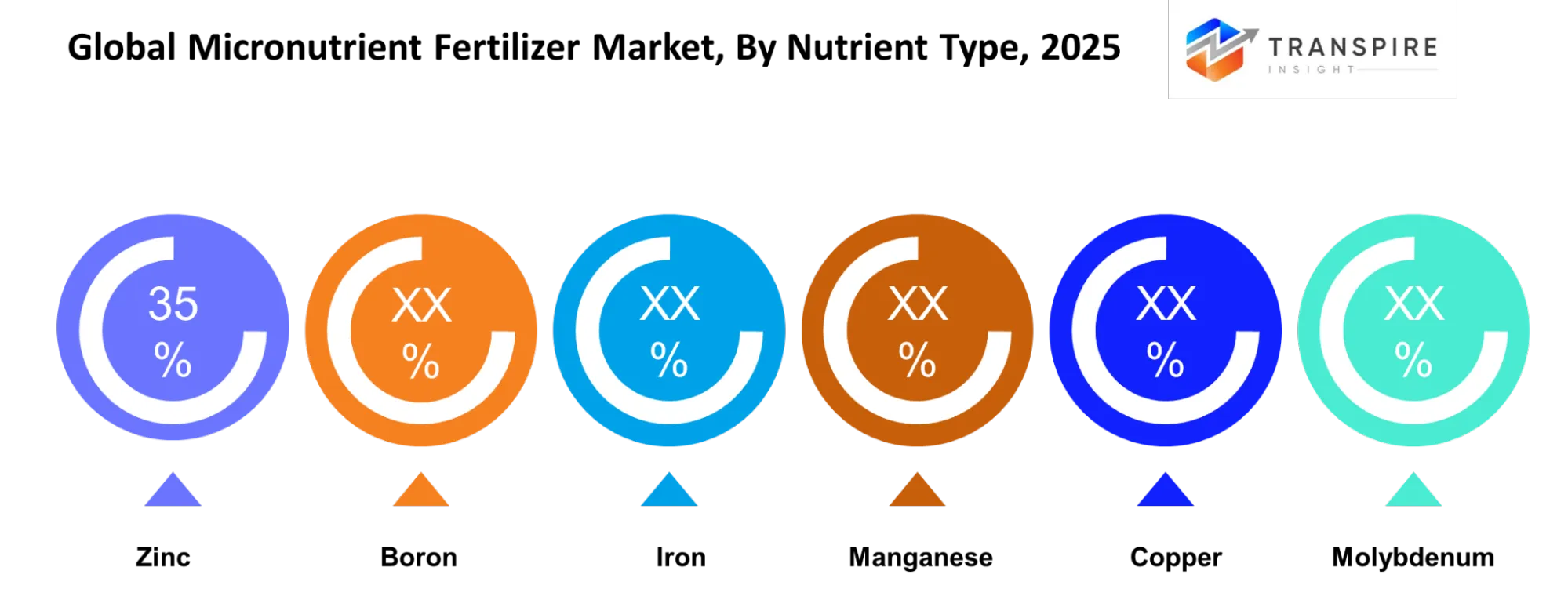
- Zinc fertilizers hold 35 percent of global micronutrient fertilizer revenue in 2025, driven by documented zinc deficiency affecting 25 to 30 percent of global wheat and rice cultivation areas across South Asia, Southeast Asia, and Sub-Saharan Africa.
- Asia-Pacific generates 48 percent of global micronutrient fertilizer market revenue in 2025, concentrated in India, China, and Vietnam, where intensive rice and wheat cultivation creates chronic micronutrient extraction and steady restocking demand.
- Chelated micronutrients command 55 percent of market revenue in 2025, reflecting higher prices justified by superior bioavailability and environmental stability compared to non-chelated mineral forms that wash away or become locked in soil.
- Foliar spray application is growing 9.2 percent annually through 2033, faster than soil application, as farmers adopt precision nutrition strategies that target specific growth stages and avoid soil fixation losses.
- Fruits and vegetables drive 32 percent of global market revenue in 2025, reflecting higher micronutrient intensity in premium-quality cultivation and stricter soil and tissue testing in export-oriented supply chains.
- Nutrien Ltd. and Yara International ASA together control approximately 22 percent of global micronutrient fertilizer market share through integrated portfolios spanning nutrient blending, distribution scale, and agronomy support services.
- Nufarm Ltd. and Haifa Group are expanding share in Asia-Pacific and the Middle East through localized product formulations and partnership networks with regional agricultural retailers and cooperative societies.
- Soil testing adoption in India and China is growing 8 to 11 percent annually, creating documented baseline micronutrient deficiency data that agronomists use to justify farmer investment in targeted micronutrient products.
- Boron deficiency in oilseed and pulse crops is generating new application opportunities as farmers in Eastern Europe, the Black Sea region, and Central Asia deploy boron fertilizers to protect yield quality and seed set consistency.
- Regulatory mandates in the European Union under the Sustainable Use of Plant Protection Products Directive are driving adoption of micronutrient products as yield protection strategies that reduce fungicide and pesticide intensity.
What are the Key Drivers, Restraints, and Opportunities in the Global Micronutrient Fertilizer Market?
The main driving force is thoroughly documented soil micronutrient depletion from very intensive cultivation practices and environmental factors itself. Global data from the International Plant Nutrition Institute really shows zinc deficiencies in soils affect some 1. 2 billion hectares of crop land - producing a chronic restocking necessity that makes for a recurring annual demand. It is not a one-time investment though - it is quite a continuous replacement cycle tied to harvest quantities, soil nutrient export through crop removal, and natural leaching losses. Soil testing programs in Australia, India, and New Zealand have actually quantified the severity of the deficiencies themselves and made targeted micronutrient application a risk management tool rather than an optional product. When a soil test very clearly shows zinc below 0. 8 mg per kilogram, the farmer's agronomist recommends application - reducing purchase resistance and creating quite a steady demand itself.
Price volatility and commodity hedging behaviour really does constrain market growth in the short term. Micronutrient fertilizers actually compete with commodity prices for nitrogen, phosphorus, and potassium - getting a significantly larger portion of farmer budgets. When global commodity prices for grain crops drop, farmers delay or cancel micronutrient purchases as they prioritize macronutrient coverage and debt repayment. Also, the chelation process for micronutrient forms adds 25 to 35 percent cost premium over non-chelated equivalents - limiting adoption in price-sensitive markets like Sub-Saharan Africa and parts of South Asia where farming margins are quite narrow. Educational barriers still persist as many smallholder farmers lack access to soil testing data or agronomic extension services that would really justify micronutrient investment.
Integration of micronutrient fertilizers with biological products and soil health platforms is actually emerging as a very high-margin growth opportunity. AgTech companies are bundling micronutrient products with soil microbe inoculants and biostimulants that enhance nutrient uptake efficiency - allowing for lower application rates while improving crop performance itself. This really repositions micronutrients from a commodity chemical product to a premium system component - supporting higher pricing and forming lock-in customer relationships to integrated platforms. Companies such as Valagro and specialty distributors are building digital platforms that connect soil test data to micronutrient prescription software - creating recurring software subscription revenue alongside product sales. This model really works very well in fruit and vegetable production where margin tolerance is higher and producers pay premiums for yield and quality consistency itself.
What Has the Impact of Artificial Intelligence Been on the Global Micronutrient Fertilizer Market?
Artificial intelligence really is changing micronutrient market dynamics through three major channels: soil and tissue analysis, precision nutrient prescription, and performance tracking over extremely large farmer networks. Machine learning models that have been trained on multispectral satellite imagery, ground-based hyperspectral sensors, and historical yield records can now detect zinc, boron, and iron deficiencies at the sub-field level even before you can see the symptoms in the crops themselves. Companies like BASF and Nufarm have partnered with precision agriculture software vendors to integrate micronutrient deficiency detection right into their agronomy platforms, enabling farmers to apply products just to those parts of fields where deficiency has been documented - instead of applying them all over the place. This really reduces waste and improves farmer returns on investment, driving adoption in those technology-adopting farmer segments even more.
Prescriptive AI models that combine soil test data, historical yield performance, crop type, and weather patterns are greatly helping agronomists go from making general micronutrient recommendations to providing prescriptions that are very specific to each farmer and field. The unique algorithms consider how nutrients are released, how soil pH affects their availability, and how sensitive the crop is at different growth stages - all in order to give you the perfect application timing and amount. A tremendous amount of data has been collected from many, many farm trials - it really is improving model accuracy every year, creating a positive cycle where early adopters generate even more data that further improves product recommendations for the next group of farmers. Performance tracking through end-of-season yield correlations and tissue testing even lets vendors verify whether the recommended micronutrient products actually resulted in yield benefits - this helps build a body of evidence that really justifies selling premium-priced branded products over generic ones.
Key Market Trends
- Asia-Pacific holds 48 percent of global revenue in 2025 and is the fastest-growing region, with China and India driving soil testing expansion and intensified wheat, rice, and cotton cultivation schedules.
- Zinc fertilizers command 35 percent of market revenue in 2025, with boron and iron each capturing 15 to 18 percent as awareness of deficiency in specific crop-region combinations spreads.
- Chelated micronutrient form is growing 8.1 percent annually through 2033, faster than non-chelated forms, as farmers shift toward higher-efficiency products when soil testing confirms deficiency.
- Foliar spray application is expanding 9.2 percent annually through 2033 as precision timing reduces product volume while improving uptake and addressing mid-season deficiency symptoms.
- Soil application remains 52 percent of total application volume in 2025 due to lower equipment cost and established farmer familiarity, but share is declining as fertigation and foliar spray gain adoption.
- Fruits and vegetables account for 32 percent of market revenue in 2025, with higher micronutrient intensity and price tolerance supporting premium chelated and specialty product adoption.
- Cereals and grains represent 38 percent of market revenue but are growing 5.8 percent annually, constrained by lower farmer margins and greater price sensitivity to commodity fluctuations.
- Nutrien Ltd. and Yara International are expanding micronutrient platform share through acquisition of regional specialty manufacturers and digital agronomic tools that increase customer stickiness.
- Regulatory frameworks in the European Union, Australia, and Canada are requiring nutrient management plans and soil testing documentation, formalizing micronutrient product deployment.
- Biological products bundled with micronutrient fertilizers are growing 11 to 13 percent annually as premium fruit and vegetable growers adopt integrated nutrient and microbial platforms.
Global Micronutrient Fertilizer Market Segmentation
By Nutrient Type
Zinc fertilizers hold 35 percent of global micronutrient fertilizer market revenue in 2025. Zinc deficiency is the most prevalent documented micronutrient limitation globally, affecting wheat and rice cultivation in South Asia where soil zinc availability has declined due to intensive production schedules and low organic matter replenishment. India alone consumes approximately 250,000 to 300,000 metric tons of zinc fertilizer annually for rice, wheat, and cotton production, representing roughly 28 to 32 percent of global zinc fertilizer consumption. Prices for zinc sulfate and chelated zinc forms fluctuate with zinc commodity prices, creating margin variability for suppliers but generating consistent unit demand across the forecast period.
Boron fertilizers capture 16 percent of market revenue in 2025 and are growing 7.8 percent annually through 2033. Boron deficiency is particularly prevalent in oilseed crops such as canola and pulses such as chickpea and lentil, as well as in sugar beets and alfalfa. The geographic concentration of boron demand in Central Asia, Eastern Europe, and Australia has created regional champions such as Aries Agro Limited and local manufacturers who understand crop-specific application protocols. Boron market growth is outpacing zinc because emerging awareness of boron's critical role in flower and seed development is expanding application into crops that have not historically received boron supplementation.
Iron, manganese, copper, and molybdenum together account for 37 percent of market revenue in 2025, with iron and manganese each capturing roughly 12 to 14 percent. These nutrients address specific crop and regional deficiency patterns. Manganese is critical for oil palm and corn production. Copper deficiency appears in high-yield apple and grapevine operations. Molybdenum is essential for legume production where nitrogen fixation depends on molybdenum-containing nitrogenase enzymes. The smaller nutrient categories receive less marketing attention but command premium pricing due to high specificity of deficiency patterns and lower substitution risk.
To learn more about this report, Download Free Sample Report
By Form
Chelated micronutrients hold 55 percent of global market revenue in 2025, with non-chelated mineral forms capturing 45 percent. Chelation surrounds the nutrient element with organic molecules that prevent soil fixation and environmental loss, allowing more of the applied nutrient to remain plant-available. The chelation process raises manufacturing cost by 25 to 35 percent compared to simple mineral salts, but the superior performance in field trials justifies the premium for farmers operating on thin margins where nutrient efficiency directly impacts profitability. Chelated zinc, iron, and manganese capture higher price premiums than chelated boron because zinc and iron deficiency symptoms are more visible and economically costly.
Non-chelated micronutrients are declining in market share from 52 percent in 2021 to 45 percent in 2025, losing ground to chelated forms as price premiums narrow and performance data accumulate. Zinc sulfate, ferrous sulfate, and boric acid remain the dominant non-chelated products due to low cost and established logistics infrastructure. These forms work well in alkaline soils where soil pH does not lock up nutrients, and in high-rainfall environments where fixation losses are minimal. Non-chelated products will remain important in price-sensitive markets where farmer budgets cannot stretch to chelated equivalents.
By Application Method
Soil application accounts for 52 percent of application volume in 2025 but is declining as a share of total market value. Farmers incorporate micronutrients into pre-plant soil applications or top-dress during the growing season. Soil application works well for zinc and boron where residual soil availability can support crop growth for multiple growing seasons. Equipment cost is low compared to foliar spray or fertigation, and farmer familiarity is highest with soil incorporation. However, soil application suffers from fixation losses in alkaline and neutral pH soils, where applied nutrients bind to clay and organic matter and become unavailable to plant roots.
Foliar spray is growing 9.2 percent annually through 2033, capturing market share from soil application as precision timing and target-stage application improve efficiency. Farmers can apply micronutrients at growth stages when crop demand is highest, maximizing uptake before dilution through water and soil interactions. Foliar spray is particularly effective for iron, manganese, and molybdenum, which are prone to fixation in alkaline soils. The technology requires specialized equipment and proper weather conditions, creating opportunities for service providers and custom applicators who bundle agronomic knowledge with application services.
Fertigation (application through irrigation systems) accounts for 18 percent of application volume in 2025 and is growing 8.5 percent annually through 2033. This method is most prevalent in fruit and vegetable production where drip irrigation infrastructure is standard. Fertigation allows continuous micronutrient supply throughout the growing season, avoiding peak deficiency periods and reducing total application rates because nutrients are delivered when roots actively absorb water. Fertigation requires precise formulations that do not precipitate in irrigation lines, creating technical barriers that favor integrated manufacturers such as ICL Group and Haifa who have invested in agronomy-focused formulation development.
By Crop Type
Cereals and grains represent 38 percent of global micronutrient fertilizer market revenue in 2025 but grow 5.8 percent annually through 2033, the slowest growth rate among crop categories. Wheat and rice are the dominant crops, particularly in South Asia and China where zinc deficiency is endemic. Farmer price sensitivity in commodity crops limits adoption of premium chelated products and technology-intensive application methods. However, yields in wheat and rice production are responsive to zinc application, with documented yield improvements of 8 to 12 percent in zinc-deficient soils, justifying steady baseline demand that is not highly cyclical with commodity prices.
Fruits and vegetables account for 32 percent of market revenue in 2025 and are growing 8.8 percent annually through 2033, the fastest among crop categories. Premium fruit and vegetable growers have higher per-hectare income and margin tolerance, allowing adoption of chelated products and precision application technologies that would be uneconomical in commodity crops. Export-oriented supply chains in India, Vietnam, and Latin America require documented soil health metrics and residue testing to meet importer food safety standards, creating formal demand for targeted micronutrient application. Quality traits such as appearance, shelf life, and nutrient density in produce are responsive to micronutrient status, giving growers financial incentive to optimize micronutrient supply.
Oilseeds and pulses represent 25 percent of market revenue in 2025 and grow 7.4 percent annually through 2033. Boron deficiency in canola and sunflower is causing yield losses of 10 to 15 percent in deficient soils, driving adoption of boron products across canola-growing regions in Canada, Australia, and Eastern Europe. Pulse crops such as chickpea and lentil require molybdenum for nitrogen fixation and boron for pod development, creating growing awareness among farmers in India and sub-continental regions that targeted micronutrient application improves yields and market premium for quality.
What are the Key Use Cases Driving the Global Micronutrient Fertilizer Market?
The key use case has been well-documented zinc deficiency correction in rice and wheat cultivation all over South Asia. Soil testing programs in India really have confirmed zinc deficiency on roughly 60% of our agricultural land - which gives us quite a formal agronomic justification for farmers to put on zinc fertilizers so they reach their yield targets. Every hectare of wheat cultivation in zinc-deficient soil generally applies around 5 to 10 kilograms of actual zinc each year - resulting in a regular yearly demand pattern linked to planting area instead of an initial one-time investment. Zinc sulfate and chelated zinc products are heavily commoditized through government-subsidized programs and retail agrochemical dealers - making zinc fertilizer very accessible to small-scale farmers over countless thousands of hectares.
Boron deficiency correction in oilseed and pulse crops is becoming a quickly developing use case in Eastern Europe, the Black Sea area, and Central Asia. Farmers planting canola in Australia and Eastern Europe have had repeated yield and quality failures from boron deficiency - since seed formation quality and pod structure are quite dependent on boron. The very apparent effect of boron deficiency on crop appearance and yield reliability really is driving fast adoption - once farmers actually see the issue themselves. Boron application protocols are quite region- and crop-specific - giving us opportunities for agronomic advisory services and specialized distributors who really know the local growing conditions - and can advise on the right application methods.
Premium fruit and vegetable production for export markets really is driving the adoption of integrated micronutrient platforms - which bundle soil testing, tissue analysis, and very precise application. Exporters of apples, grapes, and vegetables to developed country markets have to meet residue testing and nutrient content standards - which requires us to document micronutrient status very carefully. Growers are taking up soil testing programs to prove micronutrient sufficiency - and are using spray and drip irrigation applications to fine-tune nutrient levels at specific growth stages. This high-end market is really willing to spend money on agronomic services and advanced product types - giving us much higher profit margins compared to commodity crop segments.
Report Overview Table
|
Report Metrics |
Details |
|
Market size value in 2025 |
USD 5.93 Billion |
|
Market size value in 2026 |
USD 6.33 Billion |
|
Revenue forecast in 2033 |
USD 10.19 Billion |
|
Growth rate |
CAGR of 7.04% from 2026 to 2033 |
|
Base year |
2025 |
|
Historical data |
2021 - 2024 |
|
Forecast period |
2026 - 2033 |
|
Report coverage |
Revenue forecast, competitive landscape, growth drivers, regional trends, and agronomic insights |
|
Regional scope |
North America; Europe; Asia-Pacific; Latin America; Middle East and Africa (MENA) |
|
Key companies profiled |
Nutrien Ltd., Yara International ASA, BASF SE, Mosaic Company, Nufarm Ltd., Haifa Group, ICL Group Ltd., Compass Minerals International Inc., K+S Aktiengesellschaft, Coromandel International Ltd., Koch Industries Inc., Valagro S.p.A., Aries Agro Limited, Helena Agri-Enterprises LLC, Zuari Agro Chemicals Ltd. |
|
Customization scope |
Free report customization (country, regional & segment scope). Avail customized purchase options to meet your exact research needs. |
|
Report Segmentation |
By Nutrient Type (Zinc, Boron, Iron, Manganese, Copper, Molybdenum), By Form (Chelated Micronutrients, Non-Chelated Micronutrients), By Application Method (Soil Application, Foliar Spray, Fertigation), By Crop Type (Cereals & Grains, Fruits & Vegetables, Oilseeds & Pulses) |
Which Regions are Driving the Global Micronutrient Fertilizer Market Growth?
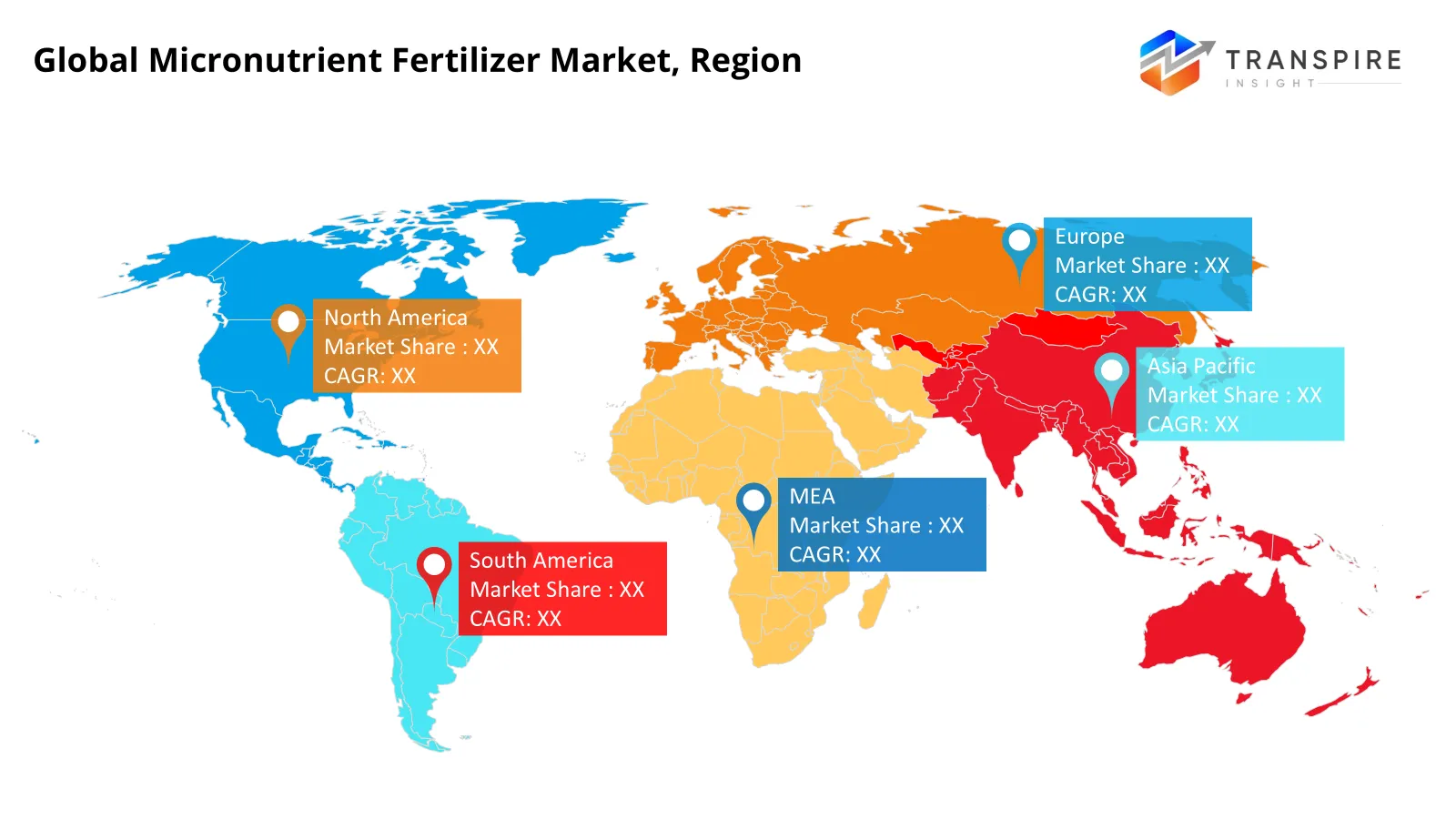
The Asia-Pacific region generates 48 percent of the world's micronutrient fertilizer market revenue in 2025 and is actually the fastest-growing area with an 8. 3 percent compound annual growth rate (CAGR) up to 2033. India and China control regional consumption the most - with India alone consuming 350,000 to 400,000 metric tons of micronutrient fertilizer annually all over wheat, rice, cotton, and vegetable production. Soil testing adoption in India through government schemes and private agronomy platforms really is accelerating farmer awareness of micronutrient deficiencies. China's very intensive vegetable and fruit production systems need continuous micronutrient application so as to keep yields on small land areas. Vietnam and Thailand are emerging growth markets because feed grain and export vegetable production is intensifying greatly - thus creating new micronutrient demand.
Europe holds 22 percent of the global market revenue in 2025 - and grows 5. 8 percent each year through 2033. The region's micronutrient market is quite mature, driven by regulatory frameworks which mandate soil testing and nutrient management plans. Boron and molybdenum are very important in European crop systems, especially for oilseed production in the Black Sea region and pulses throughout the whole continent. European farmers really do have higher income and margin tolerance, supporting the adoption of premium chelated products and precision application technologies. Climate variability from drought stress and flood events is really increasing micronutrient fixation losses in certain regions, creating a need for more frequent or higher-rate applications.
North America holds 18 percent of the global revenue in 2025 - and grows 5. 1 percent each year through 2033. The region has relatively high soil micronutrient status in historical grain-growing areas because of many decades of adequate soil management, thereby limiting zinc and boron application. Nonetheless, high-value fruit and vegetable production regions in California, the Pacific Northwest, and Florida have very high micronutrient intensity - and they adopt premium product forms and precision application. Conservation agriculture and reduced-tillage farming practices are gaining a lot of adoption - which can reduce micronutrient release from soil organic matter, thus creating additional demand for applied micronutrient products.
To learn more about this report, Download Free Sample Report
Who are the Key Players in the Global Micronutrient Fertilizer Market and How Do They Compete?
The global micronutrient fertilizer market is characterized by a mix of large integrated fertilizer companies and specialized micronutrient manufacturers. Nutrien Ltd. and Yara International together control approximately 22 percent of market share through integrated portfolios spanning nutrient sourcing, manufacturing, blending, and distribution infrastructure. These players compete on scale advantages, agronomy support capabilities, and access to farmer distribution channels through retail dealers and direct sales teams. The large integrated players also have resources to invest in digital agronomic tools and soil testing programs that drive product demand and customer loyalty.
Specialized micronutrient manufacturers such as Haifa Group, ICL Group Ltd., and Valagro S.p.A. compete on product performance, formulation innovation, and targeted market development in high-value crops. These companies invest heavily in chelation technology and biological product integration, allowing them to command premium pricing in fruit, vegetable, and specialty crop segments. Valagro's focus on biostimulant bundling and Haifa's partnership networks in Asia-Pacific demonstrate how specialized players can compete effectively against larger players by focusing on specific crop segments and customer relationships.
Regional manufacturers such as Nufarm Ltd., Coromandel International Ltd., and Aries Agro Limited hold strong positions in Asia, Middle East, and Africa through localized product portfolios and understanding of regional deficiency patterns. These companies compete on cost and regional distribution access rather than global scale. Coromandel's presence in India and Southeast Asia and Nufarm's regional expansion through acquisitions allow them to capture growing demand in emerging markets where large global players have less established presence. Regional players are increasingly acquiring technology assets and partnering with specialty companies to upgrade product offerings and move up the value chain.
Global Micronutrient Fertilizer Market Companies
- Nutrien Ltd
- Yara International ASA
- BASF SE
- Mosaic Company
- Nufarm Ltd.
- Haifa Group
- ICL Group Ltd.
- Compass Minerals International Inc.
- K+S Aktiengesellschaft
- Coromandel International Ltd.
- Koch Industries Inc.
- Valagro S.p.A.
- Aries Agro Limited
- Helena Agri-Enterprises LLC
- Zuari Agro Chemicals Ltd.
Recent Developments
In March 2026, Nutrien Ltd. announced the acquisition of a specialty micronutrient manufacturer based in India, expanding its penetration into the high-growth Indian market and gaining proprietary formulations for zinc and boron products tailored to South Asian soil conditions. The acquisition strengthens Nutrien's ability to compete directly with regional manufacturers such as Coromandel and Zuari in the 2.2 billion-person South Asian market. https://www.nutrien.com/news
In February 2026, Yara International ASA launched a new soil testing and micronutrient prescription platform powered by machine learning algorithms that analyze soil and tissue data to deliver field and farmer-specific micronutrient recommendations. The platform integrates with Yara's product portfolio and is being deployed through partnerships with agronomic advisors across Europe and North America. https://www.yara.com/news
What Strategic Insights Define the Future of the Global Micronutrient Fertilizer Market?
Over the next seven to ten years, the global micronutrient fertilizer market will transition from commodity bulk products toward technology-enabled, performance-guaranteed solutions bundled with agronomic services. Large integrated players such as Nutrien and Yara are investing heavily in digital soil testing, AI-based nutrient prescription, and outcome-based service contracts that shift revenue away from simple product tonnage toward recurring agronomic advisory relationships. This repositioning allows vendors to command premium pricing and create customer lock-in through software platforms and data ecosystems. Farmers will increasingly expect micronutrient products to come with guaranteed performance metrics and yield insurance, requiring vendors to build confidence through field trial data and peer-reviewed agronomic research.
The hidden risk is that consolidation around large integrated platforms could squeeze margin for specialized manufacturers who compete solely on product innovation. If large players successfully integrate soil testing, AI-based prescription, and delivery logistics into single platforms, they will reduce friction and transaction costs for farmers, making it harder for smaller regional players to justify price premiums. However, the countervailing force is farmer willingness to pay premium prices for solutions that address specific local deficiency patterns and crop types. Regional champions that understand boron deficiency in canola or zinc protocols in rice will retain differentiation even within a consolidated market structure.
The clearest forward opportunity is bundling micronutrient products with biological inputs and soil health platforms to create integrated nutrient and productivity systems. Companies such as Valagro are demonstrating that bundling biostimulants with chelated micronutrients creates measurable yield and quality advantages over micronutrients alone, justifying 25 to 40 percent price premiums. This bundling strategy works best in high-value crop segments where farmer margins can absorb premium pricing. Market entrants should focus on building biological product pipelines and partnering with established micronutrient suppliers to gain market access while retaining product differentiation.
Global Micronutrient Fertilizer Market Report Segmentation
By Nutrient Type
- Zinc
- Boron
- Iron
- Manganese
- Copper
- Molybdenum
By Form
- Chelated Micronutrients
- Non-Chelated Micronutrients
By Application Method
- Soil Application
- Foliar Spray
- Fertigation
By Crop Type
- Cereals & Grains
- Fruits & Vegetables
- Oilseeds & Pulses
Frequently Asked Questions
Find quick answers to common questions.
The Global Micronutrient Fertilizer Market size is expected to reach USD 10.19 Billion by 2033.
The key segments are By Nutrient Type (Zinc, Boron, Iron, Manganese, Copper, Molybdenum), By Form (Chelated Micronutrients, Non-Chelated Micronutrients), By Application Method (Soil Application, Foliar Spray, Fertigation), and By Crop Type (Cereals & Grains, Fruits & Vegetables, Oilseeds & Pulses).
Major players include Nutrien Ltd., Yara International ASA, BASF SE, Mosaic Company, Nufarm Ltd., Haifa Group, ICL Group Ltd., Compass Minerals International Inc., K+S Aktiengesellschaft, Coromandel International Ltd., Koch Industries Inc., Valagro S.p.A., Aries Agro Limited, Helena Agri-Enterprises LLC, and Zuari Agro Chemicals Ltd.
The Global Micronutrient Fertilizer Market size is USD 5.93 Billion in 2025.
The Global Micronutrient Fertilizer Market CAGR is 7.04% from 2026 to 2033.
- Nutrien Ltd.
- Yara International ASA
- BASF SE
- Mosaic Company
- Nufarm Ltd.
- Haifa Group
- ICL Group Ltd.
- Compass Minerals International Inc.
- K+S Aktiengesellschaft
- Coromandel International Ltd.
- Koch Industries Inc.
- Valagro S.p.A.
- Aries Agro Limited
- Helena Agri-Enterprises LLC
- Zuari Agro Chemicals Ltd.
Recently Published Reports
-
Apr 2026
Healthcare Polymer Packaging Market
Healthcare Polymer Packaging Market Size, Share & Analysis Report By Packaging Type (Syringes, IV Bottles and Pouches, Clamshells, Blisters, Bottles & Jars, Containers, Tubes, IV Parental Packaging, Others), By Type (Regulated, Non-regulated), By Polymer Type (LDPE (Low-Density Polyethylene), HDPE (High-Density Polyethylene), Homo-polymer (Homo), Random Copolymer (Random), Block Copolymer (Block), PET, Polystyrene, Polyvinyl Chloride, Polyamide/EVOH, Others), and Geography (North America, Europe, Asia-Pacific, Middle East and Africa, South and Central America), 2021 - 2031
-
Apr 2026
Hydrophilic Tape (Waterstop) Market
Hydrophilic Tape (Waterstop) Market Size, Share & Analysis Report By Type (Bentonite-Based Hydrophilic Tape, Rubber-Based Hydrophilic Tape), By Application (Residential Buildings, Commercial Buildings, Infrastructure Projects), and Geography (North America, Europe, Asia-Pacific, Middle East and Africa, South and Central America), 2021 - 2031
-
Apr 2026
Metalens Market
Metalens Market Size, Share & Analysis Report By Type (Visible Light Metalens, and Infrared Metalens), By Application (Consumer Electronics, Automotive Electronics, Industrial, Medical, and Others), and Geography (North America, Europe, Asia-Pacific, Middle East and Africa, South and Central America), 2021 - 2031
-
Apr 2026
PBT Resin Market
PBT Resin Market Size, Share & Analysis Report By Type (Reinforced PBT Resin, Unreinforced PBT Resin), By Processing Method (Injection Molding, Extrusion, Blow Molding, Others), By End-User (Automotive, Electrical & Electronics, Consumer Appliances, Industrial Machinery, Medical Devices, Packaging, Others), and Geography (North America, Europe, Asia-Pacific, Middle East and Africa, South and Central America), 2021 - 2031