
Global Ergonomic Pillow Market Size & Forecast:
- Global Ergonomic Pillow Market Size 2025: USD 2258.26 Million
- Global Ergonomic Pillow Market Size 2033: USD 4001.03 Million
- Global Ergonomic Pillow Market CAGR: 7.42%
- Global Ergonomic Pillow Market Segments: By Type (Memory Foam Pillows, Cervical Support Pillows, Cooling Gel Pillows, Orthopedic Pillows, Latex Pillows, Adjustable Loft Pillows, Others); By Application (Sleep Support, Neck Pain Relief, Posture Correction, Travel Comfort, Therapeutic Use, Others); By End-User (Adults, Elderly Consumers, Healthcare Patients, Travelers, Others); By Distribution (Online Retail, Specialty Bedding Stores, Supermarkets, Healthcare Stores, Others)
Global Ergonomic Pillow Market Summary:
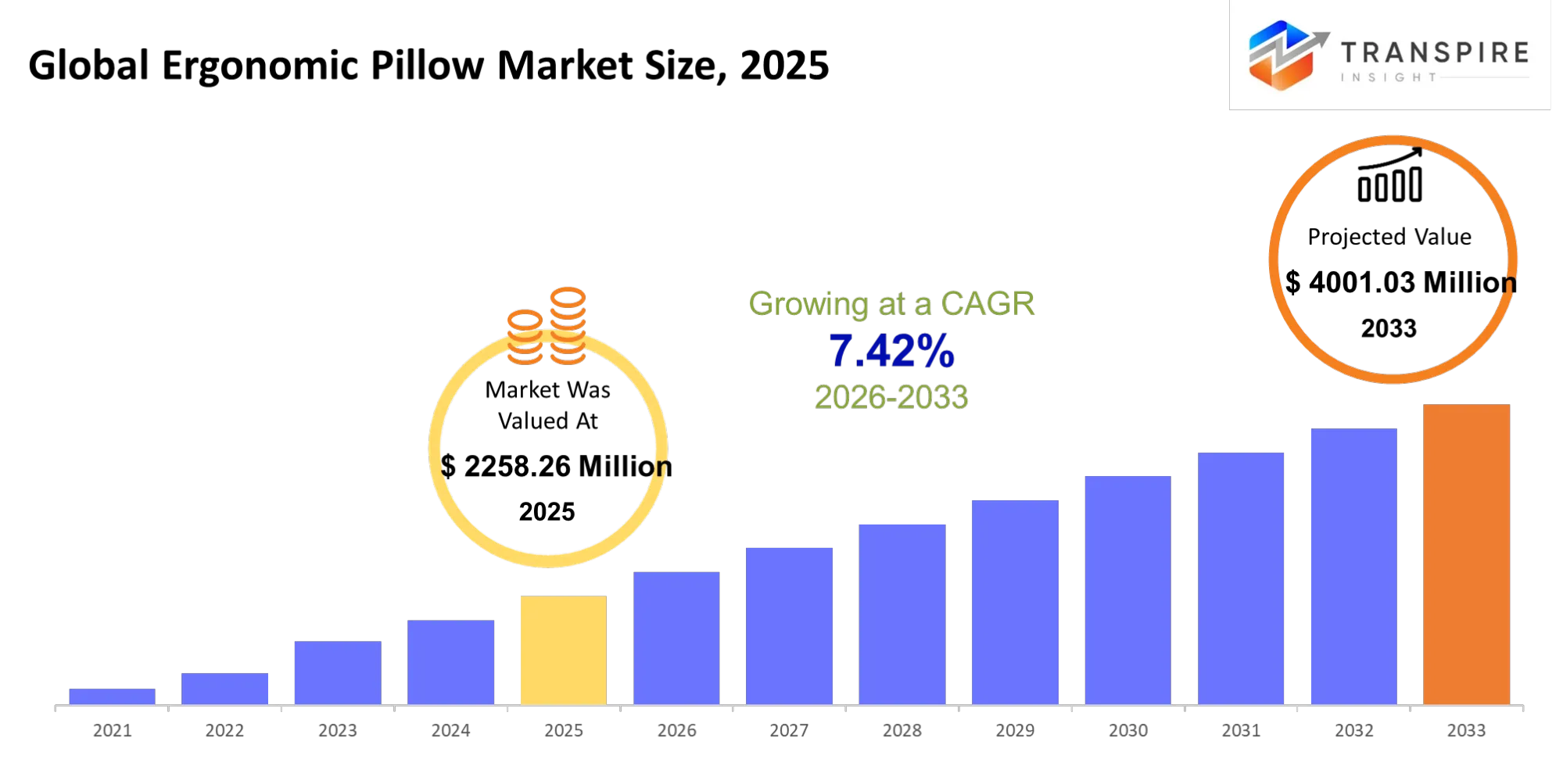
The Global Ergonomic Pillow Market size is estimated at USD 2258.26 Million in 2025 and is anticipated to reach USD 4001.03 Million by 2033, growing at a CAGR of 7.42% from 2026 to 2033.
The present-day market for ergonomic pillows includes all those products that could help consumers assume proper sleeping posture, reduce neck and shoulder strain, and position their spines properly during the time they sleep. Nowadays, ergonomic pillows have become popular not only because of their comfortable nature, but also due to the role they play in preserving sleeping health. In the past few years (three to five), the market has expanded from a bedding sector to a sleep support industry that responds to consumers' desire to focus on preventive health care and recovery. One notable structural change in the market includes personalisation and technology-enabled solutions, such as adjustable models and cooling pillows. An actual cause leading to the change in question includes the proliferation of remote/hybrid jobs, which has caused an increase in postural problems and sleep quality among people who spend long hours working at home. Neck strain, bad sleep, and other symptoms lead to an increasing number of customers seeking ergonomics products. Such cause-and-effect dynamics foster innovation in the sector and drive up prices.
Key Global Ergonomic Pillow Market Insights:
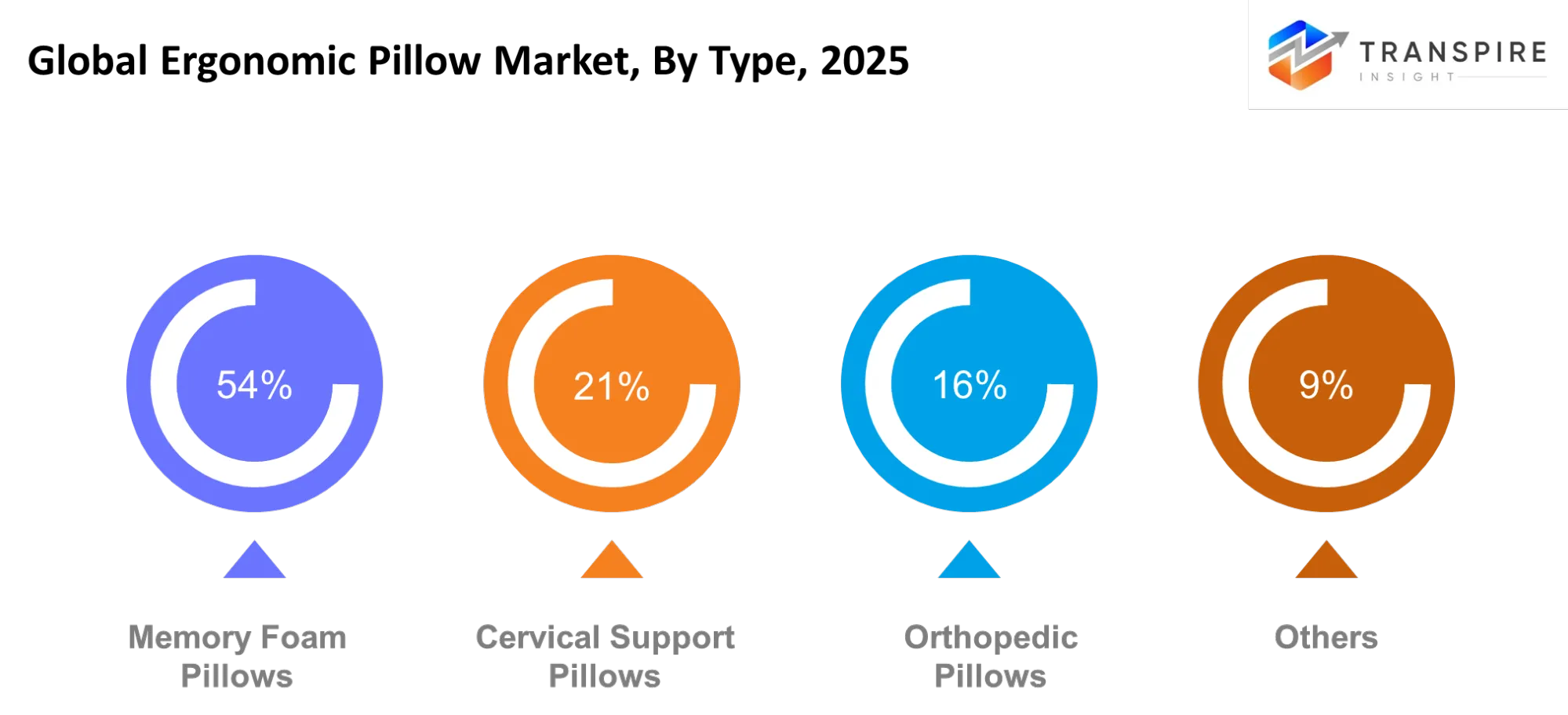
- Memory Foam Pillows have an 54% share, while Tempur Sealy improves adaptive foam technology and continues creating pillows that cater to individual needs.
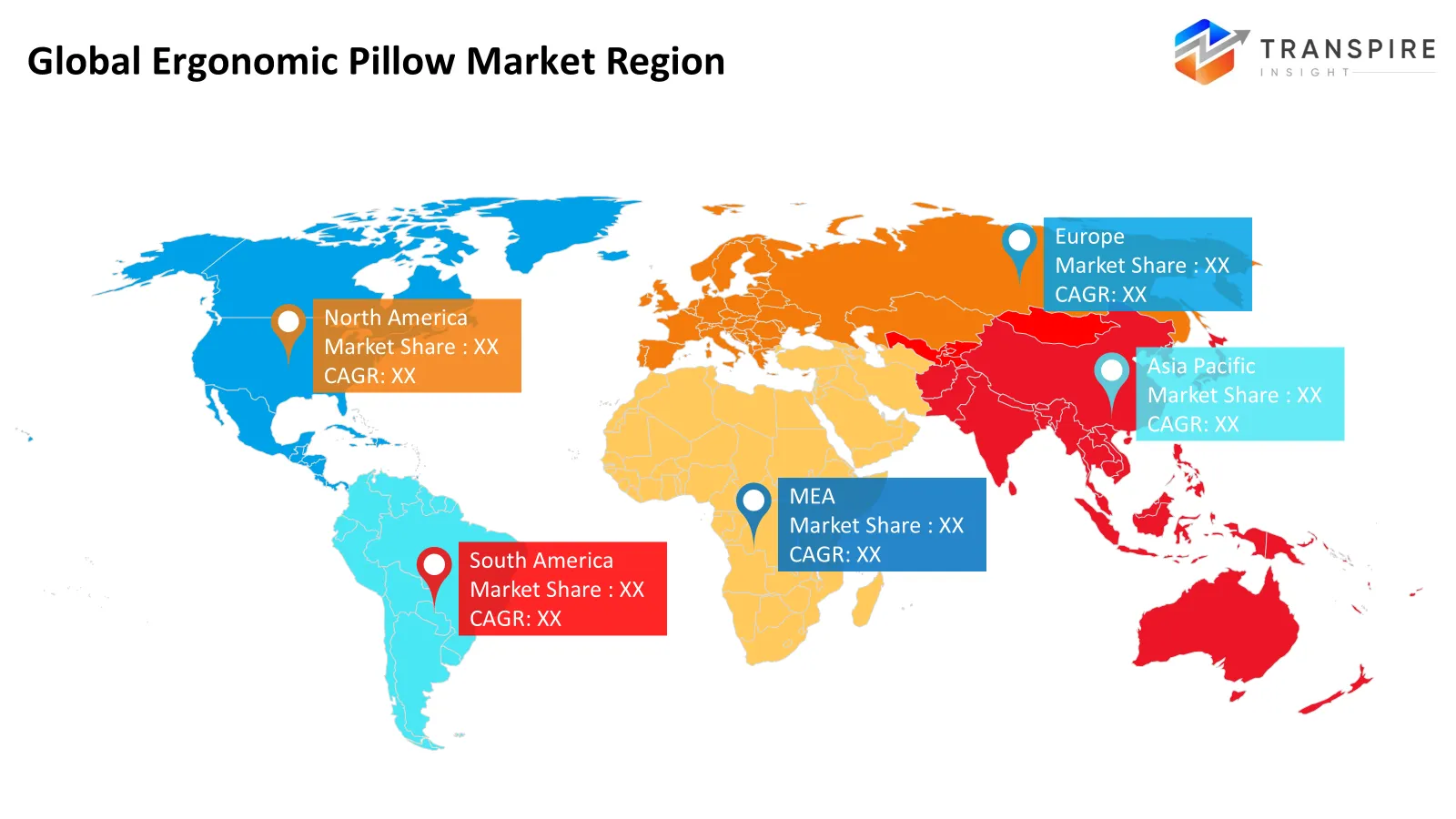
- North America takes up 38% of all sales, as Sleep Number develops its smart sleep systems, and more people opt for wellness-driven solutions that connect them with their devices.
- Europe makes up 29% of global revenue, with manufacturers like IKEA introducing eco-friendly sleep solutions to cater to the environmental needs of consumers.
- Asia-Pacific has 24% of the market share, with companies developing AI-enabled technologies in sleep products, as people in the region use their smartphones extensively.
- Cervical Support Pillows constitute 21% of the total sales volume, while manufacturers produce products that promote proper alignment of the body parts.
- Orthopaedic Pillows occupy 16% of overall demand, and manufacturers are addressing the recovery and rehabilitation needs of customers.
- Cooling Gel Pillows have 10.8% CAGR, as companies improve temperature-regulation materials and satisfy the growing demand for uninterrupted sleep.
- Online retail is the dominant sales channel, as brands like Coop Home Goods utilise digital technologies such as personalisation to engage customers.
What are the Key Drivers, Restraints, and Opportunities in the Global Ergonomic Pillow Market?
Driving:
Among the factors influencing growth in the ergonomic pillows market is an increasing awareness regarding the role of good sleep in preventive healthcare. There is a growing trend of consumer demand for sleep aids, particularly those that are more ergonomic, due to the growing number of conditions affecting their bodies – neck stiffness, poor posture, and musculoskeletal complaints – that are blamed on excessive screen use and a sedentary lifestyle. As a result of the consumer's growing interest in wellness items, sellers can take advantage of the opportunity and command high prices for their goods. In January 2026, Purecare launched a new range of cooling pillows enhanced with Alexicool technology. The product launch reflected growing consumer demand for advanced sleep solutions that combine ergonomic support with temperature regulation, helping manufacturers expand premium product offerings.
Restraints:
One of the major constraints impacting growth in the ergonomic pillows market is the absence of standardised ergonomic criteria for measuring the effectiveness of products. The problem arises as there are different claims about design efficiency from one brand to another, coupled with different preferences of individuals when it comes to sleeping.
Opportunity:
One opportunity in which technology can make a big impact is in combining sleep technology with innovative ergonomic bed technologies. Progress in smart sensors, artificial intelligence sleep analysis tools, and personalised support systems could help manufacturers create new ergonomic pillows that offer insights into sleep quality. This can be achieved through increased investment in smart sleep technology ecosystems in North America and East Asia to enable the development of new premium sleep products and enhance consumer loyalty. New opportunities for collaboration with hospitals with a greater emphasis on digital health technology and telehealth. In February 2026, Pyramid Pillow launched its patented anti-snoring ergonomic pillow in North America. The launch highlighted growing investment in specialised ergonomic sleep technologies that address specific health concerns, creating new premium market opportunities and expanding consumer adoption.
What Has the Impact of Artificial Intelligence Been on the Global Ergonomic Pillow Market?
The use of artificial intelligence technology is changing the face of ergonomic pillows in several ways, from improved product development to better consumer personalisation, as well as increased efficiencies. This is seen through the increasing use of AI technology in analysing customer reviews, sleep habits, and shopping trends. Such analysis makes it possible for developers to design pillows that suit specific customers in terms of comfort and support needs. In operation, AI technology allows for increased automation in areas such as inventory management, supply chain operations, and forecasting consumer demand. The prediction of changes in consumer needs helps in efficient production and reduces wastage. Product innovation can be achieved in terms of product design and modelling through the use of AI technology. However, one major disadvantage of the use of AI technology in ergonomic pillows is the huge amount of costs involved in incorporating the new technology in business operations. All these may have an impact on the efficiency of AI-powered ergonomic pillows.
In January 2026, Makura Co., Ltd. launched its “THE PILLOW Anshin Care” subscription service for its AI-powerepersonaliseded pillow range. The initiative strengthened customer retention by providing ongoing pillow adjustments, maintenance support, and personalised sleep optimisation services, highlighting the growing role of AI in enhancing post-purchase consumer experiences within the Global Ergonomic Pillow Market.
Key Global Ergonomic Pillow Market Trends:
- There is a growing trend towards using a more personalized support system rather than a generic pillow, depending on the type of sleep position and body shape.
- As the demand for cooling sleep products continues to rise, pillow manufacturers are increasingly incorporating cooling fabrics and phase-change materials into their products.
- Brands are shifting from product marketing to sleep wellness marketing with ergonomic and wellness attributes.
- The demand for sustainable materials has come into the forefront due to the shift of consumers towards environmentally friendly bedding options.
- Adjustable-fill and modular pillows are becoming larger to meet evolving comfort needs over the years.
- Digital-first brands are using AI-driven sleep data to optimise pillow shapes and recommendations.
- There is growing cooperation between the industry and healthcare and wellness practitioners to strengthen product credibility.
- There is an increasing demand for multi-functional ergonomic pillows which provide pressure relief, recovery support and long-term posture management benefits.
Global Ergonomic Pillow Market Segmentation
By Type:
Memory Foam Pillows constitute 54% share of the Global Ergonomic Pillow Market. They are themost dominant segment due to their ability to fit perfectly into an individual's body and maintain constant pressure relief throughout use. Cervical Support Pillows form 21%, while Orthopaedic Pillows have the market share of 16%. Both types are witnessing growth due to increased adoption among consumers looking for specific health-oriented sleep products. Despite having a relatively small market share, Cooling Gel Pillows are the fastest-growing segment and are expected to exhibit a CAGR of 10.8%.
By Applications:
The Sleep Support segment holds the largest share since there has been a rise in the number of consumers who are increasingly conscious about improving their sleep quality and health in general. Neck Pain Relief and Posture Correction segments are witnessing steady growth because of extended working hours at the office desk, as well as the increasing usage of electronic devices. The therapeutic applications segment will see growth on account of increasing usage in rehabilitation centres and wellness spas. The Travel Comfort applications segment is getting a boost through the corporate travel and tourism sector.
By End-User:
The adults form the largest group, owing to the high level of utilisation of the sleep health products amongst working adults. However, there has been an increase in demand among the elderly, owing to their bone health issues that are common with age. The patient segment is also gaining significance, due to rehabilitation and recovery needs. In addition, the travellers’ segment is gaining significance due to the search for mobility-friendly solutions to ensure sleep quality during long travel trips.
By Distribution:
The Online Retail Segment stands out because of its wide range of product selection, direct interaction with the consumer, and personalised recommendation services. The speciality bedding store segment, supermarkets, and healthcare store segments are still highly relevant because of product demonstrations, advisory expertise, and a secure buying environment. However, digital marketing, subscription sales models, and omnichannel retail strategy trends have gained significant momentum.
What are the Key Use Cases Driving the Global Ergonomic Pillow Market?
Sleep improvement using head, neck, and spine support forms the primary use case for ergonomic pillows. The demand is high for consumers who need to address issues related to poor sleep, postural alignment problems, and musculoskeletal health in general. Consequently, the market is driven by residential use cases.
Emerging use cases are found in the fields of healthcare and hospitality. Hospitals and rehabilitation clinics have begun recommending the use of ergonomic pillows as a measure to promote healing and improve patients’ comfort levels. Hotels have started including ergonomic pillows to give their guests an enhanced sleeping experience.
Novel use cases are being developed for remote workers, older people, and sports recovery patients. Awareness around the importance of sleep in ensuring performance and health is driving demand for ergonomic pillows, among other healthcare measures.
|
Report Metrics |
Details |
|
Market size value in 2025 |
USD 2258.26 Million |
|
Market size value in 2026 |
USD 2424.21 Million |
|
Revenue forecast in 2033 |
USD 4001.03 Million |
|
Growth rate |
CAGR of 7.42% from 2026 to 2033 |
|
Base year |
2025 |
|
Historical data |
2021 - 2024 |
|
Forecast period |
2026 - 2033 |
|
Report coverage |
Revenue forecast, competitive landscape, growth factors, and trends |
|
Regional scope |
United States; Canada; Mexico; United Kingdom; Germany; France; Italy; Spain; Denmark; Sweden; Norway; China; Japan; India; Australia; South Korea; Thailand; Brazil; Argentina; South Africa; Saudi Arabia; United Arab Emirates |
|
Key company profiled |
Tempur Sealy, Coop Home Goods, Mediflow, Purple Innovation, Sleep Number, Beckham Hotel Collection, EPABO, Honeydew Sleep, Saatva, Therapeutica, Mlily, Casper, IKEA, Hollander Sleep Products, Pacific Coast Feather |
|
Customization scope |
Free report customisation (country, regional & segment scope). Avail customised purchase options to meet your exact research needs. |
|
Report Segmentation |
By Type (Memory Foam Pillows, Cervical Support Pillows, Cooling Gel Pillows, Orthopedic Pillows, Latex Pillows, Adjustable Loft Pillows, Others); By Application (Sleep Support, Neck Pain Relief, Posture Correction, Travel Comfort, Therapeutic Use, Others); By End-User (Adults, Elderly Consumers, Healthcare Patients, Travelers, Others); By Distribution (Online Retail, Specialty Bedding Stores, Supermarkets, Healthcare Stores, Others). |
Which Regions are Driving the Global Ergonomic Pillow Market Growth?
The North America region is the top market for ergonomic pillows, with the region's share of the market at around 38%. Consumer spending on sleep wellness products, a well-established e-commerce ecosystem, and the broad acceptance of premium sleep solutions have all contributed to its dominance. The area also has a long history of sleep-health awareness campaigns and access to cutting-edge innovations in sleep products. The need for preventive healthcare products continues to drive market penetration in the U.S. and Canada. In May 2026, Stareep made its North American debut with the launch of its AI-powered sleep recovery system in the United States. The launch accelerated interest in technology-enabled sleep solutions and reinforced North America's role as a key innovation hub for sleep wellness products.
The European share of the world market is about 29%, and the second largest contributor in the region. Growth is fuelled more in North America by sustainability preferences and demand for quality, durable sleep products than in other regions. In the region, consumers are very interested in buying certified materials, product safety, and ergonomic design standards. This makes for a more predictable marketplace with proven channels of distribution and wellness-driven consumer buying patterns.
Asia Pacific dominates the market with a share of nearly 24% and has the highest growth rate with a CAGR of 11.6%. In recent years, consumer shopping habits have been changing due to the growing awareness of sleep-related health concerns, the boost in their disposable income, and the prevalence of rapid urbanisation. The rise of e-commerce has made it easier to get hold of specific ergonomic products. There will be further opportunities arising from smart sleep technologies and the expanding middle class in key Asian economies.
Who are the Key Players in the Global Ergonomic Pillow Market, and how do they Compete?
The competitive environment within the ergonomic pillow industry has been intensifying due to specialisation, premiumism, and targeting consumer segments. Players within the market differentiate themselves based on innovation, affordability, and provision of clinically proven sleep support, alongside increasing brand visibility in both online and offline channels. There are players that engage in competition by using sustainable innovation, customisation, and consumer-based products.
Such innovative approaches are associated with Tempur Sealy, Purple Innovation, Sleep Number, Saatva, Casper, and Mlily. The companies' differentiation is based on proprietary sleep support technology, engineered premium materials, temperature regulation innovations, and sleep wellness solutions. The growth strategy used by such companies is expansion into premium retail stores and international markets, while consistently developing clinically researched products. Niche-focused and value-based competition strategies are employed by Coop Home Goods, Mediflow, Honeydew Sleep, Therapeutica, EPABO, Beckham Hotel Collection, IKEA, Hollander Sleep Products, and Pacific Coast Feather. The companies' differentiation is through adjustable design options, therapeutic neck pillows, low-cost product offerings, and accessibility for consumers. The growth strategy used by the players is e-commerce platform penetration, retailer partnerships, product bundling, and consumer reach for wellness-conscious consumers.
Key Players are:
- Tempur Sealy
- Coop Home Goods
- Mediflow
- Purple Innovation
- Sleep Number
- Beckham Hotel Collection
- EPABO
- Honeydew Sleep
- Saatva
- Therapeutica
- Mlily
- Casper
- IKEA
- Hollander Sleep Products
- Pacific Coast Feather
Recent Development News
- In February 2026, Tempur Sealy International finished the process of integrating Mattress Firm after acquiring it and rebranded itself as Somnigroup International. The move made it possible for the firm to increase its sales channel and widen its market access in relation to high-quality sleep products, including ergonomic and orthopaedic pillows.
Source: https://www.tempursealy.com
- In April 2026, Sleep Number Corporation launched its "To a Good Life's Sleep™" initiative, stressing its extensive sleep well-being product lineup, which includes pillows. Significance: The launch of this initiative heightened consumer awareness of sleep ergonomics.
Source: https://www.sleepnumber.com
What Strategic Insights Define the Future of the Global Ergonomic Pillow Market?
The market for ergonomic pillows is transitioning from standard comfort pillows to more personalised sleep solutions incorporating innovative materials, artificial intelligence-based sleep analytics, and health-oriented designs. The market will thrive on the increased awareness among customers about spine health, the trend of remote working, and the growing rate of sleep disorders. In relation to potential risks, this would involve the availability of low-cost, non-branded products in the market, as this can heighten competition on the basis of cost while also lowering consumers' faith in the effectiveness of the products. Premium brands might find it necessary to explain their higher prices due to innovations and clinical studies of efficacy. An opportunity in the coming future lies in designing smart ergonomic pillows that monitor sleeping patterns and temperature control, and create personalised areas for various regions of the body. With more people becoming conscious about health care, there will obviously be increased demand for scientifically formulated products for sleep. Brand differentiation through innovation and certification.
Key Segmentations are:
By Type
- Memory Foam Pillows
- Cervical Support Pillows
- Cooling Gel Pillows
- Orthopaedic Pillows
- Latex Pillows
- Adjustable Loft Pillows
- Others
By Application
- Sleep Support
- Neck Pain Relief
- Posture Correction
- Travel Comfort
- Therapeutic Use
- Others
By End-User
- Adults
- Elderly Consumers
- Healthcare Patients
- Travellers
- Others
By Distribution
- Online Retail
- Specialty Bedding Stores
- Supermarkets
- Healthcare Stores
- Others
Regional Outlook
North America
- United States
- Canada
- Mexico
Europe
- Germany
- United Kingdom
- France
- Spain
- Italy
- Rest of Europe
Asia Pacific
- Japan
- China
- Australia & New Zealand
- South Korea
- India
- Rest of Asia Pacific
South America
- Brazil
- Argentina
- Rest of South America
Middle East & Africa
- Saudi Arabia
- United Arab Emirates
- South Africa
- Rest of the Middle East & Africa
Frequently Asked Questions
Find quick answers to common questions.
The Global Ergonomic Pillow Market size was valued at USD 2258.26 Million in 2025 and is poised to reach USD 4001.03 Million by 2033, expanding at a 7.42% CAGR.
Key segments for the Global Ergonomic Pillow Market are By Type (Memory Foam Pillows, Cervical Support Pillows, Cooling Gel Pillows, Orthopedic Pillows, Latex Pillows, Adjustable Loft Pillows, Others); By Application (Sleep Support, Neck Pain Relief, Posture Correction, Travel Comfort, Therapeutic Use, Others); By End-User (Adults, Elderly Consumers, Healthcare Patients, Travelers, Others); By Distribution (Online Retail, Specialty Bedding Stores, Supermarkets, Healthcare Stores, Others).
Growth is primarily driven by rising awareness of sleep health, increasing posture-related disorders, and growing consumer investment in premium wellness and recovery-focused sleep products.
The Global Ergonomic Pillow Market is led by major manufacturers, including Tempur Sealy, Coop Home Goods, Mediflow, Purple Innovation, Sleep Number, Beckham Hotel Collection, EPABO, Honeydew Sleep, Saatva, Therapeutica, Mlily, Casper, IKEA, Hollander Sleep Products, and Pacific Coast Feather.
The role of North America in the worldwide market of ergonomic pillows is defined by its domination in the market with almost 38% market share due to higher consumer awareness about sleep-related issues, purchasing power, demand for comfort products, and prominent local brands.
Commercial opportunities in the Global Ergonomic Pillow Market are emerging from the integration of AI-powered sleep technologies, smart sensor-enabled products, personalised sleep solutions, and partnerships with digital health and telehealth providers.
- Tempur Sealy
- Coop Home Goods
- Mediflow
- Purple Innovation
- Sleep Number
- Beckham Hotel Collection
- EPABO
- Honeydew Sleep
- Saatva
- Therapeutica
- Mlily
- Casper
- IKEA
- Hollander Sleep Products
- Pacific Coast Feather
About the Authors

Chetan Dhatrak
I’m Chetan Dhatrak, a Senior Research Analyst at Transpire Insight, specializing in the Consumer Goods, Foods and Beverages industry. I focus on analyzing market trends, consumer behavior, competitive landscapes, and industry developments to deliver accurate, data-driven insights. My research at Transpire Insight is built on credible sources and in-depth analysis, helping businesses and readers better understand market dynamics, emerging opportunities, and evolving consumer preferences. I’m committed to creating reliable, well-researched content that supports informed decision-making and reflects the latest developments in the consumer goods and food & beverage sectors.

Chakradhar Khansole
Chakradhar serves as the Research Director at Transpire Insight, bringing over 8 years of experience in technology, innovation, and strategic market intelligence. He specializes in transforming complex market data into actionable business insights that enable organizations to make informed, growth-oriented decisions. Recognized for his strategic vision and analytical expertise, Chakradhar leads high-impact research initiatives, delivering comprehensive market assessments, competitive intelligence, and forward-looking industry analysis.
Recently Published Reports
-
Apr 2026
Bottled Water Market
Bottled Water Market Size, Share & Analysis Report By Product Type (Still Bottled Water, Carbonated Bottled Water, Functional Bottled Water, and Others), By Packaging (PET, Cans, and Others), By Sales Channel (Supermarkets/Hypermarkets, Convenience Stores/Drug Stores, Grocery Stores/Club Stores, Foodservice, and Others) and Geography (North America, Europe, Asia-Pacific, Middle East and Africa, South and Central America), 2021 - 2032
-
Apr 2026
Color Cosmetic Packaging Market
Color Cosmetic Packaging Market Size, Share & Analysis Report By Application (Mascara Packaging, Liquid Packaging, and Liquid Face), By Type (Tubes & Bottles, Pens & Markers, Compacts & Containers, and Droppers & Pumps), and Geography (North America, Europe, Asia-Pacific, Middle East and Africa, South and Central America), 2021 - 2031
-
Apr 2026
External Microphone For Camera Market
External Microphone For Camera Market Size, Share & Analysis Report By Type (Shotgun Microphone, Lavalier Microphone, and Others), By Application (Digital Camera, Professional Video Camera, and Others), and Geography (North America, Europe, Asia-Pacific, Middle East and Africa, South and Central America), 2021 - 2031
-
Apr 2026
Foot Orthotic Insoles Market
Foot Orthotic Insoles Market Size, Share & Analysis Report By Type (Pre-fabricated, and Custom-made), By Material (Thermoplastic, Composite Carbon Fiber, and Others), By Distribution Channel (Drug Stores, Hospitals & Clinics, and Others), and Geography (North America, Europe, Asia-Pacific, Middle East and Africa, South and Central America), 2021 - 2031