

Global Controlled Release Drug Delivery Market Size & Forecast:
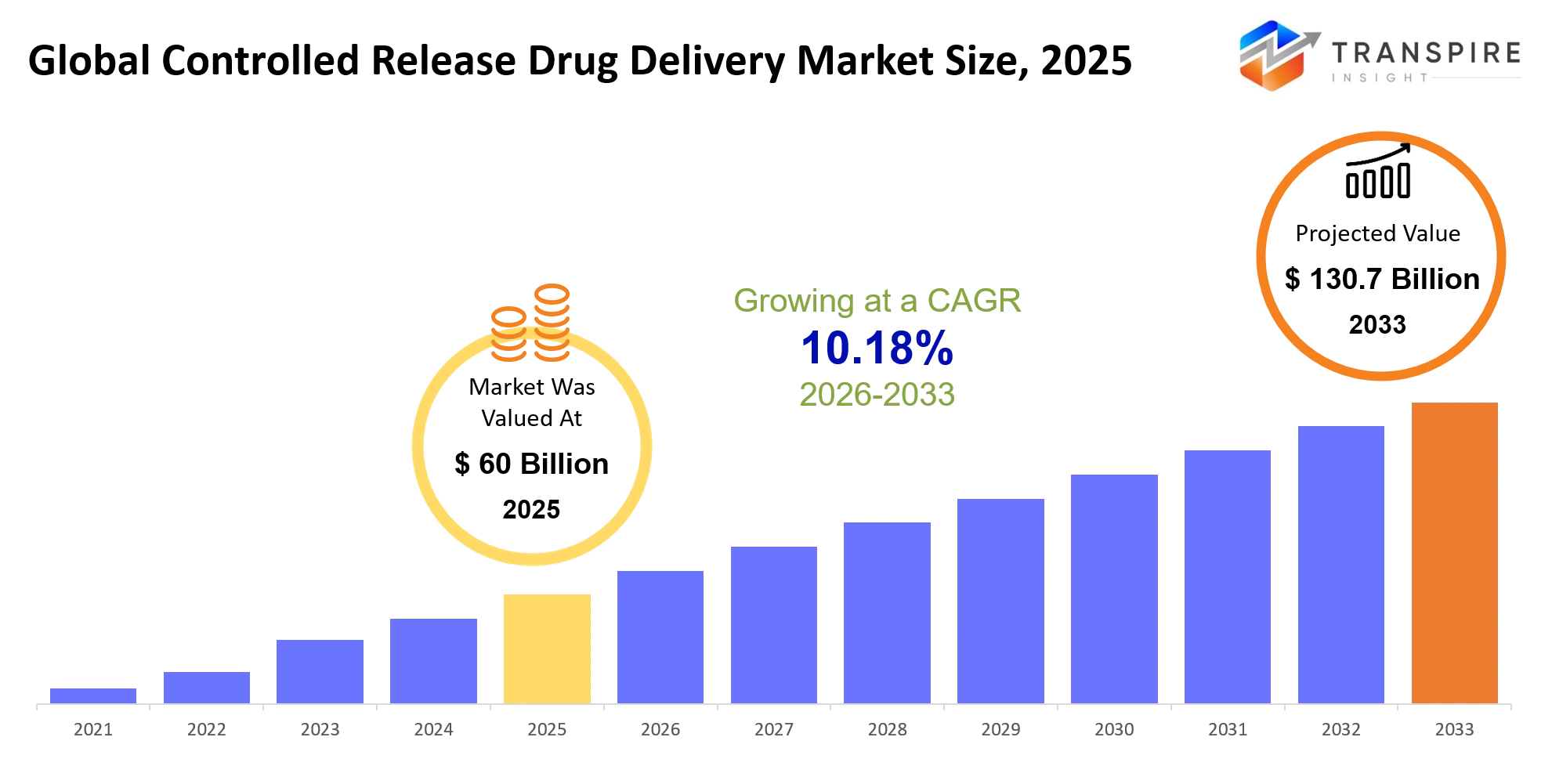
- Global Controlled Release Drug Delivery Market Size 2025: USD 60 Billion
- Global Controlled Release Drug Delivery Market Size 2033: USD 130.7 Billion
- Global Controlled Release Drug Delivery Market CAGR: 10.18%
- Global Controlled Release Drug Delivery Market Segments: By Technology (Polymer-based, Liposomes, Implants, Microspheres, Nanoparticles, Hydrogels, Others); By Route (Oral, Injectable, Transdermal, Ocular, Implantable, Others); By Application (Cancer, Diabetes, Cardiovascular, CNS, Others); By End User (Hospitals, Clinics, Pharma Companies, Others); By Material (Biodegradable, Non-Biodegradable, Hybrid, Others).
Global Controlled Release Drug Delivery Market Summary:
As per Transpire Insight Analysis, the Global Controlled Release Drug Delivery Market size is estimated at USD 60 Billion in 2025 and is anticipated to reach USD 130.7 Billion by 2033, growing at a CAGR of 10.18% from 2026 to 2033.
The controlled release drug delivery market has changed a lot, from the ways of giving people medicine to new ways that make treatment work better, reduce the number of times people have to take medicine and help people take their medicine as they should.
In the past few years, companies that make medicine have been working hard on ways to give people medicine that keeps working for a long time, especially for diseases like cancer, diabetes and heart problems that people have for a long time. One big change is that more and more companies are using technology to deliver medicine in a way that targets the right parts of the body and releases the medicine in a controlled way. Because more people are getting diseases that last a long time and people want treatments that are easy to use, companies are investing more money in new ways of giving people medicine. The government is also helping by supporting ways of delivering medicine, and scientists are still working on making materials that can break down naturally, which is helping the controlled release drug delivery market grow. As doctors and nurses try to make people better and keep them out of the hospital, controlled release systems are becoming an important part of how medicine is given, which is helping the controlled release drug delivery market keep growing in countries with good healthcare systems and in countries that are still developing their healthcare systems.
The controlled release drug delivery market is really important for the future of medicine, and the controlled release drug delivery market will keep growing as companies make better controlled release drug delivery systems.
Key Market Insights:
A trend of shift towards precise drug administration is evident in the market, with emphasis on technologies to enhance effectiveness and reduce adverse side effects. Rising investments in innovative formulations and drug delivery systems are creating new competition dynamics within therapeutic segments.
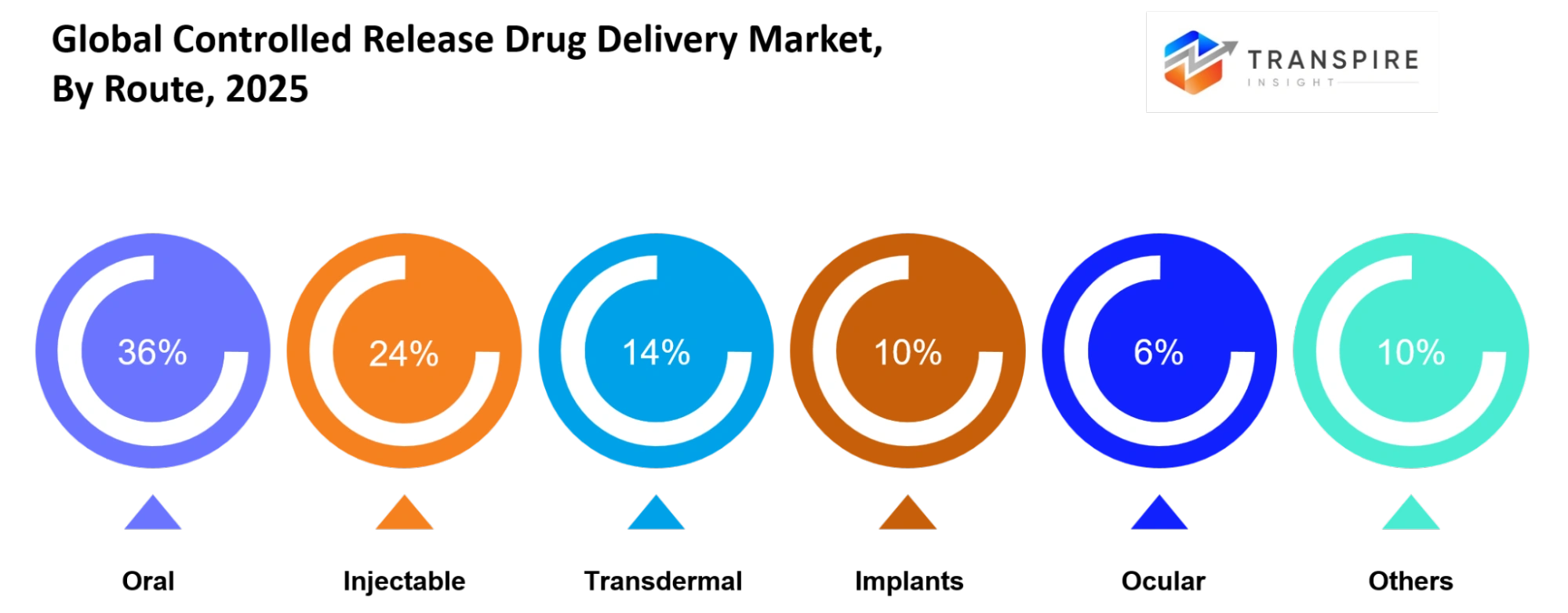
- Oral drug delivery systems occupy 36% of the market share owing to the consumer preference for a non-invasive and convenient way of administering drugs.
- Injectable drug delivery systems have 24% of the market share with rising development of long-lasting biologics and speciality drugs by pharmaceutical companies.
- Transdermal systems occupy 14% of the market with advancements in technology and higher patient compliance.
- Implanted drug delivery systems comprise 10% of the market and their use is gaining momentum in cancer therapy and chronic disease management.
- Ocular drug delivery systems occupy 6% of the market with growing innovations in ophthalmic drugs.
- Other drug delivery systems comprise 10% of the market share owing to growing diversity in therapy.
- Nanoparticle drug delivery technology is the fastest-growing segment with 18.8% CAGR due to precision medicine initiatives.
- Major pharmaceutical companies are increasing their investments in biodegradable polymers and smart drug delivery materials.
What are the Key Drivers, Restraints, and Opportunities in the Global Controlled Release Drug Delivery Market?
Drivers
The factor driving growth is the rising burden of chronic diseases necessitating the need for long-term medication management. Diseases like cancer, diabetes, neurological problems, and cardiovascular disorders usually require prolonged drug delivery. It has motivated pharmaceutical companies to design delivery systems that not only increase adherence but also reduce the dose frequency. Expansion of biologics and speciality drugs has further fueled the use of controlled release technology.
Restraints
The complexity involved in the development and manufacturing of advanced delivery systems. Designing products that provide consistent release and meet regulatory standards calls for heavy capital investment. Specialised materials, clinical validations, and stringent approvals are making the process even more expensive and time-consuming. This particular challenge continues to affect small pharmaceutical companies in a big way.
Opportunities
Nanotechnology and precision medicine are some of the major opportunities available in the market. Controlled release systems based on nanoparticles will improve drug targeting and decrease toxicity. Investment in the area of personalised medicine in the Asia-Pacific region is providing a favourable environment for innovations. It is expected that partnerships among pharmaceutical and biotech companies and research institutions will bring more such products to the market.
What Has the Impact of Artificial Intelligence Been on the Global Controlled Release Drug Delivery Market?
AI is being increasingly used in the creation and optimisation of controlled drug delivery systems. Companies are employing AI technologies to study molecular behaviour, predict release kinetics and find the best design options before starting the physical testing of formulations. Thus, development time frames get shortened, and development costs get lowered.
AI technology is used in predicting the interaction between molecules, drugs, and polymers, nanoparticles, liposomes and other materials in various physiological conditions. Machine learning systems help find the best ways of delivering drugs depending on their type and purpose.
From the point of view of manufacturing, the use of AI helps monitor all the production parameters, detect all formulation issues and help with quality control procedures. Analytics help to increase batch consistency and regulatory compliance, and reduce waste. There are certain obstacles that do not allow AI to be widely used in drug delivery systems. The high cost of deploying the technology, the lack of special datasets and the problems of integrating AI into current processes in pharmaceutical development make it difficult to implement this technology. In any case, the process of digitalisation and innovations in pharmaceuticals will continue in the following years. In May 2025, Akums Drugs and Pharmaceuticals patented an extended-release combination of Doxylamine and Pyridoxine intended to manage nausea and vomiting among pregnant women. This development is reflective of the growing emphasis being put on the development of controlled-release drugs within the region.
Key Market Trends:
Trends in the field include personalised therapies for better treatment outcomes and lower side effects for patients. Advancements in technology, including materials sciences, nanotechnology, and biologics, will change the future of drug delivery technologies.
- Use of nanoparticles in the design of new formulations to deliver therapeutics in a targeted manner.
- Increasing usage of biodegradable polymers in drug delivery technologies.
- Development of long-acting injectables used to treat chronic conditions.
- Emergence of smart implants with drug delivery capabilities.
- Biologics integrated into drug delivery technologies.
- Increasing trend in the use of personalised medicines by pharmaceutical companies.
- Digital formulation development using artificial intelligence.
- Reducing frequency of treatment through advances in technology.
- Collaborations between biotechnology companies and pharmaceutical companies.
- Focus on precision medicine and targeted oncology.
Global Controlled Release Drug Delivery MarketSegmentation
By Technology
Polymer-based drug delivery methods continue to hold a solid position in the market owing to their safe nature and wide-ranging applications in medicines. Targeted therapy through liposomes continues to gain ground, while implants offer a lasting remedy in the treatment of chronic diseases. Microspheres continue to be significant in sustained drug delivery, while nanoparticle delivery is fast becoming the fastest-growing technology sector in the market, growing at a CAGR of 18.8% due to their improved ability of targeting. Hydrogels and other forms of advanced materials continue to attract interest in the next generation of therapeutics.
By Route
Oral controlled release systems remain dominant in the market with a 36% share as a result of patient acceptability and ease of administration. Injectable drug delivery accounts for 24%, driven by development in biologics and speciality drugs. The transdermal drug delivery systems make up 14% of the market share as a result of advancements in patches, while implantation systems make up 10% and ocular delivery 6%, while others constitute 10% of the market.
By applications
Cancer treatment will be an important area for revenue generation due to the requirement of specific and constant drug delivery. Management of diabetes will continue using controlled release technology to ensure patient compliance. Cardiovascular treatments will continue benefiting from extended-release drugs, which help in the management of the condition. There is increased use of advanced delivery technology in central nervous system disorders, among other areas.
By end users
Hospitals are among the important end users, owing to the administration of speciality and advanced therapies. Clinics will continue expanding the usage of controlled release technology, which helps patients manage diseases at home. Pharmaceutical companies lead the way when it comes to research and commercialisation of controlled release technologies.
By material
Biodegradable materials have seen significant preference as they minimise safety issues over time as well as make the process of removing devices unnecessary. Non-biodegradable materials still retain importance in some special uses where they can perform for a longer period of time. Hybrid materials are being favoured because they can incorporate many functional capabilities.
What are the Key Use Cases Driving the Global Controlled Release Drug Delivery Market?
Long-term disease management is the main use case scenario, especially using oral controlled release systems, which make up 36% of the market share. Controlled release formulations allow the maintenance of optimal drug concentration, decrease the dosing regimen, and improve adherence. Additional application areas include oncology, diabetes, cardiovascular and neurological diseases. Medical practitioners tend to use controlled release technologies in order to increase the effectiveness of therapy and reduce adverse effects and personalise treatment approaches.
Potential use cases will consist of nanoparticles for targeted treatments, applications of precision medicine and biologics delivery. There is an increasing trend of research on smart implants and innovative delivery materials.
|
Report Metrics |
Details |
|
Market size value in 2025 |
USD 60 Billion |
|
Market size value in 2026 |
USD 66.3 Billion |
|
Revenue forecast in 2033 |
USD 130.7 Billion |
|
Growth rate |
CAGR of 10.18% from 2026 to 2033 |
|
Base year |
2025 |
|
Historical data |
2021 - 2024 |
|
Forecast period |
2026 - 2033 |
|
Report coverage |
Revenue forecast, competitive landscape, growth factors, and trends |
|
Regional scope |
United States; Canada; Mexico; United Kingdom; Germany; France; Italy; Spain; Denmark; Sweden; Norway; China; Japan; India; Australia; South Korea; Thailand; Brazil; Argentina; South Africa; Saudi Arabia; United Arab Emirates |
|
Key company profiled |
Johnson & Johnson, Pfizer, Novartis, Roche, Merck, Teva, AbbVie, AstraZeneca, Bausch Health, Medtronic, BD, Evonik, Lubrizol, West Pharma, Catalent. |
|
Customization scope |
Free report customization (country, regional & segment scope). Avail customized purchase options to meet your exact research needs. |
|
Report Segmentation |
By Technology (Polymer-based, Liposomes, Implants, Microspheres, Nanoparticles, Hydrogels, Others); By Route (Oral, Injectable, Transdermal, Ocular, Implantable, Others); By Application (Cancer, Diabetes, Cardiovascular, CNS, Others); By End User (Hospitals, Clinics, Pharma Companies, Others); By Material (Biodegradable, Non-Biodegradable, Hybrid, Others). |
Which Regions are Driving the Global Controlled Release Drug Delivery Market Growth?
North America
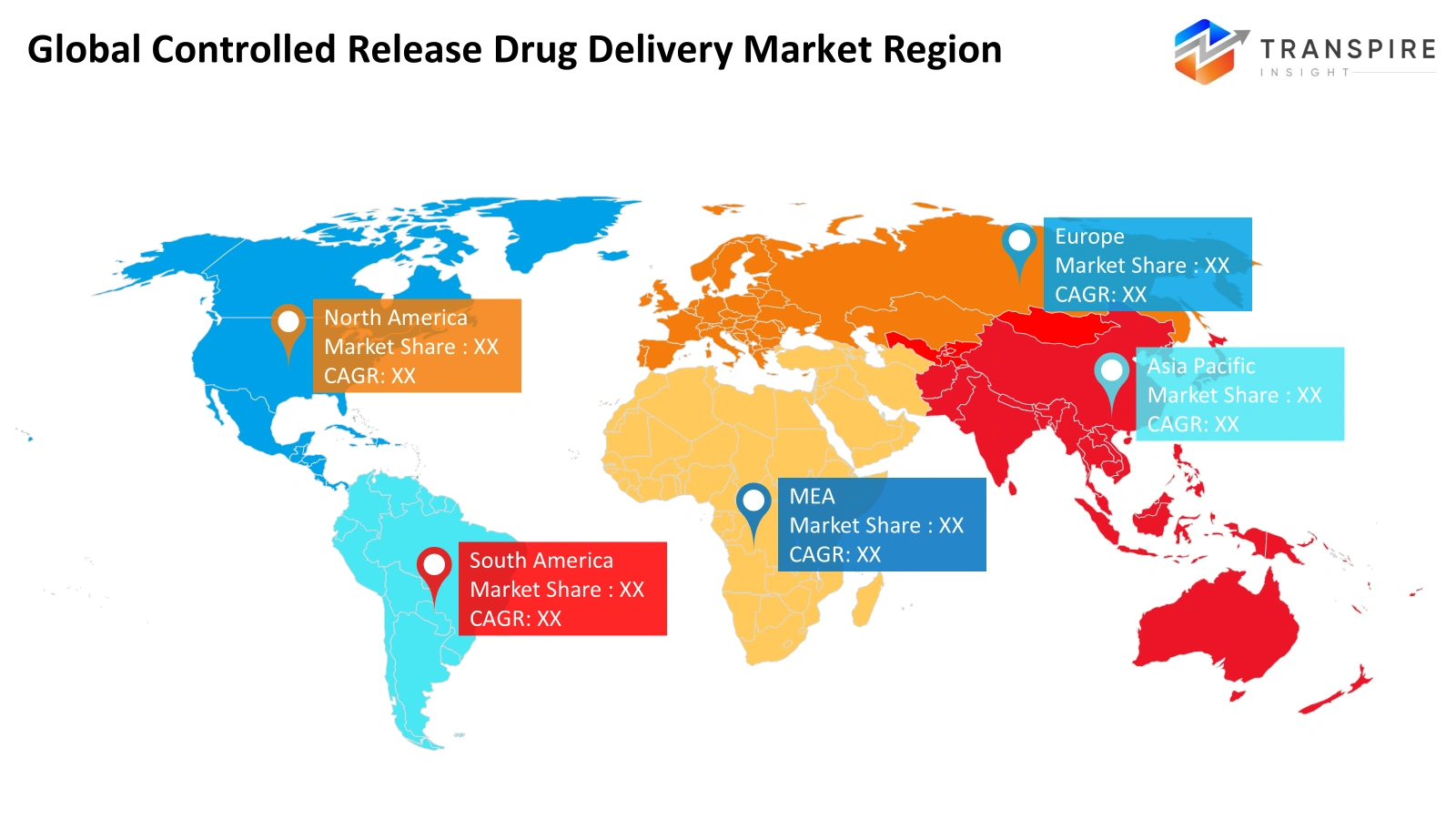
North America holds the largest market share of 45%, thanks to its advanced pharmaceutical research, significant healthcare expenditure, and the wide usage of cutting-edge drug delivery technologies. The region is characterised by a high level of clinical trials and established regulations that encourage commercialisation. The continued innovation by pharmaceutical and biotechnological companies ensures sustained growth. The rise of chronic diseases also plays a significant role in driving the demand for innovative solutions.
Europe
The market segment in Europe accounts for 27%. The stability of this market segment is ensured by the established healthcare system and substantial investments in research. Unlike North America, Europe focuses on regulatory harmonisation and sustainable pharmaceutical development. Active cooperation between academia and industries ensures continuous innovation. The rising demand for patient-specific therapies helps sustain the growth of the market.
Asia-Pacific
Asia-Pacific occupies 21% of the global market revenue share and demonstrates the highest CAGR of 16.9%. Rapid development of the healthcare infrastructure, pharmaceutical manufacturing capacities, and increased healthcare expenditure have significantly changed the regional landscape. The increase in access to advanced therapies and clinical research is expected to drive the usage of such drugs. The growing biotechnological and precision medicine investments create promising growth opportunities.In May 2025, Akums Drugs and Pharmaceuticals patented an extended-release combination of Doxylamine and Pyridoxine intended to manage nausea and vomiting among pregnant women. This development is reflective of the growing emphasis being put on the development of controlled-release drugs within the region.
Who are the Key Players in the Global Controlled Release Drug Delivery Marketand how do they Compete?
Competition in the controlled release drug delivery industry is characterised by technological advancement, knowledge in formulation, and strategic partnership. Competition in the industry involves companies trying to develop an advanced delivery system that will be able to enhance the performance of the drugs and solve complicated treatment needs.
Some of the major players in the industry include Pfizer, Johnson & Johnson, Novartis, Merck & Co., and Bausch Health Companies. These companies spend a lot of time and resources in research and development with the aim of creating more sustained-release treatments and specialty drug treatments.
These companies differentiate themselves through their technology, biodegradable substances, nanoparticle delivery systems, and therapeutic platform targeting. Strategic collaboration with biotech companies, research organisations, and contract development organisations is an important means of speeding up innovation.
Global Controlled Release Drug Delivery Market companies
- Johnson & Johnson
- Pfizer
- Novartis
- Roche
- Merck
- Teva
- AbbVi
- AstraZeneca
- Bausch Health
- Medtronic
- BD
- Evonik
- Lubrizol
- West Pharma
- Catalent
Recent Development News
In March 2025, Merck & Co. revealed its plan to introduce an injectable form of Keytruda in the US market. The new method of controlled release and convenient use allows for decreasing the treatment process from about 30 minutes to just 2 minutes.
Source: https://www.reuters.com
In November 2025, Pacira BioSciences joined hands with GQ Bio Therapeutics in order to develop AMT-143, which is a sustained delivery gene silencing therapeutic platform. The financial backing provided by Pacira towards clinical development of the platform up till commercialization shows that sustained drug delivery systems are gaining investment interest.
Source: https://www.tandfonline.com
June 2026, Novo Nordisk received UK approval for its Wegovy oral pill, further demonstrating the product growth in the area of oral drug delivery technology. This clearly indicates that there is a growing need for sustained-release oral medications.
Source: https://www.reuters.com
What Strategic Insights Define the Future of the Global Controlled Release Drug Delivery Market?
Precision medicine, targeted therapeutics, and integration of materials technology and digitalisation technologies are the main factors that will influence the future of the market. Currently, pharmaceutical organisations are shifting their focus from simple dosage forms towards highly efficacious delivery systems, which decrease the burden of therapy on the patient. One of the underestimated risks is an increasing difficulty in regulatory compliance for new drug delivery devices and combinations of products. Possible delays in approvals might have an impact on the commercialisation strategy and costs of development.
One of the promising opportunities is a combination of nanoparticle delivery of targeted therapies and utilisation of artificial intelligence in the development process. Such a combination could positively affect the treatment result and speed up innovation cycles. Companies that invest in advanced delivery systems, strategic cooperation, and production capacity would gain an advantage.
Key Segmentations are:
By Technology
- Polymer-based
- Liposome
- Implants
- Microspheres
- Nanoparticles
- Hydrogels
By Route
- Oral
- Injectabl
- Transdermal
- Ocular
- Implantable
By Application
- Cancer
- Diabetes
- Cardiovascular
- CNS
By End User
- Hospitals
- Clinics
- Pharma Companies
By Material
- Biodegradable
- Non-Biodegradable
- Hybrid
Regional Outlook
North America
- United States
- Canada
- Mexico
Europe
- Germany
- United Kingdom
- France
- Spain
- Italy
- Rest of Europe
Asia Pacific
- Japan
- China
- Australia & New Zealand
- South Korea
- India
- Rest of Asia Pacific
South America
- Brazil
- Argentina
- Rest of South America
Middle East & Africa
- Saudi Arabia
- United Arab Emirates
- South Africa
- Rest of the Middle East & Africa
Frequently Asked Questions
Find quick answers to common questions.
The global controlled release drug delivery market size was valued at USD 60 Billion in 2025 and is poised to reach USD 130.7 Billion by 2033, expanding at a 10.18% CAGR.
Key segments for the global controlled release drug delivery market are By Technology (Polymer-based, Liposomes, Implants, Microspheres, Nanoparticles, Hydrogels, Others); By Route (Oral, Injectable, Transdermal, Ocular, Implantable, Others); By Application (Cancer, Diabetes, Cardiovascular, CNS, Others); By End User (Hospitals, Clinics, Pharma Companies, Others); By Material (Biodegradable, Non-Biodegradable, Hybrid, Others).
Growth is primarily driven by the key factors influencing growth include the increase in the number of chronic illnesses, high demand for drug delivery devices, increased use of advanced drug formulations, and advancements in biodegradable polymers and nanotechnology drug delivery systems. The aging population and the demand for improved patient compliance are other factors contributing to market growth.
The global market is led by major manufacturers including (Include company players list).
North America dominates the global market for controlled release drug delivery technologies owing to its share of around 45% in the market, thereby making it the dominant regional market. Factors behind this dominance include the existence of highly developed pharmaceutical and biotech industries, substantial health care expenditure, drug delivery research, favorable regulatory environment, and increasing use of novel medicines.
Opportunities in the global controlled release drug delivery market are growing due to rising demand for long-acting medications, growing adoption of drug delivery systems targeting specific parts of the body, increasing number of biologics and speciality medicines, rising investments in new drug formulations, and the emergence of new business opportunities in the treatment of diseases such as diabetes, cancer, and heart ailments.
- Johnson & Johnson
- Pfizer
- Novartis
- Roche
- Merck
- Teva
- AbbVi
- AstraZeneca
- Bausch Health
- Medtronic
- BD
- Evonik
- Lubrizol
- West Pharma
- Catalent
About the Authors

Pankaj Ghogare Patil
I am Pankaj Ghogare Patil, a Senior Research Analyst at Transpire Insight, specializing in the Pharmaceutical, Chemicals & Materials, Healthcare IT, and Biotechnology industry. My expertise lies in conducting comprehensive market research, analyzing industry trends, evaluating competitive landscapes, and translating complex data into actionable insights. At Transpire Insight, I closely follow emerging technologies, regulatory developments, and market innovations to create accurate, well-researched, and informative content that helps businesses and professionals make informed decisions. I am committed to producing credible, evidence-based articles that reflect industry best practices while making technical topics accessible and valuable for a broad audience.

Chakradhar Khansole
Chakradhar serves as the Research Director at Transpire Insight, bringing over 8 years of experience in technology, innovation, and strategic market intelligence. He specializes in transforming complex market data into actionable business insights that enable organizations to make informed, growth-oriented decisions. Recognized for his strategic vision and analytical expertise, Chakradhar leads high-impact research initiatives, delivering comprehensive market assessments, competitive intelligence, and forward-looking industry analysis.
Recently Published Reports
-
Jul 2026
Alopecia Treatment Market
Alopecia Treatment Market Size, Share & Analysis Report By Disease Type (Alopecia Areata, Cicatricial Alopecia, Traction Alopecia, Alopecia Totalis, Androgenetic Alopecia, Alopecia Universalis, and Other Disease Types), By Treatment Type (Topical Treatments, Oral Medications, Injectable Therapies, and Hair Transplantation), By Gender (Male, and Female), By Distribution Channel (Hospitals and Clinics, Retail Pharmacies, and Online Retailers), and Geography (North America, Europe, Asia-Pacific, Middle East and Africa, South and Central America), 2021 - 2031
-
Jul 2026
Medical Ultrasound Probe Market
Medical Ultrasound Probe Market Size, Share & Analysis Report By Type (Linear Type, Convex Type, Endocavitary Probe, Phased Array/Cardiac Probe, Transesophageal (TEE) Probe, and Others), By Application (Ophthalmology, Cardiology, Musculoskeletal, Oncology, Obstetrics & Gynecology, General Imaging, and Others), By End User (Hospitals & Clinics, Diagnostic Centers, Ambulatory Surgical Centers, and Others), and Geography (North America, Europe, Asia-Pacific, Middle East and Africa, South and Central America), 2021 – 2031
-
May 2026
Biosimilars Market
Biosimilars Market By Product Type (Monoclonal Antibodies, Recombinant Hormones, Erythropoietin, G-CSF, Others), By Indication (Oncology, Autoimmune Diseases, Blood Disorders, Diabetes, Others), By Manufacturing Type (In-House Manufacturing, Contract Manufacturing), By Distribution Channel (Hospital Pharmacies, Retail Pharmacies, Online Pharmacies), By Industry Analysis, Size, Share, Growth, Trends, and Forecasts 2021-2033
-
Apr 2026
Gastrointestinal Endoscopy Market
Gastrointestinal Endoscopy Market By Type (Rigid Gastrointestinal Endoscope, Flexible Gastrointestinal Endoscopes, Disposable Gastrointestinal Endoscope), By Procedure Type (Colonoscopy, Gastroscopy, Duodenoscopy, Enteroscopy, Flexible Sigmoidoscopy, Others), By Application (Diagnosis, Treatment), By End-Users (Hospitals, Ambulatory Surgical Centers, Specialty Clinics, Laboratories, Others), By Industry Analysis, Size, Share, Growth, Trends, and Forecasts 2021-2033