

Global Construction Punch List Software Market Size & Forecast:
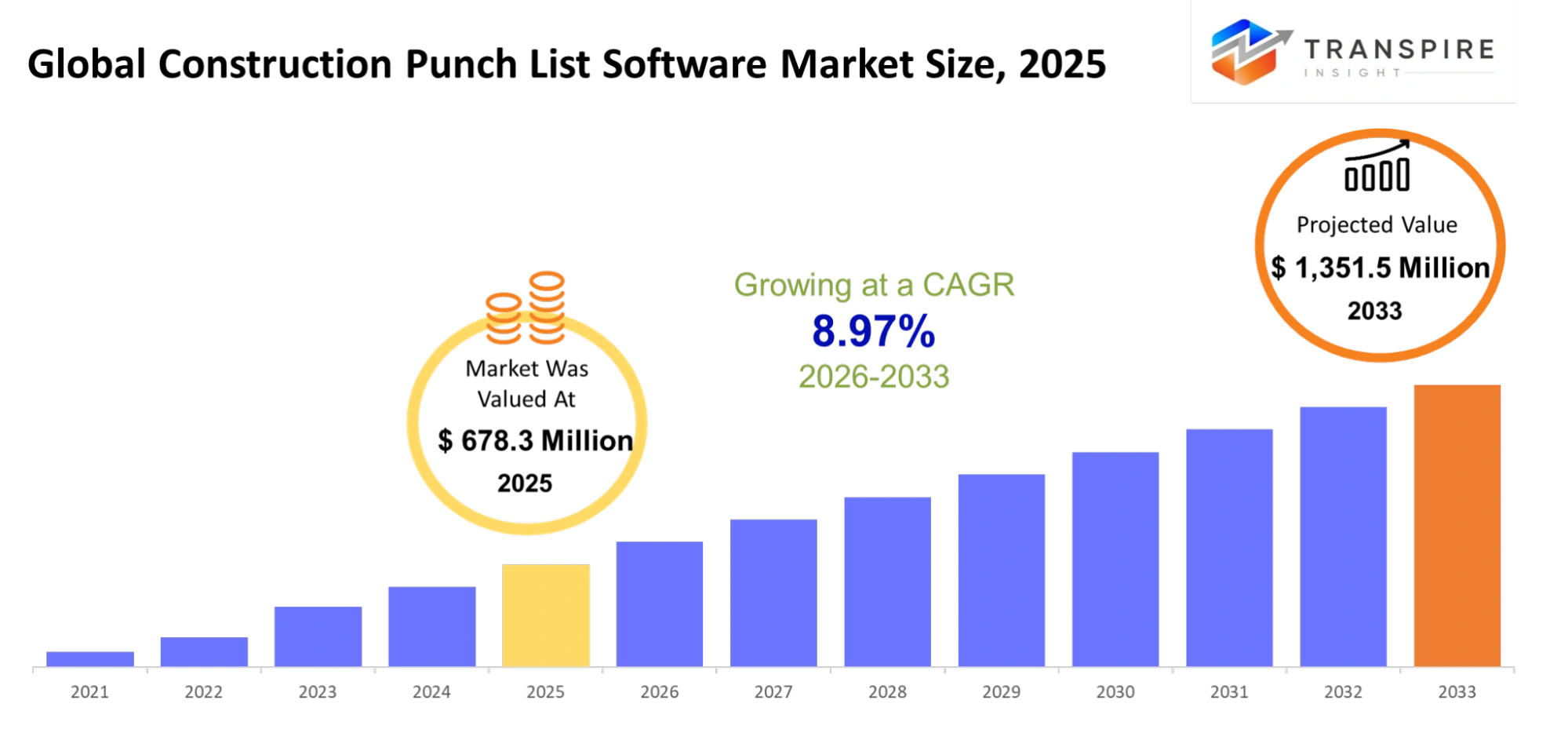
Global Construction Punch List Software Market Size 2025: USD 678.3 Million
Global Construction Punch List Software Market Size 2033: USD 1,351.5 Million
Global Construction Punch List Software Market CAGR: 8.97%
Global Construction Punch List Software Market Segments: By Deployment (Cloud-based, On-Premise), By Organization Size (Large Enterprises, SMEs), By Application (Residential Construction, Commercial Construction, Infrastructure Projects), By End-User (Contractors, Builders, Architects, Project Managers).
To learn more about this report,  Download Free Sample Report
Global Construction Punch List Software Market Summary:
The Global Construction Punch List Software Market was valued at USD 678.3 million in 2025. It is forecast to reach USD 1,351.5 million by 2033. The CAGR over that period is 8.97%.
Punch list software tracks your defects and uncompleted tasks right up until the end of your project. Your team logs their problems on a mobile device right at the work site itself. Supervisors assign tasks and give them deadlines. When something's done, they sign it off using the same system - it really replaces all those paper lists and email threads. This whole process significantly speeds up time from defect identification to completion.
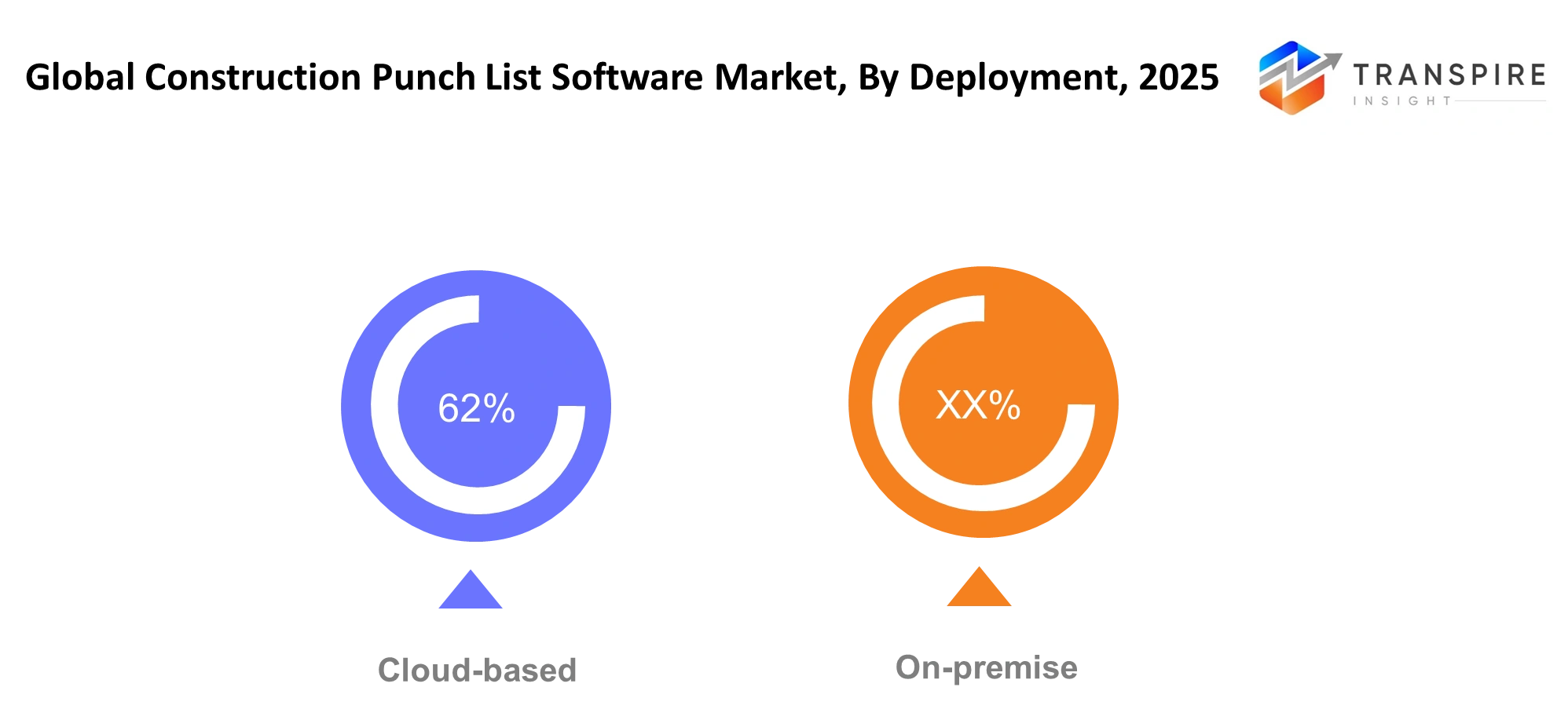
Cloud-based deployment accounts for roughly 62% of the market's revenue. Cloud tools work just about anywhere you have internet access. Updates happen all by themselves. You don't even have a server to worry about keeping on site. These features fit construction teams very well when they're constantly moving from one project to another. Smaller contractors often find cloud tools much more accessible than traditional on-premise systems.
The market has really grown since project owners are now demanding much faster closeouts. A slow punch list process seriously delays the certificate of occupancy. And that delays all the revenue for the developers. Software really reduces that gap. It also creates a permanent record. Inspectors and owners can see every defect - and how we fixed it all along the way.
Construction projects are getting much more complicated. Many more subcontractors work on each project. Coordinating between different trades is really harder. Punch list software really gives everybody a single view of what still needs to be done. That's super important on big commercial and infrastructure projects where thousands of items really need tracking.
Key Market Trends & Insights:
- Mobile-first punch list tools are now outselling desktop-only platforms. Field teams really want to be able to log their issues from their phones. Vendors who didn't get on board with mobile early have fallen behind very quickly.
- AI-based defect detection technology is starting to enter the market. A few tools are using photos to automatically spot problems. This is still very new, but its adoption is gaining speed - especially on big projects.
- Integration with BIM platforms is now an expected standard. Contractors really want punch list items linked directly to a model's location. Standalone tools that can't connect to BIM are getting harder to sell all the time.
- Adoption by SMEs (small-to-medium-sized enterprises) is growing a lot faster than adoption by large companies. Cloud pricing has dropped enough so that small firms can sign up for it. Vendors are competing extremely hard for this segment.
- Data from closed projects is being used to forecast how long it'll take to wrap things up. Companies with lots of historical punch list data have a huge advantage when it comes to bidding and planning.
Global Construction Punch List Software Market Segmentation
By Deployment
- Cloud-based tools hold approximately 62% of the market today. They hold your data on remote servers. Your team accesses them via a web browser or mobile application. You won't have to set up any local software - and there's no need to worry about managing updates. Your pricing will generally be per user each month. This is perfect for companies that appreciate a very predictable billing structure. Cloud tools even enable several project teams to collaborate on data very easily. A contractor working on ten jobs simultaneously could see every single punch list from just one central dashboard. Companies like Procore and Fieldwire designed their products with a 'cloud-first' approach from the beginning. That early positioning really paid off as the industry moved more towards mobile and remote access itself. Data security issues slowed adoption of cloud solutions a bit in some government infrastructure projects. Nonetheless, high-grade encryption methods and compliance certifications really addressed nearly all of those concerns.
- On-premise systems are set up on servers that the company itself manages. Your data will always stay within the company's internal network. Many major construction companies and government project owners really prefer this option for their data governance requirements. On-premise deployments do demand the involvement of an IT team to update and back up the system regularly. The initial cost will typically be higher compared to ongoing cloud subscriptions. Nevertheless, the overall long-term cost of ownership may actually end up being lower for very large organizations running many software licenses. This segment is shrinking slightly as a percentage of the global construction punch list software market. The majority of recent purchases now go to cloud tools. On-premise systems remain quite relevant where data control laws really prohibit cloud storage. Defense and highly critical infrastructure projects in some countries continue to require on-premise installations for these kinds of reasons.
To learn more about this report, Download Free Sample Report
By Organization Size
- Large Enterprises: Large enterprises comprise general contractors, real estate developers, and project management companies managing numerous massive projects all at once. They purchase punch list software as a component of a more extensive construction management platform. Integration with ERP systems, accounting software, and scheduling tools is a necessity. Autodesk, Procore, and Oracle really compete head-to-head in this segment. Sales cycles are extremely long. Procurement involves the IT, legal, and operations teams. When a big company standardizes on a platform, changing it costs an arm and a leg. This creates retention rates higher than 90% for suppliers with strong enterprise customer bases. Large enterprises also drive the demand for analytics features, because they want to use past punch list data to improve estimating and project planning even further.
- SMEs: SMEs in construction make up small general contractors, specialized subcontractors, and residential builders. They generally handle fewer ongoing projects. They have much smaller teams - and less IT assistance. Cloud-based punch list tools with very straightforward mobile interfaces are the most feasible choice for this group. Price sensitivity is off the charts. Lots of SMEs start out with a free or relatively inexpensive tier and then upgrade as their project workload expands. Buildertrend, CoConstruct, and Contractor Foreman have really built out significant user bases in this segment. The SME market is extremely fractured. There are literally thousands of small construction companies all over the world. Suppliers that can get and hold onto SME clients at a very low cost through self-service setup and very reasonable monthly fees are growing much faster than those relying on long enterprise sales cycles.
By Application
- Residential construction: It uses punch list software at project handover. Builders will create a list of items that remain unfinished or are defective prior to the homeowner taking possession. Commonly included are items such as paint touch-ups, adjustments to doors, installation of fixtures, and spaces in landscaping. The buyer or their inspector adds items during a walk-through. The builder assigns each item to a subcontractor. Software tracks completion and captures the sign-off. Without software, this process would use either paper or emails. Disputes arise more frequently about what was agreed upon when there's no single, unified record. Residential punch lists are generally shorter than those of commercial projects. Nevertheless, the number of residential projects is quite high indeed. Platforms like CoConstruct and Buildertrend have really built up a large user base for this application.
- Commercial construction: On the other hand, yields longer and far more complex punch lists compared to residential projects. An office fit-out or a retail development for commercial properties might have several thousand separate items spread across many different trades. Items are linked to specific rooms, floors, and even systems. Issues with mechanical/electrical/plumbing (MEP) installations, fires-stopping gaps, and compliance items related to accessibility, along with commissioning failures, are all part of commercial punch lists. Multiple parties would review and dispute items - including the owner, general contractor, subcontractors, and inspectors. Software with role-based access controls, comment threads per item, and documentation through photos is extremely essential for managing the sheer volume of work involved. Procore, Aconex, and PlanGrid really compete strongly in this area of application. The final closing phase on commercial projects is usually the most profitable and critical time frame for developers, because building permits, tenant occupation, and lease start dates all depend on completing the punch list items.
- Infrastructure projects - Such as roads, bridges, rail, airports, and utilities - also utilize punch lists. These projects operate under contract terms that specify inspection procedures, defect categories, and repair timelines. Clients from government agencies and engineering consultants are primarily the end-users on the owner side. General contractors and specialized subcontractors handle the process of fixing defects. Some items may actually require additional testing or re-commissioning once repaired. This requires some added steps that standard punch list software should be able to accommodate. The actual number of items on larger infrastructure projects can be extremely large indeed. A massive airport or rail corridor project could possibly generate tens of thousands of punch list items across several different contract packages. Trimble, Oracle, and e-Builder really have developed their platforms to handle such a high scale of work - along with the comprehensive contract documentation requirements that come with delivering public infrastructure projects.
By End-User
- Contractors: This are really the primary consumers in the Global Construction Punch List Software Market. They develop and oversee punch lists - on behalf of the project owner or as part of their contractual agreements. General contractors make use of software to allocate tasks to subcontractors, track resolution, and document completion itself. Subcontractors access the same platform to receive their assigned items and record completion with images. This really eliminates the time gap between an issue being identified and the corresponding subcontractor being informed. In projects where subcontractors are based in several locations, mobile access is very important indeed. Contractors evaluate punch list tools based on how easy they are to use in the field, the speed of item generation, photo attachment capabilities, and the quality of the closeout report produced at the end of the process itself.
- Builders: Builders especially in the residential sector, use punch list software to handle the handover process with homebuyers. The list is generated during a pre-agreed settlement inspection. Every item is photographed and set with a completion deadline. The homebuyer or their representative might be able to access a portal to check the current status of each item. This level of transparency significantly reduces disputes at final settlement. Builders also utilize historical punch list data to spot recurring flaws from specific subcontractors.
- Architects: They use punch list software primarily for contract administration purposes. Their role is to ensure that construction meets the design intent and specifications accurately. While visiting the site, they log discrepancies and issues. These items are then issued to the contractor for resolution. The architect will re-inspect and either accept the corrective action or reject it. Software that links drawings and specifications lets architects link every item to the corresponding document itself.
- Project managers: They really need to see what items are open, what's past due, and what's stopping the final inspection. Dashboards showing punch list status by trade, area, or responsible party are the features project managers value most. They also use software to generate progress reports for the project owner themselves.
Regional Insights
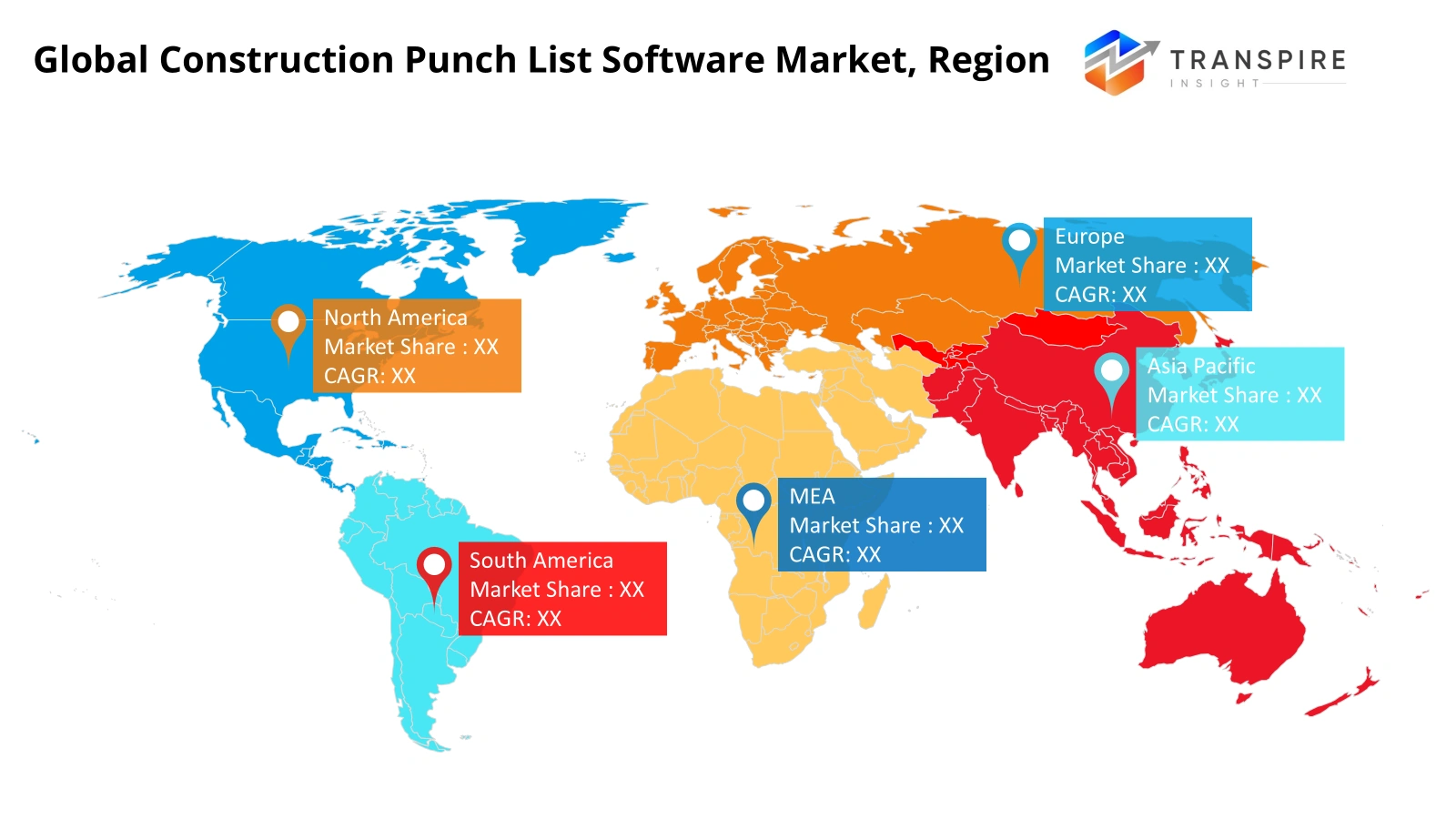
North America is our biggest regional market. The United States really stands out with its high software adoption in construction. Large contractors have mostly settled on cloud platforms. Government regulations for project documentation really boost the use of punch list software. Canada follows a somewhat similar pattern, albeit on a smaller scale.
Europe ranks second in terms of size of the market. The UK, Germany, and the Netherlands are the leaders in adoption. Mandates on public projects in these countries for Building Information Modelling (BIM) have pushed contractors towards using all-in-one digital tools more heavily. Punch list software that connects to BIM models really does well here. Eastern Europe is still earlier in the adoption curve itself.
Asia-Pacific is expanding very quickly indeed. Australia boasts some of the strongest adoption, driven by lots of large commercial and infrastructure projects. Japan and South Korea also boast quite developed construction technology markets already. China has an enormous construction sector - yet has lower spending on software per firm. India is an extremely early stage - yet very large opportunity. Infrastructure investment there is going at incredibly high volumes. Local and regional vendors do compete - alongside global platforms everywhere.
The Middle East hosts quite active construction markets in the UAE and Saudi Arabia. Very large-scale development projects need some serious structured defect management. International contractors working there will often bring their existing software platforms themselves. Local adoption is growing significantly as domestic firms see the real difference in efficiency on very complex projects.
To learn more about this report, Download Free Sample Report
Recent Development News
In November 2023, Autodesk enhanced Build (Construction Cloud) with AI-powered image analysis via its Construction IQ features. AI helps identify quality and safety risks from site images, improving issue detection during inspections.
In September 2023, Introduced AI-driven photo documentation and issue tracking, enabling automatic tagging of defects from site imagery. Reduces manual effort and missed defects during walkthroughs.
Report Metrics
|
Report Metrics |
Details |
|
Market size value in 2025 |
USD 678.3 Million |
|
Market size value in 2026 |
USD 740.7 Million |
|
Revenue forecast in 2033 |
USD 1,351.5 Million |
|
Growth rate |
CAGR of 8.97% from 2026 to 2033 |
|
Base year |
2025 |
|
Historical data |
2021 - 2024 |
|
Forecast period |
2026 - 2033 |
|
Report coverage |
Revenue forecast, competitive landscape, growth factors, and trends |
|
Country scope |
Global |
|
Key company profiled |
Autodesk Inc., Procore Technologies Inc., Oracle Corporation, Trimble Inc., Buildertrend Solutions Inc., PlanGrid (Autodesk), Fieldwire Inc., CoConstruct LLC, Contractor Foreman LLC, e-Builder Inc., RedTeam Software LLC, Jonas Construction Software, Viewpoint Inc., Aconex Ltd., LetsBuild. |
|
Customization scope |
Free report customization (country, regional & segment scope). Avail customized purchase options to meet your exact research needs. |
|
Report Segmentation |
By Deployment (Cloud-based, On-Premise), By Organization Size (Large Enterprises, SMEs), By Application (Residential Construction, Commercial Construction, Infrastructure Projects), By End-User (Contractors, Builders, Architects, Project Managers). |
Key Global Construction Punch List Software Company Insights
The global construction punch list software market consists of both large platform providers and smaller specialists. Autodesk competes through PlanGrid and its broader construction cloud platform. Procore has built a significant market share base across contractors of all sizes. Oracle and Trimble focus on large enterprises and infrastructure clients. The mentioned vendors compete in terms of integration depth and platform breadth.
Smaller vendors concentrate their efforts on specific sectors. Buildertrend and CoConstruct serve residential builders. Fieldwire has attracted quite a following among field teams for its fast, user-friendly mobile interface. Contractor Foreman targets small contractors with relatively low-cost plans. LetsBuild focuses on the European construction sector, offering localized compliance features.
The market is indeed consolidating itself. Autodesk acquired PlanGrid and then Procore experienced a loss of market share as a result. Procore responded by adding additional features so as to retain their customers. This pattern of acquisitions and product expansions seems set to continue. Mid-sized vendors that develop very strong, niche areas will remain potential targets for larger platforms.
Company List
- Autodesk Inc.
- Procore Technologies Inc.
- Oracle Corporation
- Trimble Inc.
- Buildertrend Solutions Inc.
- PlanGrid (Autodesk)
- Fieldwire Inc.
- CoConstruct LLC
- Contractor Foreman LLC
- e-Builder Inc.
- RedTeam Software LLC
- Jonas Construction Software
- Viewpoint Inc.
- Aconex Ltd.
- LetsBuild
Global Construction Punch List Software Market Report Segmentation
By Deployment
- Cloud-based
- On-Premise
By Organization Size
- Large Enterprises
- SMEs
By Application
- Residential Construction
- Commercial Construction
- Infrastructure Projects
By End-User
- Contractors
- Builders
- Architects
- Project Managers
Frequently Asked Questions
Find quick answers to common questions.
The Global Construction Punch List Software Market is expected to reach approximately USD 1,351.5 million by 2033.
Key segments include Deployment (Cloud-based, On-Premise), Organization Size (Large Enterprises, SMEs), Application (Residential Construction, Commercial Construction, Infrastructure Projects), and End-User (Contractors, Builders, Architects, Project Managers).
Major players include Autodesk Inc., Procore Technologies Inc., Oracle Corporation, Trimble Inc., Buildertrend Solutions Inc., PlanGrid (Autodesk), Fieldwire Inc., CoConstruct LLC, Contractor Foreman LLC, e-Builder Inc., RedTeam Software LLC, Jonas Construction Software, Viewpoint Inc., Aconex Ltd., and LetsBuild.
The Global Construction Punch List Software Market size is approximately USD 678.3 million in 2025.
The Global Construction Punch List Software Market is expected to grow at a CAGR of 8.97% from 2026 to 2033.
- Autodesk Inc.
- Procore Technologies Inc.
- Oracle Corporation
- Trimble Inc.
- Buildertrend Solutions Inc.
- PlanGrid (Autodesk)
- Fieldwire Inc.
- CoConstruct LLC
- Contractor Foreman LLC
- e-Builder Inc.
- RedTeam Software LLC
- Jonas Construction Software
- Viewpoint Inc.
- Aconex Ltd.
- LetsBuild
Recently Published Reports
-
Apr 2026
Handling and Lifting Equipment Market
Handling and Lifting Equipment Market Size, Share & Analysis Report By Product (Cranes and Hoists, Forklifts, Conveyor Systems, Aerial Work Platforms, Others), By Application (E-Commerce, Automotive and Railway, Food and Beverages, Aviation, Others), and Geography (North America, Europe, Asia-Pacific, Middle East and Africa, South and Central America), 2021 - 2031
-
Apr 2026
HVAC Equipment Market
HVAC Equipment Market Size, Share & Analysis Report By Heating Equipment Type (Boilers and Furnaces, Heat Pumps, and Unitary Heaters), By Ventilation Equipment (Air Handling Units, Humidifiers and Dehumidifiers, Air Filters, and Fan Coiling Units), By Air Conditioning Equipment (Unitary Air Conditioners, Room Air Conditioners, Packaged Terminal Air Conditioners, and Chillers), By End User (Commercial, Residential, Industrial, and others), and Geography (North America, Europe, Asia-Pacific, Middle East and Africa, South and Central America), 2021 – 2031
-
Apr 2026
Refrigeration Valves Market
Refrigeration Valves Market Size, Share & Analysis Report By Type (Solenoid Valves, Expansion Valves, Check Valves, Service Valves, Others), By Application (Commercial Refrigeration, Industrial Refrigeration, Transport Refrigeration, Residential Refrigeration, Air Conditioning Systems), By End User (Food and Beverage Industry, Pharmaceutical Industry, HVAC Industry, Chemical Industry, Others), and Geography (North America, Europe, Asia-Pacific, Middle East and Africa, South and Central America), 2021 – 2031
-
Apr 2026
E-Commerce Packaging Materials Market
E-Commerce Packaging Materials Market By Material Type (Corrugated Boxes, Paper & Paperboard, Foam & Cushioning Materials, Plastic Packaging, Flexible Packaging, Protective Packaging, Others), By Product(Primary Packaging, Secondary Packaging, Tertiary Packaging), By Packaging Function (Protective Packaging, Branding & Presentation Packaging, Transit & Logistic Packaging, Sustainable Packaging, Tamper Evidence Packaging), By End-User (Retail & Consumer Goods, Electronic Appliances, Food & Beverages, Healthcare & Pharmaceutical, Fashion & Apparel, Home & Furnishing, Others); By Industry Analysis, Size, Share, Growth, Trends, and Forecasts 2021-2033