

Global Cognac Market Size & Forecast:
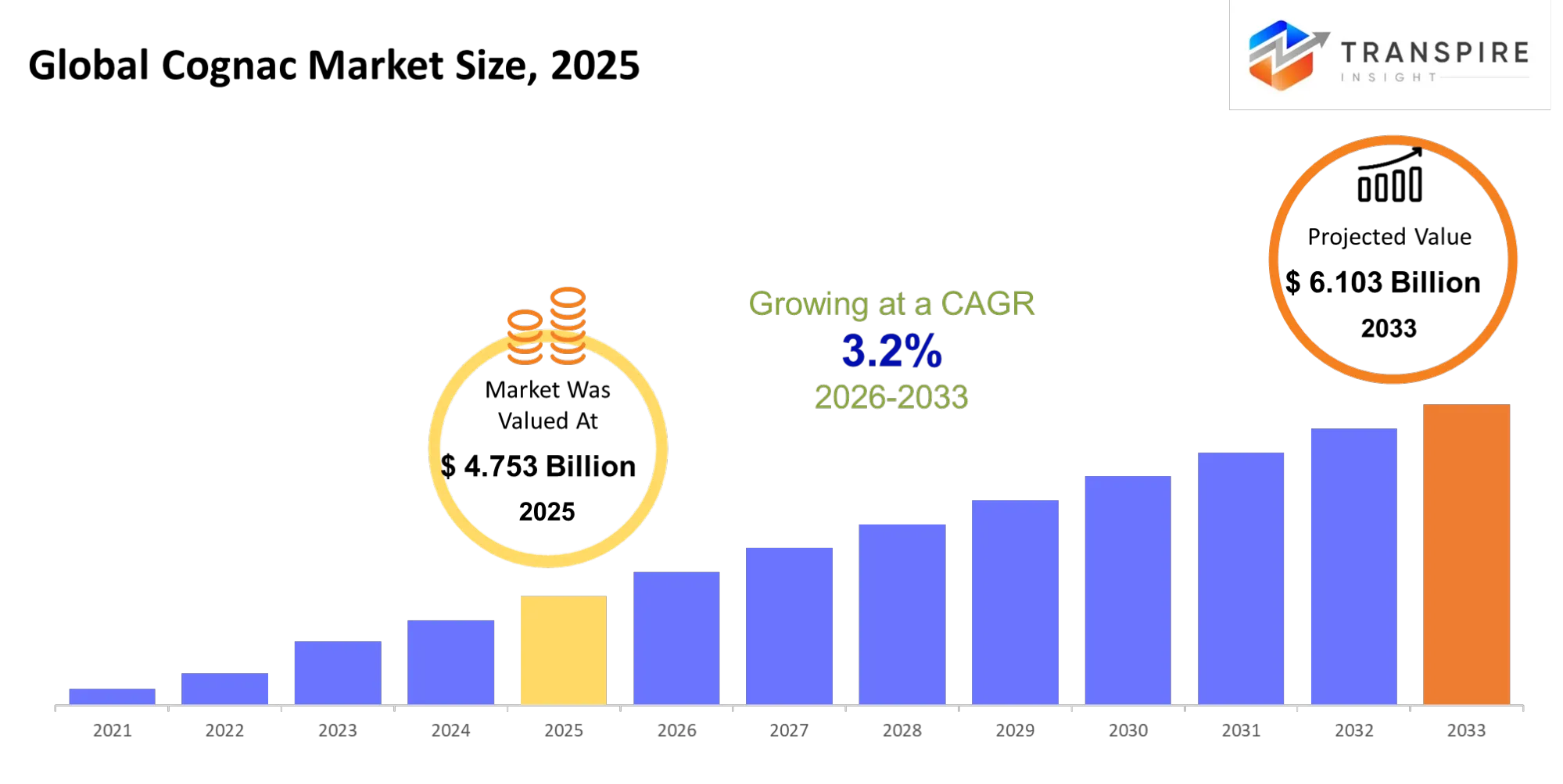
- Global Cognac Market Size 2025: USD 4.753 Billion
- Global Cognac Market Size 2033: USD 6.103 Billion
- Global Cognac Market CAGR: 3.2%
- Global Cognac Market Segments: By Type (VS Cognac, VSOP Cognac, XO Cognac, Vintage Cognac, Premium Cognac, Organic Cognac, Others); By Application (Retail Consumption, Hospitality & Bars, Luxury Gifting, Duty-free Sales, Cocktail Mixing, Others); By End-User (Individual Consumers, Restaurants & Bars, Luxury Collectors, Others); By Distribution (Liquor Stores, Online Retail, Duty-free Shops, Premium Beverage Stores, Others)
Global Cognac Market Summary
The Global Cognac Market size is estimated at USD 4.753 billion in 2025 and is anticipated to reach USD 6.103 billion by 2033, growing at a CAGR of 3.2% from 2026 to 2033.
This industry centers on aging, bottling, and exporting premium, grape-based French brandy protected under strict geographical indicators. Over the last few years, a major structural shift in consumer demand has completely repackaged the spirit from a stuffy, after-dinner luxury drink into a versatile staple of global mixology culture. A massive real-world trigger has been the aggressive push by heritage houses into urban nightlife partnerships and high-end streetwear collaborations. This tactical rebranding directly exposes younger, affluent drinkers to VSOP and vintage blends. Consequently, high-end cocktail lounges are scaling up their orders, turning a legacy sipping culture into a high-volume commercial pipeline across worldwide hospitality channels.
Key Market Insights
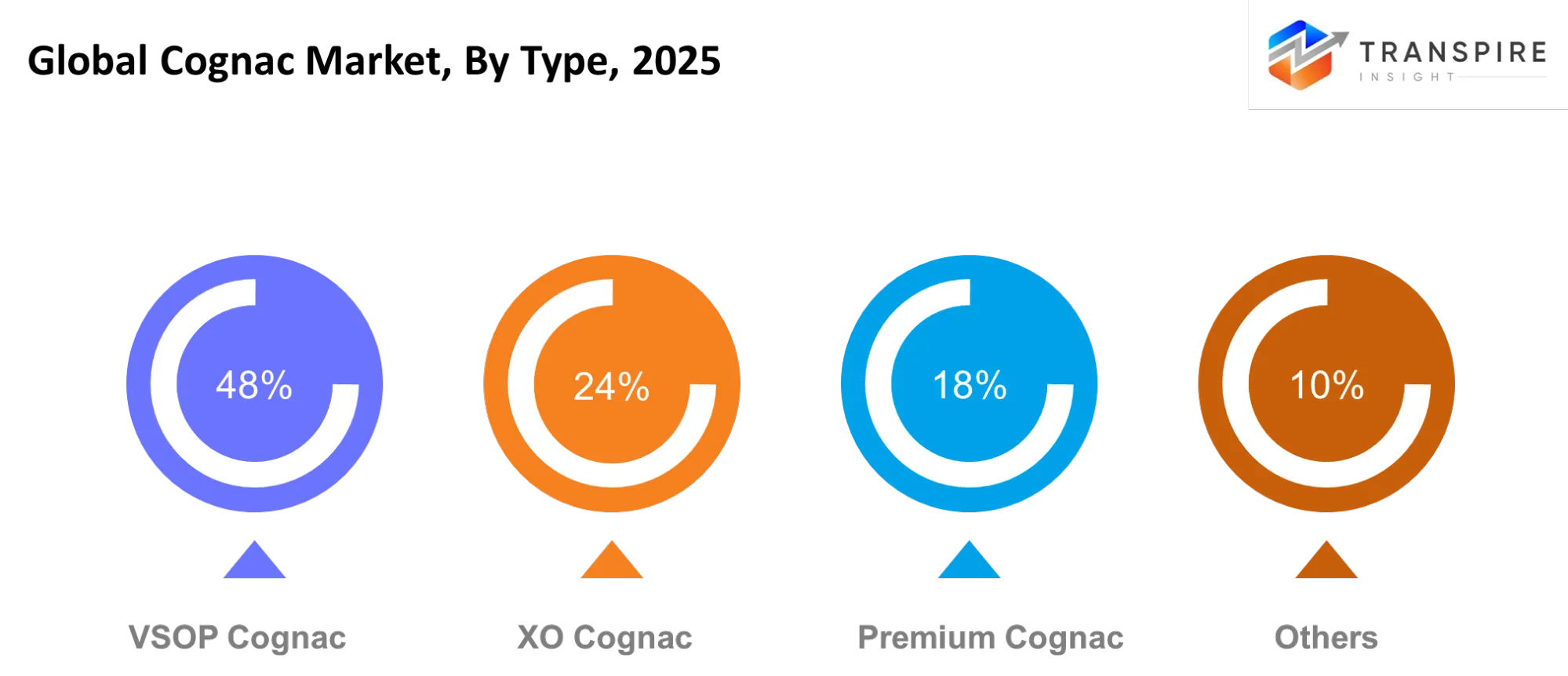
- Dominating the industry with a 48% share, VSOP Cognac is spearheading a massive shift toward premium cocktail culture, a trend perfectly captured by Rémy Martin’s 2026 Lunar New Year modern mixology gift sets.
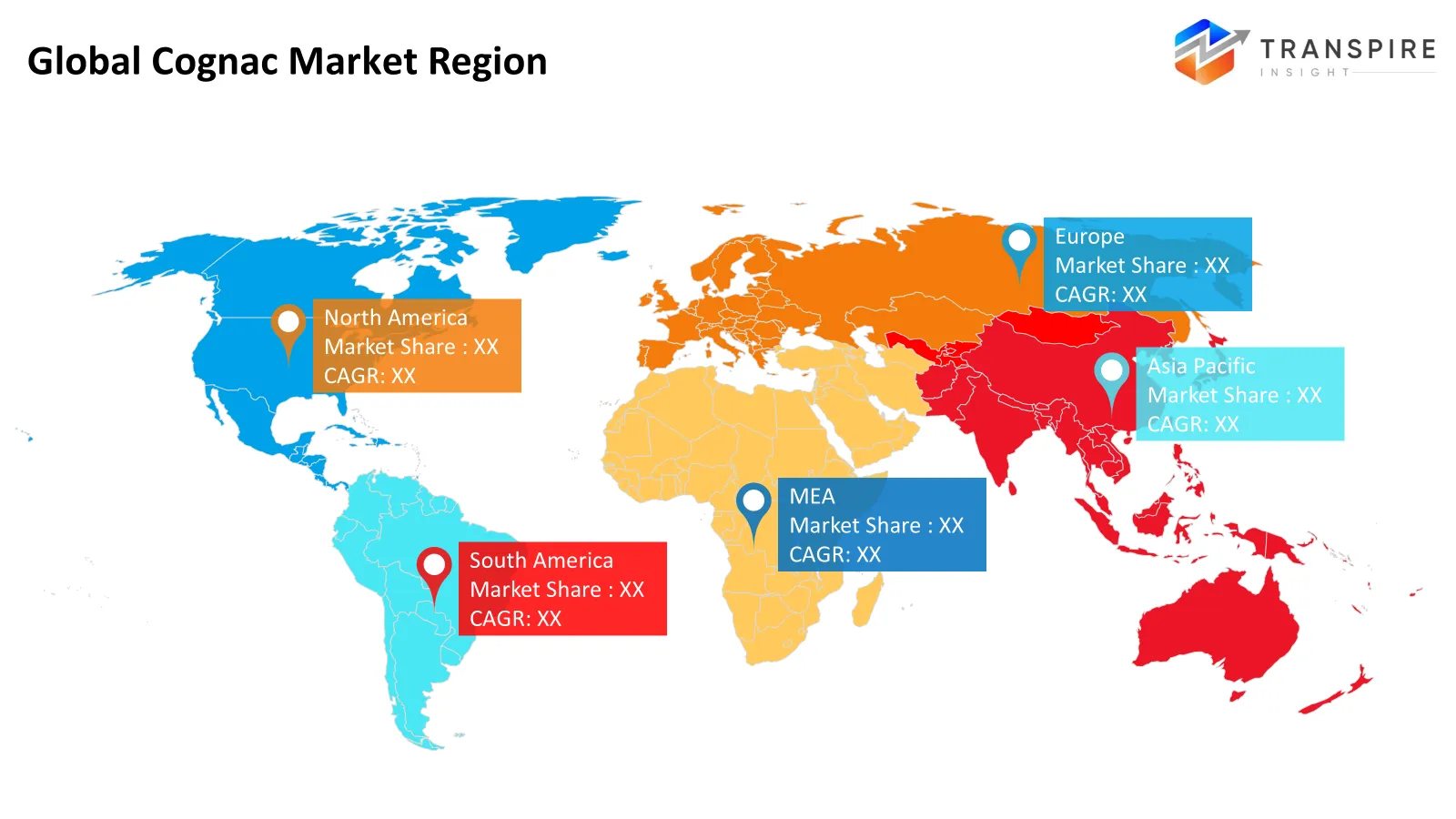
- Commanding a huge 44% of the regional market, Europe is seeing a clear behavioral turn toward sustainable drinking, driving Camus to quickly step up its low-intervention, organic vineyard practices.
- Securing a 25% share, North America’s thirst for convenience is reshaping the landscape, prompting Hennessy to launch its ready-to-drink Very Special Cocktails line in 2026 to hook younger consumers.
- Representing 24% of sales, XO Cognac is riding a powerful wave of high-end luxury gifting, which led Martell to introduce its exclusive Cordon Bleu Limited Edition sets in 2026.
- Expanding at a brisk 9.1% CAGR with a 23% share, Asia Pacific is undergoing a status-driven shopping shift, pushing Rémy Martin to collaborate with top artists for premium regional releases.
- Holding an 18% share and growing at an 8.4% CAGR, Premium Cognac is benefiting from smart tech upgrades, with Courvoisier deploying advanced fermentation analytics to keep its small-batch blending perfectly consistent.
- Accounting for 10% of the market, the "Others" segment is dealing with an intense push for eco-transparency, forcing boutique houses like Delamain to roll out supply chain tracking that proves single-estate origins.
- Covering the final 8% share, the Rest of the World market is experiencing an aspirational upgrade, pushing heritage brands like Frapin to aggressively build out footprints in emerging luxury hotel bars.
What are the Key Drivers, Restraints, and Opportunities in the Global Cognac Market?
Driver:
The real force pushing this market forward is the explosion of global cocktail culture, mixed with a massive pivot toward laid-back, approachable luxury. Things truly took off when old-school heritage houses threw out the traditional rulebook to go after Gen-Z and Millennials with high-end, pre-mixed drinks. Instead of being trapped as that stuffy drink older folks sip slowly by a fireplace, Cognac is bridging the gap into casual daytime hangouts, securing a steady stream of younger, recurring buyers.In June 2026, Hennessy rolled out its "Very Special Cocktails" lineup. This was a massive deal because, across more than 260 years of operation, it’s the first time the historic brand ever pre-blended its liquid with outside ingredients—a deliberate play for the booming RTD wave to give curious newcomers an easy, welcoming entry point.
Restraint:
The real headache for this industry is how easily it gets caught up in international trade fights. Since Cognac makers export about 98% of what they bottle, their whole business is constantly exposed to global political drama. When a major market overseas suddenly drops heavy import tariffs or starts an anti-dumping probe, these historic brands have to swallow huge financial losses, leaving mountains of unsold bottles sitting in warehouses.
Opportunity:
The next big play is bringing predictive AI analytics into the barrel-aging process. By putting money into smart, data-driven quality checks, producers can tweak fermentation settings in real time to avoid any inconsistent batches. This kind of tech makes it much easier to scale up ultra-premium production, helping brands easily lock down those high-paying, exclusive deals with top luxury hotels and bars worldwide.
What Has the Impact of Artificial Intelligence Been on the Global Cognac Market?
AI is quietly changing cognac cellars, moving operations away from basic manual checks toward automated control.
Instead of just going with old-school intuition, makers are now dropping smart sensors right into the fermentation tanks. These devices keep close tabs on temperature and pH readings around the clock. When a batch starts acting up or drifts even a tiny bit off course, the software jumps in to adjust the tank environment in real time, keeping the whole process smooth and saving potentially ruined batches before things go south.
Quality control is getting a massive lift too, mostly thanks to better data. Distillers are using predictive tools to study wood varieties and evaporation patterns, which lets them map out how a cask will taste years down the road before it ever touches a bottle. On top of that, pairing these systems with simple IoT sensors to monitor warehouse humidity allows them to pinpoint the absolute best spots to stack and rotate barrels without all the usual manual guesswork.
The real roadblock here is the upfront cash. Overhauling a legacy distillery with smart sensor networks and complex data pipelines costs a fortune. Because this initial buy-in is painfully expensive, smaller boutique houses end up completely priced out of the tech loop.
Key Market Trends
- Ditching the traditional neat pour. People just aren't saving Cognac for late-night snifters anymore. Instead, there's a massive surge in younger, lighter liquid explicitly blended to mix right into high-end cocktails.
- Heritage houses are finally abandoning those signature heavy glass bottles. They're pivoting to lightweight glass and modular refill systems because the younger crowd simply refuses to buy into luxury that isn't sustainable.
- Goodbye generic global ads. Big brands have pretty much killed off the old-school, one-size-fits-all commercial. Now, it's all about hyper-local streetwear drops and limited art collabs that actually generate internet hype.
- Blenders are actively breaking the rules. They aren't staying inside the lines of traditional French oak aging anymore, opting to experiment with old bourbon or sherry casks to get the unconventional flavor profiles younger consumers are asking for.
- Instead of making a boring run to the local liquor store, buyers are increasingly using direct-to-consumer apps and interactive online tastings to turn shopping into an actual experience.
- Selling an experience, not just a label. Distilleries are looking way past the bottle. They’re investing heavily in massive "spirit tourism" hubs and high-profile culinary pairings to capture the luxury travel market.
- Farming is getting a massive, messy overhaul. Out go the harsh chemical pesticides; vineyard managers are moving fast toward low-intervention, organic grape farming to shield their fragile crops from wild weather swings.
- The fight against fakes. Modern collectors care way more about a bottle's verified paper trail than a fancy logo, which is forcing producers to use digital tracking tech to prove single-estate authenticity.
Global Cognac Market Segmentation
By Type
VSOP Cognac completely anchors the volume here, holding a massive 48% market share as it shifts from a traditional spirit into the ultimate base for high-end cocktails. Close behind is XO Cognac with a 24% share, riding a wave of high-end luxury gifting, while Premium Cognac scales at an 8.4% CAGR thanks to tech-driven blending consistency. The core growth logic comes down to accessibility and status. Younger drinkers are dodging the entry-level VS expressions and skipping straight to versatile VSOP or prestige XO bottles to match their lifestyle choices. Looking ahead, the old lines between these aging categories will likely blur. Historic houses will increasingly market younger, specialized blends based on unique cask finishes and mixability rather than just how many years the liquid sat in a barrel.
By Application
Cocktail Mixing and Luxury Gifting are the absolute heavyweight drivers in this segment, while Retail Consumption keeps a steady baseline. The unique growth logic here is a massive behavioral flip in how the spirit is consumed. Instead of sitting on a dusty shelf for a late-night toast, Cognac is being aggressively mixed into premium drinks or packaged into limited-edition art sets for younger, wealthy buyers. This is splitting the application landscape in two. High-end hospitality networks and trendy cocktail bars will demand lighter, highly mixable liquids, while the luxury gifting and duty-free channels will force brands to create increasingly rare, hyper-premium collectible sets to satisfy status-driven shoppers.
By End-User
Individual Consumers and Restaurants & Bars make up the lion's share of the buyer pool, while Luxury Collectors capture the highest-margin slice of the market. The real growth driver is the changing demographic of the core buyer. Old-school connoisseurs are stepping aside for Gen-Z and Millennial consumers who view high-end spirits as an extension of modern street culture and personal style. This shift completely changes what brands have to deliver. To keep these younger buyers hooked, producers will have to look past the physical bottle and offer digital supply chain transparency to prove single-estate authenticity, alongside immersive direct-to-consumer online experiences.
By Distribution
Liquor Stores and Premium Beverage Stores still move the most physical inventory, but Online Retail is exploding as the fastest-growing channel. The growth logic is all about convenience and digital storytelling. Modern shoppers want to skip the boring store run and buy directly through interactive apps, virtual tastings, and high-profile online drops. This means distribution is going to become heavily digitized. Brick-and-mortar stores will have to pivot toward creating high-end, experiential boutique spaces, while brands pour massive resources into direct-to-consumer websites to control the entire buying experience from click to delivery.
What are the Key Use Cases Driving the Global Cognac Market?
High-end cocktail mixing is dominating the scene right now. Instead of grabbing basic, cheap rail spirits, upscale bars are pouring versatile VSOP blends right into premium craft drinks to hook the younger nightlife crowd.
Beyond the bar, it's blowing up as a massive status symbol for luxury corporate and holiday gifting. Distillers are constantly dropping limited-edition artist collabs, turning premium bottles into genuine collectibles for affluent buyers and duty-free shoppers.
An unexpected trend is hitting elite fine-dining spots. High-end restaurants are completely throwing out the old rules, building entire multi-course tasting menus around aged pours and turning a basic drink into a fully curated culinary experience.
|
Report Metrics |
Details |
|
Market size value in 2025 |
USD 4.753 Billion |
|
Market size value in 2026 |
USD 4.896 Billion |
|
Revenue forecast in 2033 |
USD 6.103 Billion |
|
Growth rate |
CAGR of 3.2% from 2026 to 2033 |
|
Base year |
2025 |
|
Historical data |
2021 - 2024 |
|
Forecast period |
2026 - 2033 |
|
Report coverage |
Revenue forecast, competitive landscape, growth factors, and trends |
|
Regional scope |
United States; Canada; Mexico; United Kingdom; Germany; France; Italy; Spain; Denmark; Sweden; Norway; China; Japan; India; Australia; South Korea; Thailand; Brazil; Argentina; South Africa; Saudi Arabia; United Arab Emirates |
|
Key companies profiled |
Hennessy, Rémy Martin, Martell, Courvoisier, Camus, Hine Cognac, Delamain, Frapin, Hardy Cognac, Louis Royer, Otard, Meukow, ABK6, Larsen Cognac, Gautier Cognac |
|
Customization scope |
Free report customization (country, regional & segment scope). Avail customized purchase options to meet your exact research needs. |
|
Report Segmentation |
By Type (VS Cognac, VSOP Cognac, XO Cognac, Vintage Cognac, Premium Cognac, Organic Cognac, Others); By Application (Retail Consumption, Hospitality & Bars, Luxury Gifting, Duty-free Sales, Cocktail Mixing, Others); By End-User (Individual Consumers, Restaurants & Bars, Luxury Collectors, Others); By Distribution (Liquor Stores, Online Retail, Duty-free Shops, Premium Beverage Stores, Others) |
Which Regions are Driving the Global Cognac Market Growth?
Europe pretty much holds the reins of the global cognac world, taking an impressive 44% chunk of the market and not letting go. That big lead stays almost rock-solid, mostly due to very strict local farming rules that fiercely guard the same centuries-old production approach. Rather than just sitting comfortably inside the old tradition shell, vineyard managers are now leaning into organic, low-intervention grape cultivation and putting real budget into cellar tourism experiences. It’s a careful balancing act where historic names have to keep their heritage roots, but also pivot fast enough for the eco-aware crowd today. In March 2026, boutique French producers like Bourgoin Cognac bypassed traditional bulk blending to roll out organic, single-estate cognacs designed specifically to capture the eco-conscious European market.
North America comfortably locks down the number two spot, walking away with a clean 25% slice of worldwide sales. Forget Europe's deep obsession with vintage farmlands—the crowd here cares about lifestyle trends and the massive boom in creative cocktail spaces. This constant demand is deeply tied to pop-culture and celebrity backing, seamlessly pairing an old-world liquor with modern streetwear fashion and nightlife culture. Since younger buyers across the continent care way more about easy drinking than ancient tasting rituals, big houses are aggressively racing to drop ready-to-drink, grab-and-go options that blend straight into casual day parties. In June 2026, Hennessy officially launched its "Very Special Cocktails" line across the United States, dropping a collection of premium, ready-to-serve bottled drinks crafted specifically to dominate the booming casual lifestyle segment.
The Asia Pacific region is tearing ahead with a sharp 9.1% CAGR, already locking down a solid 23% market share. Things really took a turn lately because lightning-fast city growth and a major boost in middle-class wealth pushed shoppers to swap local standard spirits for premium imported luxury labels. The real gold rush here is tied directly to massive cultural traditions surrounding corporate gift-giving and ultra-exclusive, curated dinner experiences. As high-end luxury hotels and elite bars mushroom across booming financial capitals, this entire region is rapidly becoming the main cash engine for ultra-prestige, top-shelf bottles. ·
Who are the Key Players in the Global Cognac Market and how do they Compete?
Big houses are officially dumping their stuffy, fireplace-sipping image. The competition is flat-out brutal right now because everyone is scrambling to hook a younger crowd. Instead of coasting on history, legacy labels are fighting for shelf space with street-culture collabs, green packaging, and heavy mixology campaigns.
Take Hennessy—they are aggressively rewriting the rules with an innovation-first playbook. They want to be the default choice for craft cocktails, not just a slow-sipping luxury. Their trick? Embedding the brand directly into global nightlife communities. For instance, they are leveraging their 2026 "MyWay" global cocktail challenge to lock down a permanent presence on high-end menus across booming Southeast Asian bars.
Rémy Cointreau handles things completely differently. They run a tight, hyper-premium niche strategy where fat profit margins beat mass volume every single time. They stay on top by keeping a strict chokehold on ultra-luxury bottles and using invite-only experiential events to lock in that status. For growth, they are pumping heavy investments into Chinese travel retail hubs, dropping exclusive regional lines to grab high-spending travelers.
Company List
- Hennessy
- Rémy Martin
- Martell
- Courvoisier
- Camus
- Hine Cognac
- Delamain
- Frapin
- Hardy Cognac
- Louis Royer
- Otard
- Meukow
- ABK6
- Larsen Cognac
- Gautier Cognac
Recent Development News
In February 2026, Hennessy signed on as the official Cognac partner for The BRIT Awards’ inaugural Manchester ceremony. The move plants the historic brand right in the middle of the UK music scene, kicking off a month of nightlife pop-ups and custom drink menus that are made to get younger, trend-focused consumers properly excited about the spirit. [https://www.thedrinksbusiness.com
In April 2026, Larsen Cognac unveiled a big brand overhaul and global expansion push, heavily backed by its recent takeover by International Beverage. With a brand-new look, plus two product ranges that are new and totally fresh, the century-old house can move faster and basically go after new market share across the Nordics, in China, and those busy duty-free airport shops. It’s all clearly built to grab attention and keep it. [https://www.thespiritsbusiness.com
In January 2026, Martell collaborated with renowned Chinese contemporary artist He Datian to roll out a limited-edition Lunar New Year line across its major expressions. It blends classic liquid heritage with a more modern artwork vibe, so these premium bottles become instant collector’s items and really slot the brand in nicely for the high-end corporate gifting circuit throughout Asia. [https://www.shortlist.com
What Strategic Insights Define the Future of the Global Cognac Market?
The future of the Global Cognac Market lies in a total break from old-school prestige, shifting heavily toward fast-moving cocktail spaces and younger luxury consumers. However, a major hidden risk rests in how easily the industry gets trapped in international trade wars, especially since nearly 98% of all production is exported. When sudden political tariffs hit, over-reliant brands face immediate, messy inventory pileups in their warehouses. To counter this friction, an emerging opportunity is taking shape through predictive AI analytics, letting smart distillers track aging conditions to micro-target changing global flavor preferences before bottling. The strategic play here is clear: heritage houses must aggressively pour capital into direct-to-consumer digital pipelines and hyper-local streetwear collaborations. Controlling the entire buyer journey directly is the only real way to shield premium pricing from volatile global networks.
Global Cognac Market Segmentation:
By Type
- VS Cognac
- VSOP Cognac
- XO Cognac
- Vintage Cognac
- Premium Cognac
- Organic Cognac
- Others
By Application
- Retail Consumption
- Hospitality & Bars
- Luxury Gifting
- Duty-free Sales
- Cocktail Mixing
- Others
By End-User
- Individual Consumers
- Restaurants & Bars
- Luxury Collectors
- Others
By Distribution
- Liquor Stores
- Online Retail
- Duty-free Shops
- Premium Beverage Stores
- Others
Regional Outlook
North America
- United States
- Canada
- Mexico
Europe
- Germany
- United Kingdom
- France
- Spain
- Italy
- Rest of Europe
Asia Pacific
- Japan
- China
- Australia & New Zealand
- South Korea
- India
- Rest of Asia Pacific
South America
- Brazil
- Argentina
- Rest of South America
Middle East & Africa
- Saudi Arabia
- United Arab Emirates
- South Africa
- Rest of the Middle East & Africa
Frequently Asked Questions
Find quick answers to common questions.
The global cognac size was valued at USD 4.753 Billion in 2025 and is poised to reach USD 6.103 Billion by 2033, expanding at a 3.2% CAGR.
Key segments for the cognac are Type (VS Cognac, VSOP Cognac, XO Cognac, Vintage Cognac, Premium Cognac, Organic Cognac, Others), Application (Retail Consumption, Hospitality & Bars, Luxury Gifting, Duty-free Sales, Cocktail Mixing, Others), End-User (Individual Consumers, Restaurants & Bars, Luxury Collectors, Others), Distribution (Liquor Stores, Online Retail, Duty-free Shops, Premium Beverage Stores, Others).
Growth is primarily driven by the sweeping explosion of global craft cocktail culture alongside a massive shift toward approachable, laid-back luxury. Heritage brands are keeping demand steady by rolling out versatile, ready-to-drink blends that easily hook a younger nightlife crowd looking for premium options.
The global market is led by major manufacturers including Hennessy, Rémy Martin, Martell, Courvoisier, Camus, Hine Cognac, Delamain, Frapin, Hardy Cognac, Louis Royer, Otard, Meukow, ABK6, Larsen Cognac, Gautier Cognac.
Europe holds a dominant 44% share of the market, wielding massive influence through tight regional farming laws that strictly protect ancient appellation standards. The region also dictates where the industry is heading by leading the global charge in low-intervention organic grape cultivation and high-end experiential cellar tourism.
High-margin opportunities lie in bringing predictive AI modeling and smart IoT sensors into distilleries to closely track evaporation patterns and wood varieties for flawless blending consistency. Brands can also cash in on changing demographics by building out direct-to-consumer digital sales apps and launching hyper-local streetwear collaborations.
- Hennessy
- Rémy Martin
- Martell
- Courvoisier
- Camus
- Hine Cognac
- Delamain
- Frapin
- Hardy Cognac
- Louis Royer
- Otard
- Meukow
- ABK6
- Larsen Cognac
- Gautier Cognac
About the Authors

Chetan Dhatrak
I’m Chetan Dhatrak, a Senior Research Analyst at Transpire Insight, specializing in the Consumer Goods, Foods and Beverages industry. I focus on analyzing market trends, consumer behavior, competitive landscapes, and industry developments to deliver accurate, data-driven insights. My research at Transpire Insight is built on credible sources and in-depth analysis, helping businesses and readers better understand market dynamics, emerging opportunities, and evolving consumer preferences. I’m committed to creating reliable, well-researched content that supports informed decision-making and reflects the latest developments in the consumer goods and food & beverage sectors.

Chakradhar Khansole
Chakradhar serves as the Research Director at Transpire Insight, bringing over 8 years of experience in technology, innovation, and strategic market intelligence. He specializes in transforming complex market data into actionable business insights that enable organizations to make informed, growth-oriented decisions. Recognized for his strategic vision and analytical expertise, Chakradhar leads high-impact research initiatives, delivering comprehensive market assessments, competitive intelligence, and forward-looking industry analysis.
Recently Published Reports
-
Apr 2026
Baby Infant Formula Market
Baby Infant Formula Market Size, Share & Analysis Report By ype (Infant Milk, Follow On Milk, Specialty Baby Milk, Growing-Up Milk), By Ingredient (Carbohydrate, Fat, Protein, Minerals, Vitamins, and Others), By Product Form (Powder, Liquid, and Ready-to-feed), By Distribution Channels (Supermarket/Hypermarket, Specialty Store, Pharmacies, Online Retail, and Others), and Geography (North America, Europe, Asia-Pacific, Middle East and Africa, South and Central America), 2021 - 2031
-
Apr 2026
Edible Insects for Animal Feed Market
Edible Insects for Animal Feed Market Size, Share & Analysis Report By Type (Insect Powder, Insect Meal, Insect Bar, Insect Paste, Insect Oil, and Others), By Insect Type (Beetles, Cricket, Caterpillar, Hymenoptera, Orthoptera, Tree Bugs, and Others), By Application (Livestock, Pet Food, and Aquaculture), By Livestock Type (Poultry, Swine, and Others), and Geography (North America, Europe, Asia-Pacific, Middle East and Africa, South and Central America), 2021 - 2031
-
Apr 2026
Food Industry Disinfection and Bacterial Control Market
Food Industry Disinfection and Bacterial Control Market Size, Share & Analysis Report By Type (Chemical Disinfectants, Physical Disinfectants, and Biocides and Antimicrobials), By Application (Food Processing Equipment Surface Disinfection, Food Preparation Areas Surface Disinfection, Storage Areas Surface Disinfection, Anti-microbial Coatings Food Preservation, and Preservative Solutions Food Preservation), By End User (Meat and Poultry Processing, Dairy Processing, Seafood Processing, Bakery and Confectionery, Restaurants and Commercial Kitchens, and Food Service Providers), By Sales Channel (Online, Offline), and Geography (North America, Europe, Asia-Pacific, Middle East and Africa, South and Central America), 2021 - 2031
-
May 2026
Freeze Dried Food Market
Freeze Dried Food Market Size, Share & Analysis Report By Product Type (Fruits, Vegetables, Freeze-Dried Dairy Products, Freeze-Dried Meat and Seafood, Freeze-Dried Pet Food, and Prepared Meal), By Nature (Organic, and Conventional), By Form (Powdered, Granules, and Diced), By End Use (Breakfast Cereals, Dairy Products, Bakery & Confectionery, Nutritional Bars & Supplements, Powdered Beverages, Snacks, and Retail (Household)), and Geography (North America, Europe, Asia-Pacific, Middle East and Africa, South and Central America), 2021 - 2031