
Global Chemical Gas Sterilizers Market Size & Forecast
- Global Chemical Gas Sterilizers Market Size 2025: USD 1.31 Billion
- Global Chemical Gas Sterilizers Market Size 2033: USD 1.875 Billion
- Global Chemical Gas Sterilizers Market CAGR: 4.6%
- Global Chemical Gas Sterilizers Market Segments: By Type (Ethylene Oxide, Hydrogen Peroxide, Formaldehyde, Nitrogen Dioxide), By Application (Hospitals, Pharma, Medical Devices, Labs), By End-User (Hospitals, Pharma Companies, Clinics, Labs)

To learn more about this report,  Download Free Sample Report
Global Chemical Gas Sterilizers Market Summary
The Global Chemical Gas Sterilizers Market is valued at USD 1.31 billion in 2025 and is forecast to reach USD 1.875 billion by 2033 at a CAGR of 4.6% between 2026 and 2033. Growth is propelled by the growing need for sterilization of sensitive devices via low-temperature sterilizers, surge in surgical procedures, and stringent infection control policies in healthcare and pharmaceutical segments. Factors such as technological developments like AI-enabled monitoring, compliance systems, environment-friendly sterilization solutions are fuelling market growth worldwide.
Global Chemical Gas Sterilizers Market Insights
- The Global Chemical Gas Sterilizers Market is moving towards automation, reduced emissions, and digital monitoring from the typical sterilization processes used in hospitals. Rising concerns related to infection prevention and emissions from ethylene oxide have resulted in developments in hydrogen peroxide and green sterilization equipment by various companies in the health care and pharmaceutical sector.
- EtO sterilizers continue to constitute around 45% of the total market share because of their effectiveness in sterilizing intricate and heat sensitive medical tools, and firms such as STERIS plc have started adopting emission reduction technologies.
- The demand for hydrogen peroxide vapor sterilizers continues to grow by more than 6% CAGR because of the preference of hospitals towards quick and clean sterilization, and Getinge AB has adopted automated low-temperature sterilization systems.
- Hospitals account for over 50% of the entire market demand due to improvements in infection control measures within the healthcare sector amid an increasing incidence of hospital-acquired infections (HAIs) and procedures performed surgically.
- More than 60% of newly installed sterilization equipment incorporate digital monitoring systems, indicating the trend towards the adoption of Internet of Things-driven sterile processing units.
- The use of sterilizers in pharmaceuticals and biotechnological purposes is growing rapidly to about 25% market share owing to the requirement of controlled sterilizing environment in manufacturing biological products and aseptic packing.
- He Asia-Pacific region is expected to experience the fastest growth with a CAGR more than 7% owing to fast expansion of healthcare infrastructure in India and China, along with growing investments in private hospitals and medical device manufacturing plants.
- The demand for miniaturized sterilizers has seen a rise owing to their suitability for ambulatory surgery centers and diagnostic laboratories due to space limitations and quick turnover times.
- There is a trend towards automation and connectivity in the form of cloud based sterilization management systems offered by companies like Advanced Sterilization Products.
- Sustainability is becoming one of the main factors driving the purchases of sterilizers, leading to more healthcare institutions preferring environmentally friendly sterilizers using technologies like vaporized hydrogen peroxide and nitrogen dioxide.
- Potential synergies exist for strategic collaborations between sterilization solutions providers and medical device manufacturers as they need sterilizers capable of working efficiently with complicated instruments.
What are the Key Drivers, Restraints, and Opportunities in the Global Chemical Gas Sterilizers Market?
Drivers
The key drivers for the Global Chemical Gas Sterilizers Market are attributed to the increasing sophistication of medical devices, as well as the stringent validation requirements set by health authorities regarding sterilization. State-of-the-art surgical instruments, robotic surgery devices, catheters, and implantable products made out of polymers cannot be exposed to high temperature steam sterilization; hence, they require low-temperature sterilization through chemicals. The catalyst behind this growth is the proliferation of minimally invasive procedures and the worldwide rise in ambulatory surgical procedures due to the efforts of health care authorities aimed at controlling infections. This trend has resulted in increased usage of hydrogen peroxide vapor and ethylene oxide sterilizers among others.
Restraints
One significant constraint includes regulatory and environmental constraints relating to ethylene oxide emissions. Ethylene oxide continues to be very effective in sterilizing complex devices, but due to its carcinogenic nature, there have been increased regulations on environmental controls, plant closure possibilities, and higher costs of production. This is mainly attributed to the lack of commercial options that can penetrate as effectively as ethylene oxide.
Opportunities
An opportunity exists in the evolution towards green and digitalized sterilization systems. Capitalizing on technologies like vaporized hydrogen peroxide, nitrogen dioxide, and AI-based monitoring systems can accelerate adoption. There is substantial scope for growth in the Asia-Pacific region, especially India and China, as governments invest in improving healthcare infrastructures along with the manufacturing of medical devices.Top of Form
What Has the Impact of Artificial Intelligence Been on the Global Chemical Gas Sterilizers Market?
The introduction of artificial intelligence has made the process of sterilization highly efficient and reliable in the Global Chemical Gas Sterilizers Market through automation and predictive maintenance of the sterilizing systems. With AI, sterilization can be controlled automatically based on real-time adjustments of factors such as gas concentrations, humidity, chamber pressure, and sterilization duration to minimize inefficiencies and optimize chemicals use during the process. The automation of this process is particularly important in hospitals and pharmaceutical manufacturers with frequent turnover of instruments and contamination.
Predictive analysis is one of the most significant technologies that have been developed in the industry. AI maintenance systems constantly keep track of sterilizer functioning and predict any malfunctions before their occurrence.
In April 2025, Getinge AB launched a digital interface for its cGMP sterilizers, using the Siemens SIMATIC WinCC Unified platform to optimize cleanroom processes.
Moreover, AI is contributing towards better traceability with the help of cloud monitoring and automation of audit documentations. These developments are assisting the healthcare organizations in developing more efficient infection control processes.
In March 2025, TOMI Environmental Solutions and Pharma Biotech System Components formed a partnership to incorporate the latest ionized hydrogen peroxide decontamination technology in the cleanrooms for smart sterilization processes.
Global Chemical Gas Sterilizers Market Trends:
- There has been a shift in the Global Chemical Gas Sterilizers Market from the legacy sterilization system to the digitalized, eco-friendly, and workflow-focused technology. The healthcare facilities and medical device companies now focus more on sustainable operations, process automation, and compliance issues rather than mere expansion of the sterilization facility.
- For the last few years, the hospital sector has started relying less on manual processes in monitoring and more on cloud-based systems for monitoring the sterilization process.
- The use of the legacy ethylene oxide-based sterilization method has been decreasing due to increasing awareness regarding the harmful effects on the environment.
- The sterilization equipment manufacturers have been incorporating AI systems that will facilitate the prediction of any malfunction within the sterilizer, leading to condition-based maintenance.
- Low-temperature sterilizers are becoming popular in healthcare settings due to the prevalence of heat-sensitive instruments such as robotic surgeries and polymer medical devices.
- The process of validating sterilizers has moved from paper validation to an automated one through audit trails as a result of stringent infection control regulations.
- The manufacturers of medical devices are increasingly working together with the sterilization service providers in order to create sterilizer-compatible medical devices during development.
- There is an increasing deployment of compact, modular sterilization systems by ambulatory surgical centers and specialty clinics, which is indicative of the decentralization trend within the sterilization technology industry.
- The use of advanced gas sterilization technology systems has been adopted by pharmaceutical and biotechnology organizations in order to enable aseptic production of medicines and biologics that demand contamination-free environments.
- Diagnostics through remote means and Internet of Things-enabled sterilization technology systems have become essential features of new installations that allow monitoring of equipment performance in multiple healthcare institutions.
- The impact of sustainability on purchasing behavior can be seen in increased selection of gas sterilization technology systems that limit emissions of gas, energy consumption, and chemical waste production.
Global Chemical Gas Sterilizers Market Segmentation
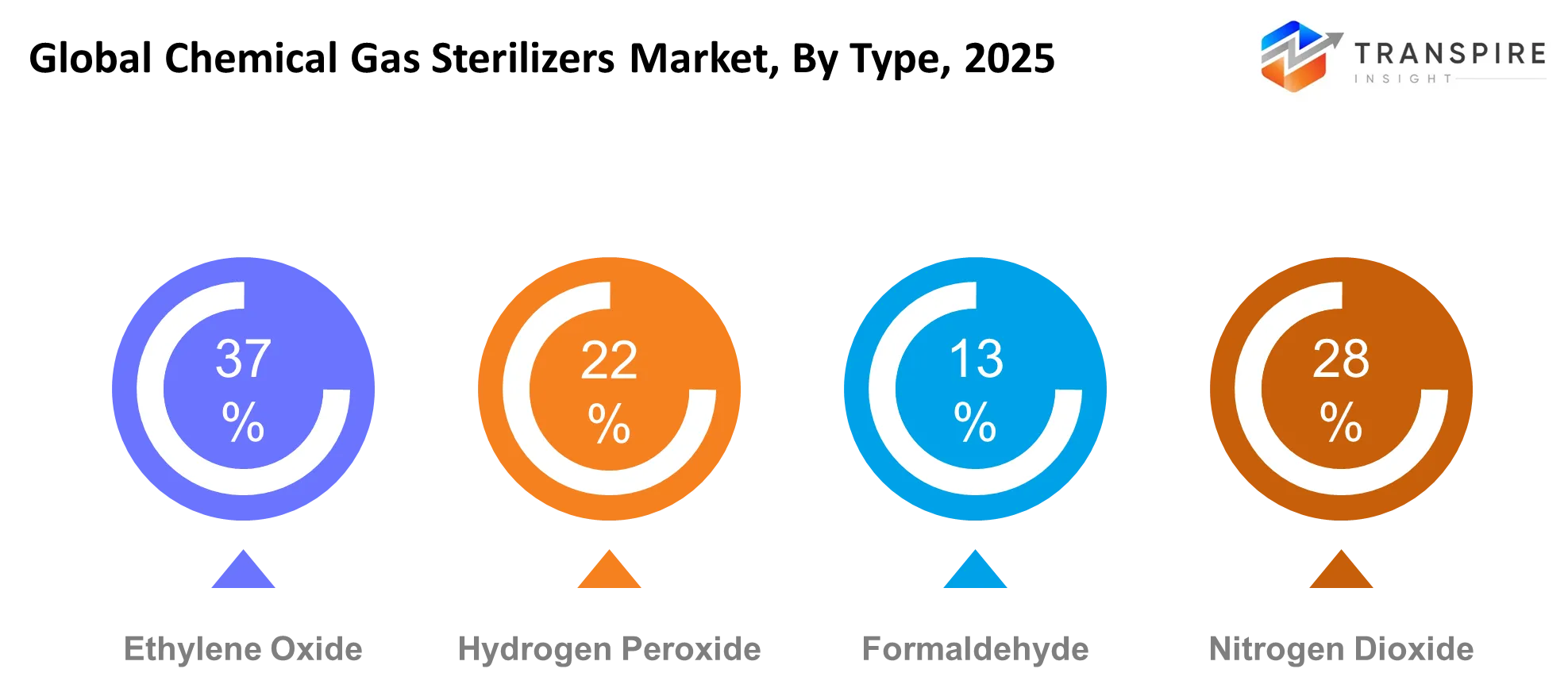
The market for Chemical Gas Sterilizers is bifurcated into product type, sterilization technique, application, end user, and geography; each one adds value to the industry’s growth and technology. Ethylene Oxide Sterilizers have retained their market dominance due to their superior capability of sterilizing highly complex, heat-sensitive, and moisture-sensitive devices utilized during surgery and diagnostics. This segment has benefitted from rising use of minimally invasive instruments, catheters, and implants that can’t be sterilized using steam-based methods. However, considering the market implications for the future, the growing environmental awareness along with stringent emission guidelines would prompt the manufacturers to develop more emission-controlled models.
Sterilization using hydrogen peroxide gas plasma technology is becoming one of the rapidly growing sub-segments owing to short operating cycles, residue-free sterilization, and reduced levels of toxicity. Hospitals and ASCs have begun adopting this kind of sterilization technique in order to optimize the processing speed. The future implication of this sub-segment is its sustainable nature and digitalized workflow that make it extremely appealing.
On an application basis, the hospital is still the top segment owing to the fact that there are high amounts of surgeries conducted in the sector, strict infection prevention protocols, and significant growth in the use of sterile processing centers. The future prospects of this segment are bright due to the fact that it will use centralized and artificial intelligence-based sterilization management systems.
The significance of the pharma/biotech sector is increasing as the processes of biologics production, vaccines production, and aseptic packaging all depend on a highly regulated and sterilized environment. The particular dynamics of this industry are shaped by the necessity to perform the contamination-sensitive process of producing medicines and the increasing attention to regulatory requirements regarding sterilized factories. In the future, there may be an increase in the use of automated technology.
Among end users, one rapidly growing area is represented by medical device manufacturers owing to the fact that sterilization validation has now become an important part of commercializing a product and obtaining approvals for the same. Medical device manufacturers are increasingly looking at collaborating with sterilization solutions suppliers in the early stages of design so as to make the product compatible with low temperature gas sterilization systems.
In a regional context, North America is still one of the dominating players in terms of market share, owing to its well-developed healthcare infrastructure and stringent sterilization requirements, coupled with high use of connected medical technologies. On the other hand, the Asia-Pacific region is becoming a significant part of the market, driven by factors such as rapid growth in the number of hospitals, increased healthcare spending, and manufacturing of medical devices domestically, notably in India and China.
To learn more about this report, Download Free Sample Report
What are the Key Use Cases Driving the Global Chemical Gas Sterilizers Market?
The main application scenario in the Global Chemical Gas Sterilizers Market refers to the sterilization of delicate and sophisticated medical equipment, including endoscopes, catheters, robotic surgical instruments, and implant components, which need low-temperature sterilization in order not to damage their structure during the sterilization process. New applications are opening up in the fields of pharmaceutical manufacturing and production of medical devices, where contamination-free processing is needed when producing biological drugs, vaccines, and sterile products, respectively. Manufacturers are relying more and more on chemical gas sterilization to comply with all required validation procedures. Developing applications are appearing in biotechnological laboratories, outpatient clinics, and advanced diagnostic centers, where compact, automated, and digitally-monitored sterilization solutions are sought out. With the growing popularity of disposable instruments and the proliferation of small healthcare institutions, new demand arises for safe and quick sterilization technology.
|
Report Metrics |
Details |
|
Market size value in 2025 |
USD 1.31 Billion |
|
Market size value in 2026 |
USD 1.369 Billion |
|
Revenue forecast in 2033 |
USD 1.875 Billion |
|
Growth rate |
CAGR of 4.6% from 2026 to 2033 |
|
Base year |
2025 |
|
Historical data |
2020 - 2024 |
|
Forecast period |
2026 - 2035 |
|
Report coverage |
Market trends, drivers, restraints, opportunities, AI impact, competitive landscape, regulatory analysis, technological advancements, regional outlook, and strategic developments |
|
Regional scope |
North America, Europe, Asia-Pacific, Latin America, Middle East & Africa |
|
Key company profiled |
STERIS, 3M, Getinge, Advanced Sterilization Products, Belimed, Tuttnauer, Andersen Products, MMM Group, Steelco, Matachana, Cantel Medical, Ecolab, Shinva, Noxilizer, Fedegari |
|
Customization scope |
Custom regional analysis, additional company profiling, country-level forecasts, competitive benchmarking, and segment-specific insights |
|
Report Segmentation |
By Type (Ethylene Oxide, Hydrogen Peroxide, Formaldehyde, Nitrogen Dioxide), By Application (Hospitals, Pharma, Medical Devices, Labs), By End-User (Hospitals, Pharma Companies, Clinics, Labs) |
Regions are Driving the Global Chemical Gas Sterilizers Market Growth:
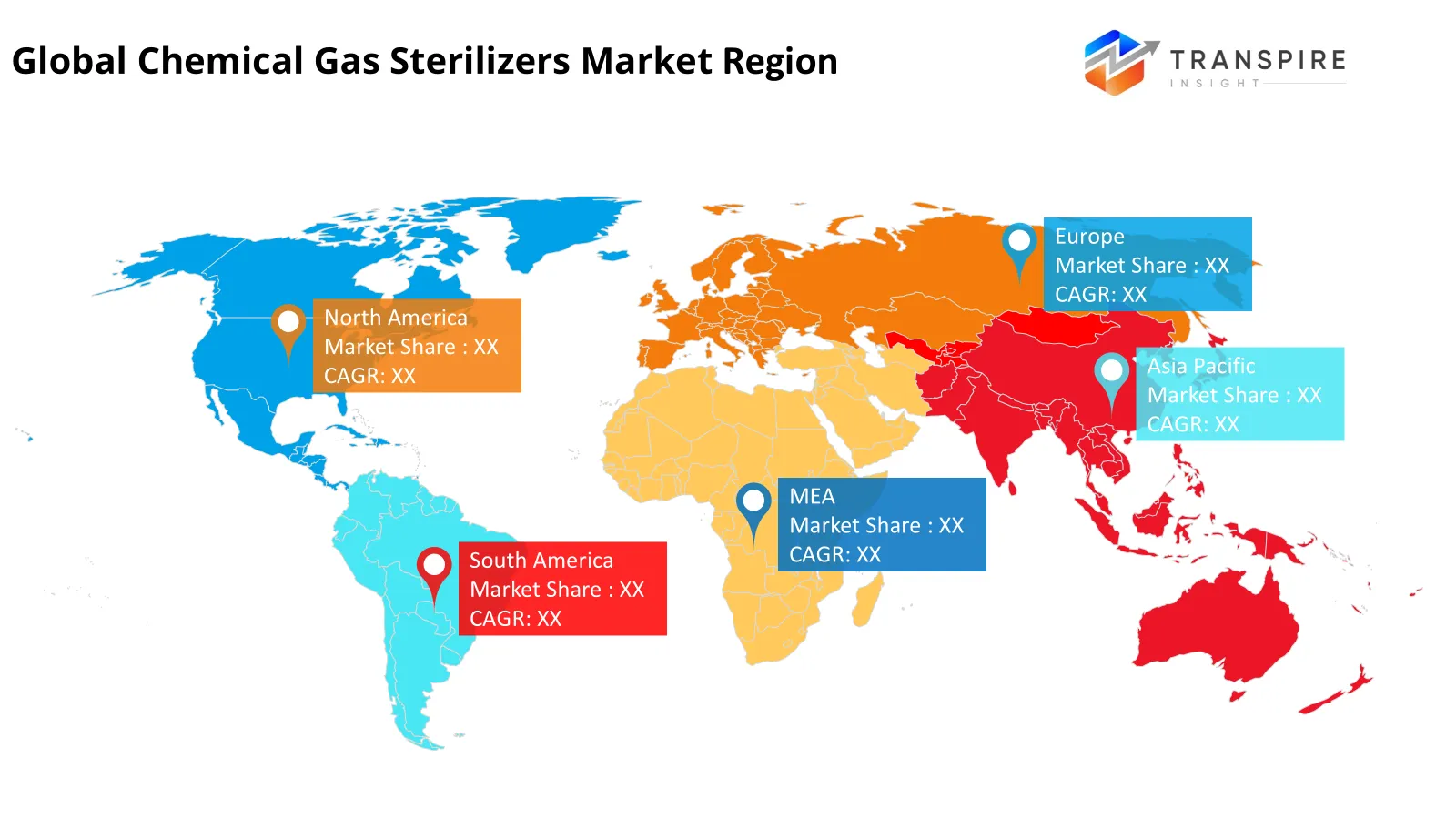
North America continues to be the dominant market among all regions on account of its highly developed healthcare system, high production levels of medical devices, and stringent standards of sterilization practices. North America holds the leading position due to the significant amount of spending done by hospitals and drug companies on the process of low-temperature sterilization that is utilized in the manufacturing of surgical instruments and biological products. Efforts by the U.S. EPA and the FDA have spurred modernization efforts in the industry.In February 2026, several sterilizers in the United States improved their ethylene oxide emissions control system, which was due to more stringent EPA guidelines for sterilization facilities.Europe represents the second-biggest market region, backed by environmentally conscious health care policies in the region and standardized hospital sterilization operations. While size and development of medical devices industry play key roles in growing the North American market, environmental regulation compliance is the key driver behind the Europe market stability.in April 2025, A modern digital interface was launched by Getinge AB which will improve the automation and optimize the workflows in cGMP washers and sterilizers used in pharmaceutical cleanrooms in Europe.
The Asia-Pacific region has emerged as the leading market due to rapid growth in the health care sector, the emergence of pharmaceutical companies in the region, and a rise in domestic manufacturers of medical devices. Post-pandemic initiatives and reforms in infection control have led to increased spending on sterilization equipment in countries such as India and China. Moreover, private hospitals and ambulatory surgery centers also require highly-efficient sterilization technology. In January 2026, Daikin Industries opened Daikin Chemical India Private Limited to provide better chemical solutions inTop of Formsupport of healthcare and pharmaceutical processes in India.
To learn more about this report, Download Free Sample Report
Who are the Key Players in the Global Chemical Gas Sterilizers Marketand how do they Compete?
The Competition Landscape in the Global Chemical Gas Sterilizers Market is based more on technology, regulation adherence capacity, sterilization efficacy, and environmental sustainability, as opposed to price competition. Competitive edge in the industry is being achieved through the development of low emission sterilizers, AI-driven workflow management, rapid cycle sterilizers, and compliance monitoring solutions. There is also increasing competition among vendors regarding their sterilization solutions in niche sectors such as the sterilization of heat-sensitive medical equipment, pharmaceutical manufacturing processes, and biologicals processes. Vendor collaboration has become crucial owing to client demands for validated and environmentally friendly sterilization systems. The strategy of STERIS plc includes highly sophisticated EO and VHPS sterilization solutions supported by digital control and proactive maintenance. The unique selling proposition of this company lies in its ability to incorporate sterilizers, consumables, and service solutions under one roof. The company constantly grows by making acquisitions, partnering with healthcare organizations, and investing in innovative sterilization solutions.
Getinge AB has specialized in innovating its low-temperature sterilization process and hospital process optimization services. This is through innovative methods such as automated sterile processing systems and hospital connectivity systems to optimize instrument tracking and streamline the processes. On the other hand, Advanced Sterilization Products distinguishes itself from its competitors through hydrogen peroxide gas plasma sterilization technology, which has faster cycles and reduces the production of toxic waste. In global terms, both firms have been penetrating into emerging markets in the Asia Pacific region through health care partnerships.
Global Chemical Gas Sterilizers Market Company List
- STERIS
- 3M
- Getinge
- Advanced Sterilization Products
- Belimed
- Tuttnauer
- Andersen Products
- MMM Group
- Steelco
- Matachana
- Cantel Medical
- Ecolab
- Shinva
- Noxilizer
- Fedegari
Recent Development News
In January 2026, Daikin Industries set up Daikin Chemical India Private Limited in Gurugram to enhance its business presence in the chemical and high-performance materials segment in India. This expansion has helped in improving supply chain logistics within the region as well as providing more opportunities in the healthcare sector. https://www.daikin.com
In February 2026, sterilization equipment operators across the U.S. accelerated upgrades of ethylene oxide emission-control systems to comply with new EPA regulations requiring up to 99.99% emission removal efficiency. The regulatory shift increased investments in advanced monitoring, filtration, and low-emission sterilization technologies throughout the chemical gas sterilizers industry. https://www.azom.com
In August 2025, Lumaegis Inc. secured USD 200,000 in pre-seed funding and advanced FDA testing plans for its RadBox sterilization device targeted for commercial launch in 2026. The funding supported development of energy-efficient sterilization technology designed as an alternative to conventional sterilization systems. https://orthodonticproductsonline.com
Strategic Insights Define the Future of the Global Chemical Gas Sterilizers Market
As we look towards the future of the Global Chemical Gas Sterilizers Market, the industry is heading in the direction of complete automation, low emissions, and integration with technology due to the increasingly strict guidelines regarding infection control as well as the complexity associated with reusable medical instruments. It is anticipated that in the future, hospitals and pharmaceuticals will be preferring environmentally-friendly sterilizing methods, for instance, vaporized hydrogen peroxide and nitrogen dioxide systems. One of the risks that may exist is the continued reliance on ethylene oxide for the sterilization of highly sophisticated devices within the industry. Although strict regulation of the environment is increasingly becoming stringent worldwide, there are no commercialized techniques of sterilization for advanced medical devices. One of the opportunities that is currently evolving includes the swift development of healthcare infrastructure and domestic production of medical equipment in Asia Pacific countries such as India and China, where there is growing demand for sterilization technologies that are energy efficient and meet regulatory requirements. In order to gain a competitive edge, companies need to focus on hybrid sterilization solutions integrating technology and sustainability.
Global Chemical Gas Sterilizers Market Report Segmentation
By Type
- Ethylene Oxide
- Hydrogen Peroxide
- Formaldehyde
- Nitrogen Dioxide
By Application
- Hospitals
- Pharma
- Medical Devices
- Labs
By End-User
- Hospitals
- Pharma Companies
- Clinics
- Labs
Regional Outlook
North America
- United States
- Canada
- Mexico
Europe
- Germany
- United Kingdom
- France
- Spain
- Italy
- Rest of Europe
Asia Pacific
- Japan
- China
- Australia & New Zealand
- South Korea
- India
- Rest of Asia Pacific
South America
- Brazil
- Argentina
- Rest of South America
Middle East & Africa
- Saudi Arabia
- United Arab Emirates
- South Africa
- Rest of the Middle East & Africa
Frequently Asked Questions
Find quick answers to common questions.
The expected global chemical gas sterilizers market size for the market will be USD 1.875 Billion in 2033.
The key segments are By Type (Ethylene Oxide, Hydrogen Peroxide, Formaldehyde, Nitrogen Dioxide), By Application (Hospitals, Pharma, Medical Devices, Labs), By End-User (Hospitals, Pharma Companies, Clinics, Labs).
The key players are STERIS, 3M, Getinge, Advanced Sterilization Products, Belimed, Tuttnauer, Andersen Products, MMM Group, Steelco, Matachana, Cantel Medical, Ecolab, Shinva, Noxilizer, Fedegari.
The global chemical gas sterilizers market size is USD 1.369 Billion in 2026.
The global chemical gas sterilizers market CAGR is 4.6%.
- STERIS
- 3M
- Getinge
- Advanced Sterilization Products
- Belimed
- Tuttnauer
- Andersen Products
- MMM Group
- Steelco
- Matachana
- Cantel Medical
- Ecolab
- Shinva
- Noxilizer
- Fedegari
About the Authors

Pankaj Ghogare Patil
I am Pankaj Ghogare Patil, a Senior Research Analyst at Transpire Insight, specializing in the Pharmaceutical, Chemicals & Materials, Healthcare IT, and Biotechnology industry. My expertise lies in conducting comprehensive market research, analyzing industry trends, evaluating competitive landscapes, and translating complex data into actionable insights. At Transpire Insight, I closely follow emerging technologies, regulatory developments, and market innovations to create accurate, well-researched, and informative content that helps businesses and professionals make informed decisions. I am committed to producing credible, evidence-based articles that reflect industry best practices while making technical topics accessible and valuable for a broad audience.

Chakradhar Khansole
Chakradhar serves as the Research Director at Transpire Insight, bringing over 8 years of experience in technology, innovation, and strategic market intelligence. He specializes in transforming complex market data into actionable business insights that enable organizations to make informed, growth-oriented decisions. Recognized for his strategic vision and analytical expertise, Chakradhar leads high-impact research initiatives, delivering comprehensive market assessments, competitive intelligence, and forward-looking industry analysis.
Recently Published Reports
-
Apr 2026
AI in Diabetic Retinopathy Market
AI in Diabetic Retinopathy Market Size, Share & Analysis Report By Type (Screening AI Systems, Diagnostic AI Systems, and Predictive AI Models), By Application Segment (Hospitals, Ophthalmology Clinics, Diagnostic Centers, and Research and Development), and Geography (North America, Europe, Asia-Pacific, Middle East and Africa, South and Central America), 2021 - 2031
-
Apr 2026
Psychometric Tests Market
Psychometric Tests Market Size, Share & Analysis Report By Type (Personality Tests, Ability/Aptitude Tests, Skill/Knowledge Tests, and Others), By Application (Talent Acquisition and Talent Management), and Geography (North America, Europe, Asia-Pacific, Middle East and Africa, South and Central America), 2021 – 2031
-
Apr 2026
Rare Biological Sample Collection Market
Rare Biological Sample Collection Market Size, Share & Analysis Report By Type (Isolation Kits & Reagent, Blood Collection Tubes, and Others), By Application (Oncology, Transcriptomics, Pharmacogenomics, and Others), and Geography (North America, Europe, Asia-Pacific, Middle East and Africa, South and Central America), 2021 – 2031
-
Jul 2026
Diabetic Retinopathy Market
Diabetic Retinopathy Market Size, Share & Analysis Report By Type (Proliferative Diabetic Retinopathy, and Diabetic Macular Edema (DME)), By Treatment Type (Anti VEGF Drug, Steroid Implants, Laser Surgeries, and Vitrectomy), and Geography (North America, Europe, Asia-Pacific, Middle East and Africa, South and Central America), 2021 – 2031
Our Clients