

Global Biopreservation Media Storage Equipment Market Size & Forecast:
- Global Biopreservation Media Storage Equipment Market Size 2025: USD 6.28 Billion
- Global Biopreservation Media Storage Equipment Market Size 2033: USD 13.66 Billion
- Global Biopreservation Media Storage Equipment Market CAGR: 10.2%
- Global Biopreservation Media Storage Equipment Market Segments: By Product (Freezers, Refrigerators, Cryogenic Storage Systems, Preservation Media, Monitoring Systems, Storage Containers, Biobanking Systems, Others); By Temperature (Below -150°C, -80°C, -20°C, 2–8°C, Ambient Temperature, Ultra-low Temperature, Controlled Temperature, Others); By Application (Biobanking, Cell Therapy, Tissue Storage, Drug Discovery, Research, Vaccine Storage, Sample Preservation, Others); By End User (Biopharmaceutical Companies, Research Institutes, Hospitals, CROs, Diagnostic Laboratories, Academic Institutions, Cell Banks, Others); By Technology (Manual Systems, Automated Systems, Smart Monitoring Systems, AI-enabled Systems, Cloud Monitoring, RFID-enabled Systems, Integrated Systems, Others)
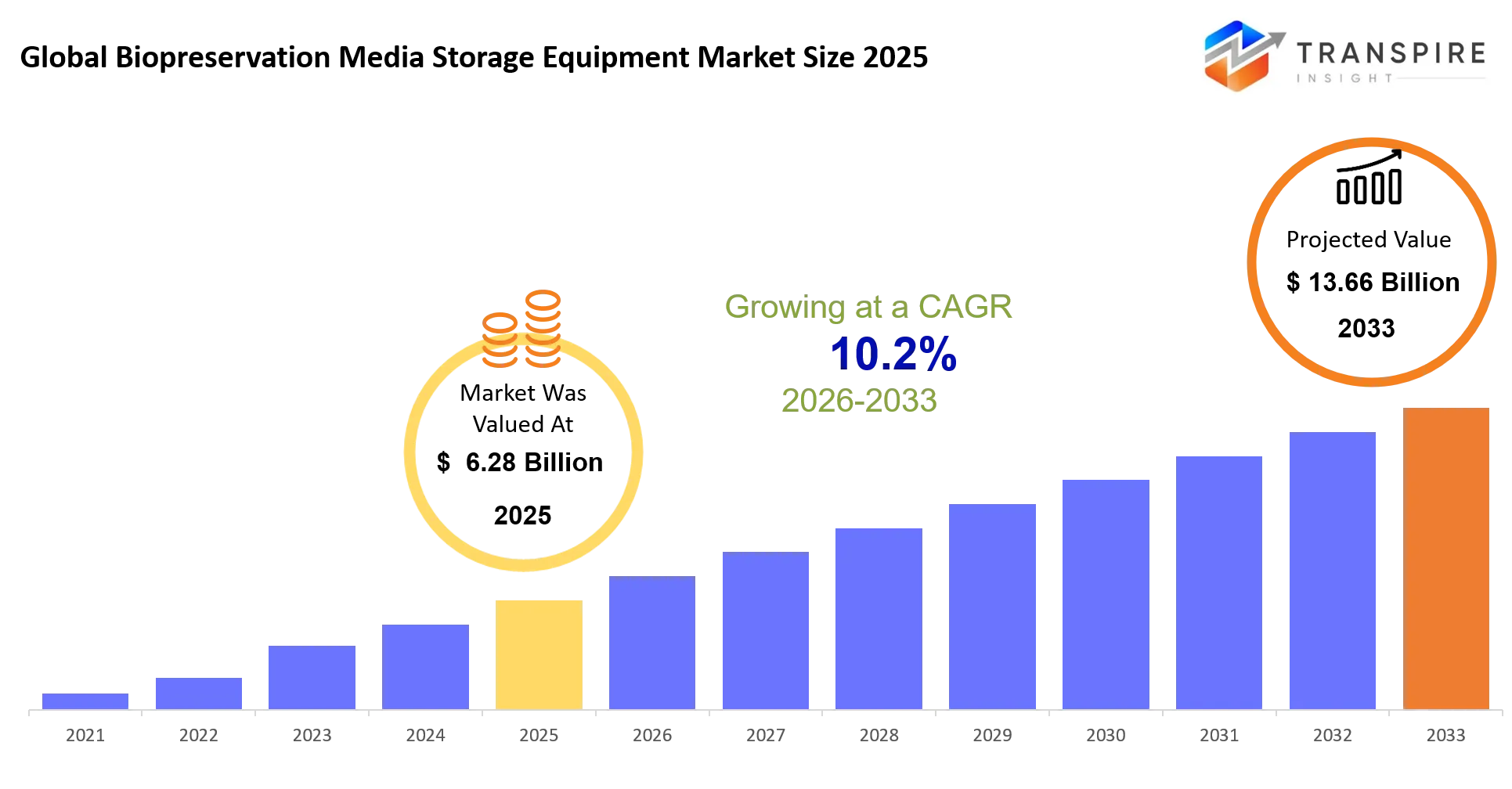
Global Biopreservation Media Storage Equipment Market Summary
As per Transpire Insight Analysis, the Global Biopreservation Media Storage Equipment Market size is estimated at USD 6.28 Billion in 2025 and is anticipated to reach USD 13.66 Billion by 2033, growing at a CAGR of 10.2% from 2026 to 2033. These specialized systems engineer, regulate, and maintain ultra-low temperature and cryogenic environments to preserve the functional viability of sensitive biological payloads like live cells, genetic material, and harvested tissues. Over the last few years - the market has undergone a critical structural shift driven by the explosion of commercial-stage cell and gene therapies requiring strict, cold-chain transparency. This transition was triggered by heavy institutional capital investments in multi-site regenerative medicine clinical trials, which mandated replacing standard, unmonitored freezers with fully validated, smart biological repositories. Consequently - the market is expanding rapidly because highly sensitive, individualized cellular materials suffer catastrophic viability losses if exposed to micro-temperature fluctuations, forcing pharmaceutical networks to systematically transition toward fully automated, ultra-low storage configurations to safeguard high-value pipelines.
Key Market Insights
The Global Biopreservation Media Storage Equipment Market is undergoing a profound operational shift, morphing from simple isolated cooling units into smart, highly automated biological containment networks. Driven by the mass commercialization of complex biologics and cell therapies, clinical operators are shifting away from standalone manual cooling systems toward fully audited - closed-loop cryogenic ecosystems to prevent irreversible sample degradation.
- Cryogenic Storage Systems command a dominant 39% share, driven by Chart Industries and MVE Biological Solutions deploying vapor-phase liquid nitrogen units to secure cellular viability.
- North America holds the commanding geographic footprint with a 44% share - propelled by massive biomedical R&D investments and heavy automated infrastructure adoption by Thermo Fisher Scientific and Azenta.
- Automated Biobanking Systems represent the fastest-growing technology segment with a 15.8% CAGR - as facilities integrate Eppendorf and Hamilton robotics to eliminate manual handling errors.
- The Asia Pacific region stands as the fastest-growing territory with a 16.9% CAGR, fueled by rapid healthcare modernization and Haier Biomedical scaling localized ultra-low temperature storage arrays.
- Standard mechanical freezers lock down a substantial 24% revenue slice, remaining a foundational asset class as PHC Holdings integrates eco-friendly hydrocarbon refrigerants and smart inverters.
- Medical refrigerators capture a stable 13% market share, driven by Helmer Scientific and Panasonic Healthcare providing uniform thermal regulation for day-to-day vaccine and blood preservation.
- Smart monitoring systems represent a high-growth 9% technology pocket, as clinical laboratories deploy BioLife Solutions cloud-connected telemetry to achieve real-time, compliant cold-chain traceability.
- Biopharmaceutical companies anchor the end-user landscape with over 35% of procurement, utilizing multi-chamber arrays from Avantor and Sartorius to protect delicate protein formulations.
What Strategic Drivers, Restraints, and Opportunities Define the Future of the Global Biopreservation Media Storage Equipment Market?
Driver
The global marketplace is expanding rapidly due to a structural transition from legacy manual storage toward validated, closed-loop cryogenic configurations. Traditional unmonitored systems cannot satisfy strict clinical trial frameworks. This shift was triggered by heavy institutional capital infusions into advanced multi-site regenerative medicine and specialized cellular therapeutics. This transformation directly accelerates global procurement revenue as pharmaceutical companies systematically replace standard mechanical boxes with automated repositories to ensure long-term cellular viability.
In April 2026, cold-chain automation leader Azenta Life Sciences officially launched its CryoArc Pico Automated Storage System, engineered to deliver automated cryogenic sample management at ultra-low -190°C configurations without requiring facility modifications. This technical rollout empowers biobanks and cell therapy laboratories to implement robotic sample-retrieving processes, eliminating transient warming risks and driving global system adoption.
Restraint
Severe transient warming events and mechanical compressor seal failures persistently restrict operational market scaling. Micro-temperature spikes during routine manual drawer access can cause irreversible crystallization within high-value biological strains. This structural hardware limitation forces clinical repositories to rely on redundant backup installations and costly maintenance agreements, preventing smooth infrastructure scaling across smaller medical setups.
Opportunity
The most lucrative growth window lies in embedding intelligent AI-enabled telemetry arrays and edge-computing thermal tracking layers directly into decentralized clinical networks. Integrating real-time cloud-connected temperature profiling platforms with active cellular analytics allows diagnostic centers to maintain unbroken cold-chain transparency. This technical progression unlocks fresh commercial equipment procurement pipelines from global health networks looking to implement automated, decentralized distribution channels for sensitive mRNA vaccines and gene vectors.
What Has the Impact of Artificial Intelligence Been on the Global Biopreservation Media Storage Equipment Market?
Artificial intelligence is fundamentally reshaping how biorepositories and clinical networks manage the preservation of high-value biological assets. Instead of forcing technicians to manually log temperatures and visually check for frost buildup—which leaves delicate cell strains vulnerable to human error—facilities now deploy smart - AI-driven monitoring software to automate environmental stabilization. AI dramatically increases cold-chain reliability through optimized predictive analytics.
Advanced thermal modeling networks continuously process streaming sensor telemetry to instantly forecast mechanical anomalies or potential coolant leaks before they happen. These specialized AI models possess predictive diagnostics capabilities - automatically calculating insulation wear, identifying micro-flickers in power draw, and anticipating compressor seal structural failures hours in advance. This operational enhancement allows engineering teams to execute preventive maintenance loops, completely bypassing catastrophic inventory losses.
However, a major limitation remains the high initial integration cost and the legacy infrastructure compatibility gap across decentralized facilities. Fragmented laboratory hardware lacks standardized data-sharing protocols, requiring expensive custom software bridges to sync old standalone freezers into modern AI-enabled cloud monitoring frameworks.
Key Market Trends
Rather than approaching cold chain storage as a set of isolated, electricity-heavy units, biorepositories are transitioning toward highly automated, intelligent containment networks. This deep shift fundamentally transforms cold chain operations, turning traditional reactive facilities into predictive, risk-managed ecosystems that guarantee sample viability.
- Moving past unmonitored mechanical units — Biopharmaceutical companies are actively deploying real-time telemetry and wireless temperature tracking sensors to eliminate the historic blind spots found in manual warehouse checks.
- Liquid nitrogen storage is shifting toward vapor-phase systems — Biorepositories are leaving liquid immersion models behind to completely remove the cross-contamination risks caused by raw liquid contact with high-value vials.
- Robotic pick-and-place automation is overtaking manual drawers — Clinical facilities are integrating enclosed mechanical retrieval arms from Azenta and Eppendorf to completely prevent transient warming errors during sample pull requests.
- Energy-intensive compressor systems are being replaced globally — Equipment manufacturers like PHC Holdings and Haier Biomedical are rapidly swapping out standard fluorocarbon units for eco-friendly hydrocarbon refrigerants and smart variable-speed inverters to slash power draw.
- Preservation media is evolving beyond animal-derived serums — Laboratories are actively abandoning traditional bovine serums in favor of chemically defined, serum-free freezing formulations to eliminate batch-to-batch clinical variability.
- Asset logistics are transitioning to smart cloud monitoring — Transport providers are pairing standard shipping dry shippers with live GPS and cloud-connected telemetry layers to track thermal profiles on the fly.
- Unified asset tracking software is replacing paper logbooks — Research networks are adopting electronic sample management systems with barcode scanners to log inventory changes automatically.
- Single-facility storage is giving way to decentralized networks — Global drug developers are establishing hub-and-spoke storage models near large medical centers to secure the delivery of personalized cell therapies.
- Regulatory documentation is turning entirely digital — Research organizations are moving toward automated software audits to achieve effortless compliance with strict international biological validation standards.
Global Biopreservation Media Storage Equipment Market Segmentation
By Product
Cryogenic Storage Systems command the leading market position with an authoritative 39% market share, acting as the primary baseline hardware for global biological sample containment. Standard mechanical freezers follow closely with a 24% revenue slice, while medical refrigerators and smart monitoring systems lock down 13% and 9% shares, respectively, leaving remaining accessories at 15%. The unique growth logic behind this product distribution is tied directly to the structural fragility of live cellular payloads. Advanced therapeutic materials suffer irreversible ice-crystal destruction if kept in standard refrigeration. This forces biopharma repositories to aggressively transition toward liquid nitrogen vapor-phase hardware and automated biobanking systems to keep samples safely below the critical glass transition temperature. Moving forward, the boundaries between standalone cold boxes and digital monitoring layers will vanish entirely. Infrastructure providers will be forced to engineer fully unified storage systems that blend automated robotic handling with built-in, wireless telemetry nodes, ensuring every sample location and movement is tracked without human intervention.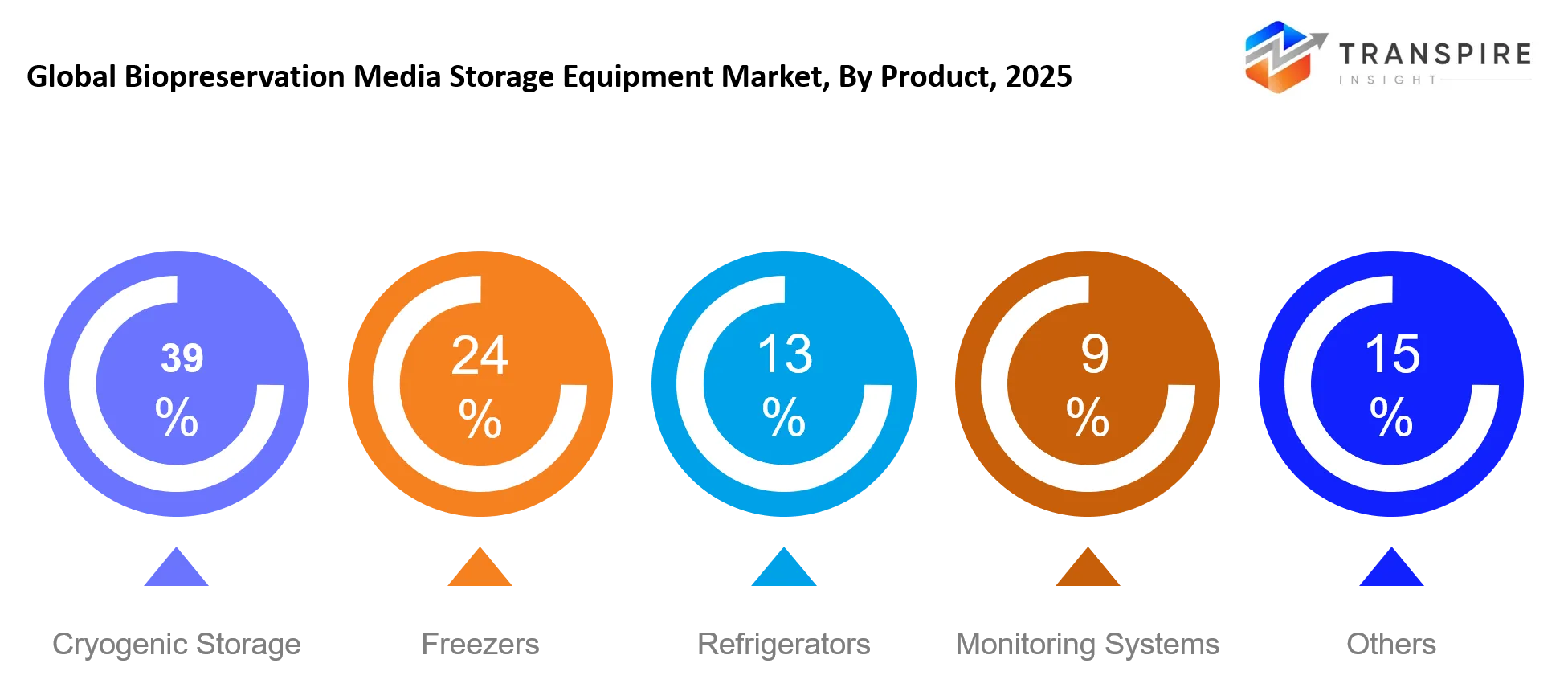
By Temperature
Deep cryogenic environments below -150°C hold the commanding position in market value, functioning as the vital operational zone for long-term genetic preservation. Ultra-low temperature systems (-80°C and -20°C configuration brackets) serve as critical secondary tiers, while standard 2–8°C clinical units and controlled ambient enclosures maintain steady volume support. The unique growth logic steering this thermal segmentation is rooted in strict global validation rules. As decentralized clinical trials expand, life science entities can no longer rely on unverified cooling lines. They demand hyper-precise thermal stability because even micro-flickers in power or temperature can compromise entire drug discovery batches. Looking ahead, equipment developers must prioritize smart variable-speed compressor engineering and vacuum-insulated structural walls. The future market belongs to multi-zone thermal systems that dynamically adjust power draw while guaranteeing uniform internal cooling, enabling laboratories to handle a diverse mix of biological materials within a single, highly efficient physical unit.
By Application
Biobanking applications anchor the market landscape as the dominant financial driver of equipment procurement, while cell and gene therapy clinical workflows emerge as the fastest-accelerating growth pocket. Tissue storage, drug discovery, and vaccine distribution maintain substantial, long-term procurement volumes. This heavy application concentration is structurally locked because national biological repositories require thousands of high-density storage slots to preserve growing libraries of population genomics data. Conversely, the explosive rise in cell therapy deployment is driven by a massive industry shift toward personalized medicine, which requires small-batch, highly specialized cryopreservation steps at every stage. Moving forward, equipment manufacturers cannot win long-term market dominance by offering generic, one-size-fits-all coolers. Sustainable business success demands building highly specialized product lines: large-scale, automated robotic biobanking racks optimized for high-throughput screening labs, running parallel to ultra-compact, automated smart shippers tailored for point-of-care medical clinics.
By End User
Biopharmaceutical companies hold the dominant market position, serving as the primary buyers of automated ultra-low and cryogenic storage facilities. Research institutes and hospital networks follow closely as primary institutional anchors, while CROs, cell banks, and diagnostic laboratories provide vital operational volume. The unique growth logic fueling biopharma procurement is the relentless pressure to shorten commercial drug development timelines. Pharmaceutical networks manage multi-billion-dollar pipelines that require perfectly preserved master cell lines and delicate protein formulations to pass strict international regulatory audits. Moving forward, vendor strategies must shift from selling isolated hardware units to delivering holistic, integrated ecosystems. Equipment developers must build deep software partnerships to offer end-to-end cold-chain validation, providing clinical operators with comprehensive audit trails, real-time data logging, and bulletproof temperature compliance records from factory floor to patient bedside.
By Technology
Manual cooling systems still maintain the largest active installation footprint, but automated sample retrieval systems and smart monitoring networks represent the most disruptive, rapidly growing technology corridors. AI-enabled analytics and cloud-connected telemetry structures follow closely as fast-evolving innovation layers. The unique growth logic behind this shift is the rising cost of human error in clinical environments. Manual picking routines expose adjacent sample boxes to dangerous transient warming events every time a technician opens a freezer door. This operational risk is forcing modern biorepositories to replace manual drawers with automated robotic pick-and-place arms. Looking ahead, the global market will experience a complete digital overhaul. Platform developers must engineer unified data networks where physical cooling hardware seamlessly communicates with AI-driven cloud portals, enabling facilities to run predictive maintenance algorithms that intercept compressor seal or insulation failures hours before they occur.
What are the Key Use Cases Driving the Global Biopreservation Media Storage Equipment Market?
National repositories utilize specialized cryogenic and mechanical hardware to anchor high-density population genomics libraries. These facilities rely on stable vapor-phase configurations to preserve vast repositories of human tissue, master cell lines, and DNA extractions for multi-decade translational medical studies without physical sample degradation.
Clinical manufacturing centers deploy programmable controlled-rate freezers to execute precise cooling workflows for personalized chimeric antigen receptor T-cell (CAR-T) isolates and stem cell harvests. Maintaining uniform cooling parameters safeguards fragile cellular structural boundaries during required down-time gaps before patient administration.
Decentralized clinical networks integrate automated monitoring platforms and smart transport containers to orchestrate tight temperature tracking loops for sensitive mRNA vaccine batches and biological vectors. Real-time telemetry prevents micro-thermal drift across multi-site transit pathways - ensuring full compliance at local clinics.
|
Report Metrics |
Details |
|
Market size value in 2025 |
USD 6.28 Billion |
|
Market size value in 2026 |
USD 6.92 Billion |
|
Revenue forecast in 2033 |
USD 13.66 Billion |
|
Growth rate |
CAGR of 10.2% from 2026 to 2033 |
|
Base year |
2025 |
|
Historical data |
2021 - 2024 |
|
Forecast period |
2026 - 2033 |
|
Report coverage |
Revenue forecast, competitive landscape, growth factors, and trends |
|
Regional scope |
United States; Canada; Mexico; United Kingdom; Germany; France; Italy; Spain; Denmark; Sweden; Norway; China; Japan; India; Australia; South Korea; Thailand; Brazil; Argentina; South Africa; Saudi Arabia; United Arab Emirates |
|
Key company profiled |
Thermo Fisher Scientific, PHC Holdings, Eppendorf, Azenta, Chart Industries, BioLife Solutions, Panasonic Healthcare, Haier Biomedical, Helmer Scientific, Merck, Sartorius, Avantor, VWR, MVE Biological Solutions, Cryoport |
|
Customization scope |
Free report customization (country, regional & segment scope). Avail customized purchase options to meet your exact research needs. |
|
Report Segmentation |
By Product (Freezers, Refrigerators, Cryogenic Storage Systems, Preservation Media, Monitoring Systems, Storage Containers, Biobanking Systems, Others); By Temperature (Below -150°C, -80°C, -20°C, 2–8°C, Ambient Temperature, Ultra-low Temperature, Controlled Temperature, Others); By Application (Biobanking, Cell Therapy, Tissue Storage, Drug Discovery, Research, Vaccine Storage, Sample Preservation, Others); By End User (Biopharmaceutical Companies, Research Institutes, Hospitals, CROs, Diagnostic Laboratories, Academic Institutions, Cell Banks, Others); By Technology (Manual Systems, Automated Systems, Smart Monitoring Systems, AI-enabled Systems, Cloud Monitoring, RFID-enabled Systems, Integrated Systems, Others) |
Which Regions are Driving the Global Biopreservation Media Storage Equipment Market Growth?
North America maintains a commanding grip on the Global Biopreservation Media Storage Equipment Market, capturing a dominant 44% of all worldwide industry revenue. This geographic hegemony is heavily driven by a massive concentration of advanced clinical stage cell therapy facilities and world-class commercial biorepositories. The regional ecosystem is structurally supported by unparalleled biomedical research capital allocations and dense healthcare infrastructure optimized for hyper-sensitive genetic preservation. Consequently, integrating fully automated, ultra-low temperature cryogenic chambers has become an absolute operational mandate for North American pharmaceutical networks looking to protect high-value regenerative medicine pipelines.
Europe serves as a highly stable, predictable secondary pillar for the global market, locking down an essential 29% share of total industry demand. While the North American market concentrates heavily on rapid cell therapy commercialization and large-scale private clinical trials, European system adoption is driven entirely by centralized academic biobanking networks and national healthcare sample repositories. This regional market stability is structurally insulated by rigid international biological data validation frameworks and strict governmental environmental mandates pushing for energy-efficient laboratory operations. To maintain perfect regulatory compliance, European medical laboratories steadily invest in advanced smart monitoring software layers that guarantee unbroken cold-chain audit tracking records.
The Asia Pacific region has emerged as the fastest-growing territory globally, accelerating at a market-leading CAGR of 16.9% to capture a 20% slice of global sales. This sudden structural shift is driven by massive healthcare infrastructure modernization waves, expanding localized pharmaceutical clinical trial manufacturing, and newly established cell banks across developing medical hubs. Historically, regional research facilities relied almost completely on standard, standalone manual cooling boxes, but the territory has now rapidly pivoted toward high-efficiency automated cold containment to handle skyrocketing patient populations. Looking ahead, future procurement in this booming corridor relies entirely on deploying space-optimized, low-carbon ultra-low freezers capable of operating reliably within space-constrained metropolitan laboratory spaces.
In June 2026, global medical solutions manufacturer Haier Biomedical officially debuted its advanced HAB80-60KA automated ultra-low temperature sample storage systems alongside space-saving, dual-refrigeration freezers at major international industry trade fairs. This strategic product deployment explicitly addresses Asia Pacific’s urgent push for low-carbon, high-efficiency automated upgrades, enabling space-constrained regional research institutions to secure thousands of biological samples with zero threat of single-point mechanical failure.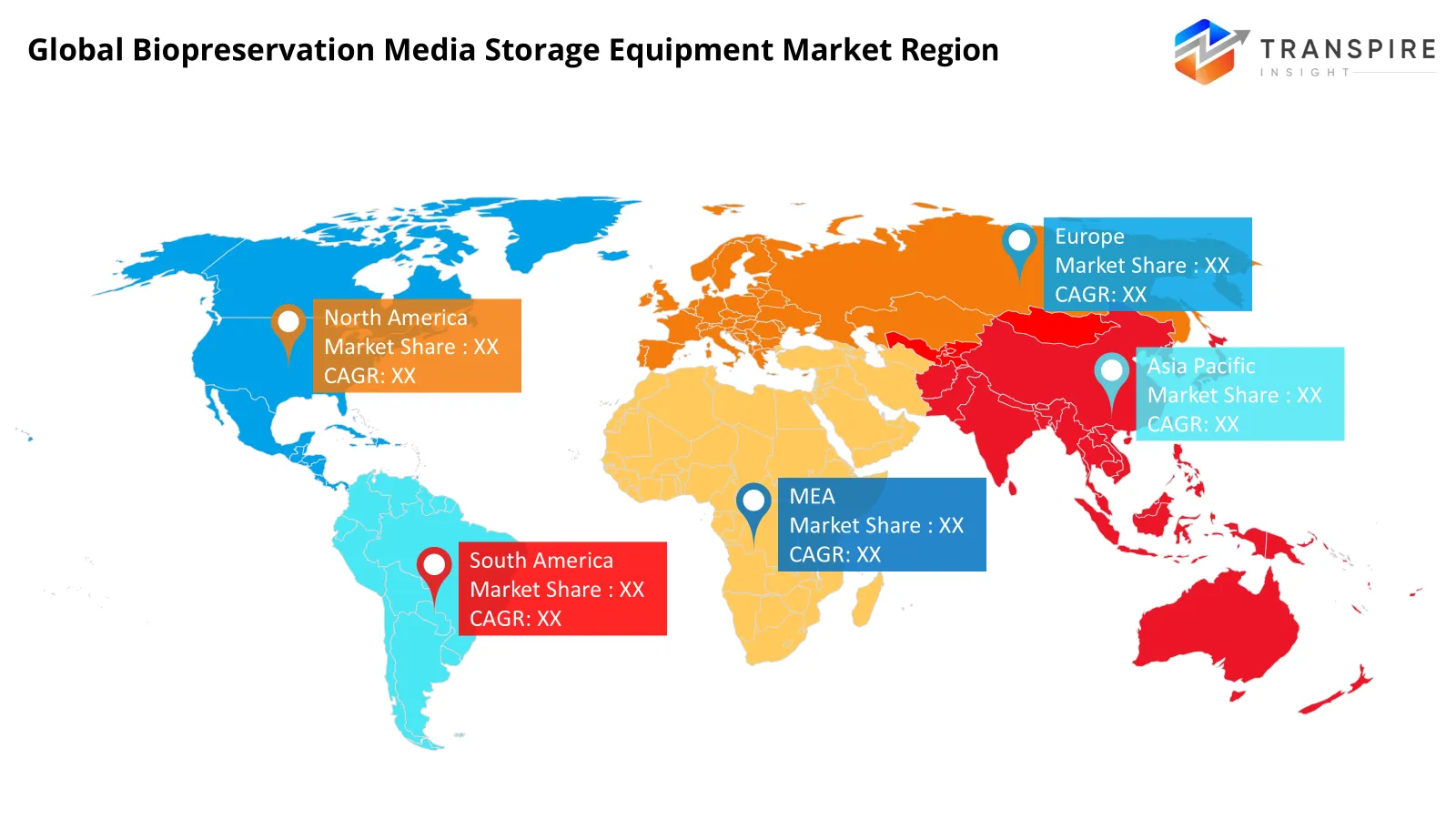
Who are the Key Players in the Global Biopreservation Media Storage Equipment Market and How Do They Compete?
The Global Biopreservation Media Storage Equipment Market is highly consolidated, with a select group of engineering and life sciences conglomerates defining the competitive baseline. Competition revolves around structural integration capability, where vendors no longer battle simply on temperature pull-down speeds but rather on total cold-chain accountability. Companies compete by embedding proprietary smart telemetry software and advanced robotic handling directly into their physical hardware portfolios, creating steep ecosystem switching costs for strict compliance-driven pharmaceutical and clinical operators.
Thermo Fisher Scientific aggressively commands a dominant footprint through a relentless technology innovation strategy, prioritizing multi-zone variable-speed inverter mechanics and predictive telemetry. The company differentiates itself via its widely deployed TSX Universal ultra-low freezer series, which adapts to fluid laboratory usage patterns to simultaneously lower heavy utility bills and maximize thermal uniformity. Their expansion approach relies on leveraging massive existing institutional distribution channels, cross-selling complete storage installations alongside routine laboratory consumables.
Azenta Life Sciences competes through a hyper-focused niche specialization strategy centered entirely on automated sample management and clean-room robotics. The enterprise differentiates itself by engineering modular - ultra-low automated repositories, like the recently debuted CryoArc Pico system, which completely removes human handling and transient warming exposure risks at -190°C. Azenta actively drives growth by acquiring regional biobanking infrastructure hubs, seamlessly wrapping legacy clinical storage facilities into its unified cloud-connected repository network.
Company List
- Thermo Fisher Scientific
- PHC Holdings
- Eppendorf
- Azenta
- Chart Industries
- BioLife Solutions
- Panasonic Healthcare
- Haier Biomedical
- Helmer Scientific
- Merck
- Sartorius
- Avantor
- VWR
- MVE Biological Solutions
- Cryoport
Recent Development News
In October 2025, pure-play cell processing solutions developer BioLife Solutions completed the strategic divestiture of its smart-shipping logistics subsidiary, evo, to an undisclosed buyer for $25.5 million in cash. This structural consolidation allows the enterprise to completely focus its corporate R&D resources on scaling its high-margin biopreservation media formulations and closed-system cell culture manufacturing portfolios to maximize recurrent enterprise SaaS and consumable revenue streams. [https://www.sec.gov
In April 2026, biospecimen procurement pioneer Sanguine Biosciences announced the absolute standardization of its collection and cryogenic processing workflows using BioLife Solutions' proprietary CryoStor cryopreservation media. This quality-focused industry partnership mandates that all human peripheral blood mononuclear cell (PBMC) isolations undergo immediate stabilization within validated, serum-free freezing formulations, guaranteeing uniform post-thaw cellular viability across global cell and gene therapy clinical trial hubs. [https://biolifesolutions.com/]
In October 2025, laboratory connectivity leader Eppendorf officially launched its next-generation VisioNize box 2 hardware interface. This system upgrade expands cloud-connected remote monitoring capabilities across existing ultra-low temperature and cryogenic laboratory networks, enabling clinical operators to retroactively equip legacy mechanical freezers with real-time temperature tracking, smart warning alerts, and automated audit trails to maximize biological asset safety. [https://www.eppendorf.com
What Strategic Insights Define the Future of the Global Biopreservation Media Storage Equipment Market?
The market is rapidly heading toward a "data-first" infrastructure model, shifting from basic cooling volume to unified, software-validated containment networks.
A major hidden risk lies in the looming regulatory and data-compliance bottlenecks as decentralized clinical facilities connect standalone hardware to cloud networks. Incompatible data formats and weak telemetry encryption can lead to data-audit failures under strict 21 CFR Part 11 protocols, rendering entire batches of stored cell therapies legally unusable. Conversely - an emerging opportunity exists in pioneering cryogen-free, automated storage arrays engineered for energy-star compliant micro-biobanks at regional points of care. This engineering shift bypasses fragile liquid nitrogen supply chains while answering heavy institutional pressures to lower laboratory carbon footprints. To maintain market dominance - vendors must transition their core strategy from selling standalone mechanical boxes to providing end-to-end "Cold-Chain-as-a-Service" platforms, bundling predictive AI diagnostic hardware with certified, plug-and-play regulatory audit software.
key segmantation are:
By Product
- Freezers
- Refrigerators
- Cryogenic Storage Systems
- Preservation Media
- Monitoring Systems
- Storage Containers
- Biobanking Systems
- Others
By Temperature
- Below -150°C
- -80°C
- -20°C
- 2–8°C
- Ambient Temperature
- Ultra-low Temperature
- Controlled Temperature
- Others
By Application
- Biobanking
- Cell Therapy
- Tissue Storage
- Drug Discovery
- Research
- Vaccine Storage
- Sample Preservation
- Others
By End User
- Biopharmaceutical Companies
- Research Institutes
- Hospitals
- CROs
- Diagnostic Laboratories
- Academic Institutions
- Cell Banks
- Others
By Technology
- Manual Systems
- Automated Systems
- Smart Monitoring Systems
- AI-enabled Systems
- Cloud Monitoring
- RFID-enabled Systems
- Integrated Systems
- Others
Regional Outlook
North America
- United States
- Canada
- Mexico
Europe
- Germany
- United Kingdom
- France
- Spain
- Italy
- Rest of Europe
Asia Pacific
- Japan
- China
- Australia & New Zealand
- South Korea
- India
- Rest of Asia Pacific
South America
- Brazil
- Argentina
- Rest of South America
Middle East & Africa
- Saudi Arabia
- United Arab Emirates
- South Africa
- Rest of the Middle East & Africa
Frequently Asked Questions
Find quick answers to common questions.
The Global Biopreservation Media Storage Equipment Market size was valued at USD 6.28 Billion in 2025 and is poised to reach USD 13.66 Billion by 2033, expanding at a 10.2% CAGR.
Key Segments for the Global Biopreservation Media Storage Equipment Market are Product (Freezers, Refrigerators, Cryogenic Storage Systems, Preservation Media, Monitoring Systems, Storage Containers, Biobanking Systems, Others); Temperature (Below -150°C, -80°C, -20°C, 2–8°C, Ambient Temperature, Ultra-low Temperature, Controlled Temperature, Others); Application (Biobanking, Cell Therapy, Tissue Storage, Drug Discovery, Research, Vaccine Storage, Sample Preservation, Others); End User (Biopharmaceutical Companies, Research Institutes, Hospitals, CROs, Diagnostic Laboratories, Academic Institutions, Cell Banks, Others); By Technology (Manual Systems, Automated Systems, Smart Monitoring Systems, AI-enabled Systems, Cloud Monitoring, RFID-enabled Systems, Integrated Systems, Others).
Growth is primarily driven by a critical structural transition toward automated, closed-loop cryogenic configurations to secure fragile, high-value clinical regenerative medicine and cell therapeutics, alongside surging institutional capital investments into multi-site clinical trial frameworks.
The Global Market is Led by Major Manufacturers including Thermo Fisher Scientific, PHC Holdings, Eppendorf, Azenta, Chart Industries, BioLife Solutions, Panasonic Healthcare, Haier Biomedical, Helmer Scientific, Merck, Sartorius, Avantor, VWR, MVE Biological Solutions, and Cryoport.
North America holds a commanding geographic footprint with a 44% market share, dominating market dynamics due to its massive concentration of premier clinical-stage cell therapy facilities, extensive private biomedical R&D investments, and rapid, heavy infrastructure adoption of automated ultra-low cold storage repositories.
Lucrative commercial opportunities exist in embedding intelligent, AI-enabled telemetry arrays and edge-computing thermal tracking layers directly into decentralized clinical networks, alongside pioneering cryogen-free, eco-friendly automated storage arrays engineered for energy-efficient micro-biobanks at local points of care.
- Thermo Fisher Scientific
- PHC Holdings
- Eppendorf
- Azenta
- Chart Industries
- BioLife Solutions
- Panasonic Healthcare
- Haier Biomedical
- Helmer Scientific
- Merck
- Sartorius
- Avantor
- VWR
- MVE Biological Solutions
- Cryoport
About the Authors

Pankaj Ghogare Patil
I am Pankaj Ghogare Patil, a Senior Research Analyst at Transpire Insight, specializing in the Pharmaceutical, Chemicals & Materials, Healthcare IT, and Biotechnology industry. My expertise lies in conducting comprehensive market research, analyzing industry trends, evaluating competitive landscapes, and translating complex data into actionable insights. At Transpire Insight, I closely follow emerging technologies, regulatory developments, and market innovations to create accurate, well-researched, and informative content that helps businesses and professionals make informed decisions. I am committed to producing credible, evidence-based articles that reflect industry best practices while making technical topics accessible and valuable for a broad audience.

Chakradhar Khansole
Chakradhar serves as the Research Director at Transpire Insight, bringing over 8 years of experience in technology, innovation, and strategic market intelligence. He specializes in transforming complex market data into actionable business insights that enable organizations to make informed, growth-oriented decisions. Recognized for his strategic vision and analytical expertise, Chakradhar leads high-impact research initiatives, delivering comprehensive market assessments, competitive intelligence, and forward-looking industry analysis.
Recently Published Reports
-
Jul 2026
Alopecia Treatment Market
Alopecia Treatment Market Size, Share & Analysis Report By Disease Type (Alopecia Areata, Cicatricial Alopecia, Traction Alopecia, Alopecia Totalis, Androgenetic Alopecia, Alopecia Universalis, and Other Disease Types), By Treatment Type (Topical Treatments, Oral Medications, Injectable Therapies, and Hair Transplantation), By Gender (Male, and Female), By Distribution Channel (Hospitals and Clinics, Retail Pharmacies, and Online Retailers), and Geography (North America, Europe, Asia-Pacific, Middle East and Africa, South and Central America), 2021 - 2031
-
Jul 2026
Medical Ultrasound Probe Market
Medical Ultrasound Probe Market Size, Share & Analysis Report By Type (Linear Type, Convex Type, Endocavitary Probe, Phased Array/Cardiac Probe, Transesophageal (TEE) Probe, and Others), By Application (Ophthalmology, Cardiology, Musculoskeletal, Oncology, Obstetrics & Gynecology, General Imaging, and Others), By End User (Hospitals & Clinics, Diagnostic Centers, Ambulatory Surgical Centers, and Others), and Geography (North America, Europe, Asia-Pacific, Middle East and Africa, South and Central America), 2021 – 2031
-
May 2026
Biosimilars Market
Biosimilars Market By Product Type (Monoclonal Antibodies, Recombinant Hormones, Erythropoietin, G-CSF, Others), By Indication (Oncology, Autoimmune Diseases, Blood Disorders, Diabetes, Others), By Manufacturing Type (In-House Manufacturing, Contract Manufacturing), By Distribution Channel (Hospital Pharmacies, Retail Pharmacies, Online Pharmacies), By Industry Analysis, Size, Share, Growth, Trends, and Forecasts 2021-2033
-
Apr 2026
Gastrointestinal Endoscopy Market
Gastrointestinal Endoscopy Market By Type (Rigid Gastrointestinal Endoscope, Flexible Gastrointestinal Endoscopes, Disposable Gastrointestinal Endoscope), By Procedure Type (Colonoscopy, Gastroscopy, Duodenoscopy, Enteroscopy, Flexible Sigmoidoscopy, Others), By Application (Diagnosis, Treatment), By End-Users (Hospitals, Ambulatory Surgical Centers, Specialty Clinics, Laboratories, Others), By Industry Analysis, Size, Share, Growth, Trends, and Forecasts 2021-2033