
Global Automotive Navigation System Market Size & Forecast:
- Global Automotive Navigation System Market Size 2025: USD 25.44 Billion
- Global Automotive Navigation System Market Size 2033: USD 43.18 Billion
- Global Automotive Navigation System Market CAGR: 6.85%
- Global Automotive Navigation System Market Segments: By Type (Embedded Navigation Systems, Portable Navigation Devices, Smartphone-integrated Navigation Systems, Head-up Display Navigation, AI-powered Navigation Systems, Connected Vehicle Navigation Systems, Others); By Application (Passenger Vehicles, Commercial Vehicles, Electric Vehicles, Fleet Management, Luxury Vehicles, Others); By End-User (Automotive OEMs, Fleet Operators, Consumers, Ride-sharing Companies, Others); By Technology (GPS-based Navigation, Real-time Traffic Navigation, Voice-assisted Navigation, Cloud-connected Navigation, Others)
Global Automotive Navigation System Market Summary:
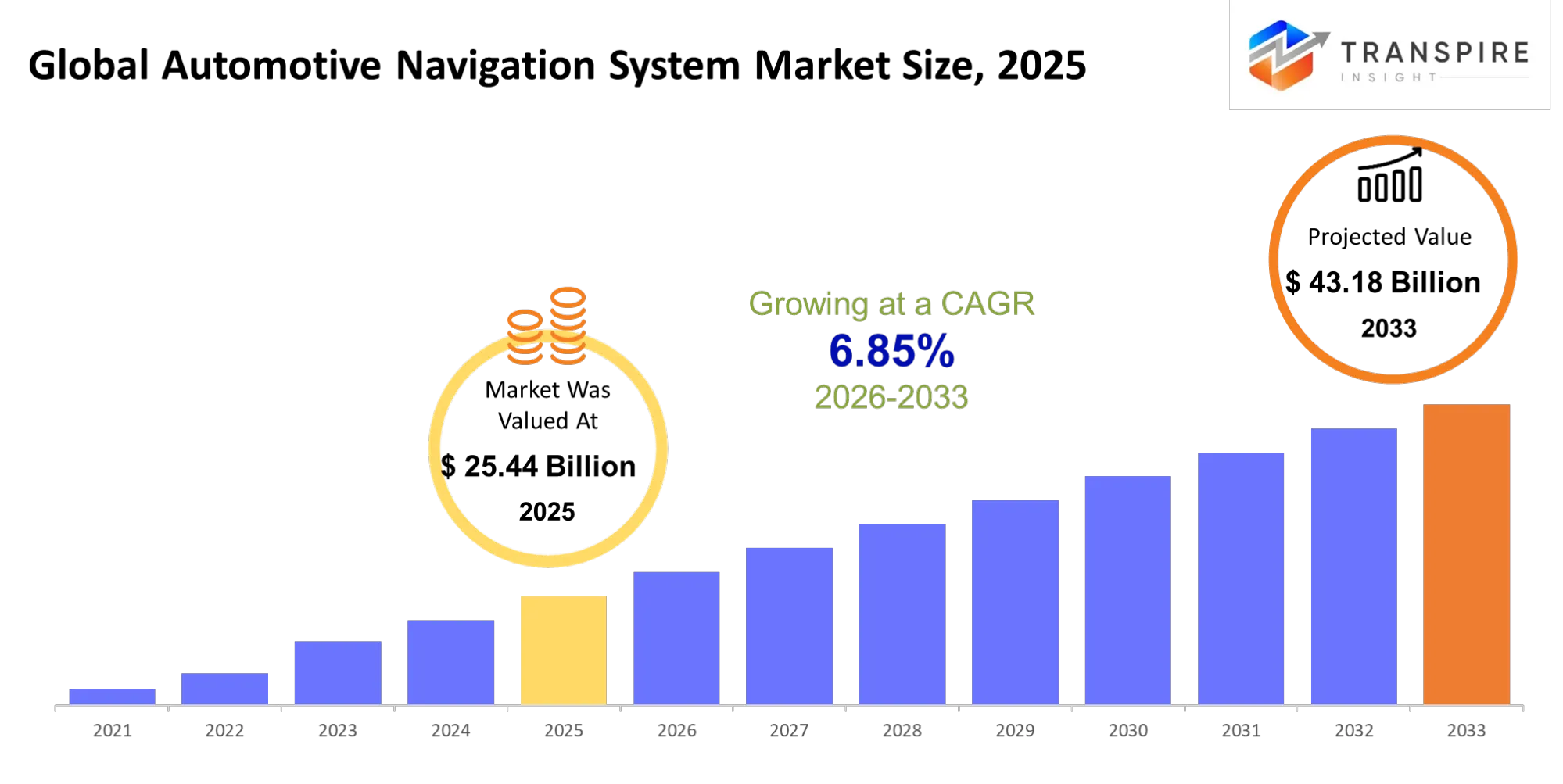
The Global Automotive Navigation System Market size is estimated at USD 25.44 Billion in 2025 and is anticipated to reach USD 43.18 Billion by 2033, growing at a CAGR of 6.85% from 2026 to 2033. Car navigation isn't just about finding the quickest route anymore. These displays are doing the heavy lifting for the whole vehicle—pulling live traffic feeds, warning safety sensors about sharp turns, and tracking battery life. We’ve moved way past those old, offline GPS units. Everything lives in the cloud now. The electric vehicle wave practically forced this shift. You can't drive an EV without knowing exactly where the next open charging station is located. But what actually made this cloud transition possible was the sudden rollout of 5G across major highways, giving cars the bandwidth to pull massive maps without lagging. Drivers now expect their dashboard to work exactly like their phone. To keep up, auto brands are throwing these smart, connected screens into standard models rather than just luxury builds, and that consumer demand is driving the whole market forward.
Key Market Insights
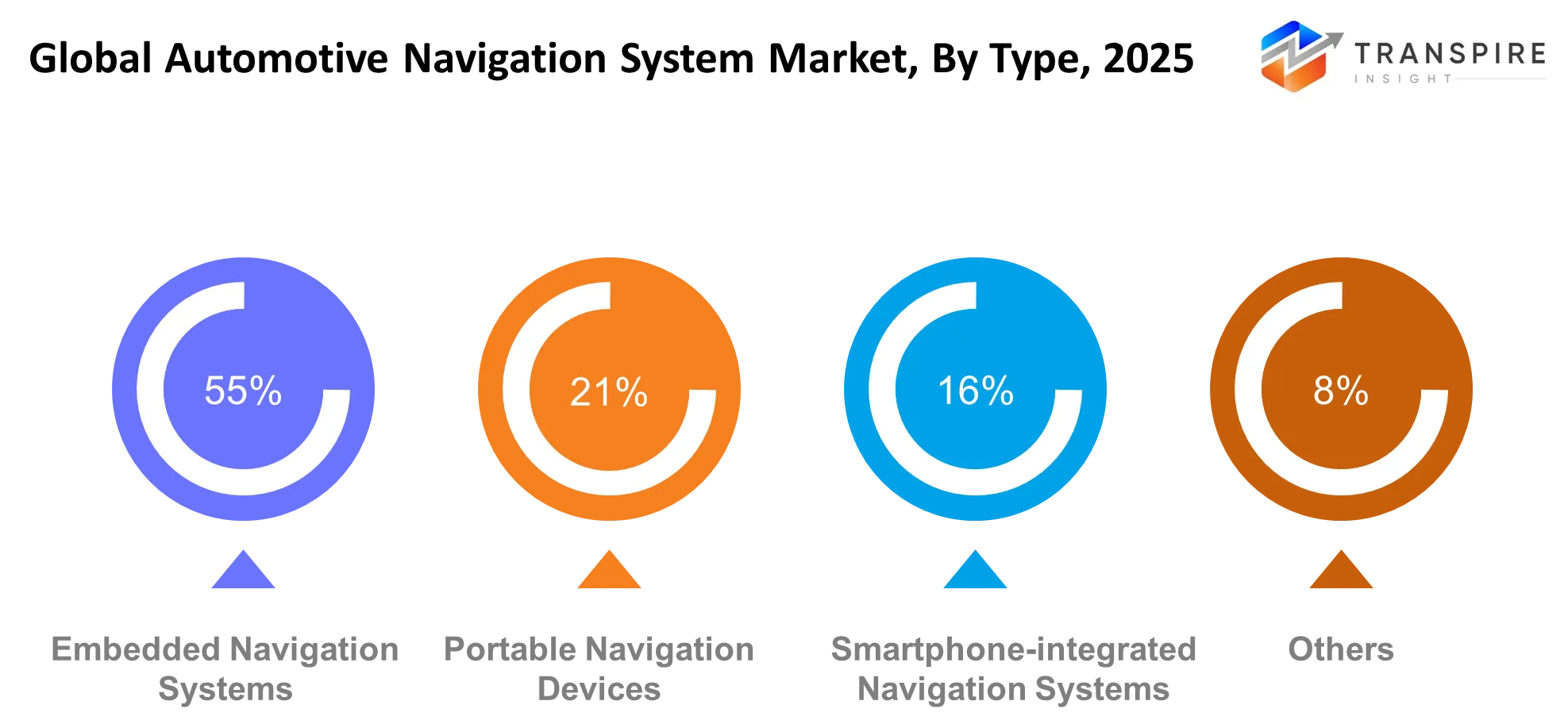
- Commanding a massive 55% share, factory-installed embedded navigation systems are being deeply wired by heavyweights like Bosch and Continental AG directly into driver-assist sensors to automatically adjust vehicle speeds for upcoming curves.
- Growing the fastest at a 12.1% CAGR, AI-powered navigation systems from companies like HERE Technologies and Qualcomm act as predictive co-pilots that learn daily commute habits and automatically reroute drivers around accidents.
- Asia Pacific leads the global volume with a massive 43% share, pushing regional giants like Denso and Hyundai Mobis to integrate navigation tech directly into smart city grids to locate real-time parking and charging stations.
- North America holds a 27% share and expands the quickest at an 11.3% CAGR, fueled by tech leaders like Harman International and Garmin partnering with telecoms to deliver heavy, over-the-air map updates straight to the dashboard.
- The European market captures a 22% share and is heavily driven by strict government safety mandates, forcing suppliers like Visteon and Alpine Electronics to actively embed intelligent speed assistance software that reads local limits.
- Standalone portable navigation devices maintain a solid 21% footprint as brands like TomTom heavily pivot these plug-and-play units toward commercial trucking fleets and off-roaders who regularly drive through massive cellular dead zones.
- Capturing a 16% slice, smartphone-integrated navigation systems remain highly popular for entry-level cars as players like Pioneer and Panasonic Automotive build smarter wireless head units that seamlessly mirror the driver's phone.
- Making up the final 8% share, niche setups like head-up displays from Clarion and Mitsubishi Electric are projecting basic turn-by-turn directions directly onto the windshield glass to keep driver eyes locked on heavy traffic.
What are the Key Drivers, Restraints, and Opportunities in the Global Automotive Navigation System Market?
Driver
Automakers are rushing to put high-end navigation back into the factory dashboard, and the boom in electric vehicles is the main reason why. You can't just drive an EV without knowing exactly where the chargers are or how much battery you have left. To fix that range anxiety, car brands are dropping offline GPS and paying software firms big money to build cloud-connected maps right into the car, creating a steady stream of subscription revenue.
In January 2026, Mapbox announced that Toyota Motor North America is building its next-generation Toyota Audio Multimedia system straight on Mapbox software. Rolling out first on the 2026 RAV4, the setup pulls 3D maps from the cloud and updates over the air, keeping the car's screen totally up to date.
Restraint
Apple CarPlay and Android Auto are still a massive roadblock for built-in navigation sales. It is a stubborn structural problem because drivers are already paying for their own phone data and love the apps they use every day. Asking them to pay an extra monthly fee for a car's factory navigation feels totally redundant, so they push back hard against premium upgrades.
Opportunity
The shift toward self-driving cars is about to open up a completely new way to make money. Instead of just selling maps to the driver, software companies can sell high-definition, lane-by-lane data straight to the car's safety sensors. Getting that level of 3D mapping right is exactly what allows premium vehicles to pull off hands-free, Level 3 autonomous driving on the highway without human input.
What Has the Impact of Artificial Intelligence Been on the Global Automotive Navigation System Market?
AI has pushed in-car navigation far beyond basic static maps. Today's systems actually learn a driver's daily routine, loading up the fastest path before anyone even types a destination. The software actively monitors live variables—like a sudden highway pileup, changing weather, or exact battery drain—and adjusts the trip instantly. This is especially critical for electric vehicles. Instead of leaving the driver to guess their range, the navigation constantly tracks power levels and redirects the car to an open charging station right when the battery gets low.
This technology also creates massive operational upgrades behind the scenes. Instead of waiting for manual database updates, modern platforms harvest anonymized sensor data from thousands of cars actively driving. If a group of vehicles suddenly brakes or swerves on a highway, the system flags a fresh road hazard or lane closure instantly, updating the map globally for other drivers without requiring a bulky software patch.
However, a persistent bottleneck holding this tech back is the connectivity gap. Processing complex AI models requires a flawless, high-speed cell signal. The moment a car enters a mountain pass or a rural dead zone, that cloud connection snaps. The premium dashboard instantly drops back to a basic offline map, losing its smart predictive features entirely.
Key Market Trends
- Dashboard screens are moving past basic routes because car companies now connect the map data directly to safety sensors, letting the car automatically ease off the gas before hitting a sharp curve.
- Brands are walking away from the old, unchangeable software setups that came with the car, preferring to push silent over-the-air updates that fix mapping bugs without making owners drive out to a dealership.
- Typing in destinations while driving is quickly fading away as engineers swap out buttons for conversational AI voice tools, allowing people to tweak their route using normal, everyday speech.
- The standard practice of getting a lifetime map when you buy a car is basically dead, replaced by automakers locking live traffic updates and advanced features behind monthly software subscriptions.
- Planning a long road trip using a separate smartphone app is winding down since built-in software now tracks exact EV battery levels to automatically schedule charging stops along the way.
- Map platforms are no longer just relying on generic satellite signals, choosing instead to pull live crowd-sourced data from nearby vehicles to warn drivers about accidents seconds after they happen.
- Flat, hard-to-read maps are losing ground to sharp 3D lane-level displays that show drivers exactly which lane they need to be in, cutting down on stressful last-second highway merges.
- Basic instrument clusters are being replaced by augmented reality displays that paint bright directional arrows right onto the windshield glass, keeping vital turns in the driver’s direct line of sight.
Global Automotive Navigation System Market Segmentation
By Type
Embedded navigation systems command the top spot, locking down a 55% market share since factory-installed dashboard screens remain the baseline for modern vehicle cockpits. Right behind them, AI-powered navigation is growing the fastest at a 12.1% CAGR. The growth dynamics here are split: embedded systems secure highly stable revenue through long-term factory contracts, while AI setups and cloud-connected platforms are climbing fast because drivers now expect predictive routing that automatically learns their daily habits. Moving forward, the line between traditional factory setups, mobile integration, and portable devices will blur. As onboard computing power ramps up, car manufacturers will phase out standalone, isolated platforms to turn standard dashboards into deeply connected networks that update over the air, eventually making head-up displays standard across everyday commuter trims.
By Application
Passenger vehicles dominate the volume here simply because daily global car production is massive. The driving force behind this is a shift in consumer expectations: buyers want their dashboard to feel just like their smartphone, pushing automakers to make advanced mapping a standard feature instead of a premium upgrade. Meanwhile, electric vehicles and fleet management are moving the fastest because they need hyper-accurate data, not just pretty maps. Drivers facing EV range anxiety or logistics managers tracking deliveries rely heavily on navigation software to pinpoint working chargers and bypass traffic bottlenecks. Moving forward, the market will split. While standard passenger cars and luxury models focus heavily on sleek interfaces, commercial fleets will demand rugged, specialized algorithms optimized for fuel tracking and automated multi-stop routing.
By End-User
Automotive OEMs are the clear heavyweights here, effectively dictating software standards and supply chain terms across the industry. While everyday consumers account for steady volume via aftermarket upgrades, major car brands drive the actual direction of the market. Their growth logic stems straight from the transition toward software-defined vehicles; looking for recurring revenue, automakers are locking into multi-year partnerships with mapping firms to offer premium traffic data as a monthly subscription. Fleet operators and ride-sharing companies operate on a completely different scale, leveraging enterprise tracking software to cut down operational overhead. In the future, management of these platforms will shift drastically. Instead of drivers manually interacting with maps, commercial enterprise users will wire navigation data directly into autonomous safety sensors, triggering automated highway routing the moment a vehicle steps up to Level 3 automation.
By Technology
Real-time traffic navigation holds the dominant position because static, offline maps simply cannot survive in congested urban centers. At the same time, cloud-connected and voice-assisted systems are expanding the quickest. The underlying growth logic is driven entirely by data processing speeds; older GPS-based hardware is losing ground because drivers won't tolerate lagging maps that require physical updates at a dealership. Moving mapping data to the cloud allows providers to stream heavy map layers to the vehicle instantly without bogging down the onboard dashboard hardware. Looking ahead, basic location tracking will take a back seat to hyper-accurate, lane-level mapping. As vehicles become more automated, software engineers will pivot from simple satellite tracking to high-definition 3D mapping tech, allowing the vehicle’s safety sensors to read exact lane lines and upcoming road changes well before the driver sees them.
What are the Key Use Cases Driving the Global Automotive Navigation System Market?
Daily city commuting remains the bread and butter of this market. Factory-installed dashboard screens rely on live traffic feeds to help drivers dodge gridlock, re-routing on the fly to shave minutes off common passenger vehicle trips.
Beyond the standard daily drive, commercial logistics and electric vehicles are pushing software adoption forward. Fleet operators use these platforms to map out efficient multi-stop delivery routes, while EV owners depend heavily on live tracking to pinpoint working chargers and protect their battery life.
The newest use cases move past manual input altogether. Hyper-accurate 3D mapping data feeds straight into automated safety sensors to enable hands-free highway cruising, while advanced systems paint bright directional lines directly onto the windshield glass.
|
Report Metrics |
Details |
|
Market size value in 2025 |
USD 25.44 Billion |
|
Market size value in 2026 |
USD 27.15 Billion |
|
Revenue forecast in 2033 |
USD 43.18 Billion |
|
Growth rate |
CAGR of 6.85% from 2026 to 2033 |
|
Base year |
2025 |
|
Historical data |
2021 - 2024 |
|
Forecast period |
2026 - 2033 |
|
Report coverage |
Rvenue forecast, competitive landscape, growth factors, and trends |
|
Regional scope |
United States; Canada; Mexico; United Kingdom; Germany; France; Italy; Spain; Denmark; Sweden; Norway; China; Japan; India; Australia; South Korea; Thailand; Brazil; Argentina; South Africa; Saudi Arabia; United Arab Emirates |
|
Key companies profiled |
Garmin, TomTom, Bosch, Denso, Pioneer, Alpine Electronics, Harman International, Continental AG, HERE Technologies, Panasonic Automotive, Mitsubishi Electric, Clarion, Qualcomm, Visteon, Hyundai Mobis |
|
Customization scope |
Free report customization (country, regional & segment scope). Avail customized purchase options to meet your exact research needs. |
|
Report Segmentation |
By Type (Embedded Navigation Systems, Portable Navigation Devices, Smartphone-integrated Navigation Systems, Head-up Display Navigation, AI-powered Navigation Systems, Connected Vehicle Navigation Systems, Others); By Application (Passenger Vehicles, Commercial Vehicles, Electric Vehicles, Fleet Management, Luxury Vehicles, Others); By End-User (Automotive OEMs, Fleet Operators, Consumers, Ride-sharing Companies, Others); By Technology (GPS-based Navigation, Real-time Traffic Navigation, Voice-assisted Navigation, Cloud-connected Navigation, Others) |
Which Regions are Driving the Global Automotive Navigation System Market Growth?
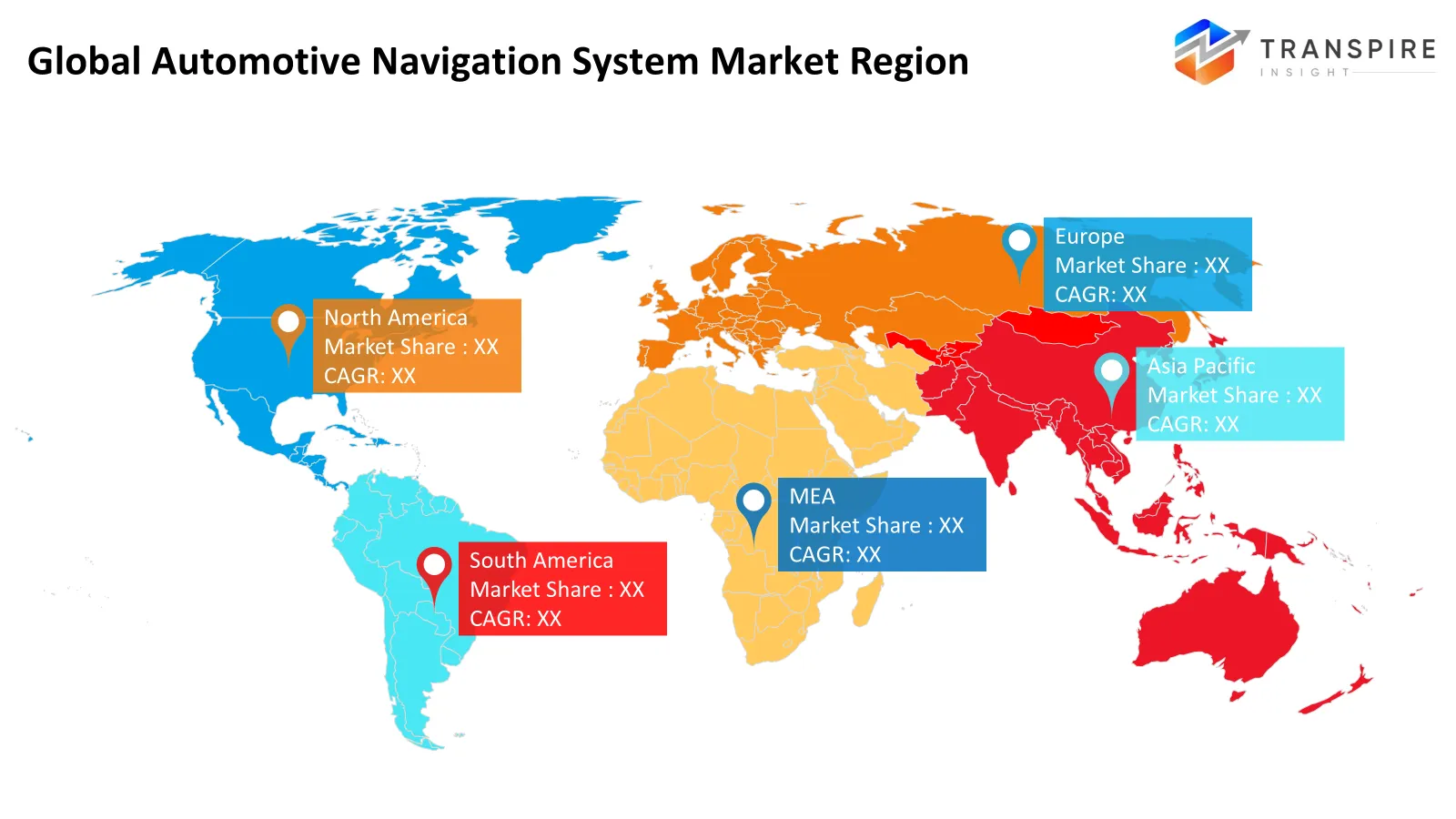
Asia Pacific holds the largest slice of the automotive navigation market, claiming a 43% share due to massive car manufacturing lines across China, Japan, and India. Instead of installing old, offline dashboard screens, local car brands are moving rapidly toward connected vehicle setups to please a very tech-savvy consumer base. Massive government backing for smart cities and widespread electric vehicle adoption mean drivers now require live maps that can instantly track regional charging grids. This steady wave of digital upgrades gives global software developers a highly reliable, long-term stream of orders.
Europe secures a solid 22% of the market but follows a completely different strategy than the volume-heavy approach seen in Asia. Rather than building maps for pure dashboard entertainment, growth here is driven heavily by strict European Union safety rules that require Intelligent Speed Assistance software in every new car. Tight data privacy laws and high driver expectations push local automakers to choose highly secure, built-in factory platforms over basic third-party mobile apps. By wiring advanced 3D maps directly into the vehicle's core safety sensors, European car brands easily hit top safety ratings while keeping up with regional regulations.
North America is outpaced by no other region, climbing fast at an 11.3% CAGR due to a sharp pivot toward subscription-based software and cloud tools. A recent boom in hybrid and battery-electric car sales has forced legacy American car brands to ditch their outdated, slow dashboard screens. Shifting to cloud-connected setups gives these automakers a great way to generate recurring monthly revenue by charging users for live traffic updates and smart routing. Looking forward, the biggest financial opportunity lies in autonomous vehicle development, where navigation companies feed hyper-accurate road data directly into hands-free driving systems. In January 2026, HERE Technologies announced at the CES tech conference in Las Vegas that it is backing the next-gen navigation and driver assistance features for Lucid Motors' luxury electric fleet, including the Air sedan and the Gravity SUV. This system wires location services directly into the car's cloud infrastructure, letting drivers sync mobile trip plans and monitor live battery range while traveling across major US highway networks.
Who are the Key Players in the Global Automotive Navigation System Market and how do they Compete?
The car navigation market is a fierce battleground where traditional hardware suppliers and mapping software firms clash. Competition has shifted completely away from selling static, pre-loaded GPS boxes toward locking down long-term software contracts for digital dashboards. Companies compete by offering the lowest data latency and the slickest, most intuitive interfaces.
TomTom relies on a strict innovation strategy. The firm differentiates itself by decoupling its software from proprietary hardware, offering open mapping platforms that give car makers full control over the dashboard user experience. To expand its market footprint, TomTom forms aggressive software alliances, partnering with major cloud platforms and voice-AI developers to embed conversational routing straight into new electric vehicle lineups.
Garmin pursues a targeted niche strategy, focusing on standalone reliability over mass-market factory partnerships. The company differentiates its products by building rugged, localized hardware with offline processing capabilities that never drop out in cellular dead zones. Garmin's expansion approach centers on capturing specialized enthusiast sectors—such as off-road transit, marine, and overland tracking—where flawless satellite reliability matters far more than standard urban commuting.
Company List
- Garmin
- TomTom
- Bosch
- Denso
- Pioneer
- Alpine Electronics
- Harman International
- Continental AG
- HERE Technologies
- Panasonic Automotive
- Mitsubishi Electric
- Clarion
- Qualcomm
- Visteon
- Hyundai Mobis
Recent Development News
In June 2026, Point One Navigation teamed up with STMicroelectronics to pack real-time kinematics and dead-reckoning capabilities directly into ST’s Teseo6 GNSS receiver chips. This collaboration gives car manufacturers a plug-and-play hardware and software bundle that delivers centimeter-accurate positioning right out of the box. By skipping the usual integration headaches, engineering teams can bypass months of calibration and move their self-driving platforms into active road testing much faster.
In April 2026, QCraft showed off its new Physical AI Model and QPilot MAX intelligent driving software at the Auto China exhibition. The system uses a unified "World Model" framework to make virtual simulation data behave identically to actual road conditions. This allows the vehicle's onboard navigation to handle confusing road anomalies on the fly, keeping the car on track during chaotic edge cases like erratic pedestrians or sudden, blinding downpours.
What Strategic Insights Define the Future of the Global Automotive Navigation System Market?
Navigation is changing fast. It's moving away from basic turn-by-turn maps toward hyper-detailed spatial tech that actually drives the car. But there's a huge blind spot here. Relying completely on the cloud leaves vehicles totally exposed to signal jamming or sudden satellite drops, which can instantly freeze automated driving systems right when you need them most.
This creates a massive opening for local edge computing. Processing complex maps directly on the vehicle's own hardware lets cars navigate tricky areas smoothly without needing a constant cellular signal.
Instead of buying generic, one-size-fits-all software patches, automakers have to build tight, hybrid systems. Wiring built-in physical sensors directly into live cloud streams keeps tracking dead-on, making sure safety systems don't fail when the weather gets ugly or the signal cuts out.
Global Automotive Navigation System Market Segmentation:
By Type
- Embedded Navigation Systems
- Portable Navigation Devices
- Smartphone-integrated Navigation Systems
- Head-up Display Navigation
- AI-powered Navigation Systems
- Connected Vehicle Navigation Systems
- Others
By Application
- Passenger Vehicles
- Commercial Vehicles
- Electric Vehicles
- Fleet Management
- Luxury Vehicles
- Others
By End-User
- Automotive OEMs
- Fleet Operators
- Consumers
- Ride-sharing Companies
- Others
By Technology
- GPS-based Navigation
- Real-time Traffic Navigation
- Voice-assisted Navigation
- Cloud-connected Navigation
- Others
Regional Outlook
North America
- United States
- Canada
- Mexico
Europe
- Germany
- United Kingdom
- France
- Spain
- Italy
- Rest of Europe
Asia Pacific
- Japan
- China
- Australia & New Zealand
- South Korea
- India
- Rest of Asia Pacific
South America
- Brazil
- Argentina
- Rest of South America
Middle East & Africa
- Saudi Arabia
- United Arab Emirates
- South Africa
- Rest of the Middle East & Africa
Frequently Asked Questions
Find quick answers to common questions.
The Global Automotive Navigation System Market size was valued at USD 25.44 Billion in 2025 and is poised to reach USD 43.18 Billion by 2033, expanding at a 6.85% CAGR.
Key segments for the Global Automotive Navigation System Market are By Type (Embedded Navigation Systems, Portable Navigation Devices, Smartphone-integrated Navigation Systems, Head-up Display Navigation, AI-powered Navigation Systems, Connected Vehicle Navigation Systems, Others); By Application (Passenger Vehicles, Commercial Vehicles, Electric Vehicles, Fleet Management, Luxury Vehicles, Others); By End-User (Automotive OEMs, Fleet Operators, Consumers, Ride-sharing Companies, Others); By Technology (GPS-based Navigation, Real-time Traffic Navigation, Voice-assisted Navigation, Cloud-connected Navigation, Others)
Growth is primarily driven by the rapid transition toward connected and software-defined vehicle architectures, government backing for smart city infrastructure, massive electric vehicle rollouts requiring live charging grids, and the expanding demand for autonomous vehicle data integration.
The global market is led by major manufacturers, including Garmin, TomTom, Bosch, Denso, Pioneer, Alpine Electronics, Harman International, Continental AG, HERE Technologies, Panasonic Automotive, Mitsubishi Electric, Clarion, Qualcomm, Visteon, Hyundai Mobis.
Asia Pacific holds a dominant 43% share of the global market. This region heavily shapes global dynamics because of massive car manufacturing networks across China, Japan, and India, coupled with aggressive local automakers who are rapidly replacing legacy offline screens with advanced cloud-connected systems.
Great opportunities are opening up in developing local edge computing platforms that process maps offline, creating high-margin software subscription packages for real-time traffic routing, and feeding hyper-detailed 3D terrain data directly into hands-free highway driving systems.
- Garmin
- TomTom
- Bosch
- Denso
- Pioneer
- Alpine Electronics
- Harman International
- Continental AG
- HERE Technologies
- Panasonic Automotive
- Mitsubishi Electric
- Clarion
- Qualcomm
- Visteon
- Hyundai Mobis
About the Authors

Mayur Shinde
I am Mayur Shinde, a Senior Research Analyst at Transpire Insight, specializing in the Automotive & Transportation and Information & Communication Technology (ICT) Industry. My work focuses on analyzing emerging market trends, technological advancements, competitive landscapes, and industry developments to deliver accurate, data-driven insights. I am passionate about transforming complex market information into clear, actionable content that helps businesses, professionals, and decision-makers stay informed and make confident strategic decisions.

Chakradhar Khansole
Chakradhar serves as the Research Director at Transpire Insight, bringing over 8 years of experience in technology, innovation, and strategic market intelligence. He specializes in transforming complex market data into actionable business insights that enable organizations to make informed, growth-oriented decisions. Recognized for his strategic vision and analytical expertise, Chakradhar leads high-impact research initiatives, delivering comprehensive market assessments, competitive intelligence, and forward-looking industry analysis.
Recently Published Reports
-
Apr 2026
ATV & UTV Market
ATV & UTV Market Size, Share & Analysis Report By Type (ATV, and UTV), By Variants (Less Than 400 CC, 400 CC To 800 CC, and More Than 800 CC), and Geography (North America, Europe, Asia-Pacific, Middle East and Africa, South and Central America), 2021 - 2031
-
Apr 2026
Automotive Central Gateway Module Market
Automotive Central Gateway Module Market Size, Share & Analysis Report By Type (Ethernet Central Gateway Module, CAN Central Gateway Module, LIN Central Gateway Module, and FlexRay), By Application (Powertrain Control, Body Control, Infotainment System, Advanced Driver Assistance Systems (ADAS), and Others), By End User (Passenger Vehicles, and Commercial Vehicles), and Geography (North America, Europe, Asia-Pacific, Middle East and Africa, South and Central America), 2021 - 2031
-
Apr 2026
Automotive Engine Oil Filter Market
Automotive Engine Oil Filter Market Size, Share & Analysis Report By Filter Type (Fuel Filter, Engine Oil Filter, Hydraulic Oil Filter, and Others), By Filter Media (Cellulose, Synthetic, and Micro), By Sales Channel (OEMs, and Aftermarket), By Vehicle Type (Passenger Cars, Light Commercial Vehicles, Heavy Duty Trucks, Buses and Coaches, and Off-road Vehicles), and Geography (North America, Europe, Asia-Pacific, Middle East and Africa, South and Central America), 2021 - 2031
-
Apr 2026
Automotive Parts Aluminium Die Casting Market
Automotive Parts Aluminium Die Casting Market Size, Share & Analysis Report By Production Process (Pressure Die Casting, Vacuum Die Casting, Squeeze Die Casting, Gravity Die Casting), By Application (Body Parts, Engine Parts, Transmission Parts, Battery And Related Components, Other Application Types), and Geography (North America, Europe, Asia-Pacific, Middle East and Africa, South and Central America), 2021 - 2031
Our Clients