
Germany Medication Adherence Packaging Systems Market Summary
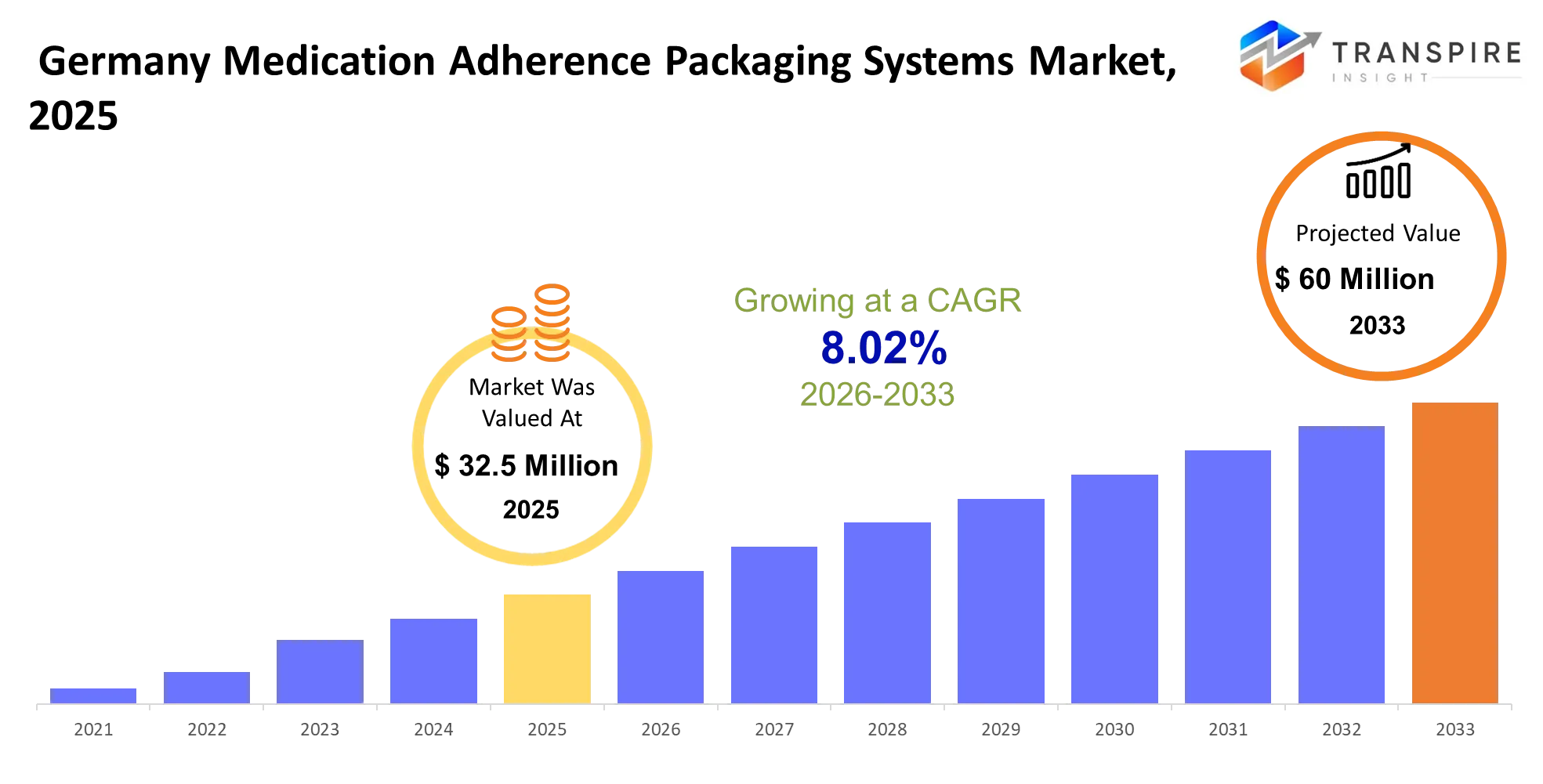
As per Transpire Insight Analysis The Germany Medication Adherence Packaging Systems Market size is estimated at USD 32.5 Million in 2025 and is anticipated to reach USD 60 Million by 2033, growing at a CAGR of 8.02% from 2026 to 2033.
The Germany Medication Adherence Packaging Systems Market plays a big role in helping pharmacies, hospitals, and long- term care providers sort medicines into patient specific packaging, which can cut down on missed doses and medication errors, plus keep treatment from getting interrupted. In a lot of ways these systems support better clinical results while also boosting dispensing efficiency and staying aligned with regulatory compliance in different healthcare environments. Over the last five years, Germany has sped up adoption of automated pharmacy technologies, since providers have been dealing with workforce shortages and they also rolled out more digital healthcare initiatives. Then the COVID 19 pandemic really made the point clearer about needing contact-efficient medication distribution, and dependable pharmaceutical supply chains, so more funds went into automated adherence packaging solutions. Since Germany’s aging population needs increasingly structured long-term medication management, healthcare organizations are combining high capacity packaging equipment with pharmacy automation software, aiming to reduce manual workloads and increase dispensing accuracy. This change is pushing more system deployments across retail pharmacies, hospitals, and care facilities, and it’s opening up more steady revenue chances for technology suppliers as well as packaging solution providers.
Germany Medication Adherence Packaging Systems Market Size & Forecast:
- Germany Medication Adherence Packaging Systems Market Size 2025: USD 32.5 Million
- Expected Market Value 2033: USD 60 Million
- Forecast CAGR: 8.02%
- Key Profile: Omnicell, BD (Becton Dickinson), McKesson, Parata Systems, Jones Healthcare Group, Cardinal Health, WestRock, Gerresheimer AG, AptarGroup, TCGRx, ARxIUM, Swisslog Healthcare, JVM Co., Manrex Limited, RxSafe
Key Market Insights
- The Germany Medication Adherence Packaging Systems Market is moving forward, sort of driven by pharmacy automation, older age demographics, and this digital healthcare integration vibe.
- Over time, it is expected to grow from about USD 32.5 million in 2025 up to around USD 60 million by 2033. A big part of that push comes from automated dispensing, plus patient safety initiatives which keep things more reliable, and less error prone.
- Regional Leadership: Western Germany kind of runs the Germany Medication Adherence Packaging Systems Market, with around 39% market share in 2025, due to dense hospital networks and big pharmacy chains… not that surprising really.
- Regional Growth: Southern Germany is forecasted to see the quickest expansion by 2033, mainly from healthcare tech investments, pharmaceutical manufacturing hubs, and a more digital hospital modernization push.
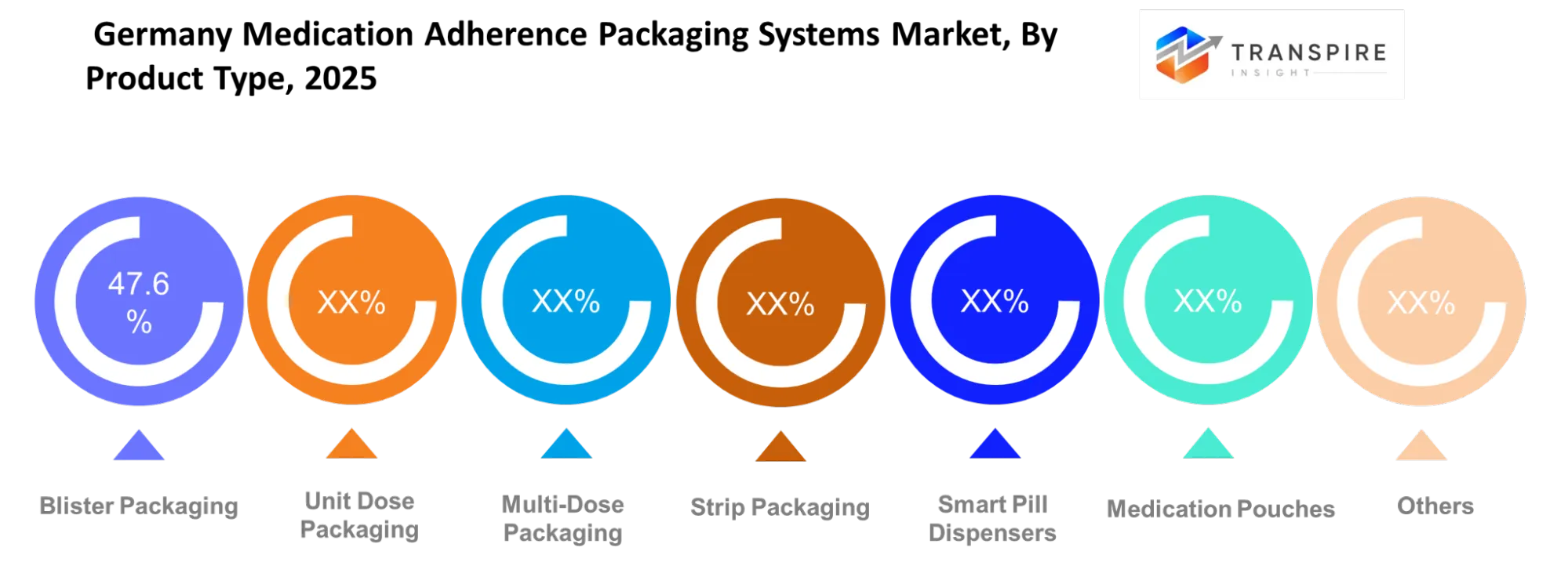
- Product Segments: Automated medication adherence packaging systems are taking the lead at nearly 48% market share, and multi dose pouch packaging stays the second most significant group. AI-enabled dispensing platforms are the fastest movers through 2033, kind of the emerging wave.
- Application & End Users: Retail pharmacies generate about 44% of industry revenue , hospitals are next, and long term care facilities should show the highest future adoption rate, as demand keeps shifting.
- Competitive Strategy: Businesses like Omnicell, BD (Becton Dickinson), McKesson, Gerresheimer AG, Cardinal Health, and AptarGroup are scaling up via pharmacy automation, smart packaging innovation, strategic partnerships, and digital workflow integration, all to protect and grow their position in the market.
What are the Key Drivers, Restraints, and Opportunities in The Germany Medication Adherence Packaging Systems Market?
Germany’s rapidly aging population and growing prevalence of chronic diseases have, overall, pushed up prescription volumes that in practice need long term medication management. At the same time pharmacies keep dealing with workforce shortages, and also stricter quality rules for dispensing accuracy, which is not easy to keep stable. Because of that more and more investment is moving toward automated adherence packaging systems, they help keep dispensing more consistent, reduce medication mistakes, and can increase pharmacy productivity too. When the daily ops run more efficiently, pharmacies and healthcare providers can handle bigger prescription volumes while also backing stronger patient adherence, and that directly feeds into market revenue growth.
Still, the biggest structural barrier is the heavy capital investment needed for automated packaging equipment, plus software integration, validation steps, and staff training. Many small independent pharmacies find it hard to even start these projects because reimbursement structures do not always cover implementation costs. On top of that, integration with legacy pharmacy information systems often needs extensive customization, this creates delays in deployment timelines, and it can end up limiting adoption among smaller healthcare providers.
Germany’s digital healthcare ecosystem is expanding pretty fast, so connected medication management solutions have real openings. When electronic prescriptions, pharmacy management software, cloud based adherence monitoring, and automated packaging systems are connected together, they can support end-to-end medication tracking. Further investments in smart packaging, for example with QR codes, serialization technologies, and patient engagement platforms, let providers improve adherence monitoring while enabling more personalized medication programs across hospitals, retail pharmacies, and home healthcare services.
What Has the Impact of Artificial Intelligence Been on The Germany Medication Adherence Packaging Systems Market?
Artificial intelligence is kinda transforming medication adherence packaging operations, mostly by improving pharmacy automation, workflow optimization, and dispensing accuracy. With AI-powered software, it sort of analyzes prescription data, patient medication histories, refill schedules, and then also pharmacy workloads, and it automates packaging sequences while cutting down on dispensing errors. Machine learning algorithms then tune production scheduling so automated packaging equipment can process prescriptions more efficiently, which helps reduce bottlenecks during those busy peak operating periods. Predictive analytics also pinpoints equipment components that need maintenance before failures happen, which increases operational uptime and usually lowers maintenance costs for pharmacy automation systems.
On top of that, advanced computer vision technologies verify package labeling, tablet counts, barcode accuracy, and sealing quality in real time, and they reduce quality control errors before products ever reach patients. AI also helps with inventory forecasting by predicting medication consumption patterns, so pharmacies can fine tune stock levels and minimize pharmaceutical waste. Overall these things improve operational efficiency, reduce labor requirements, strengthen regulatory compliance, and enhance patient safety across Germany's healthcare system.
Even so, AI adoption is still kind of limited, because integration costs are high, plus interoperability issues show up with older pharmacy software, and there isn’t always enough standardized healthcare data available for training the more advanced algorithms. Smaller pharmacies often don’t have the technical manpower or resources needed to implement sophisticated AI-enabled automation, so rollout across the German medication adherence packaging ecosystem tends to move slower than expected.
Key Market Trends
- The Germany Medication Adherence Packaging Systems market is changing, kind of, via pharmacy automation, digital healthcare integration and personalized medication management, day to day.
- Tech providers now seem to push smart packaging, AI enabled dispensing, and linked pharmacy workflows so they can speed things up and also help patients stay on track.
- In fact automated adherence packaging installations went up by more than 25% since 2021, which allows pharmacies to deal with labor shortages while also keeping dispensing more consistent, and generally boosting operational efficiency.
- At the same time electronic prescription adoption has picked up pace, and this is driving digital pharmacy workflows, encouraging tighter integration between dispensing software and automated packaging equipment across Germany.
- Smart packaging solutions—QR codes and serialization in particular—have shown up more often since 2022. That has helped strengthen medication traceability plus patient engagement, in a more measurable way.
- Meanwhile major suppliers like Omnicell, BD, Gerresheimer AG, McKesson, and Cardinal Health keep funding automation efforts, software integration, and strategic collaborations, so they can expand their competitive position without losing momentum.
- Also long term care facilities have been moving toward centralized multi dose packaging programs, which can reduce medication administration errors.
- This happens because standardized dispensing processes get supported across institutional healthcare settings, so the whole routine is steadier.
Germany Medication Adherence Packaging Systems Market Segmentation
By Product Type
Blister Packaging helps with accurate dose organization, and it still gets used pretty widely across pharmacies and healthcare facilities. It’s because the sealed compartments kind of lessen medication mix ups , and they can improve patient compliance too. Unit Dose Packaging is more about letting each medication be prepared on its own for hospitals and institutional care, where precise dispensing matters, and infection control stays essential. Multi-Dose Packaging basically gathers scheduled medicines into one pack, so the daily medication routines feel less complicated for people who handle multiple prescriptions at once. Strip Packaging gives compact storage and fast dispensing, which is handy in high-volume pharmaceutical operations.
Smart Pill Dispensers blend automated reminders with controlled release , so medication schedules are easier to keep up with for patients on long term therapy. Medication Pouches are also getting more acceptance, since labeled pouches make it simpler during different times of the day, and they can reduce confusion for caregivers. There are other packaging formats too, covering specialized therapeutic needs, customized pharmacy services, and unique patient requirements where normal solutions don’t really offer the right flexibility.
By Technology
RFID-Enabled Packaging is a bit like a silent helper for inventory, it improves visibility because healthcare providers can monitor medication movement more easily and, as a result, reduce those dispensing mistakes all along the supply chain. NFC Packaging enables secure digital interaction between the package and mobile devices, helping with authentication and also offering patient education in a more direct way. Barcode Systems still stay the most common tech, honestly, because scanning helps with dispensing accuracy and it also simplifies the pharmacy workflow too. IoT-Enabled Packaging brings in connected monitoring, it records medication usage and supports adherence tracking, which sounds simple but it really matters.
Traditional Packaging keeps working, especially for healthcare providers who want dependable and cost-effective dispensing methods without building all that advanced digital infrastructure. A lot of facilities still lean on conventional packaging because the existing systems are already compatible with the established pharmacy operations. There are also other technologies for specialized packaging needs, product authentication, and customized healthcare applications where standard digital solutions may not fully cover day to day operational requirements, not entirely.
By End User
Hospitals count as a big end-user group because huge prescription volumes, need accurate packaging, efficient dispensing, and very strict medication safety procedures all at once. Retail Pharmacies are still expanding automated packing services to make day to day workflow feel smoother , and also to deliver more personalized medication support. Long-Term Care Facilities rely heavily on organized medication packaging to keep complex treatment plans on track for residents , especially when they’re taking multiple prescriptions. Every healthcare setting can benefit from better accuracy and also fewer medication administration errors, which is kind of the whole point.
Home Healthcare keeps growing too, since more patients get ongoing treatment outside the usual medical facilities. Specialty Clinics adopt customized packaging for disease-specific therapies, with scheduled medication administration and patient monitoring built in. Other providers use adherence packaging systems for specialized treatment programs, rehabilitation services, and community healthcare initiatives , where consistent medication management matters every single time.
By Application
Chronic Disease Management still is the biggest application, mostly because long term therapies need consistent medication routines and accurate dose organization, yep. Geriatric Care helps elderly patients who take several medications in a day, so structured packing kind of becomes a key part of treatment continuity, even if it feels simple. Post-Acute Care depends on organized medication distribution after hospital discharge, which can cut down on pauses in treatment and help recovery outcomes. So each application, all together, pushes medication adherence in slightly different ways for different patient groups.
Mental Health treatment programs are also using adherence packaging more often to make complicated medication routines easier to handle, without all the fuss. Clear packaging schedules mean fewer missed doses and better treatment continuity for patients who are on long-term psychiatric medication. Then there are the other uses too, like short-term therapies, rehabilitation programs, and specialized treatment plans that still need structured medication organization across various healthcare environments, not just one setting.
By Distribution Channel
Direct Sales still stay pretty important for large hospitals, health systems, and pharmacy chains, when they want to buy automated packaging systems with customized installation, and service agreements too. Medical Distributors help keep product availability broad, by supplying healthcare providers across regional markets, using long established distribution networks. Pharmacies keep functioning as a key distribution point for adherence packaging services, because direct patient contact helps teams tailor medication preparation. In the end each channel supports a wider uptake of this technology across different healthcare facilities, not just one type.
Online Channels keep growing as healthcare providers compare products, ask for quotations and purchase packaging solutions via digital procurement platforms. Digital ordering also makes it easier for faster replacement of consumables and packaging materials, which matters when demand gets tight. There are also other distribution channels, like specialized healthcare suppliers and regional service providers, who handle customized purchasing requirements for different healthcare organizations and schedules.
What are the Key Use Cases Driving The Germany Medication Adherence Packaging Systems Market?
Hospital pharmacy operations still seem to be the top use case, mostly because huge prescription volumes call for very accurate packing and fairly standardized medication distribution, not just sort of “good enough”. Automated adherence packaging cuts down dispensing errors, backs regulatory compliance, and it also makes workflow efficiency better during those high-volume day to day operations.
Long-term care facilities and retail pharmacies keep on expanding adoption, especially for multi medication therapy programs. When the packaging is organized, elderly patients with complicated treatment routines get a smoother experience, and the pharmacy staff can prepare personalized prescriptions more efficiently. This helps a lot with chronic disease management, and even community healthcare services, in general.
Home healthcare programs are also opening up new opportunities, through connected medication monitoring and digital adherence support, because patients are no longer only inside clinics. Smart packaging tied into electronic prescription systems and remote patient management platforms will reinforce personalized treatment programs and keep medication continuity steadier across more decentralized healthcare settings.
|
Report Metrics |
Details |
|
Market size value in 2025 |
USD 32.5 Million |
|
Market size value in 2026 |
USD 35.0 Million |
|
Revenue forecast in 2033 |
USD 60 Million |
|
Growth rate |
CAGR of 8.02% from 2026 to 2033 |
|
Base year |
2025 |
|
Historical data |
2021 - 2024 |
|
Forecast period |
2026 - 2033 |
|
Report coverage |
Revenue forecast, competitive landscape, growth factors, and trends |
|
Regional scope |
Germany |
|
Key company profiled |
Omnicell, BD (Becton Dickinson), McKesson, Parata Systems, Jones Healthcare Group, Cardinal Health, WestRock, Gerresheimer AG, AptarGroup, TCGRx, ARxIUM, Swisslog Healthcare, JVM Co., Manrex Limited, RxSafe |
|
Customization scope |
Free report customization (country, regional & segment scope). Avail customized purchase options to meet your exact research needs. |
|
Report Segmentation |
By Product Type (Blister Packaging, Unit Dose Packaging, Multi-Dose Packaging, Strip Packaging, Smart Pill Dispensers, Medication Pouches, Others); By Technology (RFID-Enabled Packaging, NFC Packaging, Barcode Systems, IoT-Enabled Packaging, Traditional Packaging, Others); By End User (Hospitals, Retail Pharmacies, Long-Term Care Facilities, Home Healthcare, Specialty Clinics, Others); By Application (Chronic Disease Management, Geriatric Care, Post-Acute Care, Mental Health, Others); By Distribution Channel (Direct Sales, Medical Distributors, Pharmacies, Online Channels, Others) |
Which Regions are Driving The Germany Medication Adherence Packaging Systems Market Growth?
Western Germany has the biggest share of the market, largely because the region sort of blends, a dense network of hospitals, big pharmacy chains, pharmaceutical manufacturers, and healthcare technology providers all together. Regions like North Rhine-Westphalia and Hesse take advantage of advanced healthcare infrastructure, solid reimbursement frameworks, and really early uptake of pharmacy automation systems. A number of packaging equipment suppliers, logistics providers and digital health companies are active across the area, so it ends up feeling like an ecosystem that backs ongoing technology upgrades, not just one time purchases. Between healthcare investment, industrial know-how, and well established distribution channels, Western Germany stays at the front of medication adherence packaging adoption.
Southern Germany is still the second-largest regional contributor, though the growth path looks more nuanced than in the western states. Bavaria and Baden-Württemberg do well due to a strong medical technology industry, steady funding for healthcare innovation, and financially resilient healthcare institutions that tend to favor long-term modernization, over fast expansion. There’s also regional collaboration happening between pharmaceutical manufacturers, research bodies, and healthcare providers. That teamwork helps smart packaging technologies, and digital medication management platforms roll out in a gradual manner. This steady investment rhythm creates dependable demand, and it gives manufacturers more stable revenue options even when the overall economy feels a bit shaky.
Eastern Germany is expected to show the quickest expansion from 2026–2033, mainly because healthcare modernization programs and digital infrastructure investments will reshape regional pharmacy services.
Who are the Key Players in The Germany Medication Adherence Packaging Systems Market and How Do They Compete?
Competition is still fairly fragmented, with big global healthcare technology firms side by side with more specialized pharmacy automation providers , and then also pharmaceutical packaging manufacturers. In general the tech side—like technology innovation and integrated software abilities—has started to matter more than pure price. This is because healthcare providers are often looking for a whole medication management arrangement, not just a standalone packaging piece. Meanwhile, established suppliers keep pushing harder on customer ties via service contracts, digital integration, and workflow optimization. The more niche players tend to set themselves apart through automation efficiency and tailored pharmacy solutions, kind of the whole “fit the process” angle.
Omnicell is centered on integrated pharmacy automation, by pairing adherence packaging with medication management software, and also workflow analytics, so that healthcare providers can speed up dispensing efficiency across different care settings. Parata Systems leans into fast pharmacy automation platforms meant to raise prescription throughput while cutting down on manual intervention. Gerresheimer AG goes beyond typical pharmaceutical packaging, by putting effort into connected drug delivery technologies and digital adherence solutions. Those are aimed at home based therapies and patient monitoring support, not just the product itself.
BD (Becton Dickinson) competes by combining medication management, dispensing technologies, and clinical safety solutions directly into hospital workflows, then claims value through interoperability along with patient safety. Swisslog Healthcare focuses more on automated hospital pharmacy logistics , plus robotic medication handling, which helps healthcare facilities optimize inventory management and also improve dispensing accuracy.
Company List
- Omnicell
- BD (Becton Dickinson)
- McKesson
- Parata Systems
- Jones Healthcare Group
- Cardinal Health
- WestRock
- Gerresheimer AG
- AptarGroup
- TCGRx
- ARxIUM
- Swisslog Healthcare
- JVM Co.
- Manrex Limited
- RxSafe
Recent Development News
- In April 2026, Gerresheimer AG entered a partnership with Milliken & Company to commercialize LeneX UltraGuard technology for pharmaceutical HDPE packaging. The collaboration improves moisture barrier performance by up to 40%, strengthening packaging protection for sensitive pharmaceutical products. Source: https://www.gerresheimer.com
- In March 2026, Gerresheimer AG launched Gx InMonit, a connected adherence support system for autoinjectors featuring cloud connectivity and AI-supported patient engagement. The solution expands digital medication adherence capabilities for home-based therapies and connected healthcare. Source: https://www.gerresheimer.com
- In April 2025, Centor, a Gerresheimer company, launched a Smart Pill Organizer for remote medication adherence monitoring. The connected device enables pharmacies to monitor medication intake in real time and strengthens remote patient support programs. Source: https://www.gerresheimer.com
What Strategic Insights Define the Future of The Germany Medication Adherence Packaging Systems Market?
The market will move, kinda steadily, toward connected medication management ecosystems where automated packaging, electronic prescriptions, pharmacy software, and remote patient monitoring work through integrated digital platforms instead of standalone products, you know. Healthcare workforce shortages , demographic aging, and broader digital health implementation will keep pushing this structural shift over the next five to seven years. A less obvious risk is the growing dependence on interoperable healthcare software because fragmented digital standards can slow integration projects and, in turn, raise the implementation costs for pharmacies and hospitals.
An emerging chance sits in AI-enabled adherence monitoring paired with smart packaging for home healthcare, especially as decentralized care models keep expanding across Germany. If companies want to enter this market they should focus on open software architectures, cloud connectivity, and partnerships with healthcare information system providers rather than competing mostly on packaging hardware. That approach should help create stronger long-term differentiation, plus recurring service revenue.
Germany Medication Adherence Packaging Systems Market Report Segmentation
By Product Type
• Blister Packaging
• Unit Dose Packaging
• Multi-Dose Packaging
• Strip Packaging
• Smart Pill Dispensers
• Medication Pouches
• Others
By Technology
• RFID-Enabled Packaging
• NFC Packaging
• Barcode Systems
• IoT-Enabled Packaging
• Traditional Packaging
• Others
By End User
• Hospitals
• Retail Pharmacies
• Long-Term Care Facilities
• Home Healthcare
• Specialty Clinics
• Others
By Application
• Chronic Disease Management
• Geriatric Care
• Post-Acute Care
• Mental Health
• Others
By Distribution Channel
• Direct Sales
• Medical Distributors
• Pharmacies
• Online Channels
• Others
Frequently Asked Questions
Find quick answers to common questions.
The expectedGermany Medication Adherence Packaging Systems Market size for the market will be USD 60 Million in 2033.
Key segments for The Germany Medication Adherence Packaging Systems Market are By Product Type (Blister Packaging, Unit Dose Packaging, Multi-Dose Packaging, Strip Packaging, Smart Pill Dispensers, Medication Pouches, Others); By Technology (RFID-Enabled Packaging, NFC Packaging, Barcode Systems, IoT-Enabled Packaging, Traditional Packaging, Others); By End User (Hospitals, Retail Pharmacies, Long-Term Care Facilities, Home Healthcare, Specialty Clinics, Others); By Application (Chronic Disease Management, Geriatric Care, Post-Acute Care, Mental Health, Others); By Distribution Channel (Direct Sales, Medical Distributors, Pharmacies, Online Channels, Others).
Major Germany Medication Adherence Packaging Systems Market players are Omnicell, BD (Becton Dickinson), McKesson, Parata Systems, Jones Healthcare Group, Cardinal Health, WestRock, Gerresheimer AG, AptarGroup, TCGRx, ARxIUM, Swisslog Healthcare, JVM Co., Manrex Limited, RxSafe.
The Germany Medication Adherence Packaging Systems Market size is USD 32.5 Million in 2025.
The Germany Medication Adherence Packaging Systems Market CAGR is 8.02% from 2026 to 2033.
- Omnicell
- BD (Becton Dickinson)
- McKesson
- Parata Systems
- Jones Healthcare Group
- Cardinal Health
- WestRock
- Gerresheimer AG
- AptarGroup
- TCGRx
- ARxIUM
- Swisslog Healthcare
- JVM Co.
- Manrex Limited
- RxSafe
About the Authors

Kartik bhong
I am Kartik Bhong, a Senior Research Analyst at Transpire Insight, specializing in the Packaging, Manufacturing, and Construction industry. My work focuses on analyzing market trends, emerging technologies, industry regulations, and competitive landscapes to deliver accurate, data-driven insights. I am passionate about transforming complex industry information into clear, practical content that helps businesses, professionals, and decision-makers stay informed and make confident strategic decisions. Through continuous research and a strong commitment to accuracy, I strive to create reliable, well-researched content that reflects the latest developments across these dynamic industries and supports the vision of Transpire Insight in delivering valuable market intelligence.

Chakradhar Khansole
Chakradhar serves as the Research Director at Transpire Insight, bringing over 8 years of experience in technology, innovation, and strategic market intelligence. He specializes in transforming complex market data into actionable business insights that enable organizations to make informed, growth-oriented decisions. Recognized for his strategic vision and analytical expertise, Chakradhar leads high-impact research initiatives, delivering comprehensive market assessments, competitive intelligence, and forward-looking industry analysis.
Recently Published Reports
-
Apr 2026
Pharmaceutical Cold Chain Packaging Market
Pharmaceutical Cold Chain Packaging Market By Material (Plastic,(Polyethylene (PE), Polypropylene (PP), Polyethylene Terephthalate (PET), Expanded Polystyrene (EPS), Polyurethane (PU),Others), Paper, Metal, Others), By Product (Small Boxes, Pallets, Large Sized Pallet Containers, Others), By End Use (Biopharmaceutical Companies, Clinical Research Organizations, Hospitals, Research Institutes, Logistics and Distribution Companies, Others)”, By Industry Analysis, Size, Share, Growth, Trends, and Forecasts 2026-2033
-
Apr 2026
Active & Intelligent Packaging Market
Active & Intelligent Packaging Market By Type (Active Packaging, Smart Packaging), By Material (Polymer-Based, Paper & Board-Based, Metal-Based, Glass-Based), By Technology (Time-Temperature Indicators, Freshness Indicators, RFID, Antimicrobial Packaging, Modified Atmosphere Packaging), By Application (Food & Beverages, Pharmaceutical, Cosmetics & Personal Care, Electronics & Consumer Goods, Others), By Industry Analysis, Size, Share, Growth, Trends, and Forecasts 2026-2033
-
Apr 2026
Biodegradable Cut Flower Packaging Market
Biodegradable Cut Flower Packaging Market By Material Type (Paper & Paperboard, Biodegradable Plastics, Natural Fibers, Molded Pulp, Others), By Product Type (Sleeves, Wraps, Boxes & Cartons, Bags & Pouches, Inserts & Holders), By Application (Roses, Carnations, Tulips, Chrysanthemums, Mixed Flowers, Others) and By Distribution Channel (Direct Sales, Distributors & Wholesalers, Online Channels), By Industry Analysis, Size, Share, Growth, Trends, and Forecasts 2026-2033
-
May 2026
Pharmaceutical Packaging Market
Pharmaceutical Packaging Market By Material Type (Plastic, Glass, Metal, Paper & Paperboard, Others), By Packaging Type (Bottles, Blister Packs, Vials, Ampoules, Pouches & Sachets, Others) and By End User (Hospitals & Clinics, Retail Pharmacies, Online Pharmacies, Pharmaceutical Manufacturers), By Industry Analysis, Size, Share, Growth, Trends, and Forecasts 2026-2033