
Germany Diesel Fuel Market Size & Forecast:
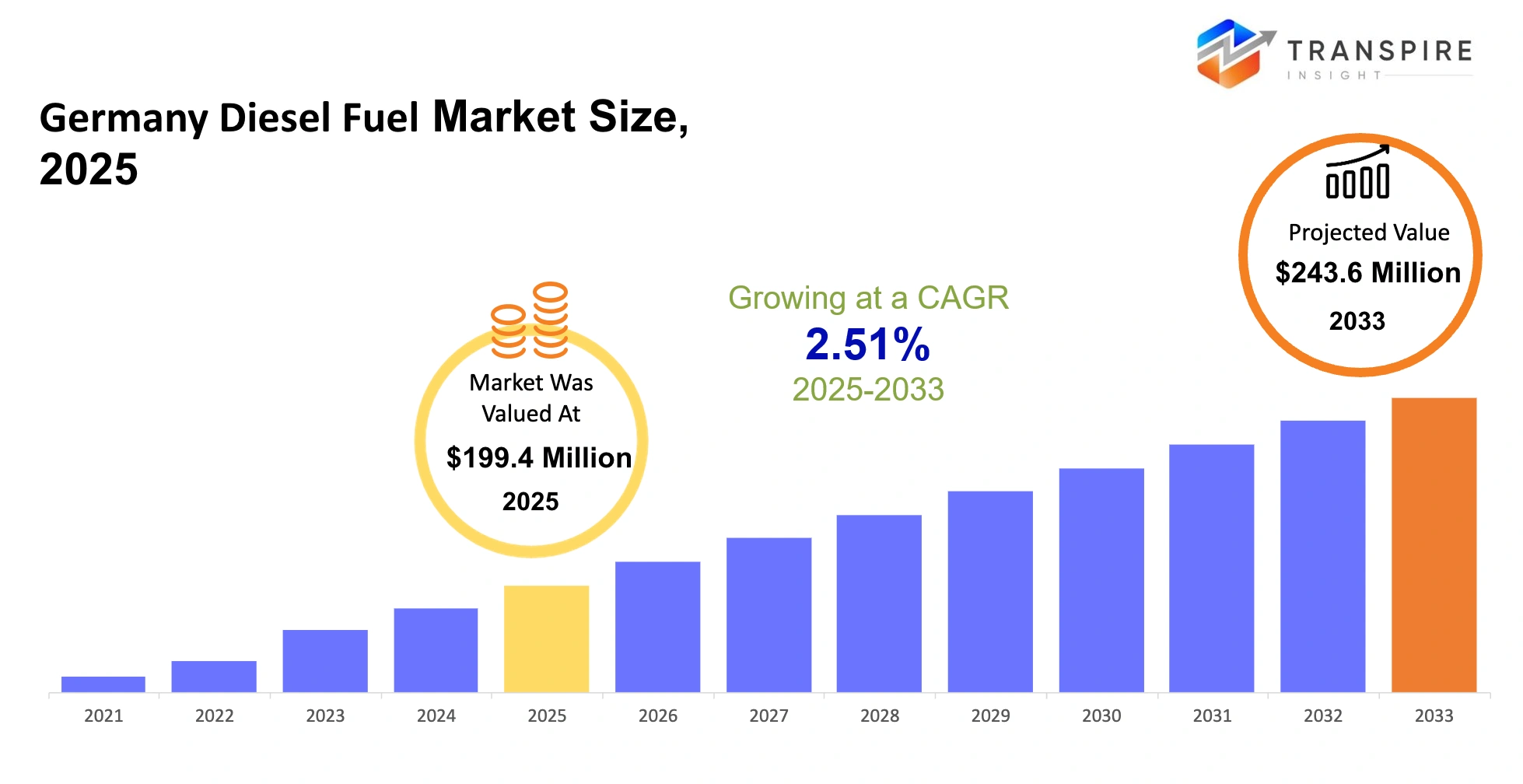
- Germany Diesel Fuel Market Size 2025: USD 199.4 Million
- Germany Diesel Fuel Market Size 2033: USD 243.6 Million
- Germany Diesel Fuel Market CAGR: 2.51%
- Germany Diesel Fuel Market Segments: By Application (Transportation, Industrial, By Power Generation, Agriculture), By End User (Commercial Vehicles, Passenger Vehicles, Marine & Rail, Industrial Equipment), By Distribution Channel (Retail Fuel Stations, Direct/Bulk Sales).
To learn more about this report,  Download Free Sample Report
Germany Diesel Fuel Market Summary:
The Germany Diesel Fuel Market size was estimated at USD 199.4 Million in 2025 and is anticipated to reach USD243.6Million by 2033, growing at a CAGR of 2.51% from 2026 to 2033. The diesel fuel market in Germany will maintain its connections to freight movement and industrial distribution and heavy vehicle operations throughout the national energy and transportation sector. The diesel distribution networks will provide essential fuel supplies to support the trucking corridors and agricultural machinery and construction fleets which require dependable fuel resources. The fuel quality standards and emission limits established by German policy changes will dictate the operational procedures for fuel suppliers and distributors. The consumer demand shift will occur as logistics companies search for engine technologies that provide both operational efficiency and reduced emissions. The operational standards of supply chains will experience transformation through refinery improvements and advanced storage solutions and digital fuel tracking systems. The market structure will change according to both technological advancements and regulatory guidance.
Key Market Trends & Insights:
- The Germany diesel fuel market shows stable demand from three sectors which include freight transport agricultural equipment and construction machinery. Industrial regions use diesel fuel for road logistics networks which operate throughout their entire network. The manufacturing industry will continue to require fuel because of its high volume transportation needs but efficiency programs and fleet upgrades will lead to gradual changes in fuel purchasing behavior.
- The Government emission rules and environmental policy establish ongoing pressure which reduces diesel consumption for the diesel market. The National climate targets require the use of cleaner fuels together with hybrid transport fleets and electric mobility solutions. The transportation sector uses policy direction to determine its refinery planning together with fuel distribution methods while it handles regulatory requirements and expenses.
- The industrial sector in Germany drives demand for diesel fuel according to current market trends and research findings. Truck freight and supply chain transport provide essential services for manufacturing clusters which operate in automotive chemical and heavy engineering sectors. Diesel fuel demand increases because strong export activity through logistics corridors links cargo transportation between factories and warehouses with major European trade routes.
- The common purchasing patterns of commercial vehicle fleets are affected by fuel efficiency enhancements which extend to their entire operational range. The logistics industry invests in advanced engine technology which reduces fuel consumption while achieving better emission control results. The upgrades decrease fuel consumption for each vehicle in operation but total market demand remains constant because of ongoing freight operations in transport and delivery activities.
- Energy price fluctuations determine purchasing behavior of transport operators and fuel distributors. Diesel retail prices respond to shifts in crude oil prices and refining margins and supply chain conditions. Businesses observe fuel expenses because transportation costs represent a significant part of their logistics and freight operations.
Germany Diesel Fuel Market Segmentation
By Application
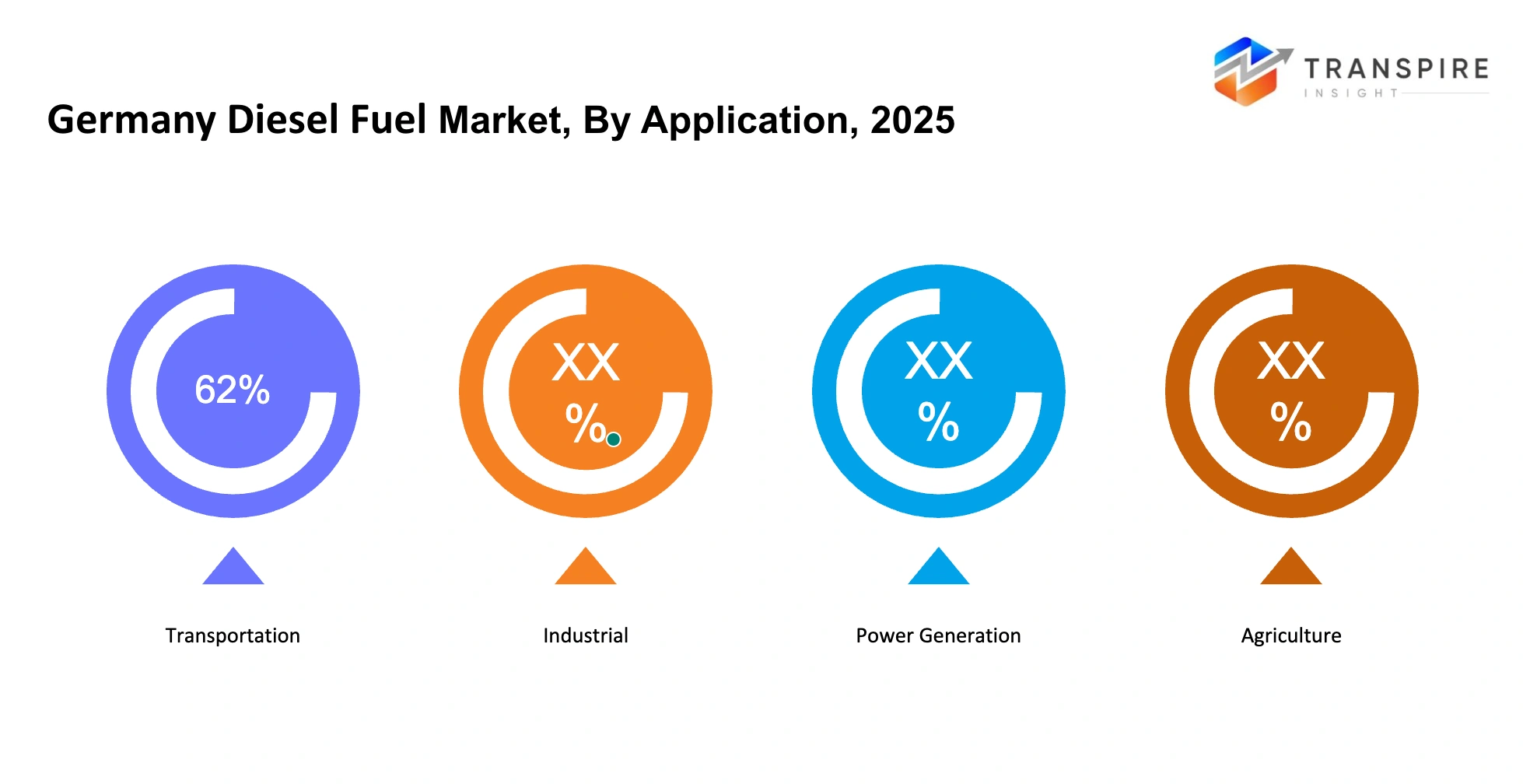
- Transportation :The diesel fuel market in Germany depends heavily on diesel-powered transportation which forms its primary transportation segment. The transportation sector needs continuous diesel deliveries to operate freight trucks, delivery fleets, buses and long-distance logistics operations. Diesel engines maintain high torque efficiency which enables trucks to transport heavy loads across highways and trade corridors throughout the country and between international borders.
- Industrial:The industrial sector represents a vital component of Germany's diesel fuel market. Diesel-powered engines drive the operations of manufacturing facilities, construction equipment mining machinery and large mechanical systems. Reliable fuel availability supports production continuity. Diesel consumption remains constant throughout industrial sites because of on going industrial development and infrastructure projects and equipment operation.
- Power generation:The diesel fuel market in Germany derives its power generation requirements from the power generation application sector. Diesel generators provide backup electricity to commercial buildings, hospitals construction sites and emergency response systems. The need for temporary power and grid support and power in remote areas drives generator usage which keeps diesel power supply available for short-term and backup needs.
- Agriculture :The agricultural sector demonstrates consistent diesel fuel requirements throughout the German diesel fuel market. The farming industry depends on diesel-powered equipment which includes tractors and harvesters and irrigation pumps and soil preparation gear. The agricultural cycle of seasonal planting and harvesting results in predictable fuel consumption throughout the year. The combination of mechanized farming methods and extensive agricultural land operations leads to increased diesel usage during rural agricultural work.
To learn more about this report, Download Free Sample Report
By End User
- Commercial vehicles:The Germany diesel fuel market shows commercial vehicles as the primary customer base which uses diesel fuel. The logistics trucks and freight carriers and delivery vans and intercity buses operate their systems with diesel engines because it provides them with long-distance capacities and efficient fuel consumption. The continuous movement of trade and the development of e-commerce logistical systems and the operation of freight transportation networks lead to persistent diesel consumption in commercial vehicle fleets.
- Passenger Vehicles: Passenger vehicles form another segment influencing the Germany diesel fuel Market. Diesel-powered cars remain present because they provide drivers with better fuel efficiency during highway driving and for extended travel distances. Business travel patterns and commuting practices and private mobility requirements drive fuel consumption. This behavior occurs mostly among drivers who need to travel long distances while requiring reliable engine performance.
- Marine & Rail: Marine and rail transportation create an additional end-user segment which leads to diesel demand. Diesel engines power cargo ships inland vessels and rail locomotives because of their strong power output and operational reliability. The national logistics infrastructure uses diesel fuel to drive freight transportation through ports and railway networks which creates continuous diesel consumption.
- Industrial Equipment: Industrial equipment serves as another important end-user area which links to diesel consumption. Diesel engines power construction loaders, excavators cranes compressors and site generators throughout many heavy-duty environments. The need for equipment performance drives continuous fuel requirements across infrastructure development urban expansion projects and industrial zone mechanical operations
By Distribution Channel
- Retail Fuel Stations: Retail fuel stations serve as the main distribution network which supplies diesel fuel to the German diesel fuel market. Public filling stations grant diesel access which enables passenger vehicles and commercial fleets and small transport operators to refuel their tanks. The station operates through multiple geographic locations which include highway service areas and urban fueling stations to provide users with efficient access to their daily transportation needs.
- Direct/Bulk Sales: The Germany diesel fuel market uses direct and bulk sales as another method for diesel fuel distribution. Diesel fuel consumption in bulk quantities occurs primarily among industrial operators and logistics firms and construction companies and agricultural businesses. Large-scale equipment operations require fuel supply through long-term contracts and storage tanks and scheduled fuel deliveries which ensure operational efficiency and secure fuel availability.
Country Insights
- Economic Structure and Demand Base: The German diesel fuel market exhibits a strong relationship with three economic factors which include industrial production, logistics operations, and commercial transportation requirements. The diesel fuel market maintains its continuous consumption pattern from large manufacturing facilities and freight transportation routes and export-oriented distribution networks. The fuel requirements of heavy trucks and delivery vehicles and construction machinery remain constant throughout different economic periods which leads to predictable diesel usage patterns in national energy distribution systems. The German diesel fuel market shows active construction projects and infrastructure work and industrial freight transportation activities across its primary economic areas.
- Transport and Freight Dependence: The Germany diesel fuel market receives strong backing from road freight transport which connects throughout the country and European trade routes. The entire long-distance trucking system relies on diesel engines for its operation which includes both warehouse distribution centers and cross-border cargo movement. Diesel technology remains the preferred choice for commercial vehicle fleets throughout logistics companies because it provides operational efficiency and durability while delivering high-load transportation capabilities. The Germany diesel fuel market maintains its demand through the transportation activities which occur between industrial centers and seaports and inland distribution points.
- Energy Policy and Environmental Regulation: The German diesel fuel market functions under strict environmental regulations which national climate policies and European emission standards establish. The market structure develops through regulations which mandate cleaner fuel use combined with advanced engine technologies and the gradual phase-out of fossil fuel resources. Government programs which support alternative transportation technologies will change diesel usage patterns in the transportation industry over time. The German diesel fuel market demonstrates how emission reduction targets and sustainable energy planning policies shape its operations.
- Refining Capacity and Supply Chain: The German diesel fuel market operates because of its extensive refining capacity which includes advanced refining facilities and comprehensive fuel distribution networks. The domestic refining sector together with pipeline systems and storage facilities and wholesale distribution networks ensures stable diesel supply throughout urban areas and industrial centers. Strategic fuel reserves and import channels enable stable national energy security systems and supply planning operations. The distribution networks of the German diesel fuel market provide ongoing diesel supply to the transportation industry and agricultural sector and industrial businesses.
- Transition Pressure from Alternative Mobility: The German diesel fuel market experiences growing pressure from electric vehicle expansion and rail freight enhancements and renewable energy development policies. The market structure undergoes alterations because of increasing electric commercial van usage and ongoing hydrogen freight tests and public transportation projects. Diesel consumption remains strong in heavy transport and agricultural machinery and construction equipment because energy density continues to be vital for these fields. The German diesel fuel market will continue to develop because it needs to balance existing fuel requirements with new transportation developments.
Recent Development News
- Germany diesel fuel Market: Regional supply and pricing variations affecting sales: Germany diesel fuel Market shows regional differences in supply and fuel prices because refinery output and distribution levels vary across regions. Some areas experienced oversupply which pushed prices lower, while other regions faced higher prices due to transportation and logistics factors. These differences affected diesel sales volumes and shaped fuel trade patterns within the country. Source: Argus Media
- Germany diesel fuel Market: Weak economic activity reduces diesel sales: Germany diesel fuel Market has seen slower diesel consumption because reduced truck mileage and weaker manufacturing output lowered fuel use. Reports show diesel spot volumes and industrial demand staying below previous years. Lower transport activity and slower production levels across the economy influenced diesel purchasing decisions among logistics and industrial companies in Germany. Source: Argus Media
|
Report Metrics |
Details |
|
Market size value in 2025 |
USD 199.4 Million |
|
Market size value in 2026 |
USD 204.8 Million |
|
Revenue forecast in 2033 |
USD 243.6 Million |
|
Growth rate |
CAGR of 2.51% from 2026 to 2033 |
|
Base year |
2025 |
|
Historical data |
2021 – 2024 |
|
Forecast period |
2026 – 2033 |
|
Report coverage |
Revenue forecast, competitive landscape, growth factors, and trends |
|
Country scope |
Germany |
|
Key company profiled |
Shell Plc, BP Plc, TotalEnergies, ExxonMobil, Chevron Corporation, Rosneft Deutschland, OMV Group, Eni SpA, Phillips 66, Valero Energy, ConocoPhillips, PetroChina, Saudi Aramco, Gazprom Neft, Marathon Petroleum. |
|
Customization scope |
Free report customization (country, regional & segment scope). Avail customized purchase options to meet your exact research needs. |
|
Report Segmentation |
By Application (Transportation, Industrial, By Power Generation, Agriculture), By End User (Commercial Vehicles, Passenger Vehicles, Marine & Rail, Industrial Equipment), By Distribution Channel (Retail Fuel Stations, Direct/Bulk Sales). |
Key Germany Diesel Fuel Market Insights
The diesel fuel market in Germany demonstrates consistent operation because of demand from transportation and industrial processes and logistics systems. The movement of freight through highways and international trade routes establishes a constant level of fuel consumption. Price movements depend on three factors which include refinery output and taxation policies and emission standards. The industry faces increasing pressure to adopt sustainable transportation solutions because businesses still rely on diesel fuel for their operations.
The diesel market remains active because strong freight corridors connect manufacturing centers that produce automotive and machinery and chemical goods. The regional distribution networks depend on truck fleets which need fuel to operate their services. The transport operators and commercial logistics providers change their buying habits according to three factors which include energy price changes and refinery capacity shifts and European environmental regulations.
The expansion of electric mobility together with stricter emission targets leads to a gradual reduction of fuel requirements for passenger vehicles. The transportation industry and the construction equipment sector and the agricultural machinery sector maintain high levels of diesel consumption. The future direction of the market depends on policy direction and carbon reduction programs and the development of alternative fuels which include hydrogen and bio-based options that exist within national energy planning frameworks.
Company List
- Shell Plc
- BP Plc
- TotalEnergies
- ExxonMobil
- Chevron Corporation
- Rosneft Deutschland
- OMV Group
- Eni SpA
- Phillips 66
- Valero Energy
- ConocoPhillips
- PetroChina
- Saudi Aramco
- Gazprom Neft
- Marathon Petroleum
Germany Diesel Fuel Market Report Segmentation
By Application
- Transportation
- Industrial
- power generation
- Agriculture
By End User
- Commercial Vehicles
- Passenger Vehicles
- Marine & Rail
- Industrial Equipment
By Distribution Channel
- Retail Fuel Stations
- Direct/Bulk Sales
Frequently Asked Questions
Find quick answers to common questions.
The approximate Germany Diesel Fuel Market size for the market will be USD 243.6 Million in 2033.
Key segments for the Germany Diesel Fuel Market are By Application (Transportation, Industrial, By Power Generation, Agriculture), By End User (Commercial Vehicles, Passenger Vehicles, Marine & Rail, Industrial Equipment), By Distribution Channel (Retail Fuel Stations, Direct/Bulk Sales).
Major Germany Diesel Fuel Market players are Shell Plc, BP Plc, TotalEnergies, ExxonMobil, Chevron Corporation, Rosneft Deutschland, OMV Group, Eni SpA, Phillips 66, Valero Energy, ConocoPhillips, PetroChina, Saudi Aramco, Gazprom Neft, Marathon Petroleum.
The Germany Diesel Fuel Market size is USD 199.4 USD Million in 2025.
The Germany Diesel Fuel Market CAGR is 2.51%.
- Shell Plc
- BP Plc
- TotalEnergies
- ExxonMobil
- Chevron Corporation
- Rosneft Deutschland
- OMV Group
- Eni SpA
- Phillips 66
- Valero Energy
- ConocoPhillips
- PetroChina
- Saudi Aramco
- Gazprom Neft
- Marathon Petroleum
Recently Published Reports
-
Apr 2026
Active Power Filter Market
Active Power Filter Market Size, Share & Analysis Report By Type (Shunt Active Power Filters, Series Active Power Filter, Hybrid Active Power Filter), By Application (Harmonics Mitigation, Reactive Power Compensation, Voltage Regulation, Power Factor Correction), By Phase (Single Phase, Three Phase), By End-User Industry (Manufacturing, Healthcare, Commercial, Automotive, Oil and Gas, Others), and Geography (North America, Europe, Asia-Pacific, Middle East and Africa, South and Central America), 2021 - 2031
-
Apr 2026
Electrical Transformer Market
Electrical Transformer Market Size, Share & Analysis Report By Core (Closed, Shell, and Berry), By Insulation (Gas, Oil, Solid, Air, and Other), By Phase (Single, and Three), By Rating (100 MVA to 500 MVA, 501 MVA to 800 MVA, and 801 MVA to 1200 MVA), and Geography (North America, Europe, Asia-Pacific, Middle East and Africa, South and Central America), 2021 – 2031
-
Apr 2026
Hydraulic Piston Pumps Market
Hydraulic Piston Pumps Market Size, Share & Analysis Report By Type (Axial Piston Pumps, Radial Piston Pumps), By Operating Pressure (Low Pressure, Medium Pressure, High Pressure), By Application (Construction, Mining, Agriculture, Automotive, Oil & Gas, Industrial Machinery, Others), By End-User (OEMs, Aftermarket), and Geography (North America, Europe, Asia-Pacific, Middle East and Africa, South and Central America), 2021 – 2031
-
Apr 2026
Laboratory Gas Generators Market
Laboratory Gas Generators Market Size, Share & Analysis Report By Product (Nitrogen Gas Generator, Hydrogen Gas Generator, Zero Air Gas Generator, Purge Gas Generator, TOC Gas Generators, Others), By Application (Gas Chromatography, Liquid Chromatography-mass Spectrometry (LC-MS), Gas Analyzers, Others), By End-user (Life Science, Chemical & Petrochemical, Food & Beverage, Others), and Geography (North America, Europe, Asia-Pacific, Middle East and Africa, South and Central America), 2021 – 2031